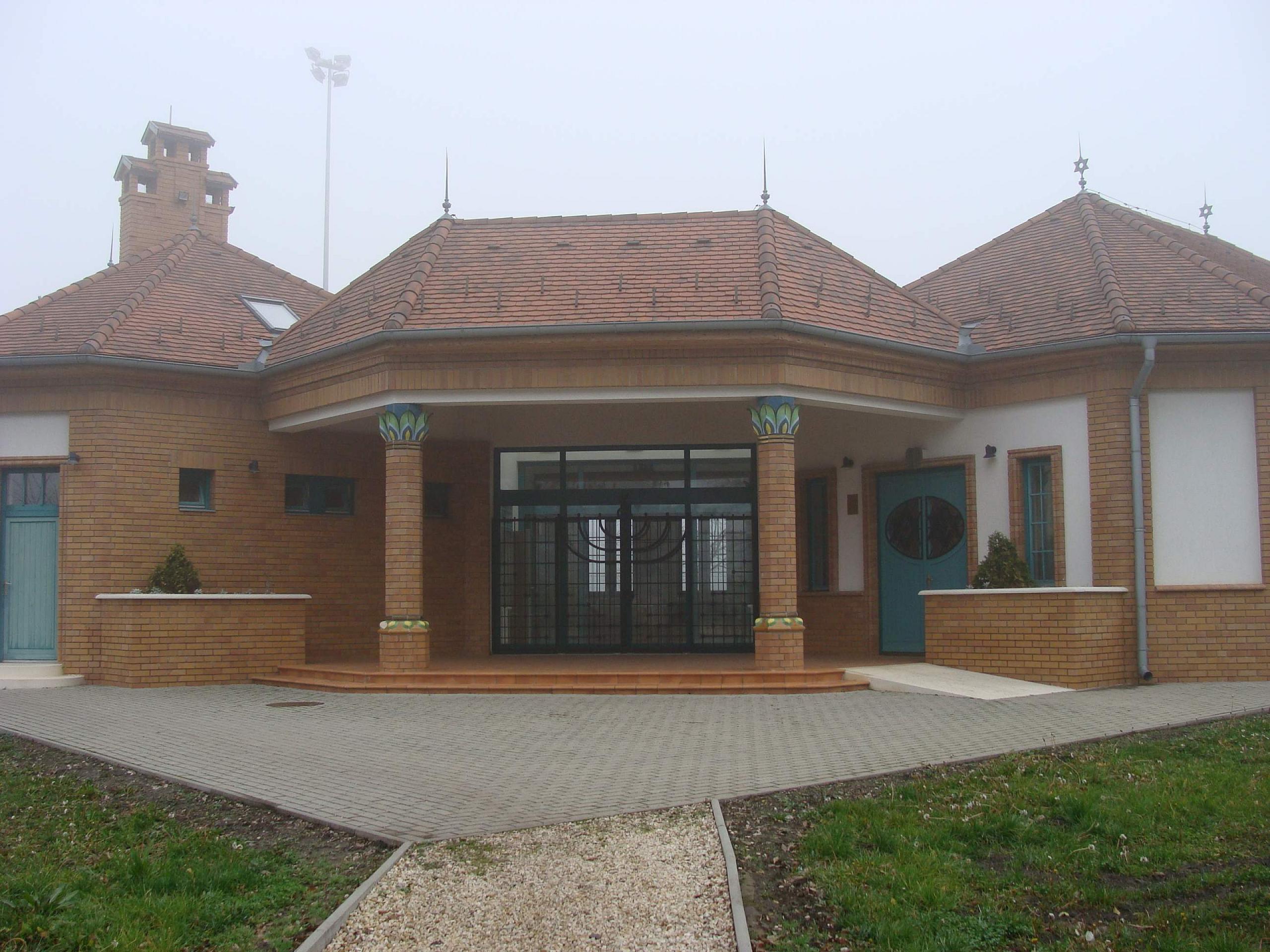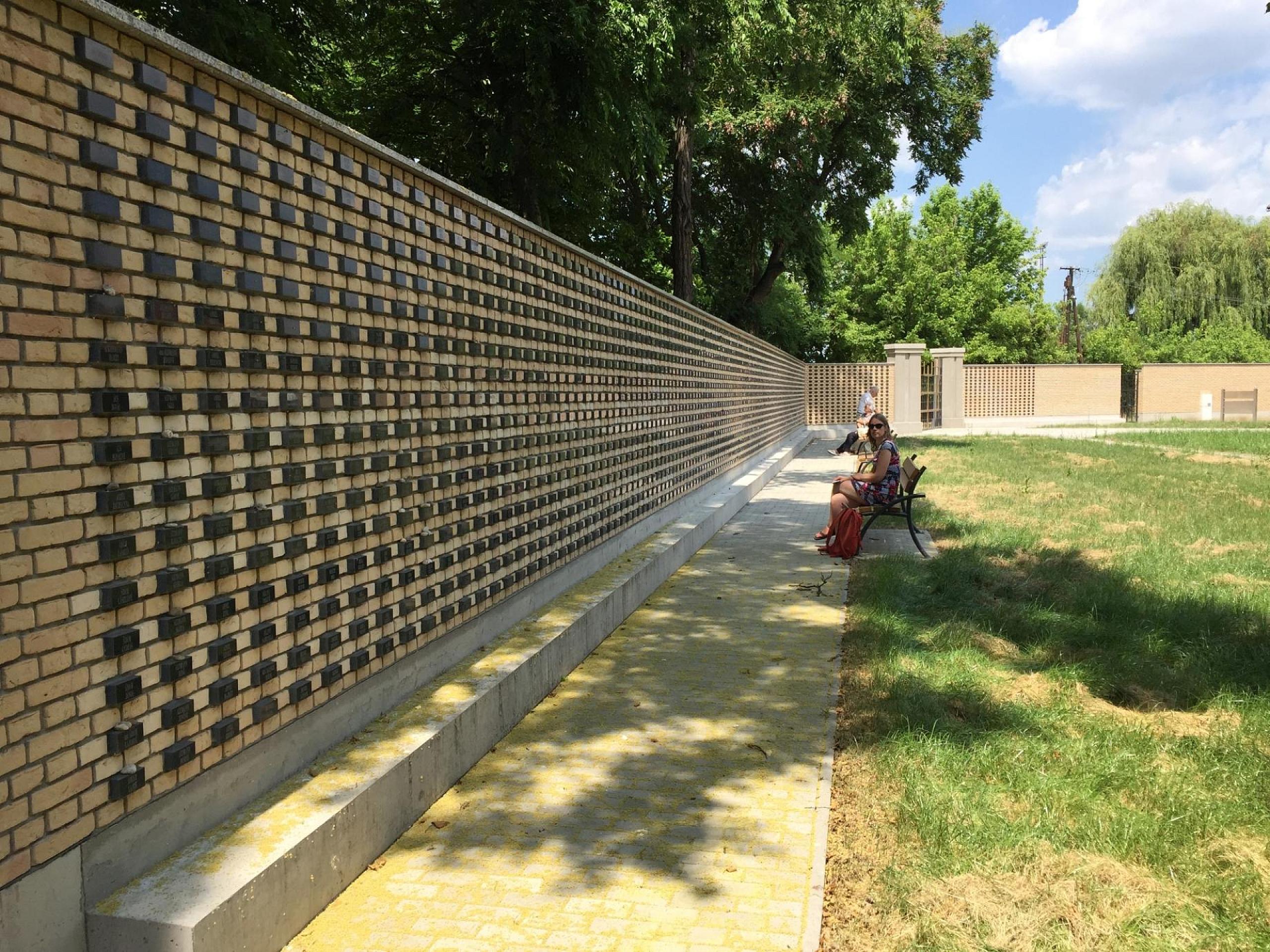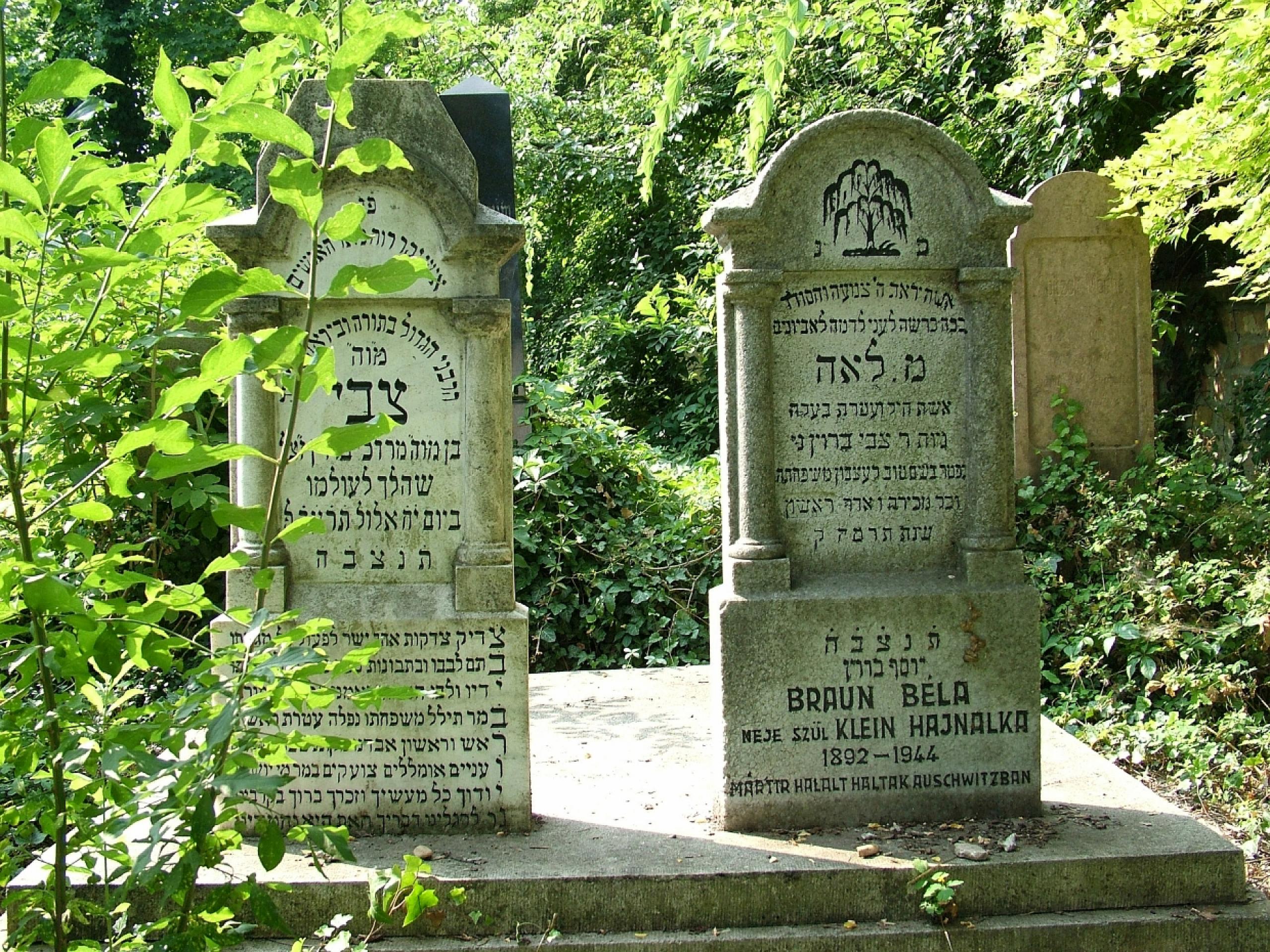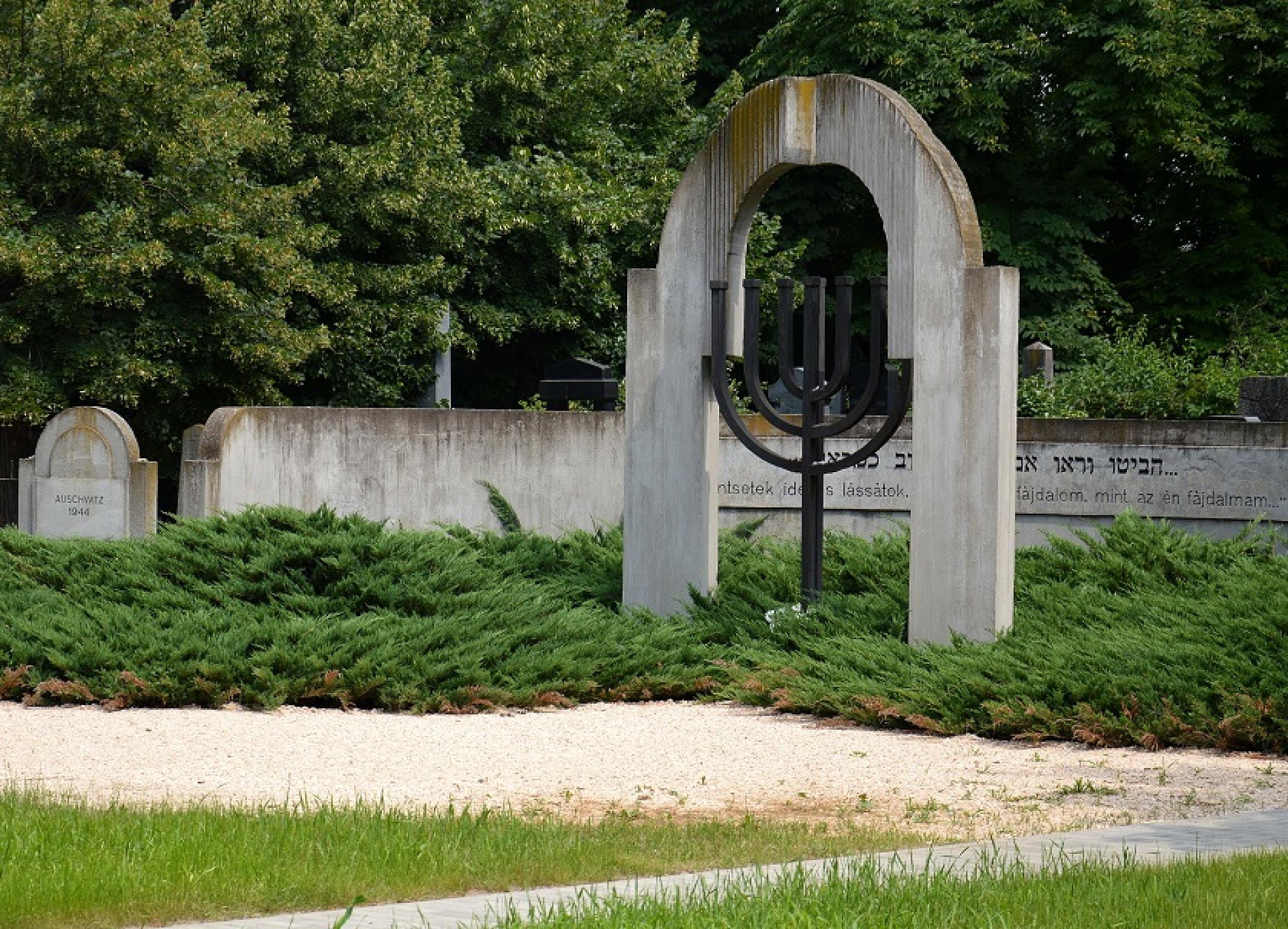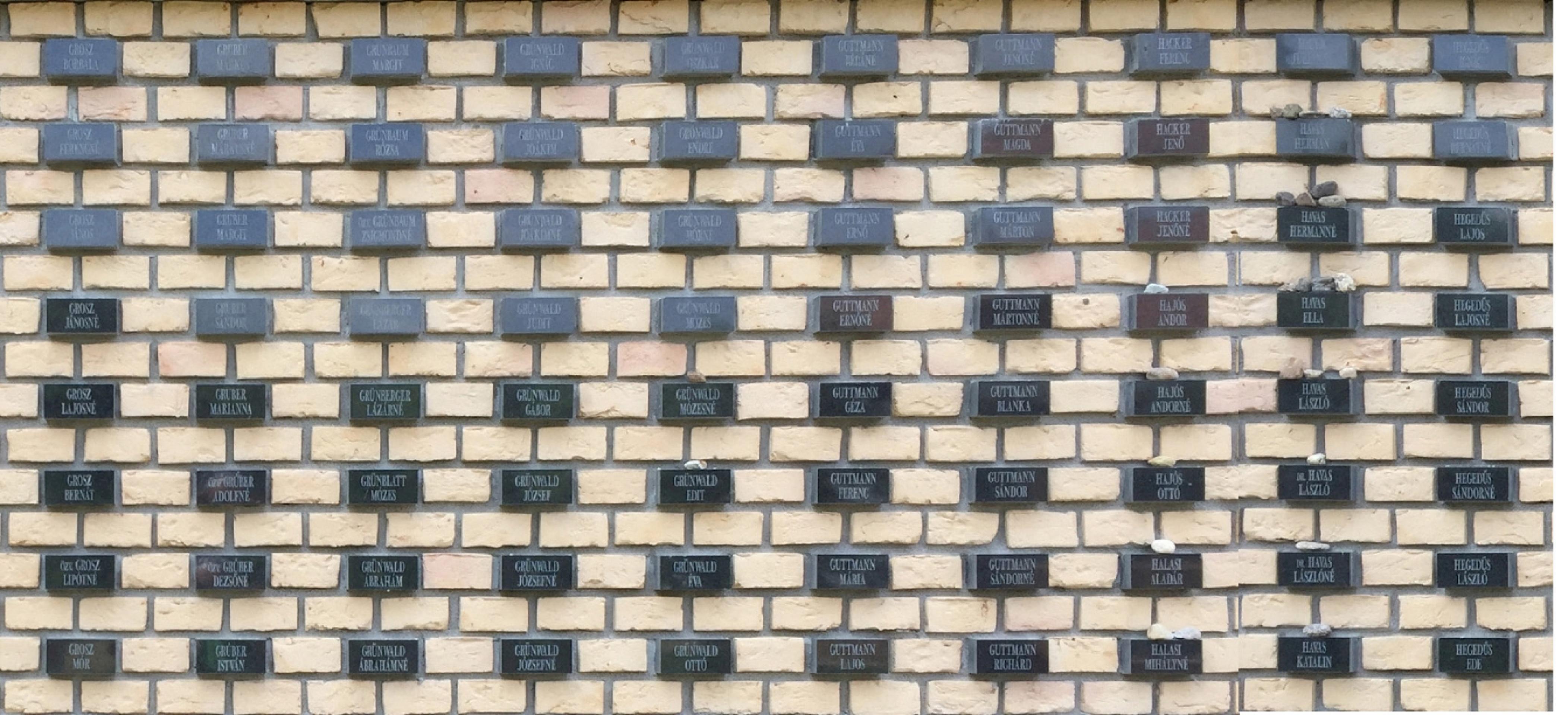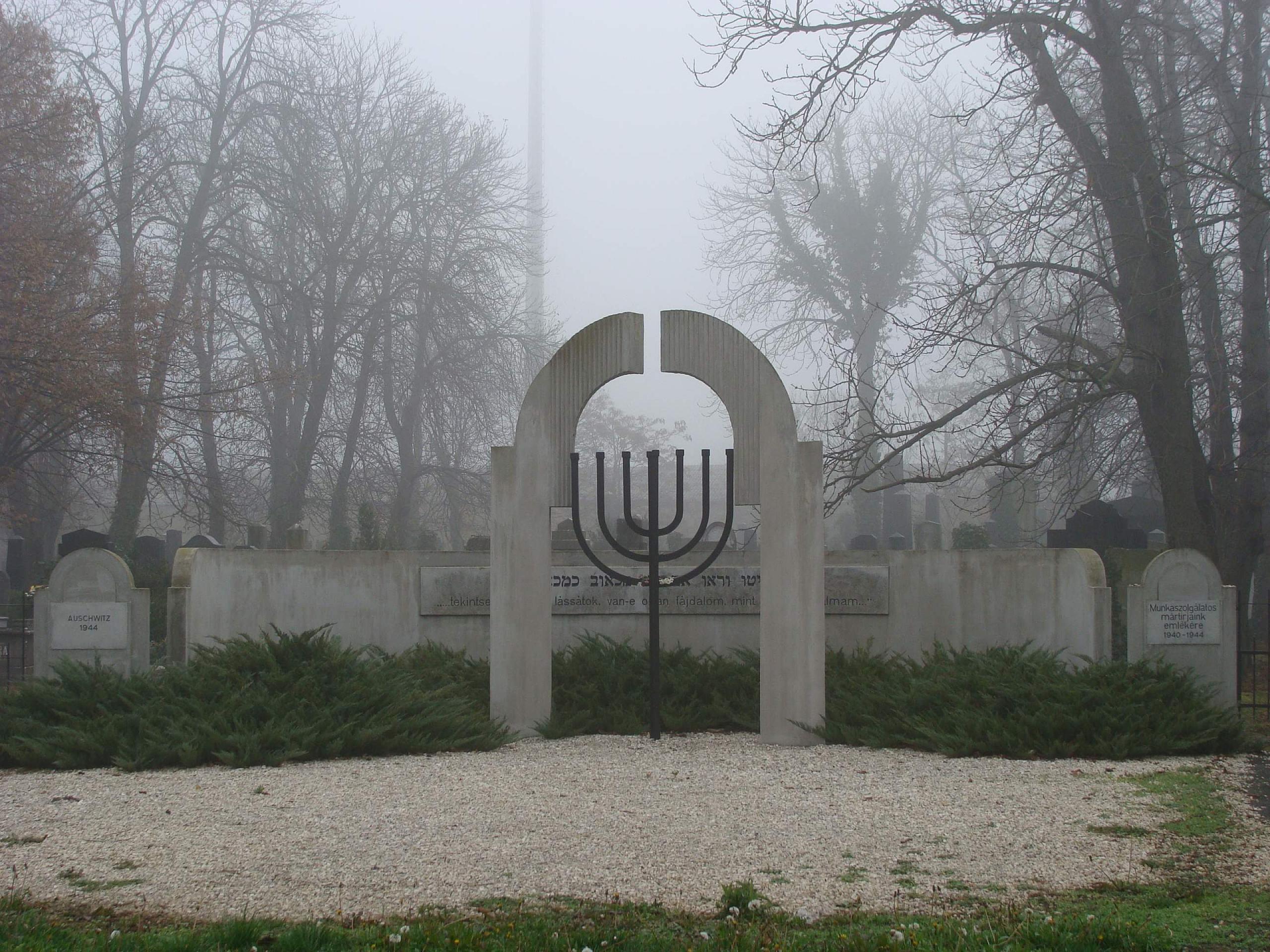
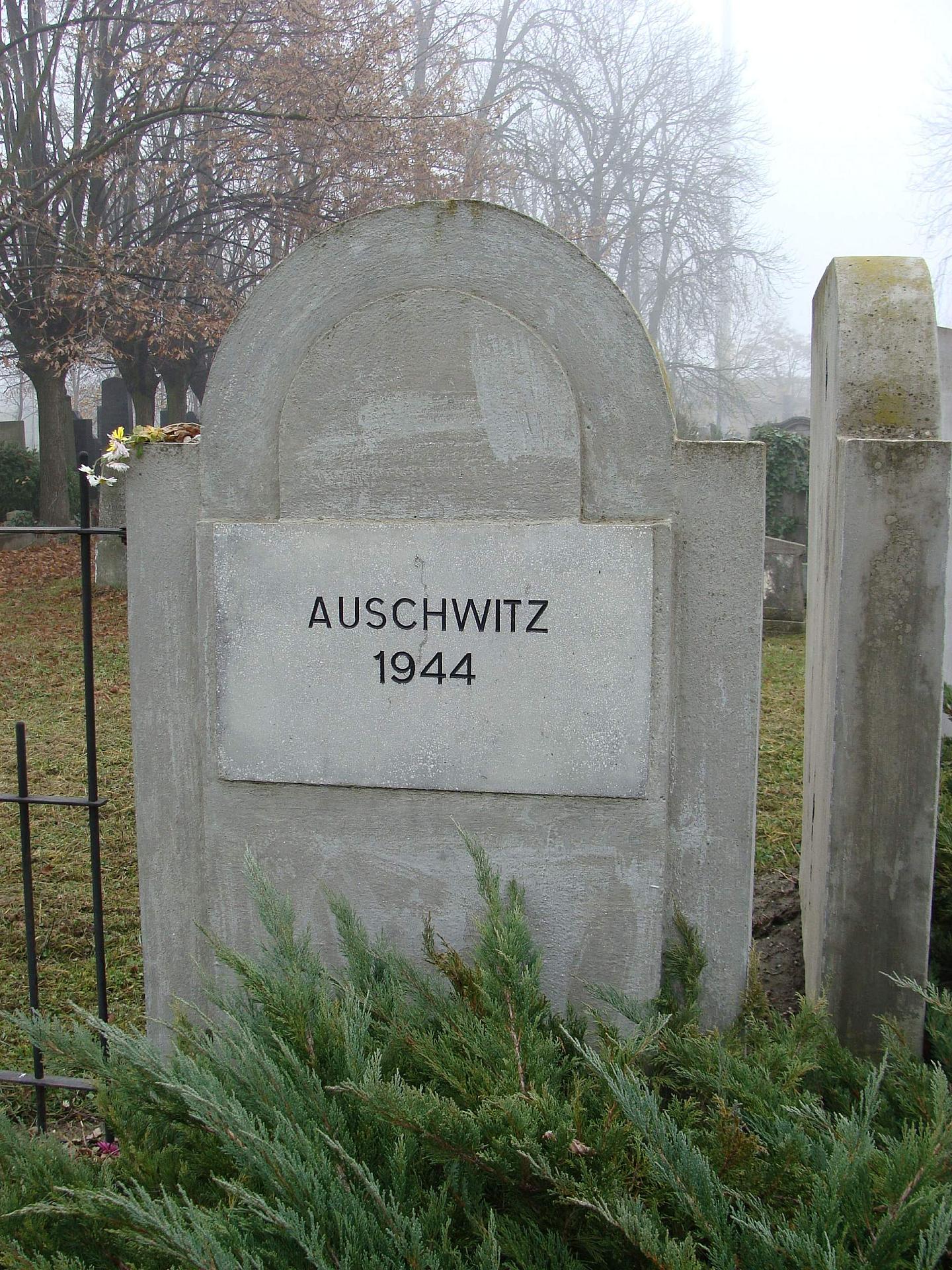
In 2004, a Holocaust memorial was dedicated on the Jewish cemetery in Békéscsaba. Hungary's newest synagogue is located in close vicinity. In 2016, it was complemented by a memorial wall.
History
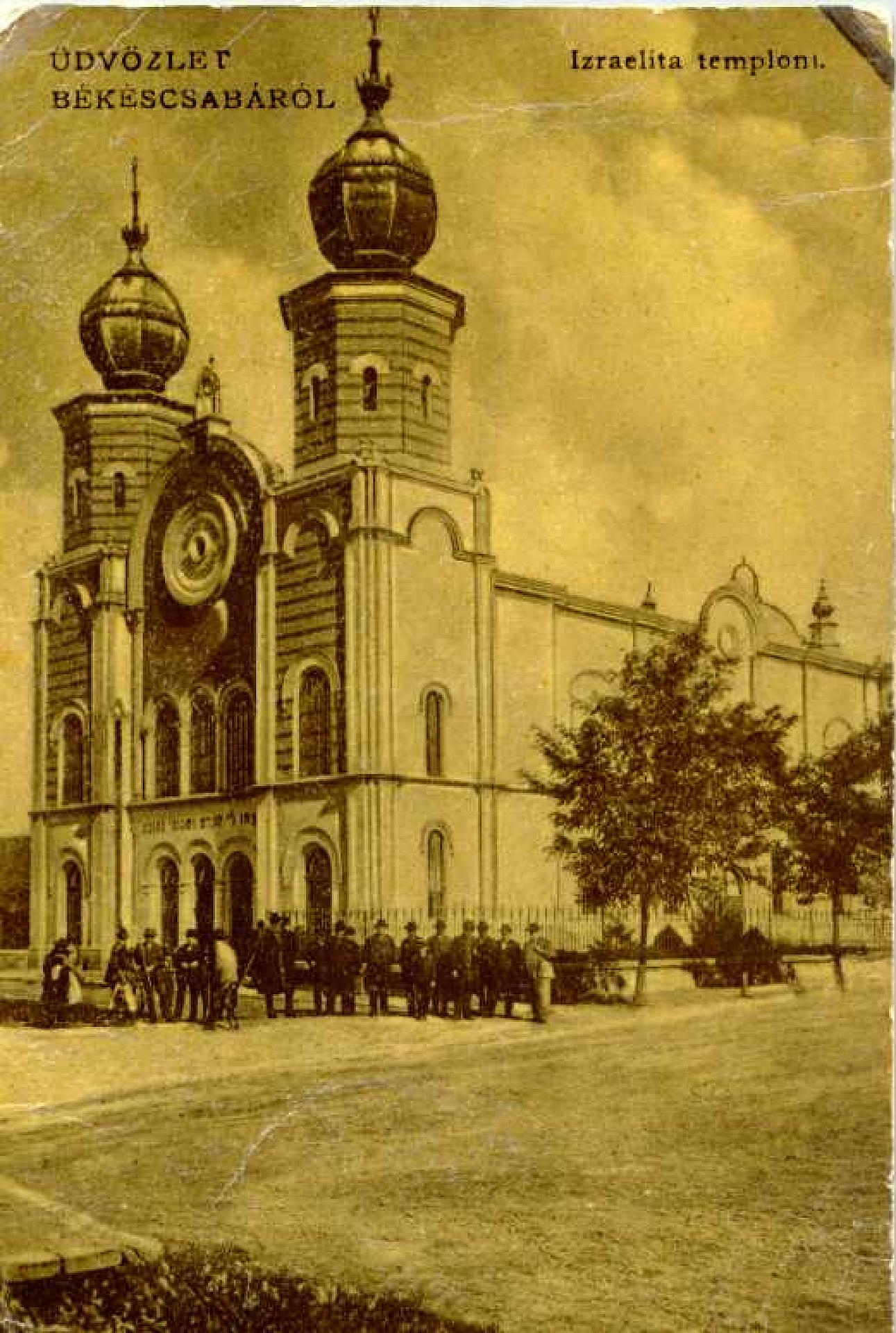
Békéscsaba is a city situated in the south-east of Hungary. Jews first settled here in the 18th century; the first synagogue was erected in 1846. In the 1890s, two larger synagogues were built: one for the Orthodox community, and one for the Neolog community. Békéscsaba developed rapidly during the inter-war period: After the cities of Oradea (Hungarian: Nagyvárad), Timișoara (Temesvár) and Arad had to be ceded to Romania, Békéscsaba became an important centre in the region. This development was also felt by the 2,433 Jews of Békéscsaba (population of 1941), making up 4.6 percent of the total population - many of the new businesses and industrial firms were owned by Jews.
In 1941, Hungary joined the war and hundreds of Jewish men were drafted for labour service in the Hungarian army. Many lost their lives on the eastern front or were murdered by Hungarian soldiers. Soon after the invasion of the German Wehrmacht in March 1944, all 226 Jewish businesses and 137 factories in Békéscsaba were shut down. In May, a ghetto was established. Békéscsaba was an important transport hub, so in June 1944, Jews from the surrounding areas were brought here. Together with the Jews from the ghetto they were later deported to a collection camp, guarded by the SS. 13 of the 3,840 prisoners died of the effects of abuse or due to the horrific conditions at the camp. At the end of July, the Jews were deported in two transports. The first departed on July 25 for Strasshof near Vienna, where the prisoners were to be deployed in forced labour. The second left for the Auschwitz-Birkenau extermination camp on July 26, 1944.
Victims
It is estimated that 80 to 85 percent of the Jews deported from Békéscsaba to Auschwitz were murdered in the gas chambers by the SS. However, the majority of those deported to Strasshof survived.
Remembrance
Several hundred survivors returned to Békéscsaba after the war, and Jewish life could be organised anew. In the following years, however, many turned their backs on the city. In November 1946, there were anti-Semitic riots in Békéscsaba. An even stronger blow was the establishment of the communist dictatorship in 1948/49, which nationalised businesses and factories, depriving many Jews of their means of existence. Religious life too was restricted. In 1949 there were nearly 500 religious Jews in Békéscsaba; in 1965, there were only 147. What's more, many Jews denied or neglected their Jewish background.
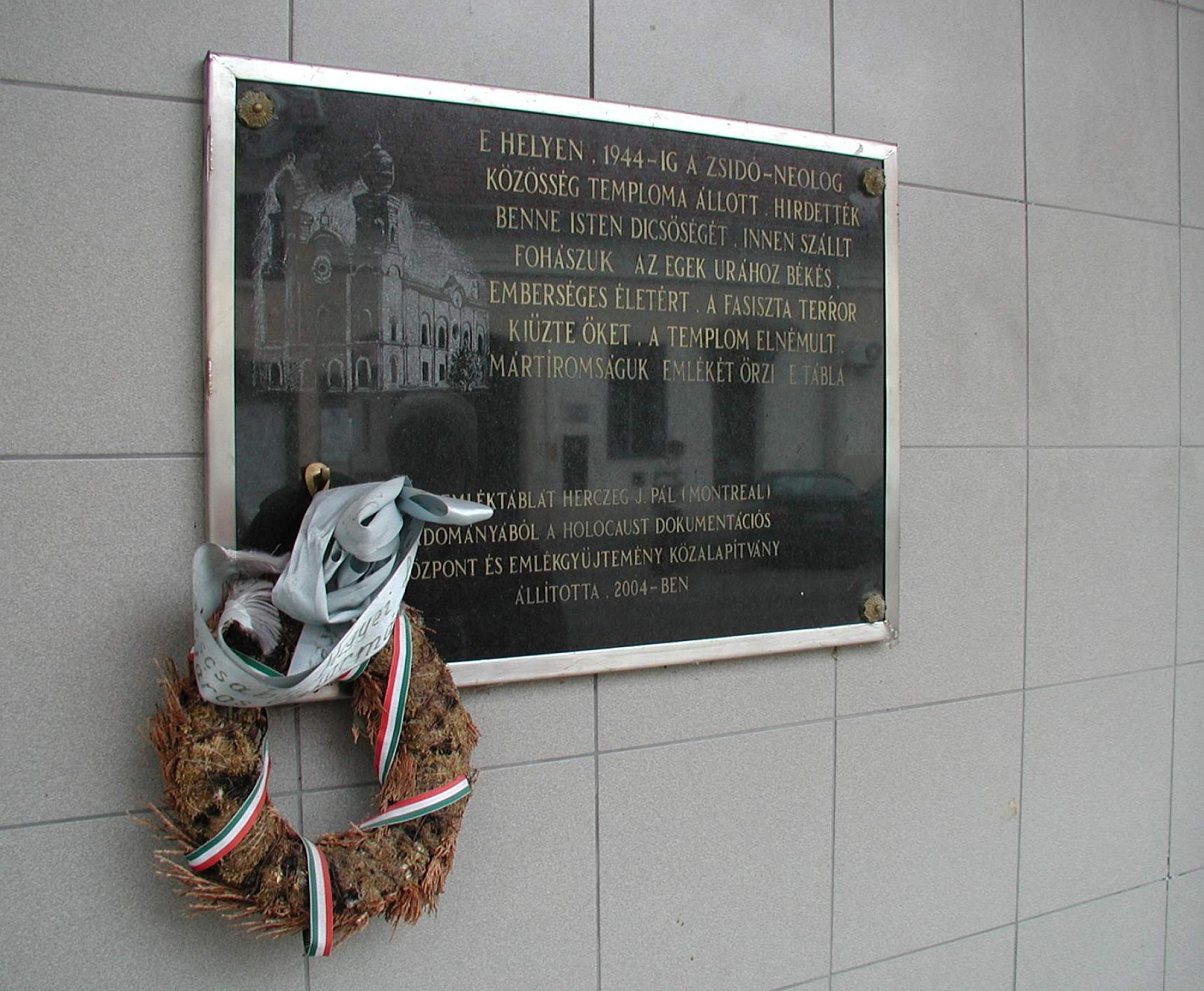
After the fall of communism, many returned to their Jewish roots. At the same time, Jewish emigrants could become more involved - for example, a Jew from Békéscsaba, who had emigrated to Canada, funded a memorial plaque on the site of the former Neolog synagogue in Luther street.
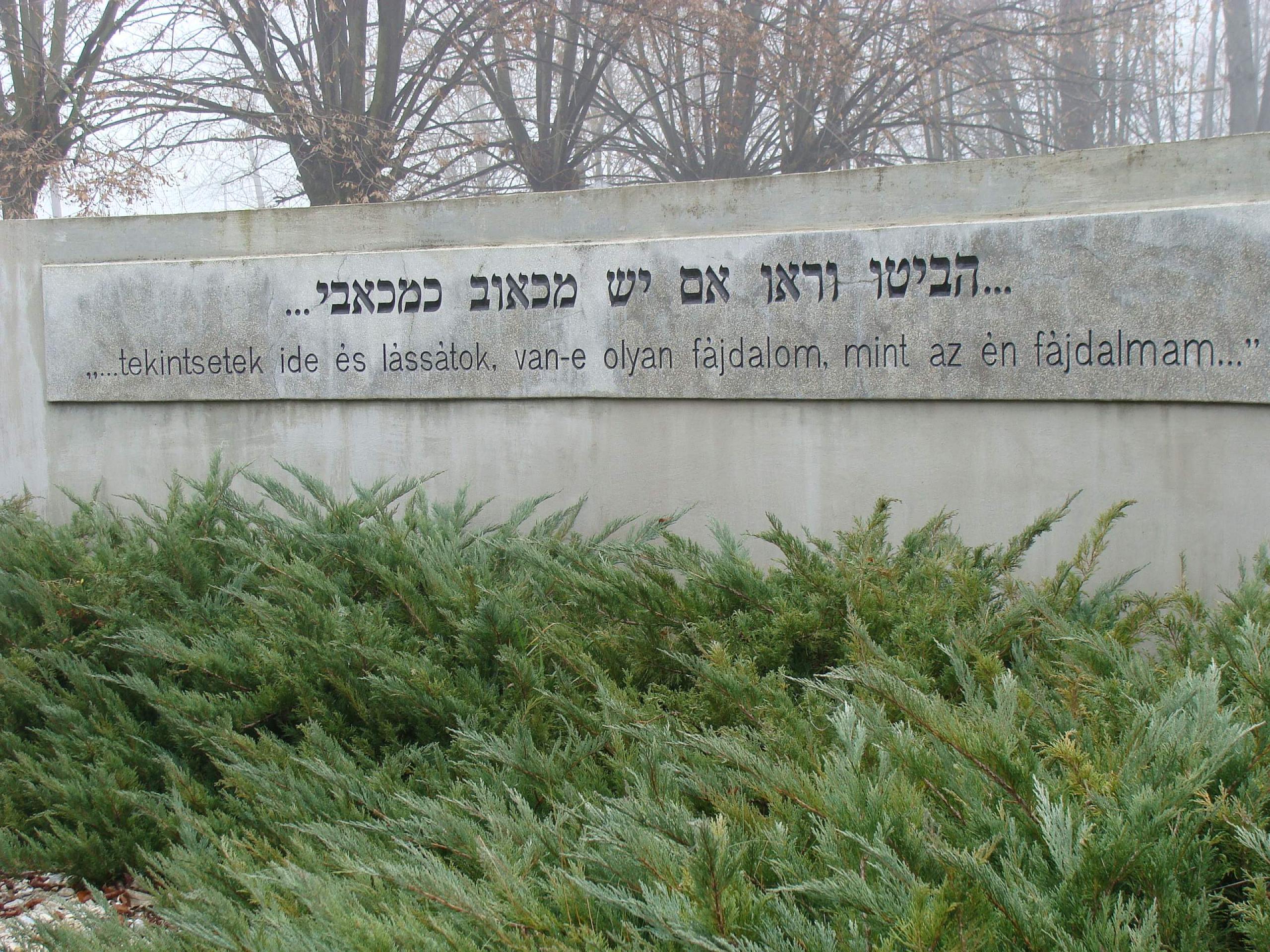
Next to the Békéscsaba Jewish cemetery stands Hungary's most recently built synagogue, completed in 2004. That same year, a Holocaust memorial was dedicated there. Behind a menorah is a wall bearing a quote from the Bible in Hebrew and in Hungarian, which reads: »Look and see if there is any sorrow like my sorrow«. The wall is flanked by two symbolic grave stones. One of them commemorates the men who died while conducting labour service; the other is dedicated to those who perished in Auschwitz.
In 2016, a new element was added to the Jewish cemetery. Adjecent to the Holocaust memorial, a memorial wall of about 50 meters length was erected with the names of Holocaust victims from Békéscsaba and surrounding communities engraved on black bricks. One of the initiators of the new memorial was Holocaust survivor Gábor Hirsch (*1929) whose family story is shown in the Information Centre of the Holocaust Memorial in Berlin.
Contact
Izraelita temető
5600 Békéscsaba