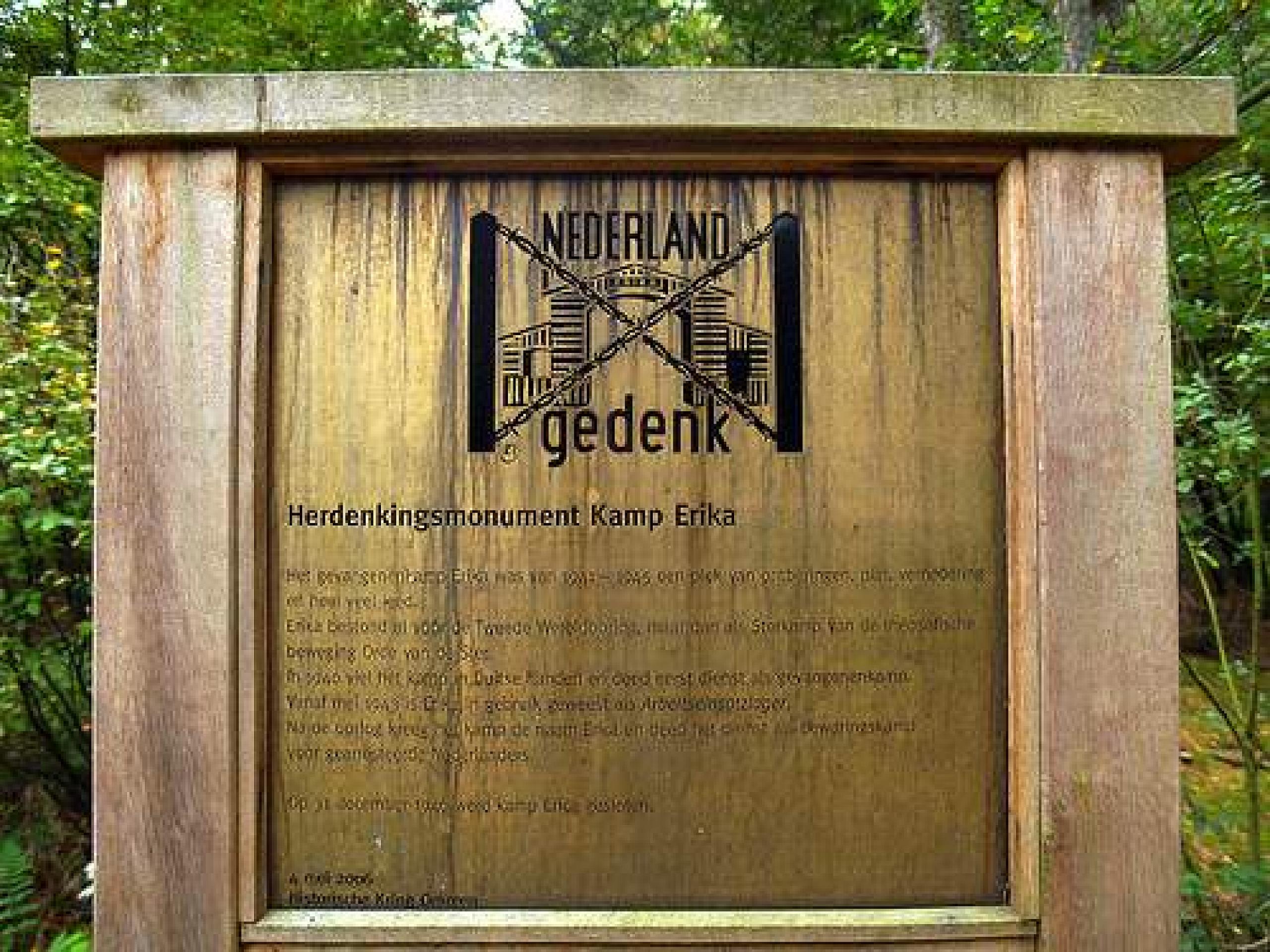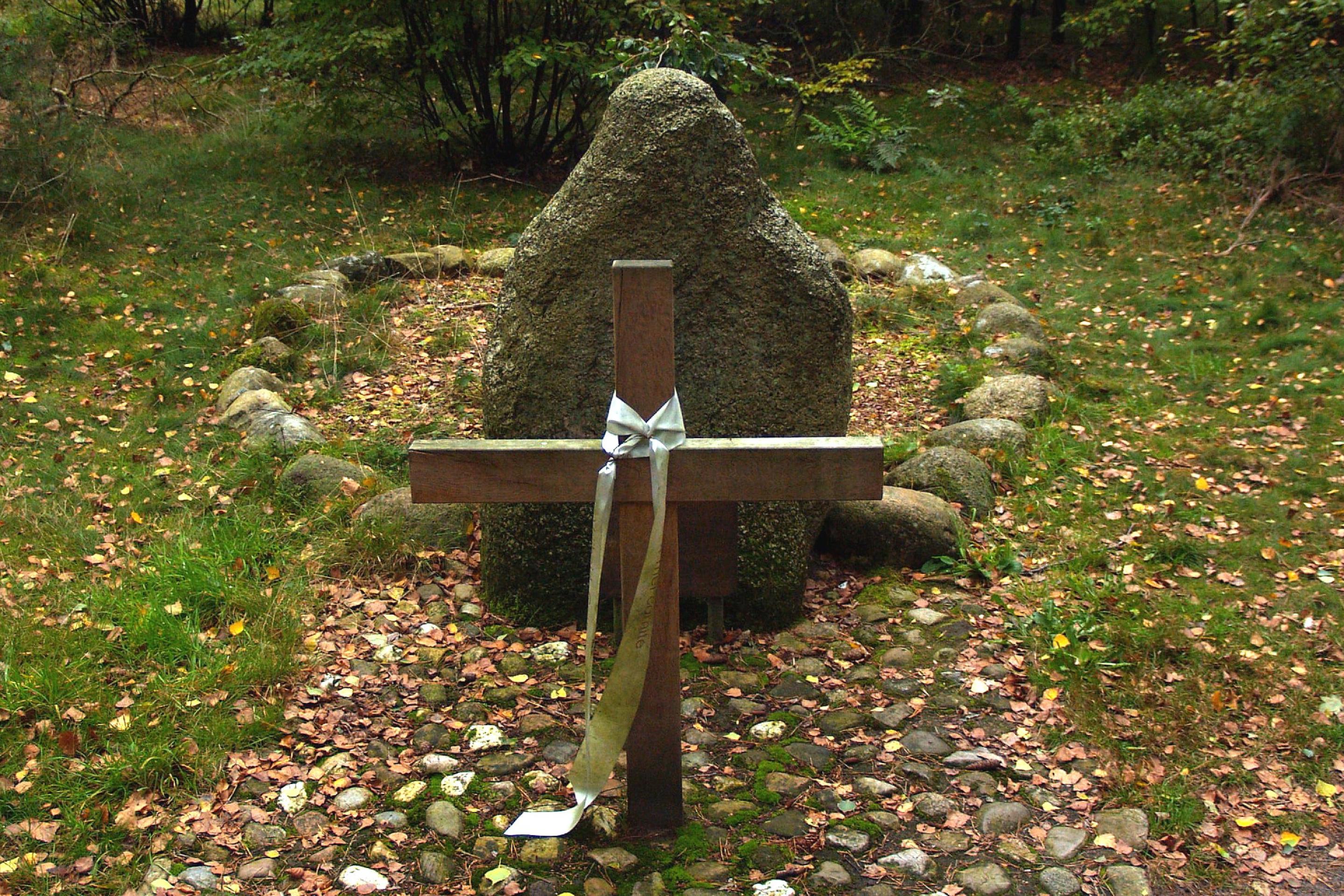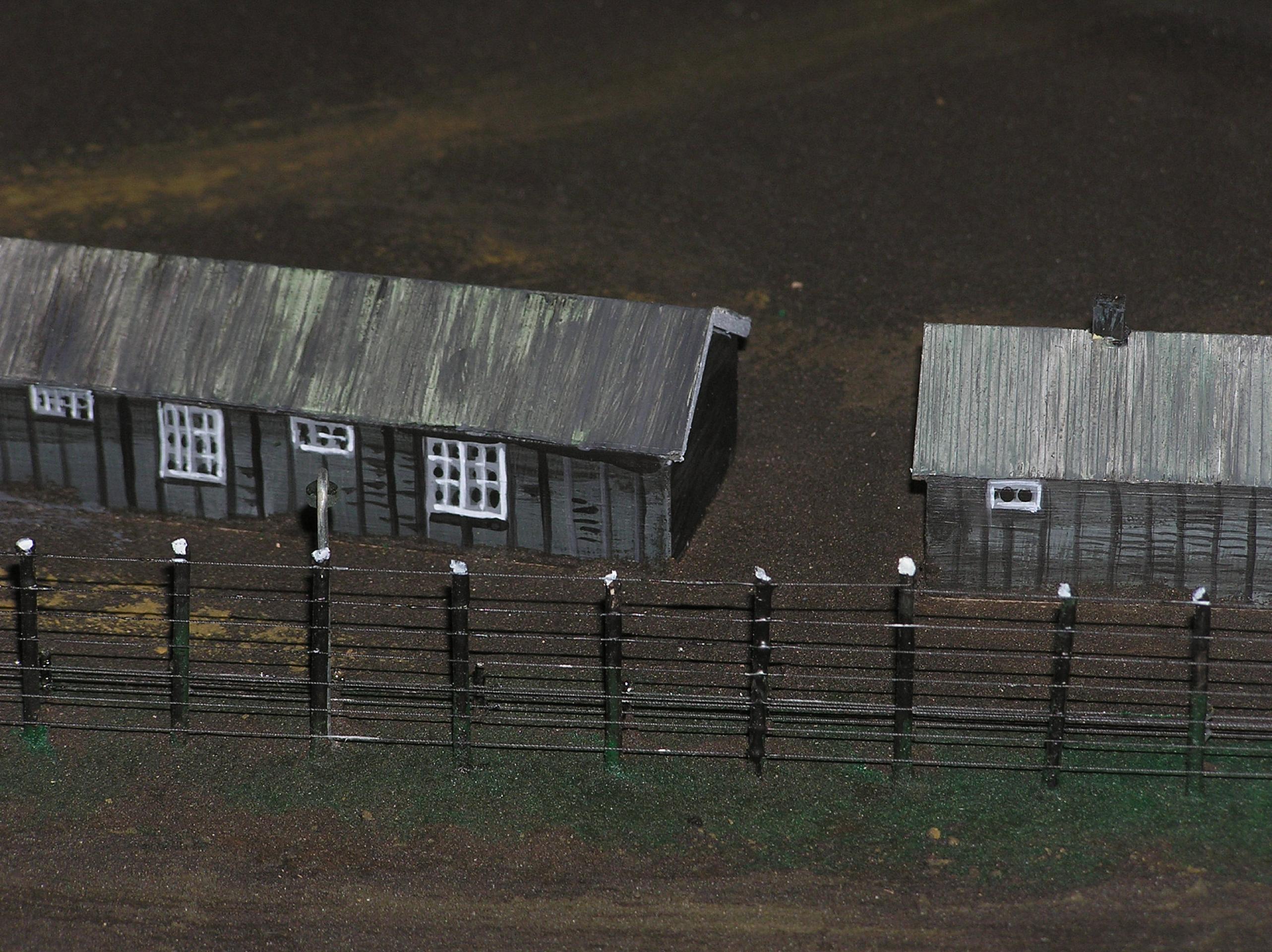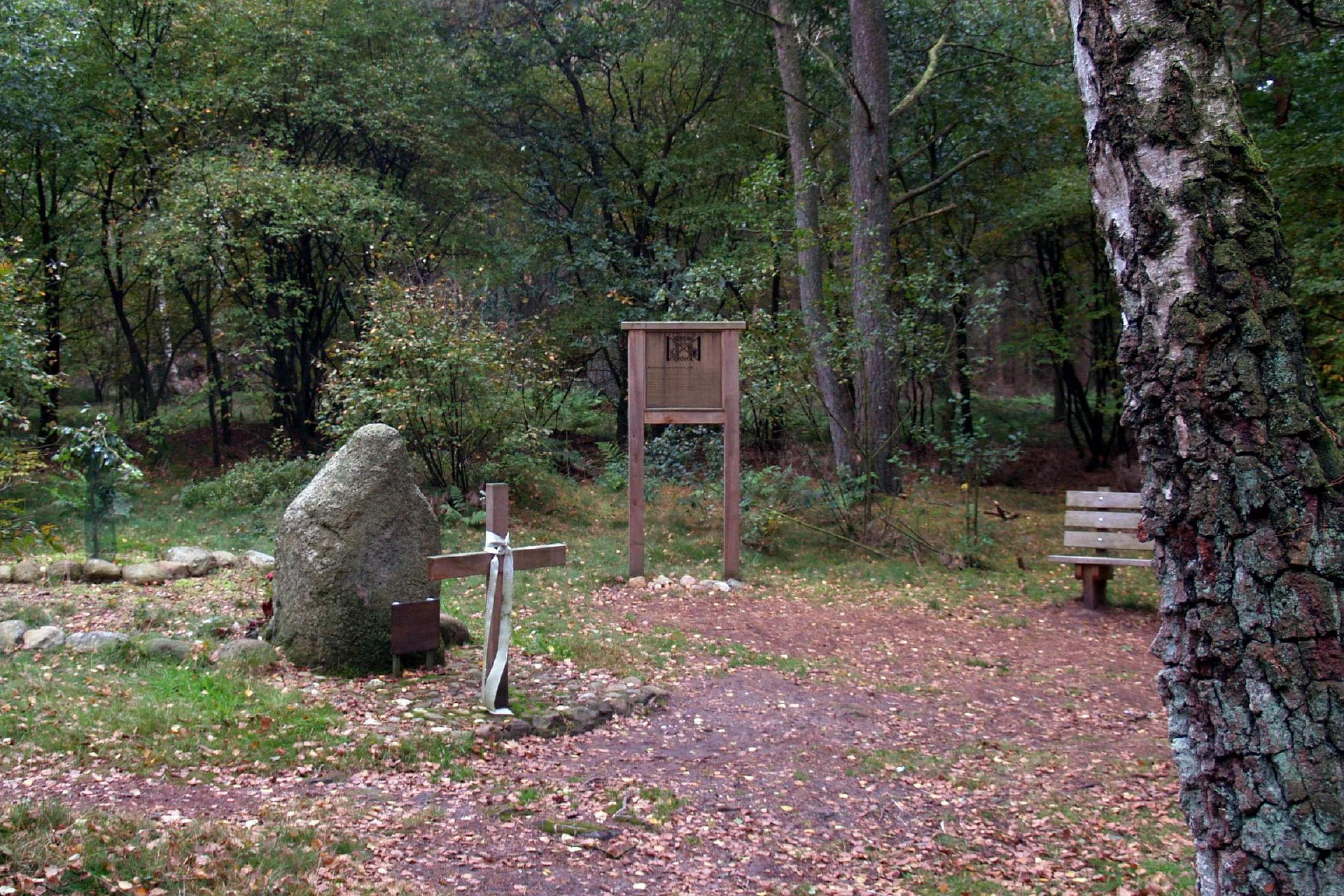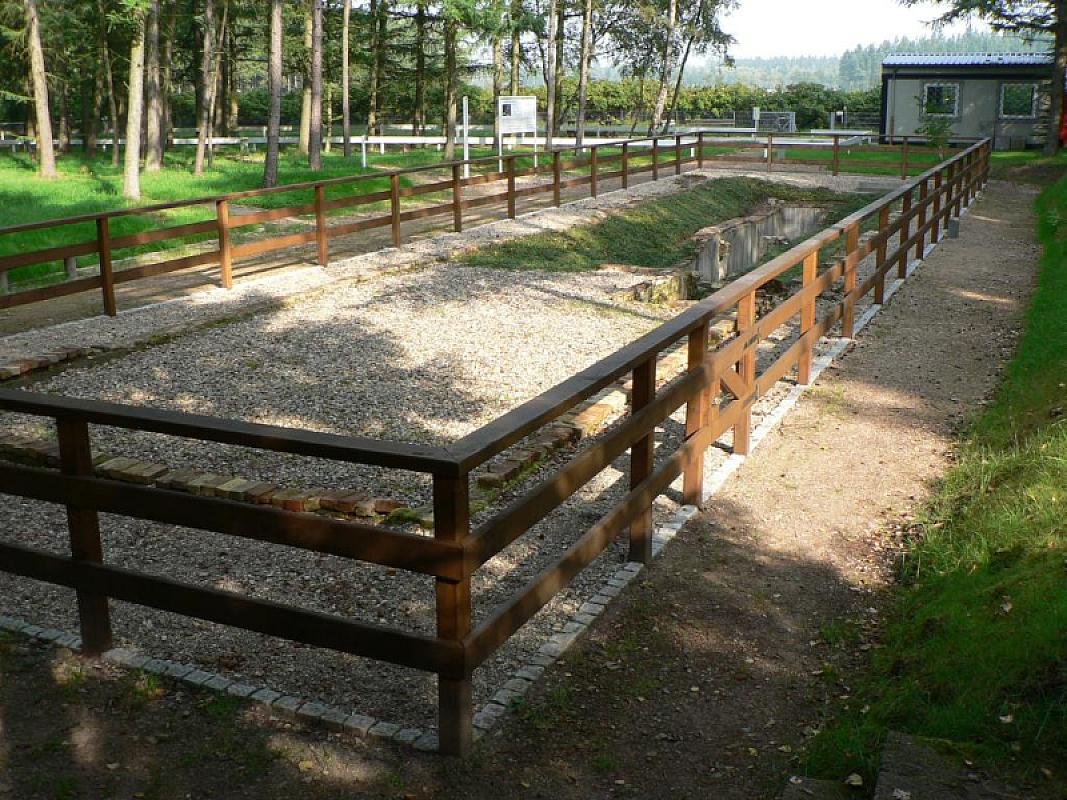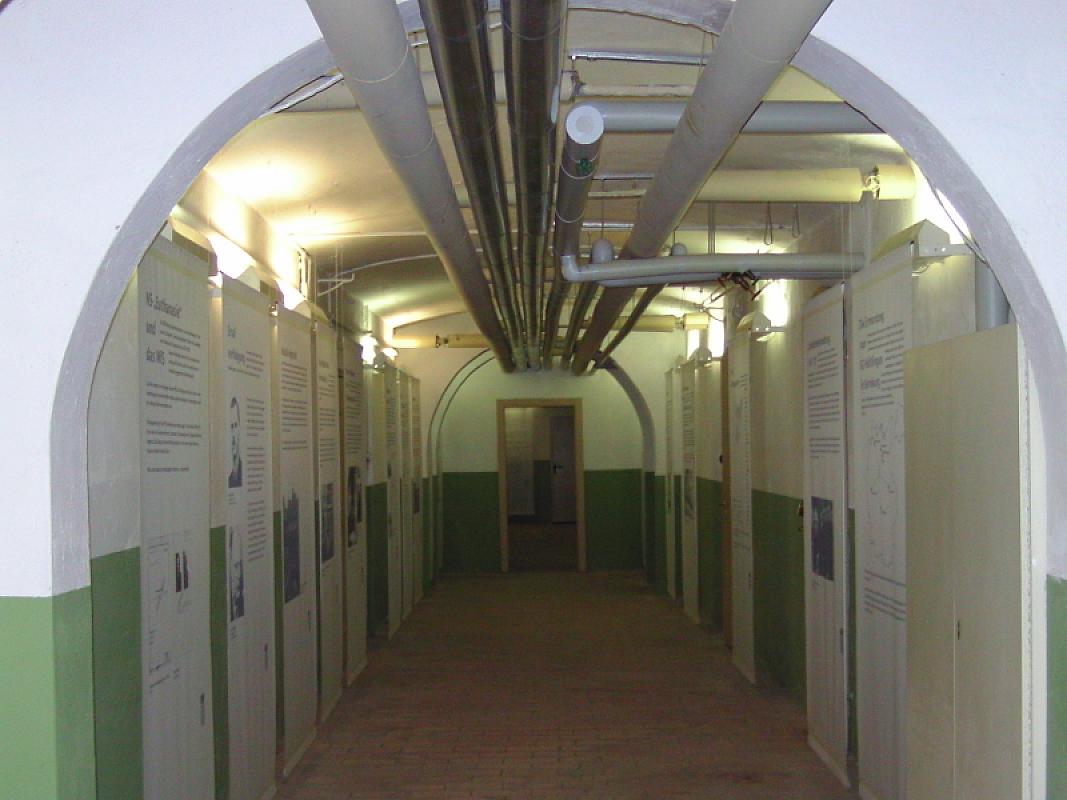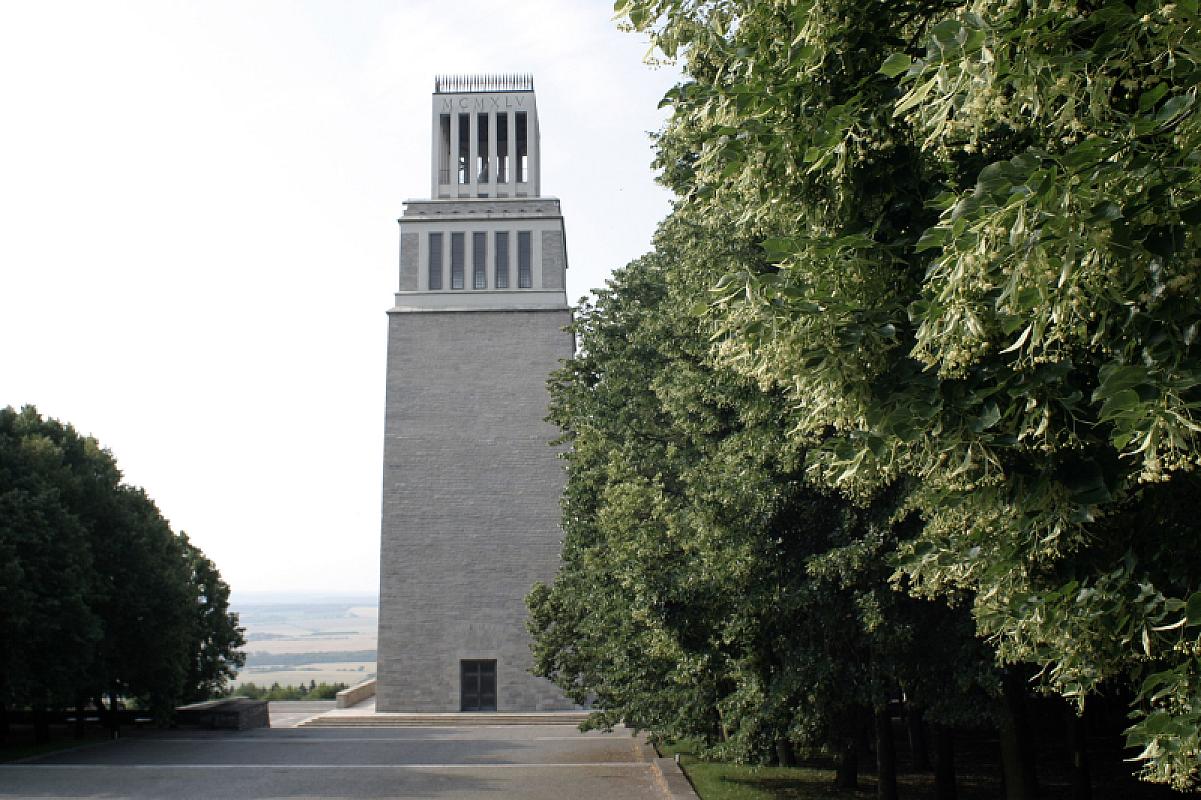
A memorial on the premises of the former »Erika« camp close to the city of Ommen calls into remembrance the fates of the camp's prisoners.
History
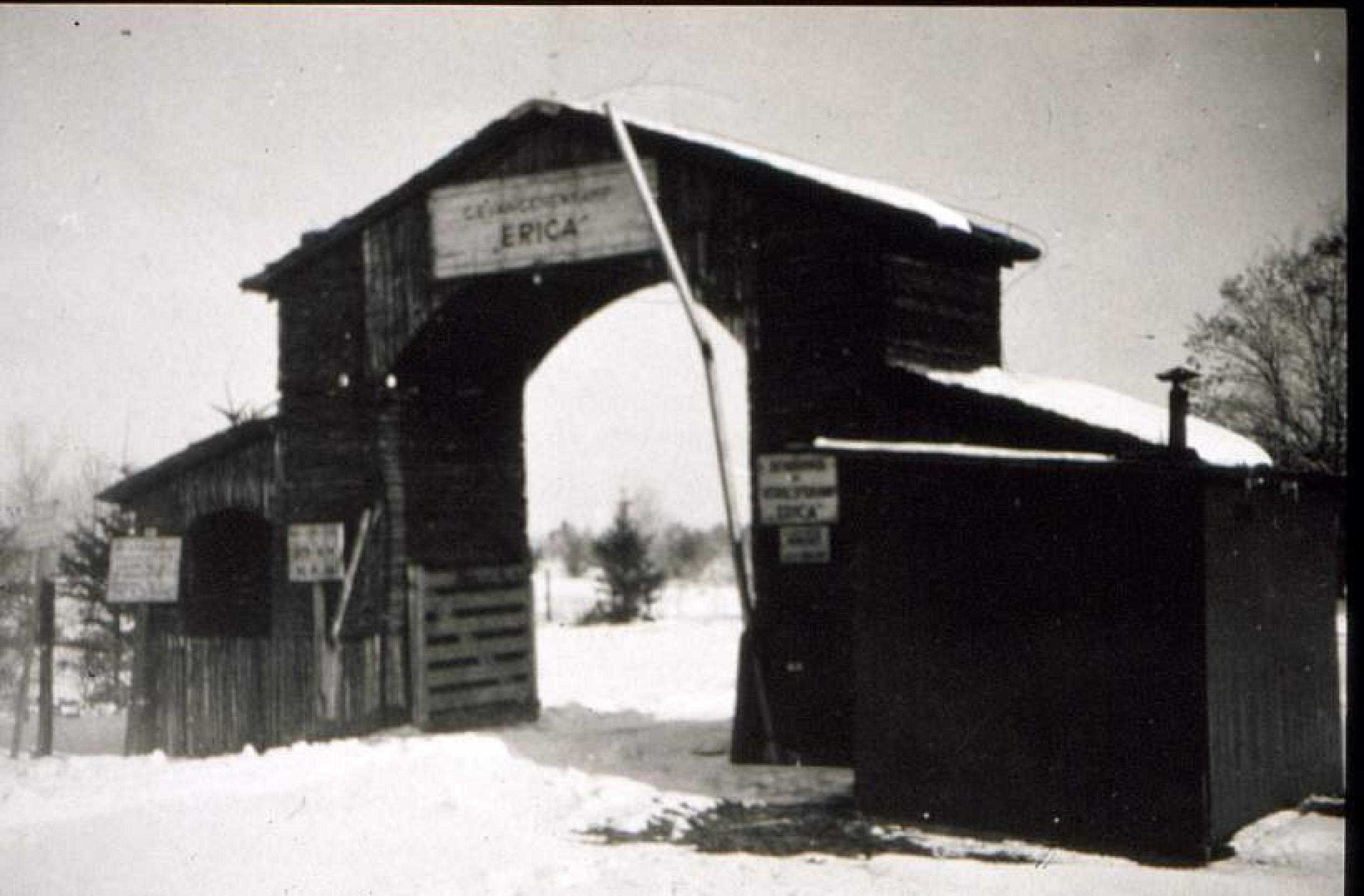
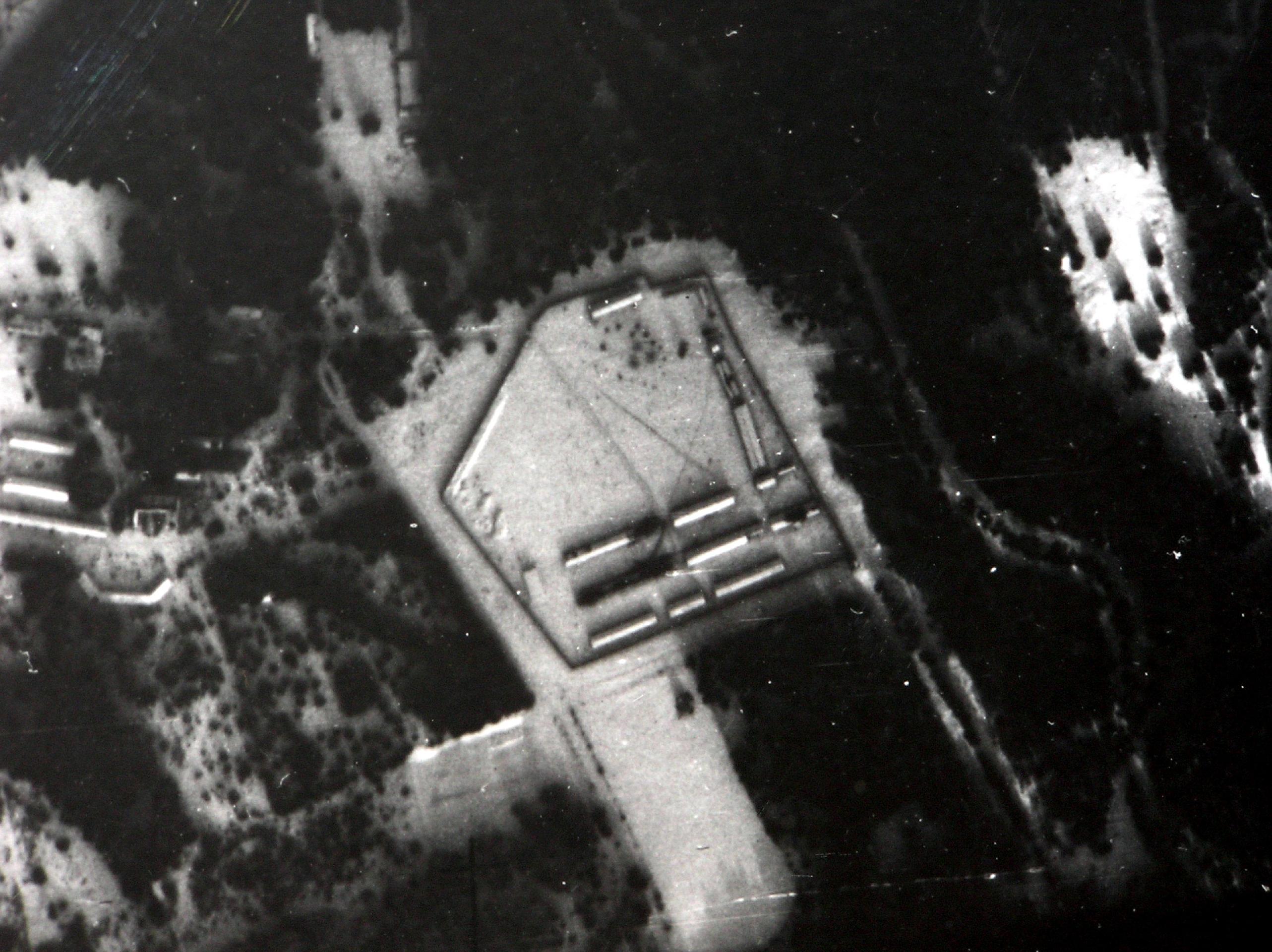
In 1924, the esoteric society »International Theosophical Association« opened a summer camp just south of the community of Ommen. In May 1940, German troops invaded the Netherlands, and the new occupying forces dissolved the organisation and confiscated its premises. In 1941, the camp area was expanded by the general commissariat as a »penal camp«, and in June 1942, the first prisoners were admitted. Camp »Erika« was under civil administration, and the guards were Dutch. The prisoners were for the most part criminals and »economic delinquents« - people who had supposedly violated the economic regulations of the occupying regime. The camp quickly became overcrowded. Many of the inmates were deported to Germany for forced labour deployment. The conditions at the came were quite like similar to those at a concentration camp; the guards were infamous for their brutality.
In May 1943, the penal camp was closed and the camp was reopened as a »labour deployment camp«. It was used to intern students who had refused to sign a »declaration of loyalty« towards the occupying regime. »Asocials« and »labour evaders« were also incarcerated, the latter referring to men who refused to be deployed as labourers in Germany. The conditions at the camp were slightly better during the second phase of its existence. Most of the prisoners were eventually deported for labour deployment in Germany. In September 1944, the German Order Police took over the camp, which was finally shut down on April 5, 1945.
Victims
Between June 1942 and May 1943, about 3,000 prisoners passed through the camp. Between 170 and 200 inmates died during this period, either on site or in concentration camps in Germany. Between 3,000 and 4,000 prisoners were interned at the camp during the second phase of the camp's existence; 12 of them died at the camp.
When the Germans invaded the Kingdom of the Netherlands in May 1940 there were around 120,000 Jews living in the country, 75,000 of whom were in Amsterdam. An SS-led civil administration quickly began to implement anti-Jewish measures and organised acts of violence. A »Central Office for Jewish Emigration« was established by the SS in Amsterdam by the end of March 1941. On June 22 the following year Adolf Eichmann (1906–1962), head of the department for Jewish affairs in the SS Reich Security Main Office, informed the Foreign Office in Berlin that an agreement had been concluded with the German Reich Railways (Reichsbahn), one of the provisions of which was the deportation of 40,000 Jews from the Netherlands. These Jews were firstly detained in the Westerbork transit camp, where lists of names for deportation were produced. The first trains left here for Eastern Europe in the middle of July 1942. There were repeated raids to get hold of the Jews earmarked for deportation. By September 1944 around one hundred deportation transports had left Westerbork for the Auschwitz and Sobibor extermination camps, the Theresienstadt ghetto or the Bergen-Belsen concentration camp. The SS deported over 100,000 people; mainly Jews but also Roma. Jews with Dutch nationality were also deported to their deaths from France and Belgium. The total number of Dutch Jews murdered between May 1940 and the end of 1944 lies at around 102,000, or 75 percent of the pre-war Jewish population of the country. Over 110,000 Jewish civilians also died during the war and occupation.
There are countless monuments, museums, memorial sites, plaques and small sites of memory related to the Second World War in the Netherlands, along with research institutes and archives. The 22 metre high »Nationaal Monument op de Dam« (National Monument on Dam Square) was inaugurated in Amsterdam as early as 1947. Dedicated to all Dutch »victims of the Second World War«, the monument’s current design dates from 1956. The Anne Frank House was opened in 1960. There are national sites of memory at the former National Socialist concentration or transit camps. For example, a memorial site was established in Westerbork in 1983 comprising the historic grounds, a national monument and a modern museum. In 1987, the »Joods Historisch Museum« (Jewish Historical Museum) was inaugurated in the Great Synagogue in Amsterdam. This museum also charts the persecution and murder of the Jews. In 2021, the Durch Holocaust Memorial of Names was inaugurated in Amsterdam that lists the names of 102.000 murdered Jews and Sinti and Roma on its walls.
After the war, the Dutch culture of memory was characterised above all by its emphasis on the resistance against the German occupation. From the 1980s, increasing attention was paid to the question of how the majority of the population adapted themselves to the occupation, as opposed to those who consciously collaborated. A further feature of Dutch memory is its focus on the present. This approach is especially clear in memorials to the persecuted Sinti and Roma as well as in one of the best known monuments in the world to the homosexual victims of National Socialism, located in Amsterdam.
Remembrance
Following the liberation by Canadian troops, the Allies used the premises as an internment camp for people suspected of having collaborated with the occupying regime. Up to 2,000 people were interned at the camp until is dissolution at the end of 1946. Later, the premises were converted to a camp site, and all remaining traces of the camp vanished. For many years, all that commemorated the camp was a cross which had been erected in 1946; in 1991, a memorial stone and plaque were added. On May 4, 2006, an information sign was set up. The museum of local history in Ommen has a department dedicated to researching the history of the camp.
Possibilities
Exhibition at the museum
Open
The memorial is accessible at all times. The museum is open Tuesday to Friday 10 a.m. to 5 p.m., Saturday 1 p.m. to 4.30 p.m., in July and August the museum is also open Monday 5 p.m. to 9 p.m.
In January only by appointment.