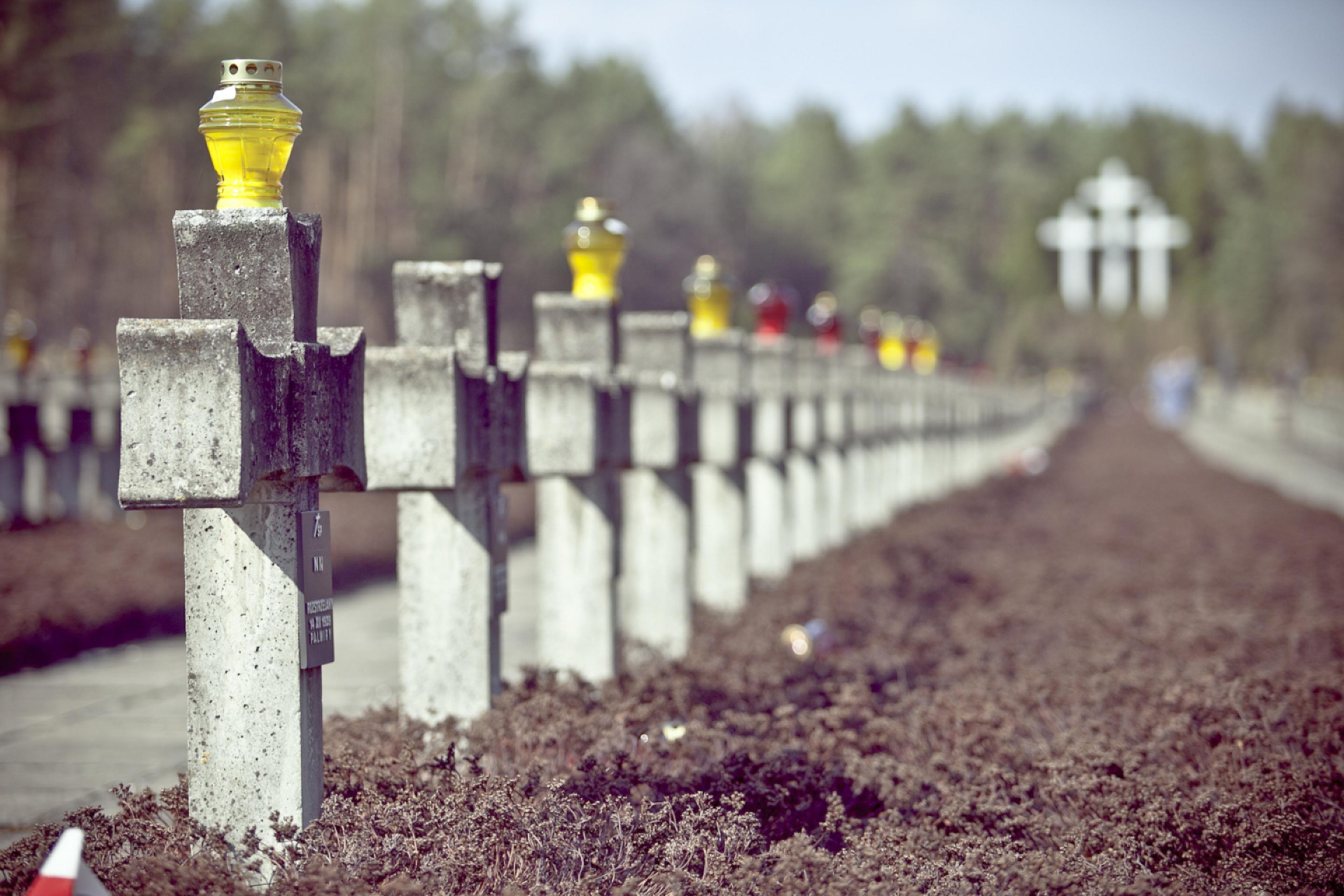
The forest of Palmiry near Warsaw is one of the most important sites of national remembrance in Poland. During the German occupation almost 2,000 members of the educated Polish elites were murdered here.
History
The German Wehrmacht captured the Polish capital Warsaw on September 28, 1939. Poland was militarily defeated and divided between Nazi Germany and the Soviet Union. To choke off any Polish resistance both occupying forces soon began to persecute members of the Polish elites and to murder them in large numbers.
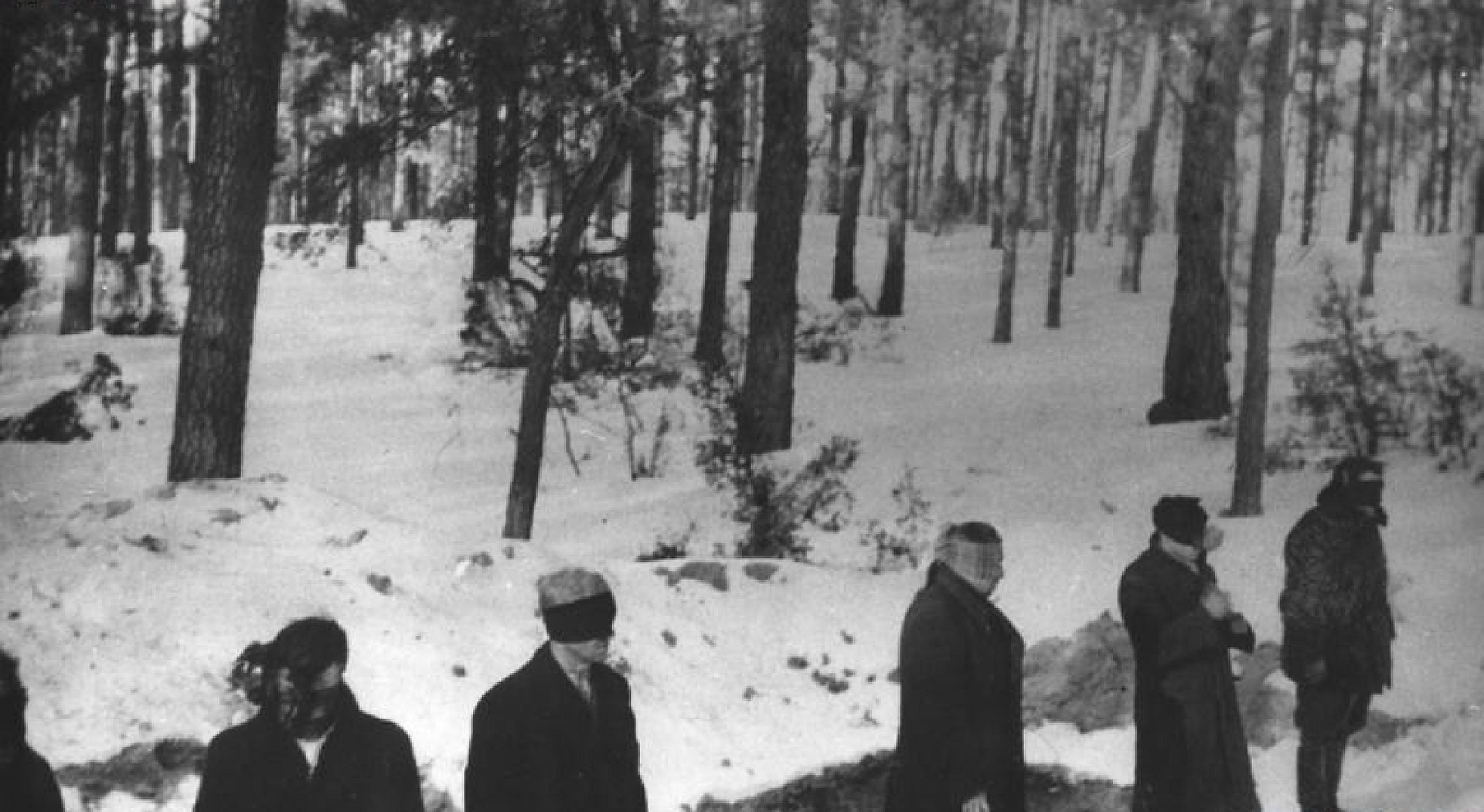
One of the best known sites of these murders became a piece of woodlands near the village of Palmiry, about 20 kilometres north west of Warsaw. Prior there had been an ammunition dump of the Polish Army which was blown up during the hostilities. German security forces (Gestapo, SS, SD, Sicherheitspolizei) used the resulting clearance for executions from December 1939 to July 1941 in at least 20 cases. Most of the victims were members of the Polish elites: Politicians, intellectuals, artists and clergy, most of whom were held captive in the Gestapo's main prison, the infamous Pawiak prison. The victims were brought to Palmiry by lorry, shot at pits dug out shortly beforehand and buried. The largest mass shootings were conducted by German security forces in the course of the so called AB-Aktion (»Außerordentliche Befriedungsaktion«, English: Extraordinary Operation of Pacification). On June 20 and 21 alone 358 prisoners from the Pawiak prison were shot in Palmiry, among them 82 women.
The murder operations in Palmiry stopped in July 1941 – Palmiry could no longer be kept secret as a place of mass shootings. Polish underground organisations had even managed to secretly photograph executions.
Victims
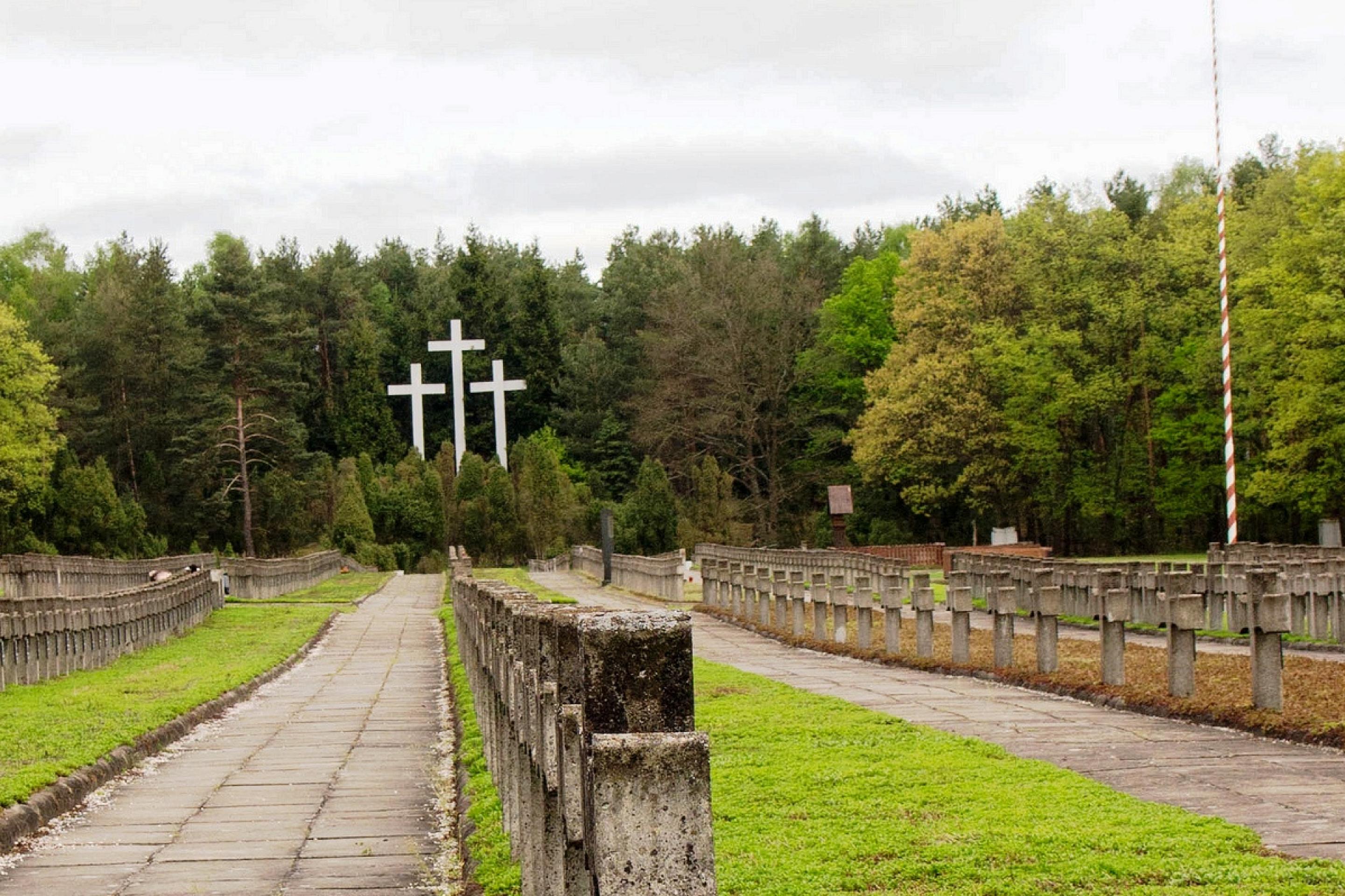
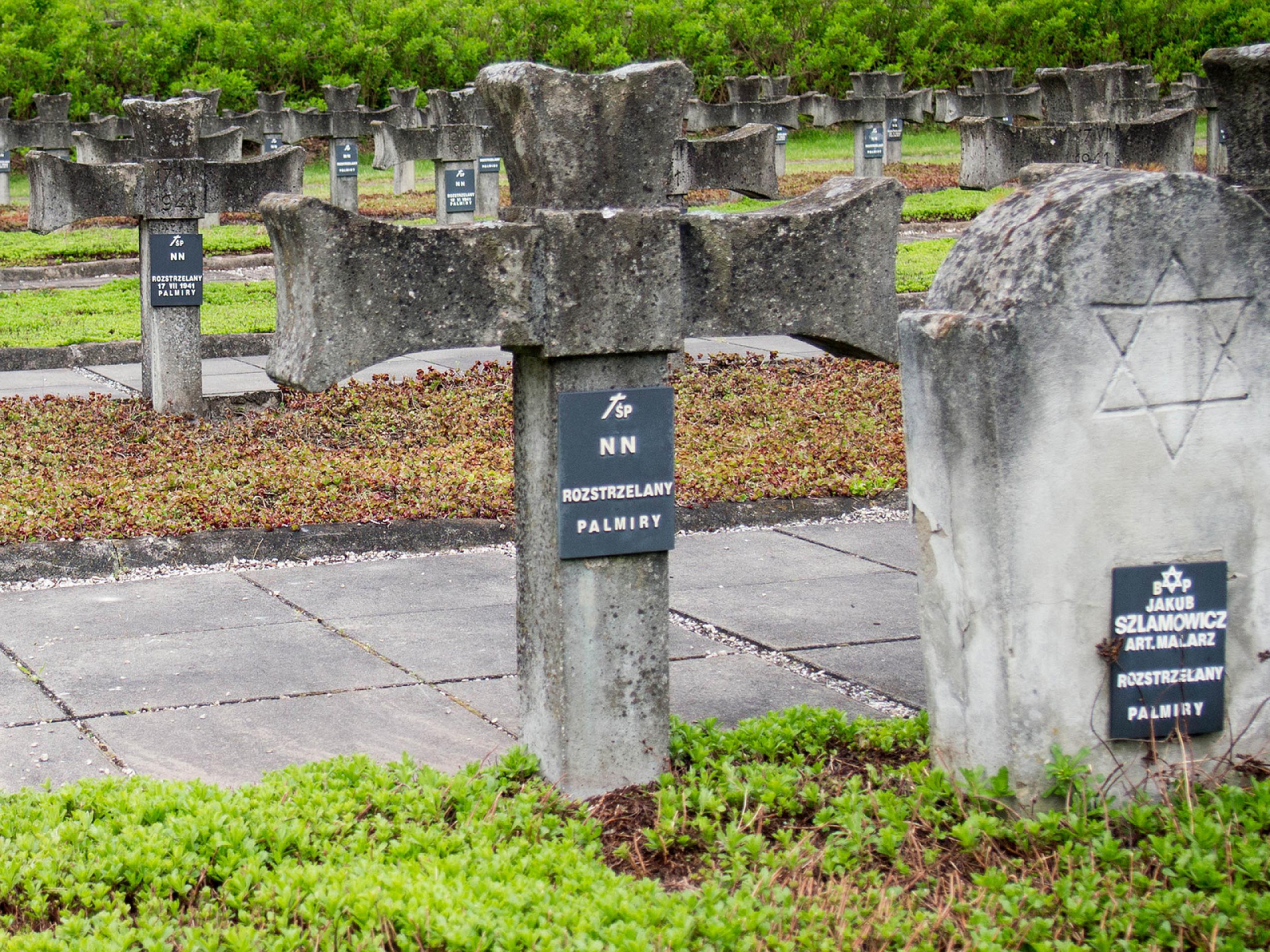
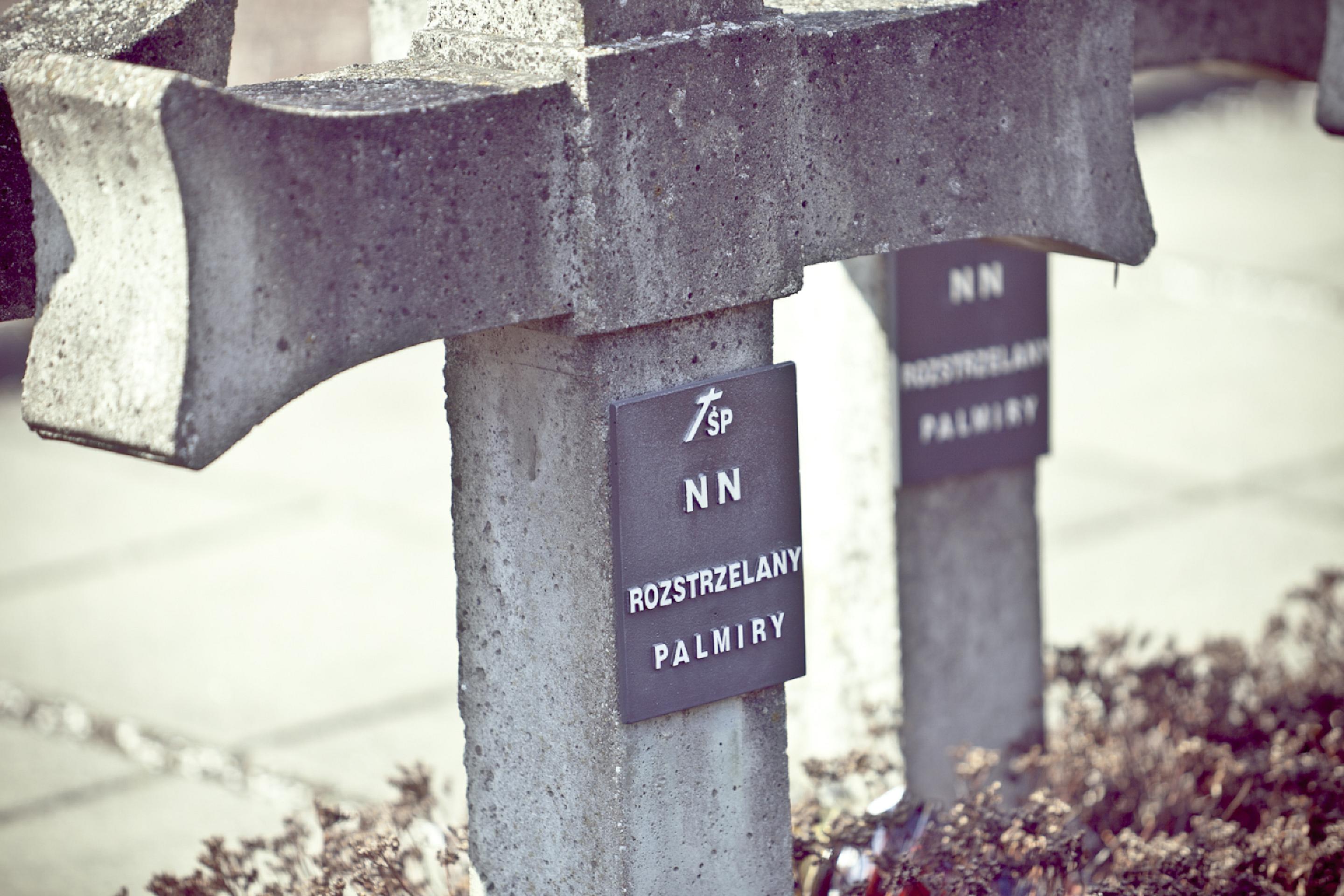
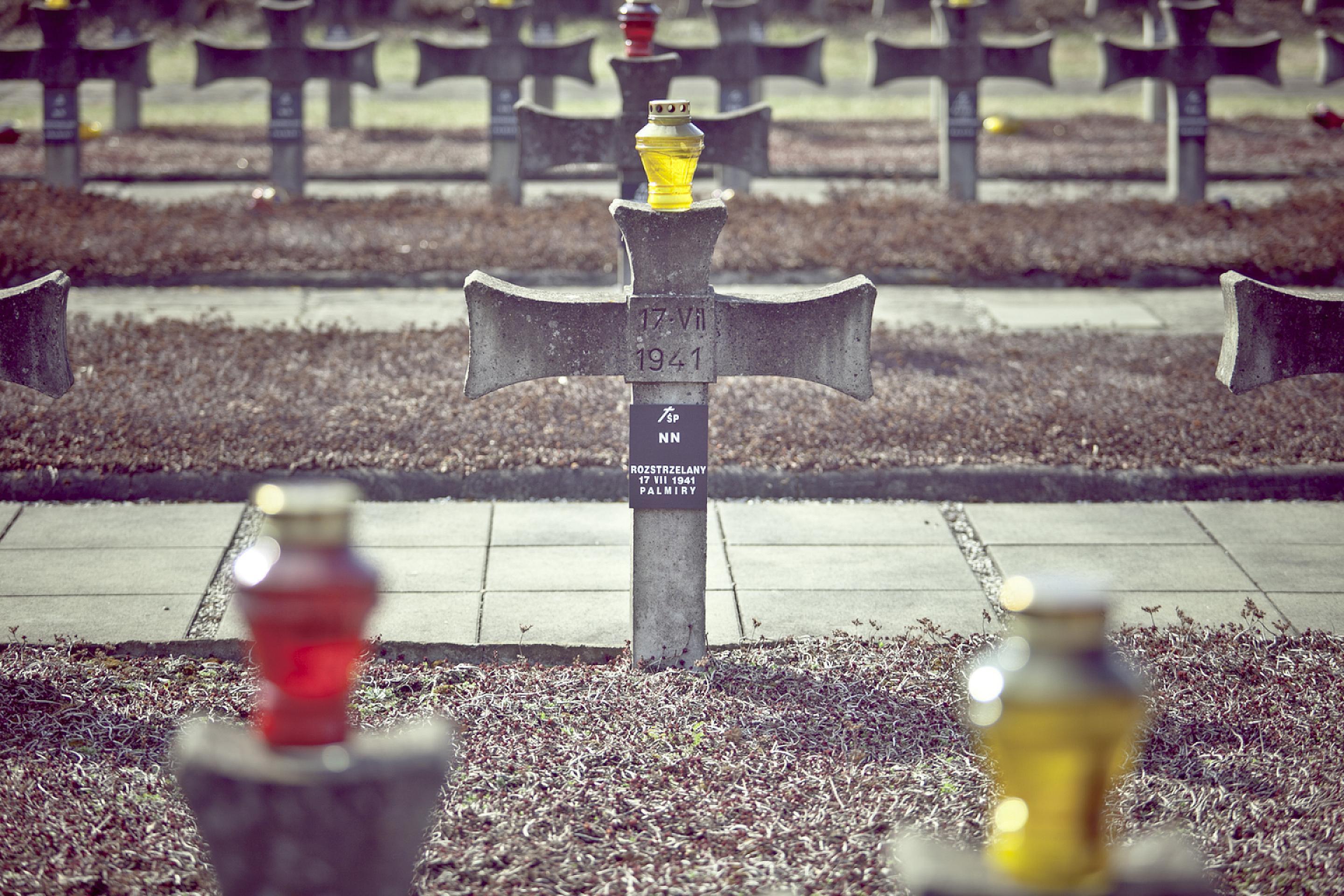
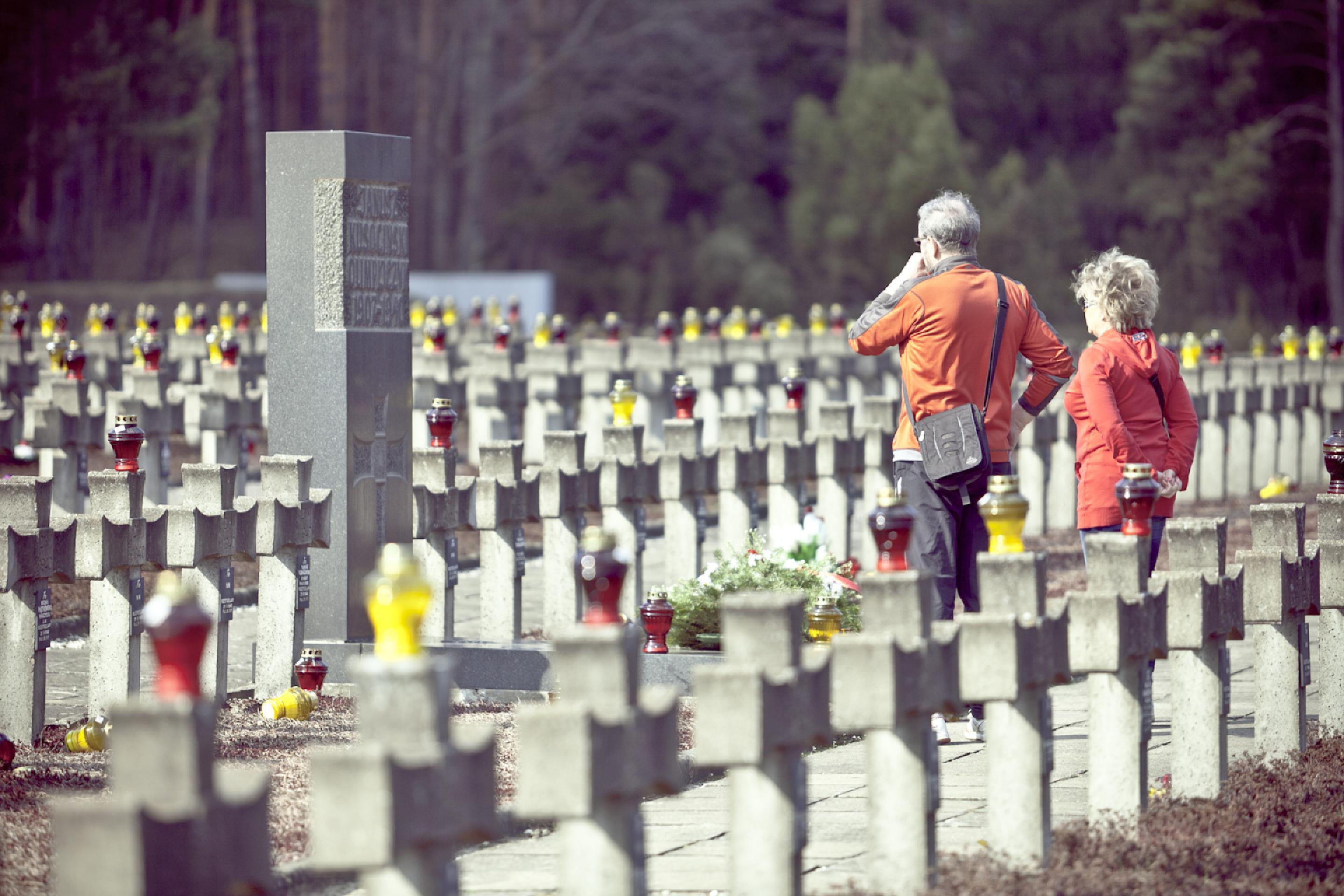
On the cemetery of Palmiry 2,252 Poles are buried, murdered during the German occupation on various acts of terrorism. About 1,800 were shot at Palmiry itself. The other victims were shot at other places, their mortal remains were brought to the cemetery after the war.
Among the murdered victims of Palmiry were numerous prominent Poles, e.g. politicians, journalists, military, university professors, clergy and athletes. There were many Jews among the victims. The exact number of victims is not known, it is even possible that there are more mass graves in the forest that have not been discovered yet.
The Second World War began in September 1939 with the invasion of Poland and the occupation of the west of the country by German troops and the east of the country by the Red Army. Persecution and terror directly followed the invasion in both parts of the country. German units massacred members of the intelligentsia, Jewish and non-Jewish civilians as well as hospital patients.
At the end of 1939 the German administration established ghettos where the Jewish population was forced to live in cramped and horrendous conditions. Following the invasion of the Soviet Union in 1941, eastern Poland also fell under German control. SS Einsatzgruppen started to systematically murder Jewish men, later also women and children. In autumn 1941, local German authorities in the former west of the country began to prepare for the mass murder of Jewish ghetto prisoners using poison gas. By 1945, some three million Polish Jews had been murdered in the extermination camps at Chelmno, Belzec, Treblinka, Sobibor, Majdanek or Auschwitz, starved to death in the ghettos or shot dead. In 1943 the Jews living in the Warsaw ghetto staged an uprising, which was brutally crushed by the SS.
Polish soldiers fought with the Allies on all fronts during the Second World War. Polish partisan groups, including the patriotic »Armia Krajowa« (Home Army), formed the largest resistance movement in occupied Europe. August 1, 1944 saw the start of the Warsaw Uprising, the most extensive civilian campaign against the Germans in occupied Europe. It failed also because the Red Army, already standing on the opposite side of the Vistula River, chose not to intervene. It is estimated that up to 250,000 people lost their lives in the uprising. A total of around three million non-Jewish Poles met a violent death during the German occupation.
Once the Red Army had arrived on (East) Polish soil in January 1944, the troops of the Armia Krajowa were stripped of their weapons by the Soviet secret service and the officers were either shot or deported. The millions of deaths during the occupation, the permanent Soviet annexation of eastern Poland, the incorporation of former eastern German territories and the ensuing population transfers all left a traumatic political and social legacy in Poland.
Remembrance of the murder of European Jews in German extermination camps was initially marginalised in the Polish culture of memory. Although Auschwitz soon became an international symbol of the Holocaust, in Poland it was viewed for decades above all as a »site of Polish martyrdom«. However, the start of the 21st century brought about changes in this respect, due in part to the fierce debates over the Jedwabne massacre in eastern Poland. The massacre of around 340 Jews on July 10, 1941 was originally attributed to the »Gestapo and Hitler police« but had in fact been carried out by Polish »neighbours« without orders from the Germans. Debates in Poland and abroad on Polish perpetration resulted in the Polish President Aleksander Kwaśniewski (*1954) issuing an apology to the victims in 2001. There were increasing calls from experts, such as those from Poland’s Institute for National Remembrance, for the country to confront the most difficult chapters in its history, which also include the anti-Jewish pogroms in 1946-47 and state anti-semitism in communist Poland during the post-war period.
The Polish invests extensively in memorial culture, including grand projects with international ambition. The Warsaw Rising Museum was opened already in 2004. The POLIN Museum of the History of Polish Jews was opened in 2013 on the territory of the former Warsaw Ghetto, a new museum dedicated specifically to the Warsaw Ghetto will follow suit in 2024. Since 2017, there is a major Museum of the Second World War in Gdańsk. Since the turn of the millennium, the sites of the former German extermination camps have also been converted into modern memorial sites. An ever-growing preoccupation with Poland’s Jewish and multicultural heritage can be observed in the field of culture as well.
Remembrance
The mass shootings in the forest of Palmiry did not remain unnoticed by the Polish residents. Transports of prisoners and sounds of shotings from the forest were recorded. Already during the war Palmiry thus became a unique symbol for the crimes of the German occupiers in Poland.
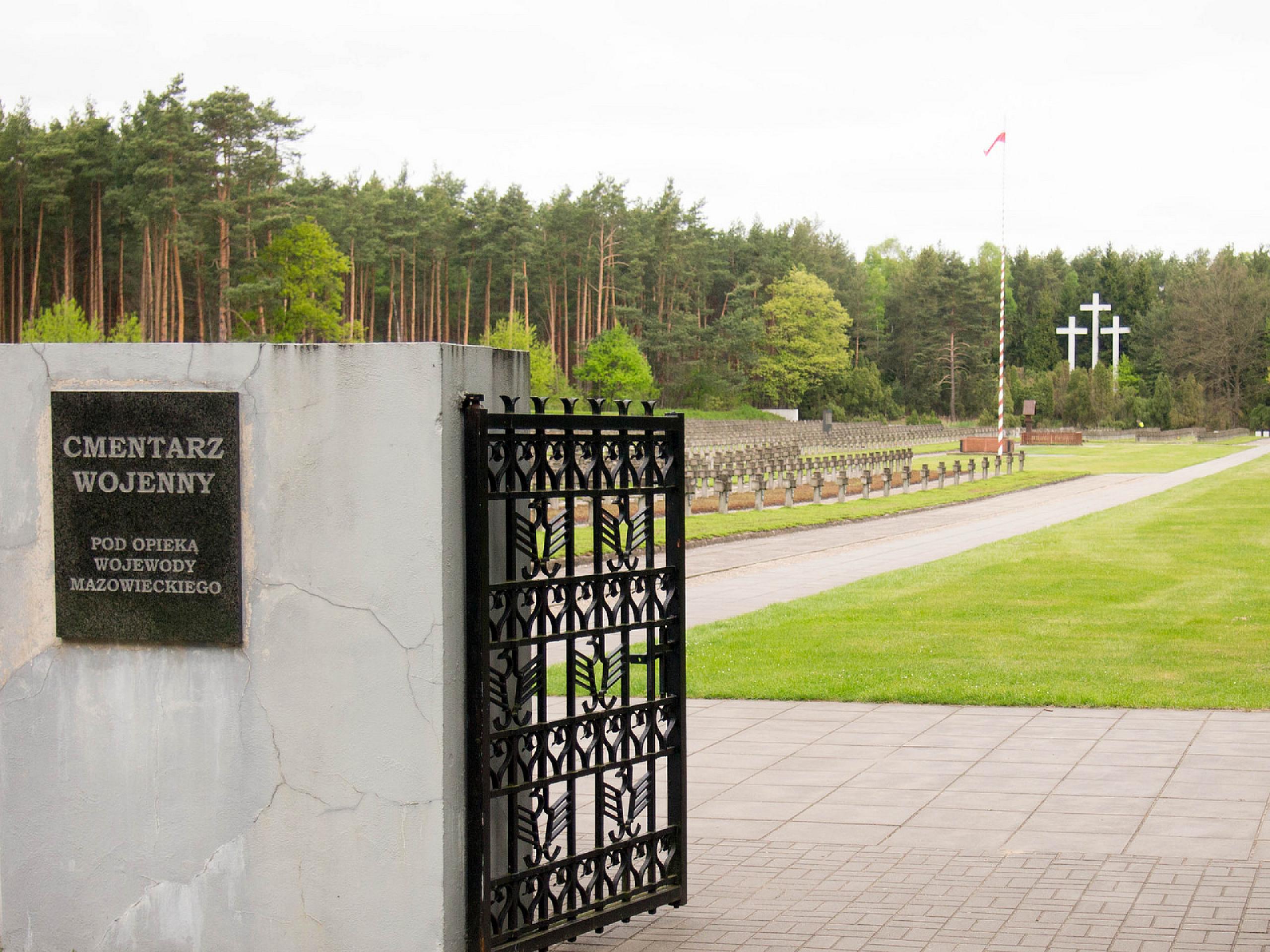
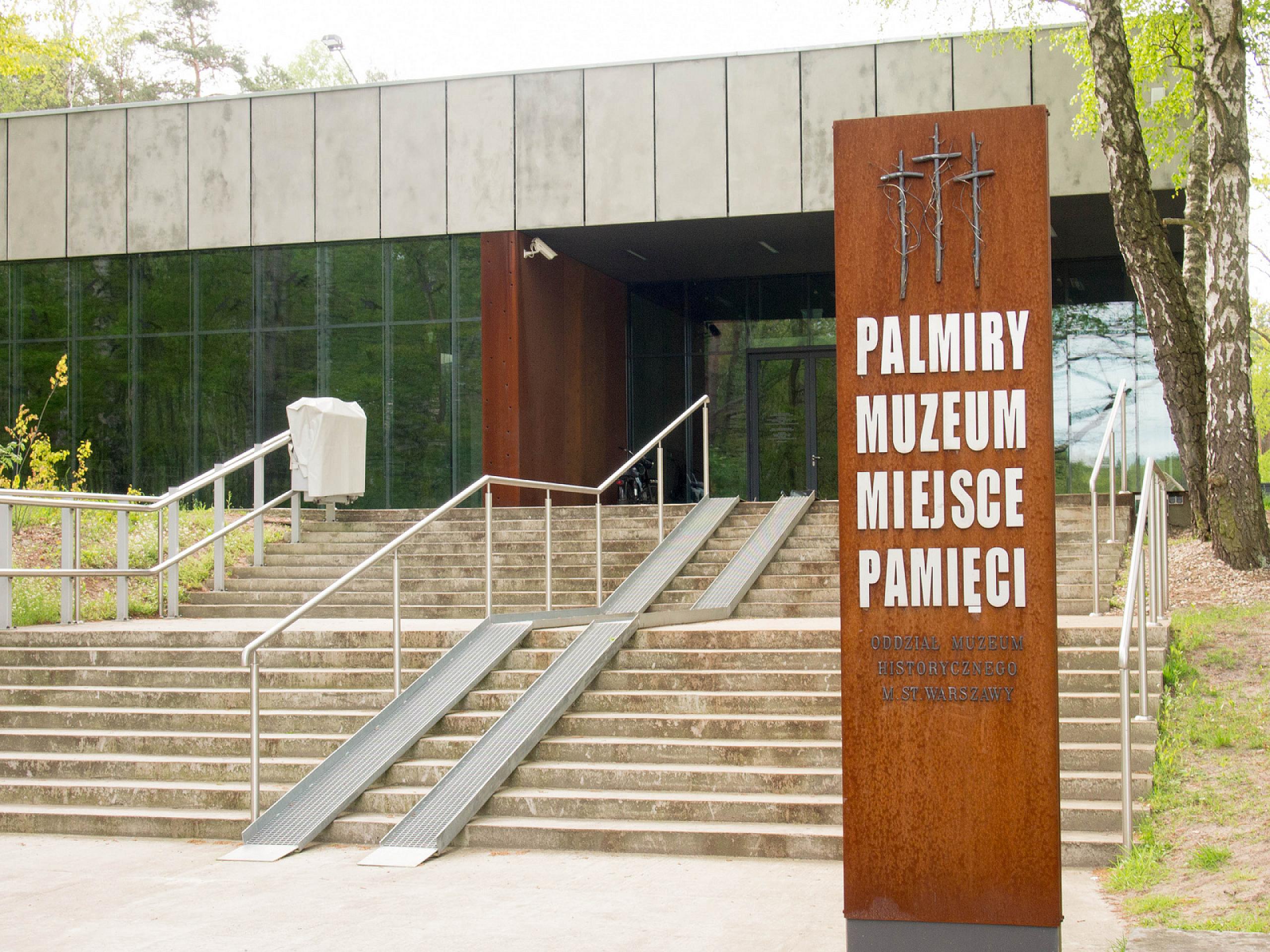
The Polish Red Cross opened the mass graves in 1945/46. In many cases it was possible to identify the victims since they were usually allowed to keep personal belongings prior to being shot. After the exhumation the place was converted into a cemetery, a memorial opened in 1948. In 1973 the »Museum of Struggle and Martyrdom« (Polish: Museum Walki i Męczeństwa) was opened. In March 211 a new museum, the »Museum Palmiry – Place of Memory« (Polish: Muzeum – Mejsce Pamieci Palmiry« was opened to replace the old one which was no longer deemed up-to-date. It is run by the Historical Museum of Warsaw.
Possibilities
Polish and English tours by arrangement
Open
May to October Tuesday to Sunday 10 a.m. to 6 p.m., November to April Tuesday to Sunday 9 a.m. to 4 p.m. Last admission 30 minutes before closing