Deportation Memorial on Putlitzbrücke and Moabit Freight Station Memorial
Deportationsmahnmal Putlitzbrücke und Gedenkort Güterbahnhof Moabit
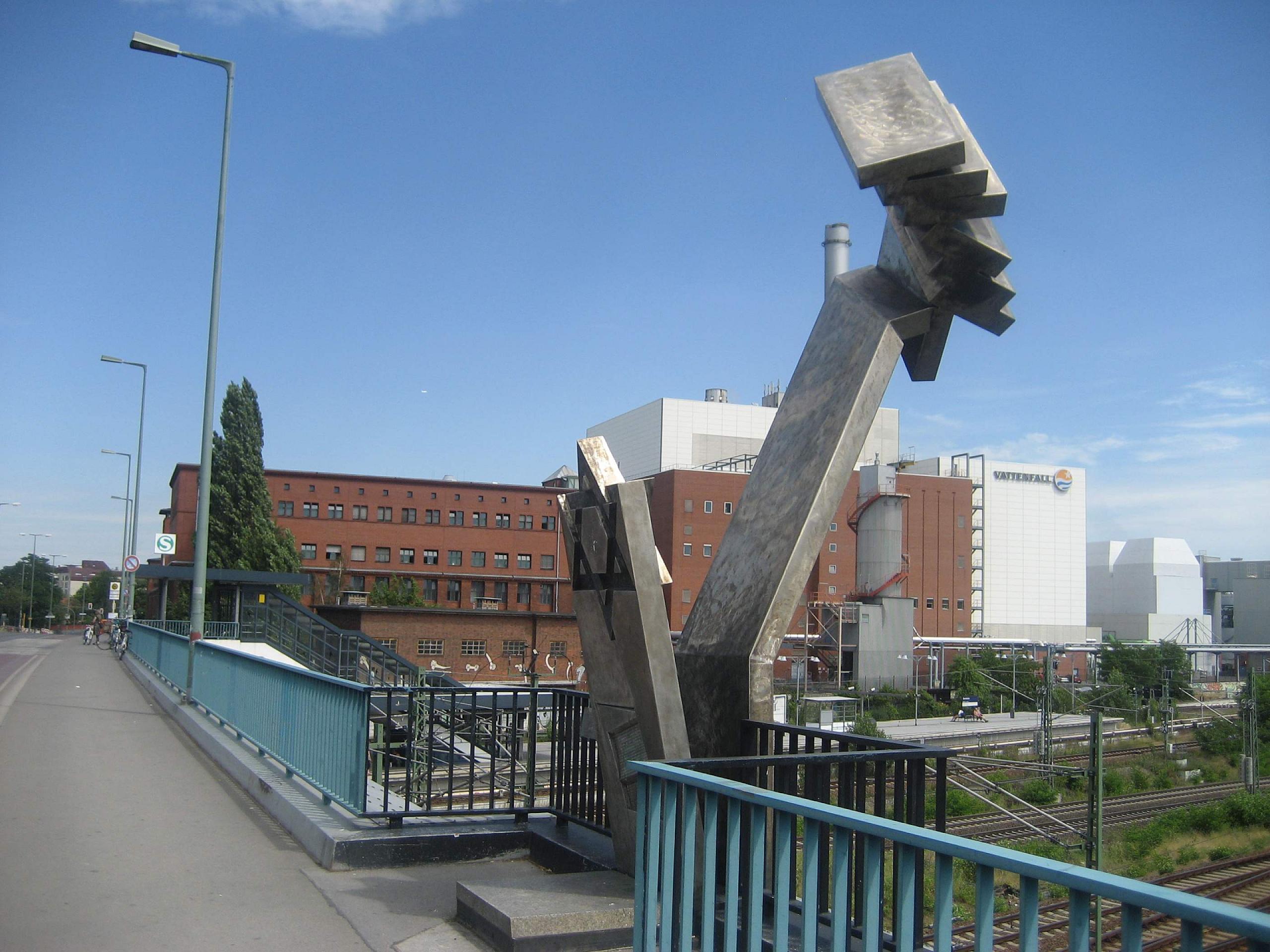
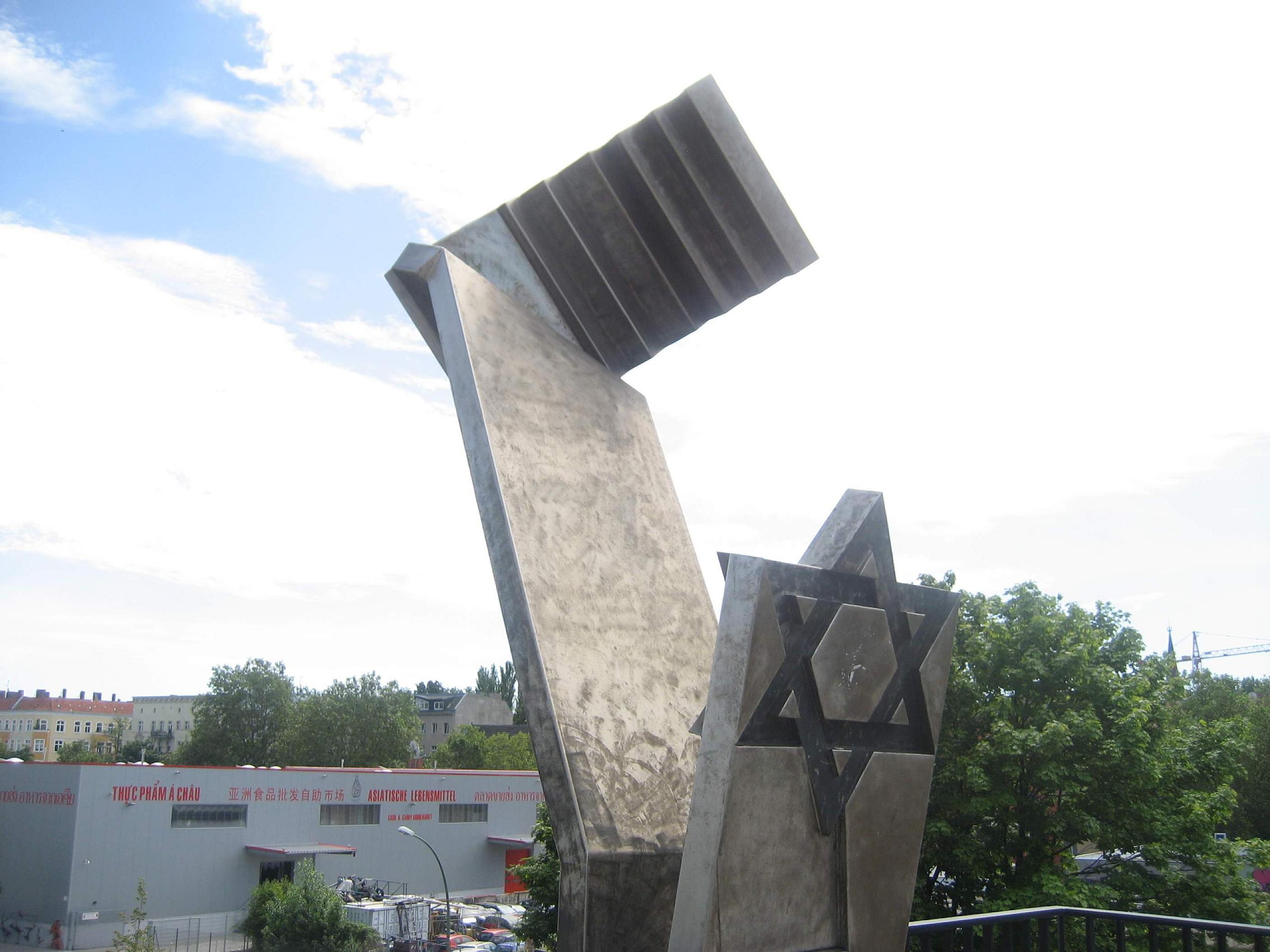
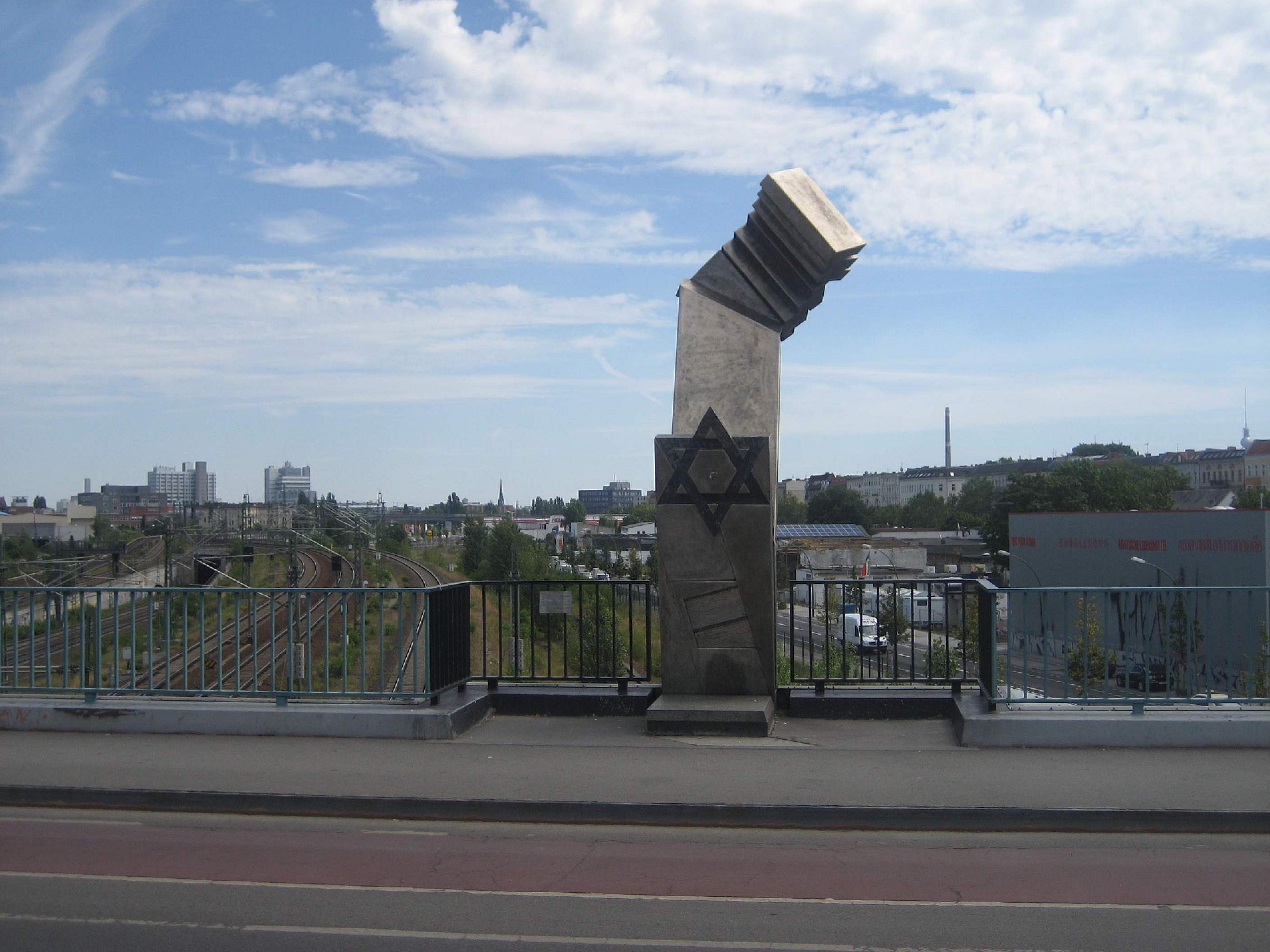
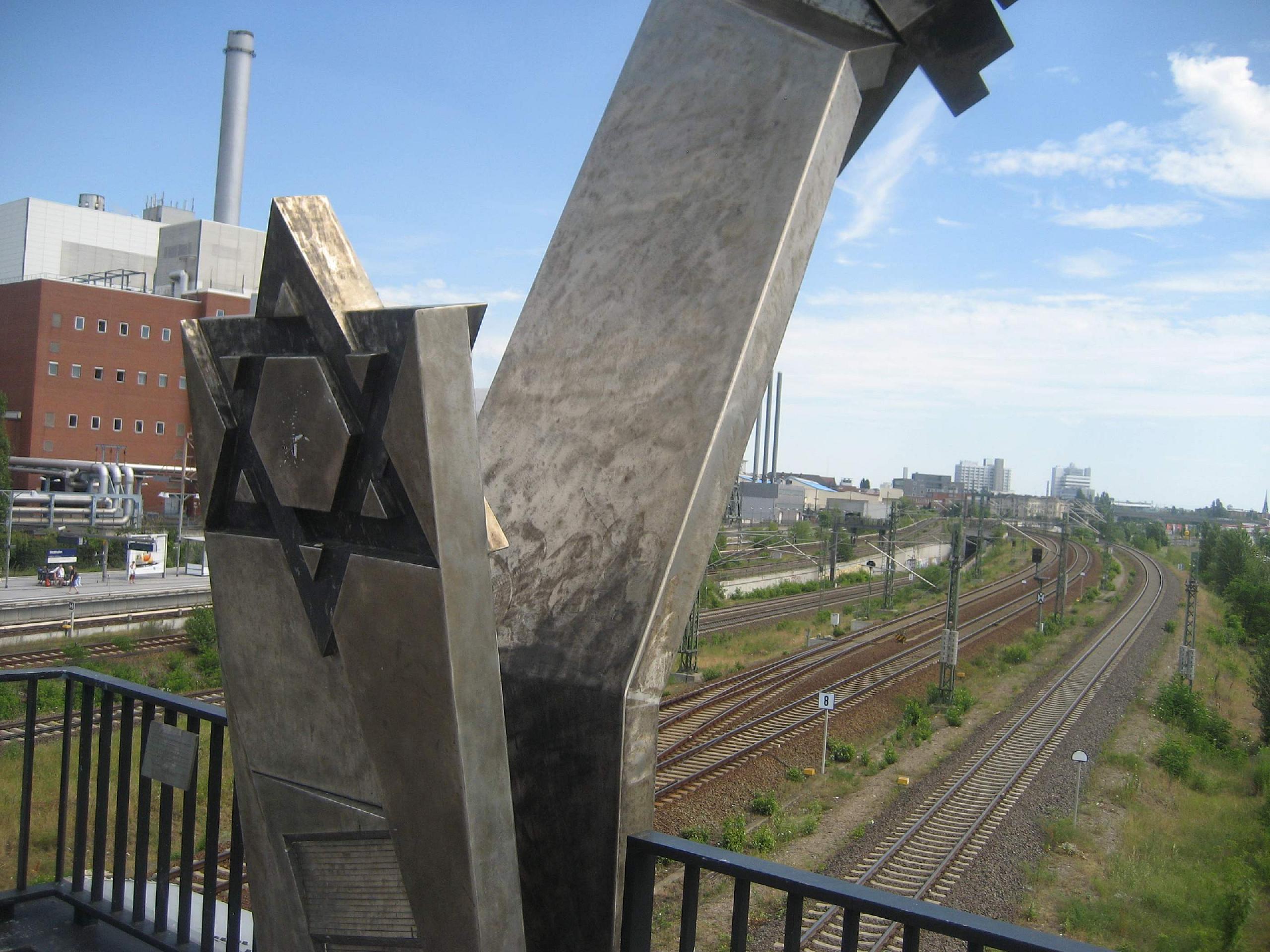
Since 1987, a memorial on the Putlitzbrücke (Putlitz bridge), which connects the districts of Moabit and Wedding, has commemorated the 30,000 Berlin Jews who were deported from the nearby Moabit freight depot.
History
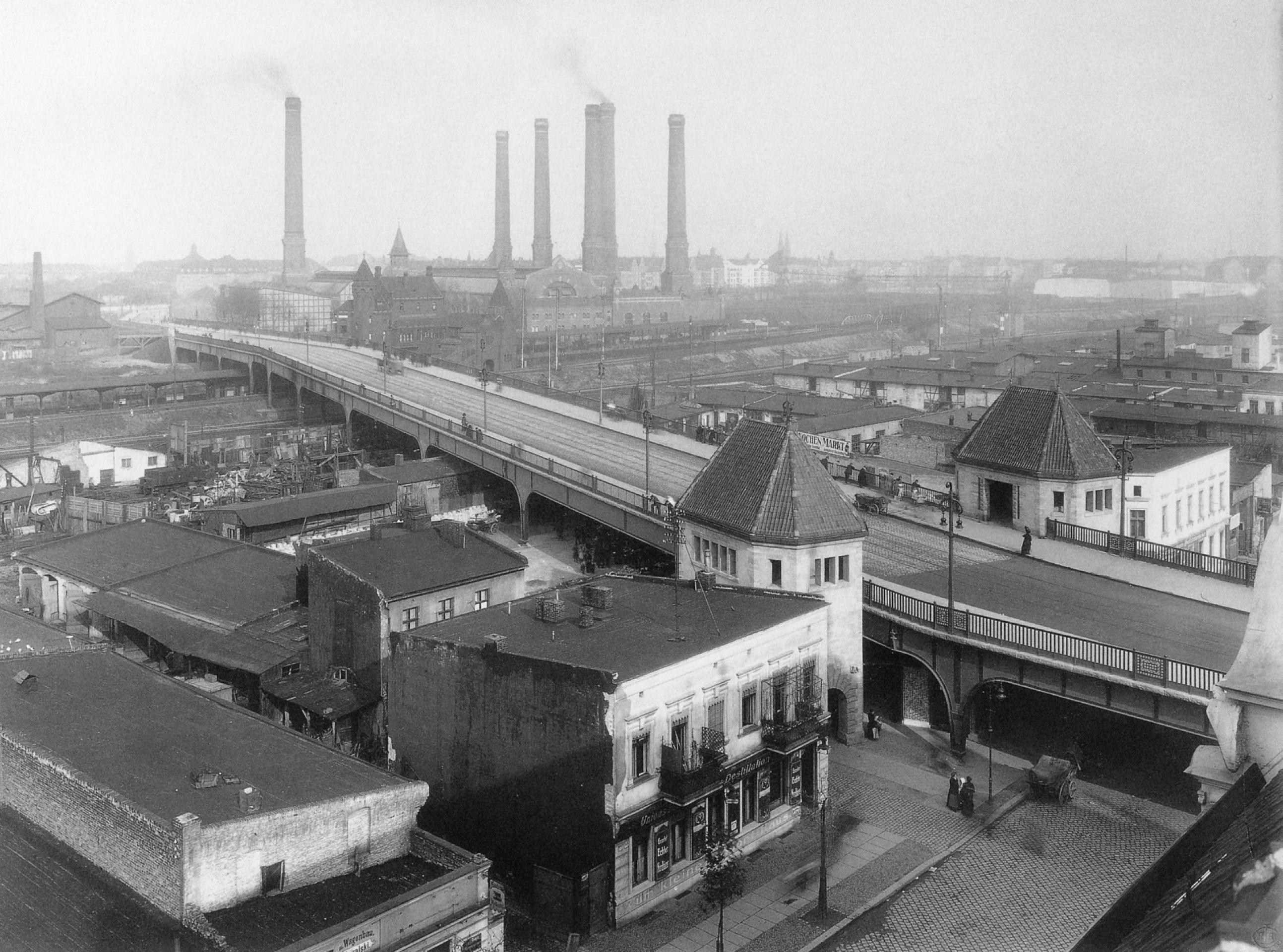
In autumn 1941, the Gestapo began deporting Jews from Berlin to ghettos and extermination sites in the occupied territories in the east. At first, the trains departed from the Grunewald train station; from 1942 on, the more centrally located train stations Anhalter Bahnhof as well as the Moabit freight depot were used. Probably from March 1942 on – at the latest from August onwards – most transports departed from Moabit. The train station was located only two kilometres from the synagogue in Levetzowstraße, where the Gestapo had set up a collection camp for Berlin Jews and deportation lists were compiled. From there, the police and SS chased the Jews to the ramp at the edge of the station, frequently beating them with truncheons and whips, and forced them to board the special trains of the German state railway. At the beginning, the trains consisted of old passenger cars, however, from 1942 on, the Reichsbahn increasingly used freight cars for the deportations.
Victims
Over 50,000 of the Jews deported from Berlin did not survive the war. Many of the transports went to the ghettos of Theresienstadt, Minsk, Riga, Kaunas (Russian: Kovno) and Łódź. From July 1942 on, many of the transports from Berlin went directly to Auschwitz-Birkenau and other extermination camps. An estimated 30,000 Berlin Jews were deported from the Moabit freight station.
Remembrance
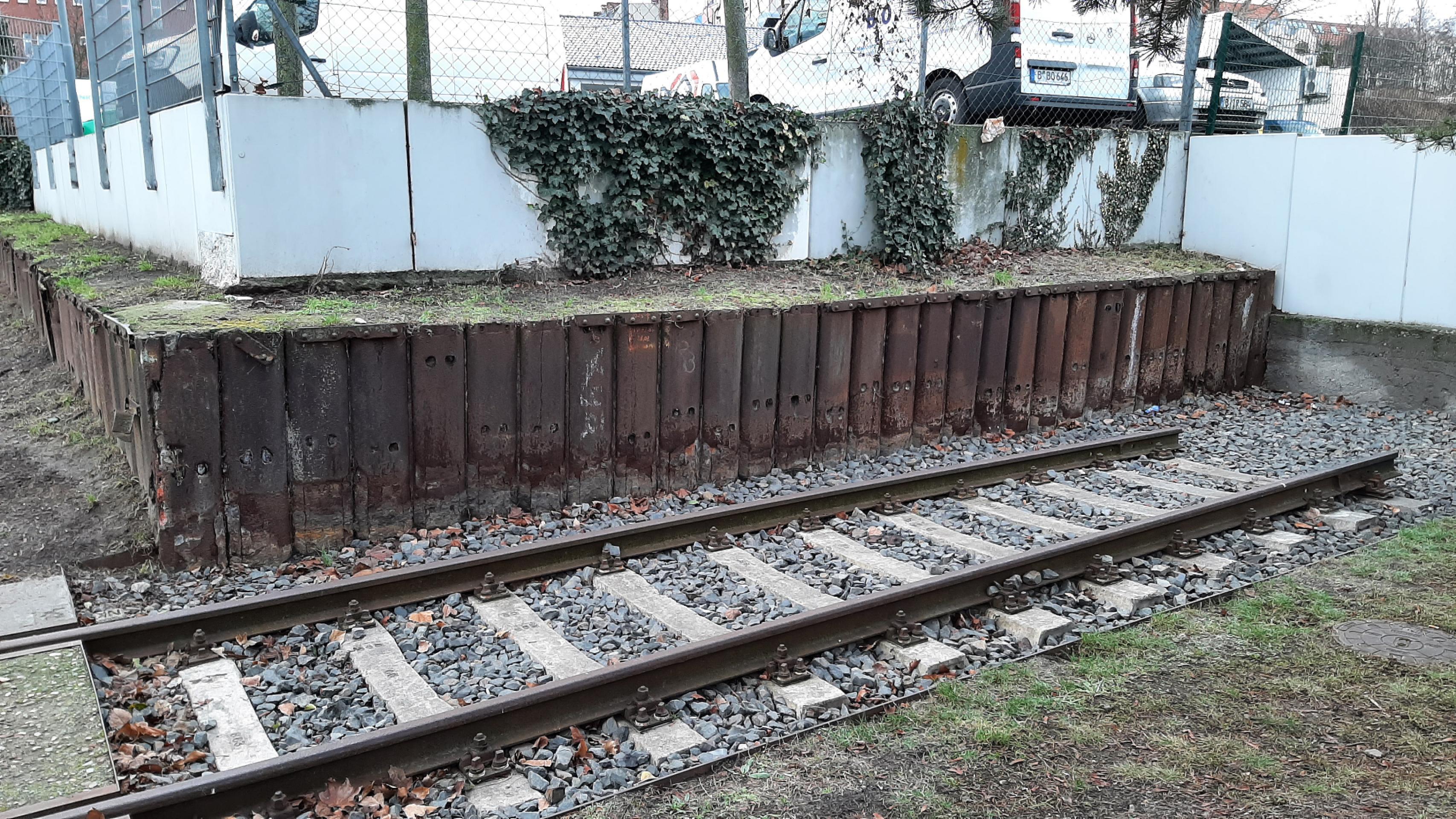
The Deportation Memorial came about on the initiative of the Senate of West Berlin. The Putlitzbrücke was chosen for the location due to the fact that the premises of the former freight depot can be overlooked from there. Parts of platform 69 can still be seen – it is from here and two other platforms that the deportation trains departed. The memorial, which was dedicated in 1987, consists of a 2,5 metre large sculpture by Volkmar Haase, the front part of which resembles a gravestone. Behind it the memorial extends upwards into a staircase-like shape. Inscribed on an additional plaque are the words: »Steps which are no longer steps – Stairs which are no longer stairs – Symbol of a journey which was no longer a journey […]«.
The memorial has been vandalised on several occasions. In 1992, it was damaged so severely that it had to be taken down and restored.
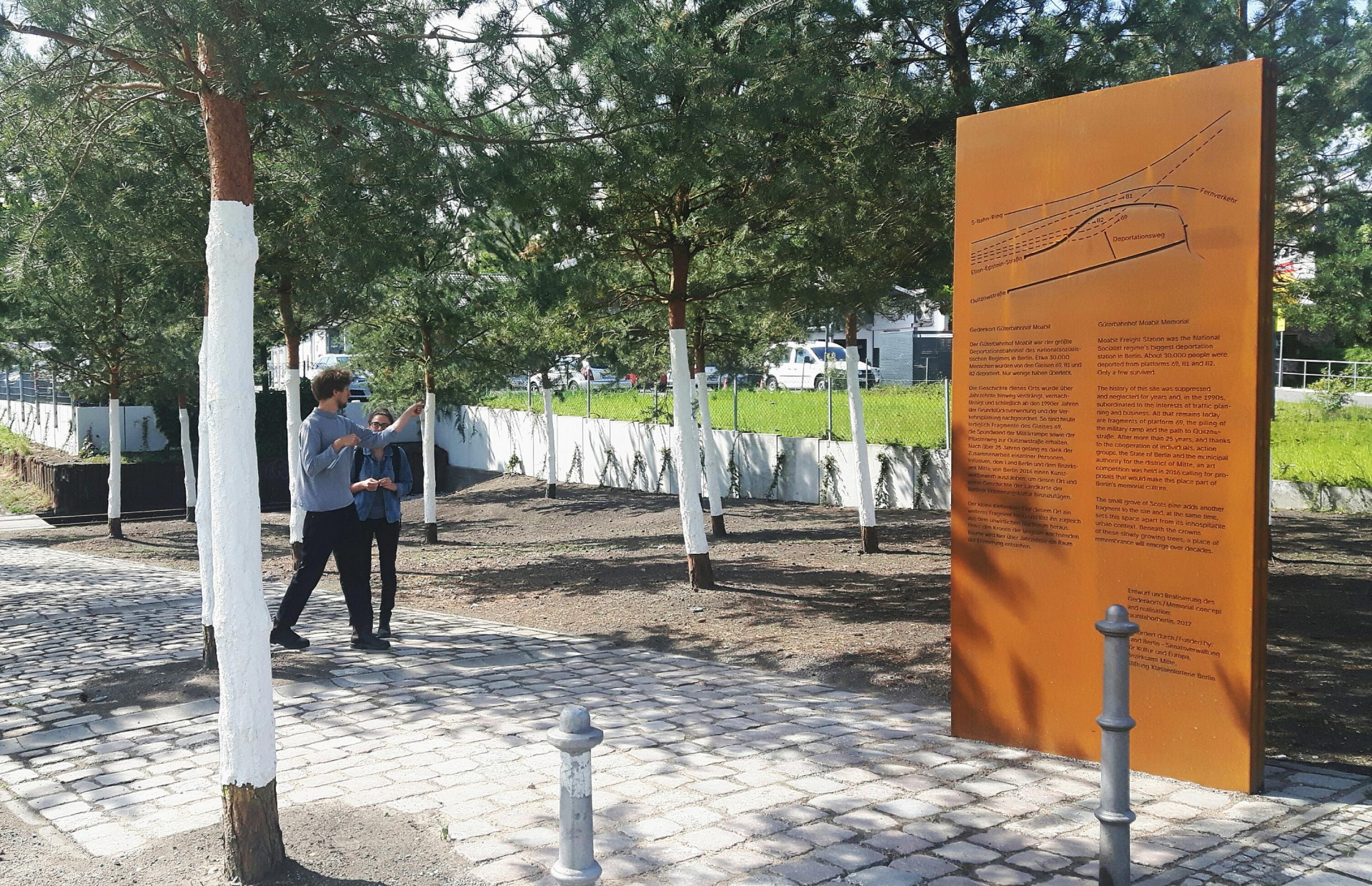
On an area between Quitzowstraße and Ellen-Epstein-Straße, near the Putlitzbrücke bridge, the state of Berlin is planning to establish a memorial site in cooperation with the Topography of Terror Foundation. Conditions on site are difficult; many historical traces have now disappeared from the city’s landscape or have been built over, and now there is a supermarket and a hardware store in the immediate vicinity. The driving force behind the efforts to create a worthy memorial site is the Gleis 69 e.V. association. In 2007, a first memorial stele was inaugurated, pointing the way to the freight station's former deportation ramp. In 2017, the memorial site was expanded with two more information stelae and a grove where several trees are to grow towards the sky. Meanwhile, the future of the remains of the deportation ramp is still not secured, and the future development of the memorial site is to be explored in a round table supervised by the Topography of Terror Foundation.
Open
Accessible at all times
Contact
info@gleis69.de
Putlitzbrücke
10559 Berlin