Dubossary Holocaust Memorial
Мемориал жертвам фашизма / Monument la mormântul comun al victimelor Holocaustului
A monument in the small Moldovan town of Dubossary (Romanian: Dubăsari), which has since the beginning of the 1990s been part of the breakaway region of Transnistria, honours the approximately 4,000 Jews from Dubossary and surrounding areas who were murdered by SS Einsatzgruppen (mobile killing units) in 1941.
History
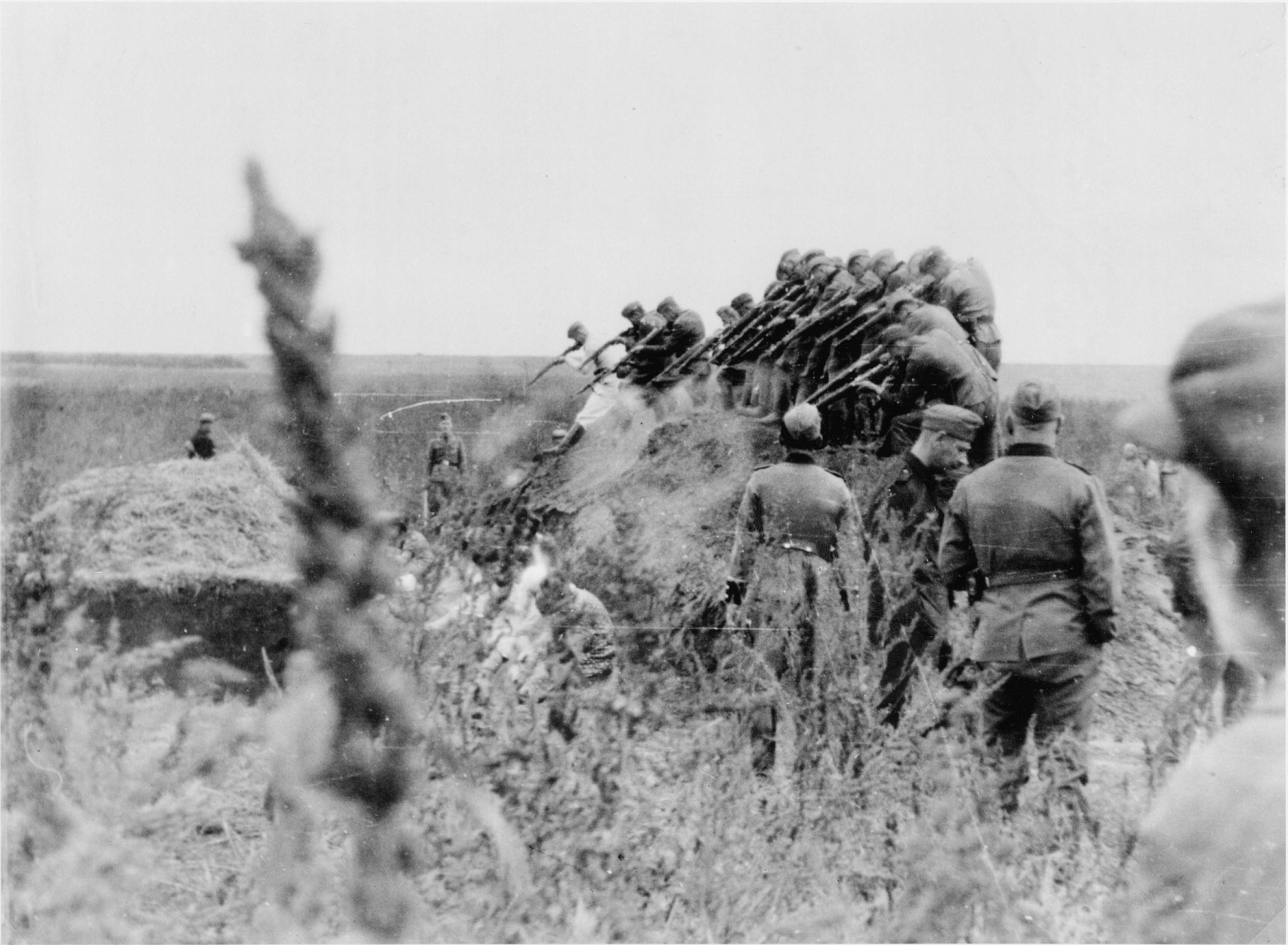
The small town of Dubossary lies beyond the river Dniester, in direct vicinity of the region of Bessarabia – a region which Romania had to cede to the Soviet Union in 1940 and which today to a large part makes up the territory of the Republic of Moldova. Jews first settled in Dubossary in the 18th century; in 1939, there were about 2,200 Jews living here. After the invasion of the Soviet Union in June 1941, German and Romanian troops occupied the city. In the summer of 1941, they were followed by SS Einsatzkommando 12b (mobile killing squad) under the command of Max Drexel. The Jews from Dubossary and vicinity had to move into a ghetto guarded by Romanian units. At the beginning of September 1941, Drexel ordered the leader of the Jewish community, Alexander Dyemenchuk to have pits dug outside the town, supposedly for the purpose of storing supplies for the winter. A week later, the command of the Einsatzgruppe issued an order for Jews to prepare for their resettlement to the area of the city of Tiraspol on September 12, 1941. In the early morning of that day, members of the mobile killing squad, Romanian constabulary and other helpers forcibly gathered about 2,500 Jews on the premises of a tobacco factory close to the prepared pits. The members of the mobile killing squad first brought the men to the pits, after having forced them to first hand over all of their valuables. The Jews had to line up on the edge of the pit, where they were shot from behind. The mobile killing squad then shot the women and the children. In total, Einsatzkommando 12b killed up to 2,500 Jews during this first operation. Two days later, the SS men shot about 1,500 Jews from the nearby towns of Okna and Kotovsk at the same pit. Shortly before moving further east, the mobile killing squad searched the area once more, killing a further 500 Jews.
Victims
About 4,000 Jews died in the shootings carried out by Einsatzkommando 12b (mobile killing squad) in September 1941. Over half of them came from Dubossary, several hundred came from nearby villages. Some of them had sought refuge in Dubossary. About 1,500 Jews came from the towns of Okna and Kotovsk. About 500 Jews from the wider region of Dubossary were murdered at the end of September 1941.
Remembrance
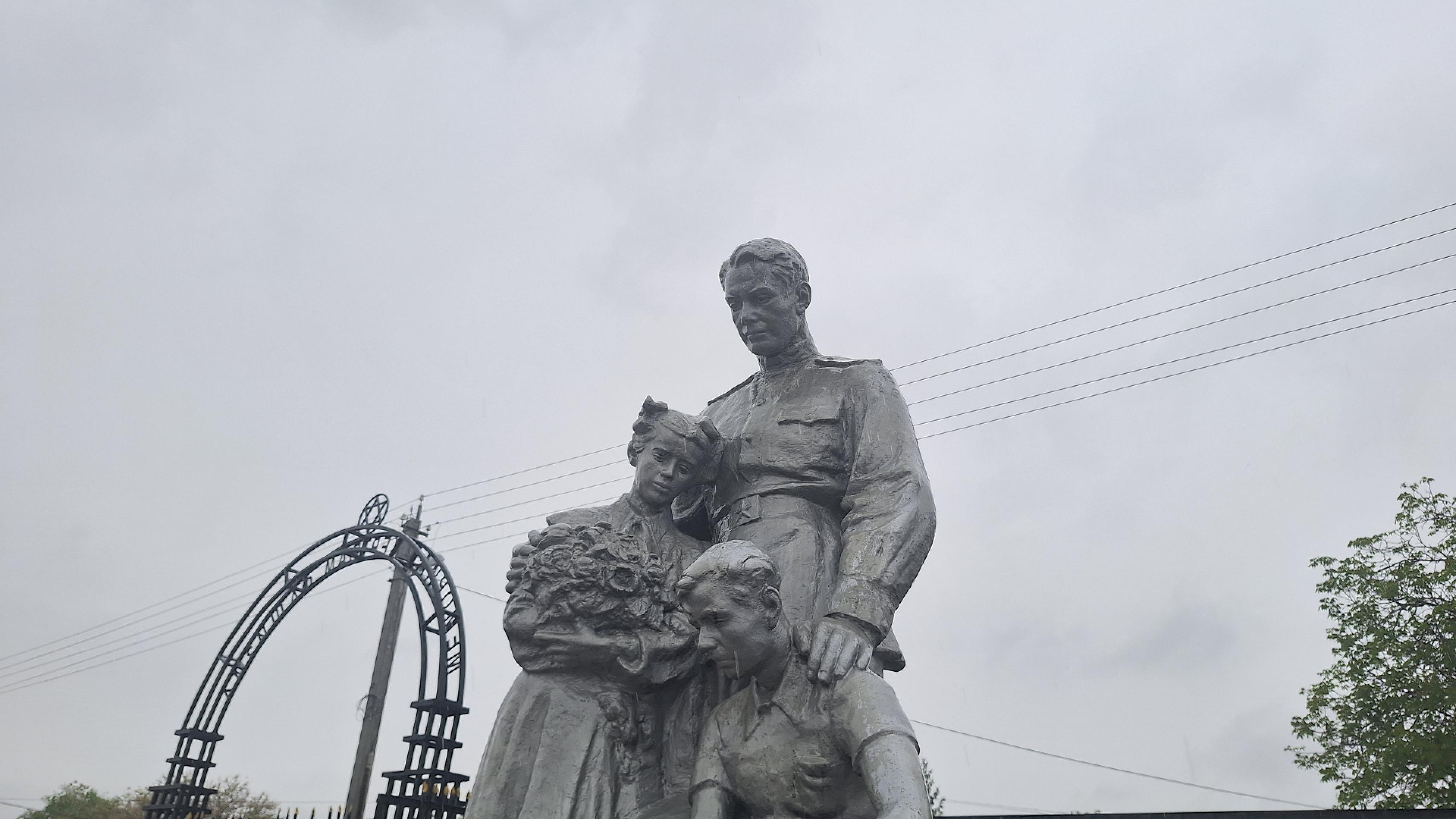
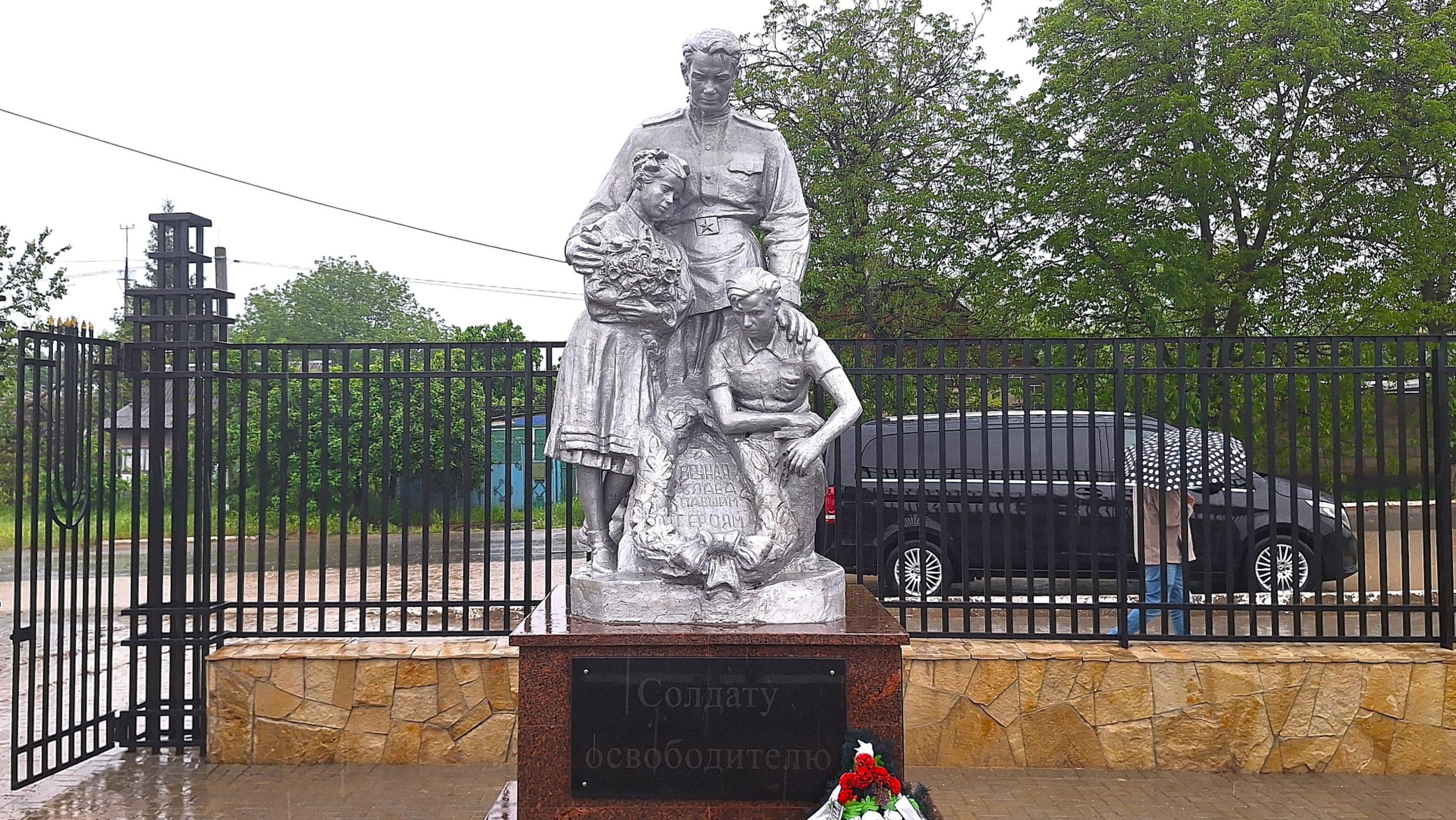
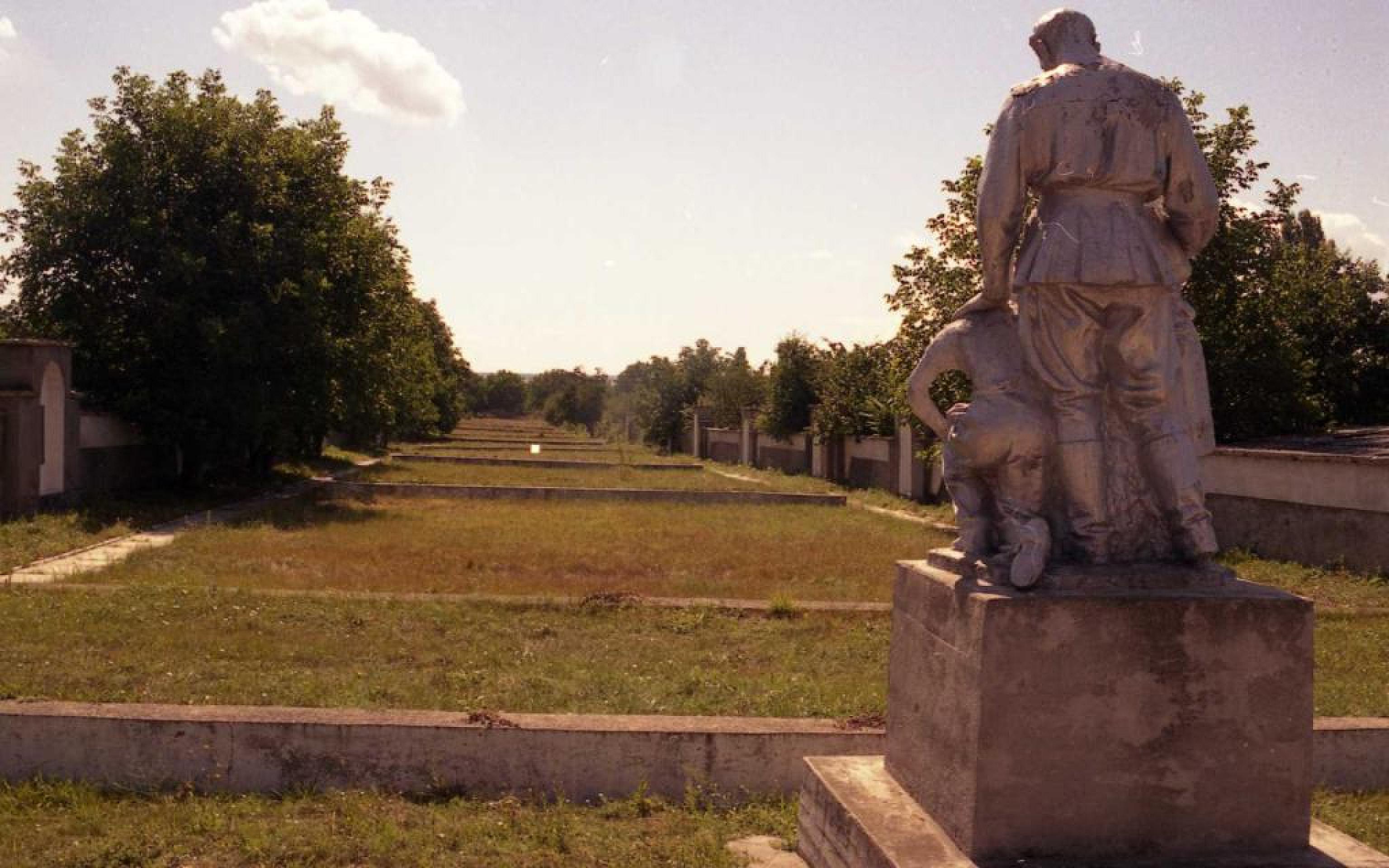
In 1949, a fenced-in memorial complex was established at the site of the 1941 executions. The eleven mass graves were put under protection. A sculpture group titled »To the Liberating Soldier« was installed at the entrance, depicting a Soviet soldier bent over two children.
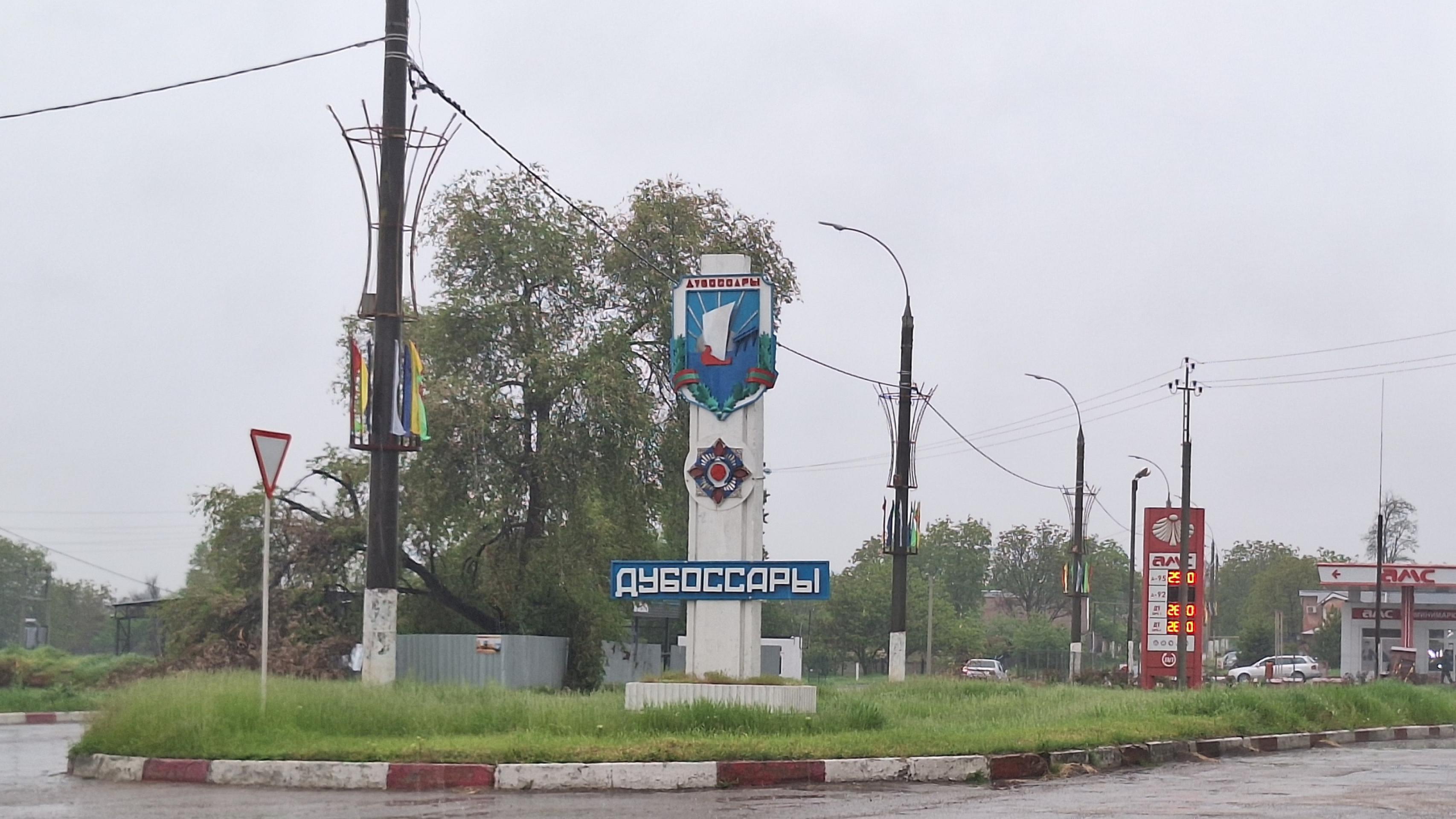
Dubossary is part of the breakaway region of Transnistria, where Russian is the predominant language and Soviet commemorative traditions continue to be observed. Here, the site is called the »Monument to the Victims of Fascism«, while in the Republic of Moldova’s register of monuments it is designated as the »Monument to the Victims of the Holocaust«.
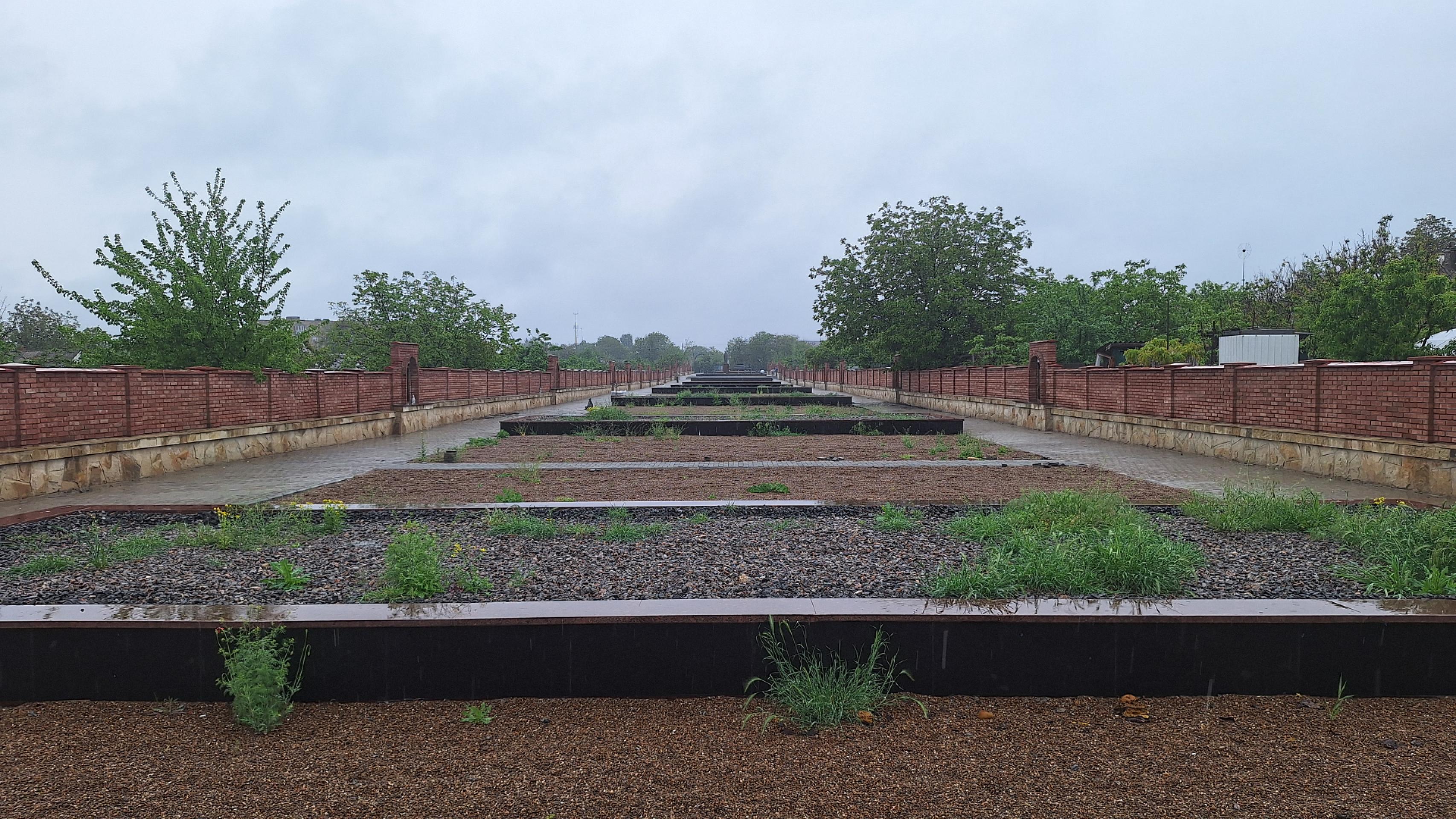
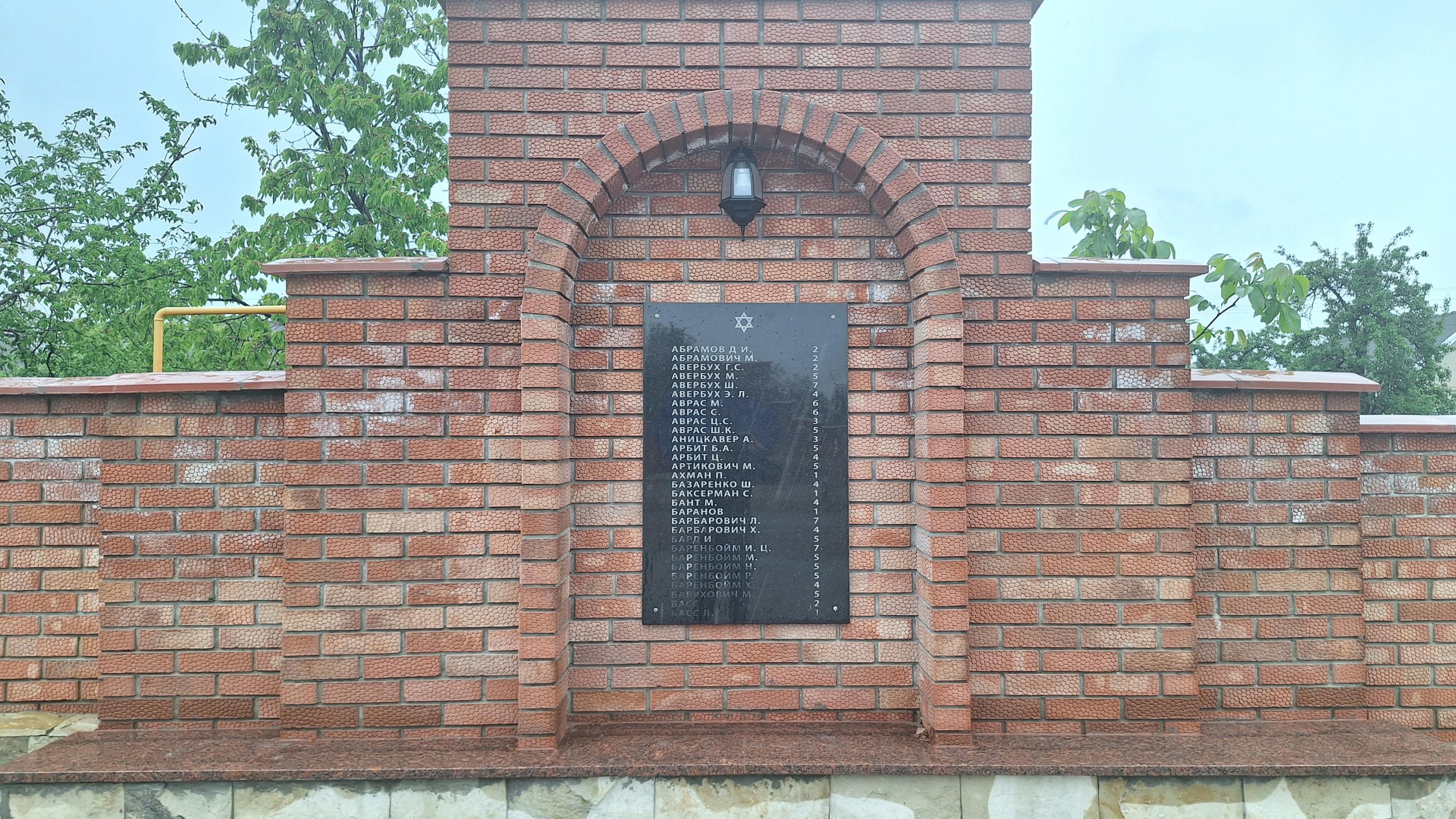
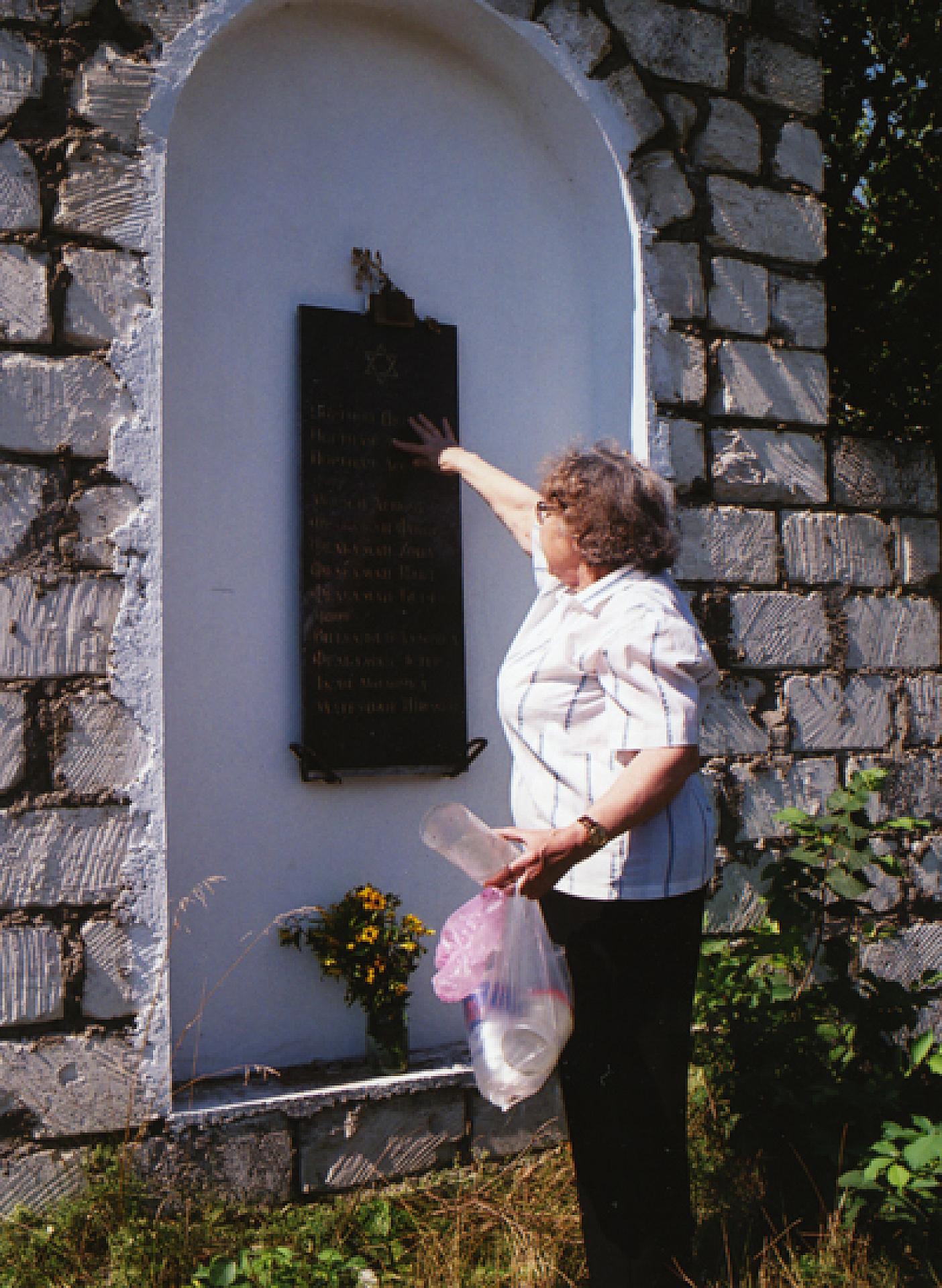
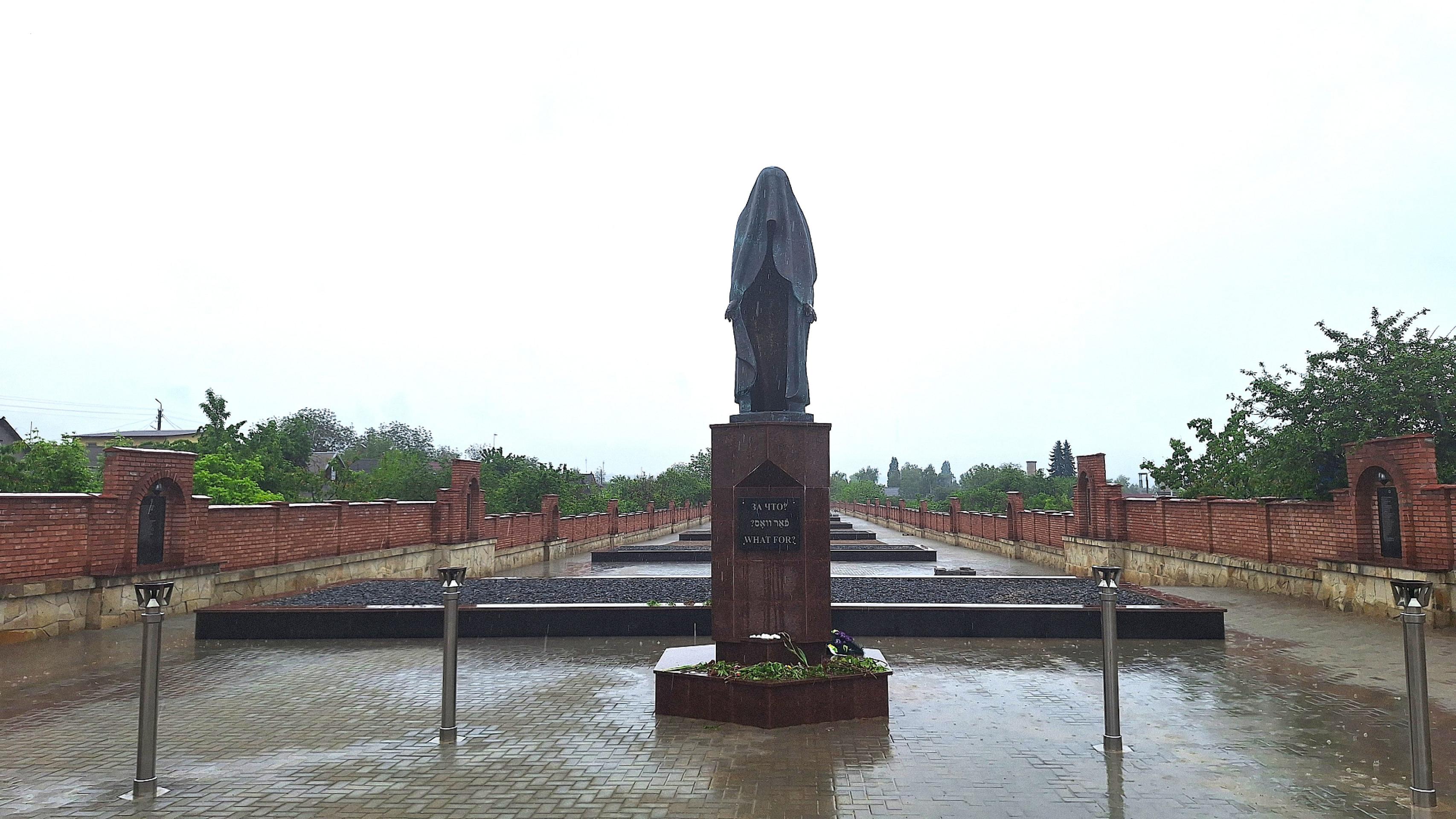
The burial site has been renovated several times, most recently in 2025. Low walls frame the mass graves where the victims of the shootings are buried. The site is nearly 300 meters long. Various commemorative and informational plaques are also embedded in the niches of a wall bordering the site. These include the names of approximately 3,000 victims from Dubossary, which the local Jewish community researched in the 1990s.
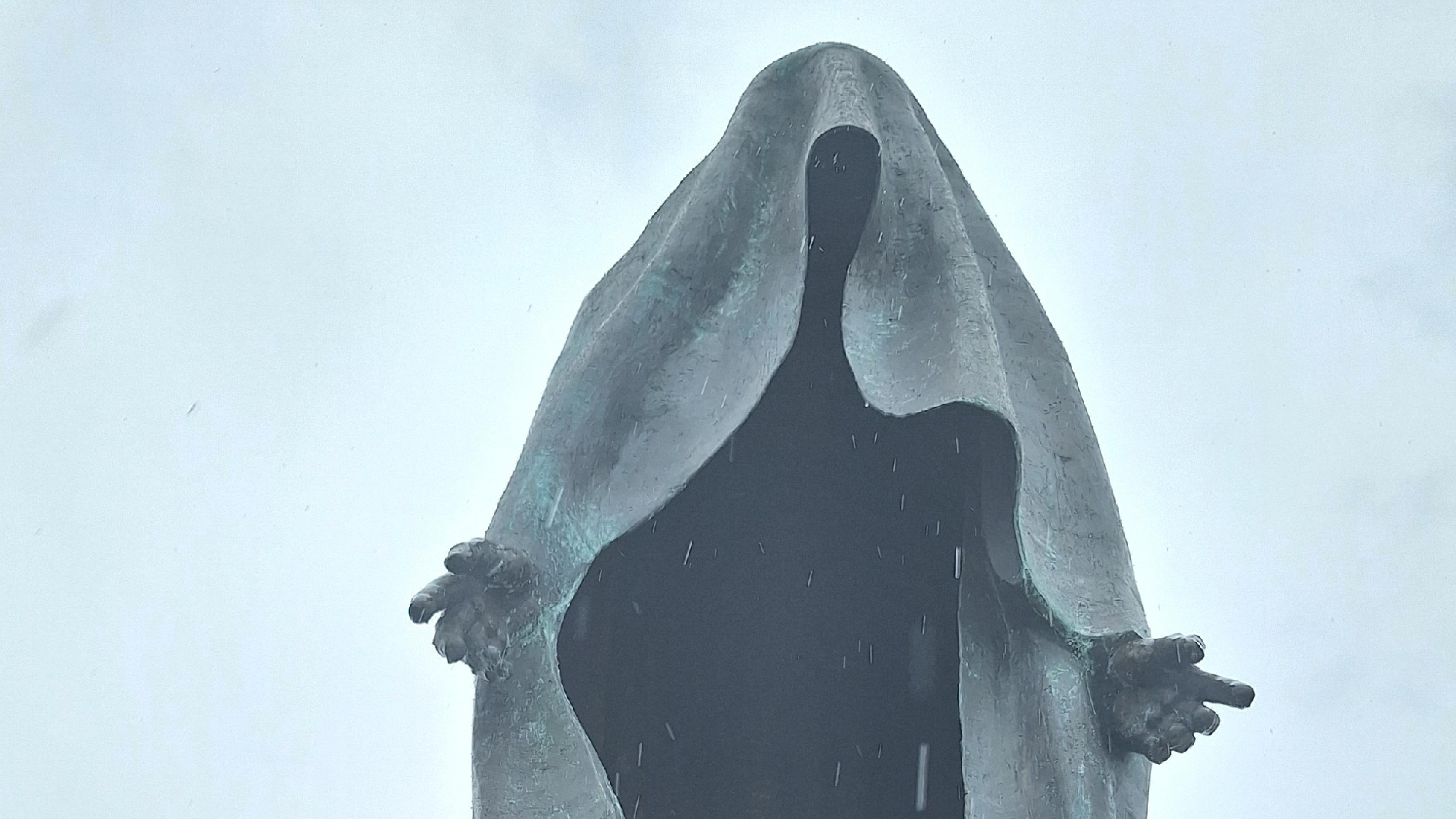
In 2017, a sculpture titled “Requiem” was unveiled on the site, across from the Soviet soldier statue. The idea for the project originated with the Soviet-Moldovan artist Lazar Dubinovsky (1910–1982) and was brought to life by Serhiy Gonenko. The 2.5-meter-tall statue depicts the silhouette of a praying and mourning Jew, but the statue is hollow inside. On its pedestal is an inscription in Russian, Yiddish, and English that reads: »What for«?
The memorial complex is the largest of its kind for Holocaust victims in the region. Commemorative events are held there regularly, both on Holocaust Remembrance Days and on May 9, which is celebrated as Victory Day in most of the Russian-speaking areas of the world.
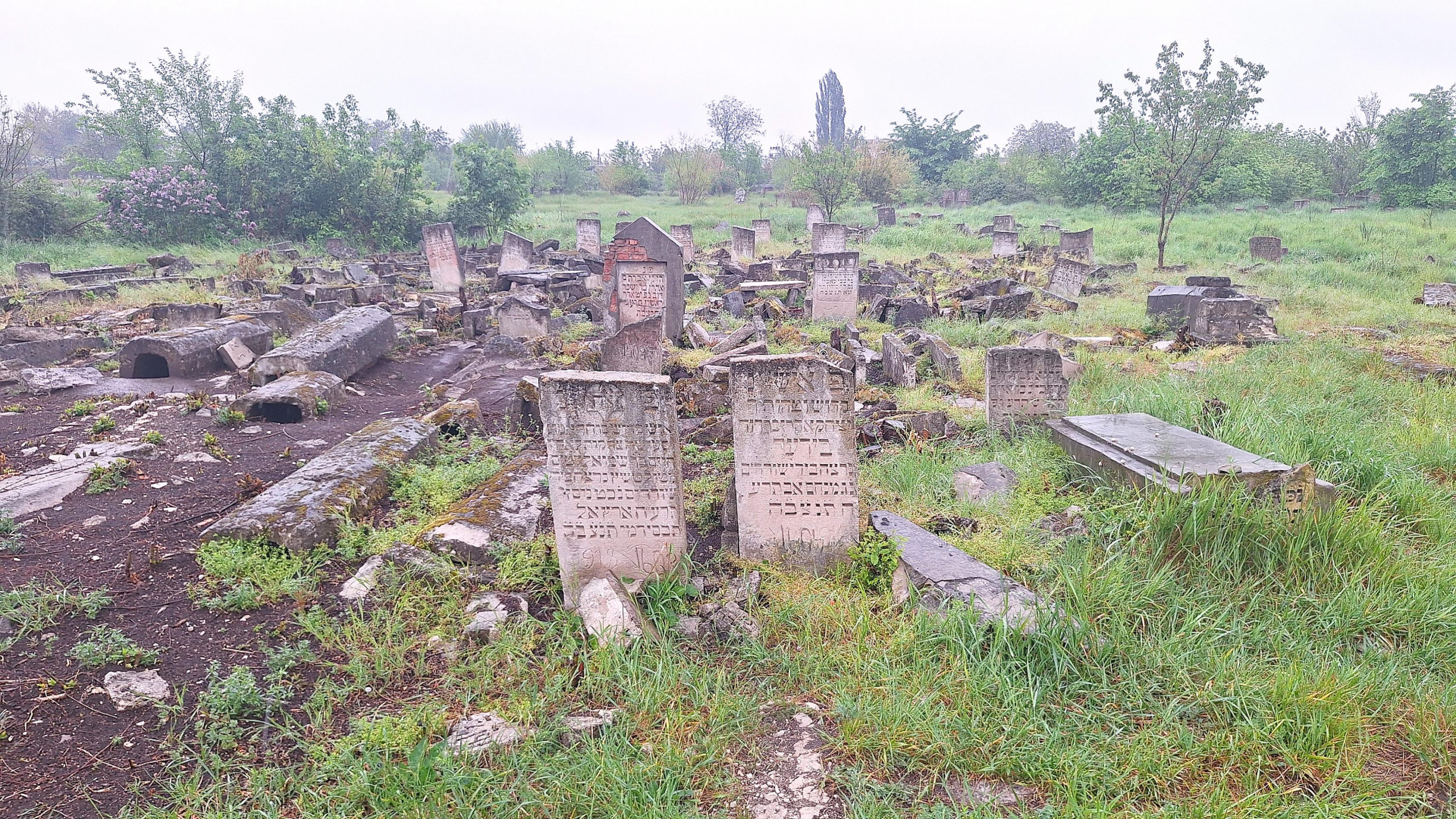
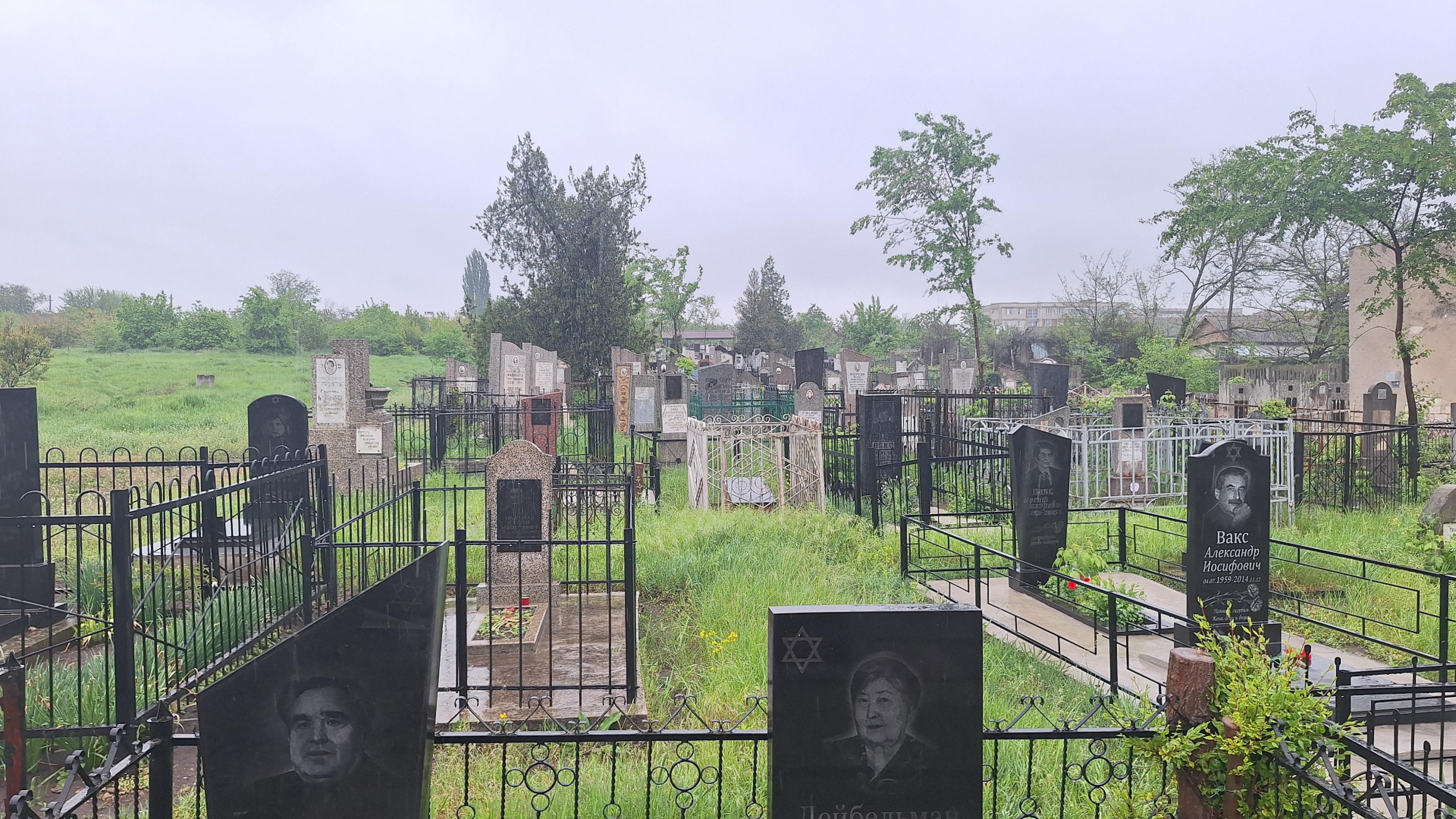
About a mile and a half from the mass graves lies the Jewish cemetery of Dubossary. The oldest gravestone there dates back to 1827. The cemetery is still in use today.
Remarks
Großes Update mit neuen Bildern und Infos 2026
Contact
http://www.dubossary.ru/page.php?163
ul. Zoja Kosmodemjanskaja
4501 Dubăsari