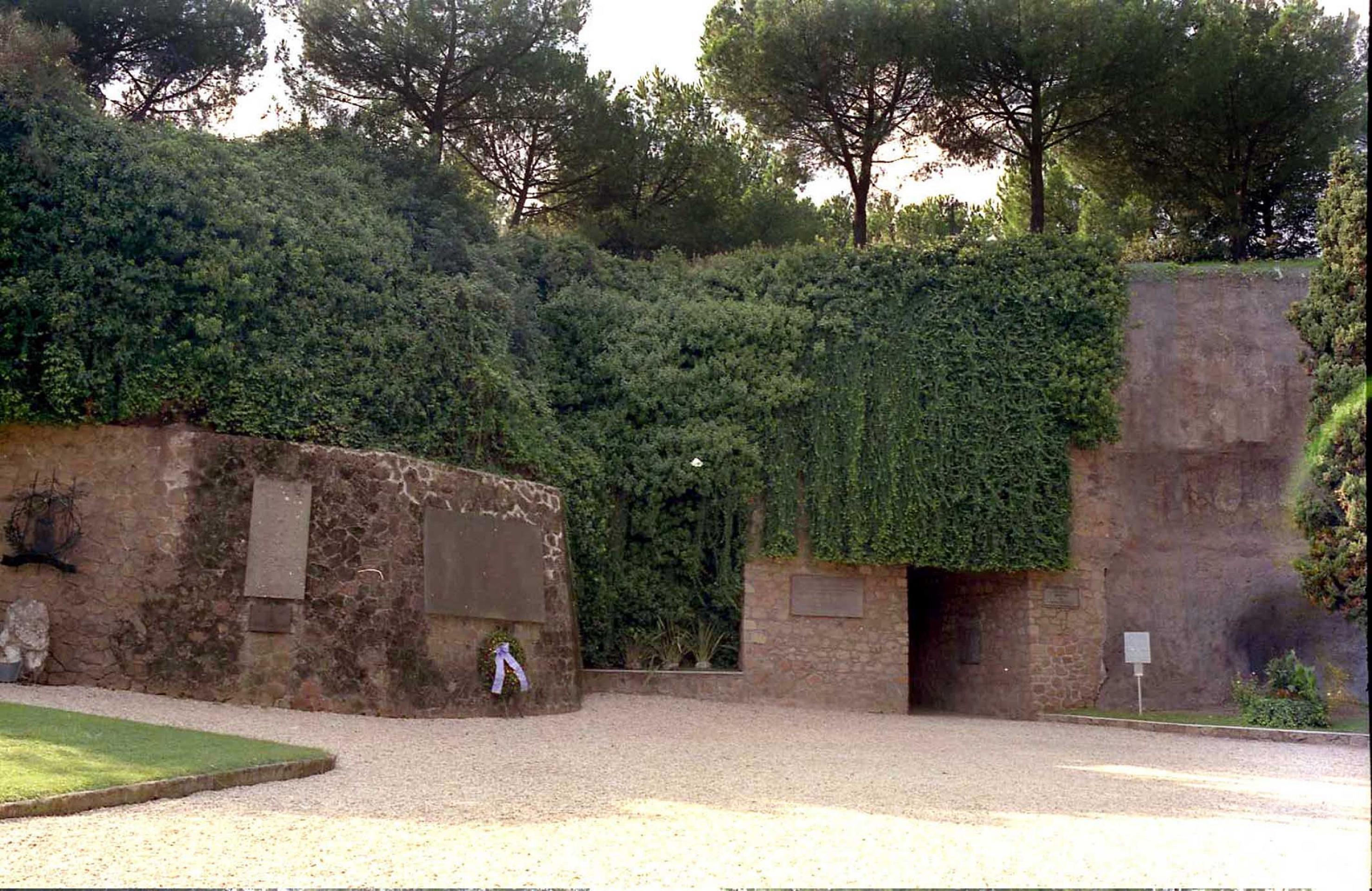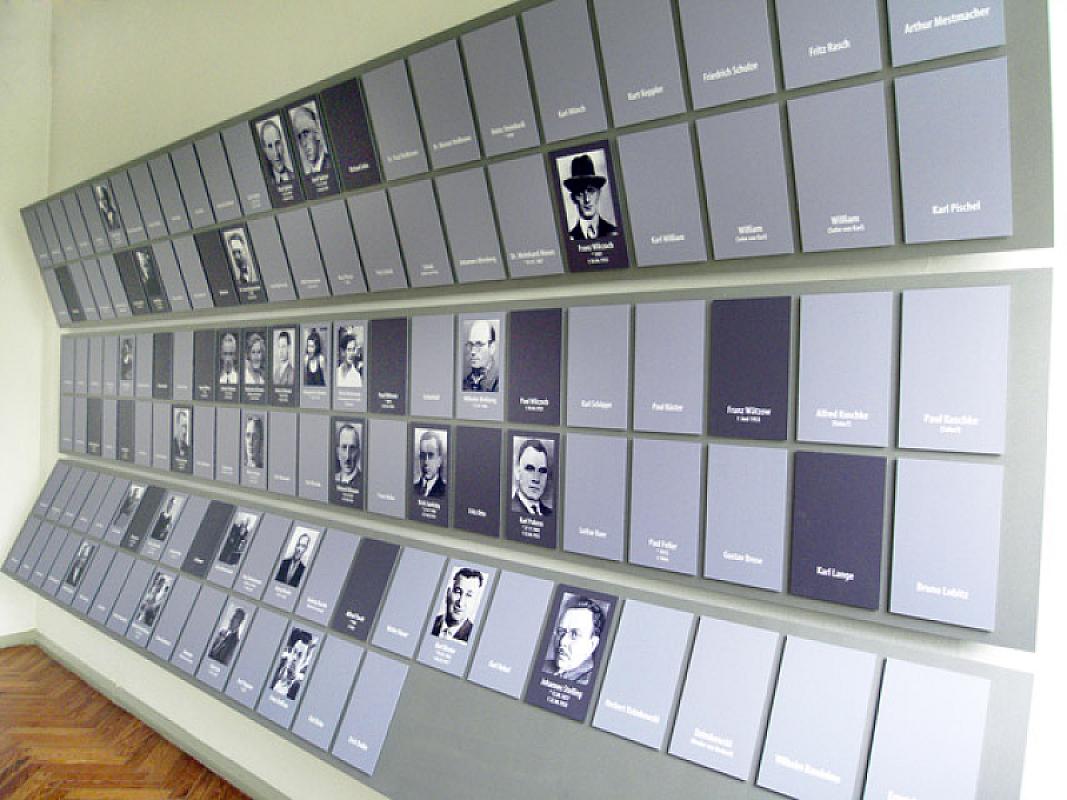
On March 24, 1944, a mass execution of 335 people was carried out in the Ardeatine Cave as part of »retaliation measures« of German occupation forces. The cave was subsequently blown up and sealed. The victims are buried there until this day - a memorial and a museum recall their fate.
History
Since September 1943, when Italy had surrendered to the Allies and the king had fled, the country had been occupied by the German Wehrmacht. In the spring of 1944, the Allies were advancing towards the capital. At the same time, Italian resistance against the German occupation and Fascism was growing in strength, though many of the resistance movements were in conflict with one another.
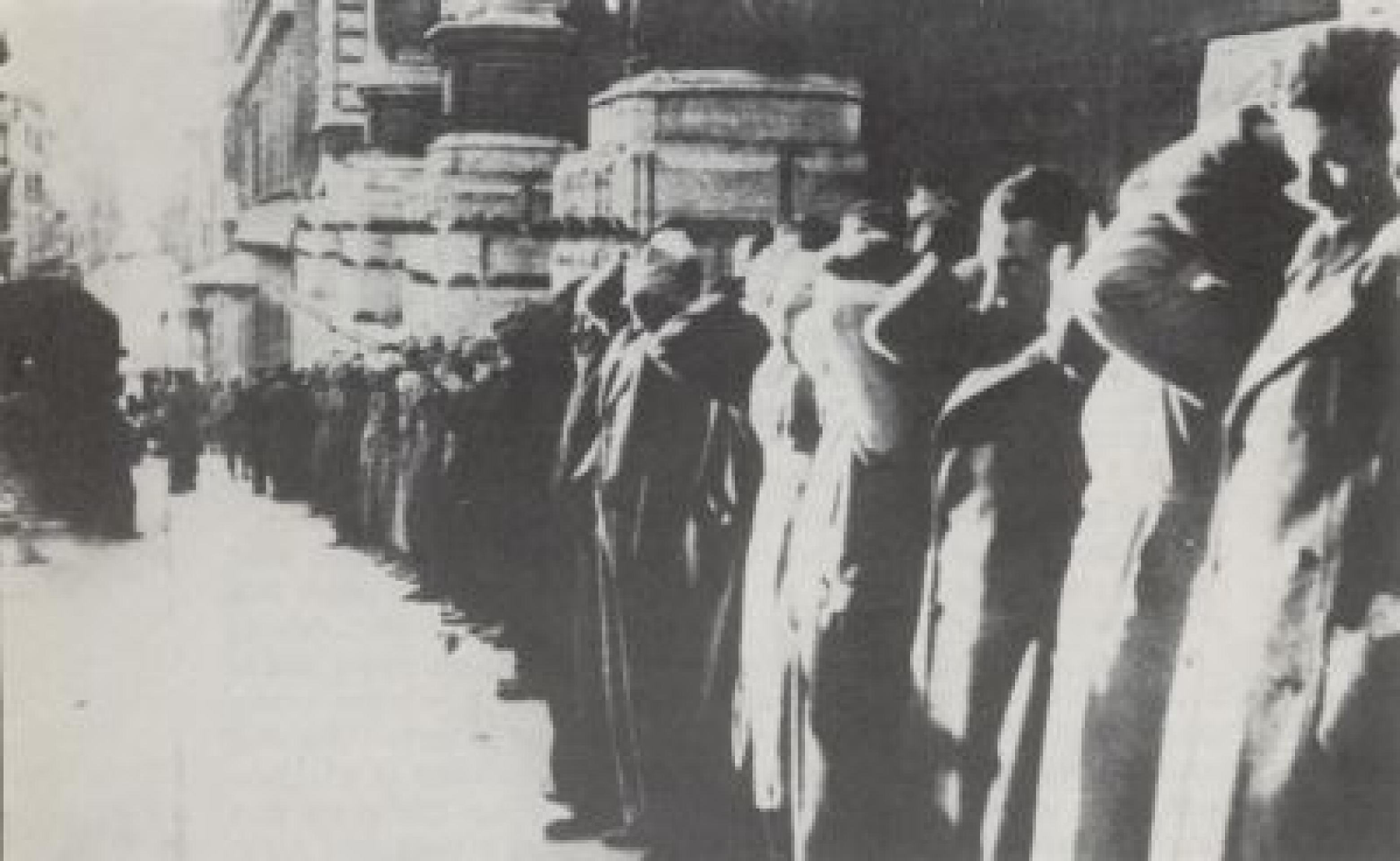
On March 23, 1944, a communist partisan group carried out a bomb attack in Via Rasella during which 33 German policemen were killed and 67 more injured. Adolf Hitler and Heinrich Himmler immediately demanded carrying out brutal reprisal measures. As a result, Herbert Kappler, commander of the security police and security service (SD) in Rome, ordered the shooting of 10 Italians for every killed German. Kappler initially wanted to execute prisoners of the SD who had been sentenced to death for supporting resistance groups or were still awaiting their sentences, yet there weren't enough to fulfil the ratio, so Kappler additionally gathered political prisoners from Italian prisons as well as Jews who had until then been exempt from deportation. An Italian prison accidentally brought five prisoners too many, so the final number of victims reached 335. They were tied up, loaded onto trucks and transported to the Ardeatine Cave, a disused quarry in the south of Rome. There, they were shot in the back of the neck by a firing squad led by Carl Schütz, which consisted of 80 to 90 members of security service. Herbert Kappler too participated in the killings, which took several hours. The cave tunnels were subsequently blown up. Some of the victims were most probably only injured and only died after the explosion by bleeding out or suffocating.
In June 1944, Rome was liberated by the Allies.
Victims
195 of the 335 victims were prisoners of the security service, 55 were political prisoners from Italian prisons, 75 were selected for execution due to their Jewish background. 10 men had been randomly arrested on the street.
322 of those shot could later be identified. The oldest victim was 74, the youngest was 15 years old. They were of all social classes and pursued various professions. None of them had participated in preparing the Via Rasella bomb attack; only few of them were communists.
Remembrance
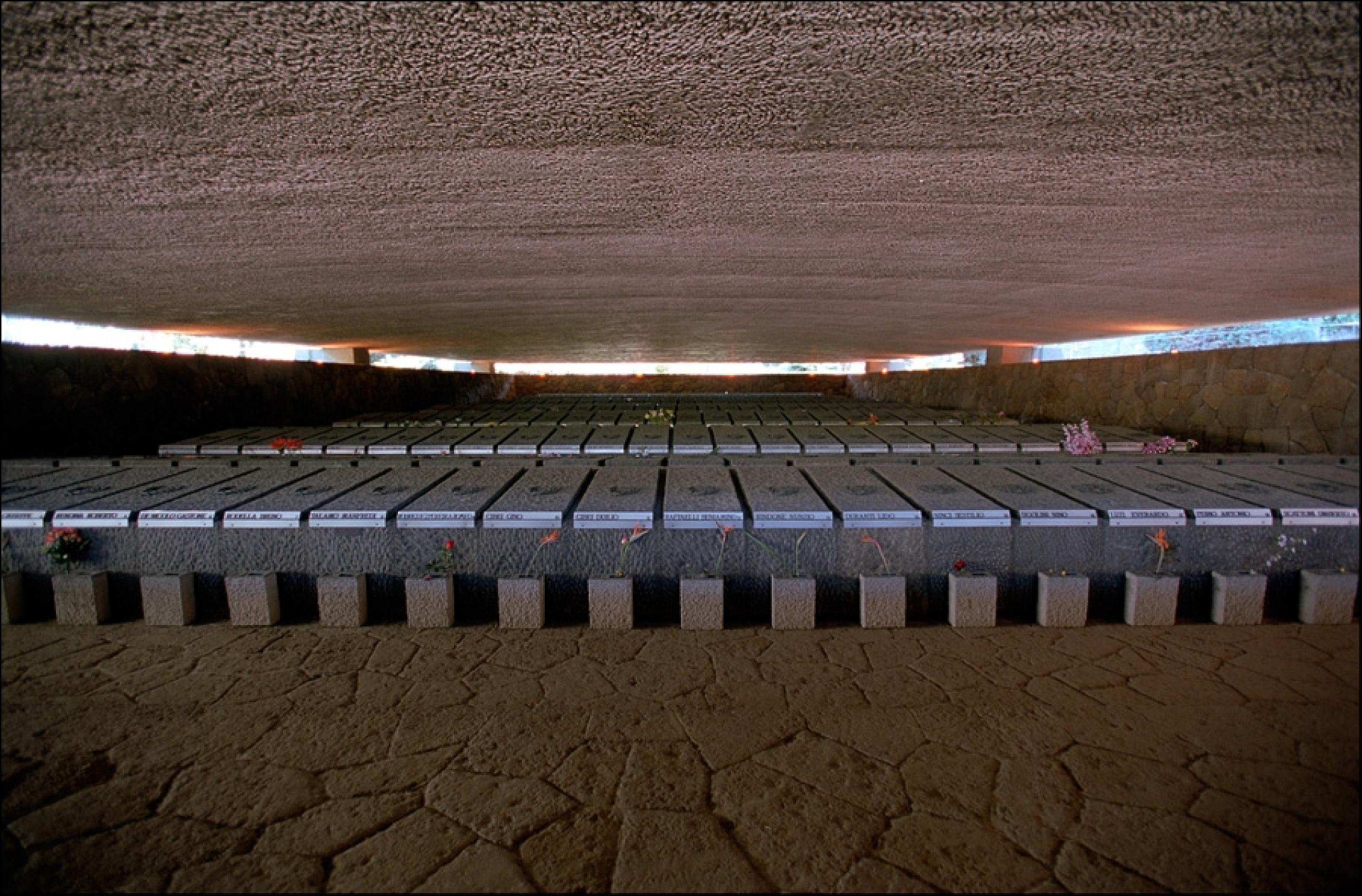
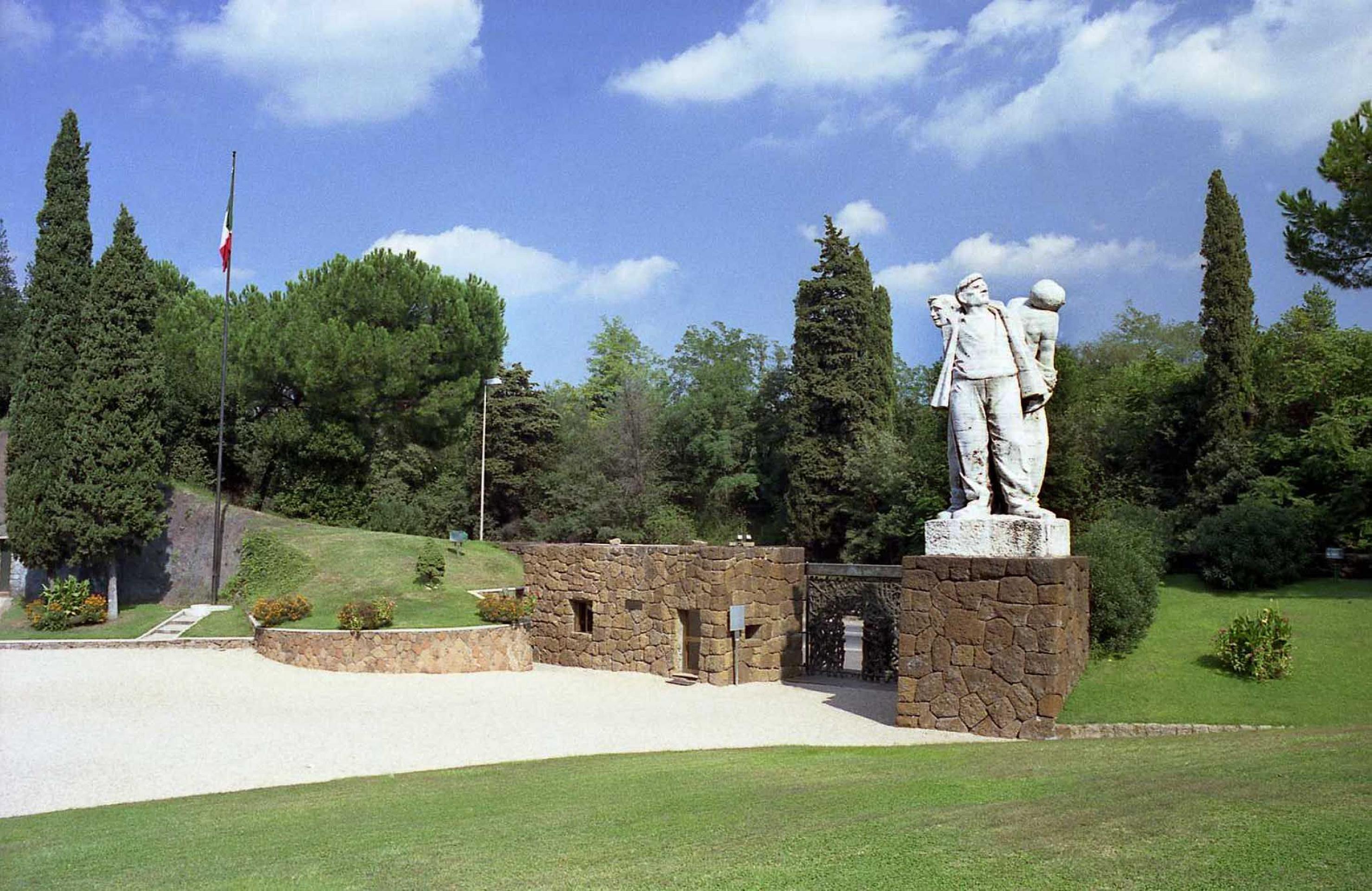
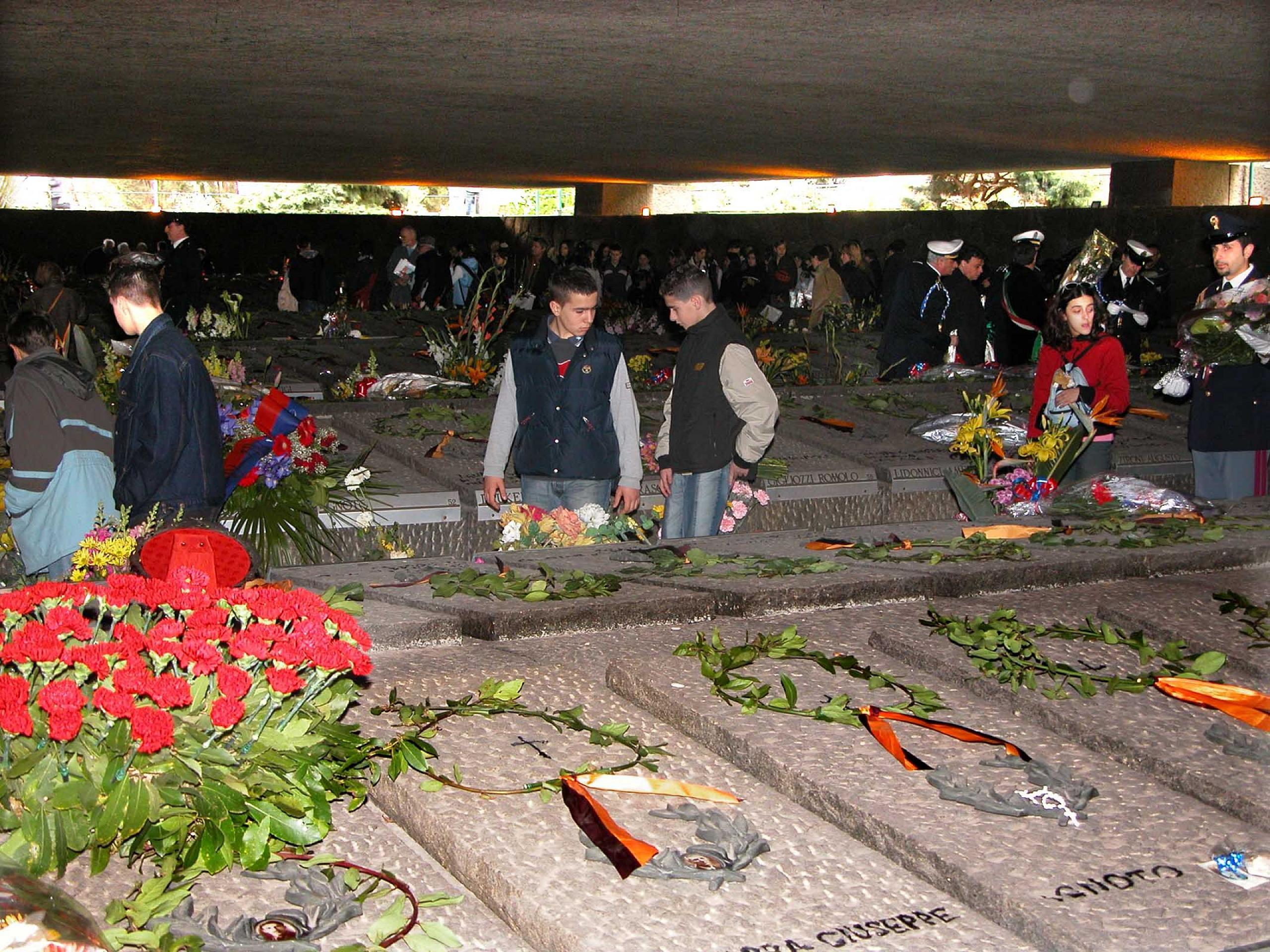
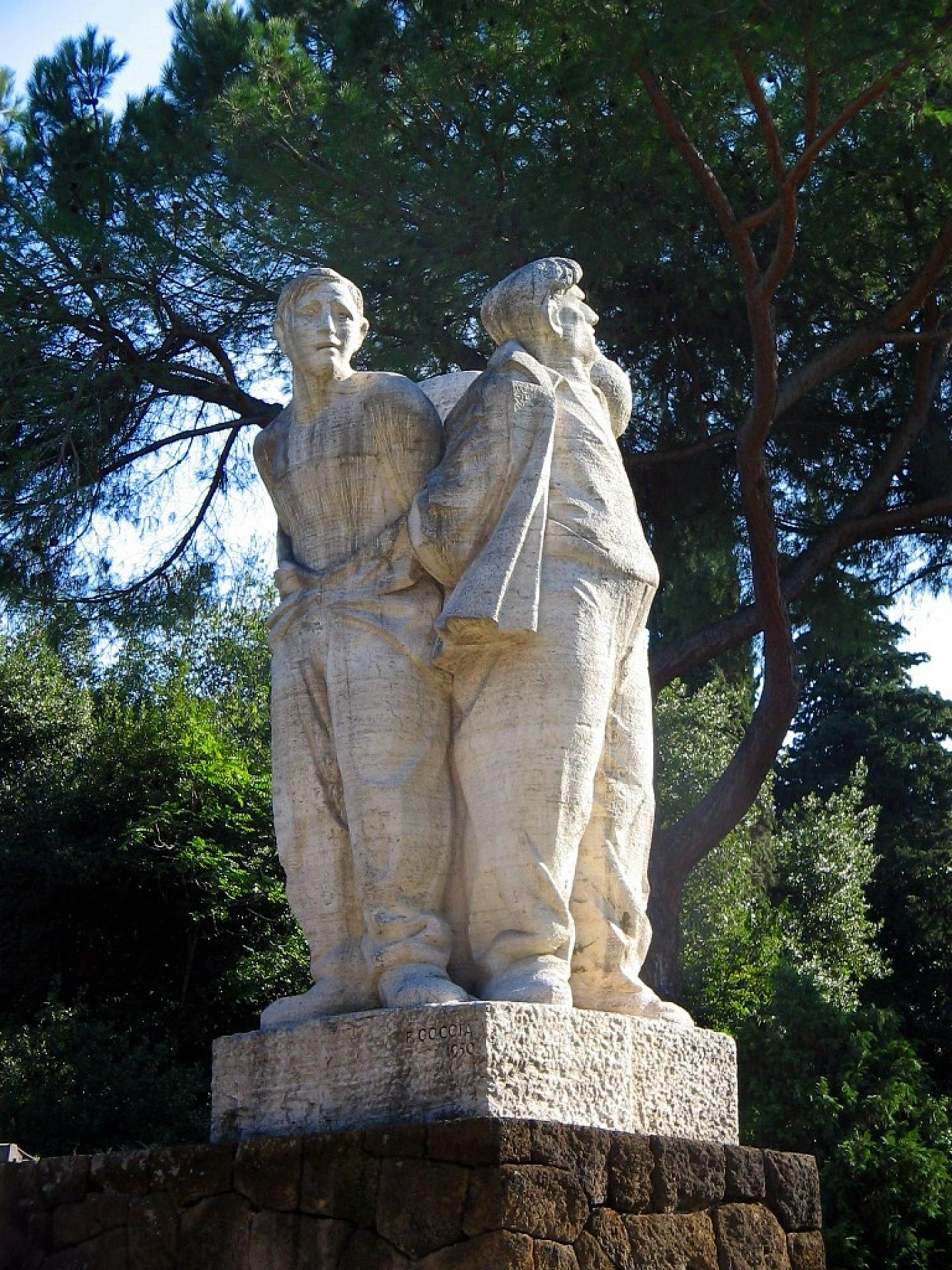
On March 24, 1949, on the fifth anniversary of the massacre, a memorial was dedicated at the historic site. It was designed by architects Giuseppe Perugini, Nello Aprile and Mario Fiorentini as well as sculptors Mirko Basaldella and Francesco Coccia. At the heart of the memorial is a mausoleum which contains the sarcophagi of the victims, all covered with identical granite slabs. There is a total of 336 sarcophagi: one of them represents all those who died fighting against the occupation regime and against Fascism. The cave tunnels have for the most part, aside from the necessary security measures, been kept in the state in which the Germans left them after the blasting operation. A small museum, which deals with the history of resistance from the end of Fascism until Rome's liberation by Allied troops on June 4, 1944, completes the memorial. The ANFIM association (Associazione Nazionale Famiglie Italiane Martiri – National Association of Italian Families of the Martyrs) has for decades been organising guided tours through the memorial complex.
The Ardeatine massacre was the subject of several criminal trials after the war. In 1948, Herbert Kappler was sentenced to life-long imprisonment before an Italian military tribunal. The case of SS-Hauptsturmführers Erich Priebke, who probably checked the death list during the shootings, drew international attention in the 1990s. In 1998, he too was sentenced to life imprisonment.
Possibilities
Museum, brochures in several languages, guided tours conducted by victims' relatives
Open
Monday to Friday 8:15 a.m. to 3:15 p.m.
Saturday and Sunday 8.15 a.m. to 4 p.m.
Closed on January 1, Easter Sunday, Easter Monday, May 1, August 15, December 25.
Contact
http://www.mausoleofosseardeatine.it/
info@mausoleofosseardeatine.it
+39 06 6795629
Via Ardeatina 174
00186 Roma