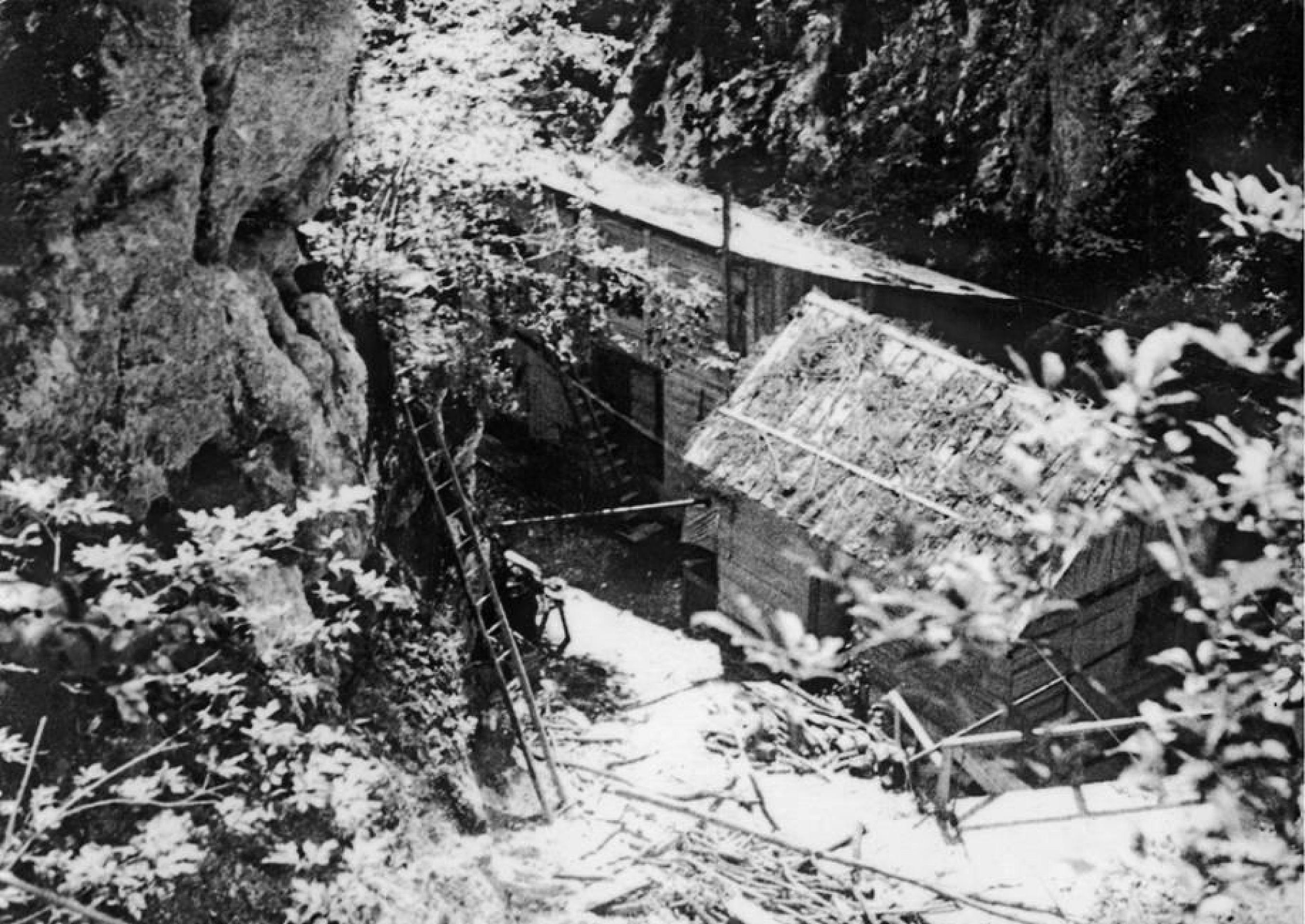
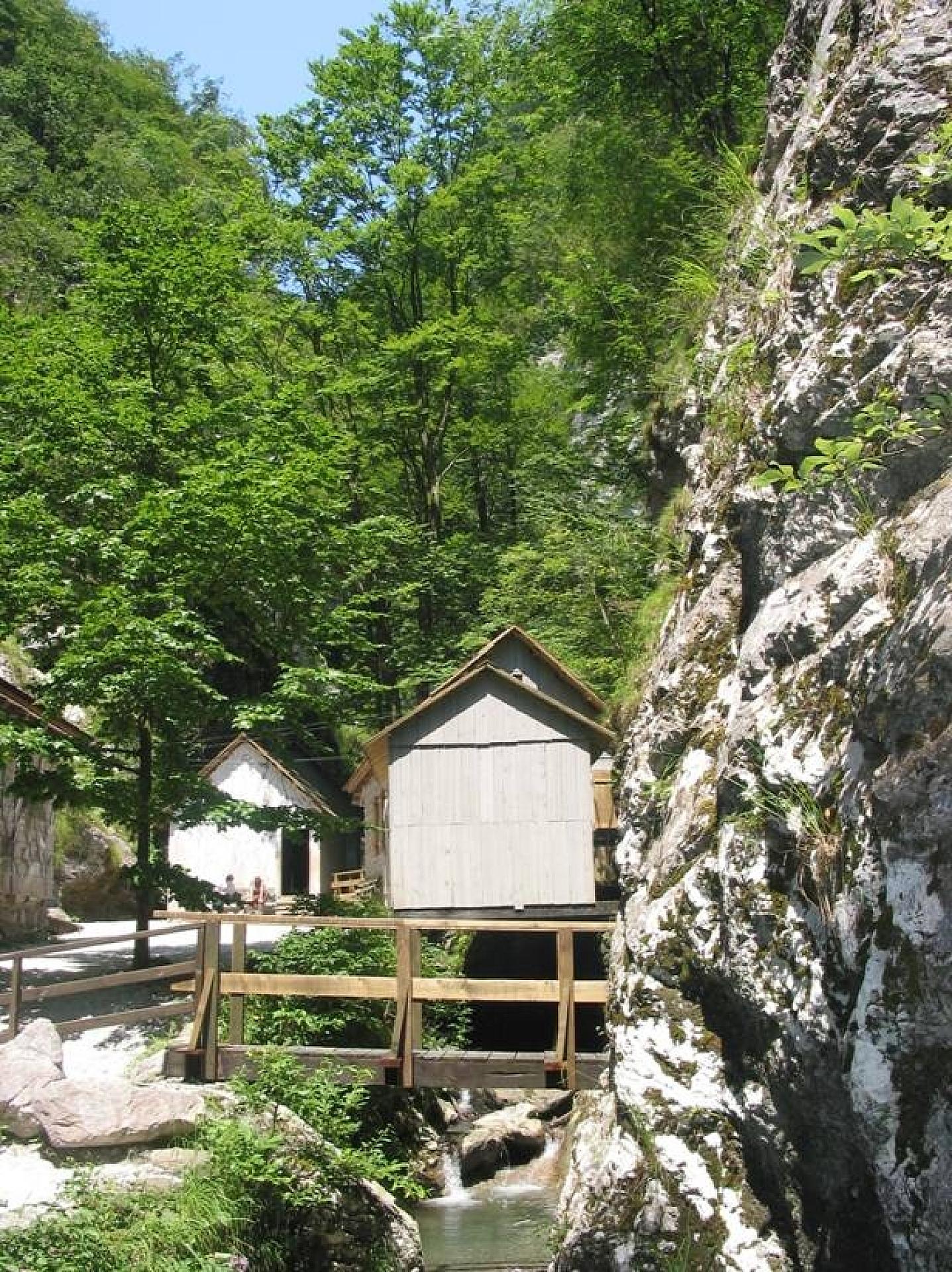
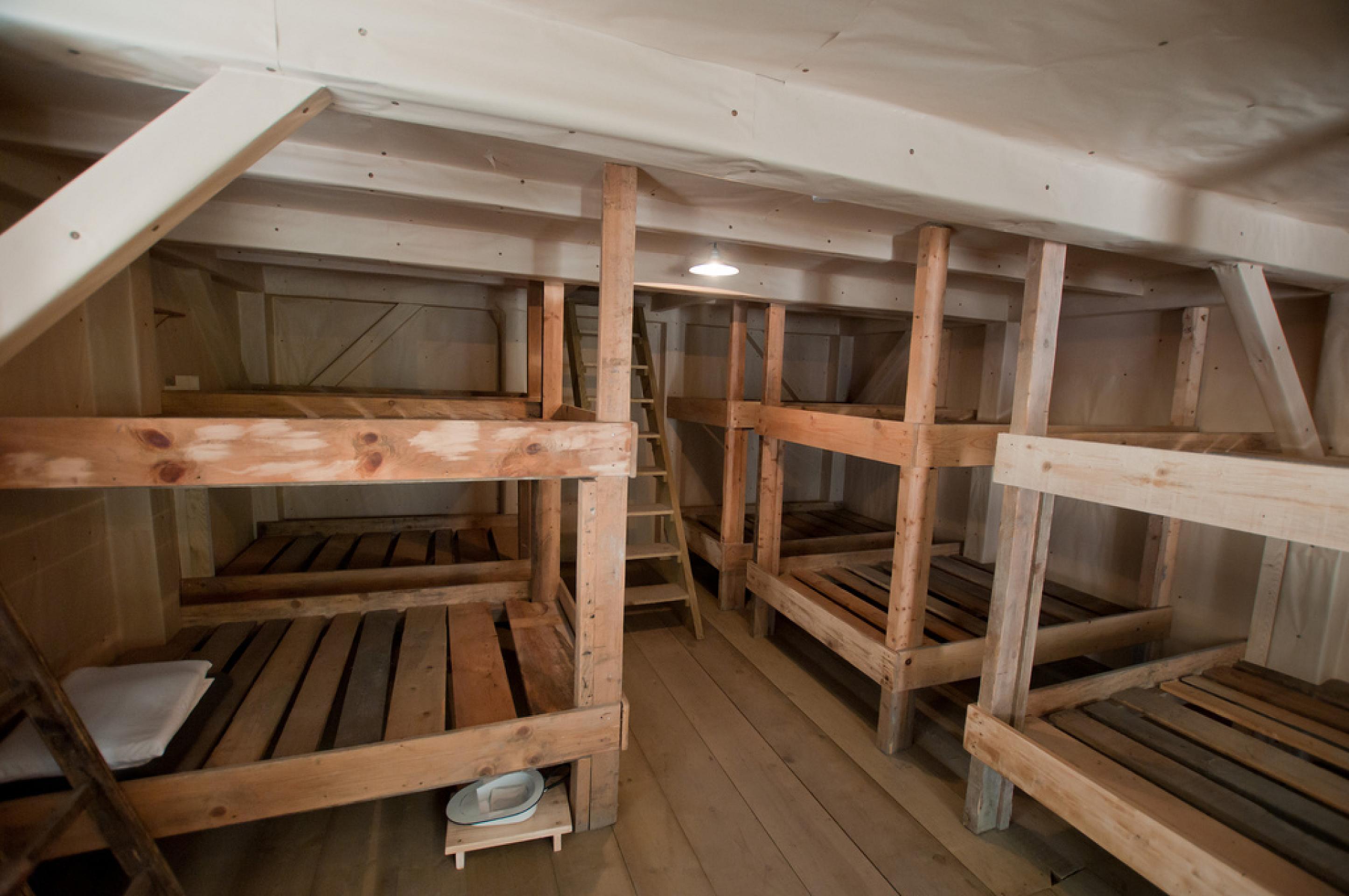
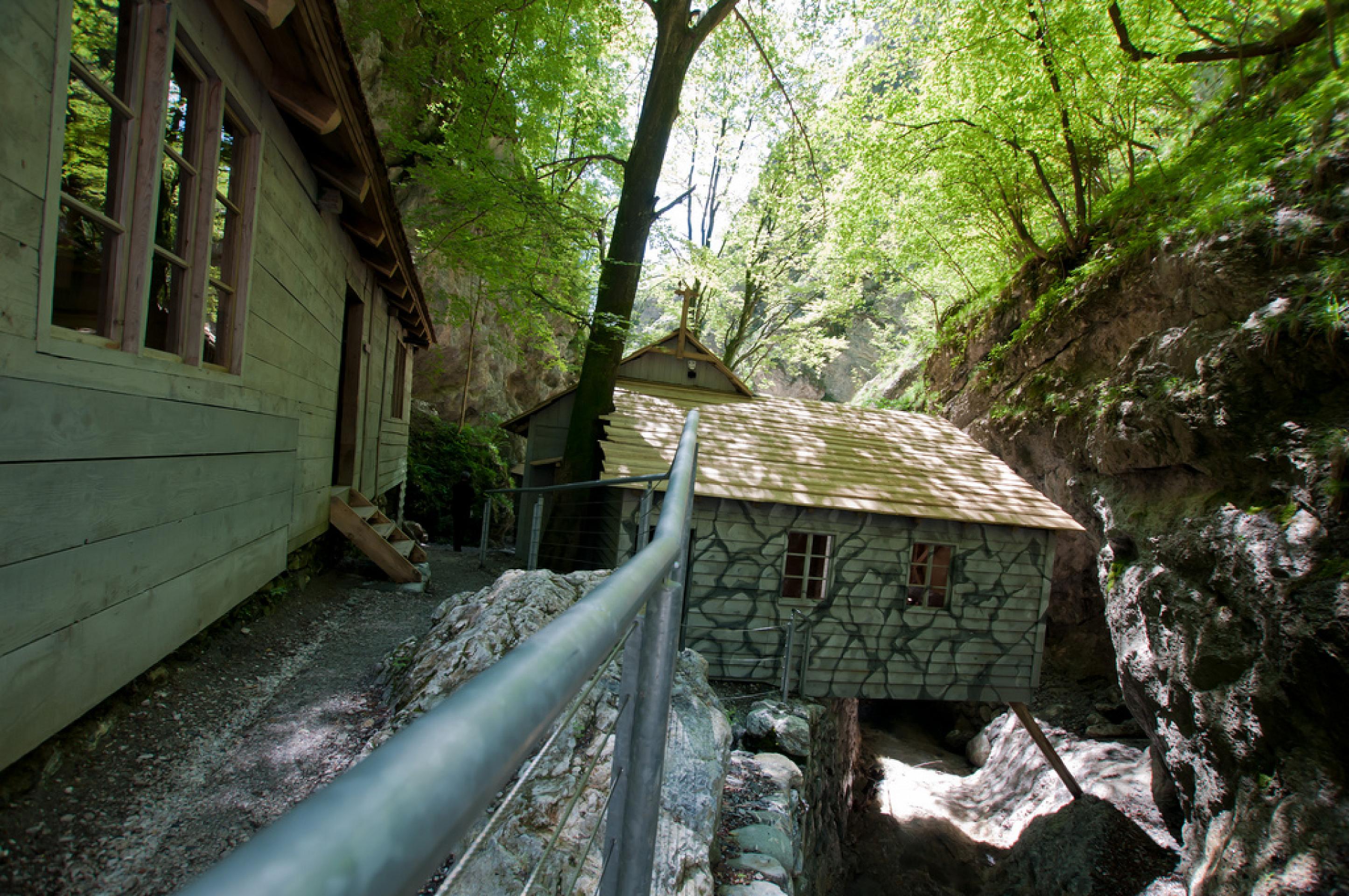
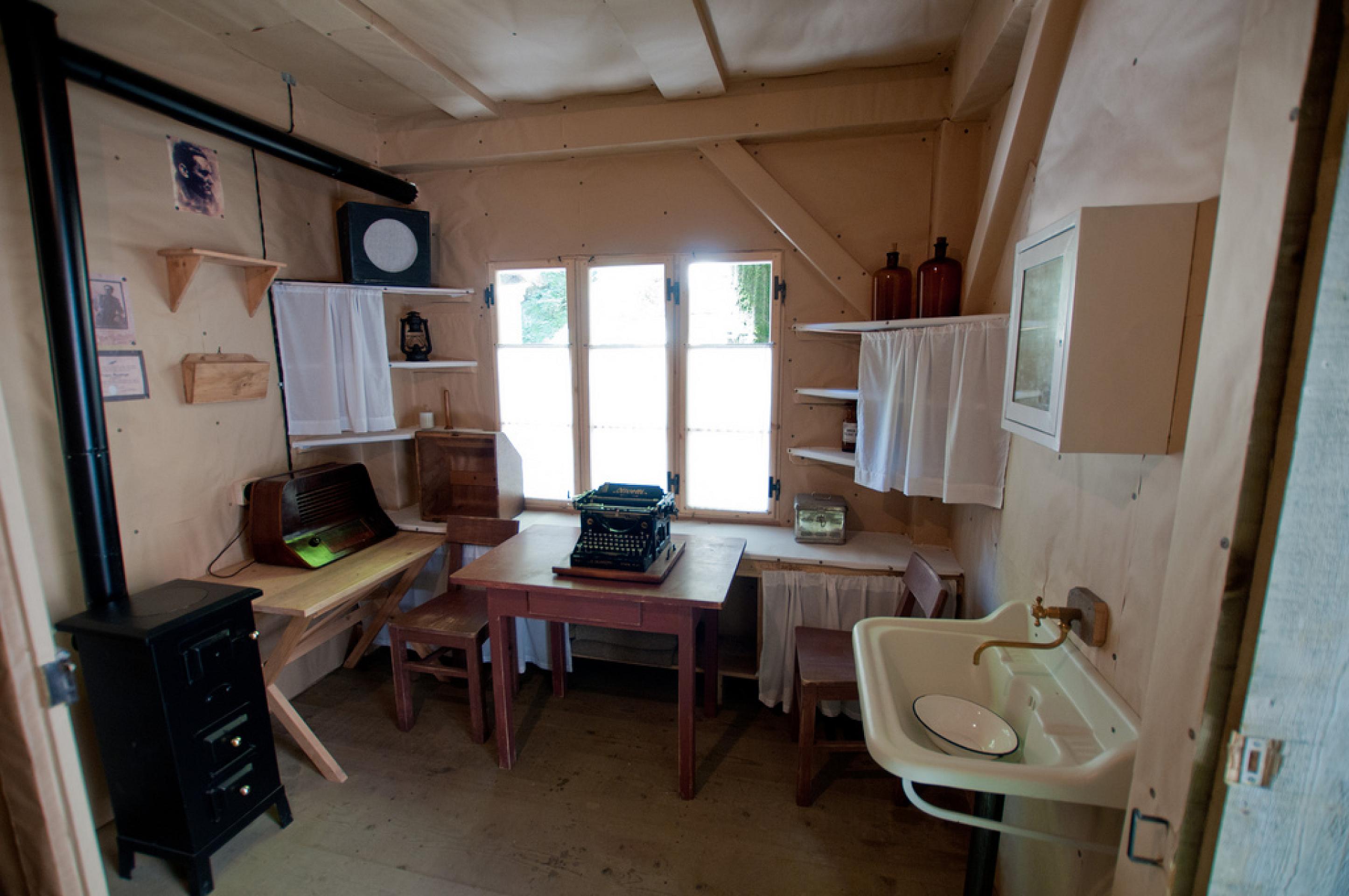
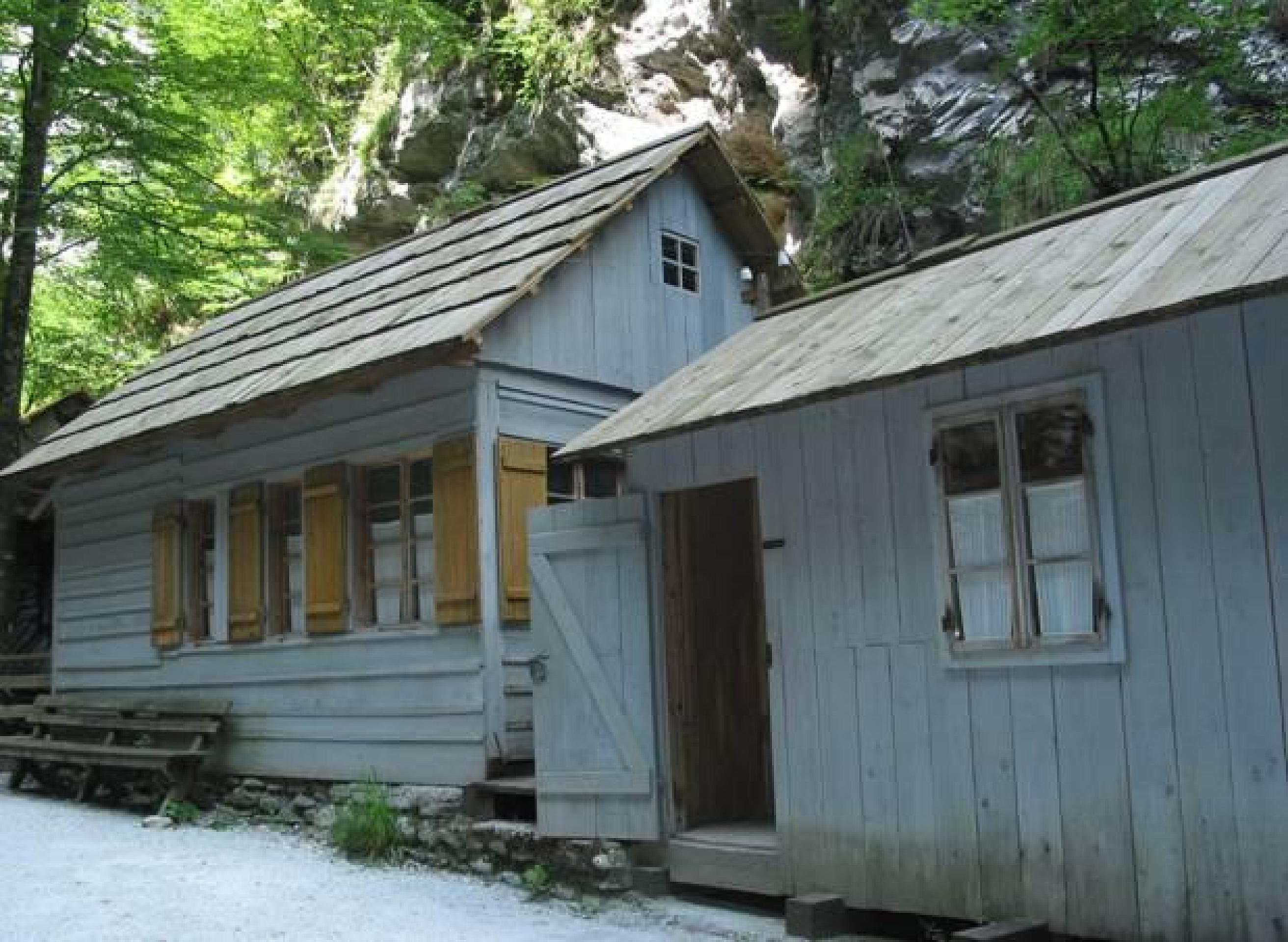
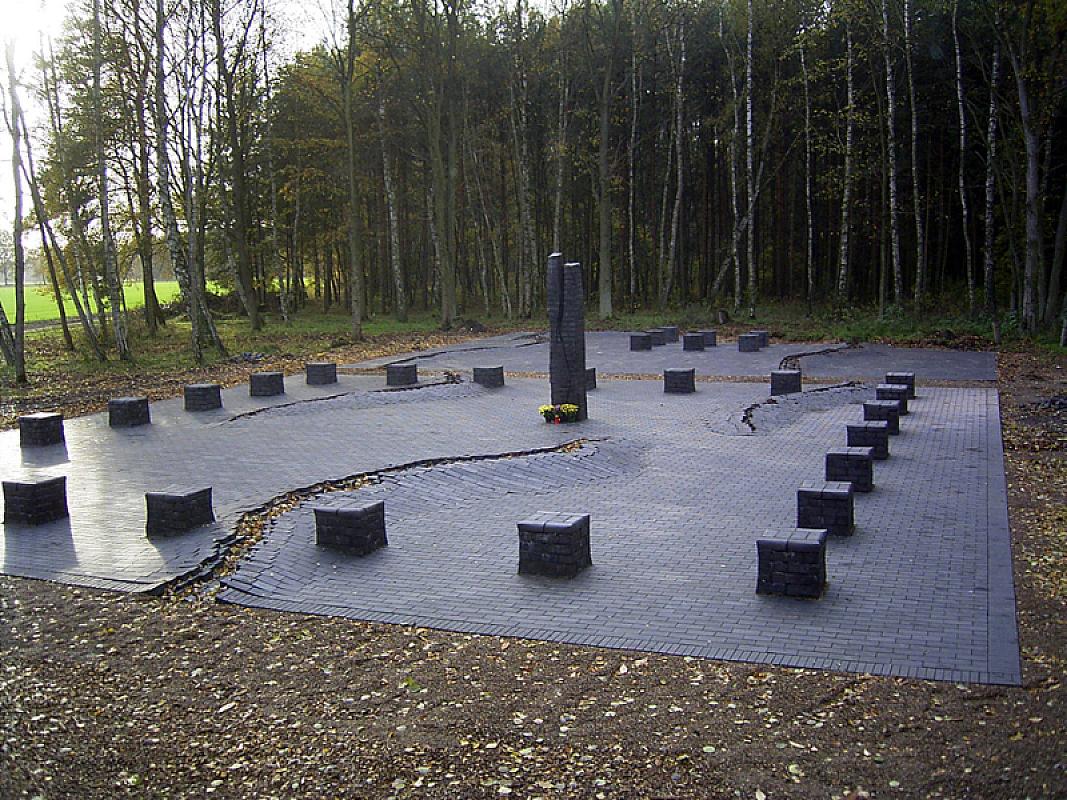
The former »Franja« partisan hospital is located in a gorge near Cerkno in western Slovenia. Between 1943 and 1945, wounded partisans were treated in this concealed hospital.
History
Cerkno lies in the historic Primorska region in present-day Slovenia. After World War I, the region became part of Italy. Following Italy's surrender in September 1943, partisans began reconquering the formerly Slovene area. In October 1943, the German Wehrmacht took the Slovene territories previously occupied by Italy and tried to defeat partisan resistance.
In autumn 1943, partisans built a hospital hidden in a gorge of the Pasica stream at Dolenji Novaki near Cerkno. On December 23, 1943, the first wounded were treated in two barracks. The hospital was founded by Dr. Viktor Volčjak; it was later run by Dr. Franja Bojc Bidovec, after whom the hospital was named. The hospital was in a remote location in the gorge and it was secured by three defence lines. German units attacked the complex twice, yet they never made it through to the actual hospital and didn't cause any severe damage. On May 5, 1945, the last 98 patients of the hospital were moved to the Gorica (Italian: Gorizia) hospital.
Victims
Between 1943 and 1945, a total of 578 men and women who fought for the partisans received medical treatment at the »Franja« partisan hospital. 78 patients died and were buried on-site.
In April 1941 the German Wehrmacht occupied the Kingdom of Yugoslavia, which was dissolved and partitioned between the Third Reich and the neighbouring countries. Slovenia in the north came under Italian, German and Hungarian administration. It was occupied by German troops and designated for »Germanisation«. The aim was to expropriate some 220,000 to 260,000 Slovenes and then force them out of their homes. The central transit camp for the »resettlement« of the Slovenian civilian population was set up in May 1941 in Reichenburg castle in the east of the country. Around 80,000 people were affected by the deportations.
Just a few days after the occupation of Slovenia by Germany and its allies, the »Osvobodilna Fronta« (Liberation Front) was founded by communists, left-wing Catholics and bourgeois intellectuals and began to build up a partisan army. The German occupying forces controlling the Italian part of Slovenia from 1943 and also the Hungarian part from 1944 carried out horrific reprisal measures, going as far as to destroy entire villages.
Italian and Hungarian occupation forces initially shielded Slovenian Jews from the German deportations to the extermination camps. However, Italy deported part of the Jewish population to the island of Rab on the Adrian peninsula in August 1943. Around 300 of these deportees fell into the hands of the SS a few weeks later when Rab was occupied by the Wehrmacht and they were deported to Auschwitz in March 1944. The SS subsequently deported the Slovenian Jews in the Hungarian zone from spring 1944 onwards.
The German occupation of Slovenia continued until May 1945. As soon as the German occupation had come to an end communist partisan groups led by Josip Broz Tito (1892–1980) began to arrest and shoot tens of thousands of the members of units allied with the Germans (the so-called Home Guard) as well as ethnic Germans and ideological opponents. It remains unclear how many died as a result; 590 mass graves have been discovered up to present.
Slovenia now became part of the Socialist Federal Republic of Yugoslavia. Monuments honouring the communist partisans were built throughout the country. A number of museums also remembered the expulsion of the Slovenes, the persecution of political prisoners and the terror during the German occupation. Survivors and the Jewish communities built a number of Holocaust memorials in the former Hungarian zone of occupation.
Slovenia gained independence in 1991. There was no move to destroy the symbols of the communist culture of remembrance. The memorial site at the former partisan hospital »Franja« in Cerkno is now a UNESCO World Heritage Site. In 1991 the synagogue in Maribor, one of the best-preserved in the eastern Alps, became a regional museum and in 2011 it became the Center of Jewish Cultural Heritage Synagogue Maribor. At the entrance to the synagogue, there is a memorial to the murdered and expelled Jews of Maribor.
Shortly after Slovenia gained independence, a parliamentary commission started to investigate the mass murders after the end of the war. A second commission began its work in 2004.
Remembrance
The partisan hospital remained intact after the war. Since 1963, the buildings have been administered as a branch of the Idrija municipal museum. In 2007, a large part of the complex was destroyed following torrential rainfalls and flooding. The partisan hospital was rebuilt in 2009; most of the buildings could be reconstructed.
Open
April to September:
9 a.m. to 6 p.m.
October:
9 a.m. to 4 p.m.
Between March and November:
only by appointment and weather permitting