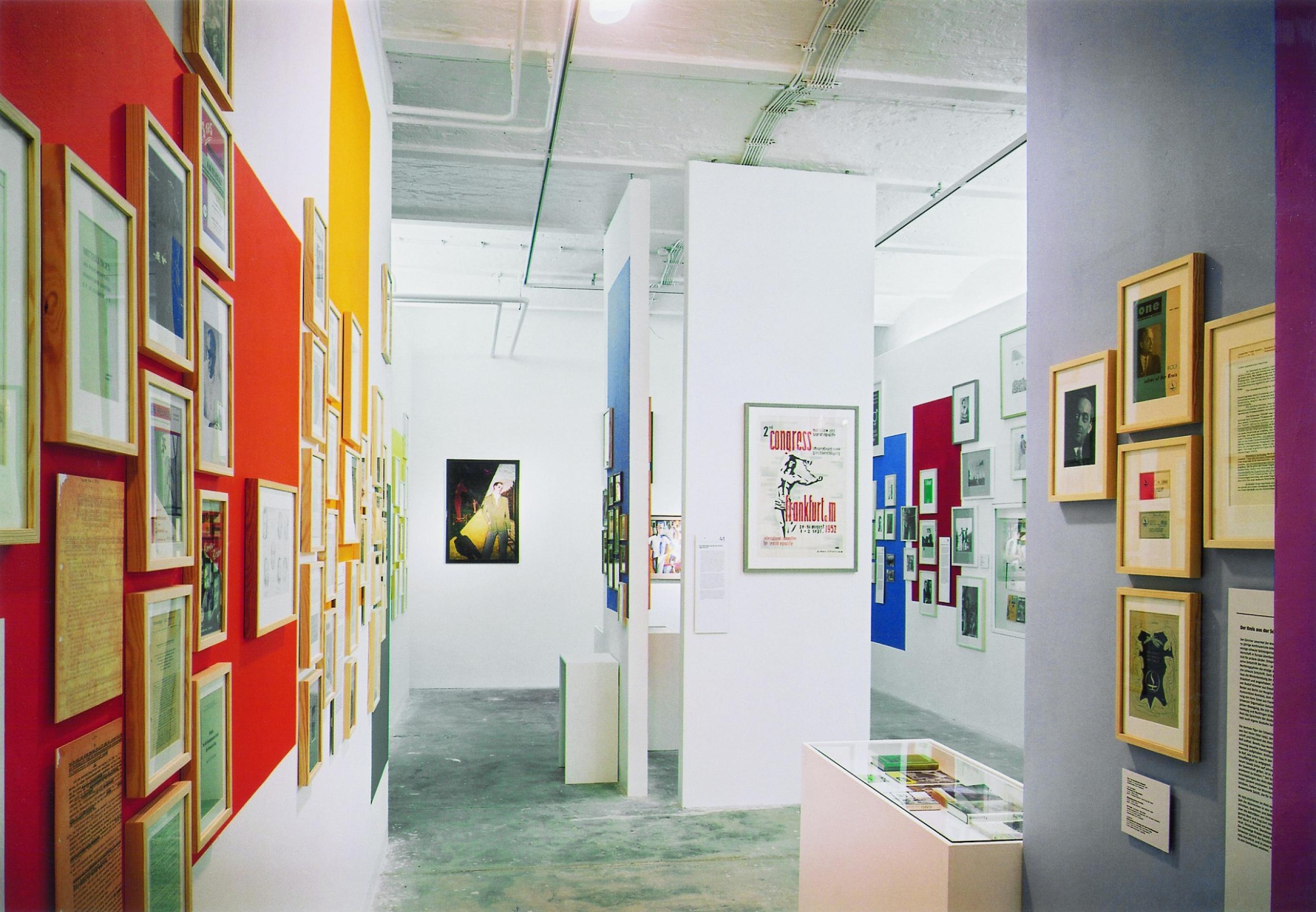
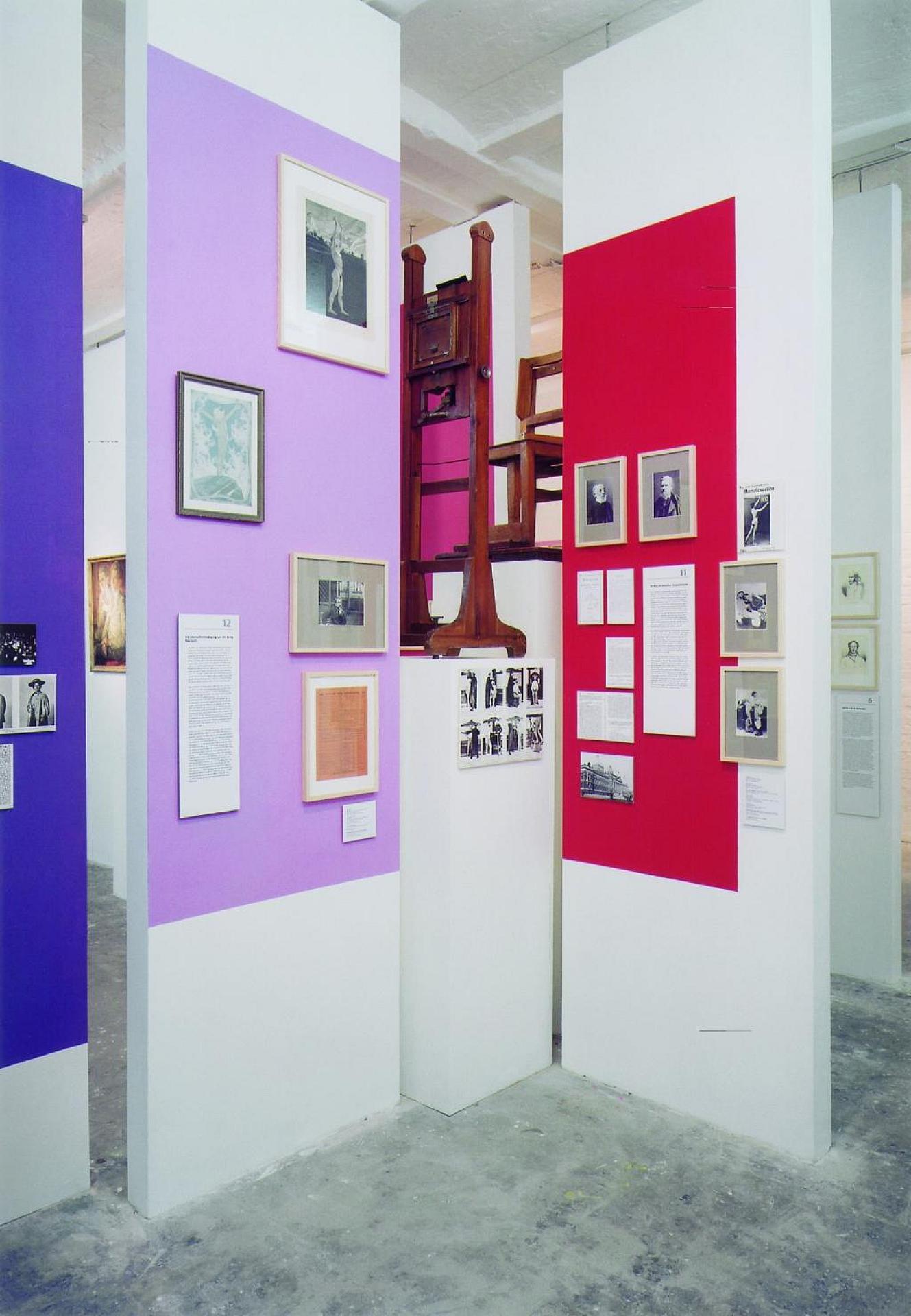
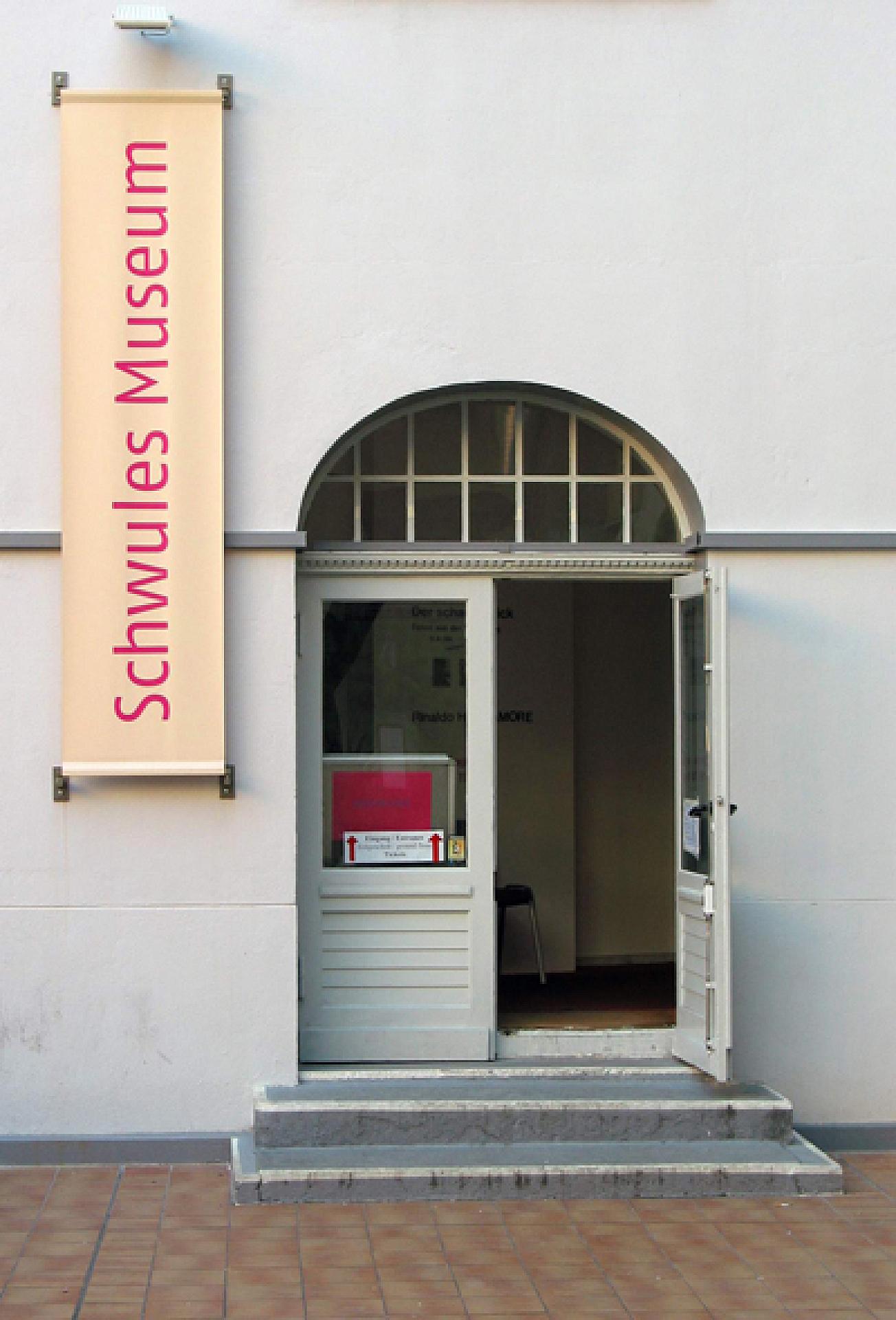
Established in 1988, the Gay Museum in Berlin provides insights into different aspects of gay life, past and present. The permanent exhibition also contains information on the persecution of homosexuals under National Socialism.
History
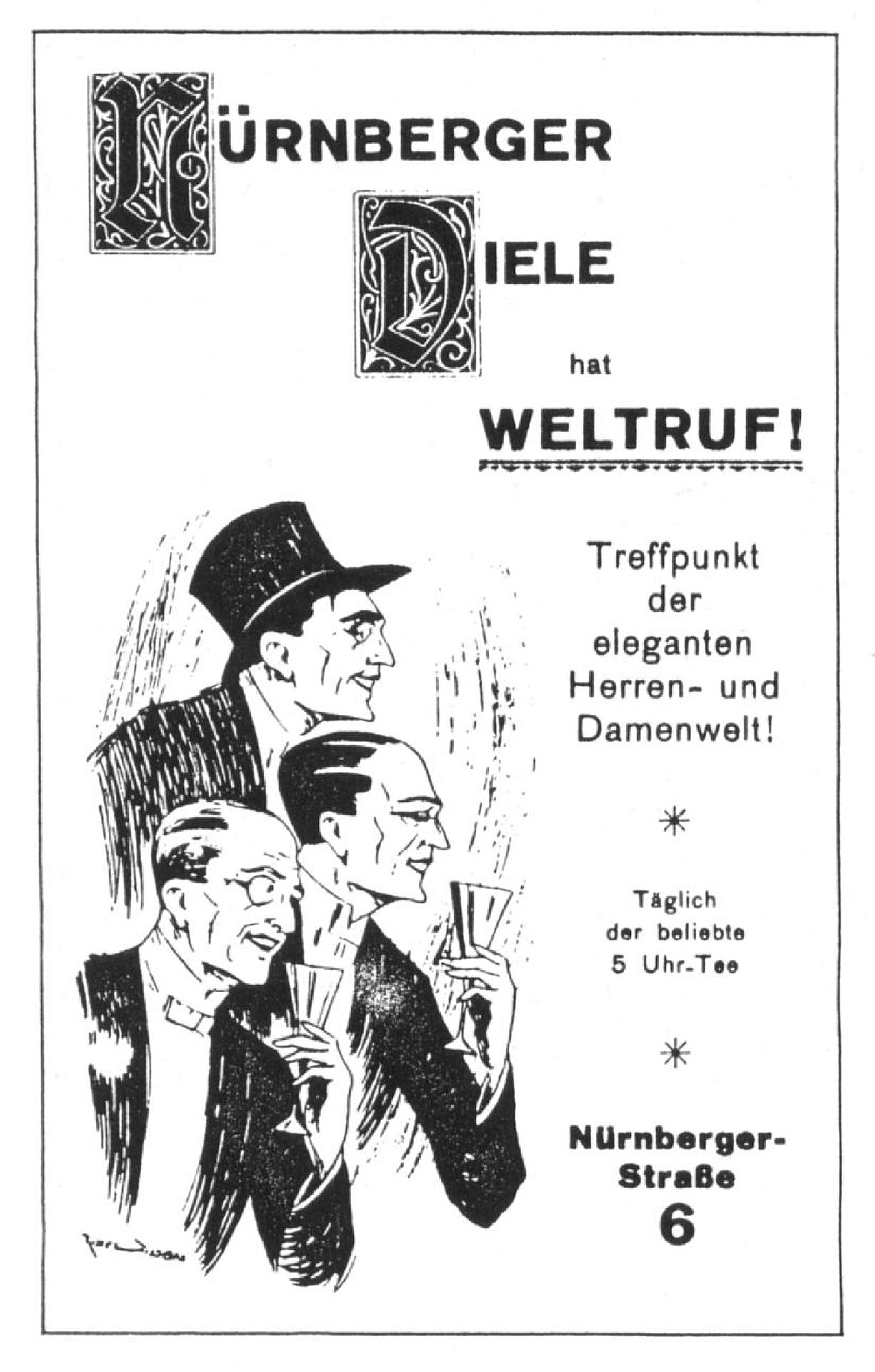
Berlin of the Weimar Republic was a city in which gay life could for the most part flourish freely. There were many networks, magazines and bars for gay men and lesbians. Homosexuality and the way it was dealt with played an important role in Berlin's cultural life.
The National Socialists' rise to power in 1933 was a severe blow to homosexuals in Germany. Already in the spring of 1933, the authorities shut down most bars which were known to be meeting points for gays and lesbians. On May 6, 1933, National Socialists plundered the library of the »Institute for Sexual Research«, which had been founded by Magnus Hirschfeld, and destroyed the looted books during a book burning session on what is today Bebelplatz four days later.
In 1935, the National Socialists broadened Paragraph 175 of the German Criminal Code condemning homosexuality and thus made criminal prosecution of gay men possible. The very broad term »lewdness« was now no longer qualified as an »offence« but as a »crime« which could be punished by up to five years of imprisonment. The also newly formulated Paragraph 175a introduced prison sentences of up to ten years for so-called »severe lewdness«. Gay men and supposedly gay men were persecuted by the police mostly in larger cities. Many were denounced by their neighbours at the slightest suspicion. National Socialist courts sentenced about 50,000 men on the basis of Paragraph 175 and 175a. A part of the convicts was incarcerated in prisons, however, between 5,000 and 15,000 men were deported to concentration camps where they were marked as a separate prisoner group with pink triangles. Stigmatised due to their homosexuality, they were mostly avoided by other prisoners.
Victims
During National Socialism about 50,000 men were sentenced on the basis of Paragraph 175 and 175a. Thousands of men were sent to concentration camps for being gay, many of them perished there due to hunger and abuse or fell victim to targeted killings.
The entry to power of the National Socialists in 1933 heralded the state persecution of opponents of the regime, Jews, Roma – who were classed as »gypsies« -, the sick and many other groups. For the first time, anti-semitism became part of the government policy of a modern state and the persecution of all groups was progressively heightened. The process was characterised by the interplay between state regulation, violence from supporters of the regime and rabble-rousing propaganda from the press. The acts of terror against the Jews in November 1938 (»The Night of the Broken Glass«), culminating in around one hundred deaths, marked the prelude to the complete exclusion and murder of the Jewish minority.
With the outbreak of the Second World War in September 1939, large parts of Europe fell under German control. In Eastern Europe in particular a multi-tiered system of camps and extermination sites was established, in which the SS murdered up to six million Jews, among them around 165,000 German Jews. It is estimated that around seven million Germans lost their lives in the war, including almost 3.5 million civilians. Around 28 million residents of the occupied Soviet Union (both soldiers and civilians) and three million non-Jewish Poles met a violent death. These groups are still barely commemorated in Germany.
Germany came under Allied occupation in 1945 and 1949 saw the foundation of the German Democratic Republic (GDR) and the Federal Republic of Germany (FRG), who had very different cultures of remembrance. The GDR profiled itself as an »antifascist« state. The former concentration camps at Buchenwald, Ravensbrück and Sachsenhausen became »National Memorials« and primarily documented the communist resistance during the war.
In the Federal Republic, the dominant memory was initially of the victims of Allied bombing raids and those who had fled or been expelled from their homes in the former territory of the Third Reich. It was left to specific groups to remember Nazi persecution, the Holocaust or the resistance. With the exception of the war crimes trials, there was no public discussion of perpetrators or involvement in crimes. However, the situation was to change in the mid-1960s, when the statute of limitations for murder was lifted following a lengthy debate. Also during this period, memorial sites were established at former concentration camps (1965: Dachau and Neuengamme; 1966: Bergen-Belsen) and the German Resistance Memorial Centre was opened in 1968 in West Berlin. However, it was not until the 1980s that a diverse and often small-scale landscape of memory developed as the result of local initiatives.
Following German unification in 1990, a national memorial site concept was developed and there was a major review of German sites of memory. The Memorial to the Murdered Jews of Europe in Berlin was inaugurated in 2005. The Topography of Terror, a comprehensive documentation of National Socialist crimes and perpetrators, has opened with a new centre in May 2010; the documentation centre »Flight, Expulsion, Reconciliation« followed suit in 2021. In the meantime, central memorials in Berlin have been erected to commemorate further groups of Nazi victims as well: the murdered Sinti and Roma, the patients murdered in the context of the Nazi’s »Euthanasia« killings and the persecuted homosexuals.
The German victims of National Socialist terror in the former Eastern territories of the Third Reich were forgotten by both German states after the end of the war. For decades, memory of these victims was only preserved by West German associations for Germans born in these territories and it mainly excluded the period from 1933 to 1945.
Remembrance
Since the beginning of the 1980s, efforts to create a museum on the history of homosexuality and gay lifestyle had been made in West Berlin. In 1986, the »Association of Friends of the Gay Museum in Berlin« was founded. This initiative resulted in the opening of the Gay Museum in Berlin's Kreuzberg district in 1987. Between 1989 and 2013, it had been located in the rear of a town house on Mehringdamm, not far from well-known gay scene hotspots. In 2013, the museum moved to Lützowstraße in Berlin's Tiergarten district. The relocation, made possible by public grants, also meant that the work of the museum could be expanded thematically. Until a new permanent exhibition will be opened, there are a number of temporary exhibitions.
Possibilities
Guided tours, readings, concerts, archive and library, temporary exhibitions
Open
Daily, except for Tuesdays: 2.00 p.m. to 6.00 p.m.; Saturday: 2.00 p.m. to 7.00 p.m.