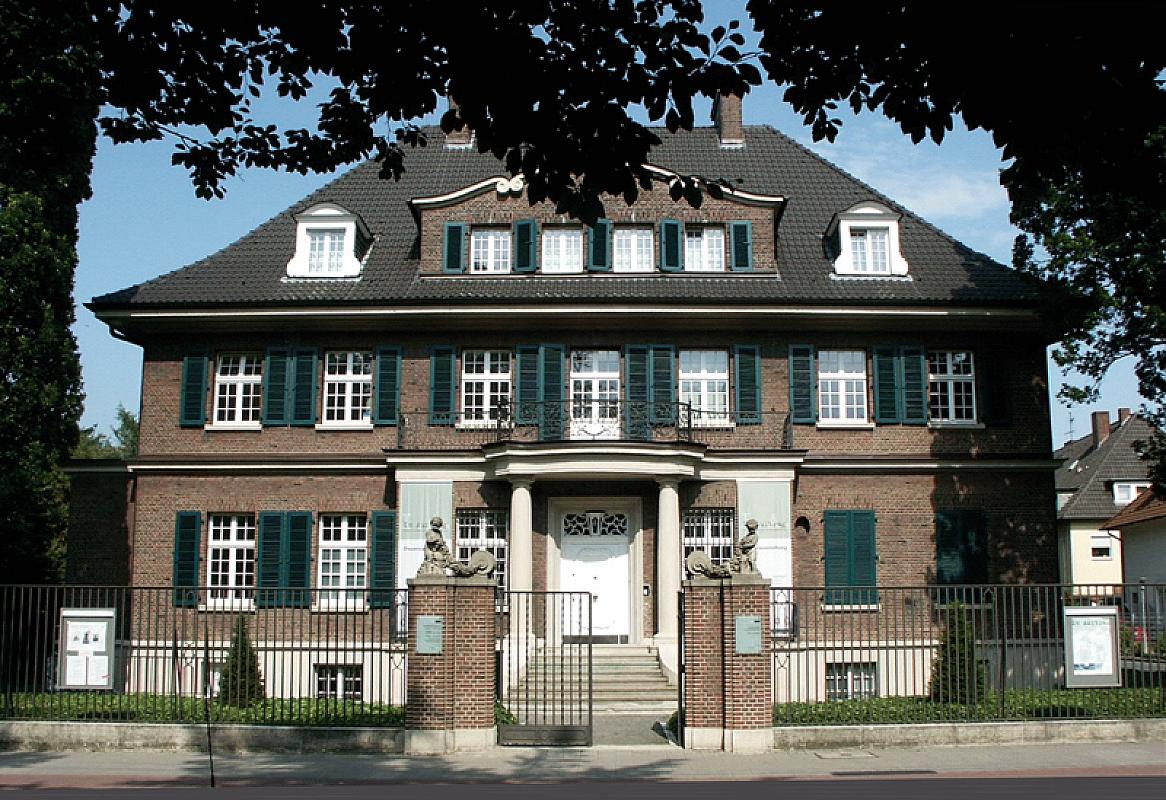
In the autumn of 1940, the German occupying forces established the largest ghetto in occupied Europe in the Polish capital Warsaw. On April 19, 1943, the »Jewish Combat Organisation« (Polish: Żydowska Organizacja Bojowa) launched an uprising against the German troops who were preparing the final deportations from the ghetto. In 1948, a memorial was dedicated to the ghetto fighters.
History
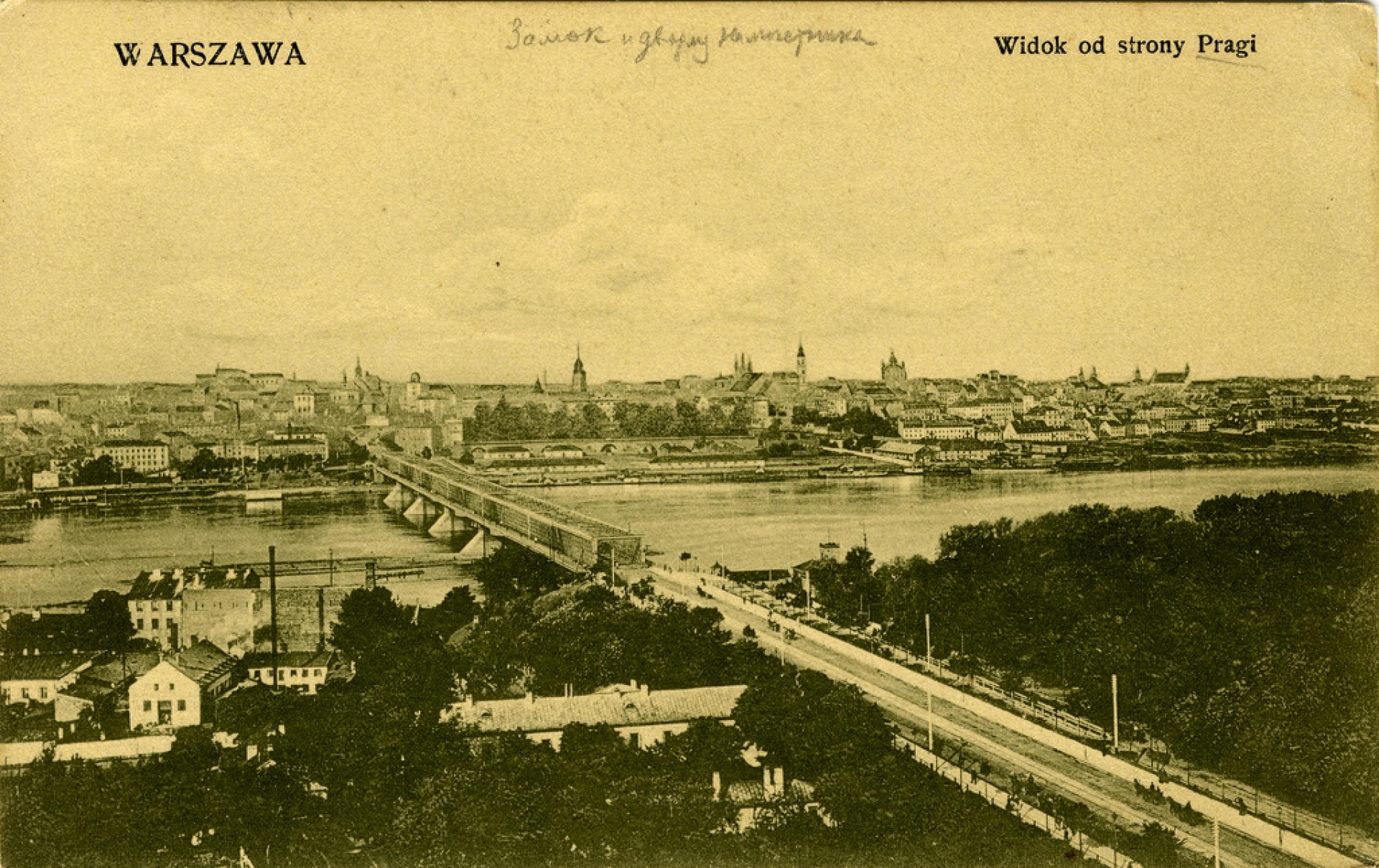
Before World War II, Warsaw was home to the largest Jewish community in Poland, comprising of 350,000 members. Following the invasion of Poland, the German Wehrmacht took Warsaw at the end of September 1939. The German administration immediately began depriving Jews of basic rights, and frequent attacks, expropriation and labelling determined their everyday life. Already in November 1939, the district of Muranów, to a large part inhabited by Jews, was declared a »Seuchensperrgebiet« - a territory endangered with epidemics.
On October 2, 1940, the governor of the Warsaw district, Dr. Ludwig Fischer, ordered the establishment of a closed ghetto in this area. Within six weeks, all Jews had to move to the ghetto, while the non-Jews had to leave their homes for other parts of town. Over 410,000 people were crowded into the ghetto. From mid-November 1940 on, the ghetto was separated from the rest of the city by a 3-metre high wall.
The ghetto was to be dissolved as part of »Aktion Reinhardt«, the systematic murder of the Jews in the General Government. Deportations from the ghetto began on July 22, 1942. Until September 12, the SS, assisted by Jewish police units, deported up to 10,000 people daily to the Treblinka death camp, north-east of Warsaw.
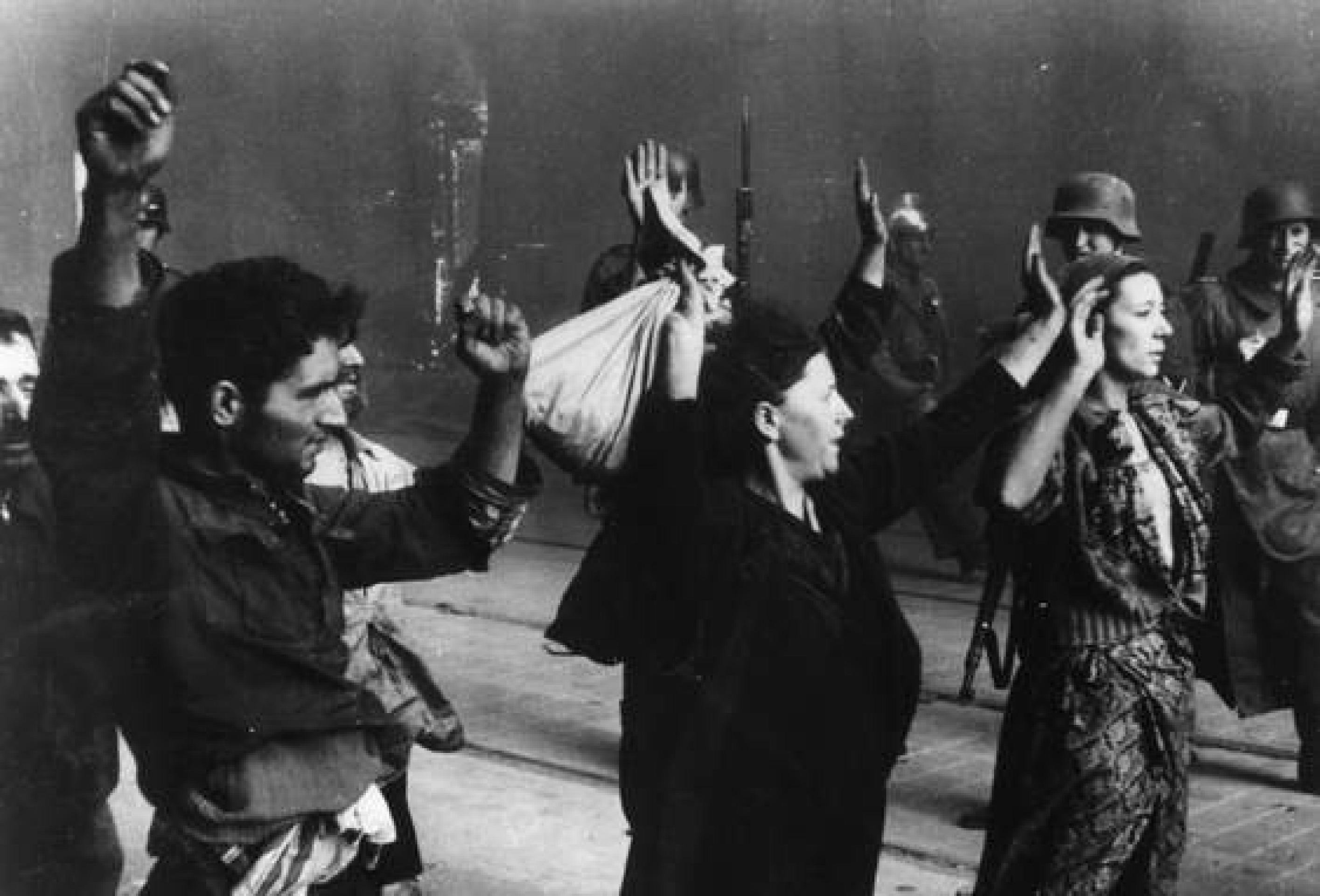
There were about 60,000 people left in the ghetto after the »Grosse Aktion«. Several hundred of them formed the »Jewish Combat Organisation«. When over 2,000 members of the SS, police and Wehrmacht, commanded by Jürgen Stroop, wanted to forcibly clear the ghetto on April 19, 1943, an armed uprising was launched. The fighting lasted over a month. Stroop's troops burned down the ghetto bit by bit, until they finally suppressed the uprising in mid-May 1943.
In August 1943, by order of Heinrich Himmler a concentration camp was set up on the completely pulverized premises of the former ghetto.
Victims
Apart from Warsaw Jews, an additional 50,000 Jews from surrounding areas had to move into the ghetto. In addition, the German authorities deported thousands of Jews from Bohemia and the German Reich as well as Sinti and Roma from Romania, Bulgaria and Hungary to the Warsaw Ghetto. About 100,000 Jews died of hunger or illnesses in the ghetto due to a policy of deliberate underprovision.
Between July 22 and September 12, 1942, in the course of the systematic deportations referred to as the »Grosse Aktion«, some 254,000 Jews were deported to the Treblinka extermination camp and murdered in the gas chambers.
About 12,000 Jews died during the Ghetto Uprising, almost all of them resistance fighters. Many died when residential houses were blown up or streets were burned down by SS, police and Wehrmacht units. About 7,000 survivors of the uprising were deported to Treblinka and over 40,000 to various labour camps in the Lublin District.
Only a few resistance fighters managed to escape after the uprising; many of them subsequently joined partisan groups or Polish resistance groups. Of the 500,000 Warsaw Ghetto inmates in total, only a few thousand lived to see the end of the war.
Remembrance
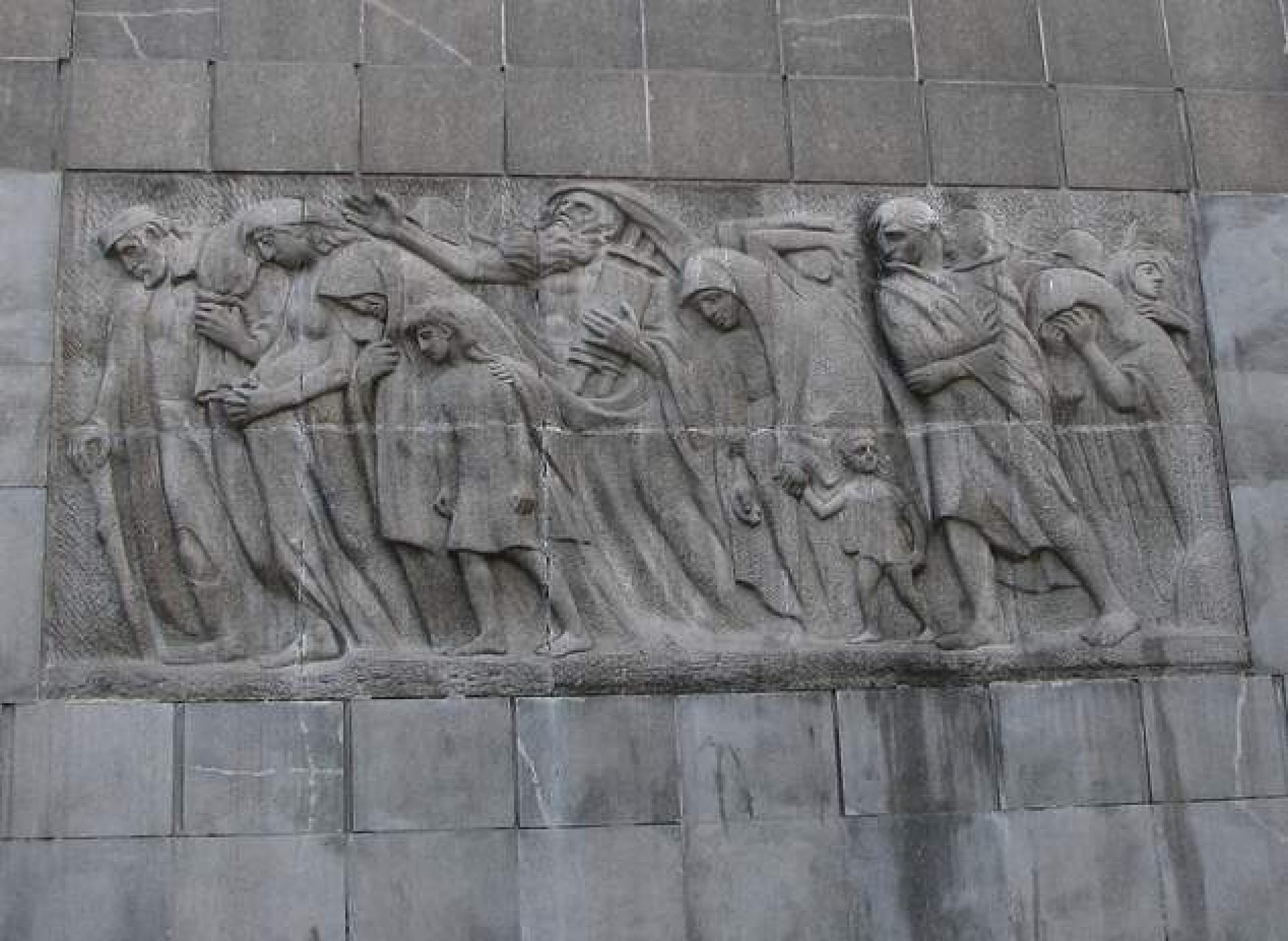
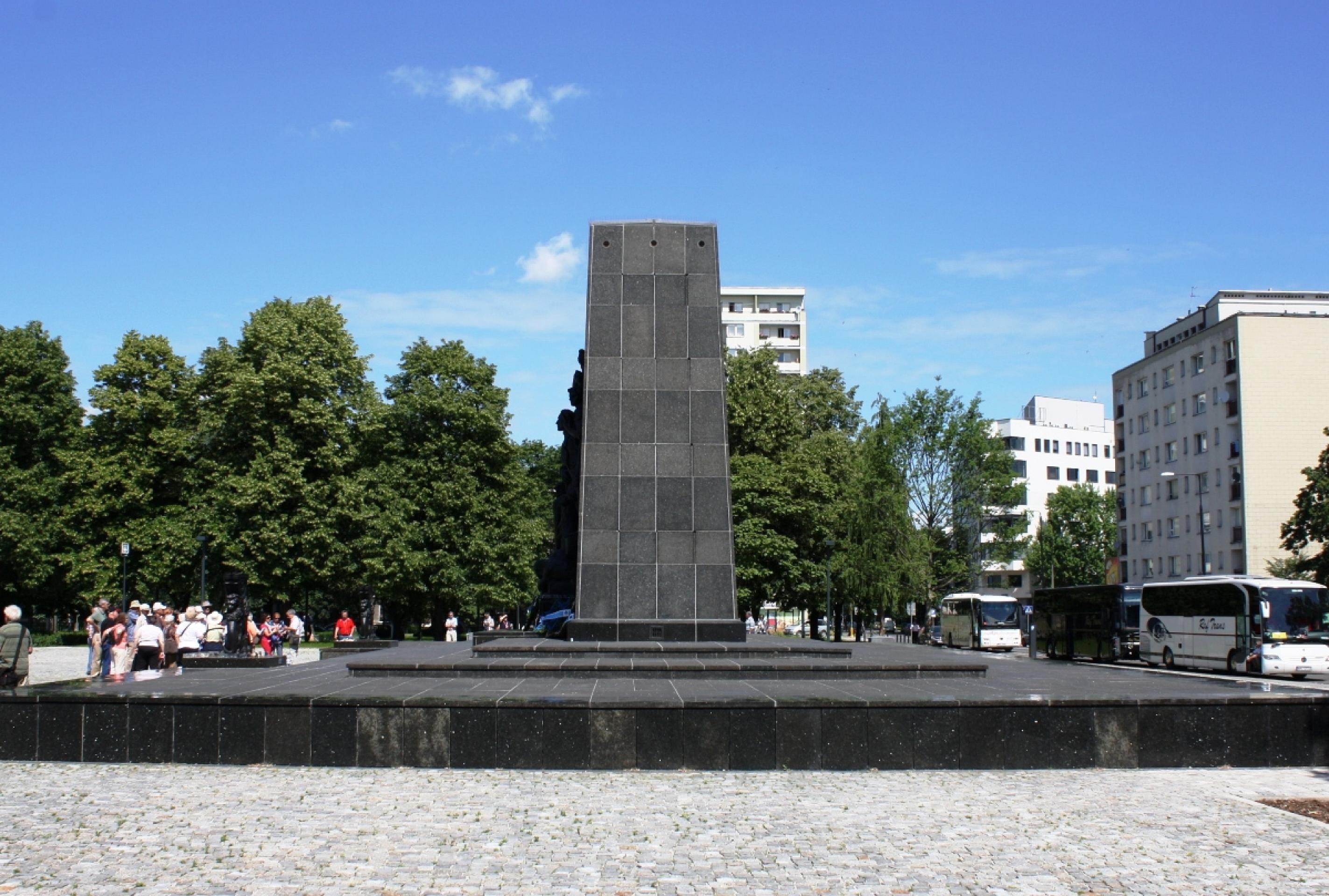
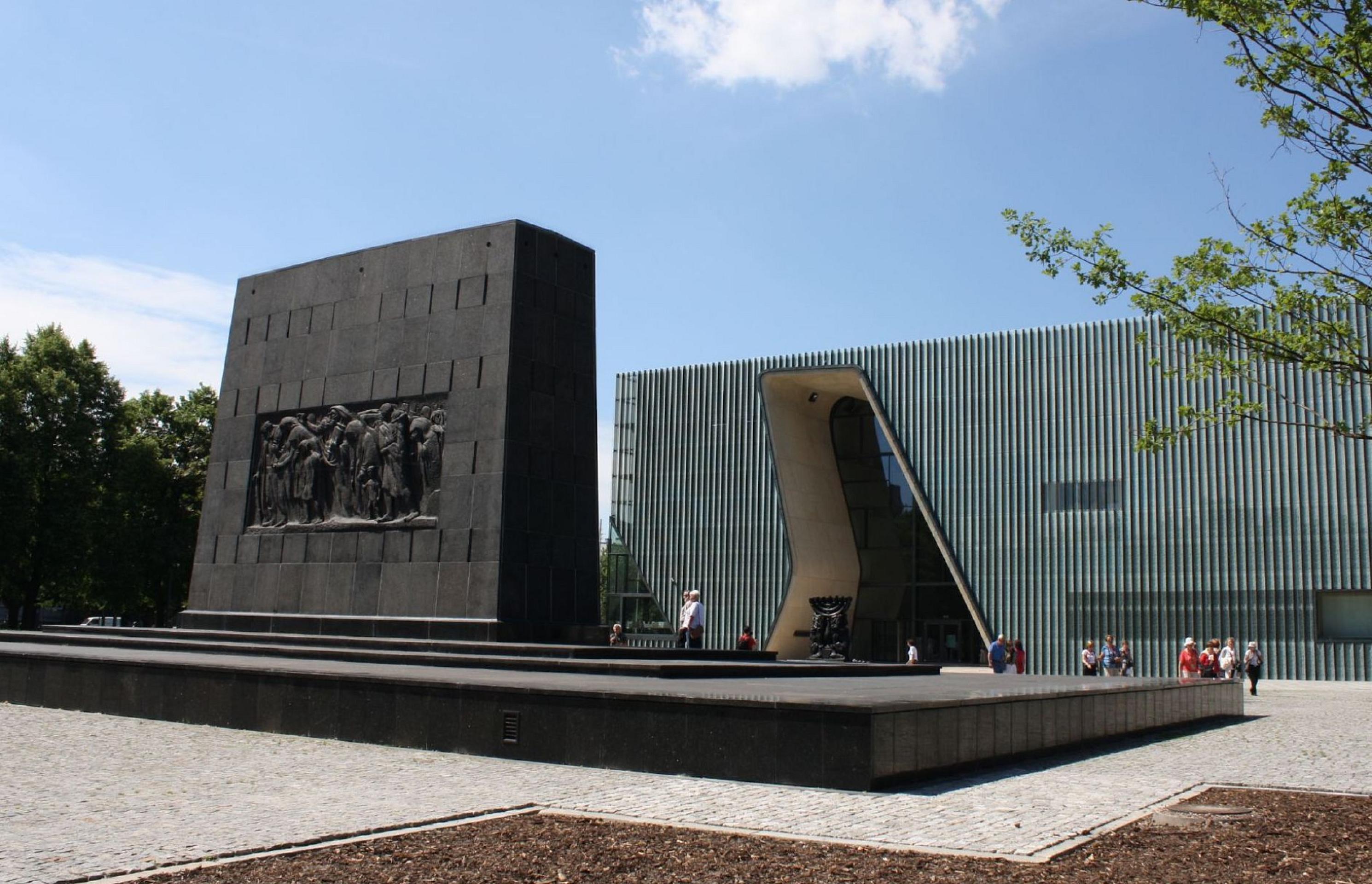
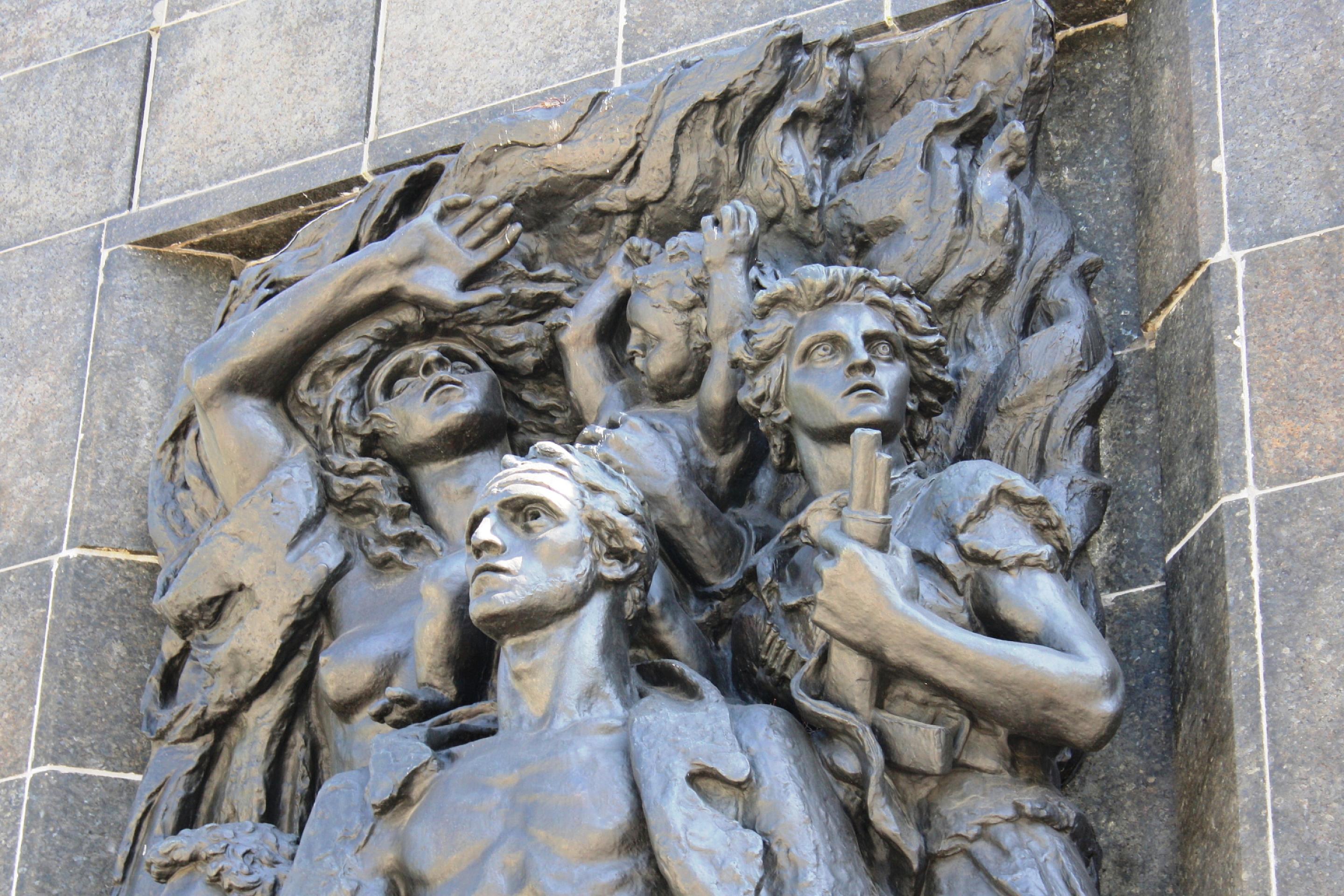
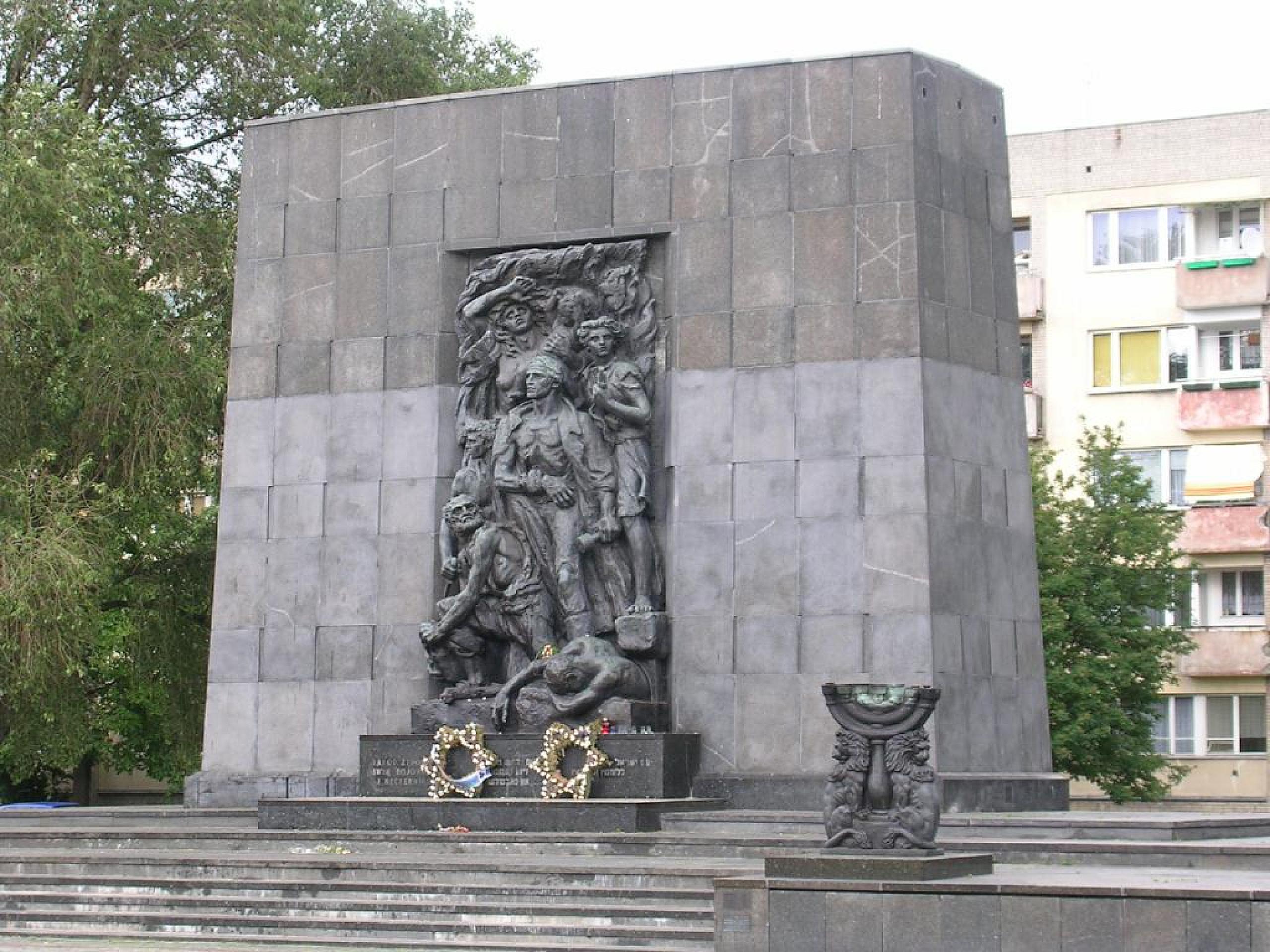
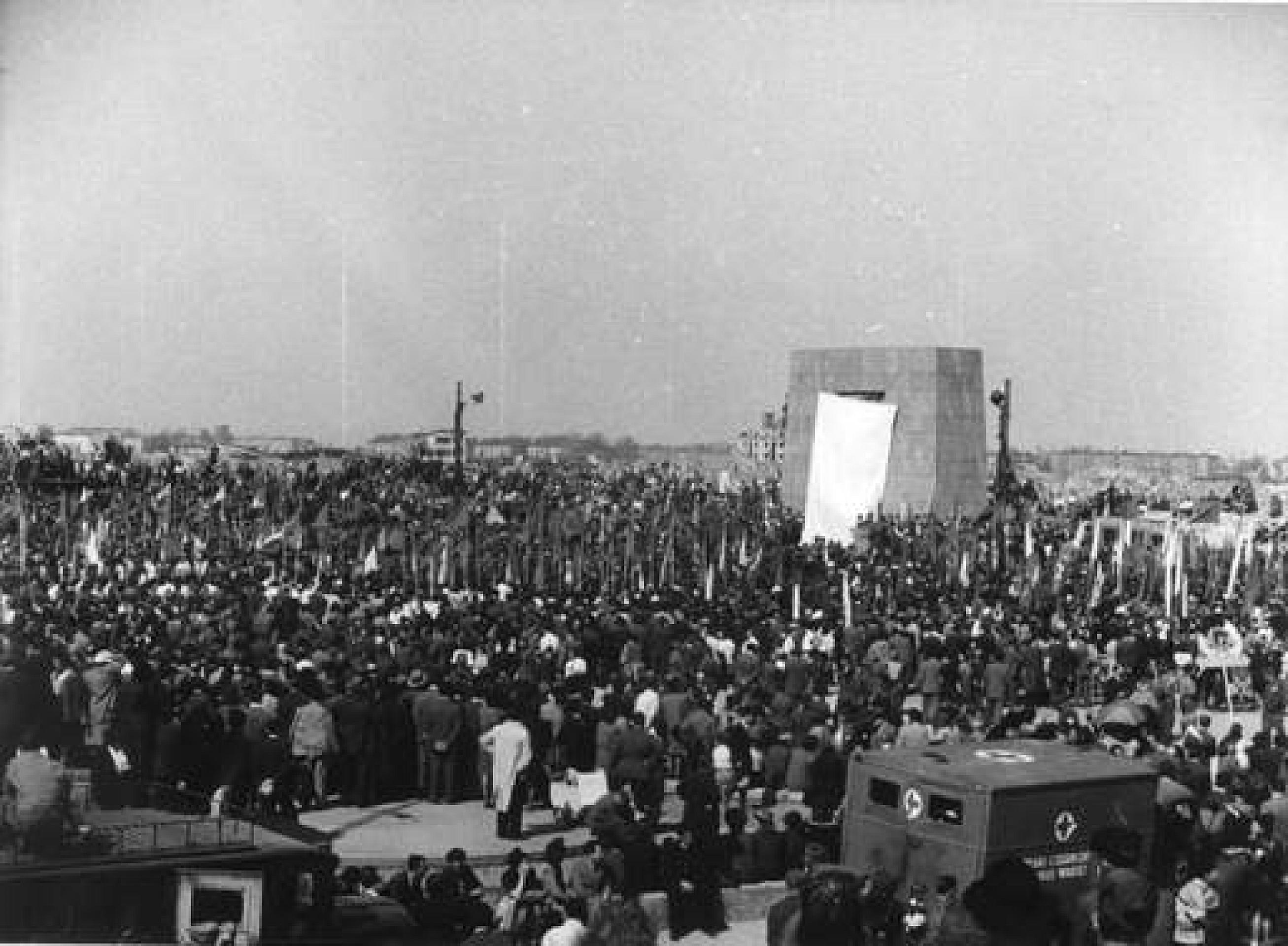
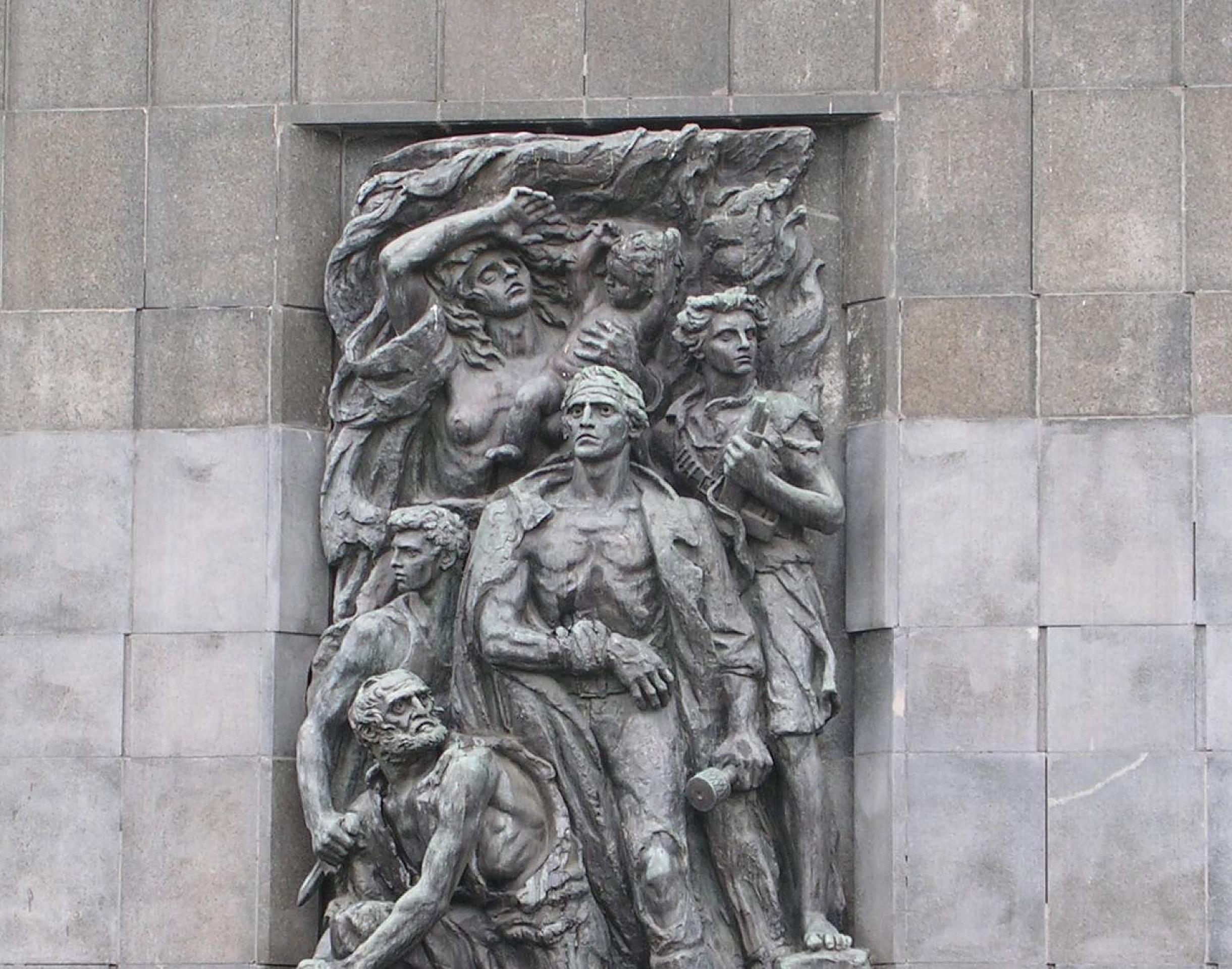
A first memorial sign in the memory of the ghetto uprising was established already in 1946. Right next to it, the »Ghetto Heroes' Memorial« was dedicated on April 19, 1948, the fifth anniversary of the uprising. It was erected on the initiative of Jewish organisations and financed by donations. At first, the monument by Nathan Rapoport stood alone in the demolished landscape where the ghetto once was. The memorial has two sides: depicted on one side are seven heroic, larger-than-life bronze figures, while the other side portrays figures with bowed heads, walking towards their deaths.
In 1967, at a time when anti-Semitic sentiments were gaining ground in the People's Republic of Poland and Jewish life in Poland seemed threatened, the Israeli memorial »Yad Vashem« reproduced the memorial. Until the 1980s, the square in front of the memorial was used for official commemorative ceremonies. In December 1970, West German chancellor Willy Brandt dropped to his knees in front of the memorial. His gesture - and the photos which circled the world - made the memorial famous worldwide.
In the 1980s, the »Solidarność« opposition movement, founded during the 1980-81 strikes in Gdańsk, began gathering at the memorial, making it an assembly point for critics of the system and a symbol of resistance against the communist regime.
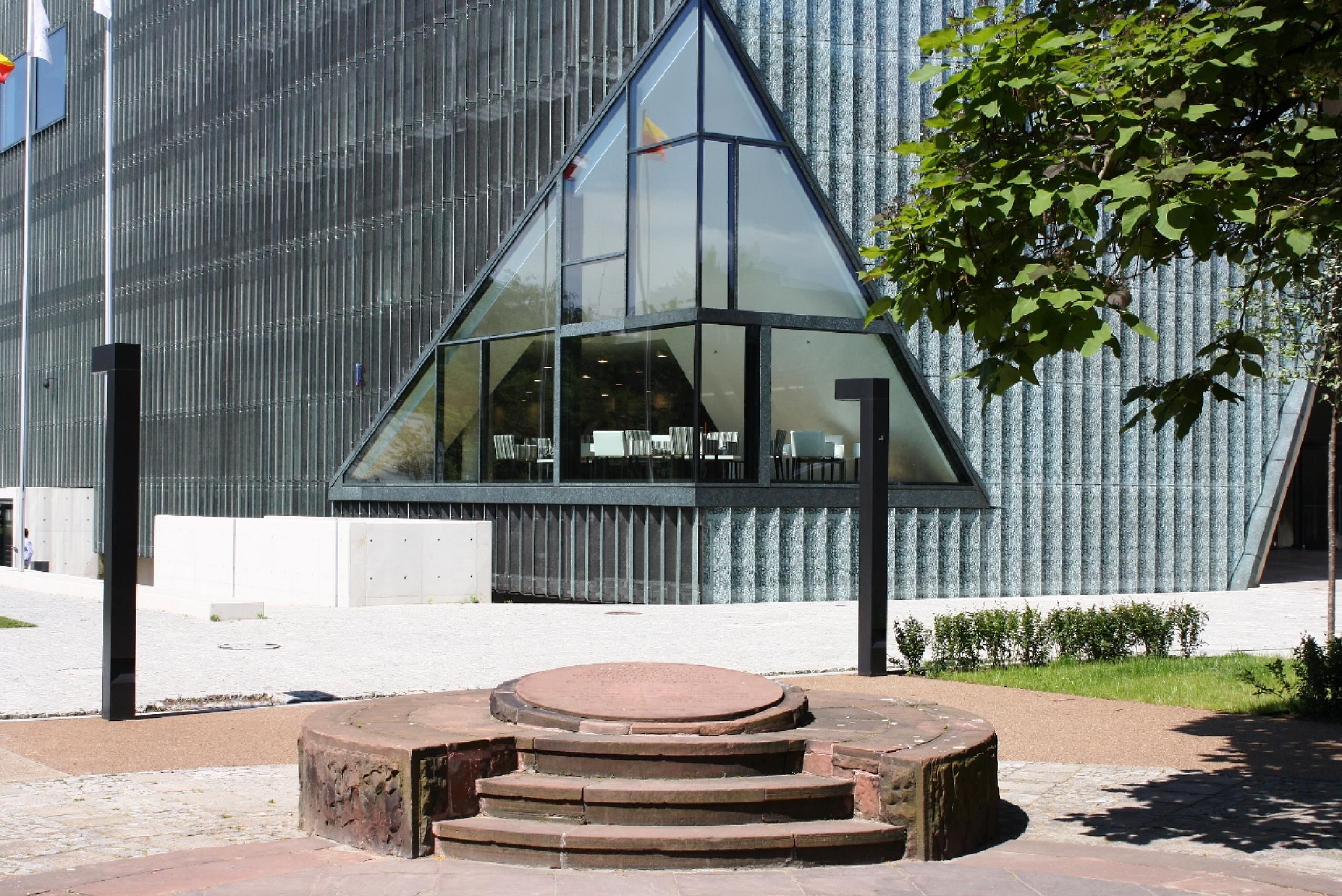
In 2013, on the 70th anniversary of the uprising in the Warsaw Ghetto, the Museum of the History of Polish Jews was inaugurated right next to the memorial.
Open
The memorial is accessible at all times.
Contact
ul. Zamenhofa
00-165 Warszawa