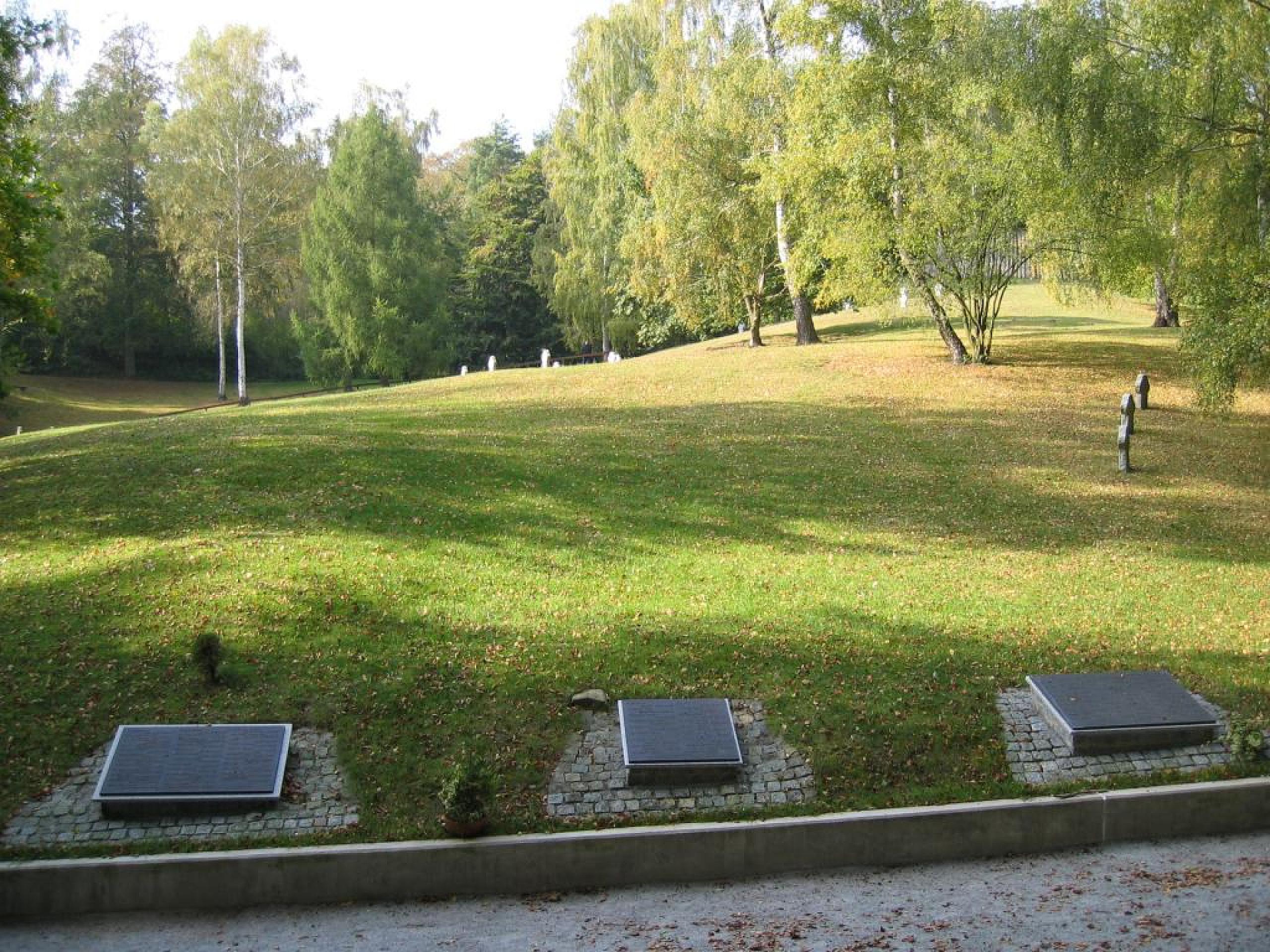
The largest war cemetery of Mecklenburg-Vorpommern is located on the island in the Baltic Sea Usedom, close to the township of Kamminke. Tens of thousands of war dead were buried on the Golm hill, Usedom's highest elevation point. They perished on March 12, 1945, during an American air raid on the neighbouring port town of Swinemünde (Polish: Świnoujście). The German-Polish border now runs between Kamminke and Świnoujście.
History
During the final phase of World War II, there were thousands of refugees from Eastern Pomerania and East and West Prussia in Swinemünde. Here they waited to board ships which would carry them into safety away from the approaching war front. Swinemünde was home to a strategically important military port. At the beginning of March 1945, a Germany navy »combat formation« arrived in Swinemünde from Gdingen (then called Gotenhafen, Polish: Gdynia). It consisted of two battleships, several destroyers and torpedo boats. The »combat formation« was to bring relief to German soldiers in their fight against the superior Soviet army. At about noon on March 12, 1945, the US Air Force launched an attack against the port town. Its aim was to deliver a blow to the German navy by destroying this strategic port.
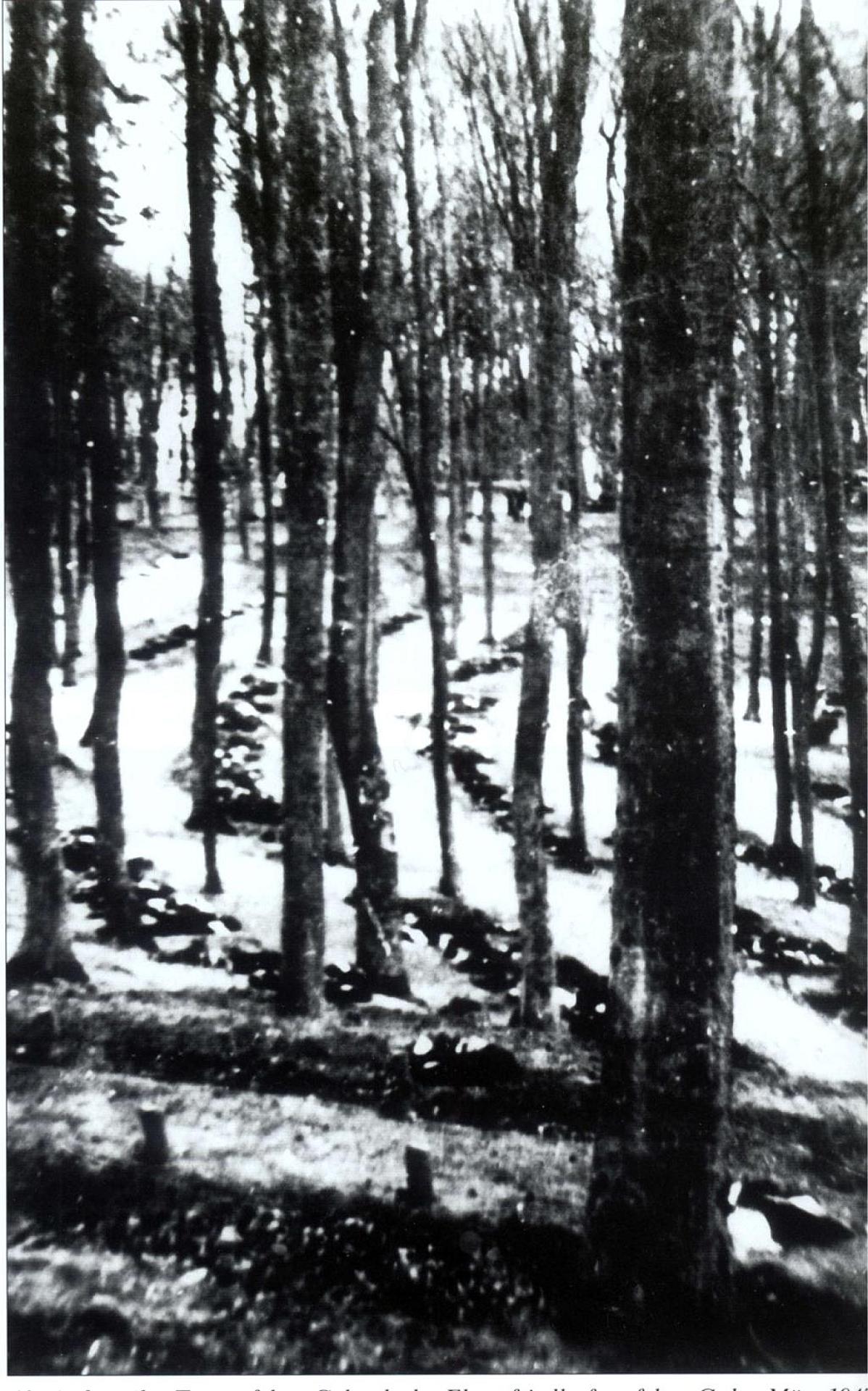
Within an hour, the about 670 American bombers destroyed large parts of the city. Though the US Air Force hit several ships, they did not manage to severely damage the port complex. Many of the bombs hit upon populated areas of the city. The Swinemünde spa grounds on which many refugees and soldiers had been staying in the open were also hit. Many wounded soldiers who were being taken care of in mobile army hospitals at the train station also fell victim to the air raid.
Victims
Some sources speak of over 20,000 victims of the American air raid on Swinemünde. Historians, however, assume that the actual number of victims is closer to about 4,000 to 5,000.
Among the victims were not only many refugees but also residents of Swinemünde, forced labourers and prisoners of war.
Most of the dead were buried by volunteers in anonymous graves on the Golm hill. Located there are also the graves of about 3,000 Wehrmacht soldiers. From 1944 on, the city of Swinemünde had buried all the dead from the municipal military hospital on the Golm.
Remembrance
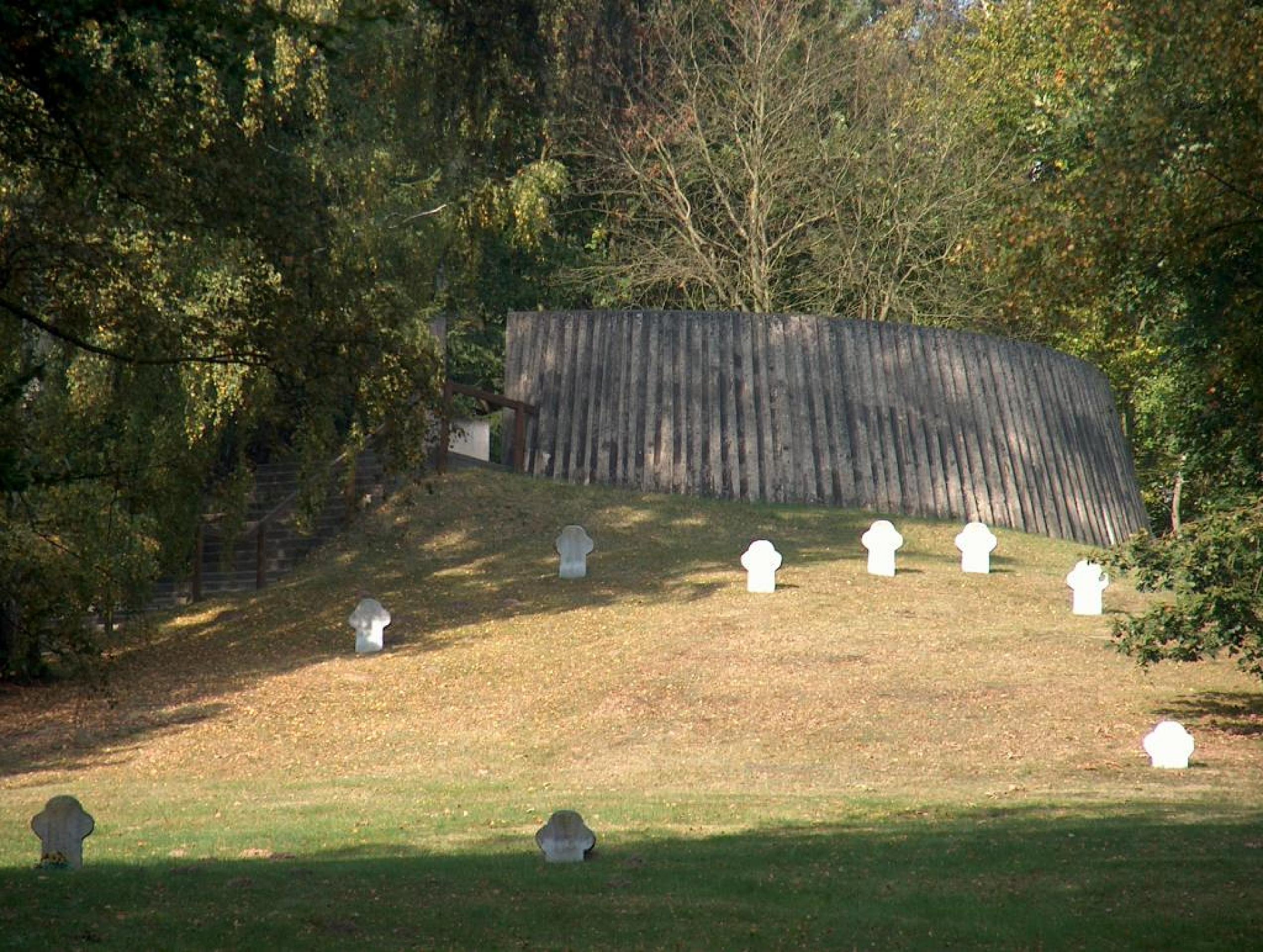
During GDR times, the regional Protestant church and state institutions disagreed about the appropriate form of commemoration. In 1969, all individual graves were levelled out for political reasons. The state authorities commissioned Rostock artist Wolfgang Eckard with designing a memorial complex. The result was a circular concrete building, divided into two parts, which was set up on a central site. The inscription reads: »May no mother ever again mourn her son«.
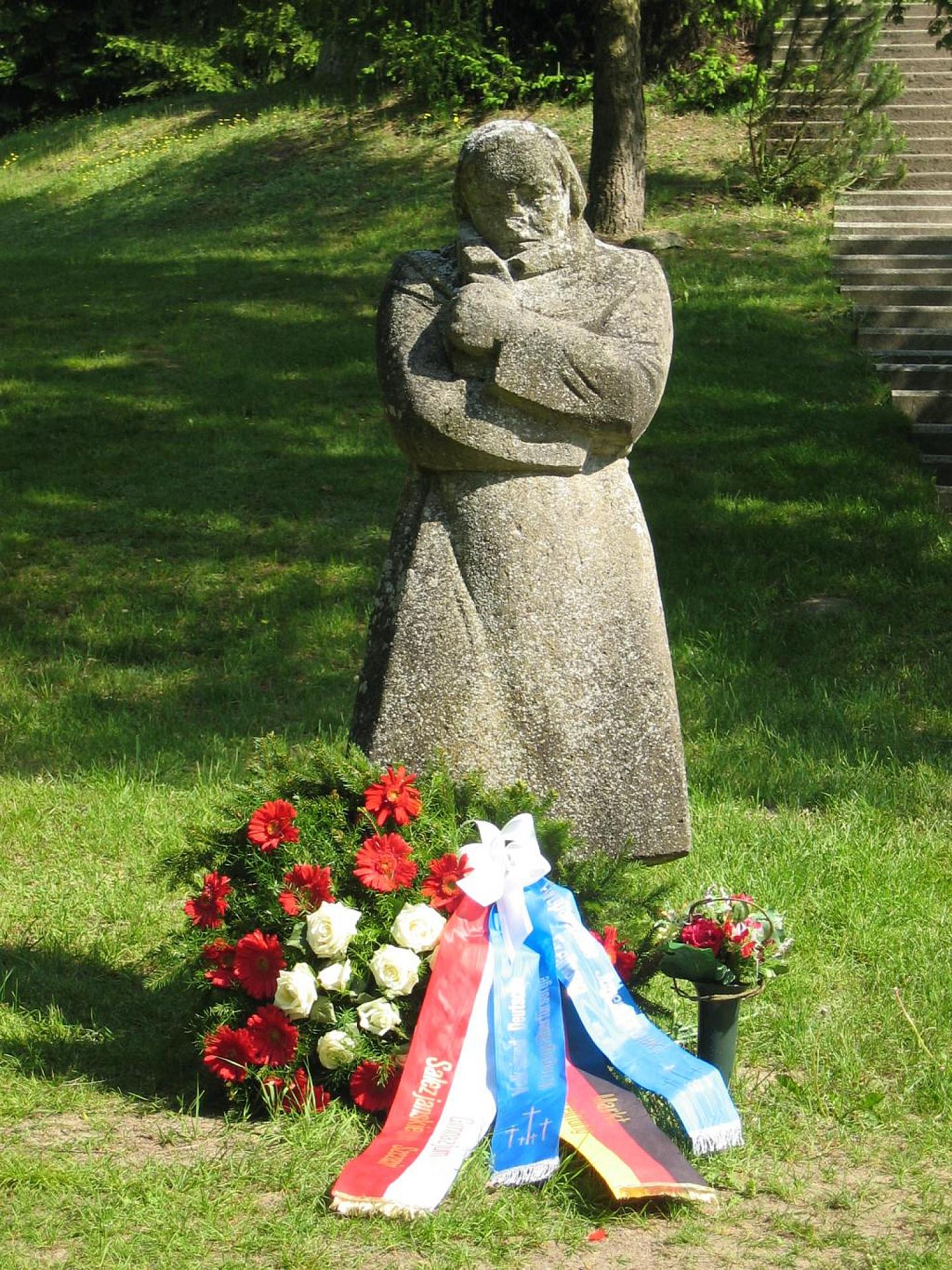
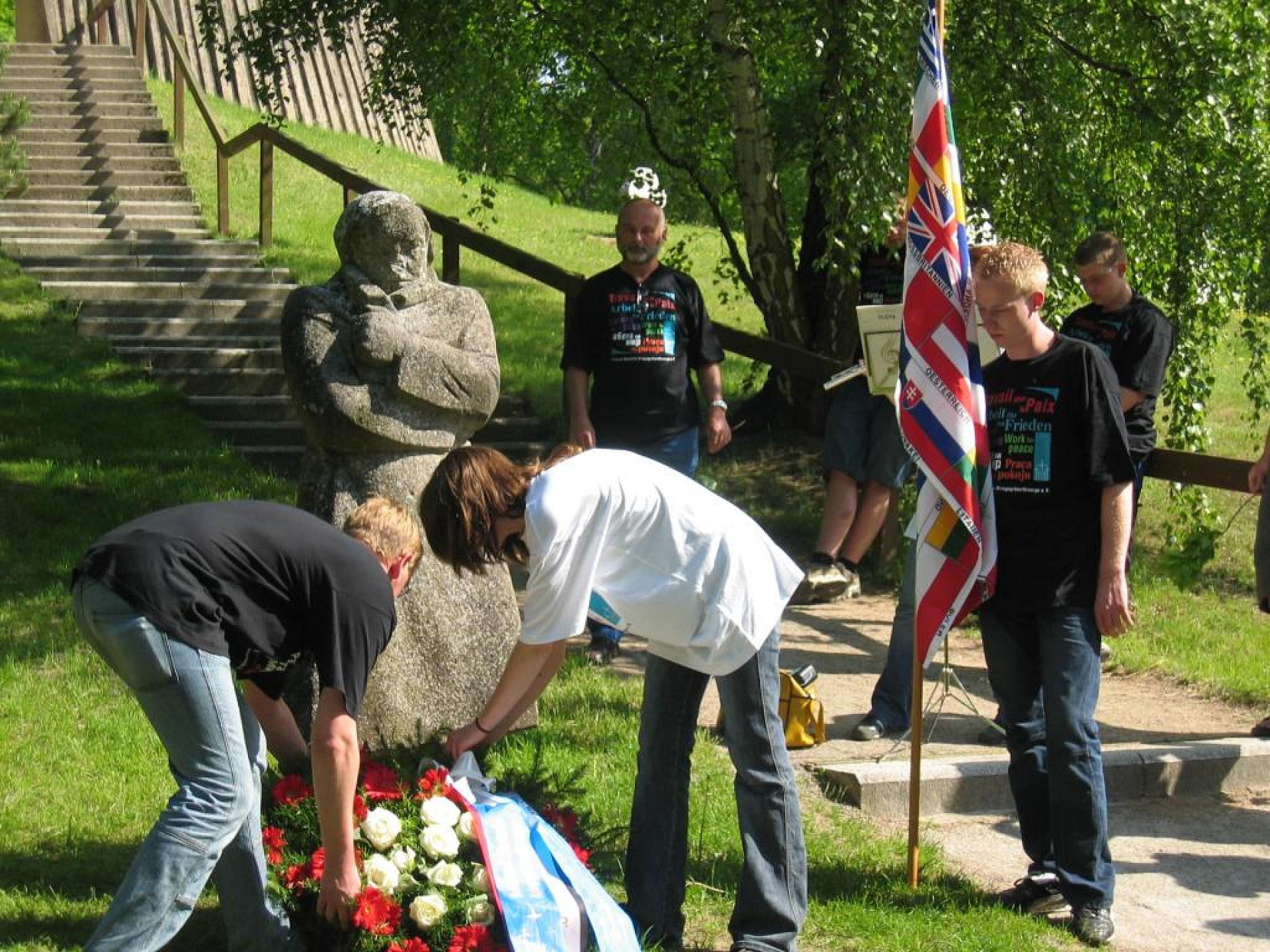
Located in front of the entrance to the building stands a sculpture by Rudolf Leptien entitled »The Frozen« - though created at the beginning of the 1950s, it was only set up on the Golm hill in 1984.
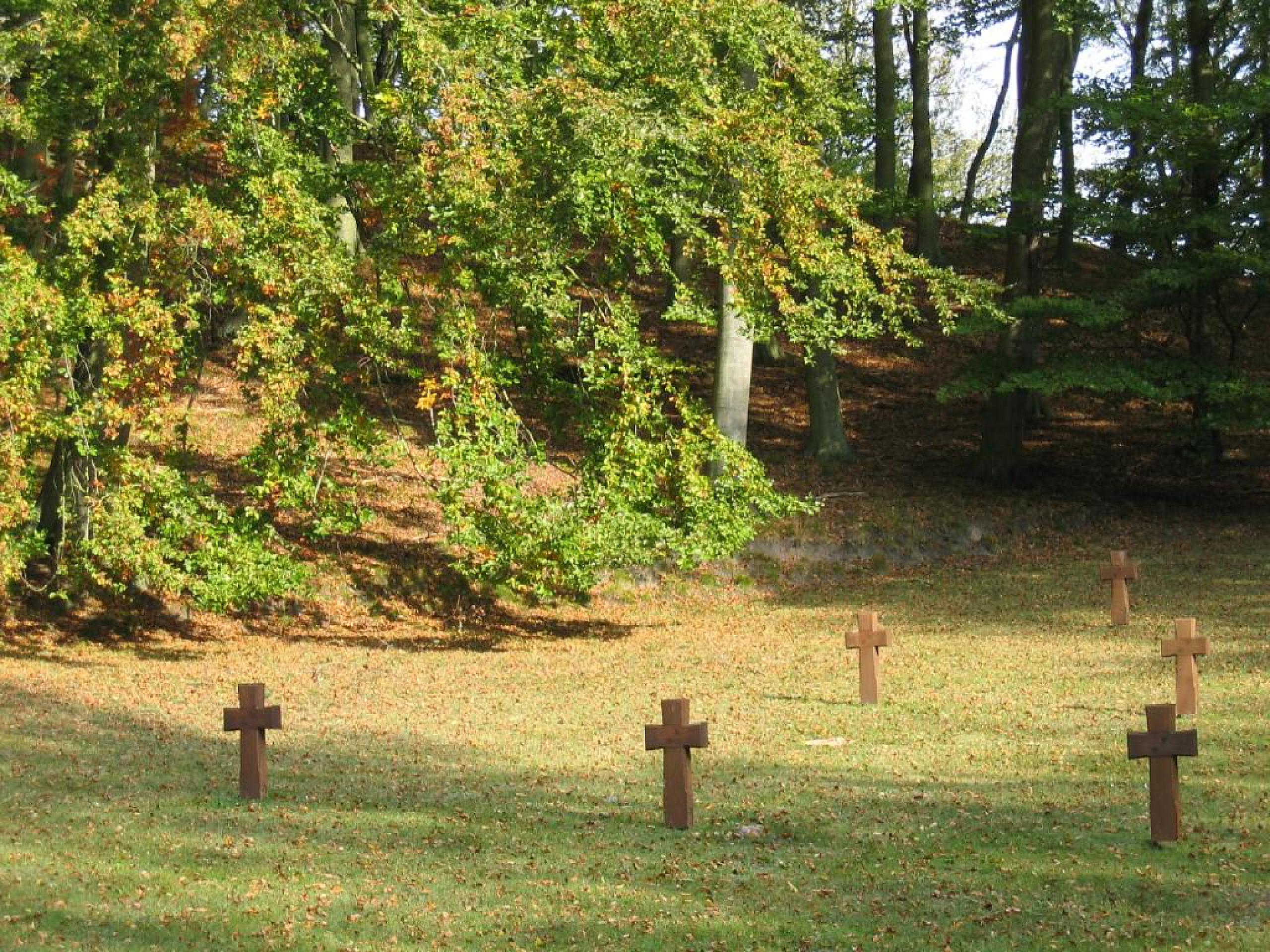
On March 12, 1992, the Golm Memorial Interest Group association was established. In 1995, it began redesigning the war cemetery complex. A 5-metre large wooden cross was set up on the Golm as well as symbolic crosses and name plaques to commemorate the dead.
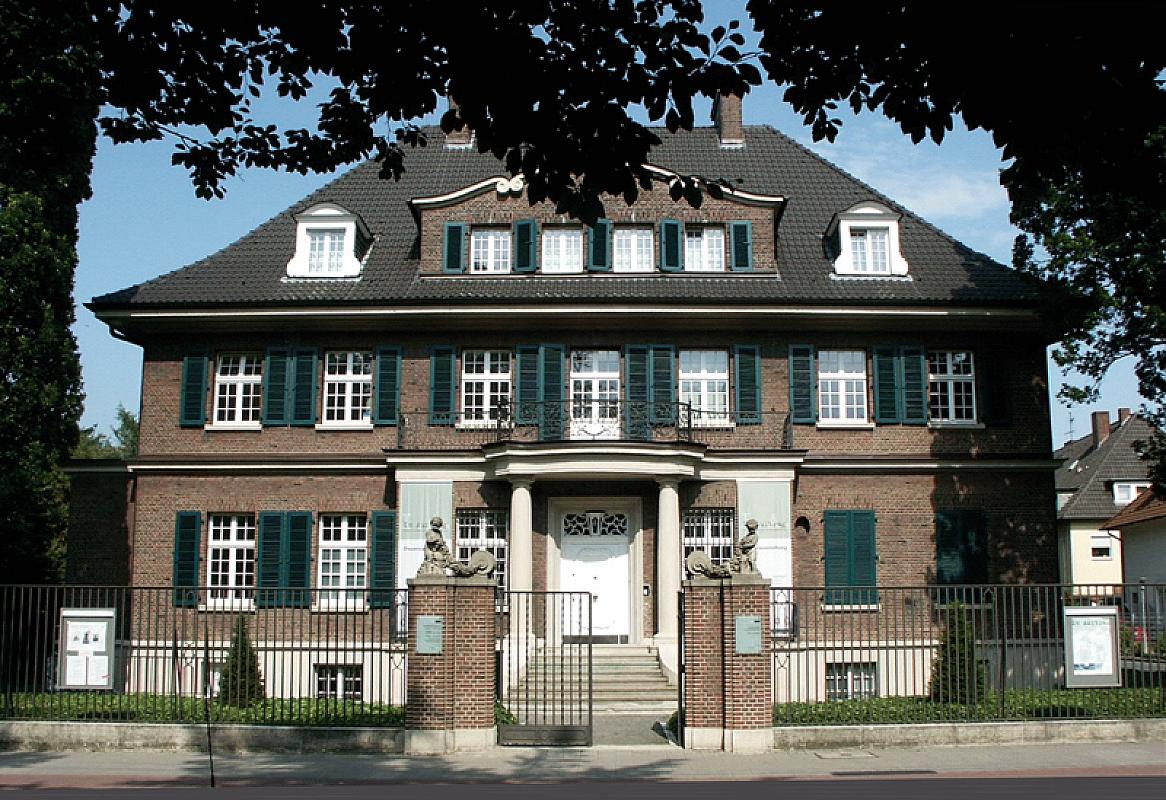
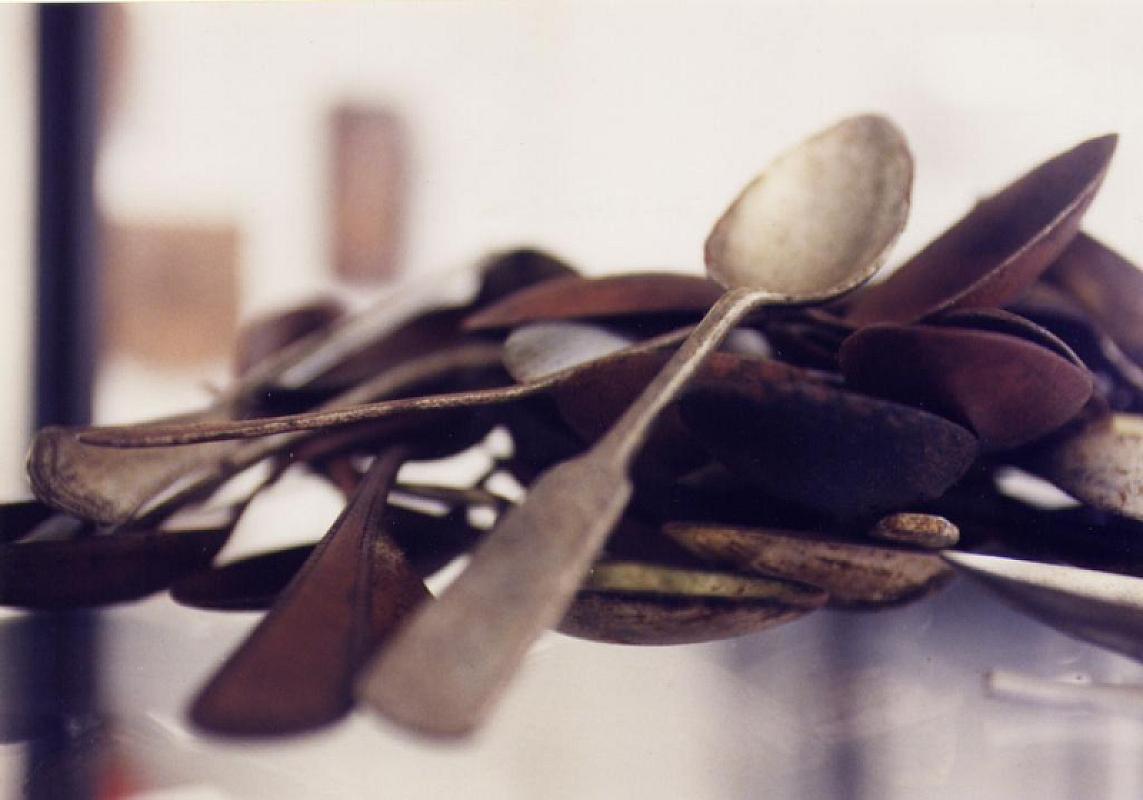
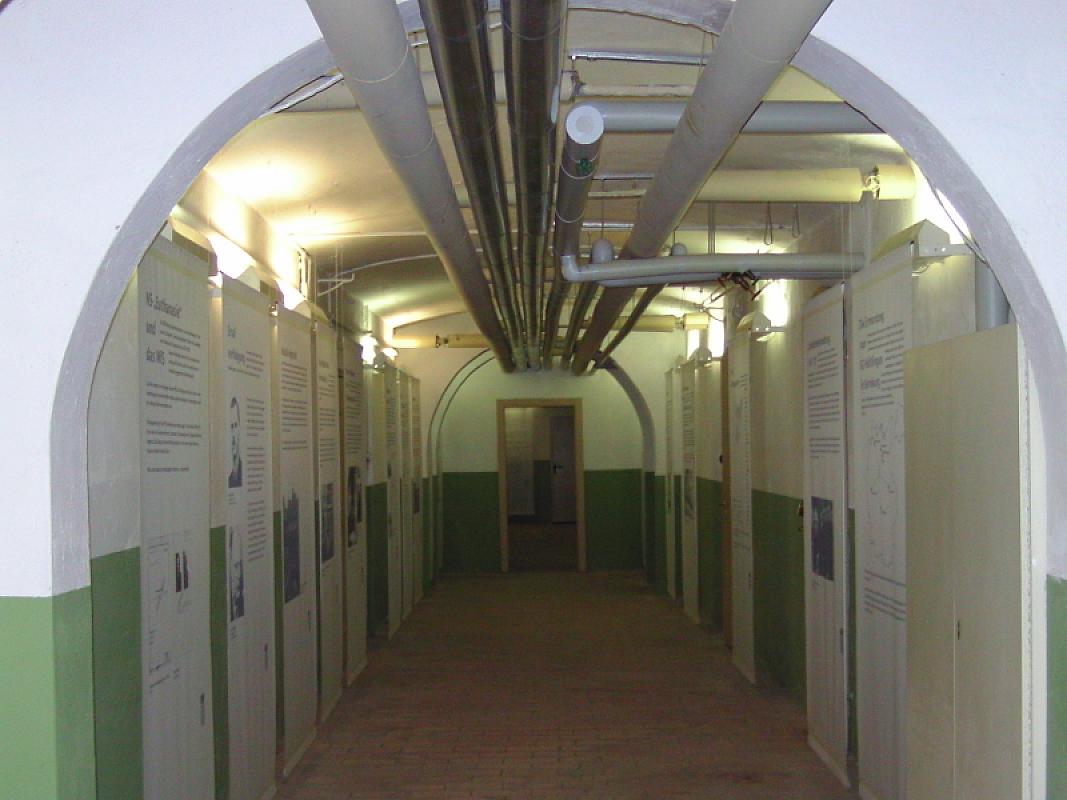
On March 1, 2000, the war cemetery came under the auspices of the German War Graves Commission. Soon thereafter, a small pavilion was erected on the site. Displayed here is an exhibition on the history of the region during World War II. Since 2005, the German War Graves Commission has also operated a youth meeting centre in Kamminke.
Possibilities
Permanent exhibition on the war cemetery, guided tours, educational projects on peace for school groups and youth groups, collection of source material about the war cemetery at Golm, access to the archives (by appointment)
Open
The memorial site is accessible at all times.
Exhibition: daily from 9:00 a.m. until 5 p.m.
Contact
info@jbs-golm.de
+49 (0)38376 290 0
17419 Kamminke