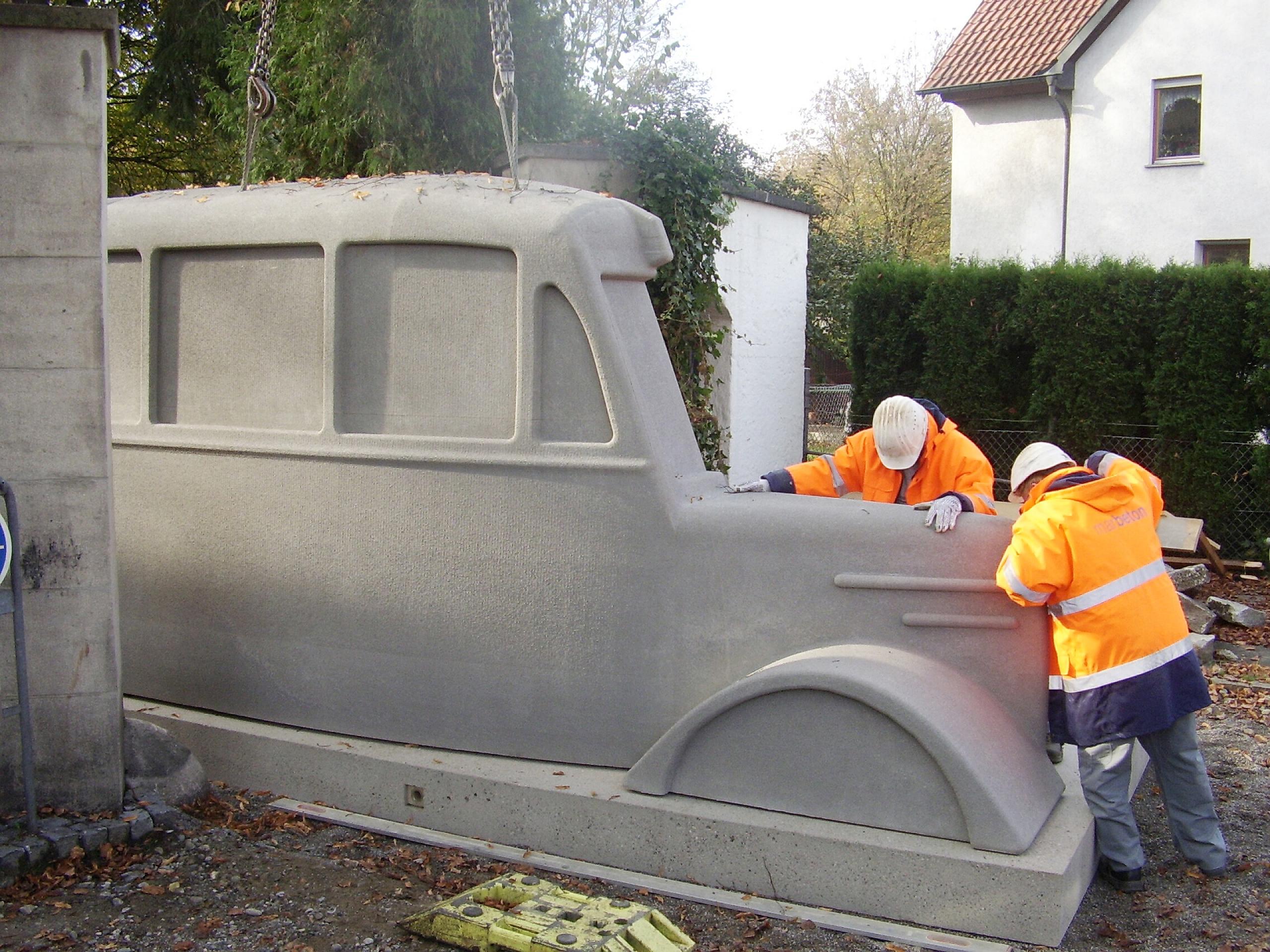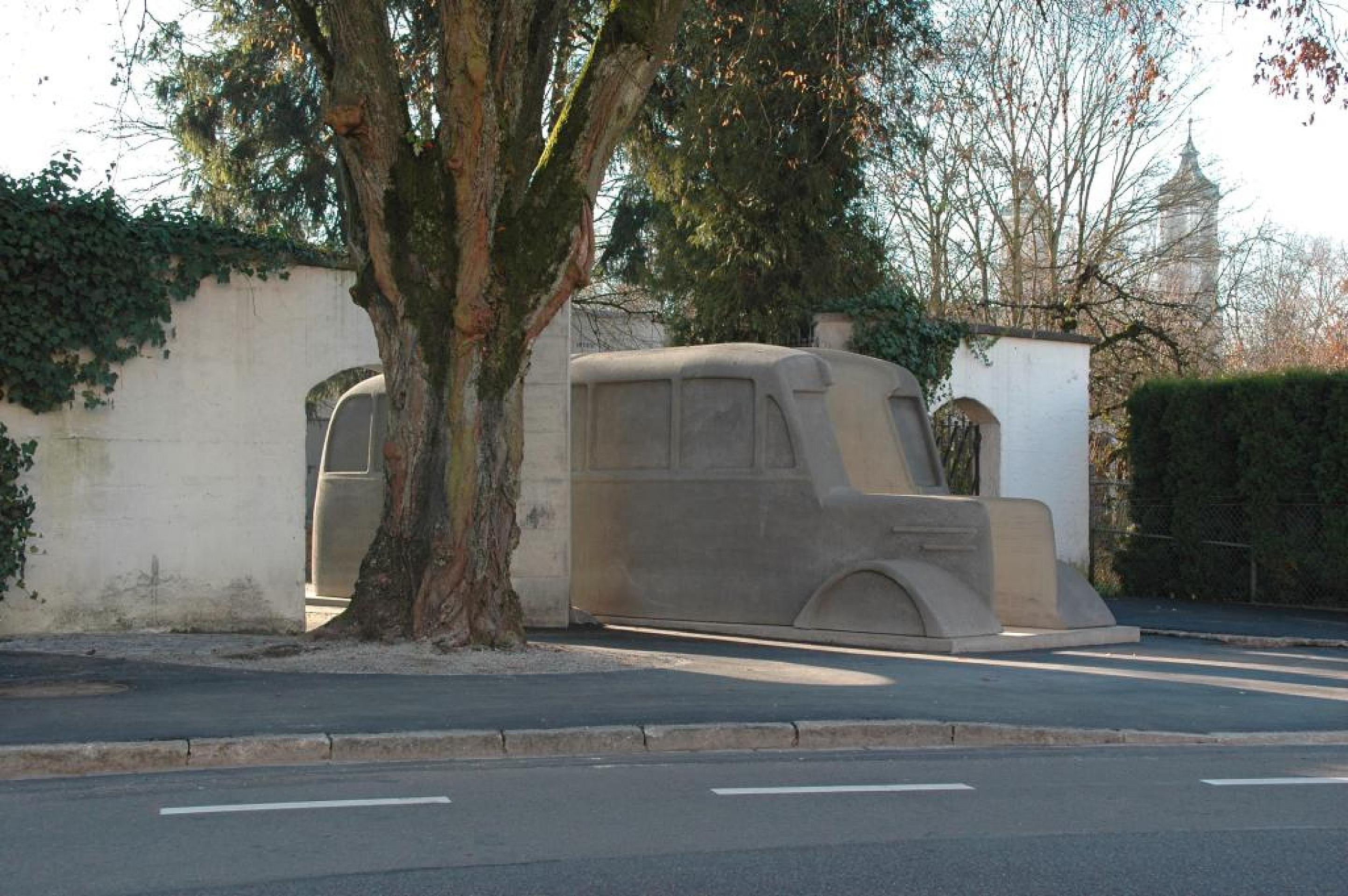
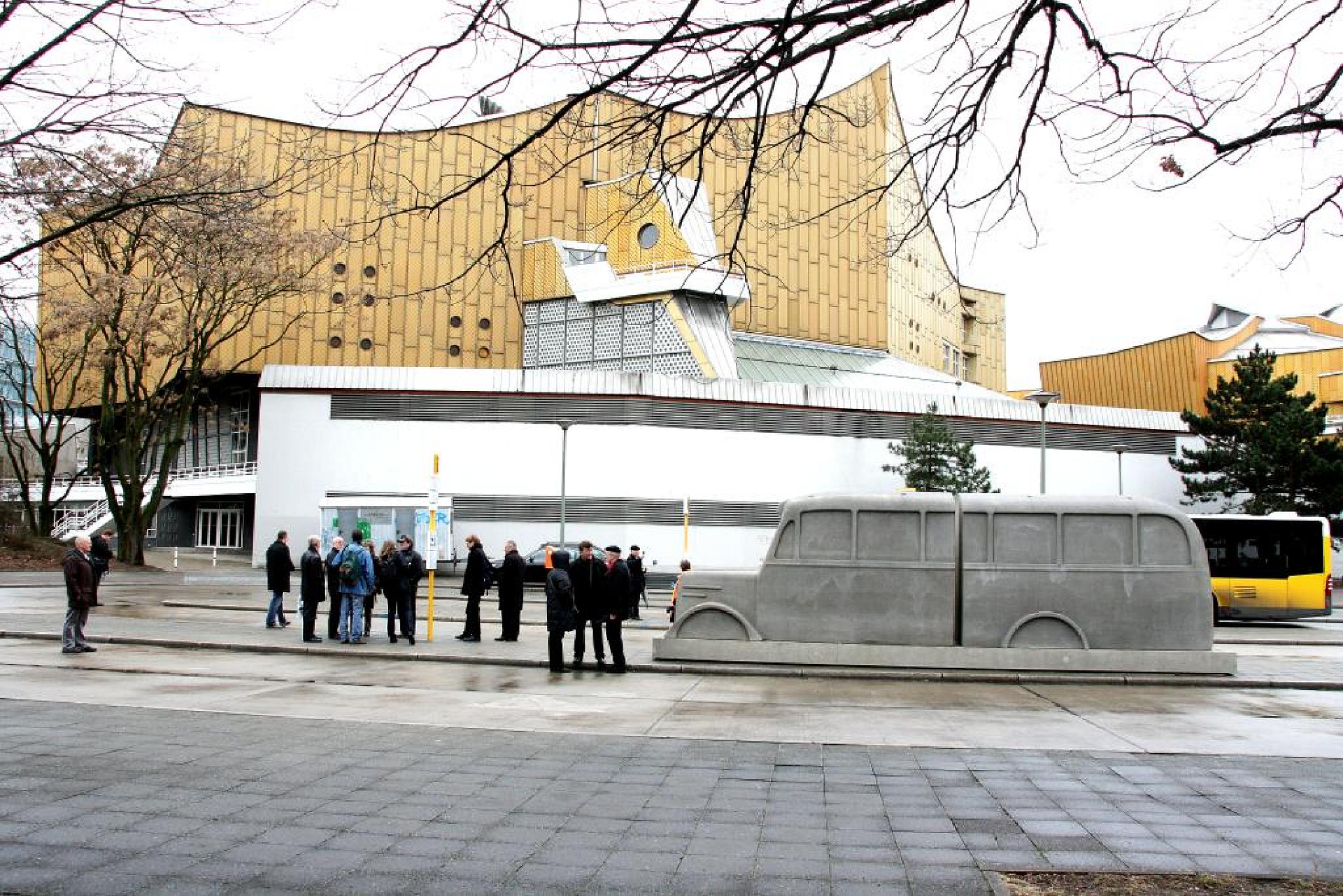
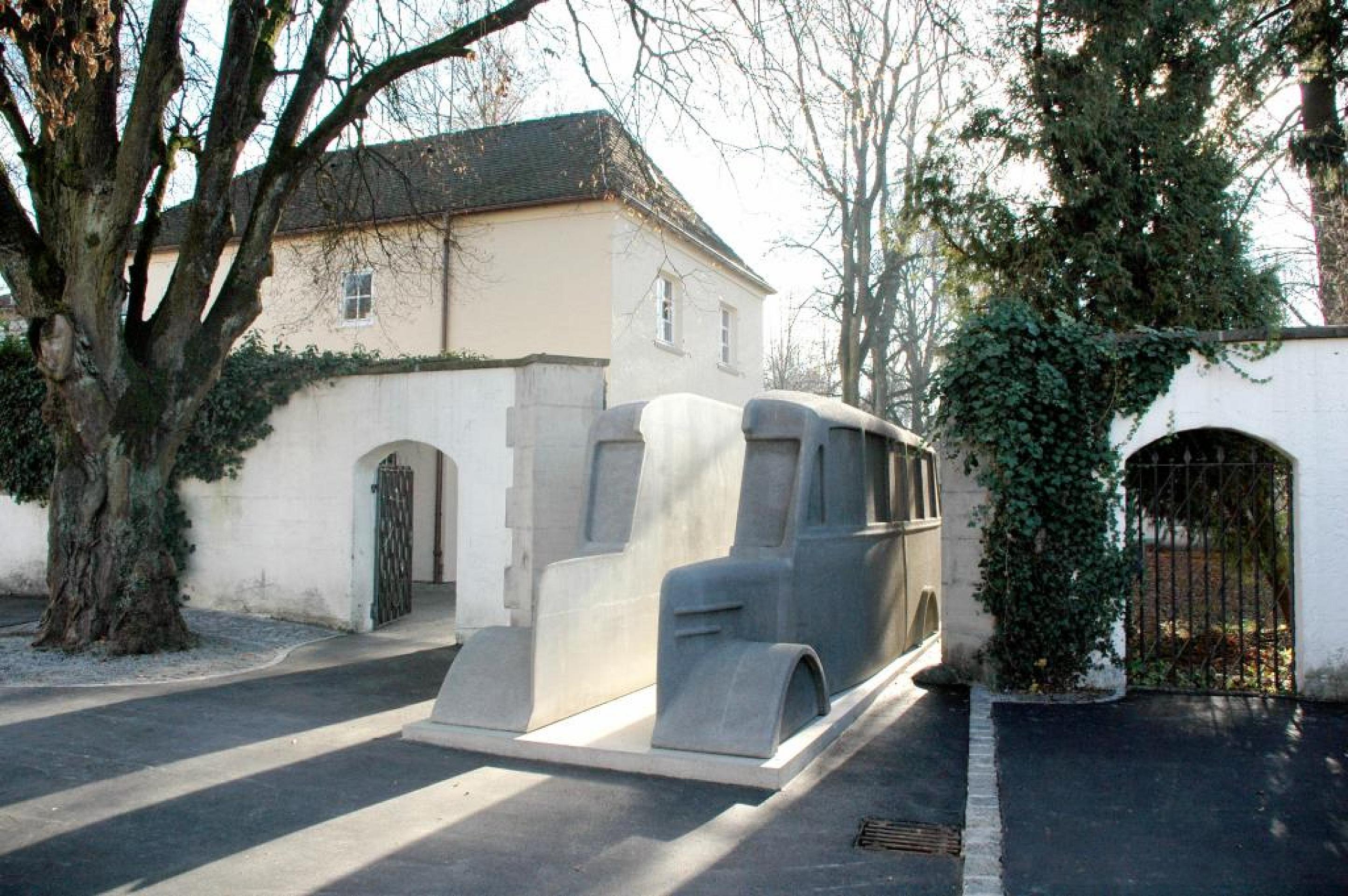
Since 2006, the »Grey Buses Memorial« in Ravensburg-Weißenau has commemorated the fates of the handicapped and mentally ill people who were taken from the Weißenau hospital to »T4« killing centres in Grafeneck and Hadamar in 1940/41. A second identical »Grey Buses Memorial« regularly changes locations, being displayed at historic sites of the »euthanasia« campaign.
History
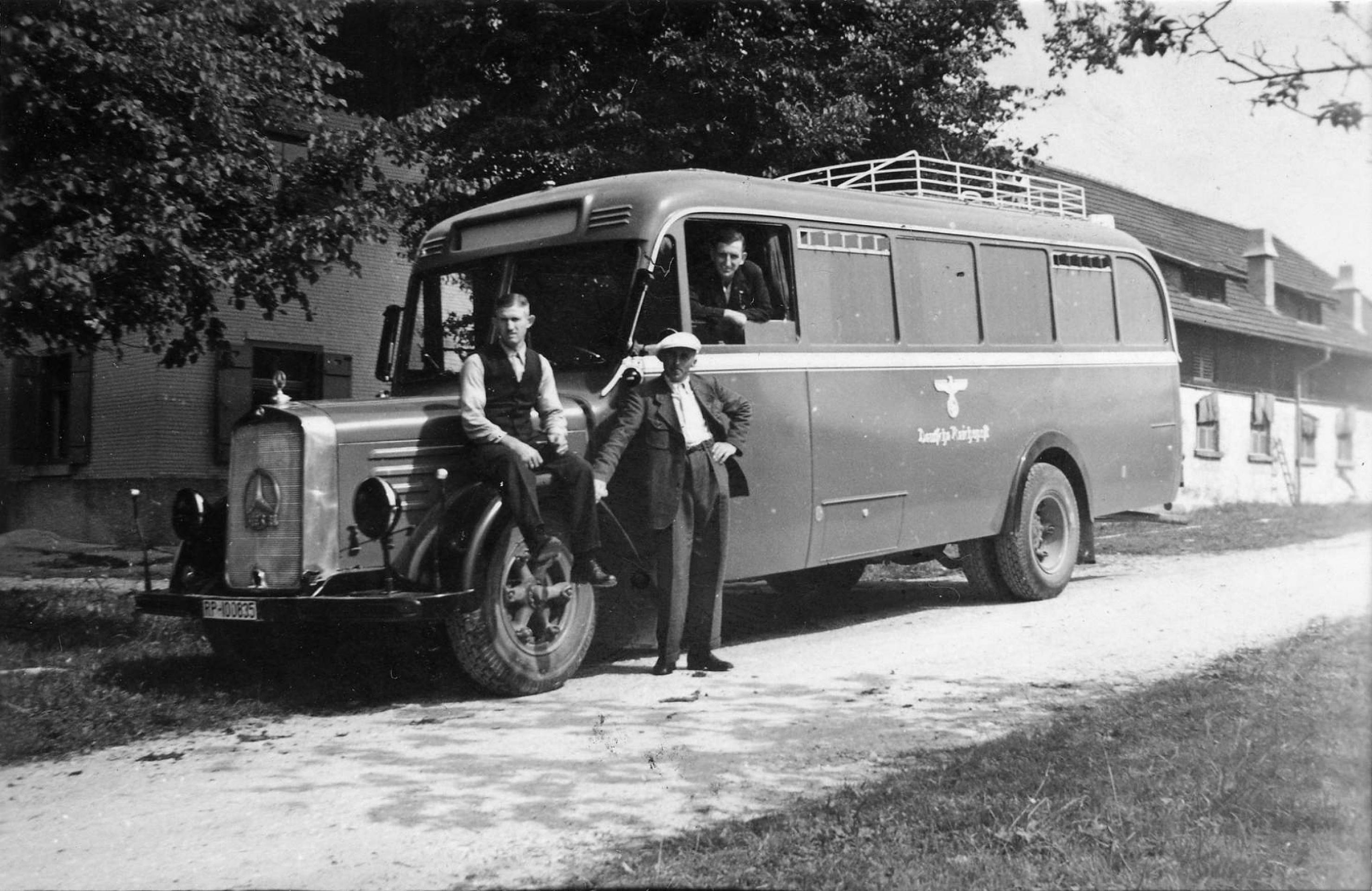
Under the National Socialist regime the term »euthanasia« stood for the murder of thousands of mentally and physically handicapped people. The murder was planned and organised by a central office which directly reported to Adolf Hitler. The office was code named »T4« in reference to its postal address in Berlin's Tiergartenstraße. At first, toddlers up to the age of three fell victim to »euthanasia«, later older children and youths were affected. Beginning 1940, handicapped adults and ill people were included in the scheme under the new code »Action T4«. During the initial phase, people were killed by malnourishment, poison or medications. From January 1940, more and more »T4« killing centres began operating gas chambers. The transfer of patients deemed »unworthy of living« to so-called transit institutions was to ensure better concealment of the »Action T4«. After several weeks in transit institutions, the handicapped and mentally ill patients were taken to one of six killing centres by the Gemeinnütziger Krankentransport GmbH (GEKRAT; engl.: charitable ambulance service). The camouflage organisation used omnibuses from the bus pool of the Reich postal service. Before using them, the GEKRAT repainted the red buses, including the windows, grey. In order to hide the buses' real purpose from the public, the bus drivers were instructed to take alternate routes on their journeys.
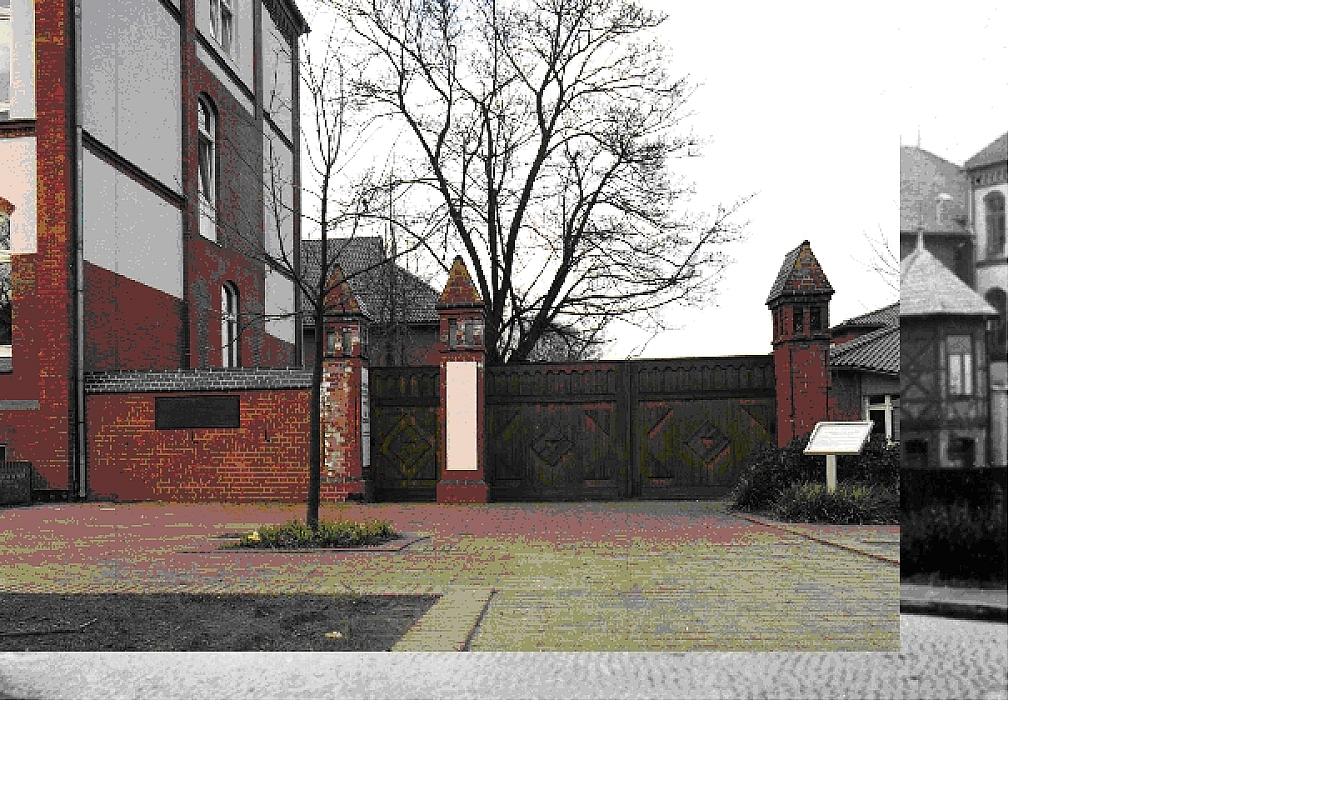
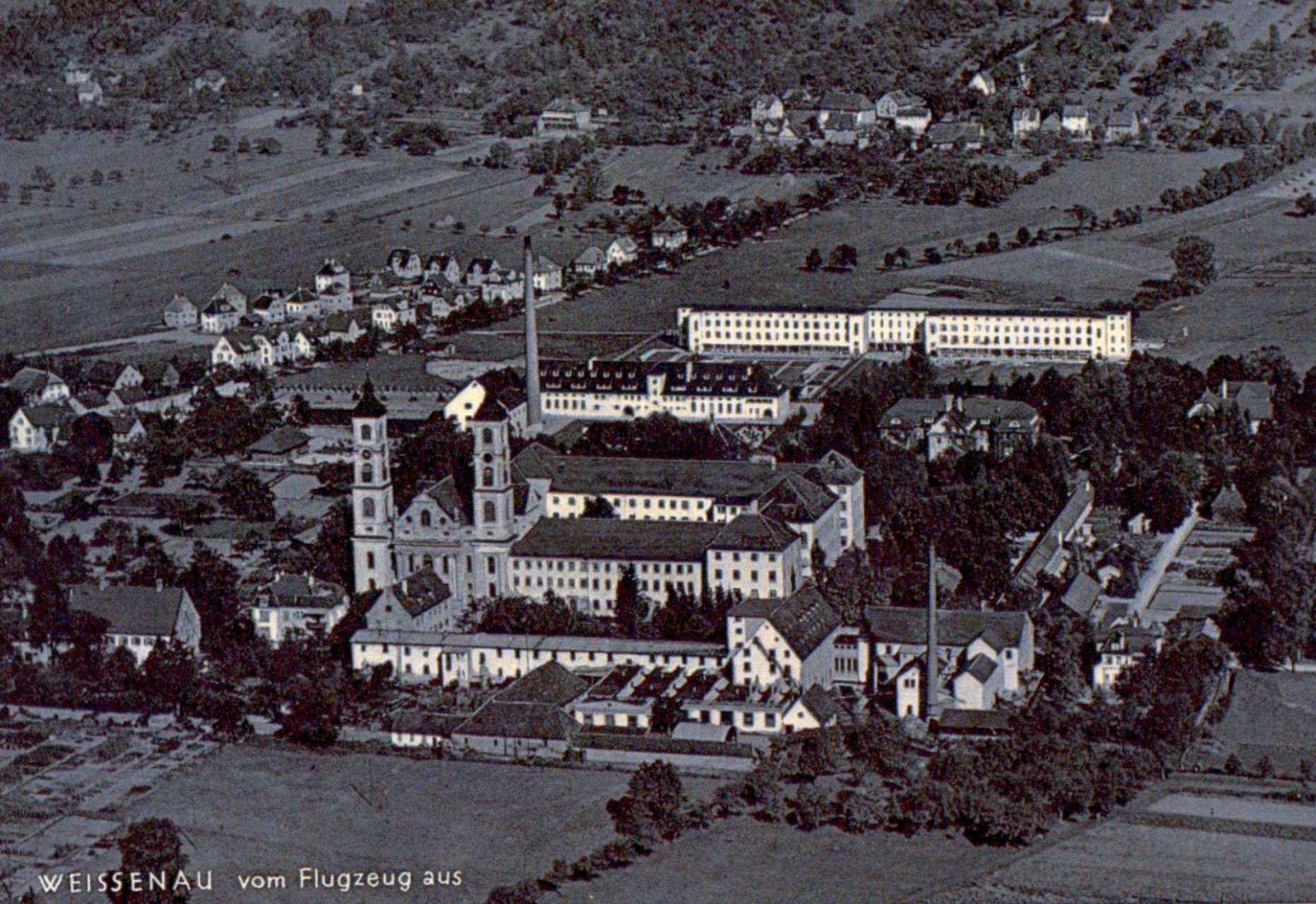
The mental hospital in Württembergian Weißenau close to Ravensburg was converted to a transit institution by National Socialist authorities in 1940. From here, the GEKRAT brought nearly 700 patients to the Grafeneck and Hadamar killing centres in 1940/1941. Even after the »euthanasia« campaign had officially been put to a halt, doctors and medical staff continued killing patients from the Weißenau hospital by poisoning them with medications and starving them to death.
Victims
691 physically and mentally handicapped people were transported from the Weißenau hospital in the GEKRAT's grey buses to the »T4« killing centres in Grafeneck and Hadamar in 1940/41. There, doctors and medical staff asphyxiated them with carbon monoxide in gas chambers camouflaged as shower rooms.
Remembrance
In 2005, the city of Ravensburg and the Weißenau Centre for Psychiatry (ZfP) launched a tender for a concept of the »Weißenau Memorial«. A jury consisting of delegates from the city, the ZfP as well as art experts selected the design by Horst Hoheisel and Andreas Knitz at the beginning of 2006 - it entailed a reproduction of the GEKRAT omnibuses made out of concrete. The »Weißenau Memorial« has been standing in an unused gateway on the hospital premises since November 2006. It is from here that the GEKRAT buses departed in 1940/41 carrying the patients who were to be murdered. A central passageway between the two segments of the memorial is used as an entrance to the premises by both visitors and staff of the ZfP. Inscribed on the wall in the central passageway is a quote of one of the patients: »Where are you taking us to?«
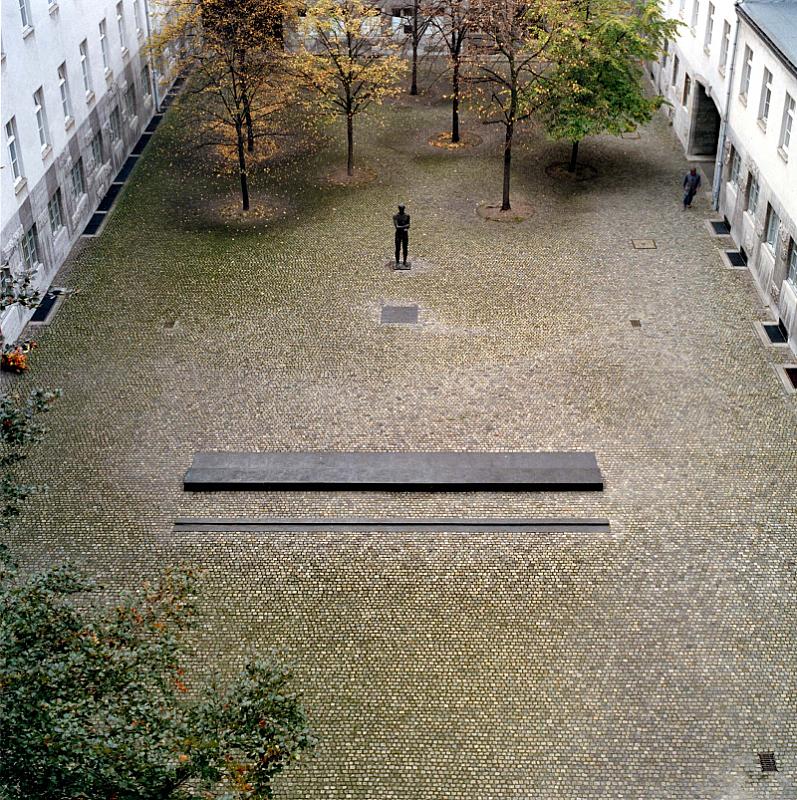
A second, identical copy of the memorial which is temporarily being put on display at various sites in Germany honours the victims of »euthanasia«. The bus has already been presented in Ravensburg on the street used by the GEKRAT in 1940/41 as well as in Brandenburg an der Havel, Stuttgart and Berlin's Tiergartenstraße. The central »T4« office was located there during the National Socialist period; in the present day, the site is home to the Berliner Philharmonie.
Open
Accessible at all times
Contact
http://www.dasdenkmaldergrauenbusse.de
info@zfp-zentrum.de
+49(0)7583 331 584
Weingartshofer Straße 2
88214 Ravensburg