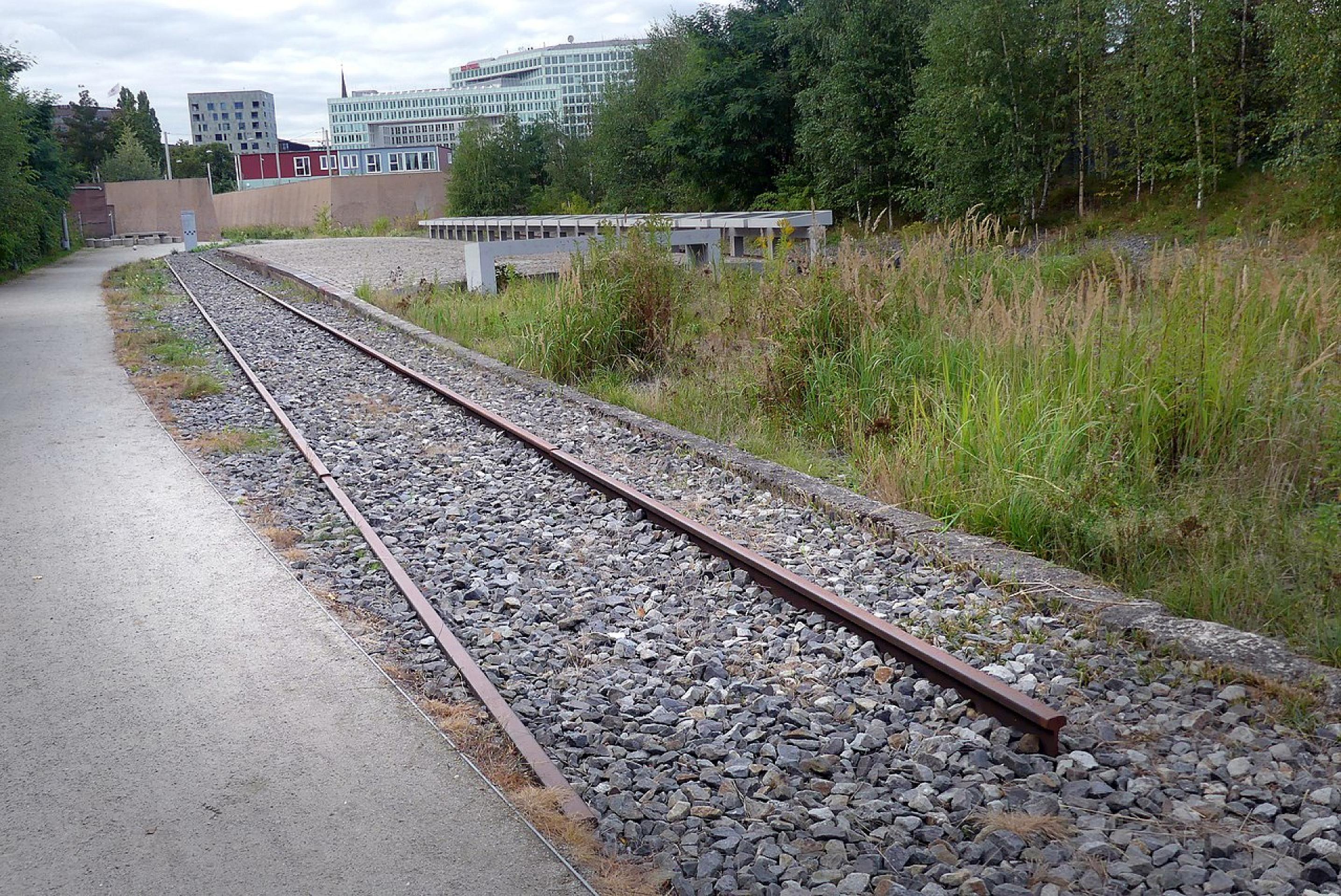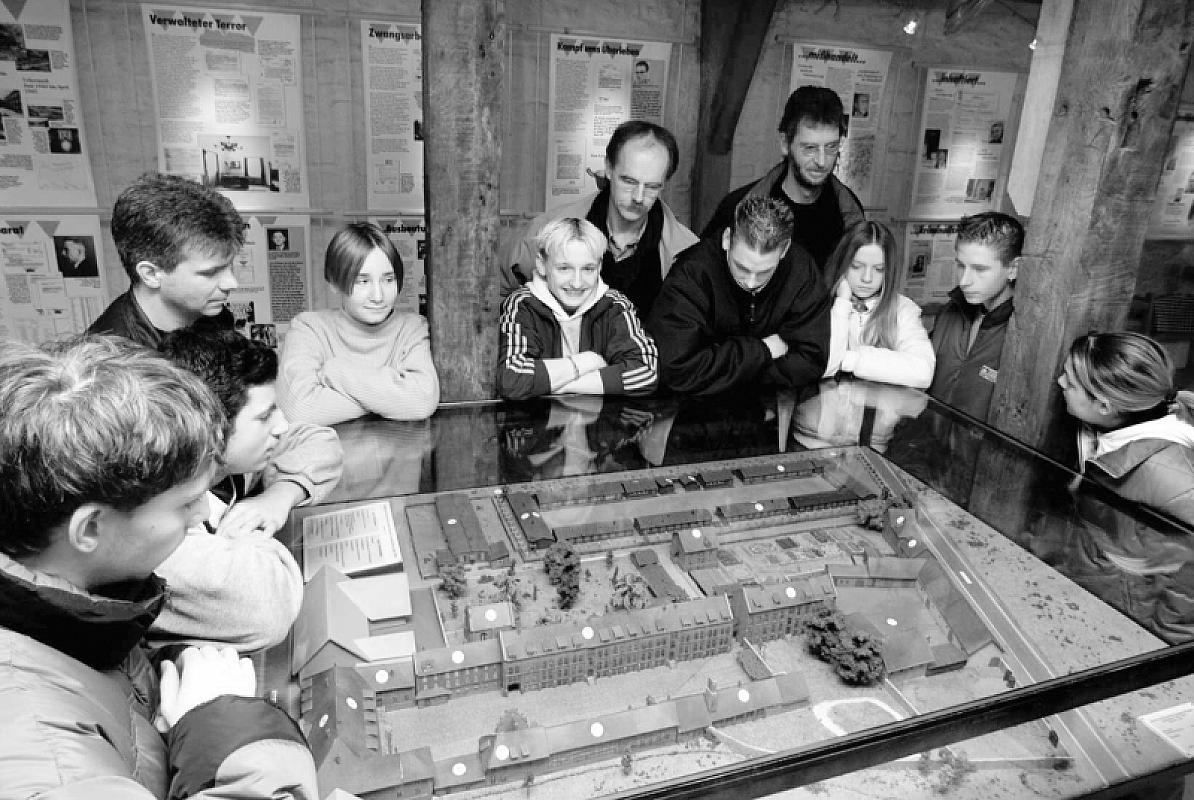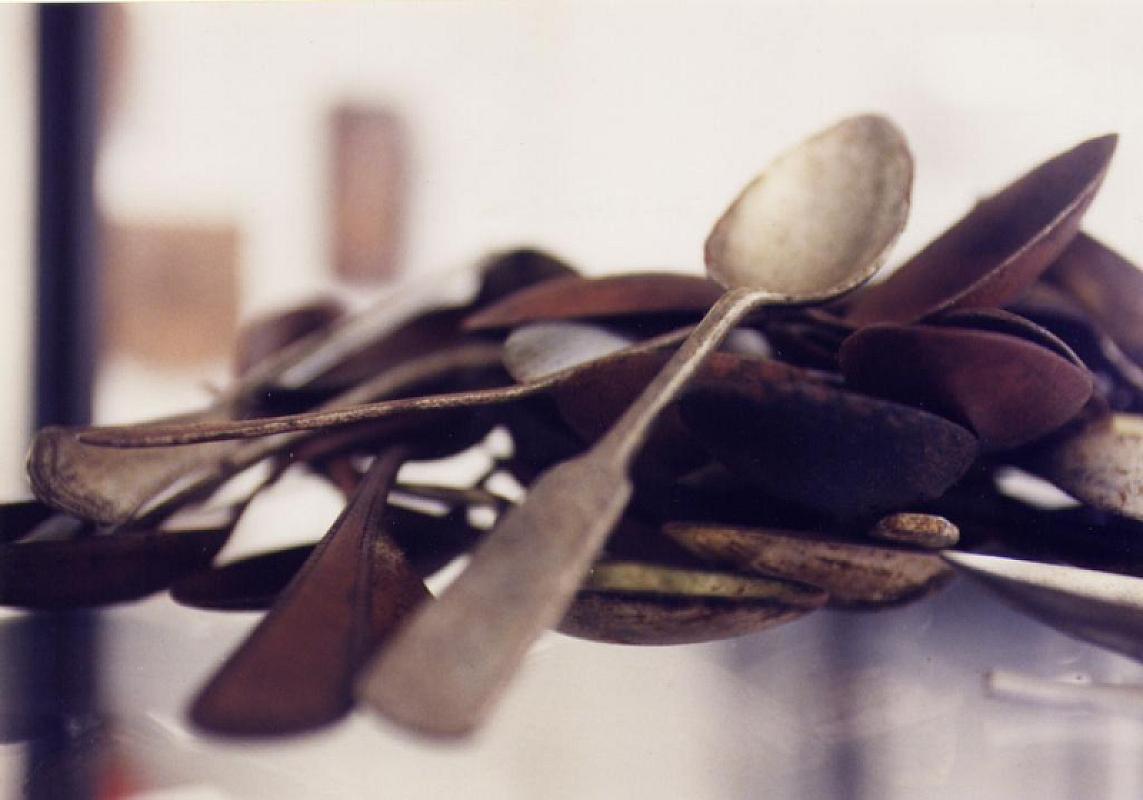
From May 1940, the SS, Gestapo and criminal police deported around 8,000 Jews and Sinti and Roma from Hamburg and northern Germany to ghettos, concentration camps and extermination camps in twenty transports. All of these transports departed from platform two of the former Hannoversche Bahnhof station.
History
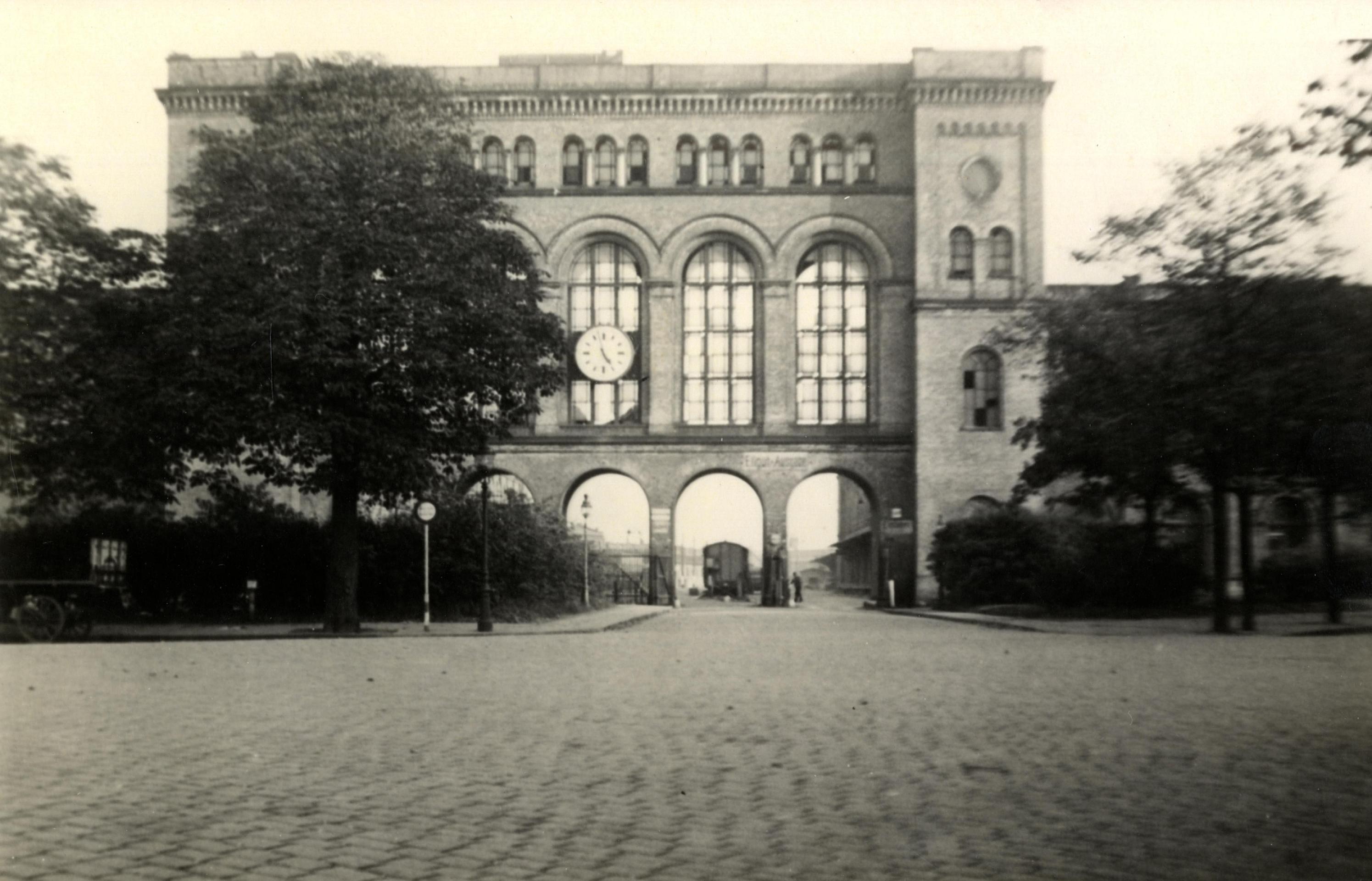
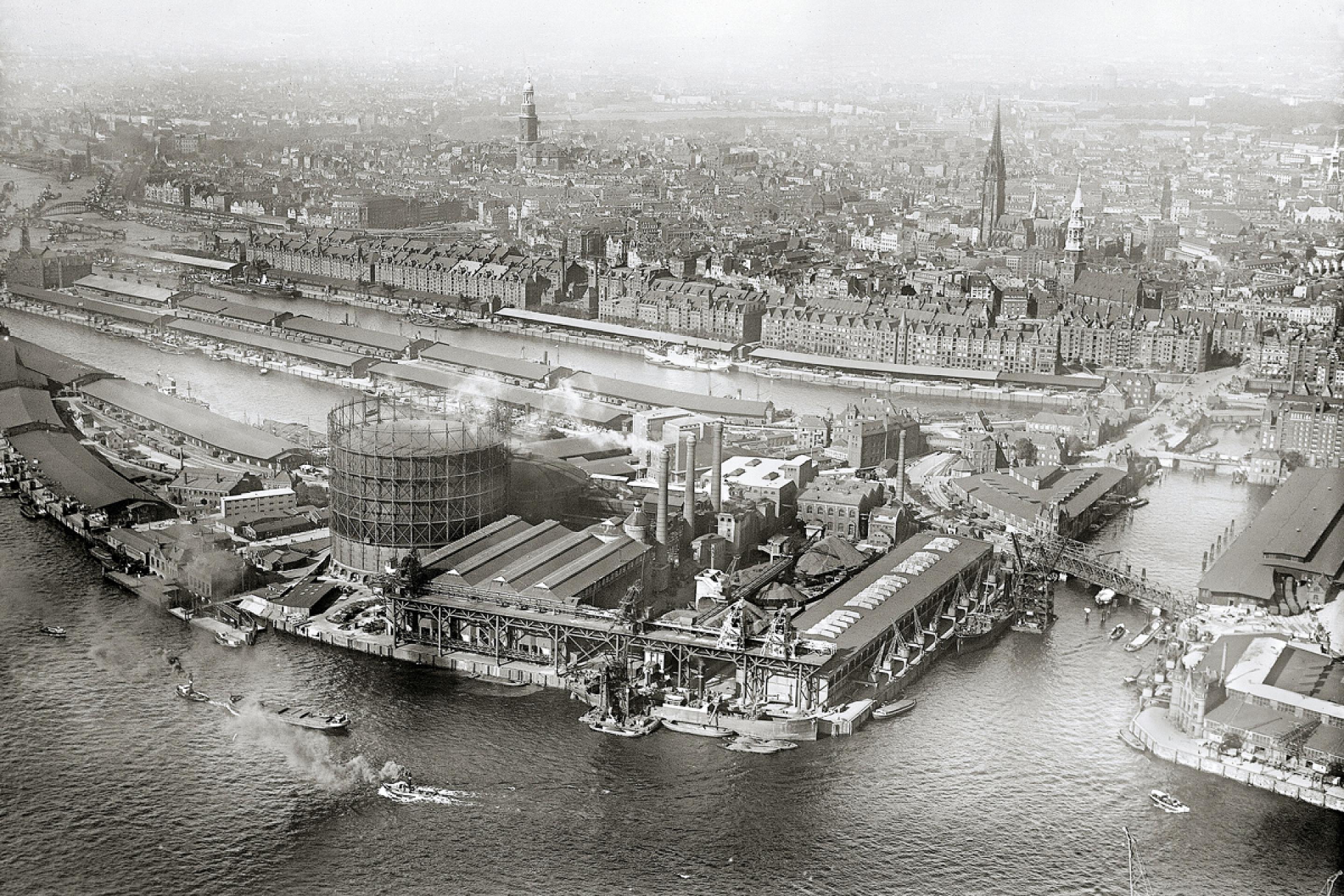
The Hannoversche Bahnhof (english: Hanover Train Station, Venloer Bahnhof until 1892) was completed in 1872 and was an important transport hub in the Hanseatic city. Thanks to the existing and further developed infrastructure and its location close to the harbour, it was a central transshipment point for Hamburg until the Second World War.
In the early 20th century, the trade in tropical fruits in Hamburg grew significantly, so that a third transshipment centre was needed for the goods. The »Fruchtschuppen C« (english: fruit shed) not far from the Hannovershe Bahnhof station had been in use since around 1912 and had become the main transhipment and storage centre for tropical fruits. Due to the war, trade in luxury goods from overseas declined, which meant that Fruit Shed C was also used less.
On 20 May 1940, the Hannoversche Bahnhof was used for the first time for the deportation of Sinti and Roma to Bełżec in occupied Poland. The first deportation of Jews from Hamburg to the Litzmannstadt (Łódź) ghetto followed on 25 October 1941. In November and December, Jews were deported to the Minsk and Riga ghettos.
Between May 1940 and February 1945, the SS, the Gestapo and the criminal investigation department deported a total of around 8,000 Jews as well as Sinti and Roma from Hamburg and large parts of north-west Germany in a total of twenty transports via the Hannoversche Bahnhof train station. The deportation trains led to the Minsk, Riga, Theresienstadt (Czech: Terezín) and Litzmannstadt/Łódź ghettos, the Belzec labour camp and the Auschwitz-Birkenau extermination camp.
Victims
Until 1933, around 20,000 Jews lived in Hamburg. Between 1933 and 1941, the year in which emigration was banned, around 10,000-12,000 Jews emigrated. Between October 1941 and February 1945, around 6,000 Jews were deported from Hamburg, of whom only a few hundred survived.
To organise the deportation of the Sinti and Roma from Hamburg and north-west Germany in 1940, the Hamburg criminal police suggested Fruchtschuppen C as a suitable »collection camp«. In May 1940, the Bremen and Hamburg criminal police departments organised the arrest and deportation of a total of around 910 Sinti and Roma. Around 550 were picked up in Hamburg and around 360 in other parts of north-west Germany. Under guard by the police, they were led from Fruchtschuppen C to the Hannovrsche Bahnhof train station, where they had to board the freight cars of the waiting train. After almost three days, the train reached Bełżec in Poland. On site, the deportees were forced to build parts of the Bełżec labour camp, where they themselves were held from then on and forced to perform hard physical labour. The Sinti and Roma still alive in July were deported on to the Krychów labour camp. The majority perished there at the latest due to inhumane conditions, severe malnutrition and epidemics.
Due to the industrial character of the harbour area in Hamburg, the attention that the deportations could have attracted remained largely muted. Nevertheless, these events did not go completely unnoticed by the city's population. There are reports that some passers-by recognised the transports of Jews to the railway station and even reacted with applause.
In addition to the persecuted Jews, Sinti and Roma, from 1942 onwards around 2,000 primarily political prisoners were also transported as part of the 999 penal division in four transports from the Hannoversche Bahnhof station to the Wehrmacht's »Heuberg« training camp in what is now Baden-Württemberg.
Remembrance
For a long time, there was nothing commemorating the deportations from the Hannoversche Bahnhof in Hamburg to the occupied territories in the east. After the train station itself was severely damaged during the war, the remains, including the large entrance portal, were demolished in 1955. The last remains of the building were removed in the 1990s. Since the 2000s, the urban area around the former railway station has been redeveloped as part of the HafenCity district development project.
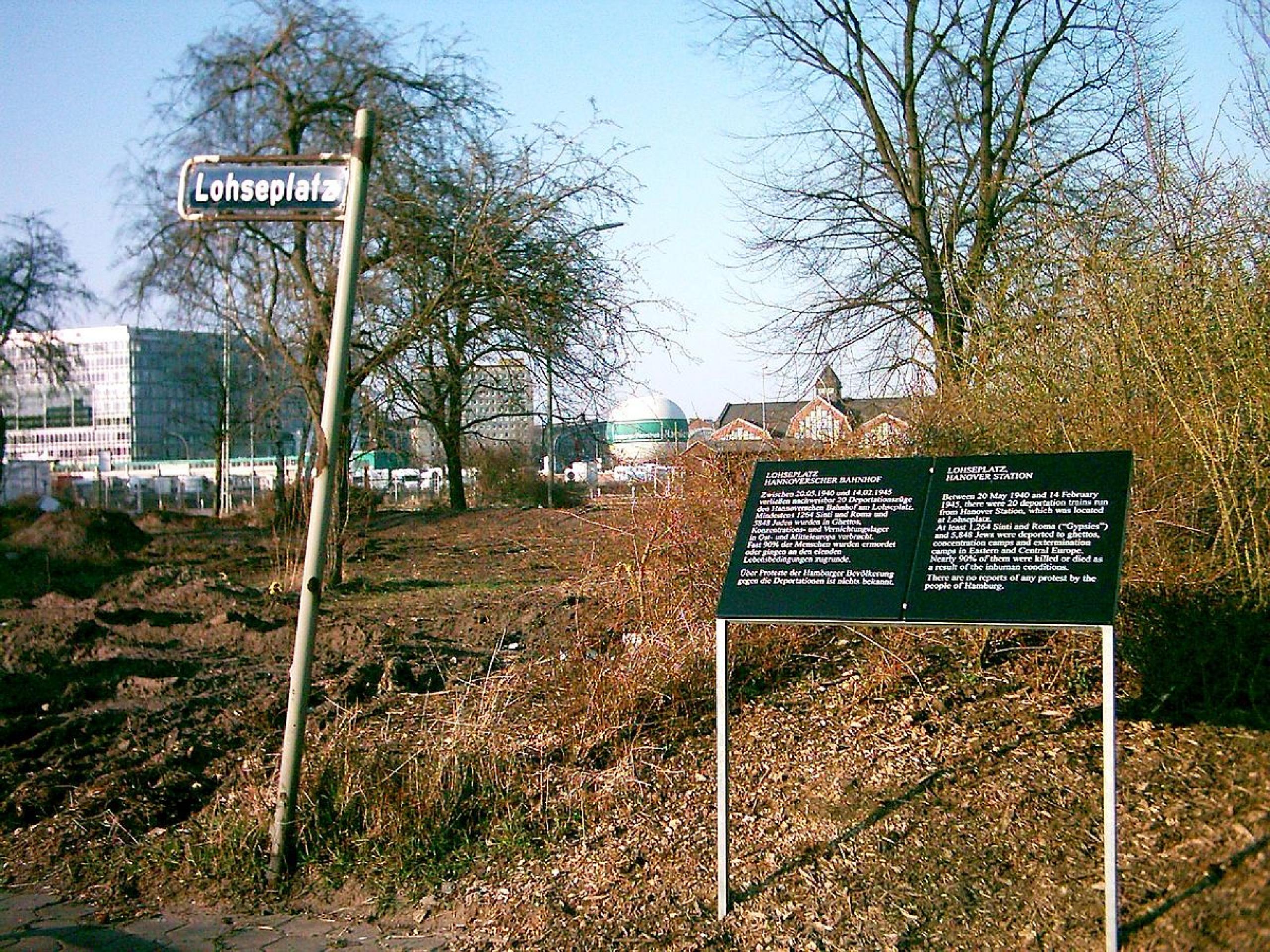
In 2004, the Research Centre for Contemporary History in Hamburg (Forschungsstelle für Zeitgeschichte in Hamburg, FZH), under the direction of Linda Apel and Frank Bajohr, prepared an expert report on the deportations of Jews and Sinti and Roma for the Hamburg Department of Culture. In 2005, as part of the »Hamburger Tafelprogramm« (Hamburg Plaque Programme), the department decided to install the first memorial plaque commemorating the victims on Lohseplatz, the forecourt of the former railway station building.
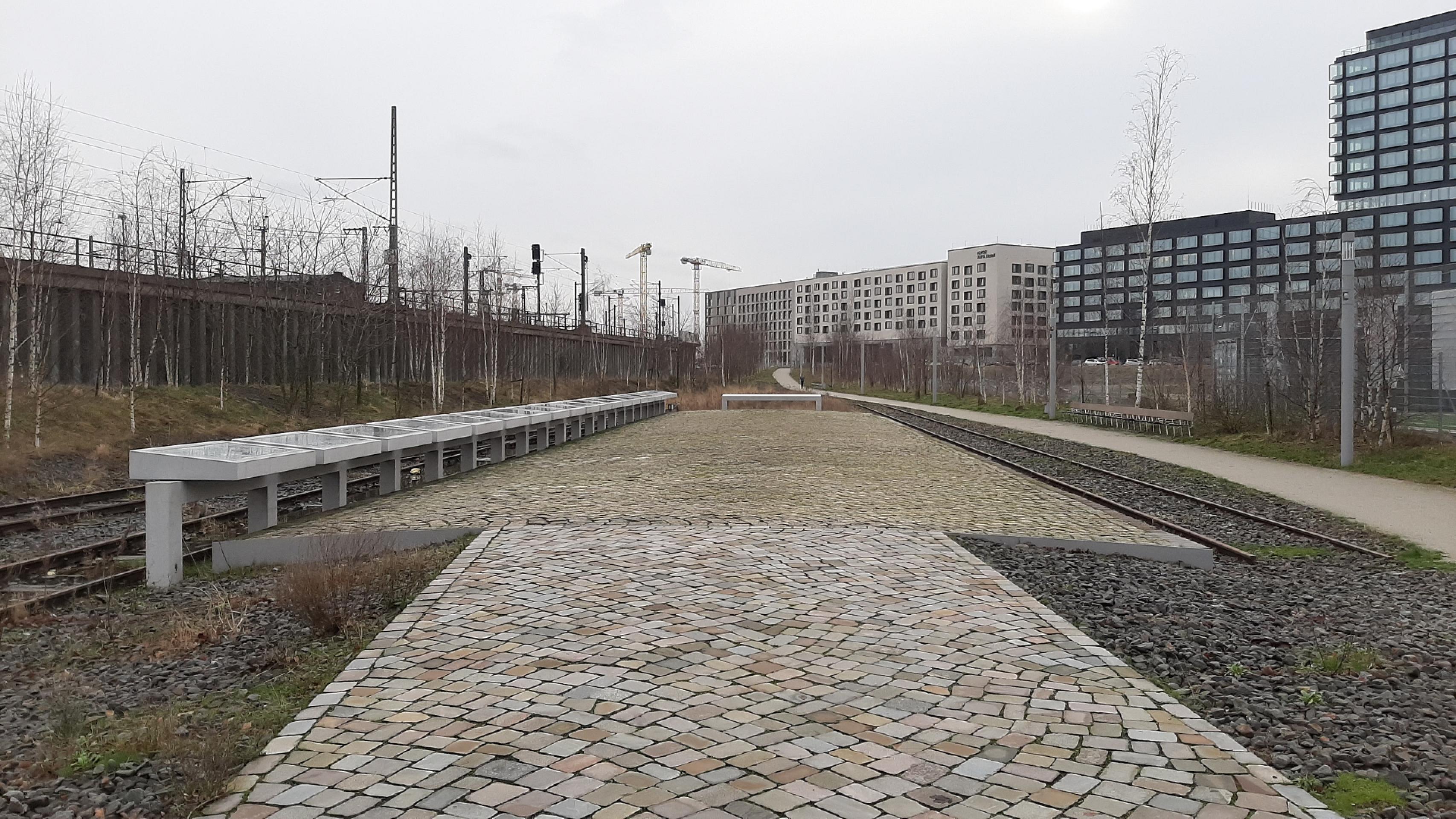
Between 2007 and 2009, the FZH drew up further expert reports which revealed, among other things, that the remains of a railway platform used for the deportations were still present on site. As a result, the site was placed under a preservation order and the originally planned development in the newly emerging HafenCity district was modified. The coalition agreement of the Hamburg city government stipulated that a memorial site and information centre would be integrated into the design of the new district.
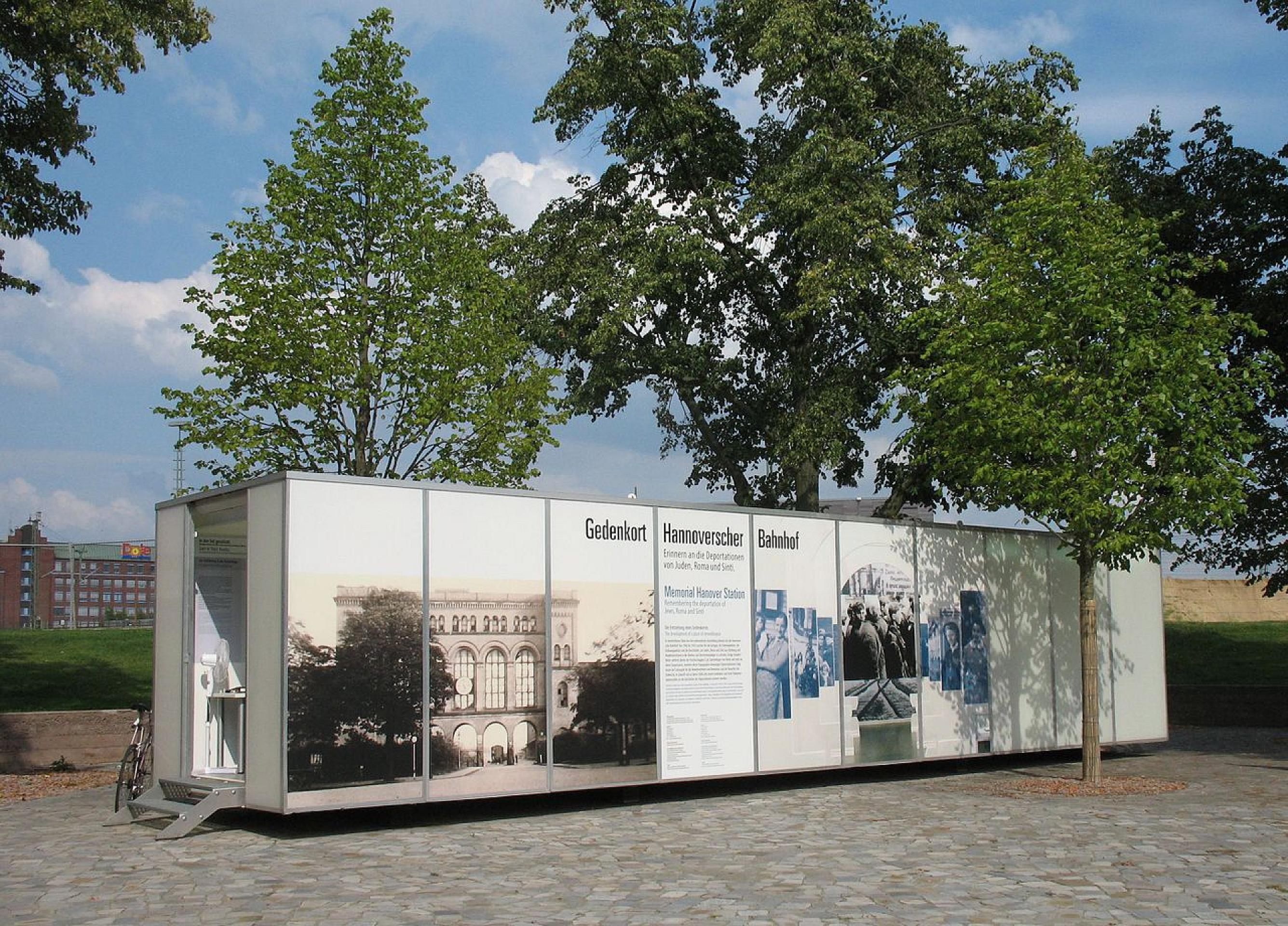
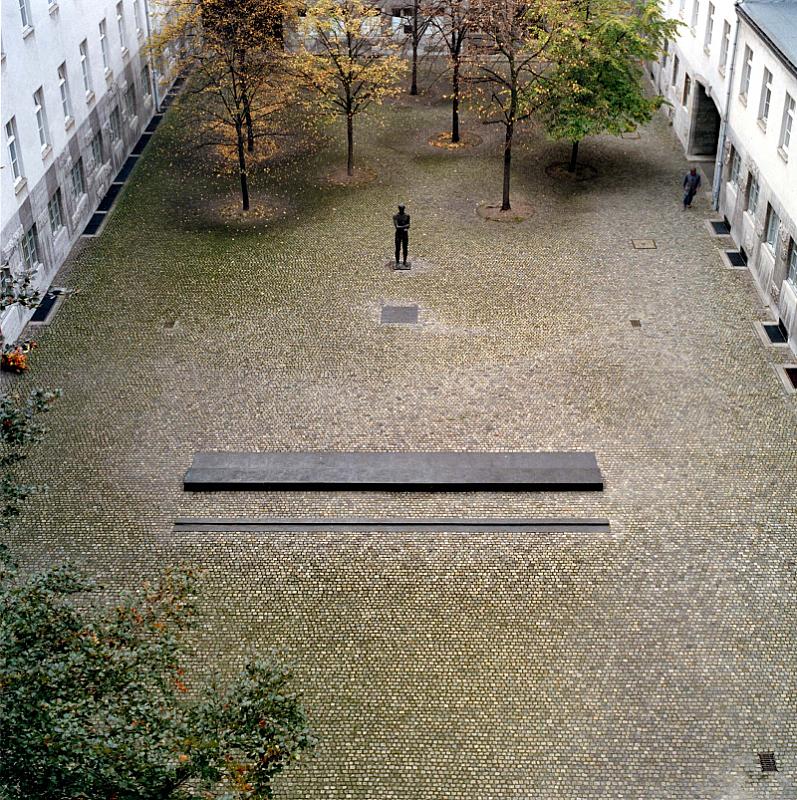
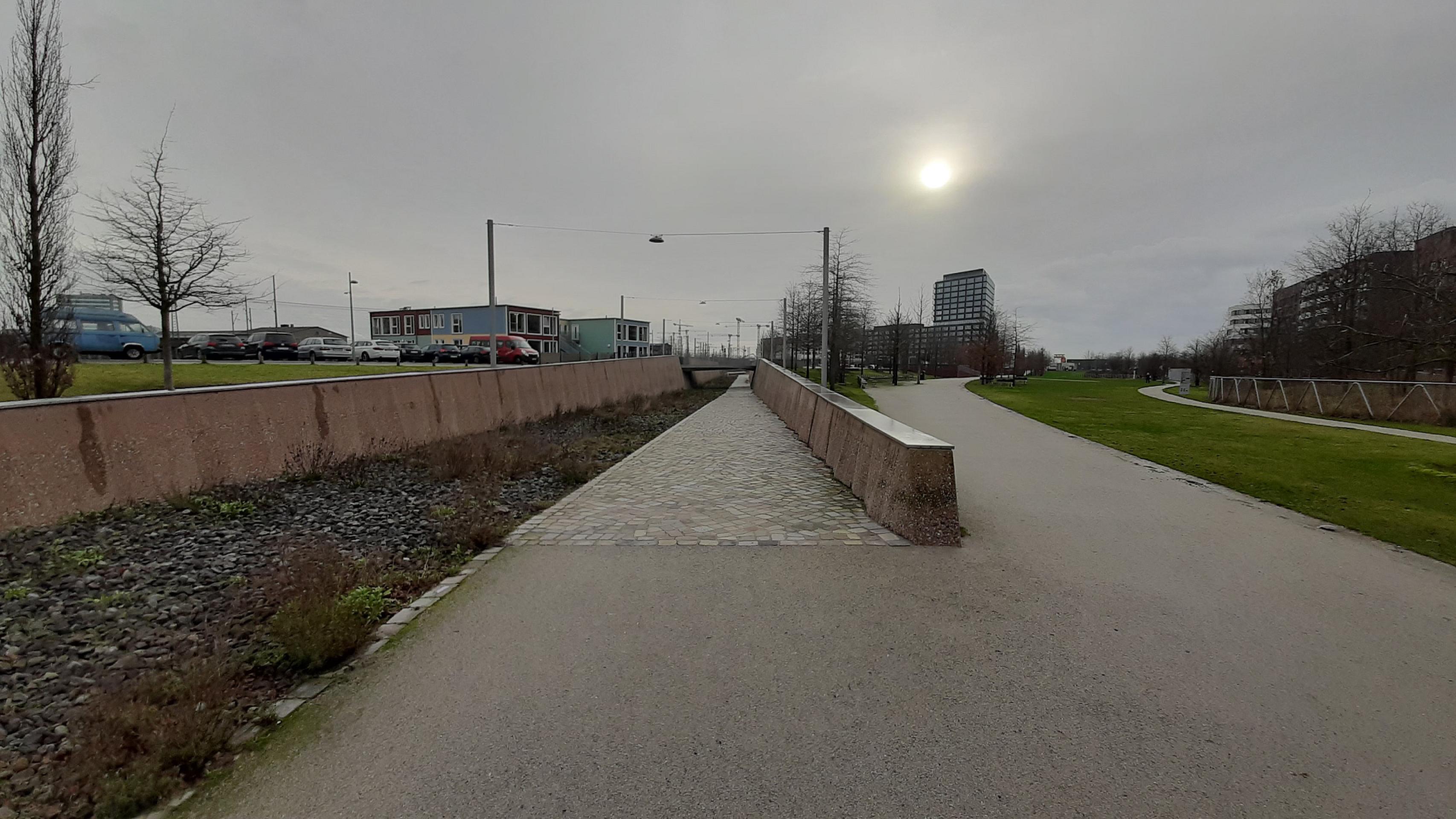
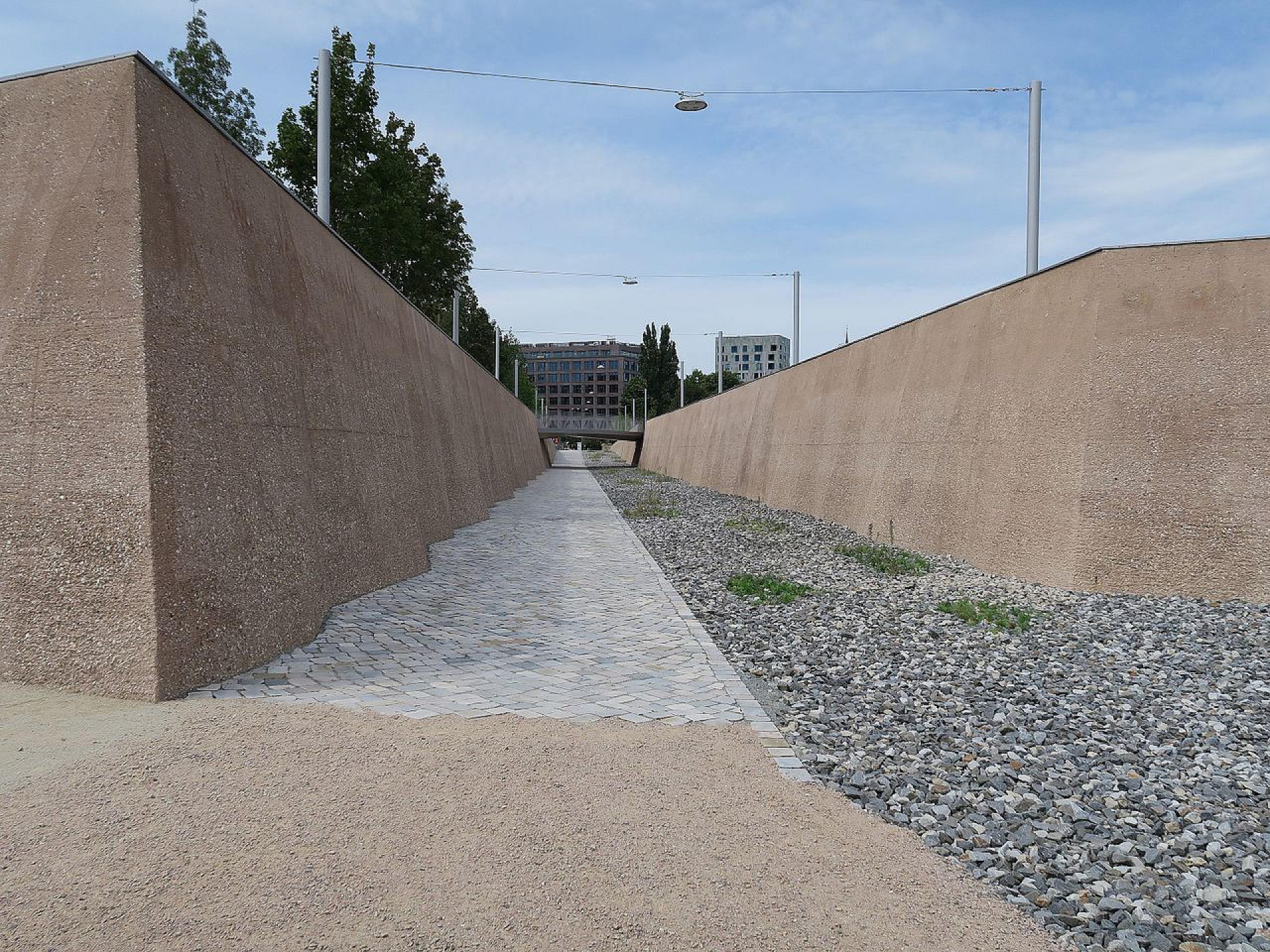
The memorial site, opened in 2017, currently consists of three parts. The first part, which is already visible, is an information pavilion that houses the »Sent to their deaths« exhibition in Lohsepark. The so-called »Fuge«, which imitates the original course of the tracks in front of the station building, leads from the pavilion to the remains of the former railway platform two. Memorial plaques there commemorate the deportees.
The information and documentation centre is due to open in 2027. Fruchtschuppen C is to be included in the memorial centre concept in 2025 as part of the redesign of the district under the name »denk.mal Fruchtschuppen C«.
Possibilities
Guided tours, special exhibitions, travelling exhibitions, commemorative events
In future: training courses, workshops, permanent exhibition
Open
The memorial on the railway tracks and the information board on Lohseplatz are accessible at all times.
Information pavilion:
April to October
Monday to Sunday: 12.00-18.00
Between November and March, it is possible to visit the information pavilion by prior arrangement via e-mail: juliane.podlaha@gedenkstaetten.hamburg.de (telephone: +49 (0)40 428 131 566).
Contact
https://hannoverscher-bahnhof.gedenkstaetten-hamburg.de/de/
denk.malhannov.bhf@gedenkstaetten.hamburg.de
+49 (0)40 428 131 566
Am Hannoverschen Bahnhof
20457 Hamburg