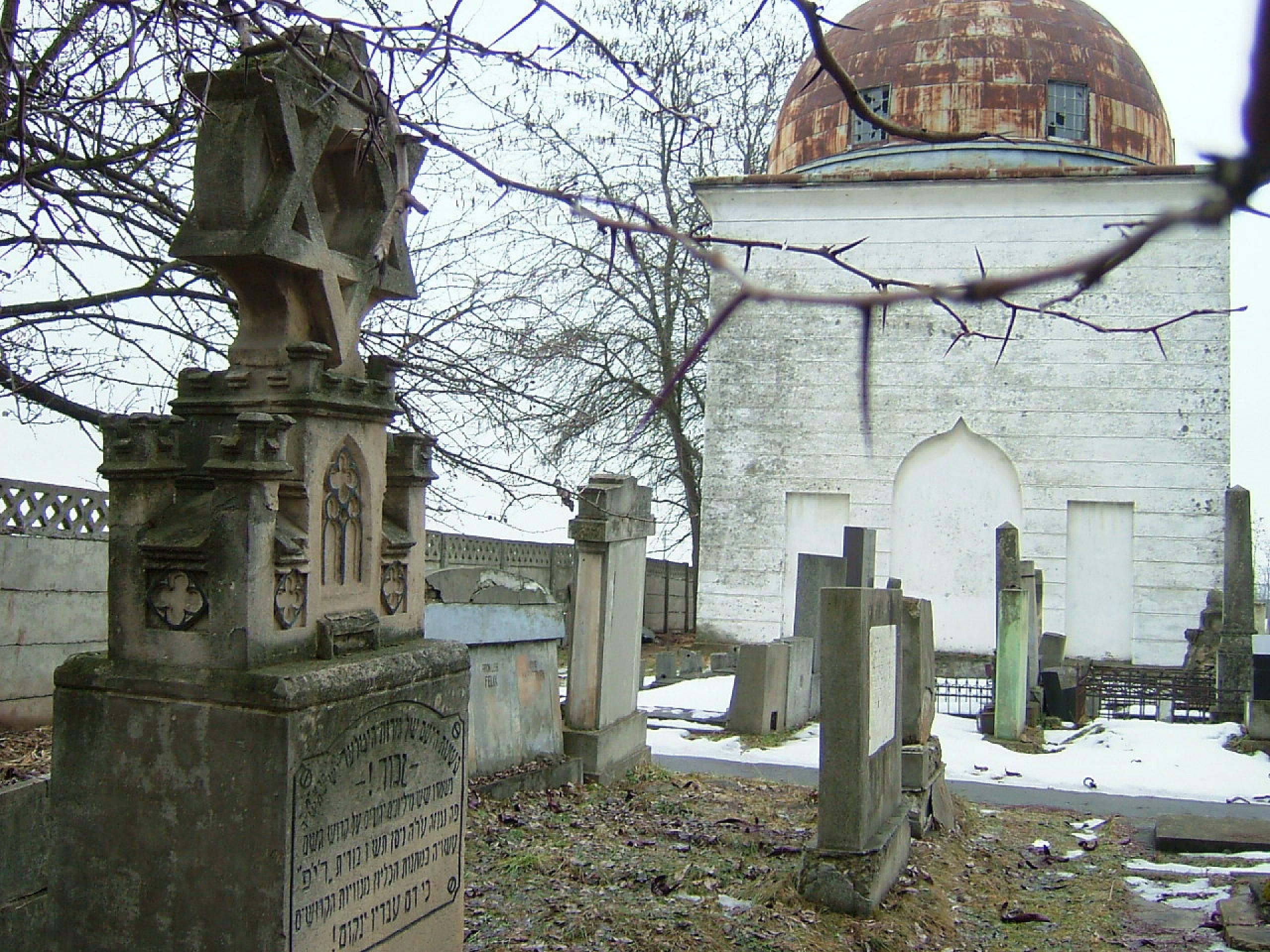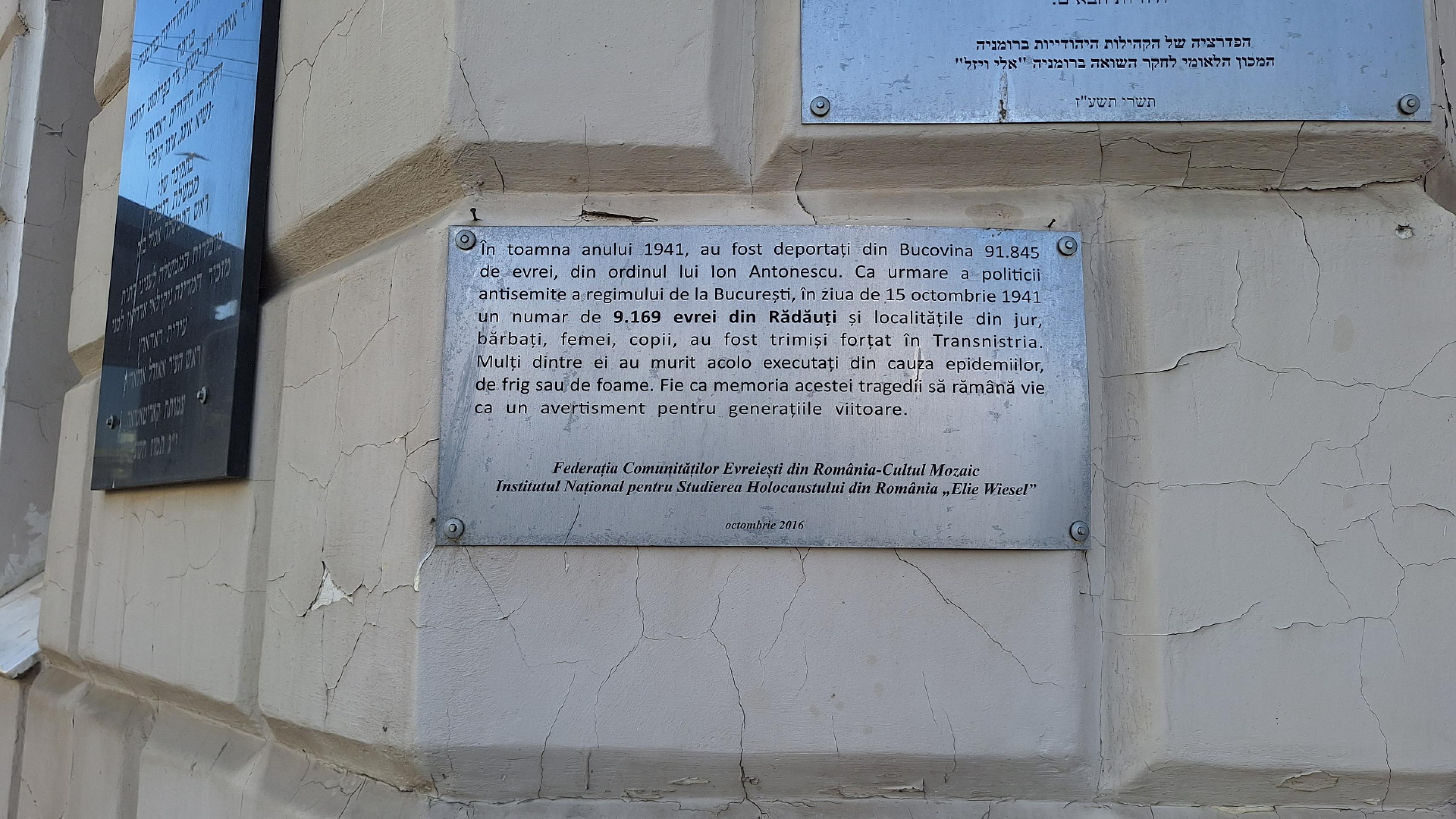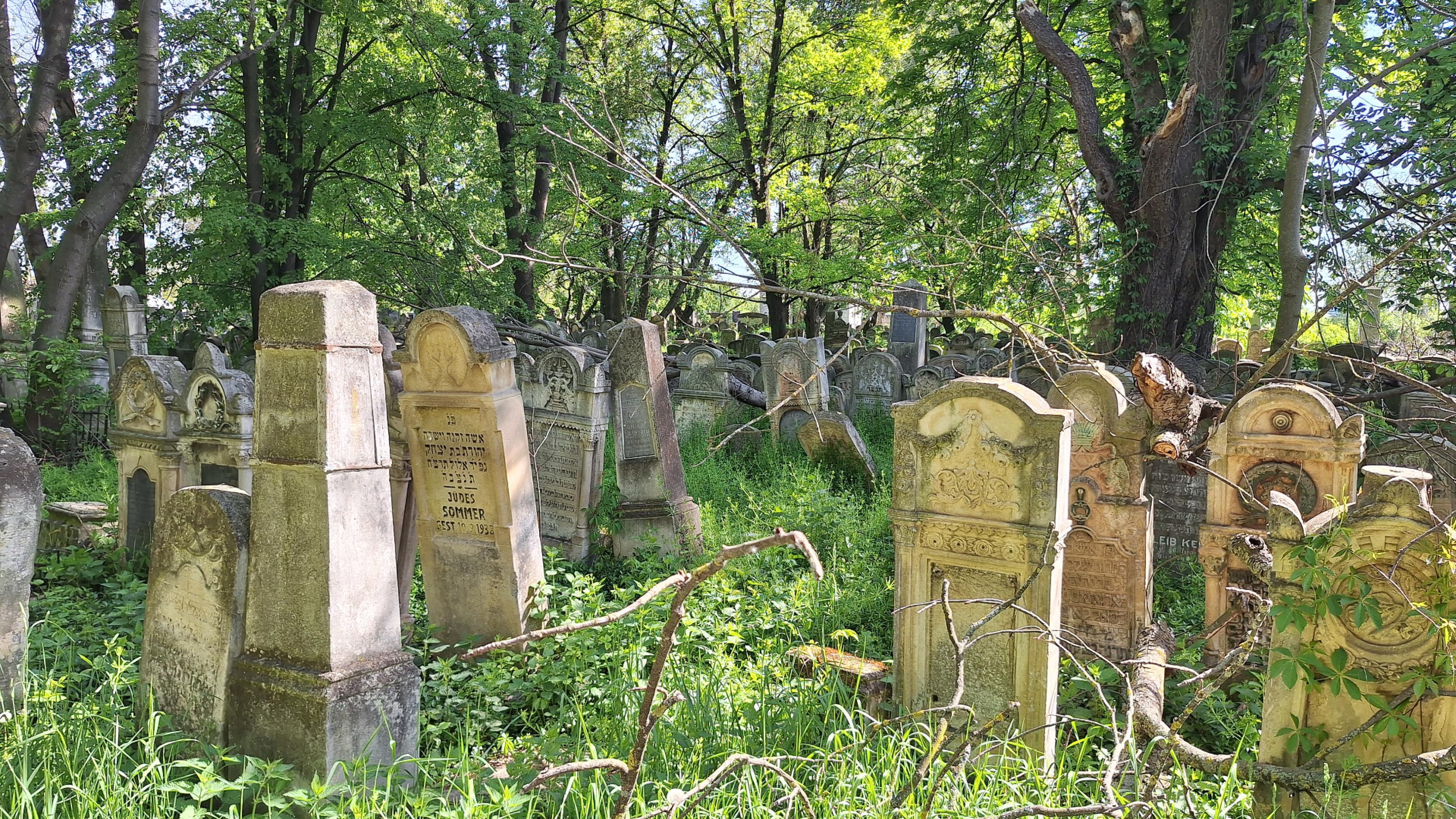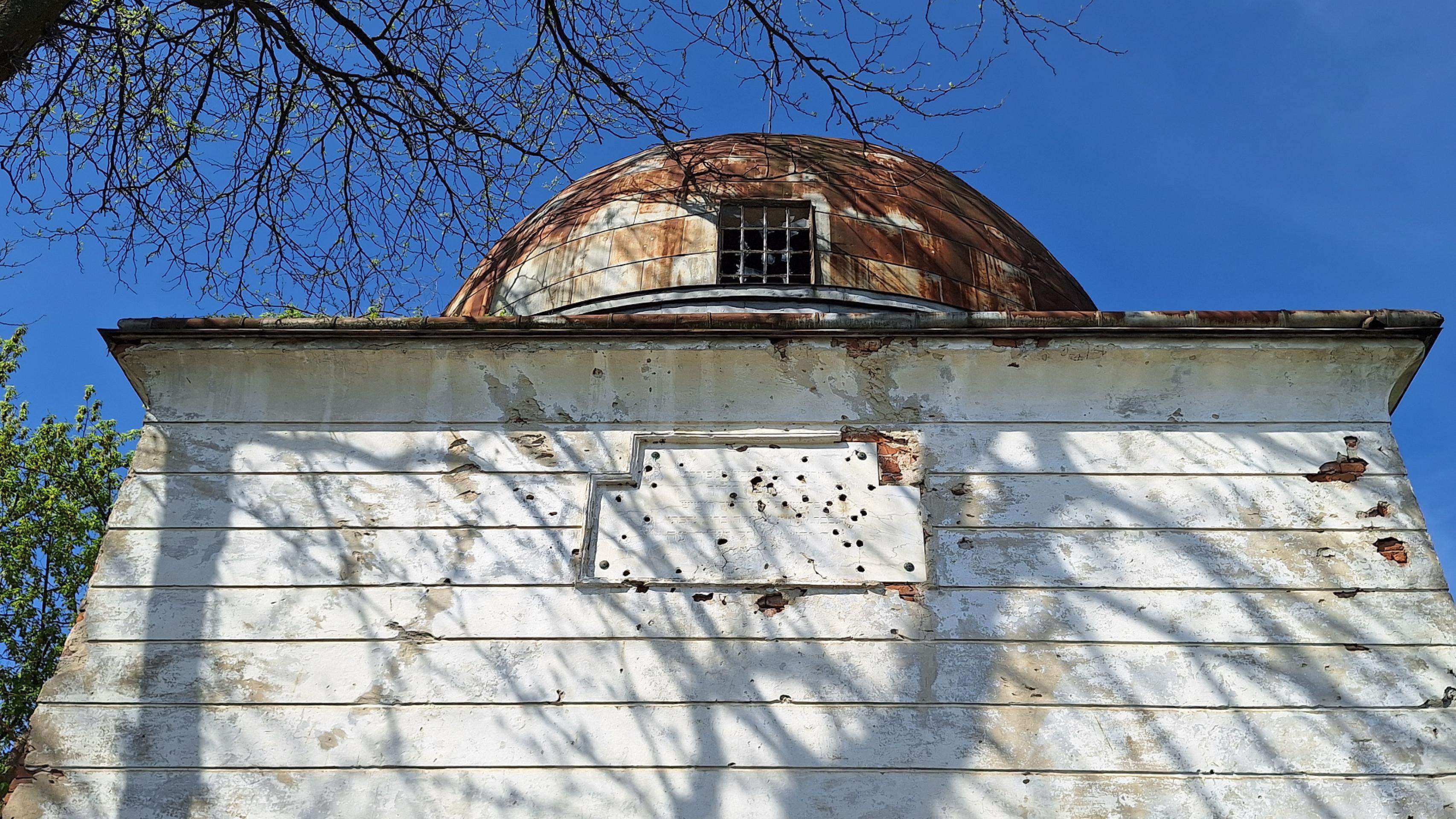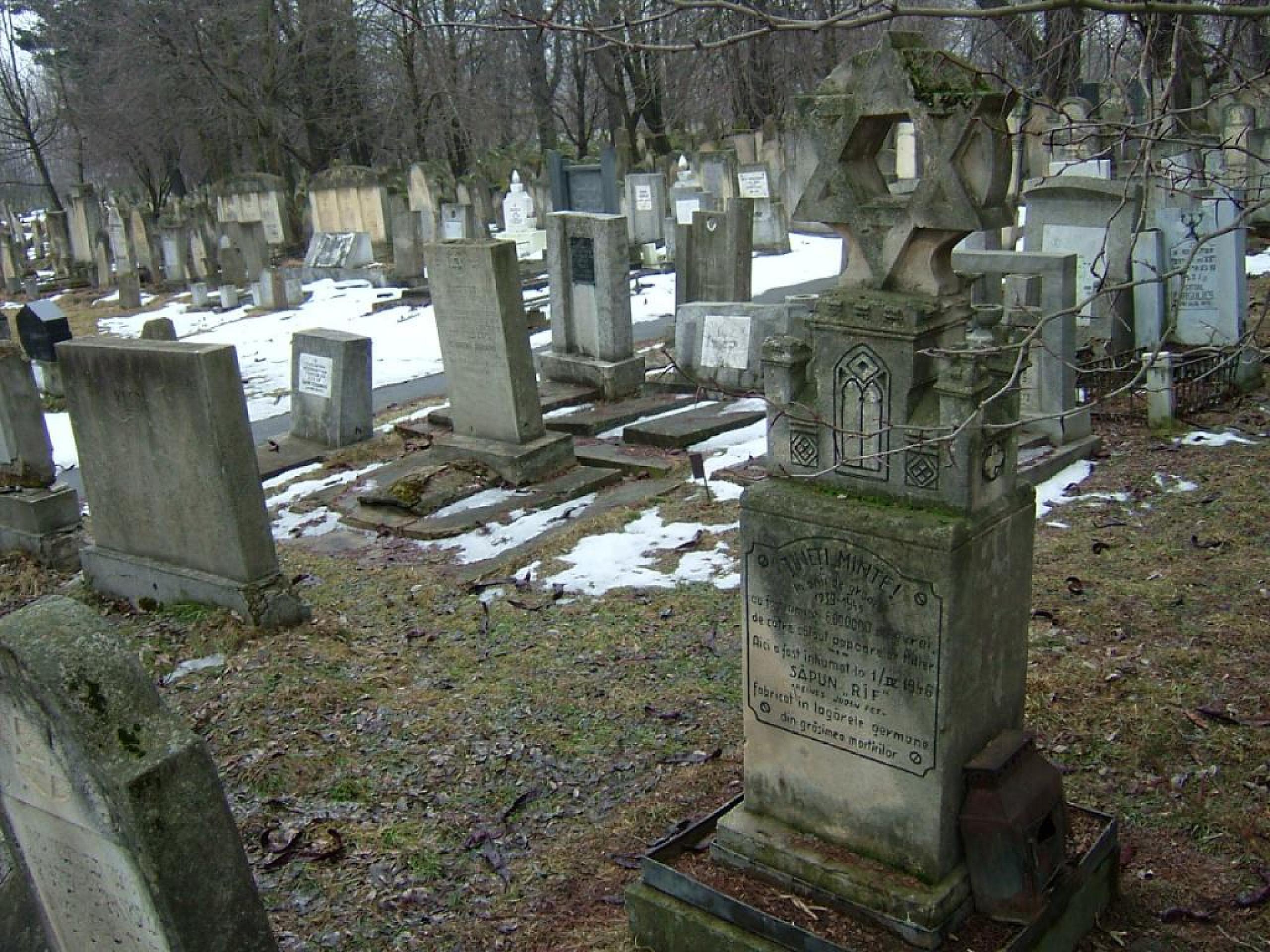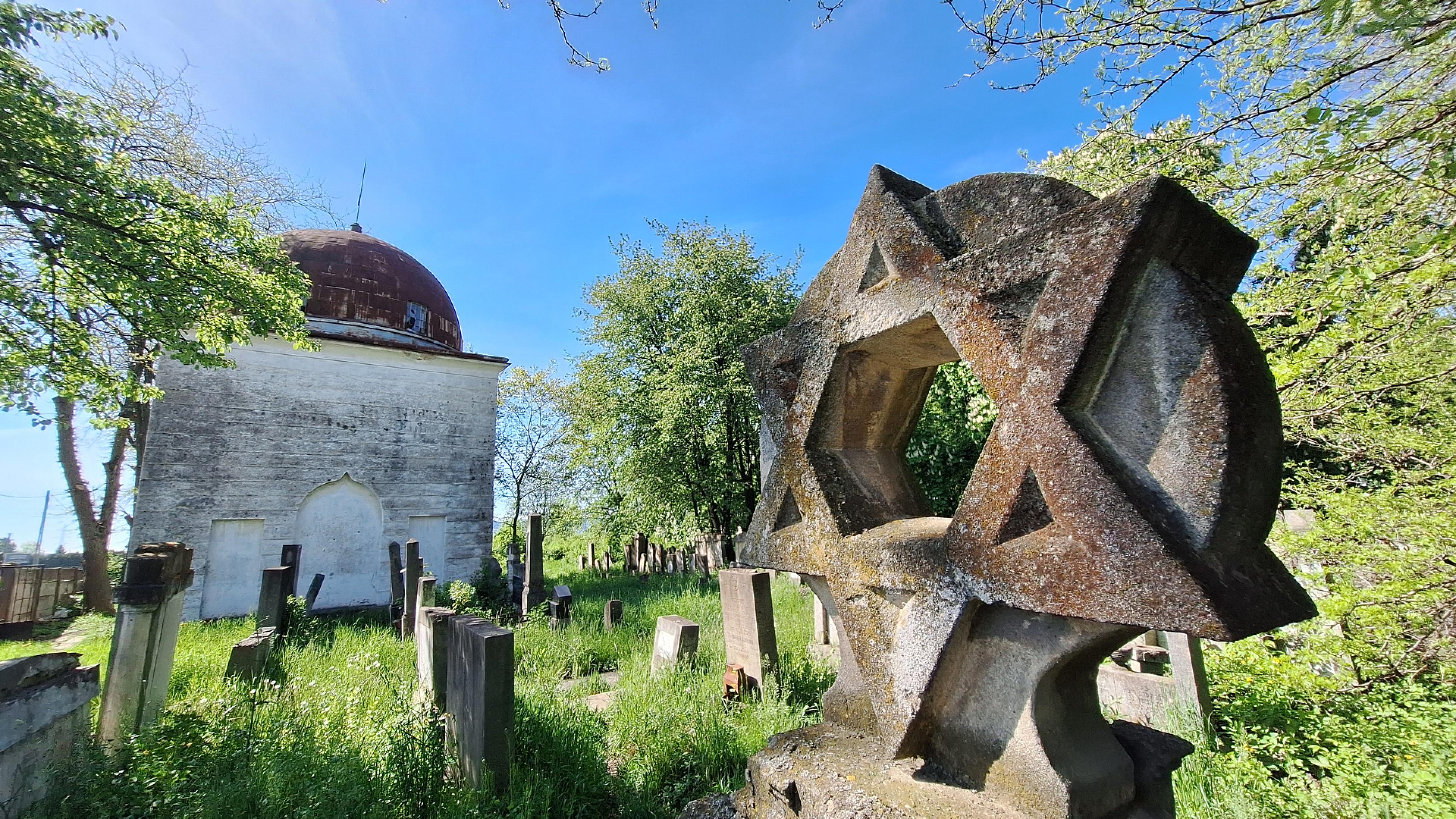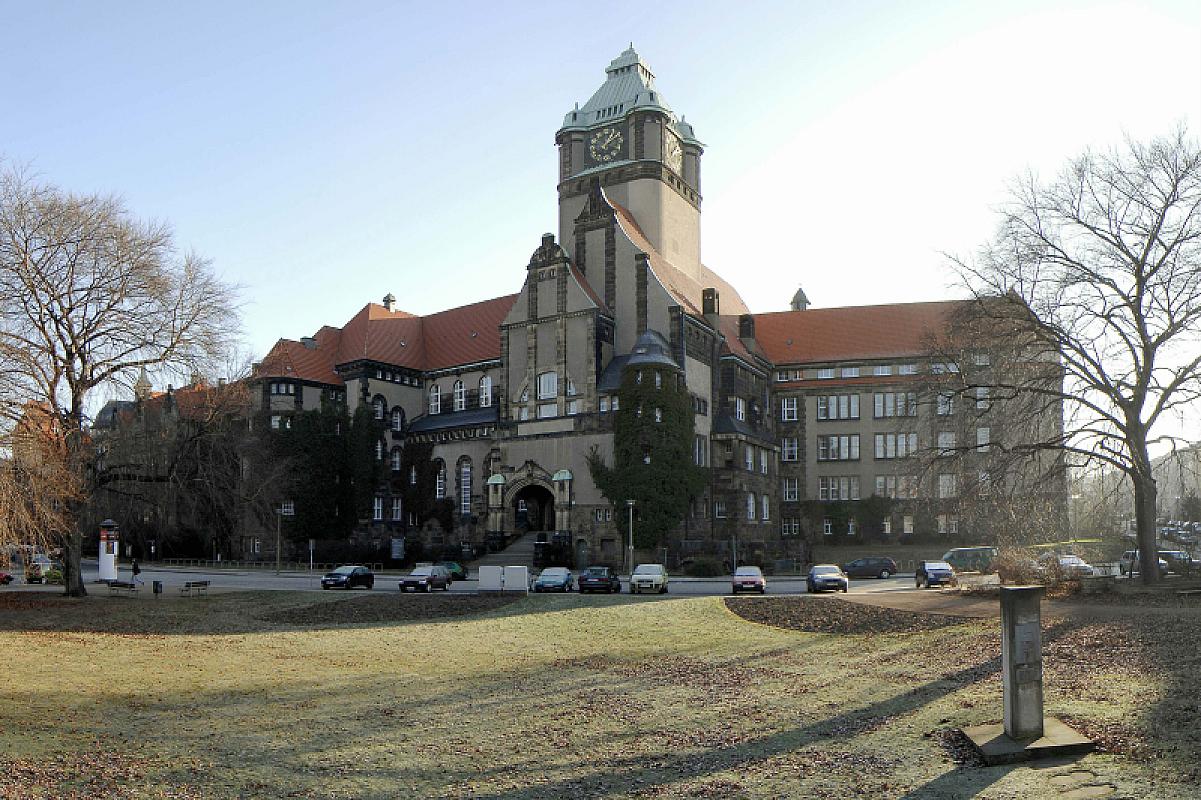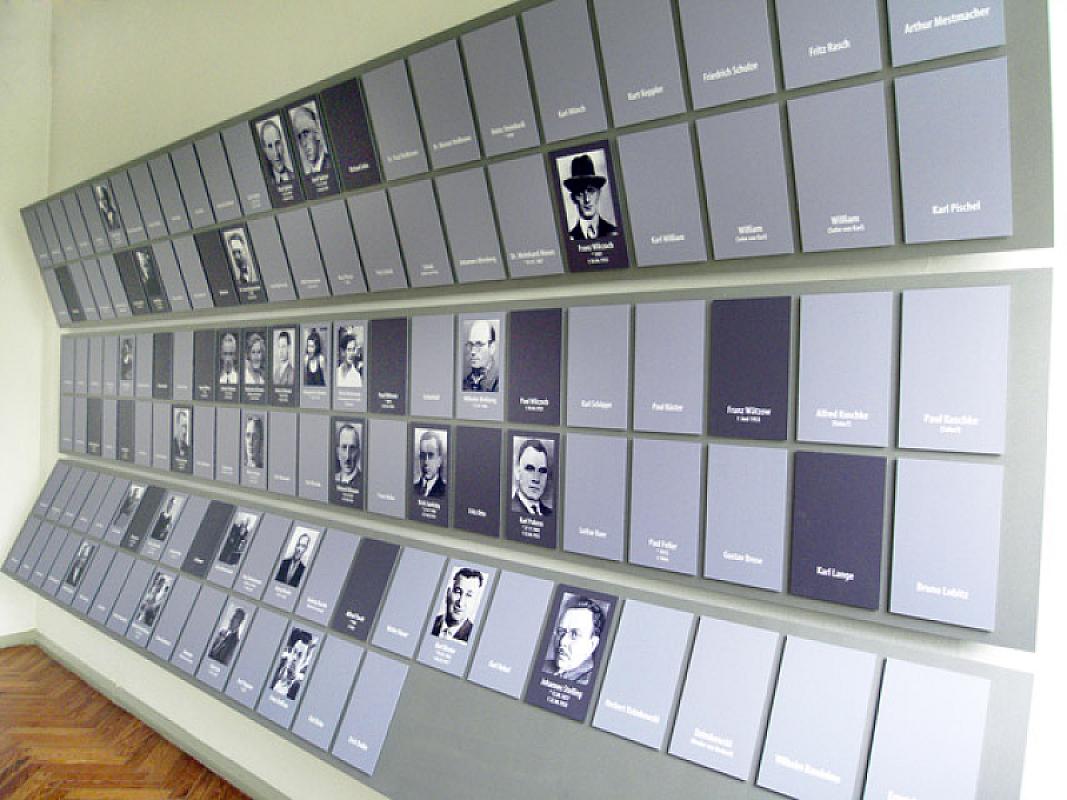
A memorial at the Jewish cemetery in Rădăuţi (German: Radautz, Hungarian: Radóc), located in southern Bukovina in the north-east of Romania, honours the Jews from Rădăuţi who were deported to ghettos and labour camps in Transnistria in October 1941.
History
Rădăuţi is situated in the historic region of Bukovina, an area which had until the First World War been part of the Austro-Hungarian empire and subsequently came under Romanian rule. Jews had been living in Rădăuţi since the end of the 18th century. In 1930, there were about 5,600 Jews living in the town, constituting just over a third of the population of Rădăuţi. In the summer of 1941, Romania joined forces with the German Reich and took part in the invasion of the Soviet Union. Anti-Semitic attacks had already previously taken place in Rădăuţi and other towns in Bukovina. In the autumn of 1941, Romanian dictator Ion Antonescu ordered the deportation of all Jews from Bukovina to Transnistria. This region, east of the river Dniestr in southern Ukraine, had been under Romanian occupation since 1941; SS Einsatzgruppe D (SS mobile killing squad) had already shot most of the 130,000 Jews living there in the summer of 1941. Between October 12 and 14, 1941, Romanian authorities deported at least 8,000 Jews from Rădăuţi and surrounding areas to labour camps and ghettos in Transnistria. From 1944 on, when the Red Army was approaching, the Jews who had been deported to Transnistria could return to Bukovina. Most of the Jews from Rădăuţi returned to their home town and settled there once again.
Victims
At least 8,000 Jews from Rădăuţi and vicinity were deported to Transnistria in 1941. They had to conduct forced labour and living in atrocious conditions. How many Jews from Rădăuţi perished in Transnistria is not known.
The Kingdom of Romania was politically unstable in the interwar period and threatened by territorial claims from its neighbours. The country sought an alliance with National Socialist Germany but the Nazi leaders in Berlin chose to support Hungary, Bulgaria and their temporary ally, the Soviet Union over the border issue. Romania had to agree to surrender large parts of its territory to these states during 1940. This led to increased radicalisation within the country. King Karl (1893–1953) granted unrestricted authority to General Ion Antonescu (1882–1946) but then had to abdicate to allow his son Michael (1921–2017) to come to the throne. The right-wing extremist »Garda de Fier« (Iron Guard), which was allied with Antonescu, immediately began to persecute the Jews. In 1941 Romania took part in the German attack on the Soviet Union. Romania organised the deportation of up to 155,000 Jews and 25,000 Roma from Bukovina and Bessarabia to the occupied Ukrainian territory of »Transnistria«. Tens of thousands died as a result of mass murder, imprisonment, forced labour, starvation and illness. Meanwhile, the Jews in northern Transylvania (part of Hungary since 1940) were subject to the anti-semitic legislation in this region. However, the majority were spared any violent persecution until the Wehrmacht invaded in 1944. The SS now began to deport Jews to Auschwitz in cooperation with the Hungarian authorities. The total number of murdered Romanian Jews is thus spread over various territories: 50,000 Jews from Bessarabia and Bukovina along with 20,000 Jews from central Romania were murdered and around 120,000 Transylvanian Jews died under the Hungarian-German occupation.
In August 1944, the Red Army offensive caused Romania to change sides. Michael I stripped Antonescu of his powers and the country came under Soviet control. The dictator was executed in 1946 and the king abdicated the following year. In the initial post-war period memory focused on liberation by the Red Army. A monument to the fallen Soviet soldiers was built in Bucharest. Romania’s alliance with Germany was ignored. Under Nicolae Ceausescu (1918–1989), who ruled the country with his secret service from 1965, the »liberation from the yoke of fascism« was presented as the achievement of Romanian heroes. With the end of the Ceausescu regime in 1989 many Romanians preferred to adopt a contrary approach: the attack on the Soviet Union in 1941 was now more frequently viewed as a campaign against Bolshevism. There was growing admiration for Antonescu. In contrast, for some Romanians the king, now living in exile, became increasingly important as a symbol of democracy as he had toppled the dictator and was later expelled by the communists.
There was no place for the Holocaust in post-war memory. Most survivors had already left the country by the 1950s. Memory was left to the Jewish communities, which established a small research centre in 1977 and a small museum in Bucharest the following year as well as a number of memorials. In 2004 a committee was set up to research the Holocaust and Romanian crimes. The committee was led by Elie Wiesel (1928–2016), a Romanian-born Holocaust survivor and Nobel Peace Prize winner. A National Institute has continued the research since 2005. In 2009, a central Holocaust memorial was inaugurated in Bucharest that also honours the Roma who had been deported to Transnistria. However, apart from this sign, there is still little remembrance to the more than 12,500 Romanian Roma murdered during the war.
Remembrance
After the end of the Second World War, a large Jewish community came together again in Rădăuţi. In 1947, there were about 6,000 Jews living there, including many refugees from northern Bukovina, which had become part of the Soviet Union after the war. In the following years, many Jews emigrated to Israel. By 1962, the Jewish community had shrunk to only about 800 members; in 2002, it consisted of 62 members.
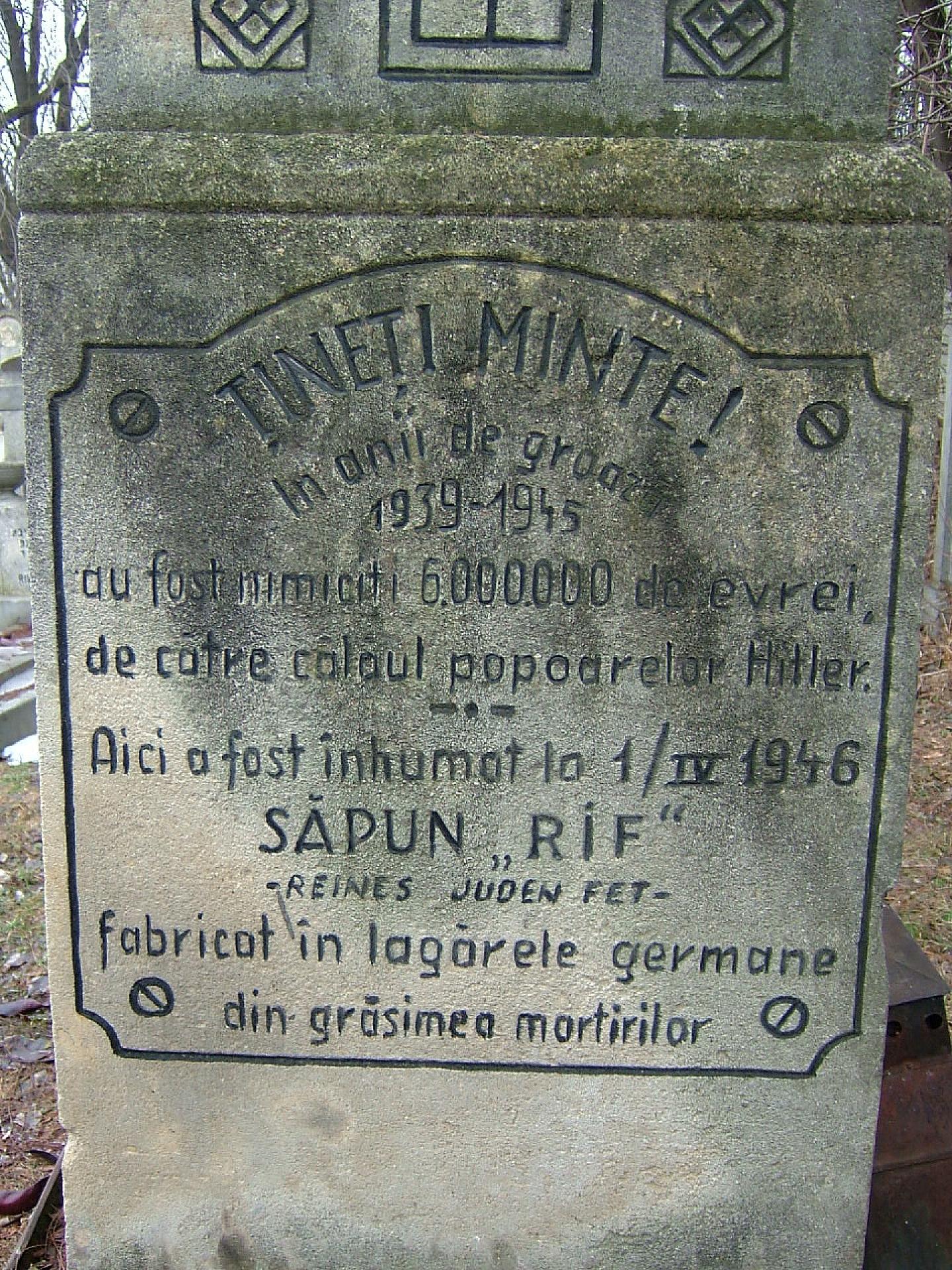
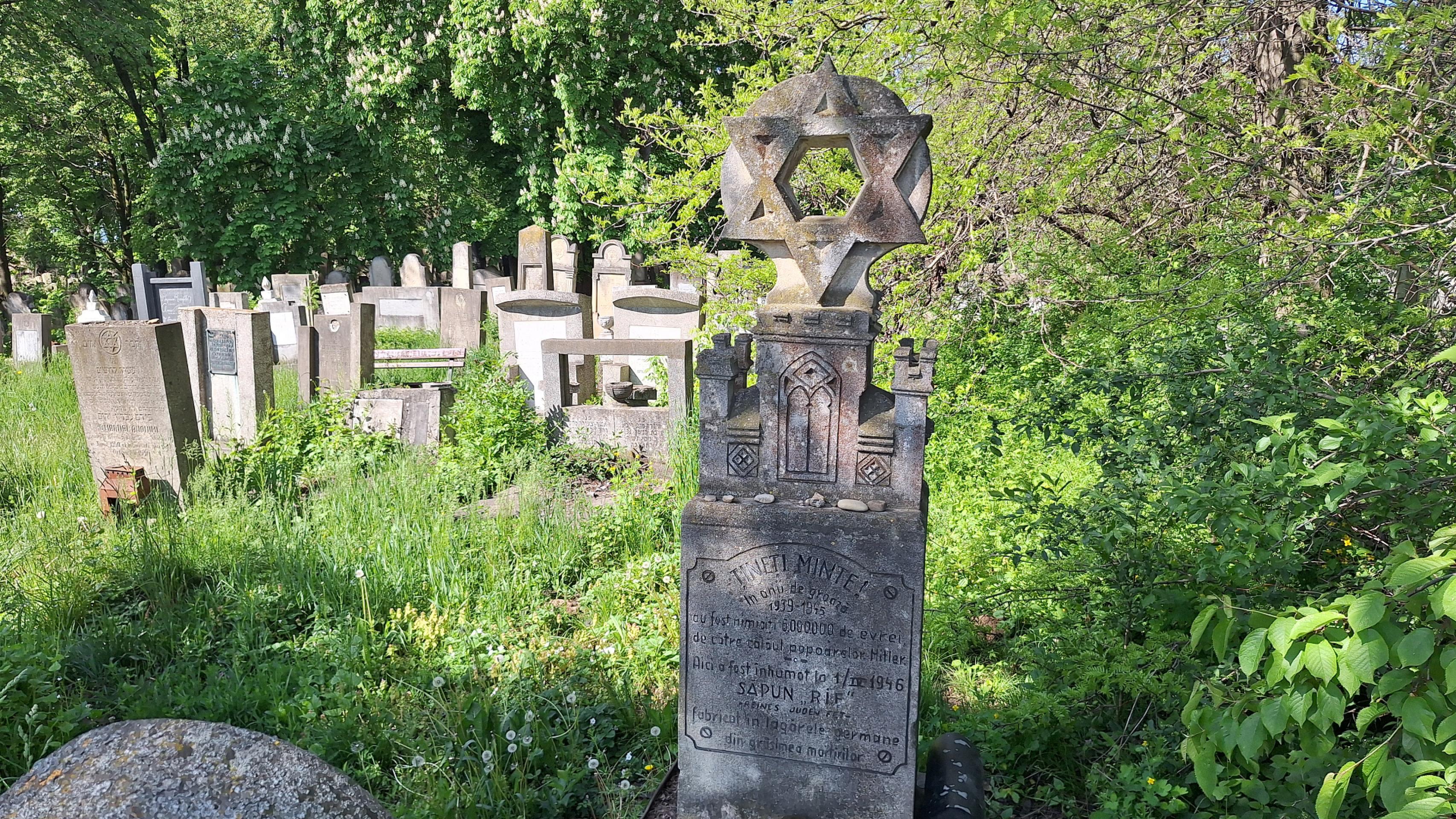
A monument at the Jewish cemetery in Rădăuţi commemorate the victims of the Holocaust. An inscription on the tombstone explains that soap has been buried on this site, having been produced »in the German camps out of the martyrs' fat«. Already during the Holocaust a rumour spread concerning the mass production of soap from the corpses of murdered Jews. The acronym »R.I.F.« (Reichsstelle für Industrielle Fettversorgung, Reich Centre for Industrial Fat Provisioning) was believed to stand for »Reines Jüdisches Fett« (»Pure Jewish fat«). This myth lived on after the war and was exploited for propaganda purposes by the Soviet Union, even though there was no evidence for an industrial-scale production of soap made from human fat. Yet this belief prompted many survivors to bury pieces of soap, including in Rădăuţi, and set up tombstones referring to the supposed origin of »R.I.F.« soap.
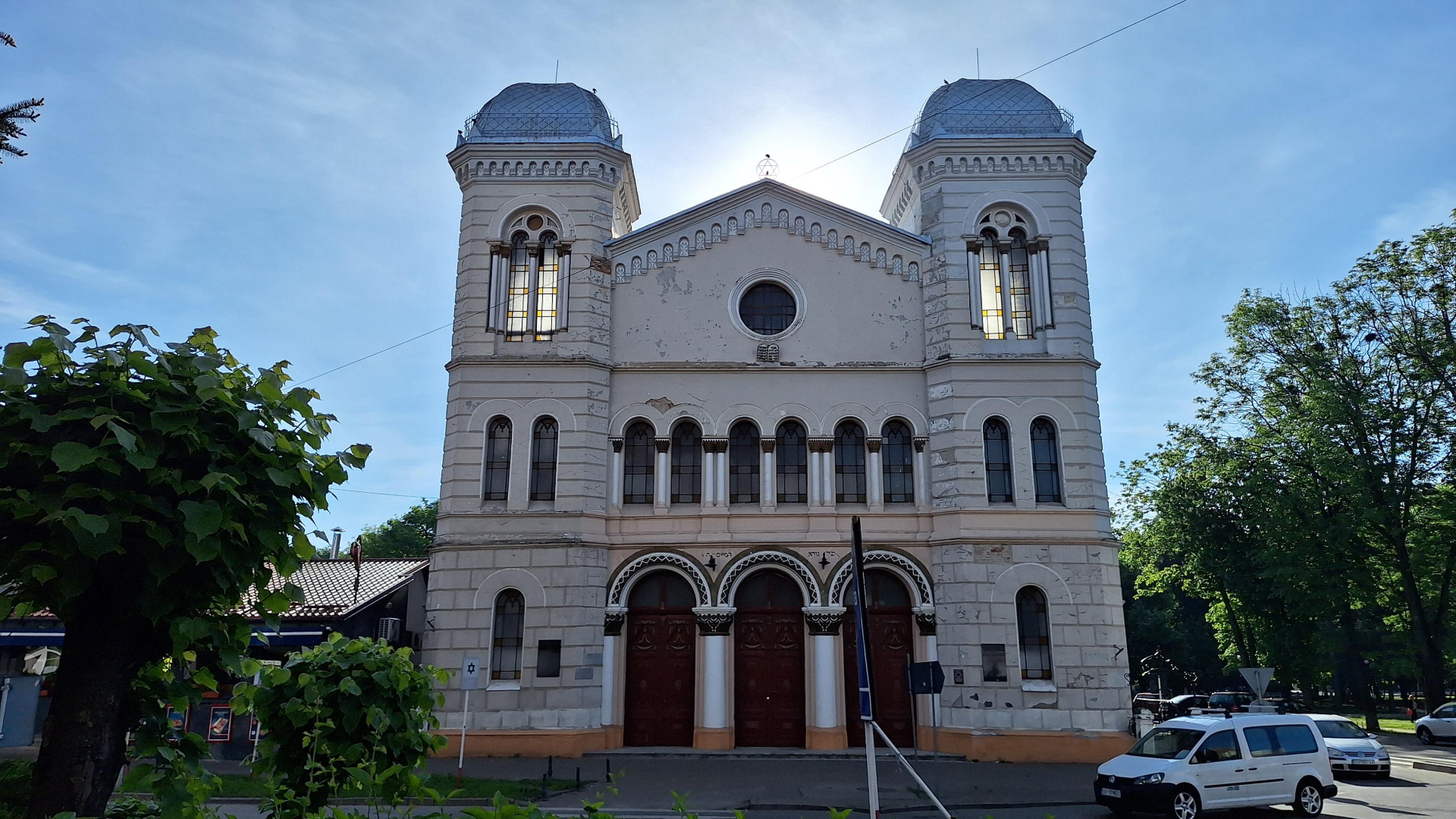
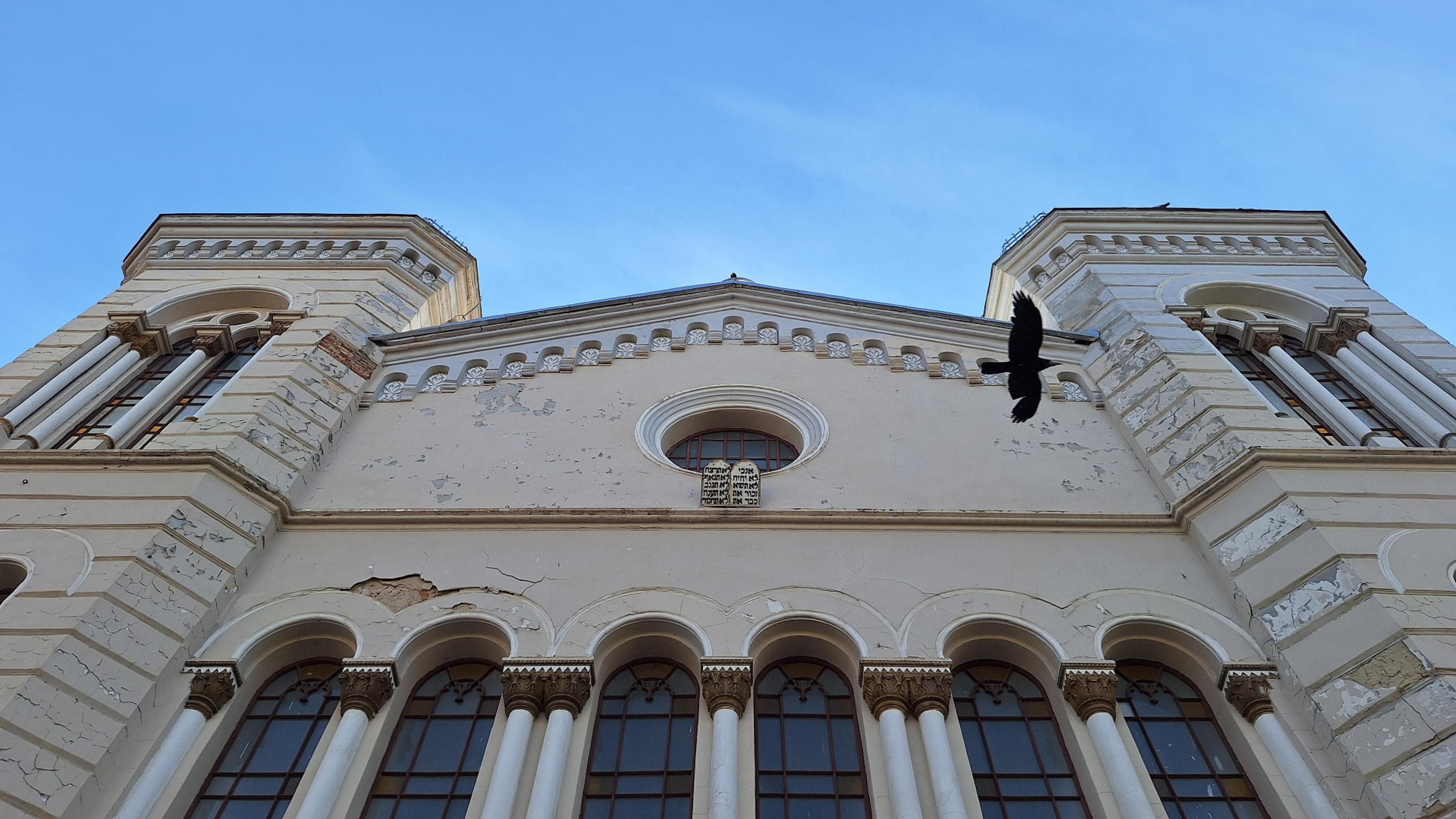
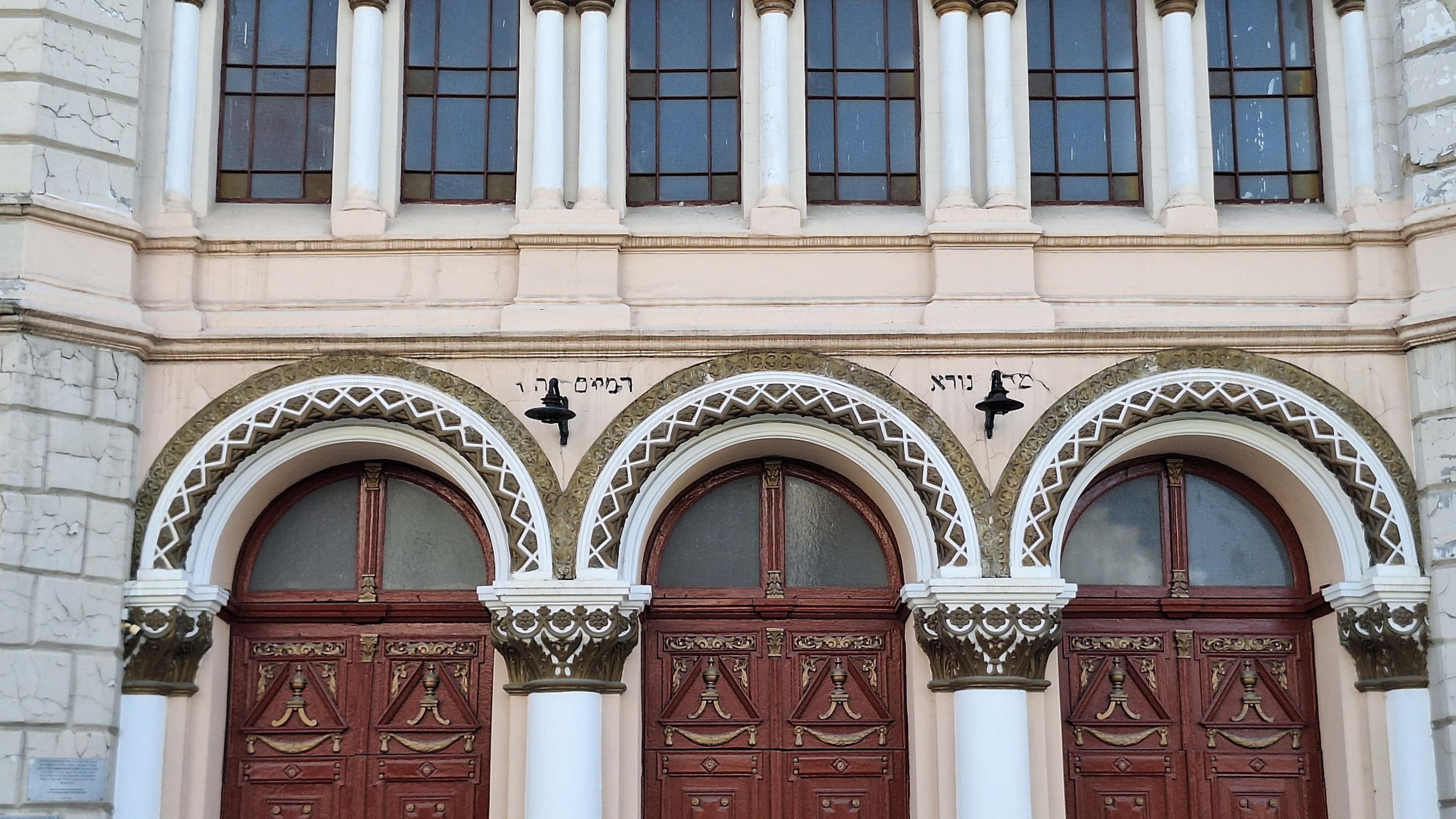
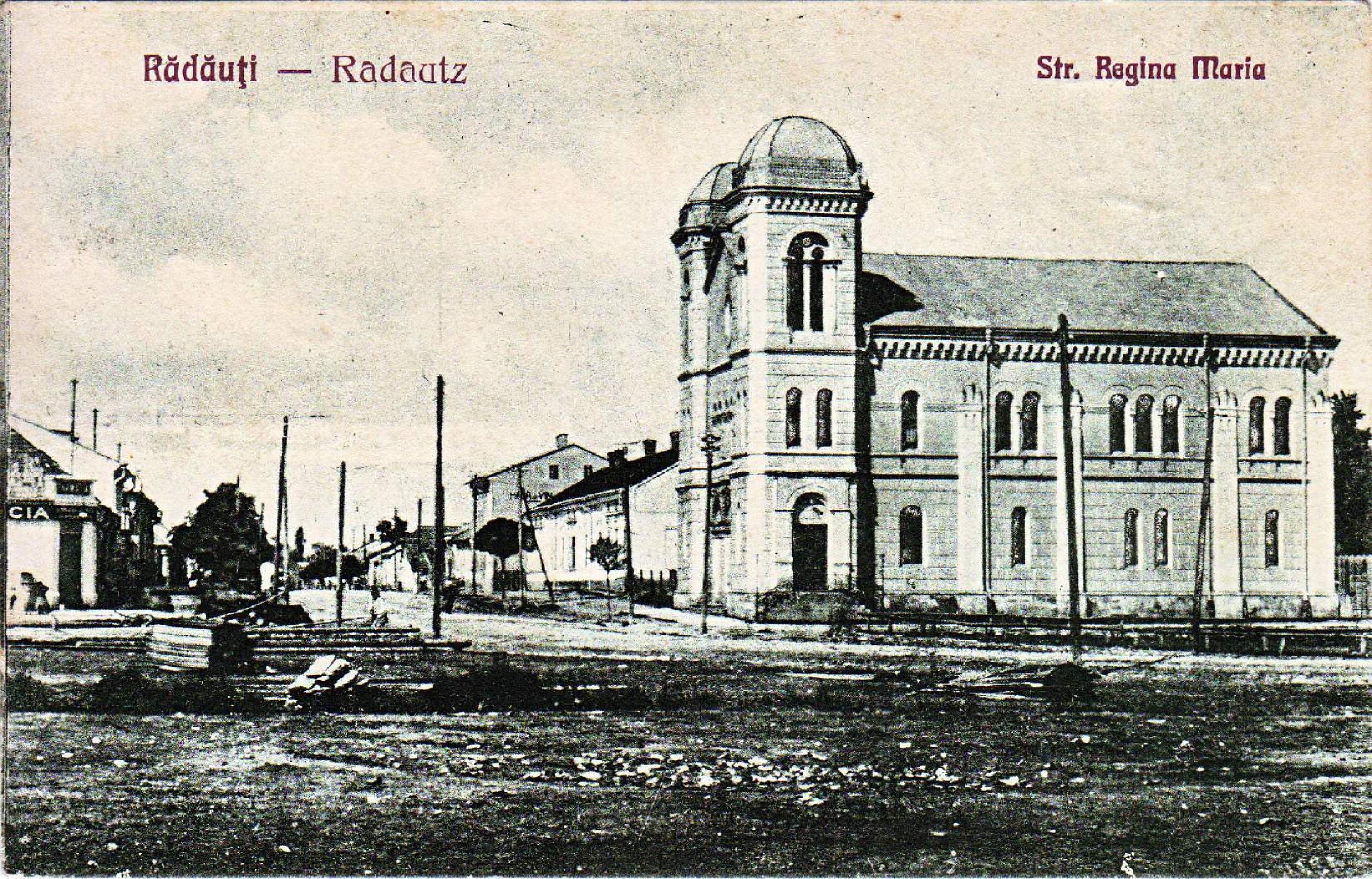
In the centre of town, the Great Synagogue, which was opened in 1883, bears witness to the city’s rich Jewish heritage. It was restored in the 2010s.