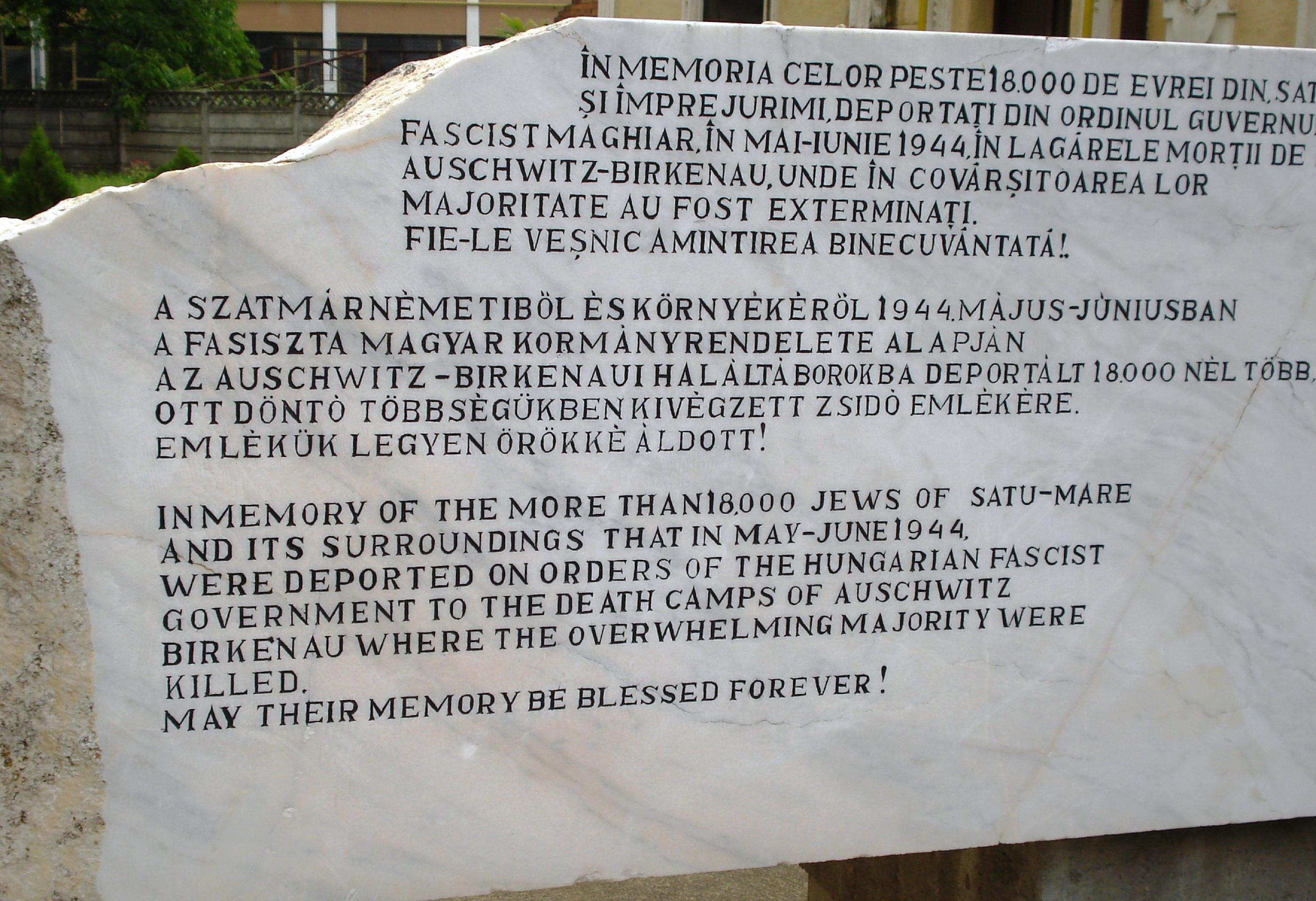
Holocaust memorial in Satu Mare
Monumentul Holocaustului din Satu Mare / Szatmárnémeti Holokauszt-emlékmű
Satu Mare is the most northwesterly major city of Romania close to the Hungarian border. A Holocaust memorial in the city remembers the more than 18,000 Jews from Satu Mare and surroundings who were deported to the extermination camp of Auschwitz-Birkenau in 1944.
History
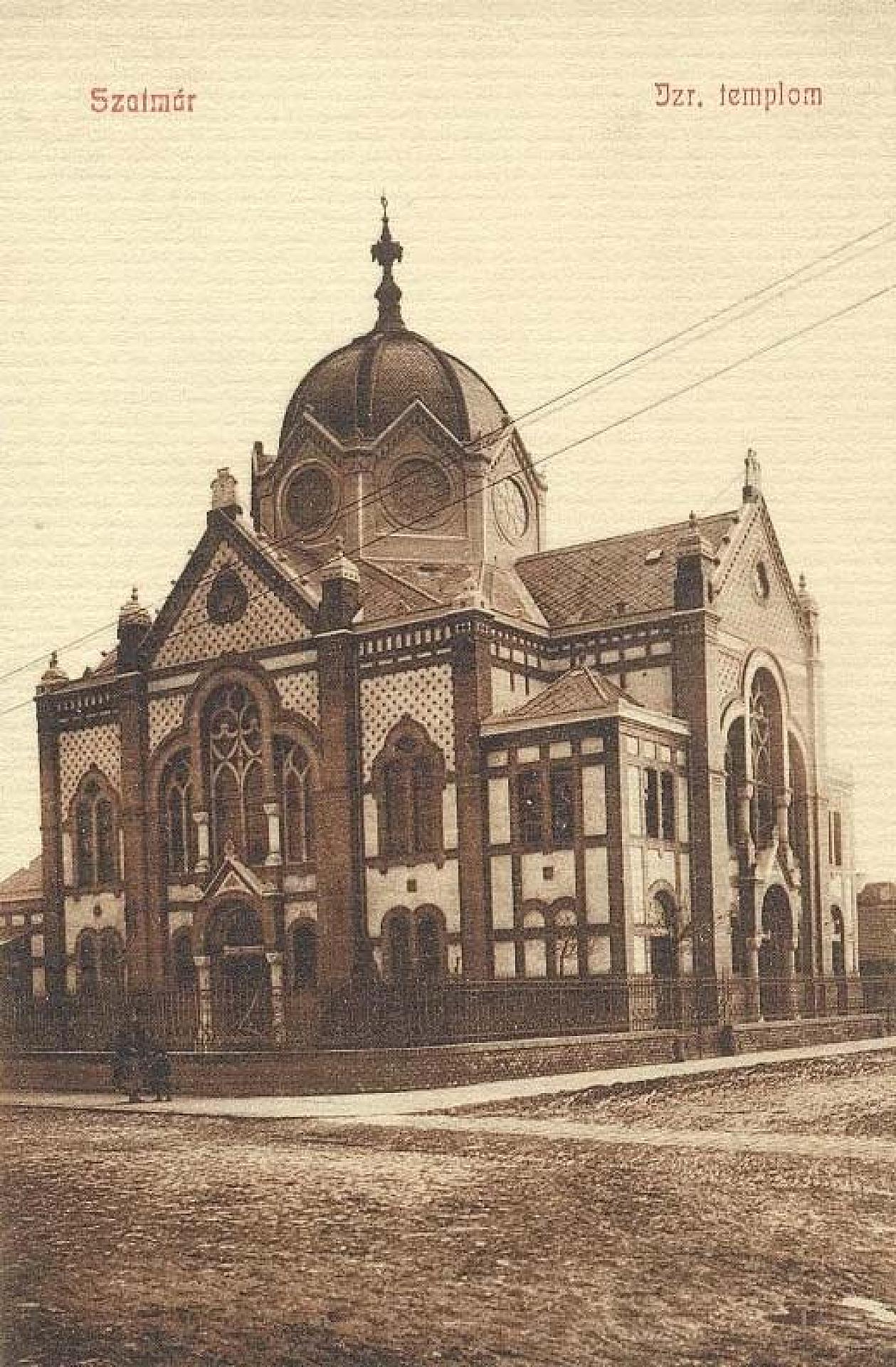
Since the Treaty of Versailles Satu Mare (German: Sathmar, Hungarian: Szatmárnémeti) is the most northwesterly city of Romania, close to the Hungarian border. Jews were allowed to settle in the city from the middle of the 19th century, from then on their number increased rapidly. The Jewish community was divided into several factions, reflected in the great number of synagogues. Satu Mare was home to many Hasidim but between the World Wars Zionism also gained strength.
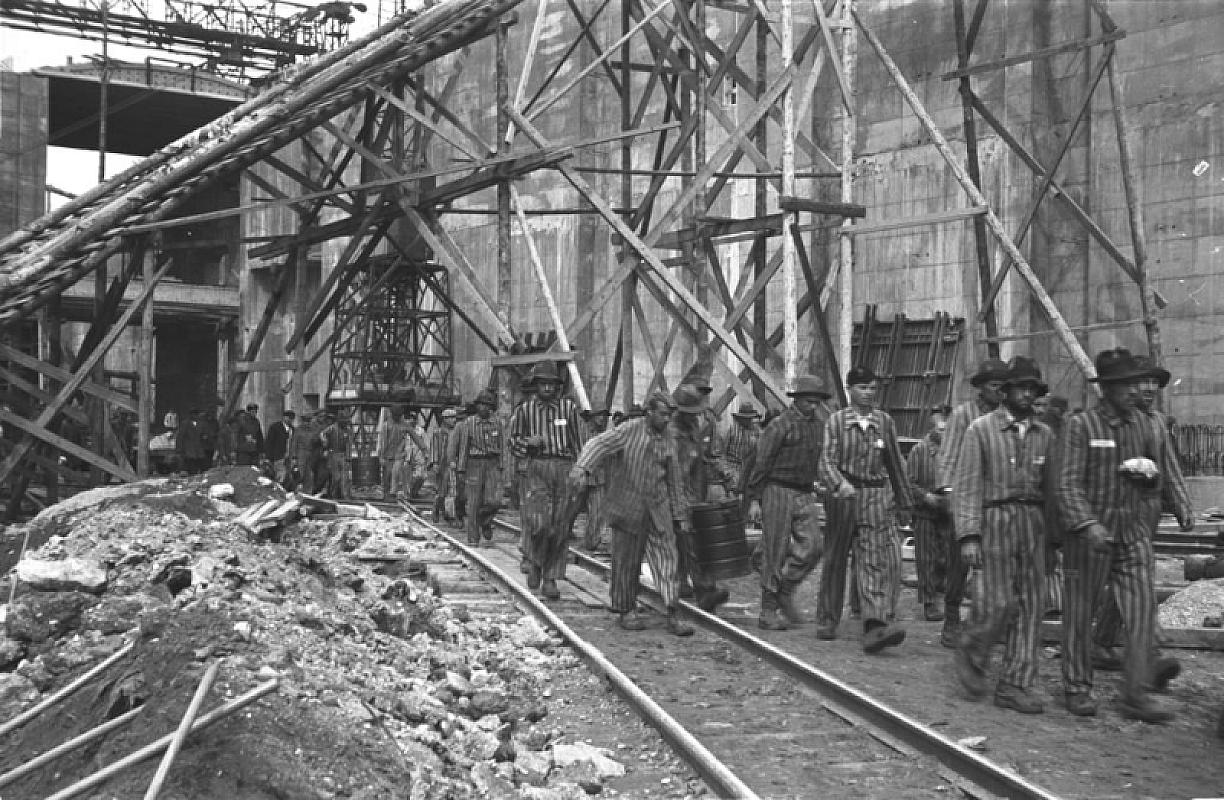
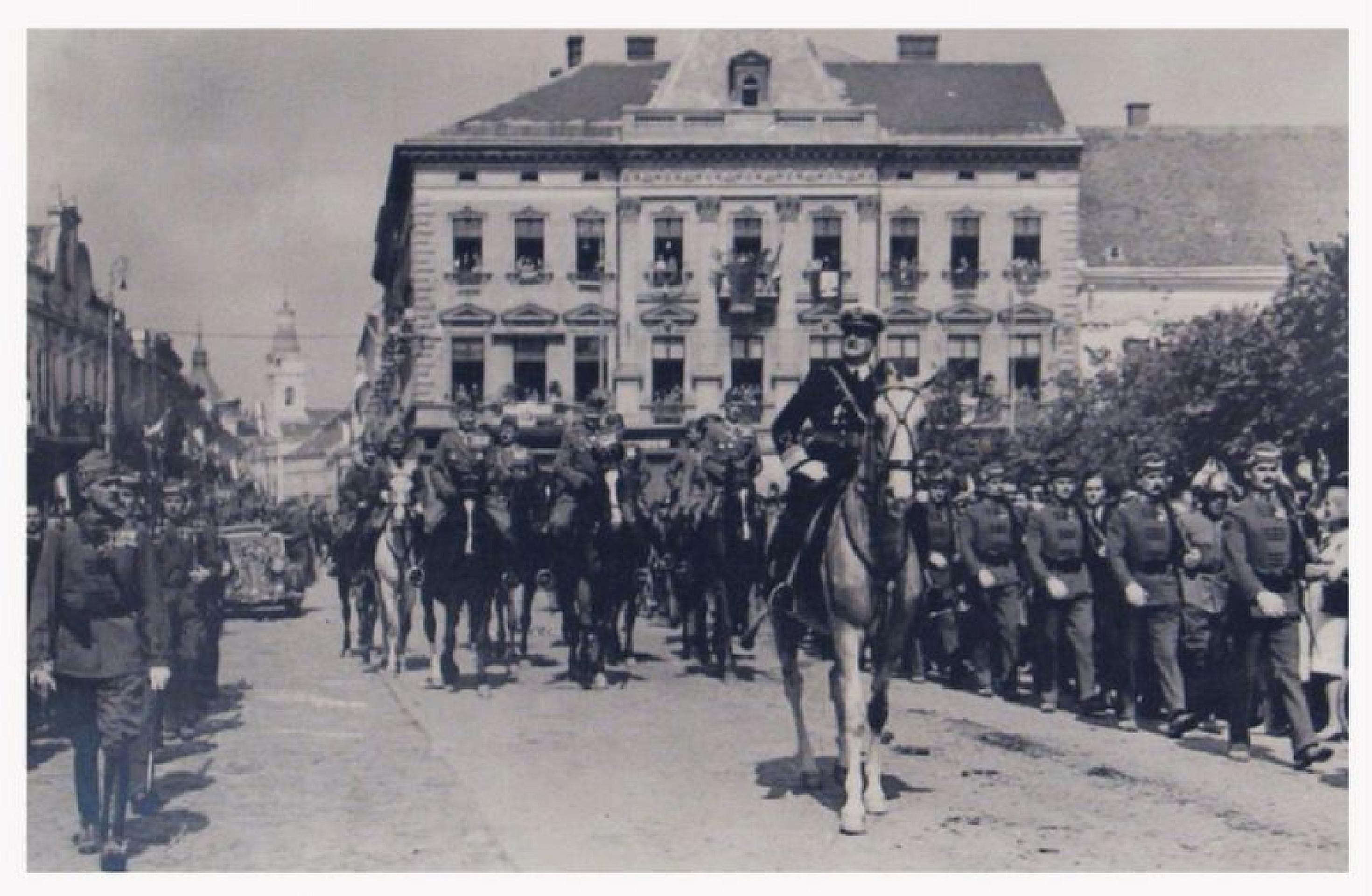
Because of the Second Vienna Award, Satu Mare as well as Northern Transylvania was re-assigned to Hungary in 1940. As a consequence, all anti-Jewish Hungarian laws applied to the almost 13,000 Jews of Sathmar, who made up about a quarter of the city's population. In the summer of 1941 Hungary deported tens of thousands of Jews – mostly of unsettled citizenship – to the occupied Ukraine, many of them were murdered by the SS near Kamianets-Podilskyi, only a few returned. These measures affected up to 1,000 Jews from Satu Mare. Between 1942 und 1944 most of the Jewish men aged 21 to 45 were sent to forced labour battalions of the Hungarian army, many of them died at the eastern front.
Few weeks after the occupation of the country by the German Wehrmacht the Hungarian administration established a ghetto in Satu Mare: Approximately 18,000 Jews from the city and its surroundings were held for weeks in a cordoned off quarter. Police and constabulary regularly tortured Jews to get hold of their allegedly hidden money and valuables. The approximately 18,800 residents of the ghetto were eventually deported to the extermination camp of Auschwitz-Birkenau via Kosice in six transports between May 19, and June 1, 1944.
Victims
The Hungarian authorities deported more than 18,000 from Satu Mare to Auschwitz-Birkenau. The SS murdered the overwhelming majority by poison gas, however, the exact number of victims is not known. It is estimated that about 12% or 2,200 of the Jews deported from Satu Mare survived the Holocaust.
Remembrance
After the war the survivors initially returned to Satu Mare and re-established the Jewish community. In 1947 already 7,500 Jews lived in the city, most of them coming from other regions, for many of them the city near the Hungarian border was to become a stepping stone to go further west. From the 1950s onwards the number of Jews decreased continuously, most of them emigrated to Israel. According to the latest censuses there are less than 100 Jews living in Satu Mare, most of them very old.
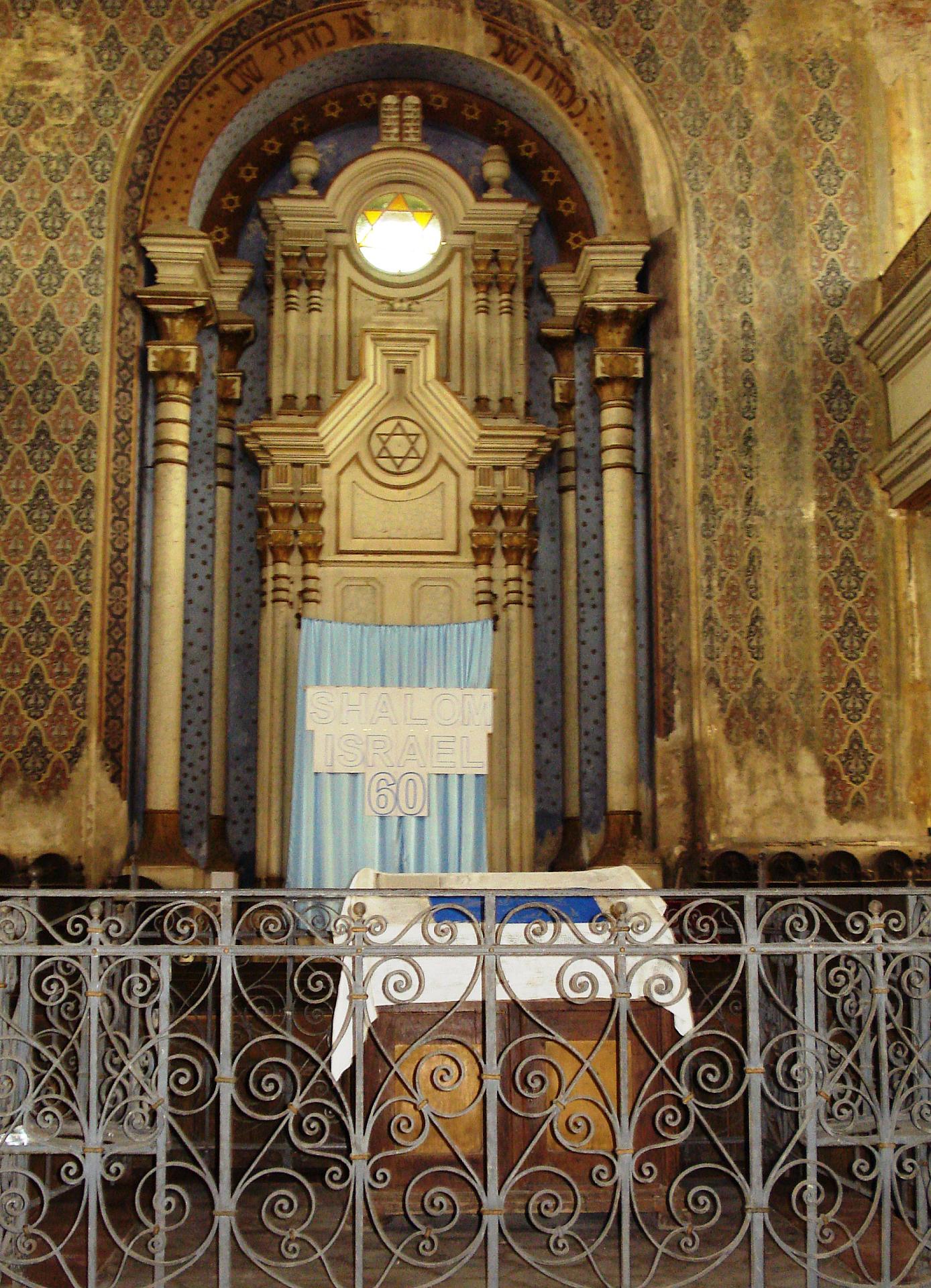
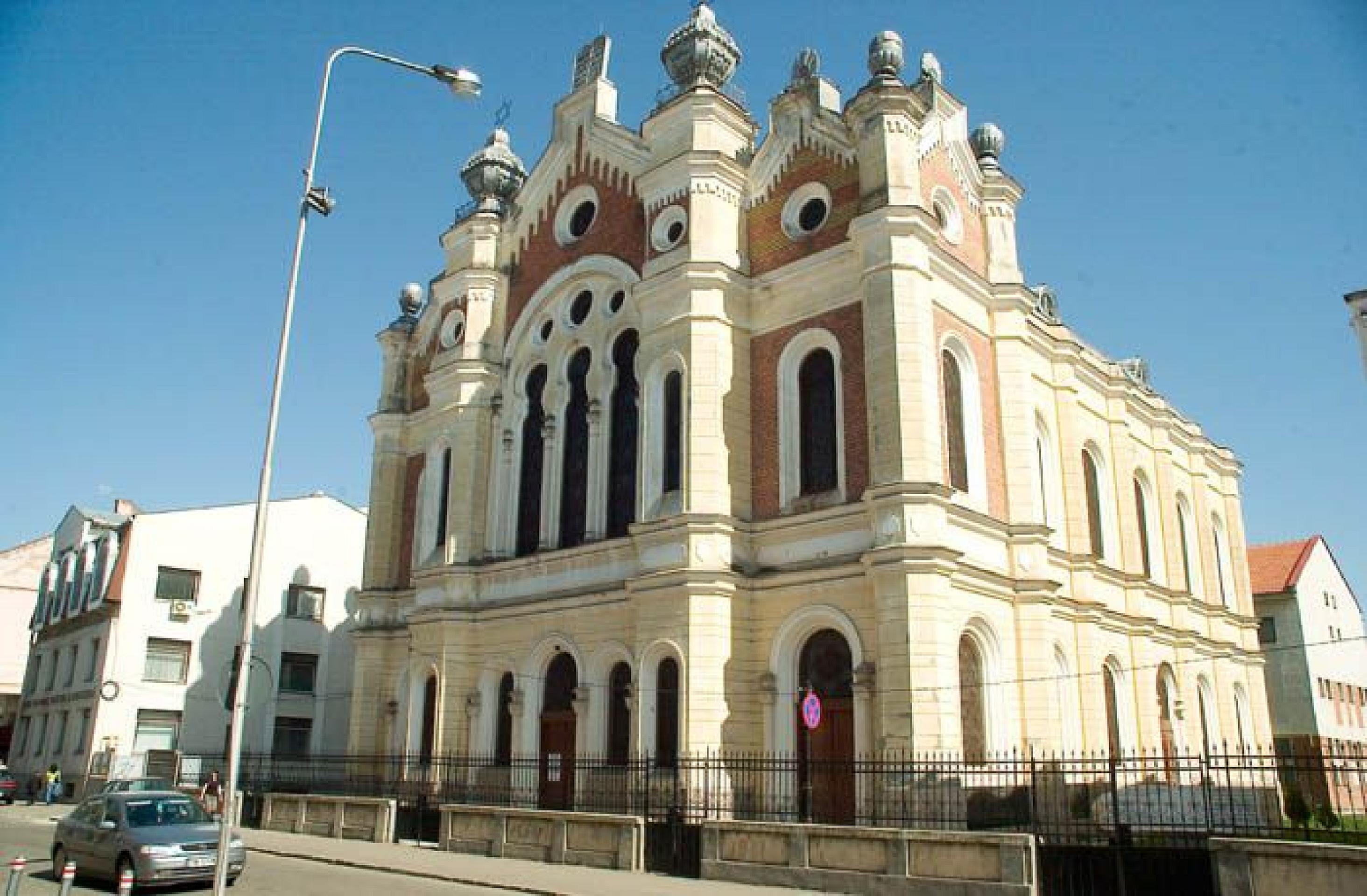
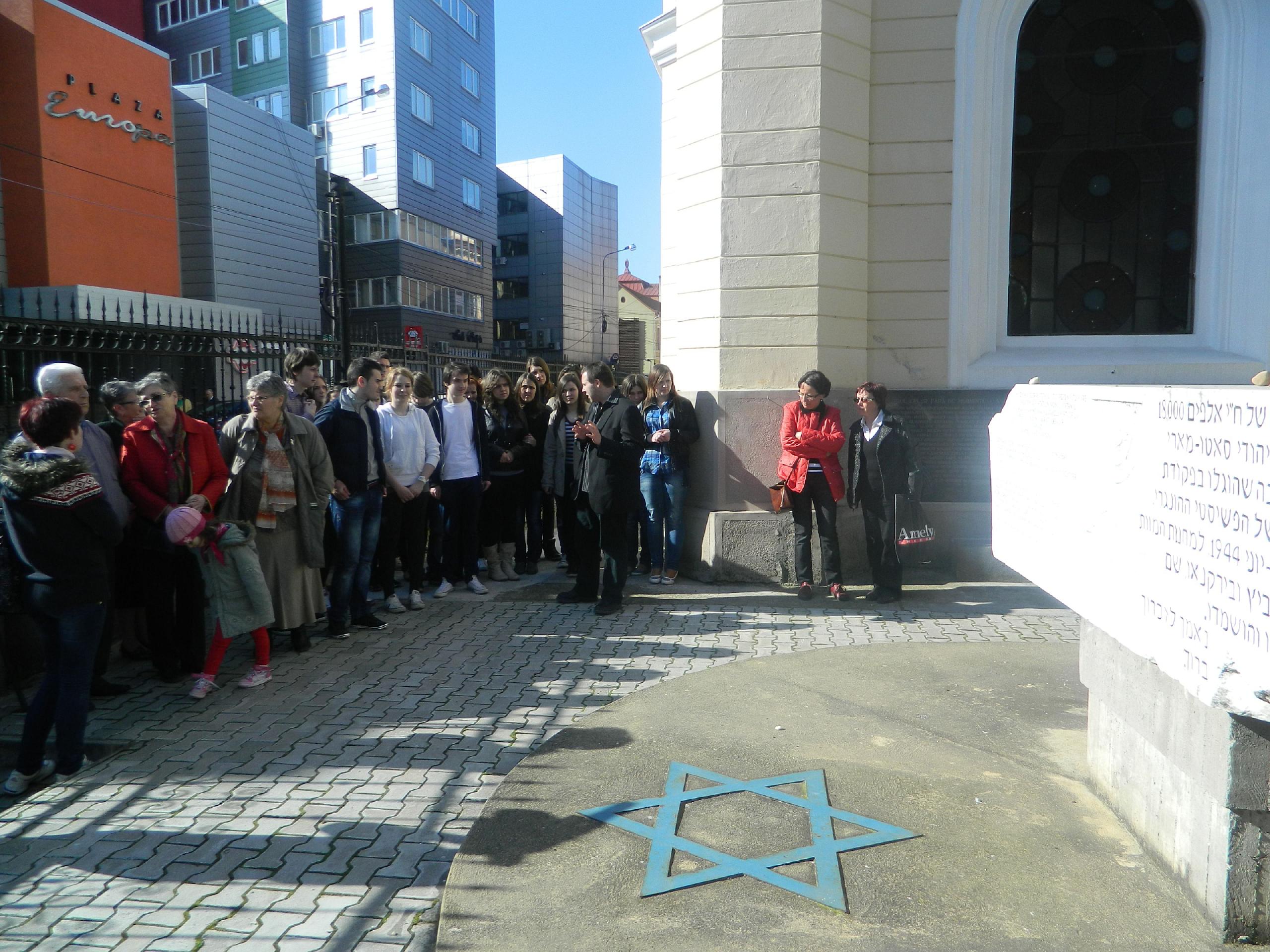
The synagogues are the only remnants in the cityscape to tell of the once busy Jewish life. The synagogue of the liberal community did not survive the Second World War, but the great orthodox synagogue in str. Decebal (Hungarian: Várdomb utca) is relatively well-preserved. Next to it is an older, also orthodox prayer house. Between the buildings is the Holocaust memorial, remembering the deported Jews of Satu Mare. On the memorial is an inscription in Romanian, Hungarian, English and Hebrew reading: »In memory of the more than 18.000 Jews from Satu Mare and surroundings that in May-June 1944 were deported on orders of the Hungarian fascist government to the death camps of Auschwitz Birkenau where the overwhelming majority were killed. May their memory be blessed forever!«
Open
The memorial is accessible at all times.
Contact
http://www.jewishcomunity.ro/en/index.php
cesatumare@gmail.com
+40 (0) 261 713 703