Memorial Holocaustului al Târgu Mureș / Marosvásárhelyi Holokauszt-emlékmű
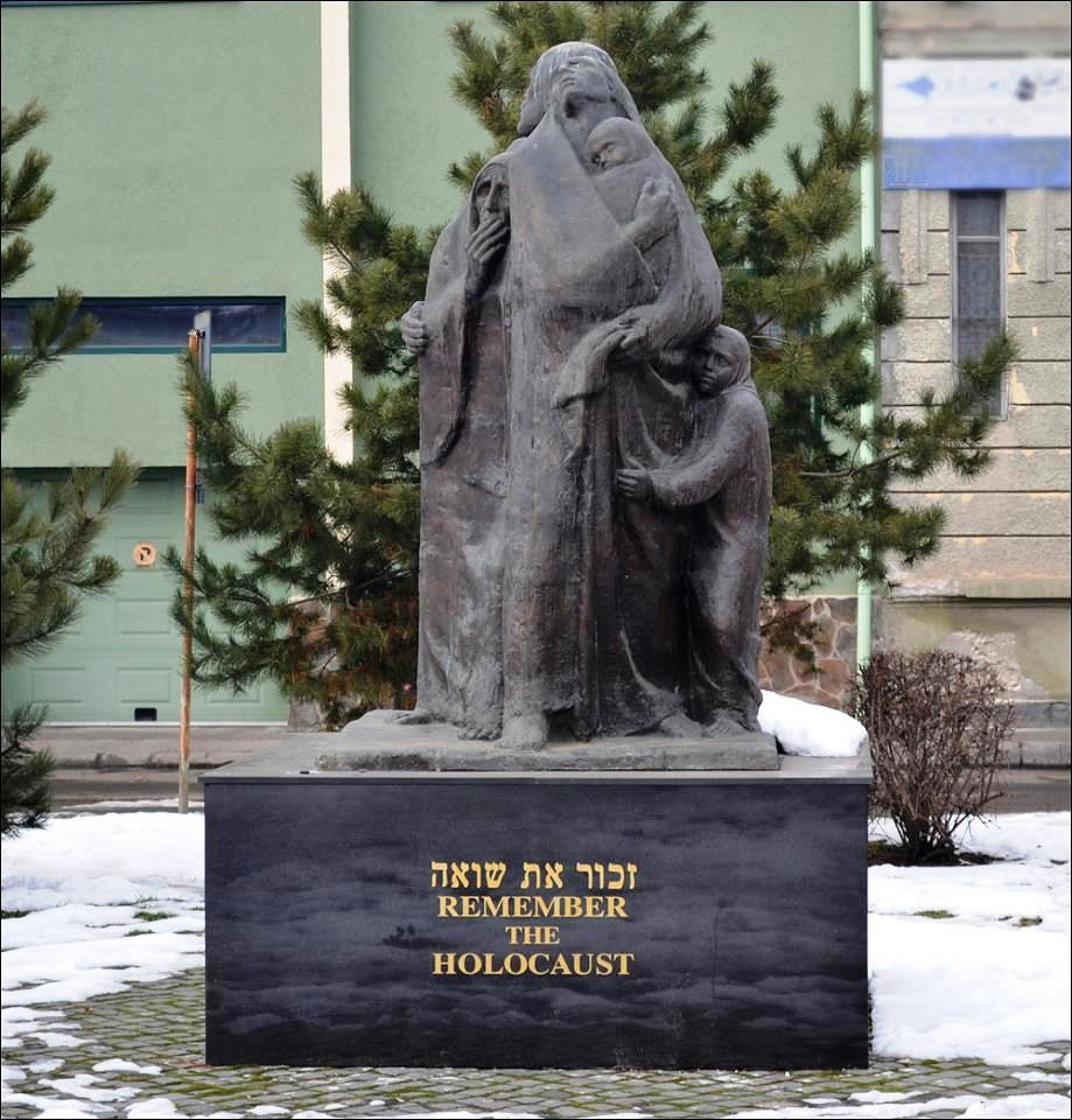
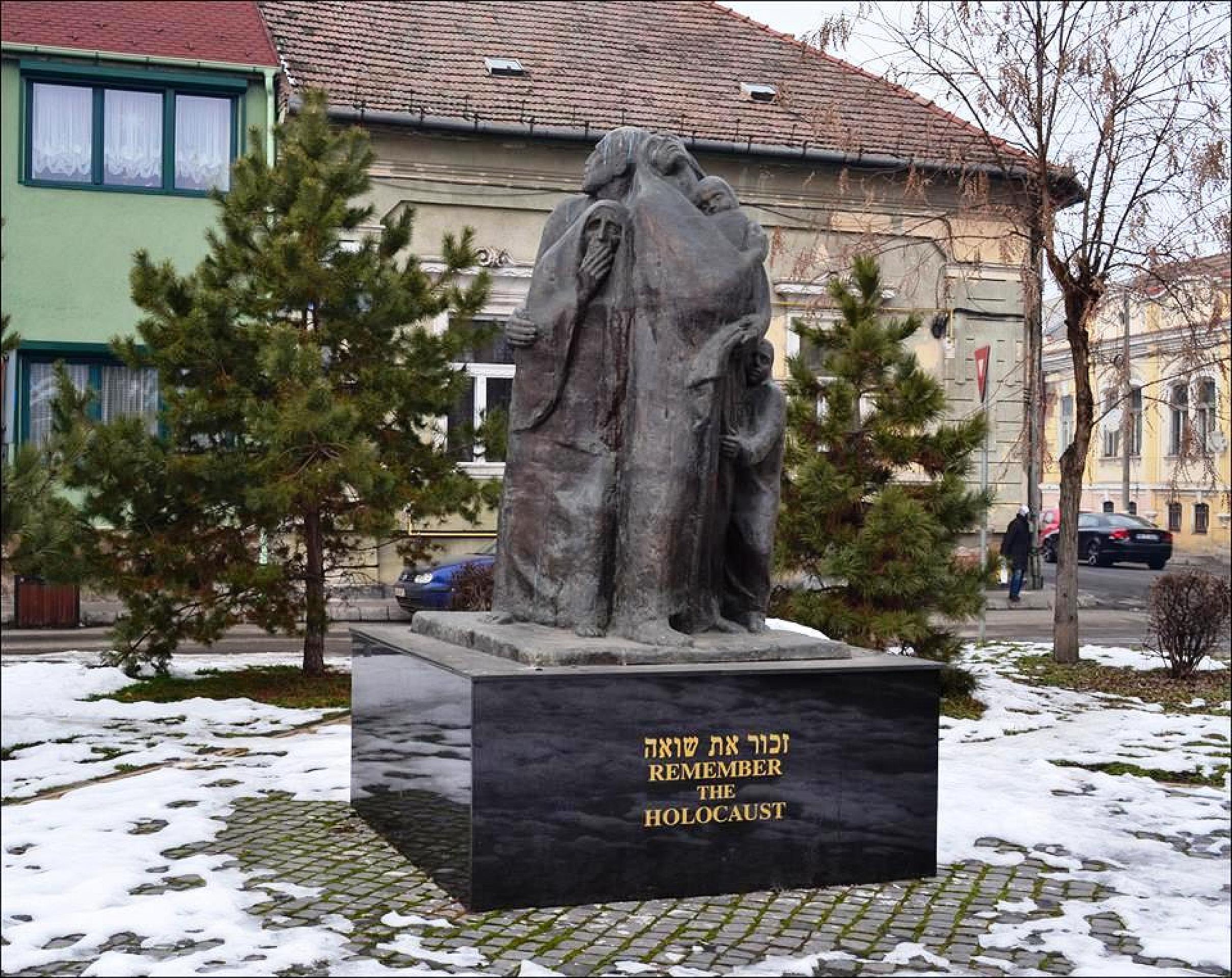
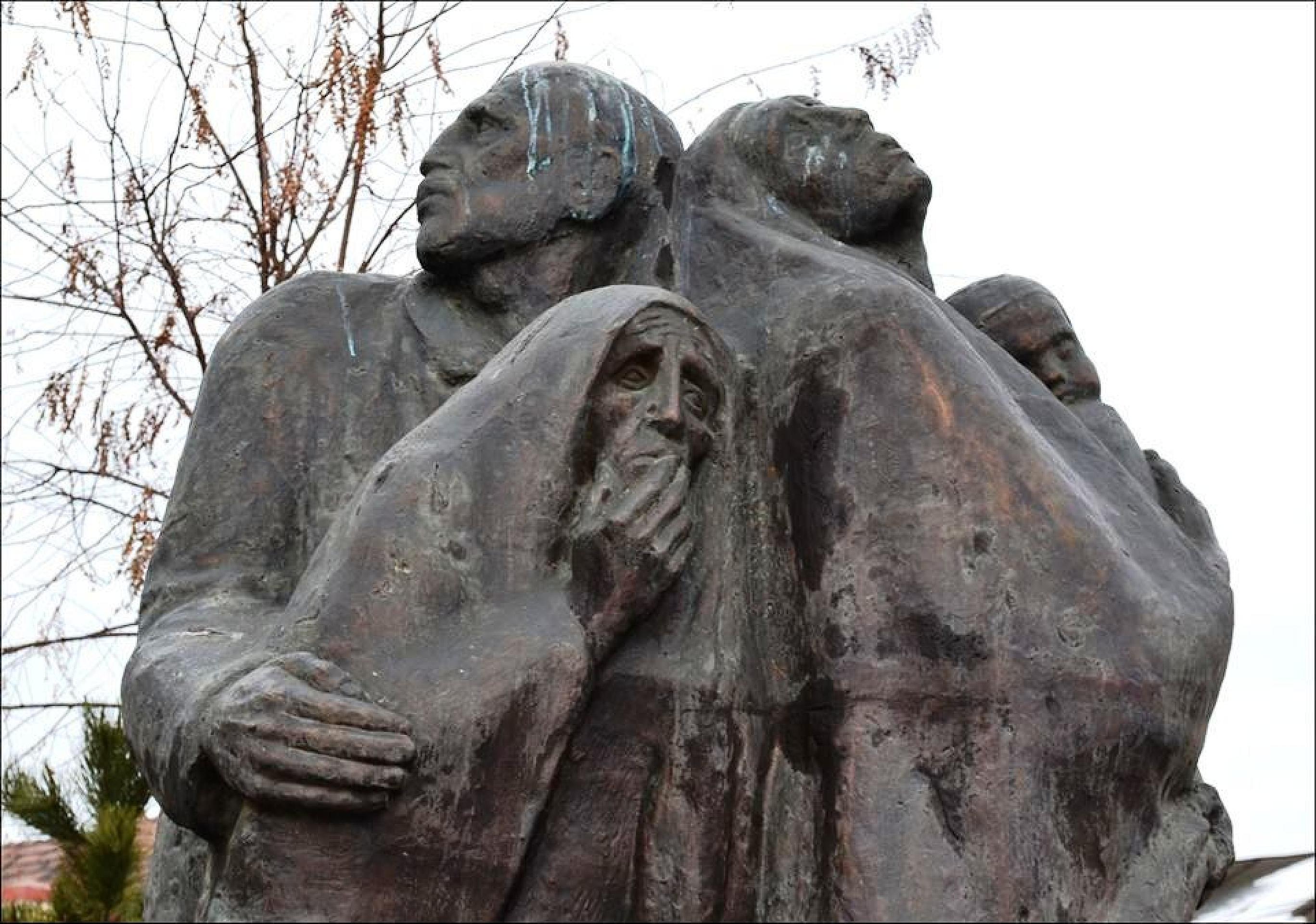
Since 2003 a group of sculptures in the city centre remembers the murdered Jews of Târgu Mures and its surroundings.
History
Târgu Mures (Hungarian: Marosvásárhely, German: Neumarkt am Mieresch) is one of the most important cities of Transylvania. After the collapse of the Austro-Hungarian Empire the city passed to Romania until Hungary regained the northern part of Transylvania in 1940. A Jewish community existed in the city since 1849, its members originally came from the surrounding villages. Like elsewhere in Hungary the community divided in 1870 into an orthodox and a more liberal community called »status quo ante«. Especially members of the latter group where willing to adapt to the Hungarian mainstream society. Later a strong Zionist movement emerged while there were also several Hasidic groups among the orthodox. According to the 1941 census the predominantly Hungarian Târgu Mures had a Jewish population of 5,693 out of a total of 45,000.
After the city's incorporation into Hungary the Hungarian laws pertaining to Jews immediately came into effect. Between 1940 and 1944 up to 1,500 men were enlisted for so-called labour service in the army and sent mainly to the eastern front from where only few returned.
A few weeks after the start of the German occupation of Hungary in March 1944 the systematic looting of Jewish property and the preparations for the deportation of the Jews from Târgu Mures began. On May 3, all the Jews from the city and its surroundings had to move to a ghetto which was established in an empty brick yard. The Hungarian authorities and the German SS deported the Jews at the end of May, and the beginning of June 1944 in three transports via Košice and Cracow to the extermination camp of Auschwitz-Birkenau.
Victims
Hundreds of men from Târgu Mures died as labour service men in the Hungarian army between 1940 and 1944 at the eastern front. 7,559 Jews were deported from the ghetto in Târgu Mures to Auschwitz-Birkenau, most of the were murdered by the SS by poison gas on their arrival. The total number of survivors from Târgu Mures is not known.
The Kingdom of Romania was politically unstable in the interwar period and threatened by territorial claims from its neighbours. The country sought an alliance with National Socialist Germany but the Nazi leaders in Berlin chose to support Hungary, Bulgaria and their temporary ally, the Soviet Union over the border issue. Romania had to agree to surrender large parts of its territory to these states during 1940. This led to increased radicalisation within the country. King Karl (1893–1953) granted unrestricted authority to General Ion Antonescu (1882–1946) but then had to abdicate to allow his son Michael (1921–2017) to come to the throne. The right-wing extremist »Garda de Fier« (Iron Guard), which was allied with Antonescu, immediately began to persecute the Jews. In 1941 Romania took part in the German attack on the Soviet Union. Romania organised the deportation of up to 155,000 Jews and 25,000 Roma from Bukovina and Bessarabia to the occupied Ukrainian territory of »Transnistria«. Tens of thousands died as a result of mass murder, imprisonment, forced labour, starvation and illness. Meanwhile, the Jews in northern Transylvania (part of Hungary since 1940) were subject to the anti-semitic legislation in this region. However, the majority were spared any violent persecution until the Wehrmacht invaded in 1944. The SS now began to deport Jews to Auschwitz in cooperation with the Hungarian authorities. The total number of murdered Romanian Jews is thus spread over various territories: 50,000 Jews from Bessarabia and Bukovina along with 20,000 Jews from central Romania were murdered and around 120,000 Transylvanian Jews died under the Hungarian-German occupation.
In August 1944, the Red Army offensive caused Romania to change sides. Michael I stripped Antonescu of his powers and the country came under Soviet control. The dictator was executed in 1946 and the king abdicated the following year. In the initial post-war period memory focused on liberation by the Red Army. A monument to the fallen Soviet soldiers was built in Bucharest. Romania’s alliance with Germany was ignored. Under Nicolae Ceausescu (1918–1989), who ruled the country with his secret service from 1965, the »liberation from the yoke of fascism« was presented as the achievement of Romanian heroes. With the end of the Ceausescu regime in 1989 many Romanians preferred to adopt a contrary approach: the attack on the Soviet Union in 1941 was now more frequently viewed as a campaign against Bolshevism. There was growing admiration for Antonescu. In contrast, for some Romanians the king, now living in exile, became increasingly important as a symbol of democracy as he had toppled the dictator and was later expelled by the communists.
There was no place for the Holocaust in post-war memory. Most survivors had already left the country by the 1950s. Memory was left to the Jewish communities, which established a small research centre in 1977 and a small museum in Bucharest the following year as well as a number of memorials. In 2004 a committee was set up to research the Holocaust and Romanian crimes. The committee was led by Elie Wiesel (1928–2016), a Romanian-born Holocaust survivor and Nobel Peace Prize winner. A National Institute has continued the research since 2005. In 2009, a central Holocaust memorial was inaugurated in Bucharest that also honours the Roma who had been deported to Transnistria. However, apart from this sign, there is still little remembrance to the more than 12,500 Romanian Roma murdered during the war.
Remembrance
After the Second World War Târgu Mures became part of Romania again. In 1947 2,240 Jews lived there, a lot of them originally from other regions. During the time of the communist dictatorship many Jews emigrated and in 1992 the number of the Jewish community was down to 155 members only.
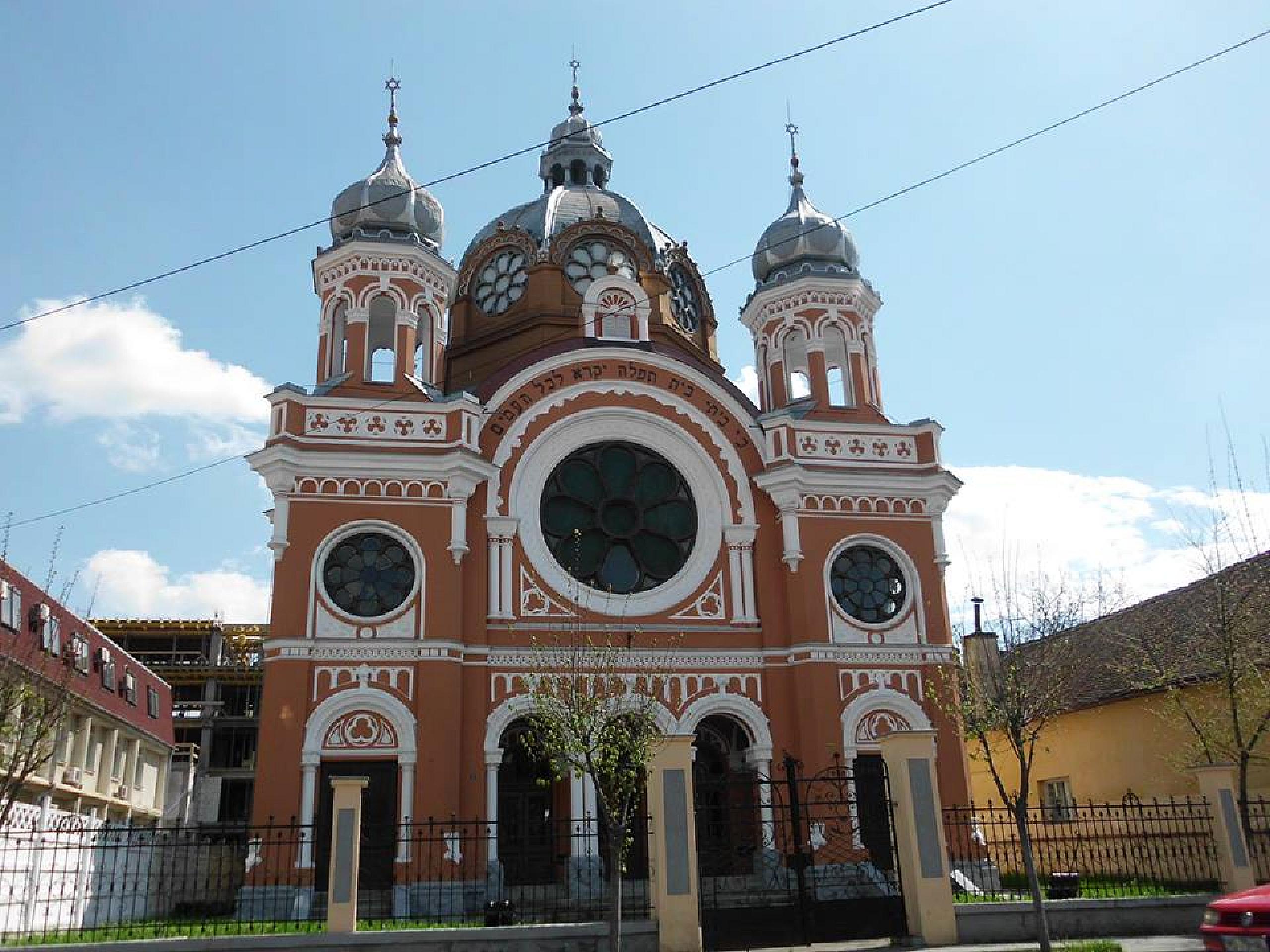
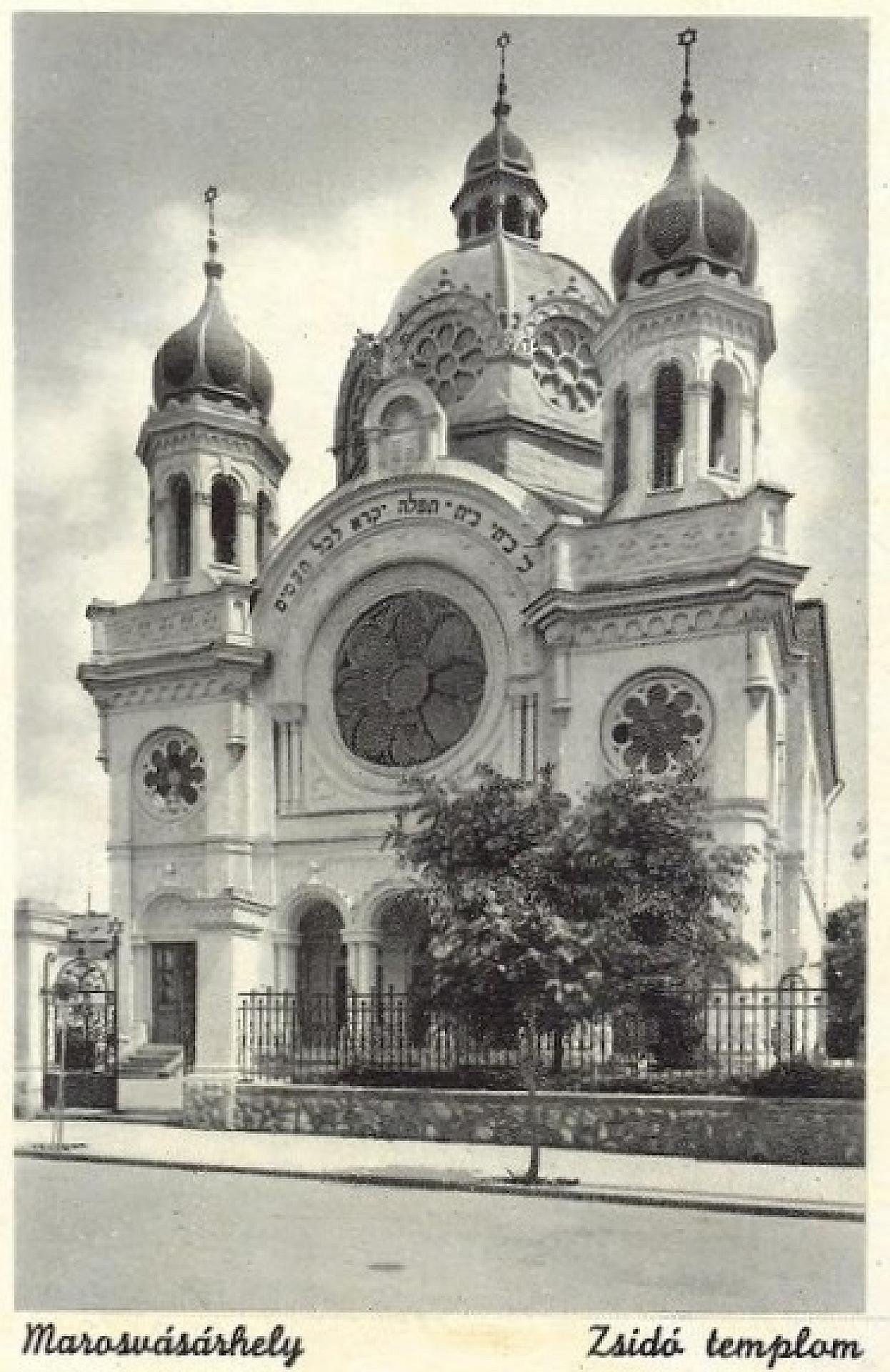
The city is still home of one of the largest synagogues in Transylvania. Also known as the »Great Temple«, it was opened in 1900 by the community »status quo ante« and refurbished some years ago.
On May 4, 2003 a Holocaust memorial was dedicated in Târgu Mures. It was one of the first Holocaust memorials in Romania and is the work of the sculptor Márton Izsák. On the memorial's pedestal the words »Remember the Holocaust« are inscribed in English and Hebrew. Originally another rather controversial plaque was attached, pointing out that the crimes were committed by the »fascist Hungarian government«. The plaque wasn't mounted again after the memorial's renovation in Autumn 2013.