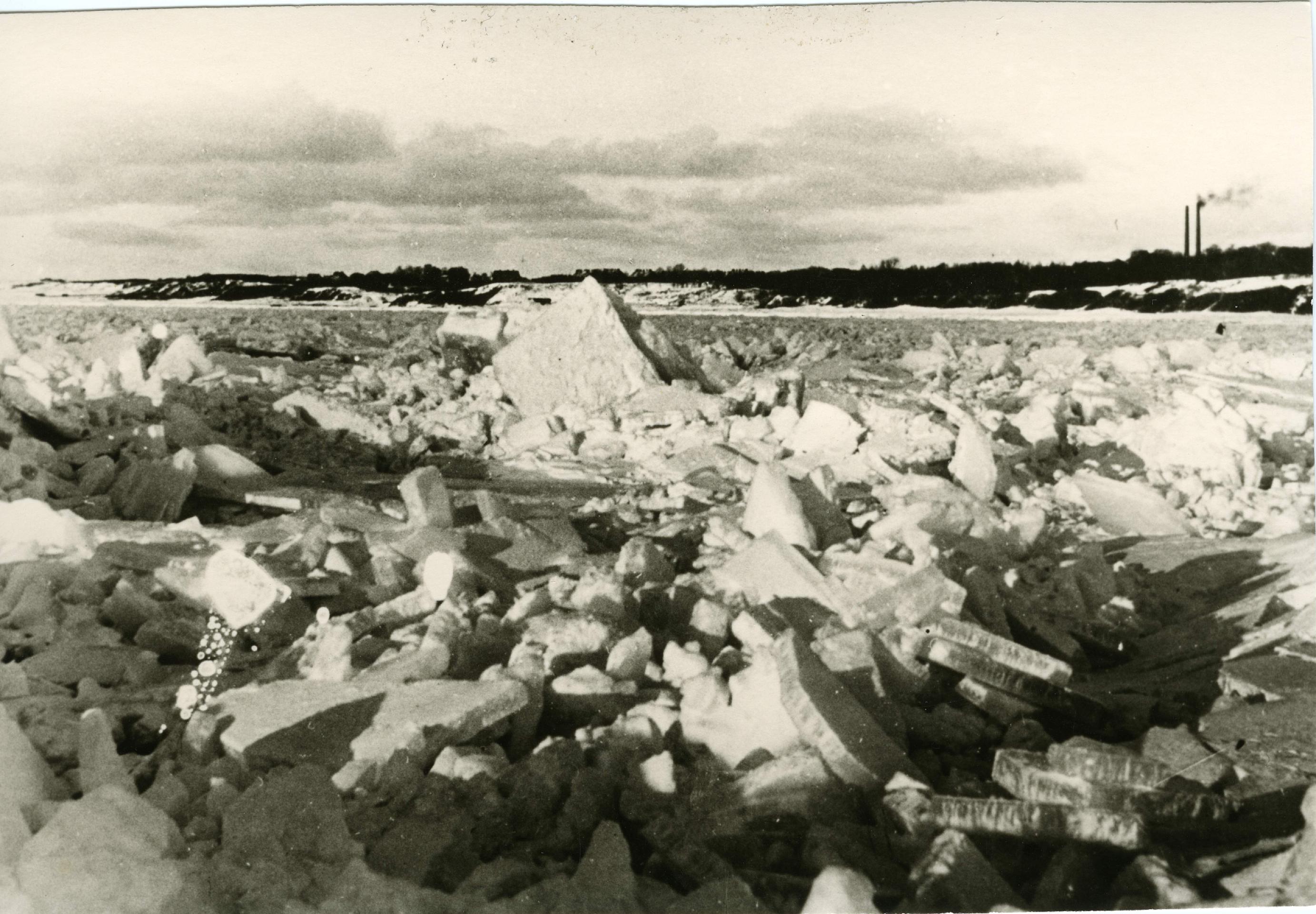
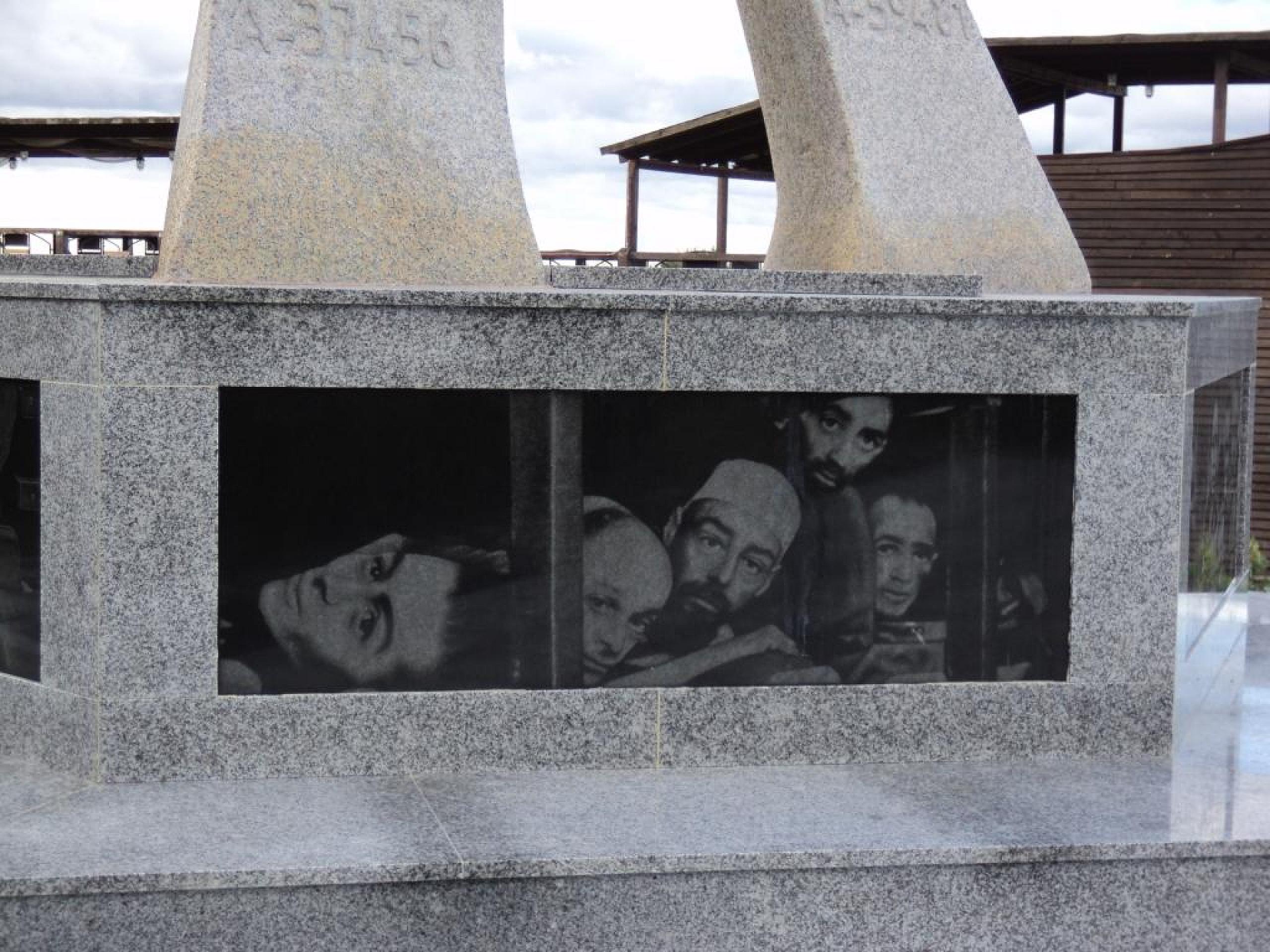
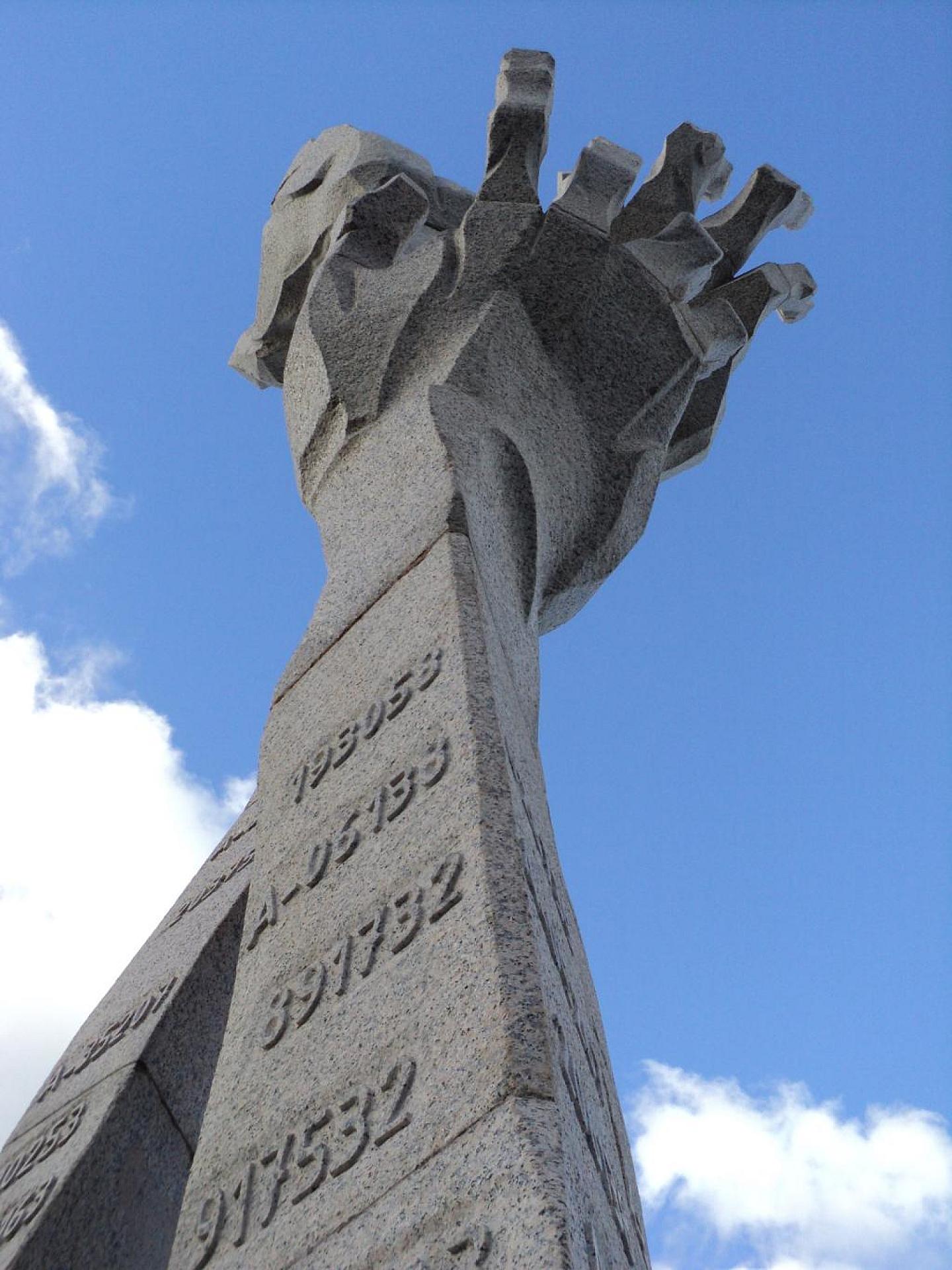
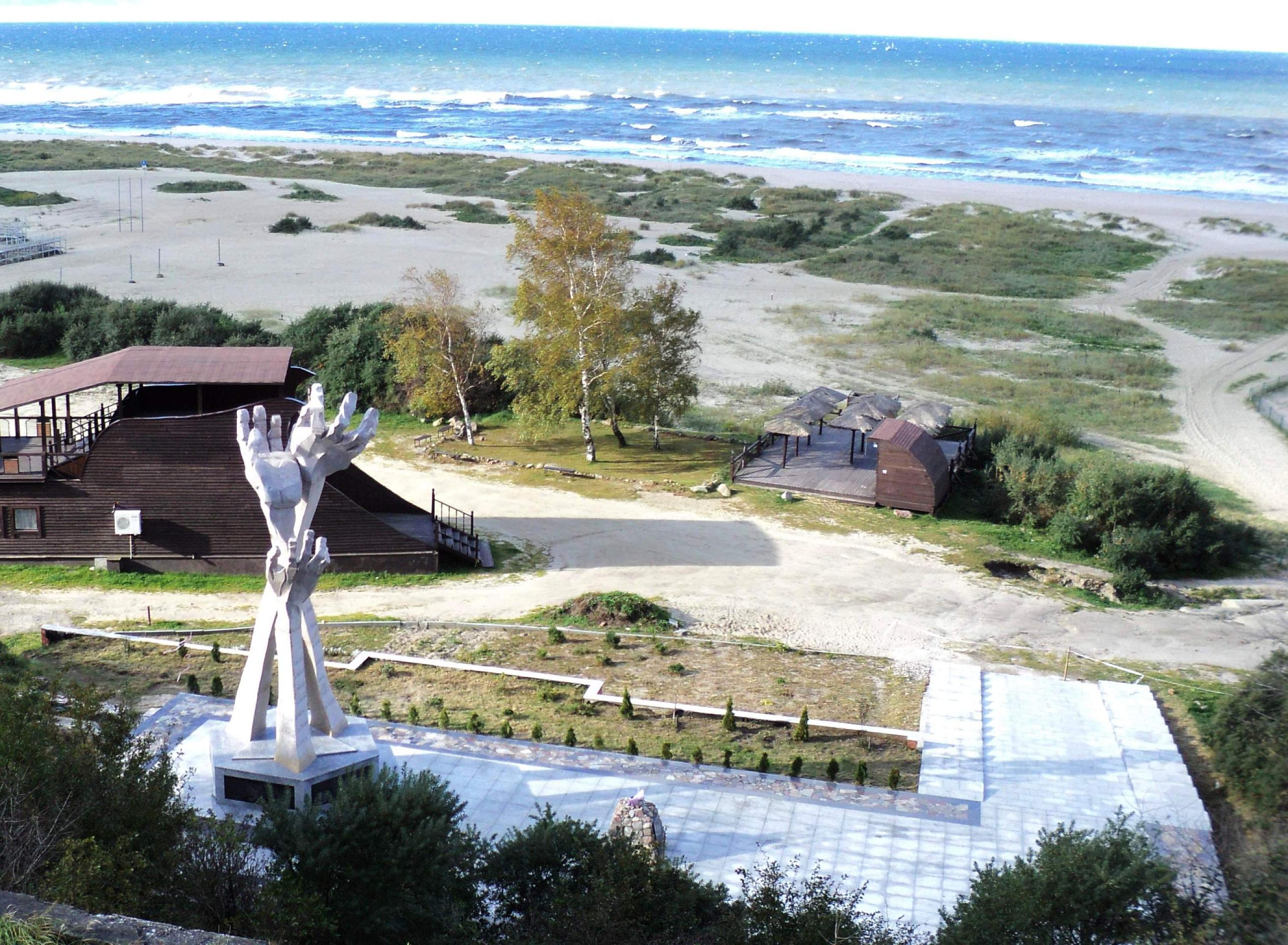
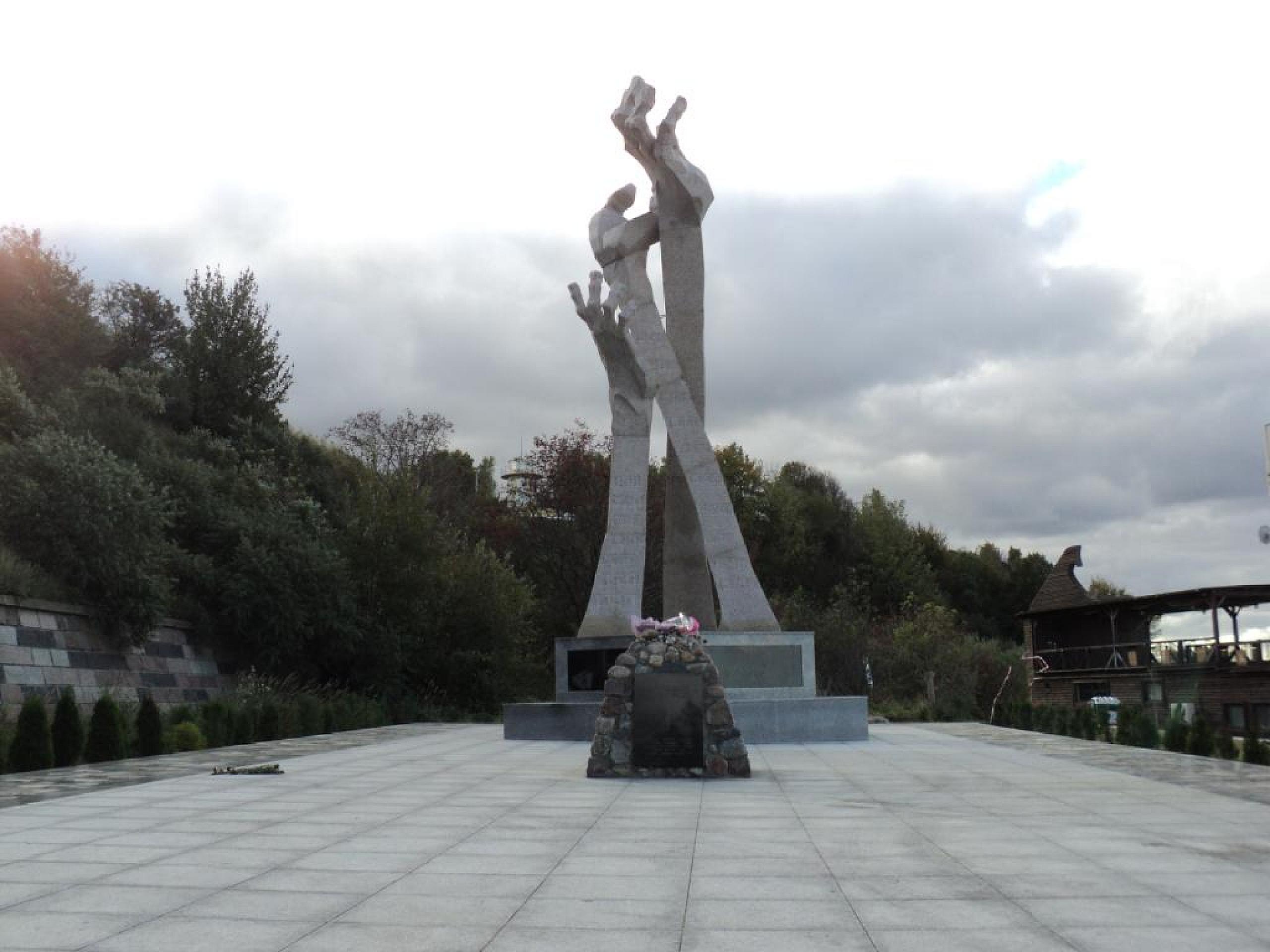
Yantarny (German: Palmnicken) is situated about fifty kilometres northwest of Kaliningrad. A monument and a memorial stone on the beach commemorate the almost 3,000 Jews who were shot or driven into the sea by members of the German SS and their foreign helpers on the Baltic coast on January 31, 1945.
History
As the Red Army was approaching, the SS dissolved the East Prussian sub-camps of Stutthof concentration camp in January 1945 and gathered the approximately 13,000 prisoners in Königsberg. On January 26, the SS - under the command of Fritz Weber - and their foreign helpers herded at least 5,000 Jewish women from Poland and Hungary onto a death march in the biting cold to Sambia peninsula on Baltic coast. Only 3,000 arrived in Palmnicken, the rest were murdered by the accompanying commando on the way there. On the evening of January 31, 1945, members of the local German Volkssturm (home guard), which had been mobilised by local mayor Kurt Friedrichs, took the Jews to the beach. There the SS guards shot the Jewish women or drove them into the icy Baltic Sea in which they froze to death.
Victims
At least 3,000 - according to some accounts as many as 5,000 - Jews, mainly women from Poland and Hungary, were shot by German and foreign members of the SS on the beach of Palmnicken. Already 2,000 prisoners perished during the preceding death march from Königsberg. There were only about 18 survivors of the massacre of Palmnicken.
In the Russian Federation, the 9 May – the anniversary of the victory of the Soviet Union in the Great Patriotic War against »Hitlerite Fascism« – is the most important public holiday to have been retained from the country’s Soviet past. On 23 August 1939 the Soviet Union, led by Josef Stalin (1878–1953), initially signed a »non-aggression pact« with the Third Reich. This pact defined the »spheres of interest« of both regimes in East Central Europe and contained the provision to divide Poland between them. On June 22, 1941 the German Wehrmacht and its allies commenced their invasion of Soviet territory. Recent research estimates that by the end of the war in 1945 there had been up to 28 million civilian and military deaths in occupied Soviet territory.
The Soviet culture of memory continues to have an impact on today’s Russia. Its symbols, such as the monumental style memorials in Saint Petersburg or Volgograd, are still popular and used to stage large-scale memorial services such as on 9 May. However, these sites of memory are less places of mourning and remembrance of the victims than places to honour wartime heroes. For a long time the victims were not remembered at all, and later they were classed as »victims of fascism«. The influence of this approach to the past can be seen, for example, in the conflict surrounding a sculpture put up in 1995 in front of the Great Patriotic War Museum in the capital Moscow. Entitled »Tragedy of Peoples«, the monument is dedicated to the approximately twenty million civilian victims in the Soviet Union between 1941 and 1944 and was intended to bring about a turnaround in the Russian culture of memory. However, the monument had to be moved behind the building following intense criticism, also from the general public, that the message was too pessimistic.
At the same time, however, there were also non-governmental human rights organisations such as »Memorial«, which deal with repressed aspects of history, for example the prisoners of war from the Red Army and forced labourers held captive in Germany during the Second World War. Upon their return to the Soviet Union, these individuals were classed as traitors, universally accused of collaborating with the Germans and again imprisoned in camps. In terms of official state remembrance, there are regular remembrance initiatives on the part of committed local departments for culture, which have succeeding in establishing specific memorials as well as a culture of remembrance that includes the victims. It is often thanks to the commitment of individuals or Jewish communities that small sites of memory have been able to emerge in a number of locations, often funded with the smallest of budgets. After 1941, some 100,000 Soviet Jews died on the territory of today’s Russian Federation, mainly as a result of mass shootings carried out by SS Einsatzgruppen and their auxiliaries. They were remembered as »peaceful citizens« in the Soviet period. It is only since the early 1990s that additional plaques have been put up at official monuments and that Jewish victims have been named or commemorated by translating the inscriptions into Hebrew. There was also rudimentary Russian research into the Holocaust. In 2012, the Jewish Museum and Tolerance Centre was opened in Moscow, acknowledged also by international experts. At the same time, however, the political regime ruling the country has become more and more nationalistic. State propaganda is dominated by an openly revisionist historical narrative which has only turned more aggressive with the war of aggression against Ukraine. Important civil society organisations, including »Memorial«, have been repressed severely.
Remembrance
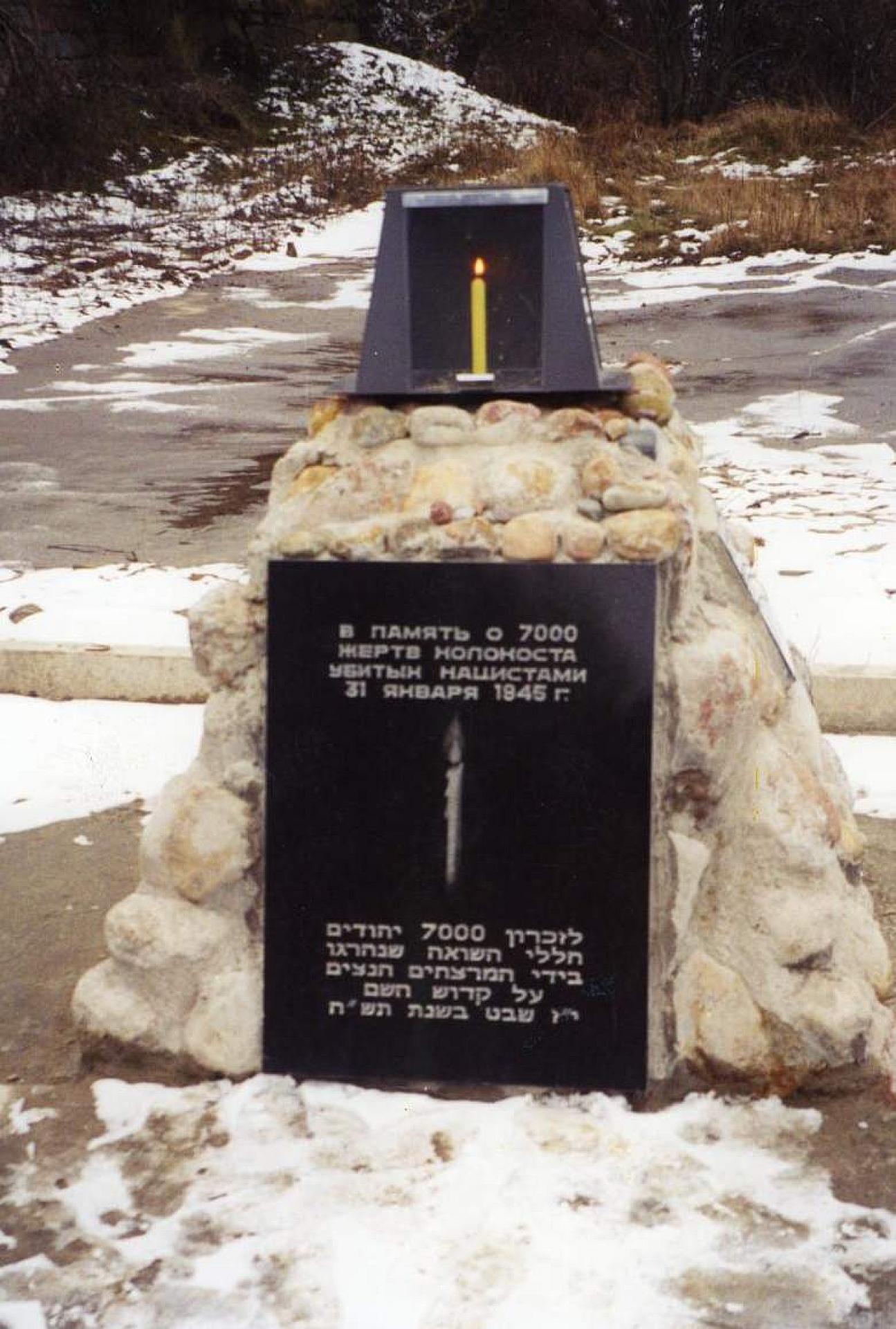
In the 1960s, remains of a mass grave were uncovered during amber excavations. The discovered bodies were thought to be killed Soviet prisoners of war and a respective memorial stone was set up. Only after the eye witness accounts of Martin Bergau from Palmnicken were known did it become clear that murdered Jews had been buried there. On his initiative, youth from Germany and Russia restored the grave in 1999, with the support of the German War Graves Commission and the Russian society »Memorial«. The Jewish community of Kaliningrad erected a memorial stone on January 31, 2000, which displays an inscription in Hebrew and Russian.
A new and much larger memorial was inaugurated on the beach of the Baltic Sea in January 2011. It was financed by a citizens' initiative in Kaliningrad and designed by the artist Frank Meisler. The Foundation Memorial to the murdered Jews of Europe published in 2010 the memoirs of Maria Blitz (1918–2016), one of the very few survivors of the death march.