Skip to content

Holocaust Monuments in Athens

Olokaftoma mnimeíon stin Athína


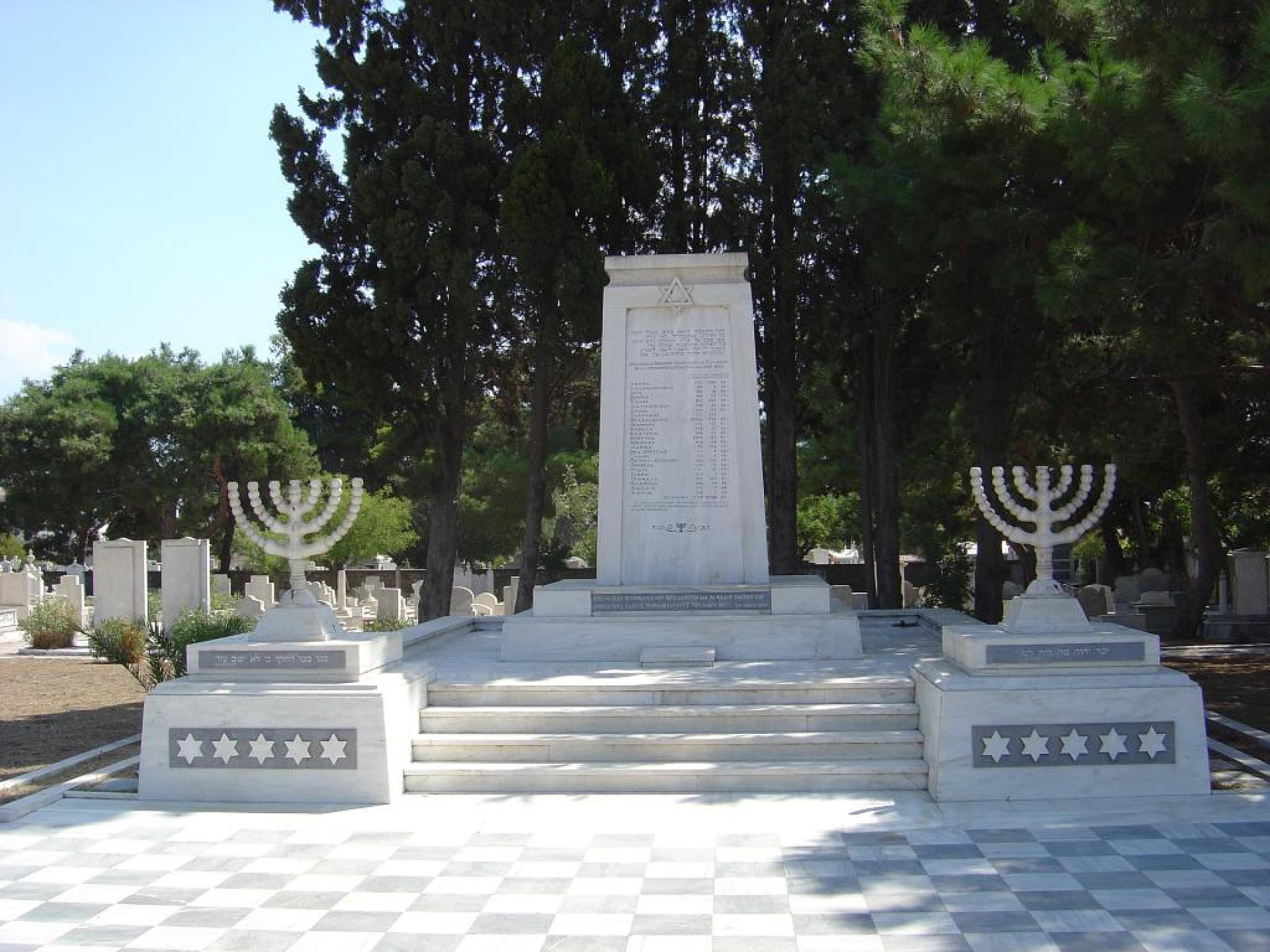
Two monuments in Athens are dedicated to the Greek Jews who perished in the Holocaust. One was erected in the 1950s in the Jewish cemetery in the Nikaia suburb, the second was unveiled in the city centre in 2010.

History

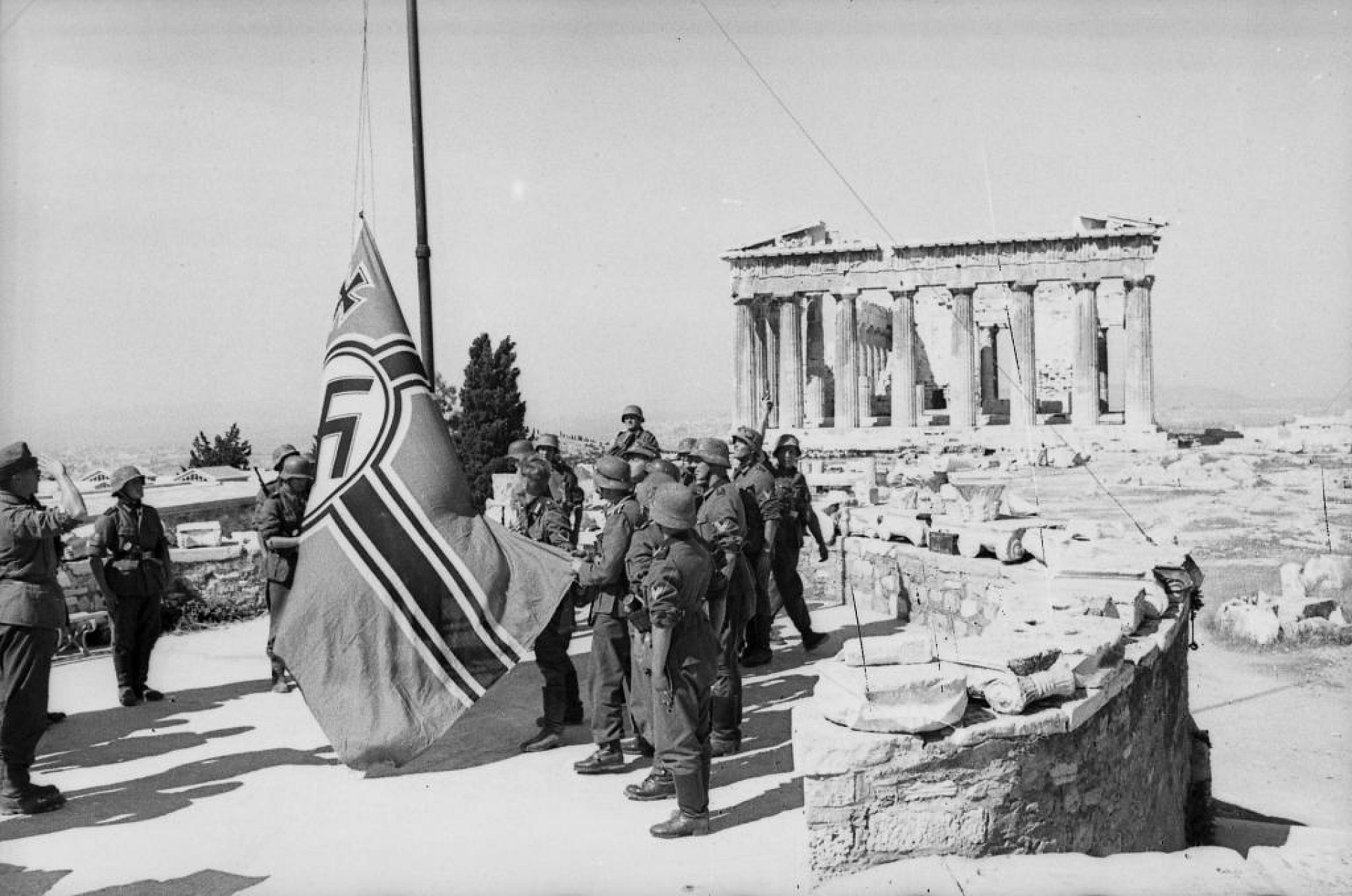
Between April 1941 and September 1943, Athens was under Italian occupation. During that period, many Jews from territories occupied by the Germans in Greece sought refuge in the Greek capital. After Italy had changed surrendered to the Allies, the German Wehrmacht took control of Italy's occupation zone in September 1943. Soon, the National Socialists began registering the Jews in Athens, yet they stumbled upon unexpected difficulties: the Jewish population had always been scattered across the city, making it more difficult to compile a record. The leader of the Jewish community, whose help the occupation forces hoped to rely on in the process, fled to the mountains. In addition, non-Jews in Athens were very helpful towards their Jewish neighbours by, for example, hiding them or, as was the case with members of the police, supplying them with false papers. Archbishop Damaskinos Papandreou of Athens also played an active part in protecting Jews. Only a few hundred of the 4,000 to 7,000 Jews in Athens let themselves be registered in the following months. Under these circumstances the security police and security service decided to conduct mass arrests on March 24 and 25, 1944. Together with Wehrmacht units and collaborators from the Greek police they chased down about 800 Jews who had hidden in the city. On April 2, 1944, they were deported together with the previously registered Jews to Auschwitz-Birkenau via the Larissa camp. The transport reached the death camp on April 11, 1944.
Victims

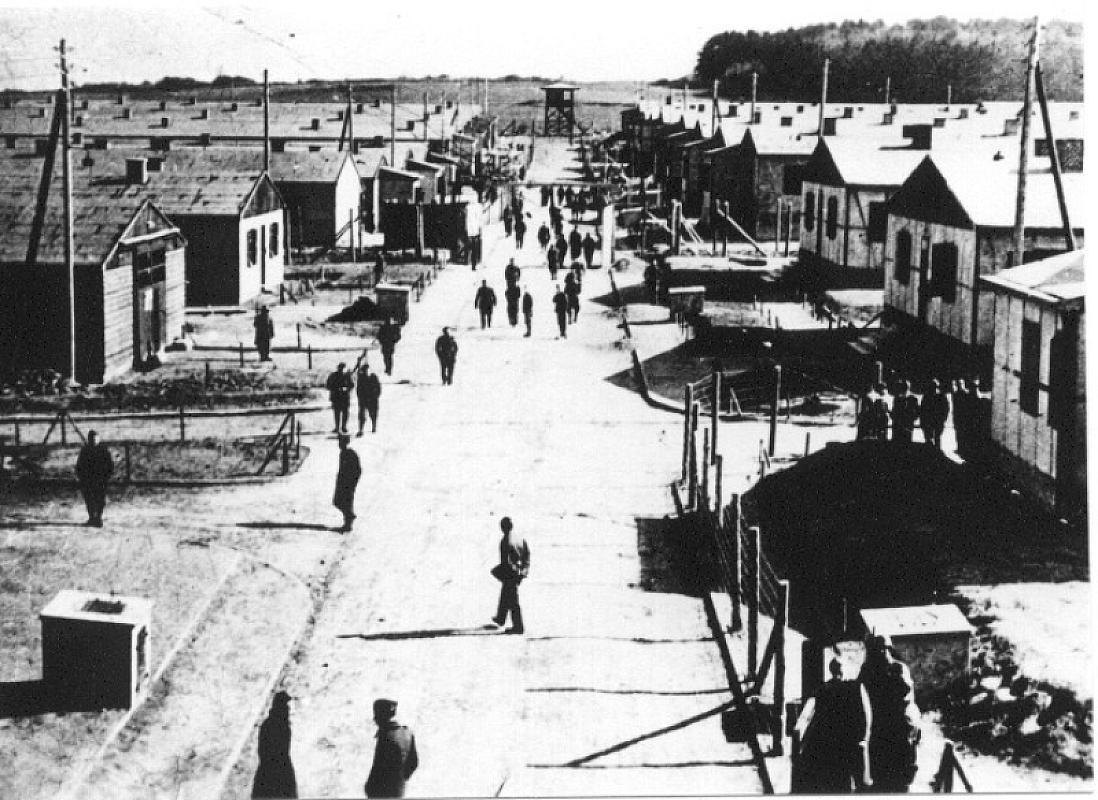
In April 1944, about 1,900 Jews were deported from Athens to the Auschwitz-Birkenau extermination camp. 1,300 of them came from Athens, the remaining 600 were from the regions of Preveza, Arta, Agrinio and Patras. They had previously been deported to the Chaidari transit camp north-west of Athens. In total, about 59,000 Jews from Greece were murdered during the Holocaust.

The Wehrmacht invaded the Kingdom of Greece in April 1941. The country was divided up between the Third Reich and its Axis allies Italy and Bulgaria. The occupying powers exploited Greece’s agricultural resources as well as the country’s limited industrial capacity. This resulted in a famine in the winter of 1941-42, which probably claimed the lives of over 100,000 Greeks. Jewish life in occupied Greece was dominated by expropriation, public abuse, arrests, murder and forced labour. Between March 15 and mid-August 1943, around 46,000 Jews were deported in 19 transports from Thessaloniki to the Auschwitz-Birkenau and Treblinka extermination camps. These transports were organised by an SS special commando with the support of the local military administration. At the beginning of March 1943, the Bulgarian occupation authorities in the Greek province of Thrace had already arrested over 4,000 Jews, who were subsequently deported to Treblinka by the SS. Following the capitulation of Italy in autumn 1943, the Wehrmacht advanced to the Italian-occupied part of Greece. In March 1944, the SS and locals deported over 8,500 Jews from Athens, Ionnina and Rhodes to Auschwitz-Birkenau. Italy had previously refused to deport these Jews. Around 59,000 Greek Jews were murdered in the Holocaust. The German occupation regime met with growing Greek resistance. The Wehrmacht responded in 1943-44 with numerous brutal attacks, reprisals and mass shootings. Entire villages were destroyed, for example the villages of Kalavrita and Distimo. Over 100,000 Greek civilians are believed to have died in the process. The period from 1944, whilst Greece was still occupied by Germany, saw conflict between right-wing royalists and left-wing communist groups in the country. These conflicts escalated into a civil war from 1946-49. The royalists won this war with the support of Great Britain and the USA and adopted a strict anti-communist approach. Faced with a likely left-wing election victory in 1967, the military staged a putsch, seized power, and governed the country for the next seven years. The left-wing’s role in the resistance during the Second World War was only acknowledged following Greek accession to the European Economic Community in 1981. With the fall of communism in 1990-91 the divisions in Greek memory were finally overcome, allowing a confrontation with the 1946-49 civil war. To a large extent, the Greek culture of memory continues to be dominated by remembrance of the resistance against the Germans. Memorial inscriptions often use the term »Holocaust« to refer to the murder of the civilian population, for example the »Holocaust of Kalavrita«. For a long time it was left to the Jewish community to remember the 85 percent of Greek Jews who were murdered in the Holocaust. Until 1997, the country’s only Holocaust memorial was to be found in the Jewish cemetery in Thessaloniki, the town with the largest Jewish community in Greece before the war. A Holocaust memorial was inaugurated in the centre of Saloniki in 1997 in conjunction with the ceremonies marking the town’s status as European City of Culture that year. In 2005, the memorial was moved to another site in the city. In 2010, a new holocaust memorial was inaugurated in Athens as well. Currently, a major holocaust museum is under construction in Thessaloniki, to which Germany contributes a sum of 10 million euros.

Remembrance

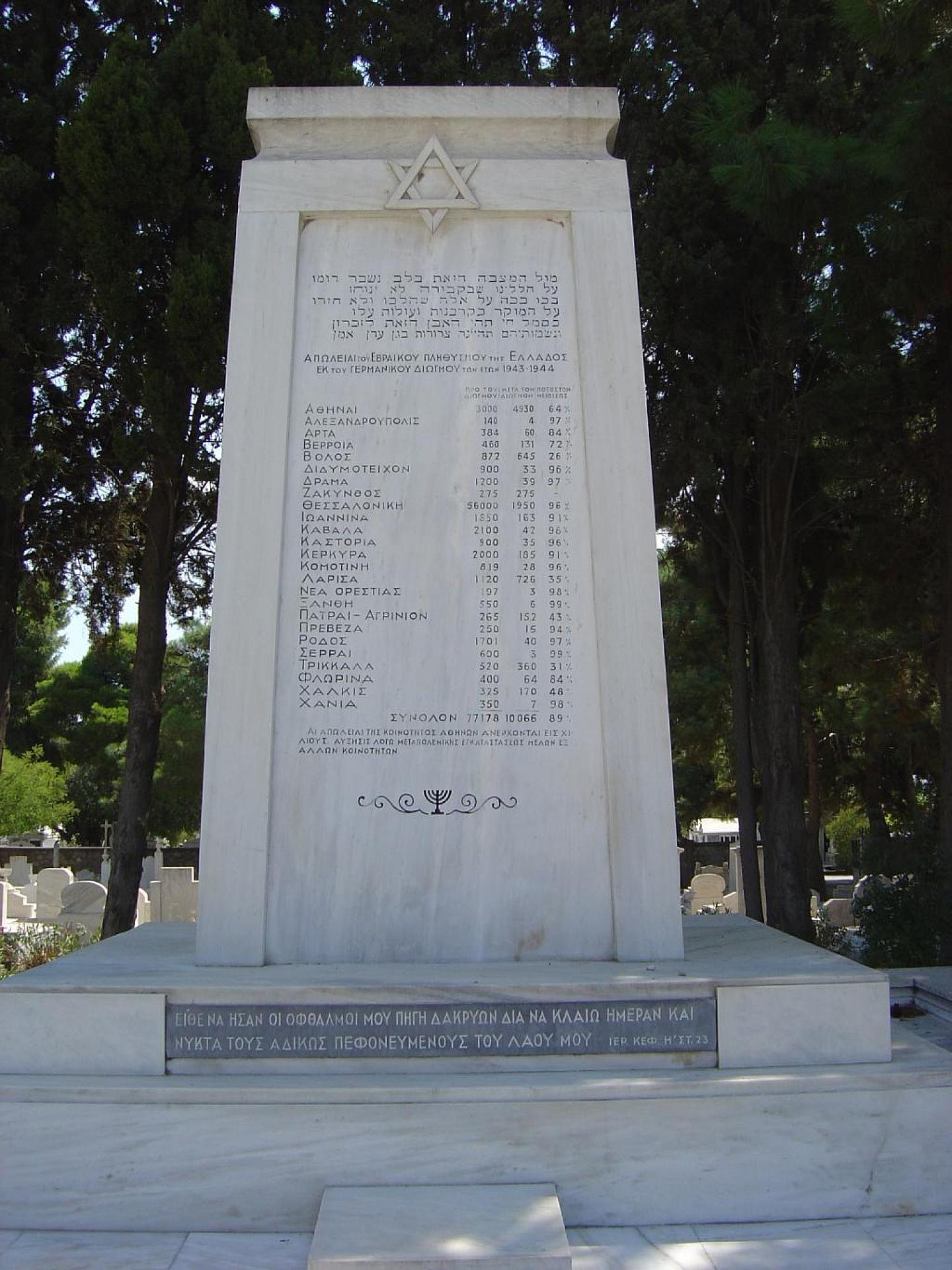
Today, Athens is home to a Jewish community comprising several thousand members. In the 1950s, the community erected a Holocaust monument on the new Jewish cemetery in Nikaia, a suburb of Athens. The marble monument, which is little known outside of the Jewish community, honours the Greek victims of the Holocaust. The central column is inscribed with the numbers of deportees and victims from the larger Jewish communities in Greece.
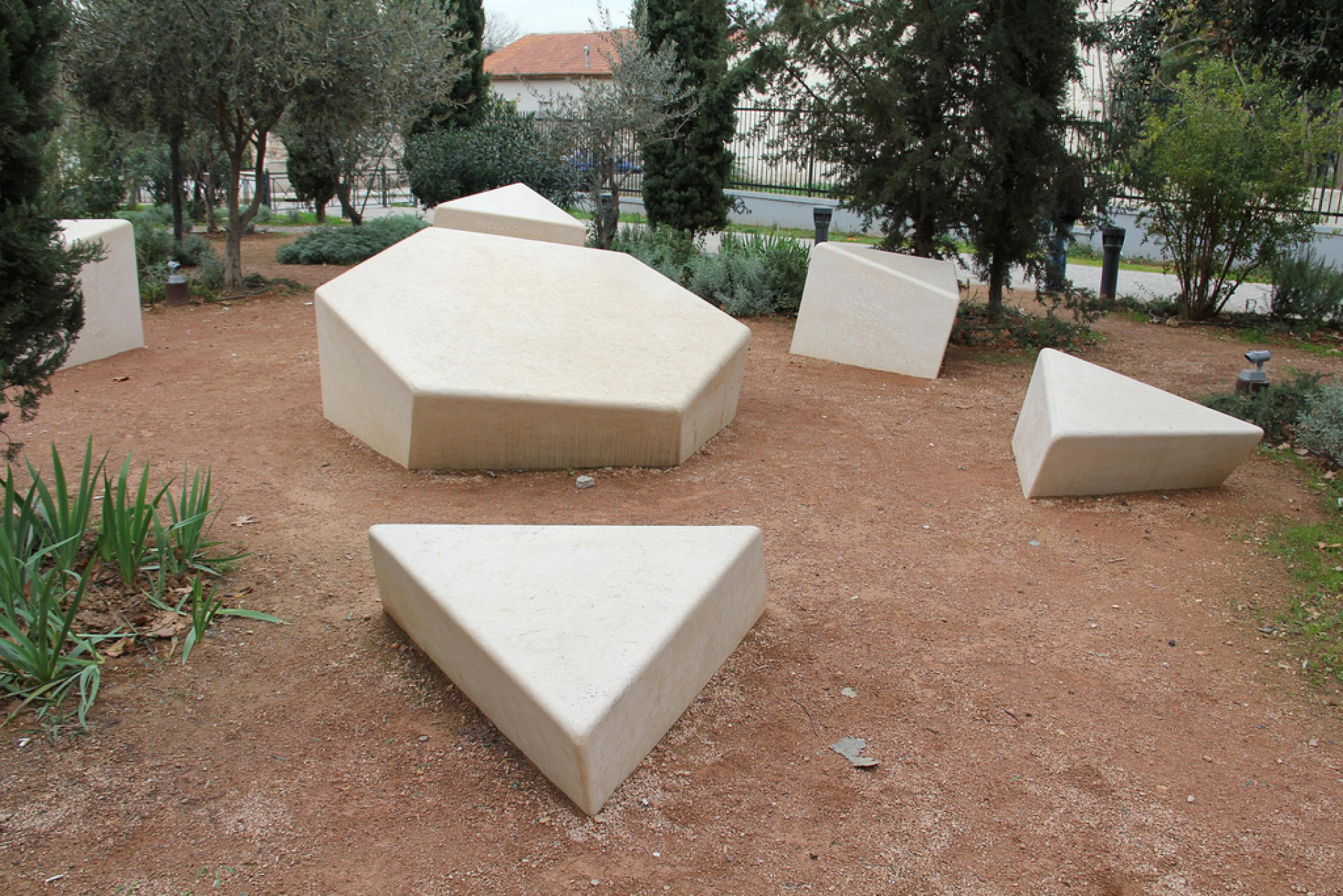
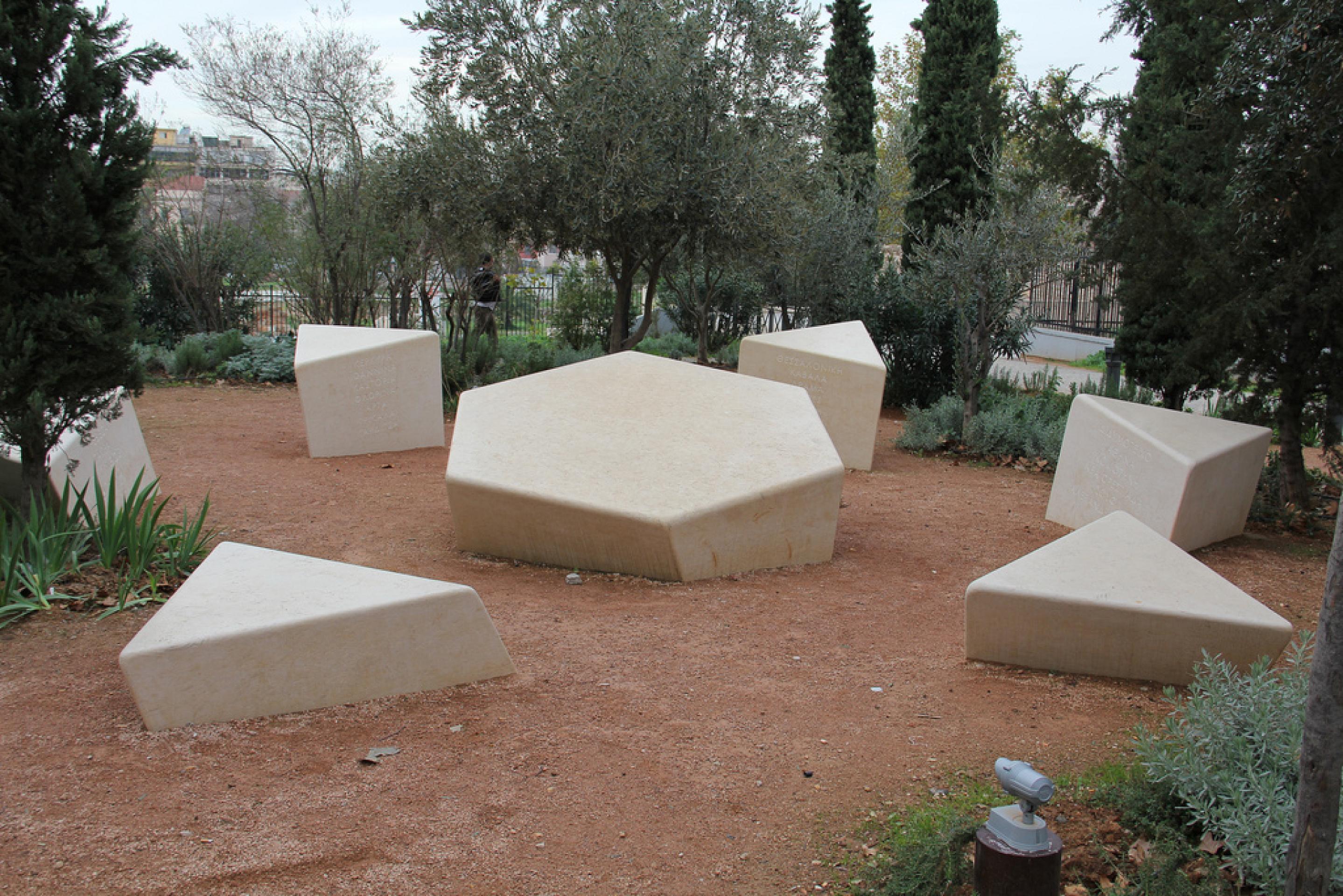
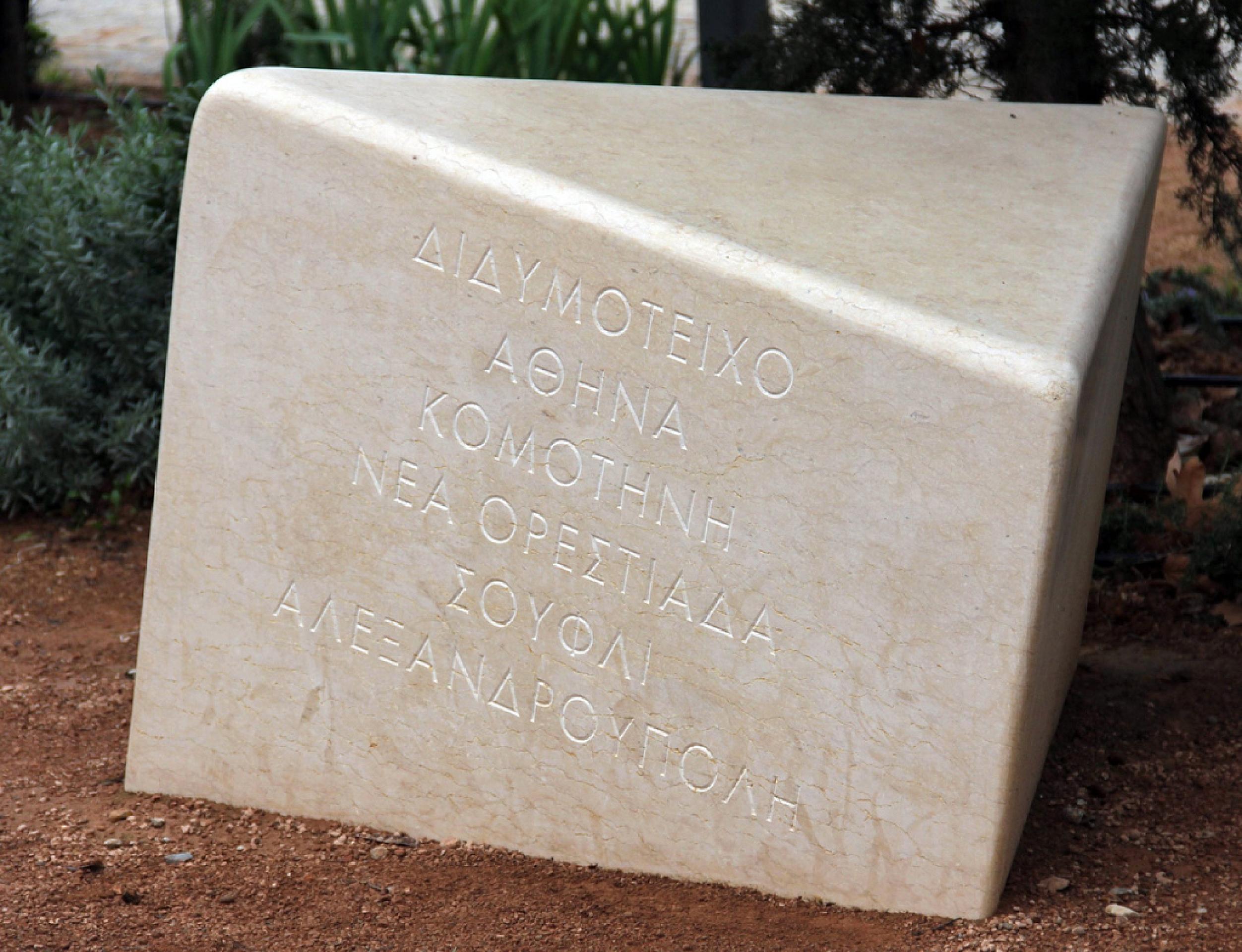
After many years of efforts the Jewish community, supported by the city of Athens, was able to unveil a further Holocaust memorial in the city centre in May 2010. The monument by Greek-American artist DeAnna Maganias is situated in a garden close to a synagogue, in which Jews from Athens were held captive during the occupation. The monument consists of stones laid down in the form of a Star of David. Engraved on the stones are the names of Greek towns and cities whose Jewish communities were annihilated during the Holocaust.
Contact

https://athjcom.gr

info@athjcom.gr


105 53 Athen