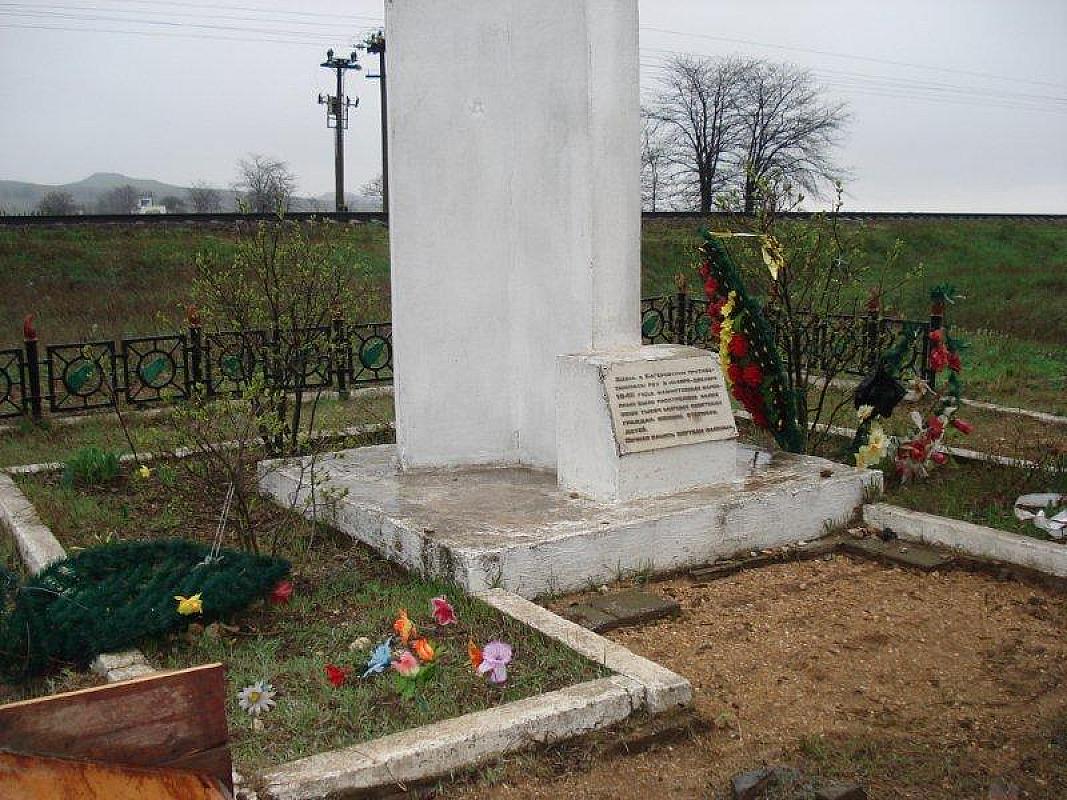
In the small town of Šeduva in the north of Lithuania a number of memorials was erected to remember the town's destroyed Jewish community.
History
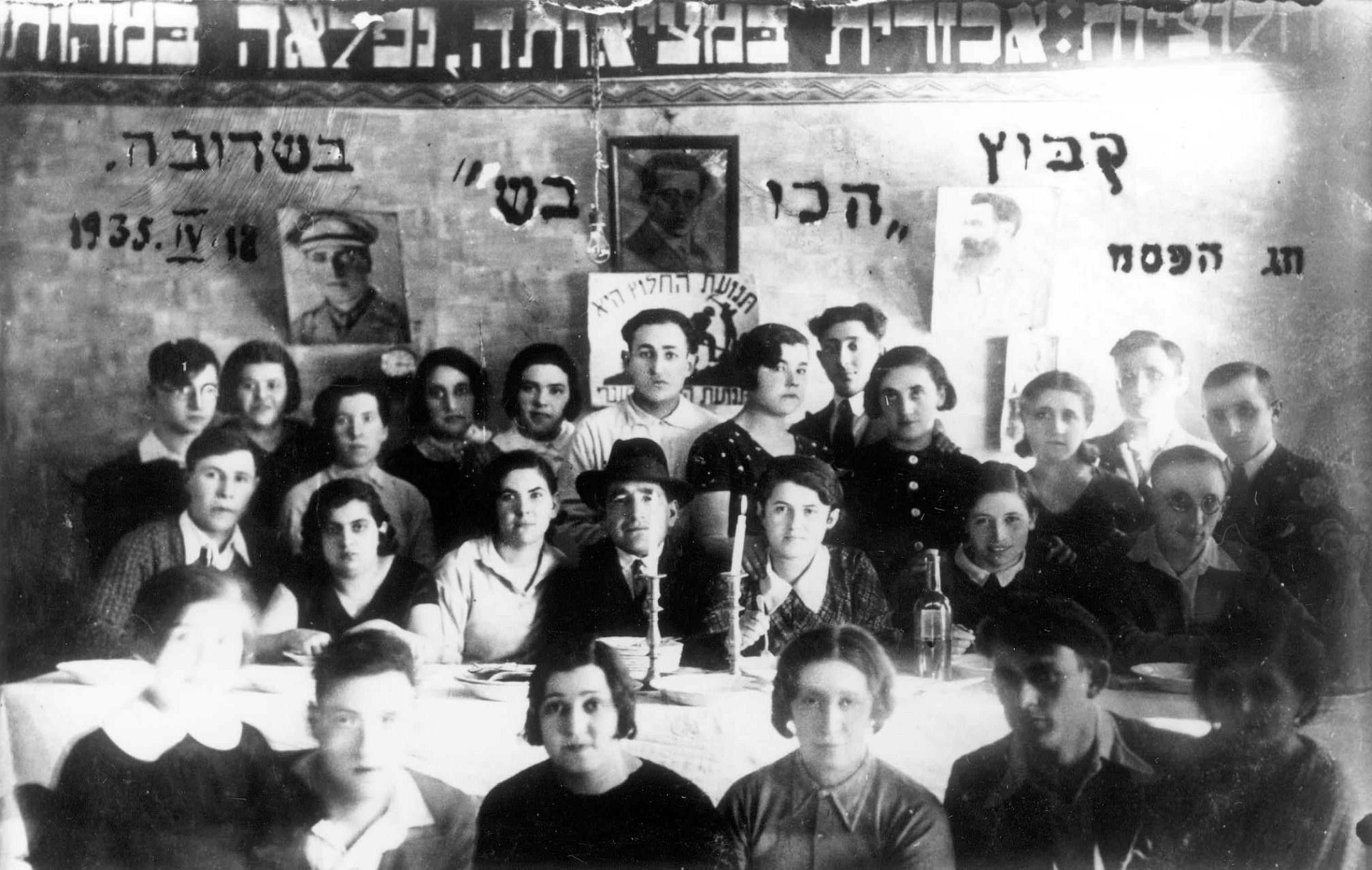
Šeduva (German and Russian: Shadow, Yiddish: Shadeve) is a small town half way between Shiauliai (Lithuanian: Šiauliai) and Panevėžys in the north of Lithuania, a traditional agricultural town. Jews lived there since the 15th century. Beginning of the 18th century many more Jewish families settled there. From 1795 Lithuania was part of the Russian Empire and so was Šeduva. The main synagogue was consecrated in 1866. At the end of the 19th century more than half of the population was Jewish, the town was a shtetl. During the First World War the town was largely destroyed, after which many Jews left. Lithuania became an independent country in which antisemitism rose sharply, especially during the 1930s. Many Jews emigrated for instance to the United States or Palestine. At the same time Zionism gained many supporters, especially among the Jewish youth.
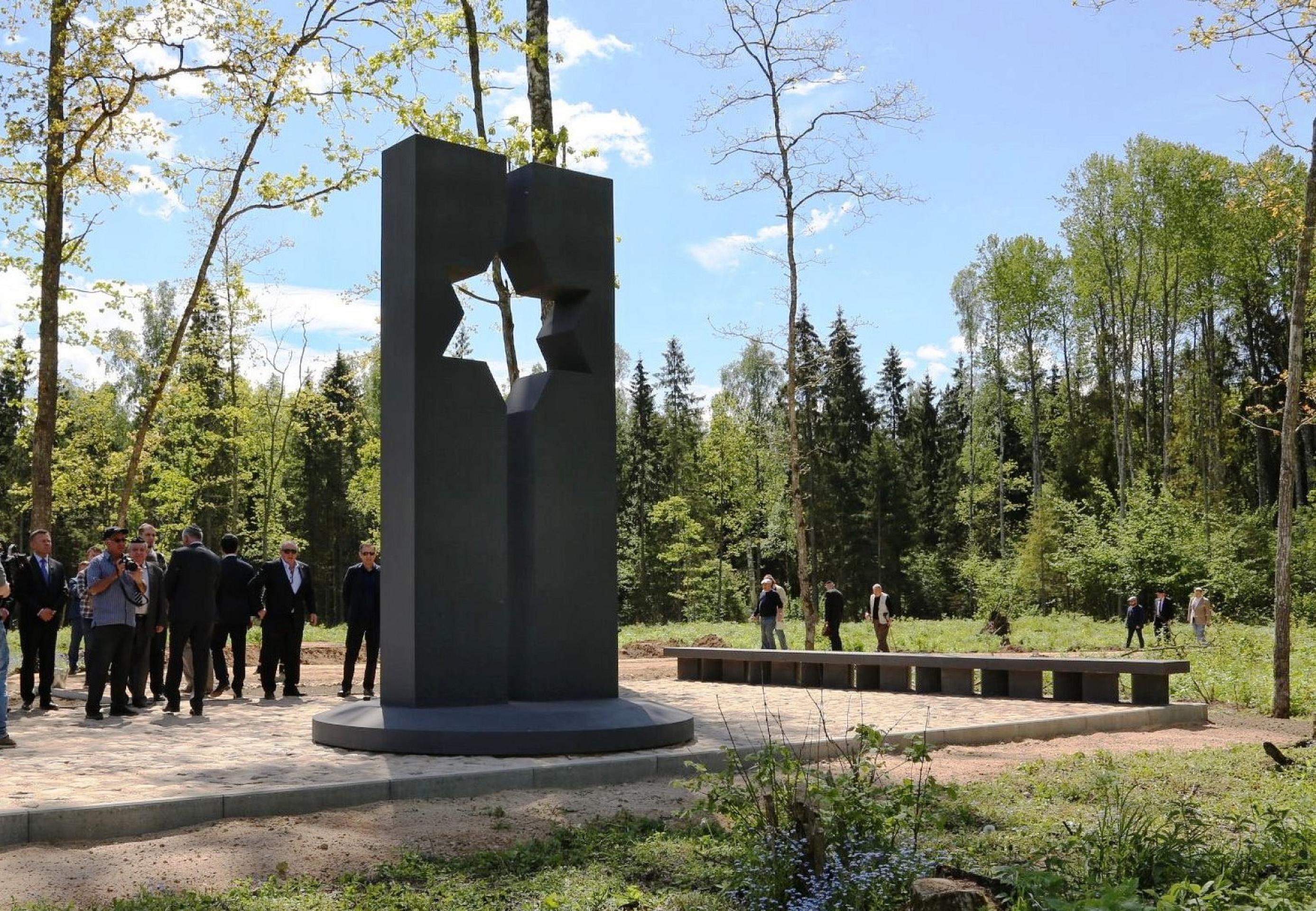
In 1940 Lithuania became part of the Soviet Union. In June 1941 the German Wehrmacht attacked the Soviet Union, Šeduva was captured only a few days later. Many Lithuanians greeted the Germans as liberators. During the first days of occupation Lithuanian nationalists murdered Jews whom they blamed to have collaborated with Soviet authorities. A few weeks later the Jews of Šeduva were deported to a nearby village where they were detained in barracks. Many were shot. On August 25, 1941 the Jews were loaded on trucks and taken to the forest of Liaudiškiai. On this and the following day the SS »Rollkommando Hamann«, which was made up of Germans and Lithuanians and which during these months annihilated entire Jewish communities all over Lithuania, murdered all remaining Jews of Šeduva.
Victims
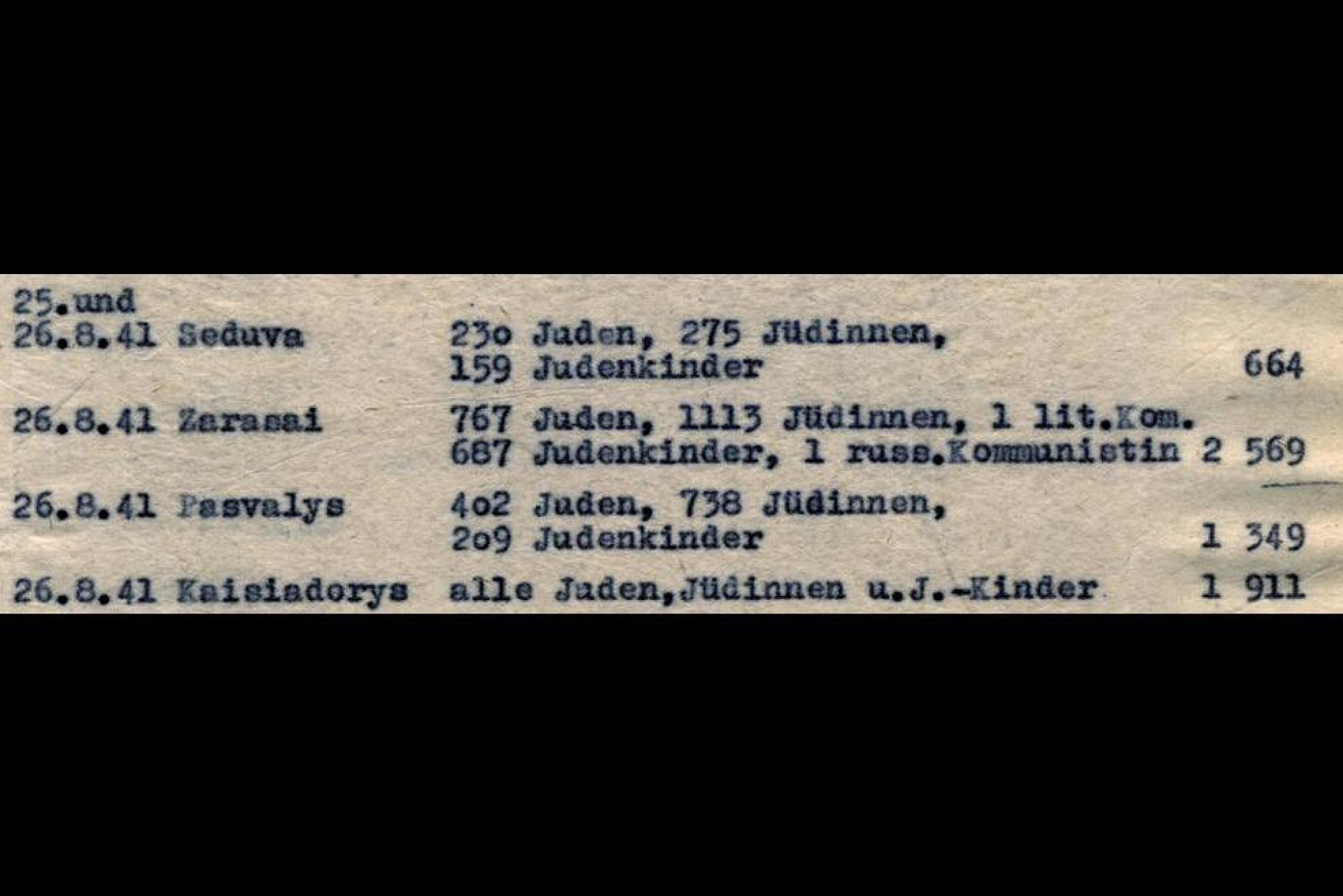
According to the »Jäger-report« from December 1941 – a situation report from the SS-»Einsatzgruppe A« (mobile killing unit) which operated in all of the Baltic states – on August 25 and 26, 1941, 664 Jews altogether (»230 Jewish men, 275 Jewish women, 159 Jewish children«) were murdered in Šeduva. The preceding weeks many Jews had already been murdered so the total number of murdered Jews in Šeduva is about 800. More precise numbers are not known.
Remembrance
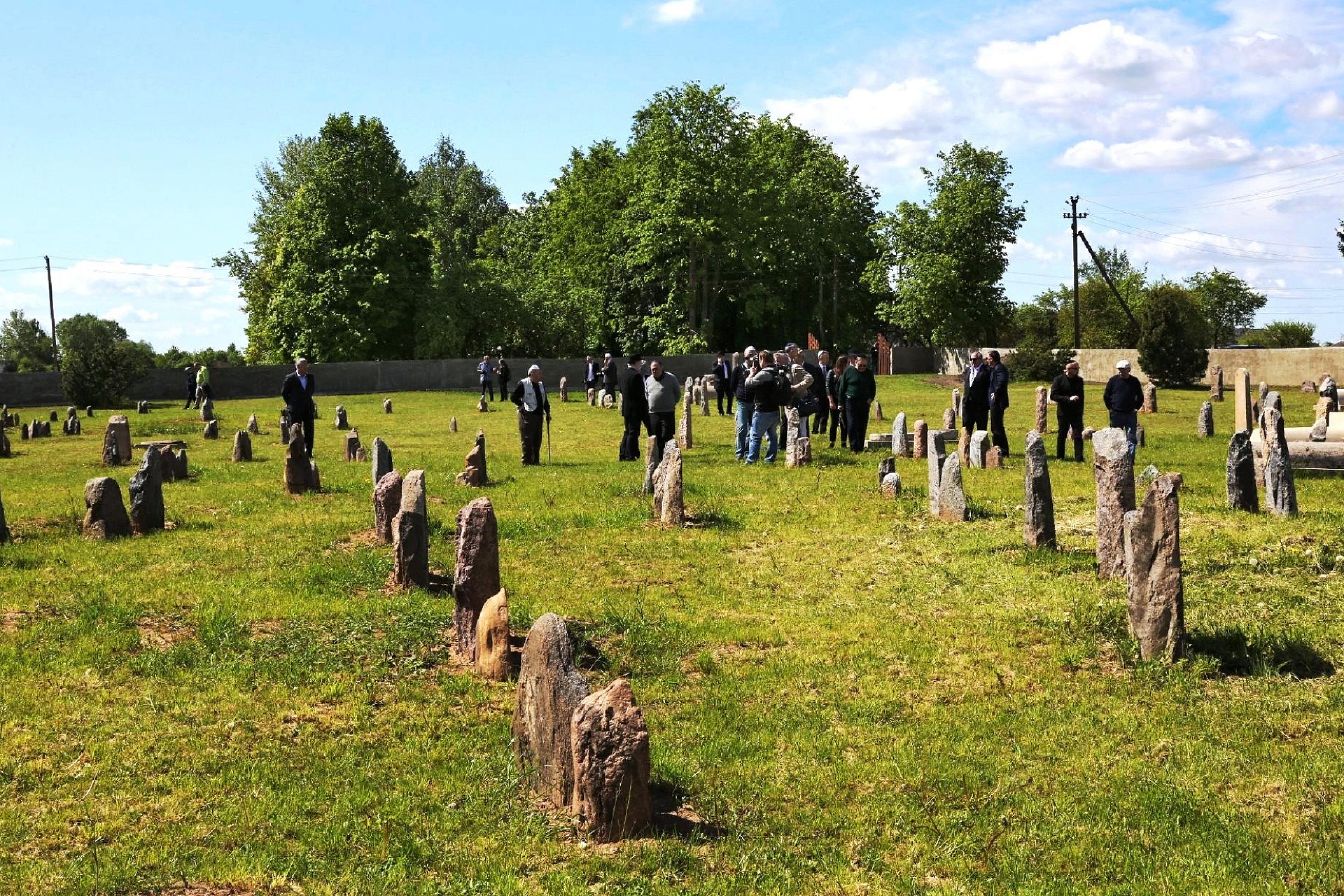
There are no Jews living in Šeduva since August 1941. After the Second World War Lithuania was again part of the Soviet Union. During this time the mass graves of murdered Jews were marked and furnished with simple memorial stones. Of the town's former synagogues not even photographs remained. The only surviving trace of the Jewish community which once made up the majority of the town's population was the derelict and overgrown Jewish cemetery.
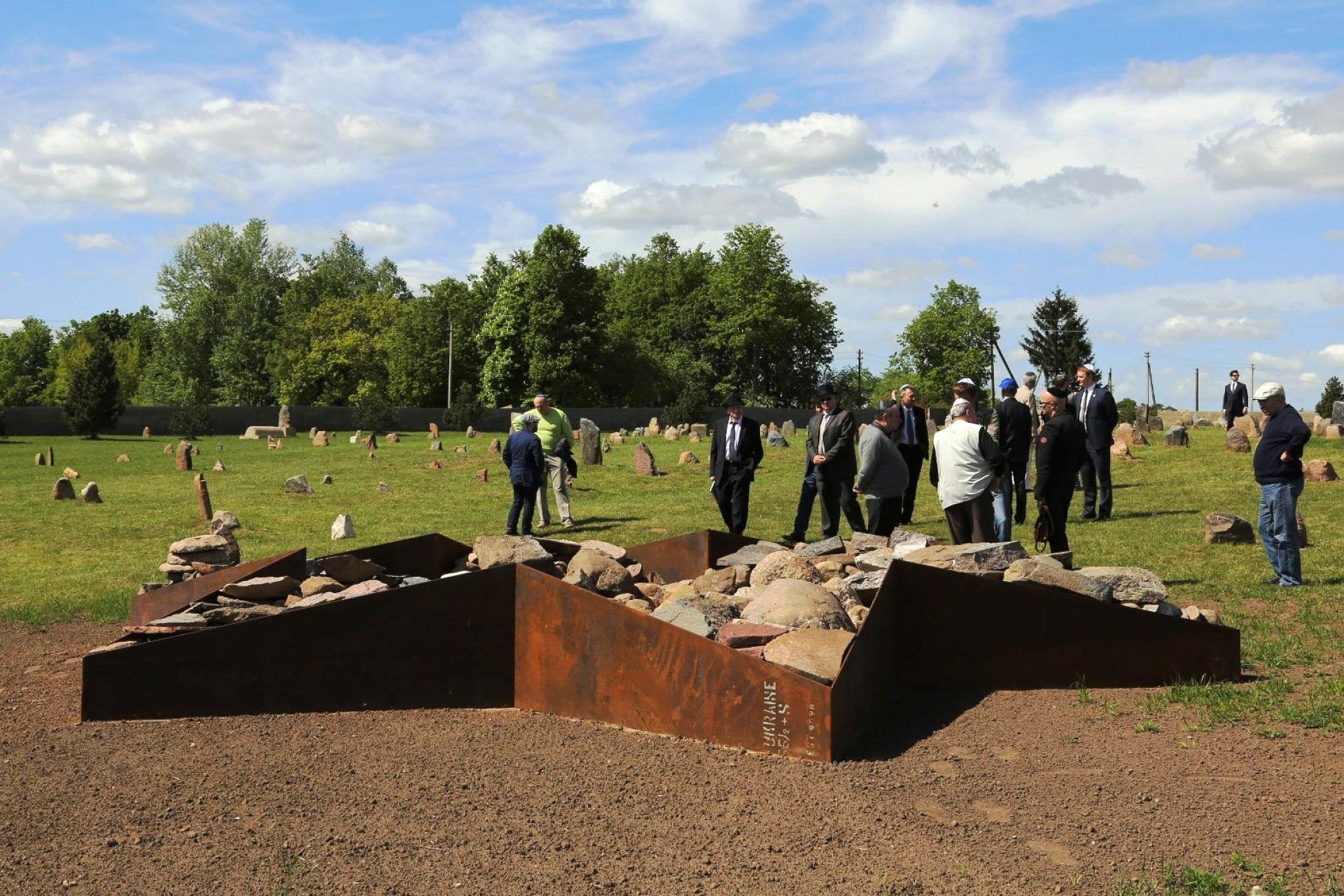
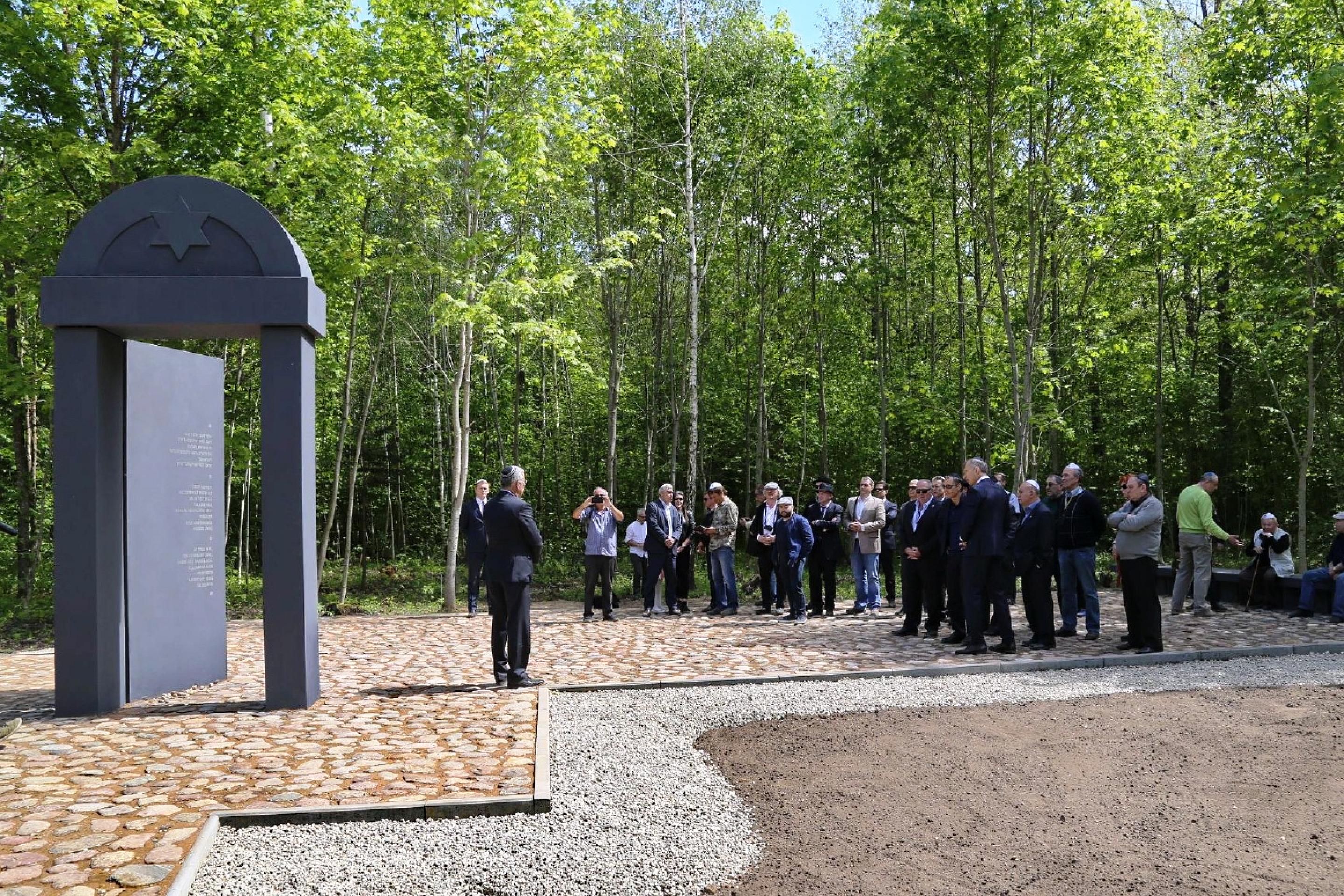
Twenty years after Lithuania regained its independence the local initiative »Šeduva Jewish Memorial Fund« (Lithuanian: Šeduvos žydų memorialinis fondas) aims at initiating in Šeduva one of the main places of remembrance for the Jews of Lithuania and the Holocaust. Its aim is to show the culture of Lithuanian Jews (traditionally called Litvaks in Yiddish) and the life in a shtetl, but also to be a dignified site of remembrance for the victims of the Holocaust. As a first step the Jewish cemetery was restored and hundreds of headstones were deciphered and re-erected. New memorials designed by the artist Romas Kvintas were erected next to the mass graves of the victims of the mass shootings in the forest of Liaudiškiai, another memorial is about to follow in the town centre. A museum on the history of the Jews of Šeduva is planned near the cemetery for the future.
Open
The Jewish cemetery is opened daily except on Saturdays and Jewish holidays. The holocaust memorials in the forest are accessible at all times.
Contact
https://www.inforadviliskis.lt/en/sightseeing-places/old-seduva-jewish-cemetery/
Žvejų gatvė
82007 Šeduva