Skip to content

Husum-Schwesing Concentration Camp Memorial

KZ-Gedenkstätte Husum-Schwesing


The »Husum-Schwesing Concentration Camp Memorial« is located close to the North Frisian city of Husum, not far from the township of Schwesing. From September until December 1944, up to 2,500 prisoners had to conduct forced labour in this camp constructing the »Frisian Wall« fortifications.

History

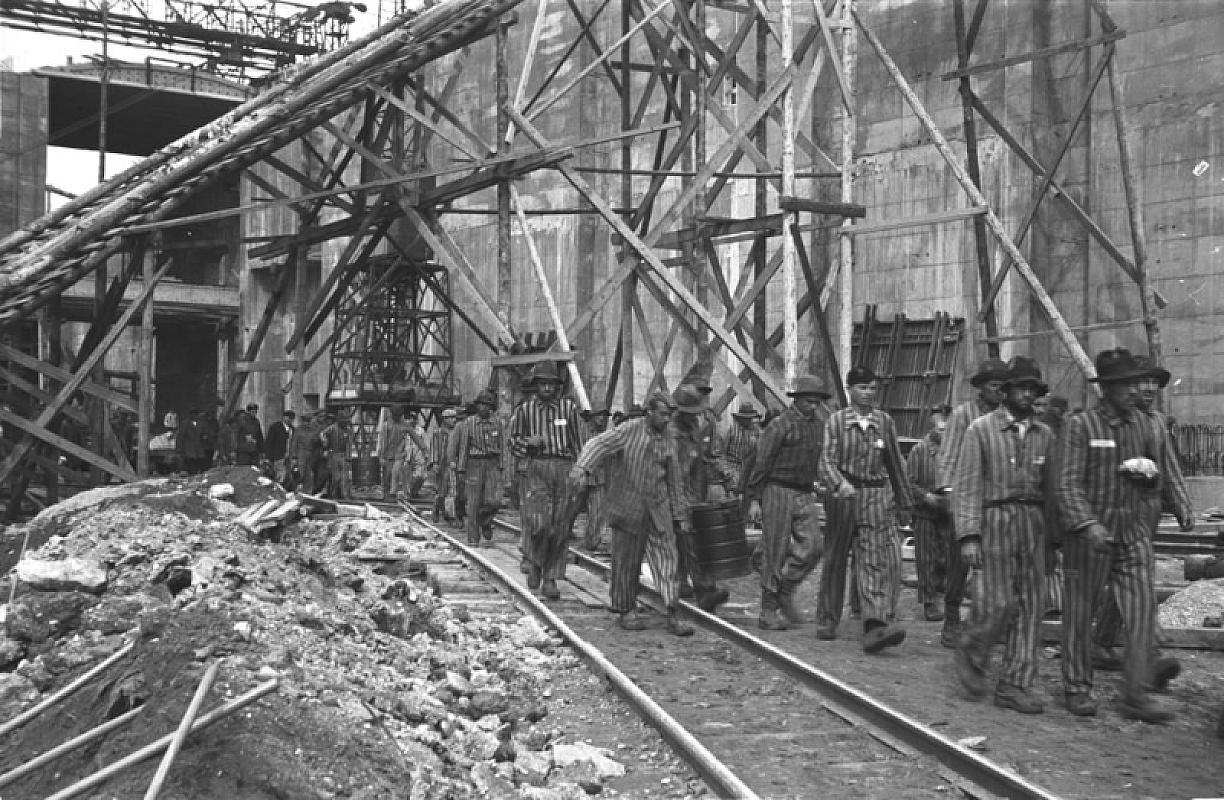
After the Allies had landed in Normandy in June 1944, Adolf Hitler issued an order on August 28, 1944, for the construction of a system of fortifications along the German North Sea coast and the Danish border. Several forced labour camps were established for this purpose. On September 25, 1944, the SS brought about 1,500 male prisoners from the Neuengamme concentration camp to Schwesing near Husum. The prisoners were accommodated in a barracks camp which had initially been built for the Reichsarbeitsdienst (RAD, Reich Labour Service) to house 400 people. The camp was renamed »Husum-Schwesing satellite camp«. On October 20, a further transport of 1,000 prisoners from the Neuengamme central camp arrived, meaning there were close to 2,500 people incarcerated at Husum-Schwesing. On November 1, the prisoners who had arrived last were deported to the Ladelund satellite camp. The prisoners in Husum-Schwesing were deployed in forced labour constructing fortifications. Most of them had to dig anti-tank trenches. The work was physically exhausting and the prisoners were constantly abused by the Kapos. For the most part the prisoners were forced to stand in water, which leaked from the tunnel openings they were digging. Many fell ill and died in Husum-Schwesing due to the hard labour, scant food supplies and lack of hygienic facilities: about six prisoners died each day, about half of the inmates were sick. The camp was shut down on December 29, 1944, after the military situation had developed differently than previously expected by the Germans. The SS transported the prisoners back to the Neuengamme concentration camp. The »Frisian Wall« was never completed.
Victims

The majority of the prisoners in Husum-Schwesing came from the Netherlands. Other large prisoner groups came from France, Denmark and Poland. Moreover, there were inmates from the Soviet Union, Germany, Belgium, Italy, Yugoslavia, the Protectorate of Bohemia and Moravia (today the Czech Republic), and Spain. It can only be estimated how many people perished in Husum: it is assumed that there were between 300 and 400 fatalities.

The entry to power of the National Socialists in 1933 heralded the state persecution of opponents of the regime, Jews, Roma – who were classed as »gypsies« -, the sick and many other groups. For the first time, anti-semitism became part of the government policy of a modern state and the persecution of all groups was progressively heightened. The process was characterised by the interplay between state regulation, violence from supporters of the regime and rabble-rousing propaganda from the press. The acts of terror against the Jews in November 1938 (»The Night of the Broken Glass«), culminating in around one hundred deaths, marked the prelude to the complete exclusion and murder of the Jewish minority. With the outbreak of the Second World War in September 1939, large parts of Europe fell under German control. In Eastern Europe in particular a multi-tiered system of camps and extermination sites was established, in which the SS murdered up to six million Jews, among them around 165,000 German Jews. It is estimated that around seven million Germans lost their lives in the war, including almost 3.5 million civilians. Around 28 million residents of the occupied Soviet Union (both soldiers and civilians) and three million non-Jewish Poles met a violent death. These groups are still barely commemorated in Germany. Germany came under Allied occupation in 1945 and 1949 saw the foundation of the German Democratic Republic (GDR) and the Federal Republic of Germany (FRG), who had very different cultures of remembrance. The GDR profiled itself as an »antifascist« state. The former concentration camps at Buchenwald, Ravensbrück and Sachsenhausen became »National Memorials« and primarily documented the communist resistance during the war. In the Federal Republic, the dominant memory was initially of the victims of Allied bombing raids and those who had fled or been expelled from their homes in the former territory of the Third Reich. It was left to specific groups to remember Nazi persecution, the Holocaust or the resistance. With the exception of the war crimes trials, there was no public discussion of perpetrators or involvement in crimes. However, the situation was to change in the mid-1960s, when the statute of limitations for murder was lifted following a lengthy debate. Also during this period, memorial sites were established at former concentration camps (1965: Dachau and Neuengamme; 1966: Bergen-Belsen) and the German Resistance Memorial Centre was opened in 1968 in West Berlin. However, it was not until the 1980s that a diverse and often small-scale landscape of memory developed as the result of local initiatives. Following German unification in 1990, a national memorial site concept was developed and there was a major review of German sites of memory. The Memorial to the Murdered Jews of Europe in Berlin was inaugurated in 2005. The Topography of Terror, a comprehensive documentation of National Socialist crimes and perpetrators, has opened with a new centre in May 2010; the documentation centre »Flight, Expulsion, Reconciliation« followed suit in 2021. In the meantime, central memorials in Berlin have been erected to commemorate further groups of Nazi victims as well: the murdered Sinti and Roma, the patients murdered in the context of the Nazi’s »Euthanasia« killings and the persecuted homosexuals. The German victims of National Socialist terror in the former Eastern territories of the Third Reich were forgotten by both German states after the end of the war. For decades, memory of these victims was only preserved by West German associations for Germans born in these territories and it mainly excluded the period from 1933 to 1945.

Remembrance

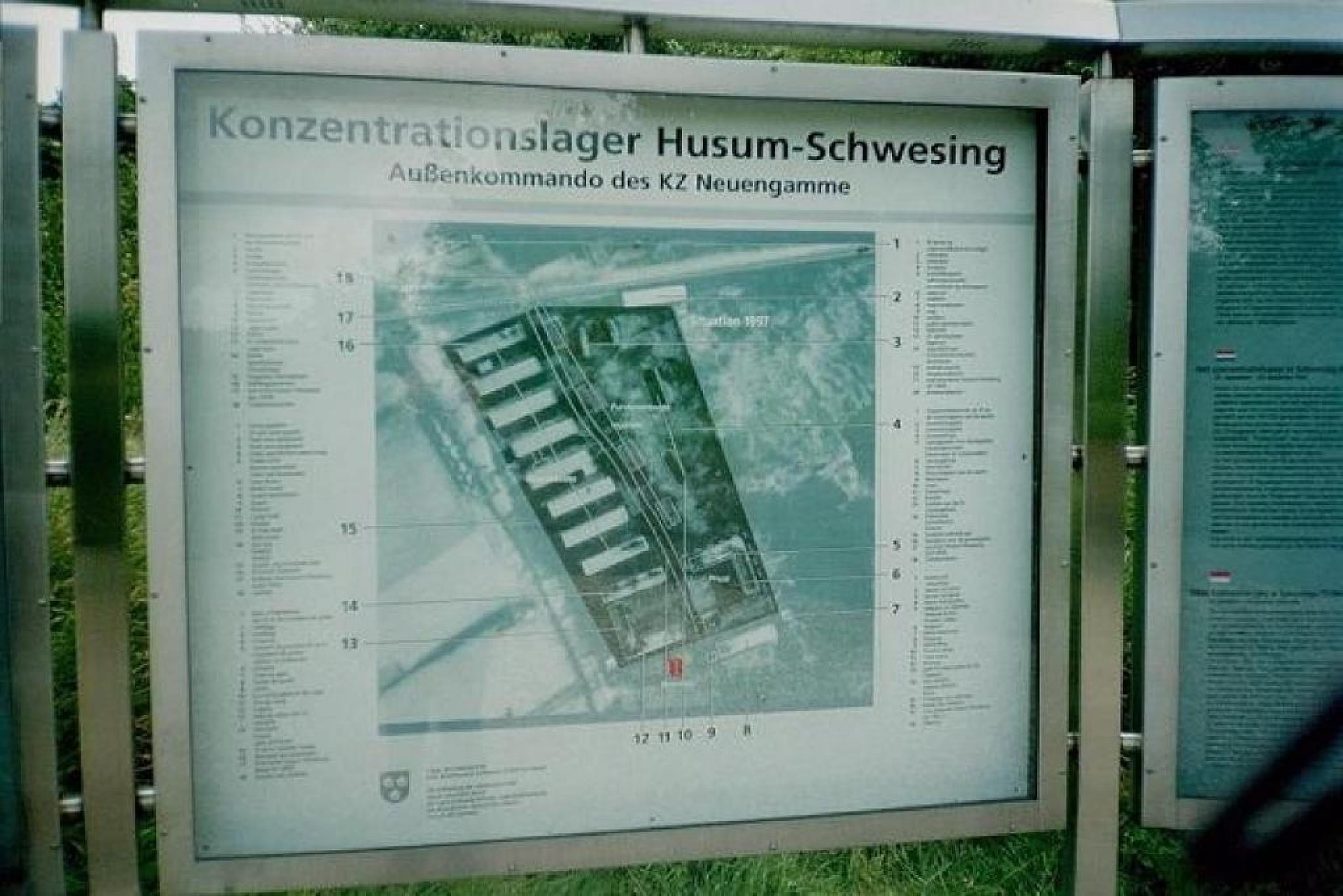
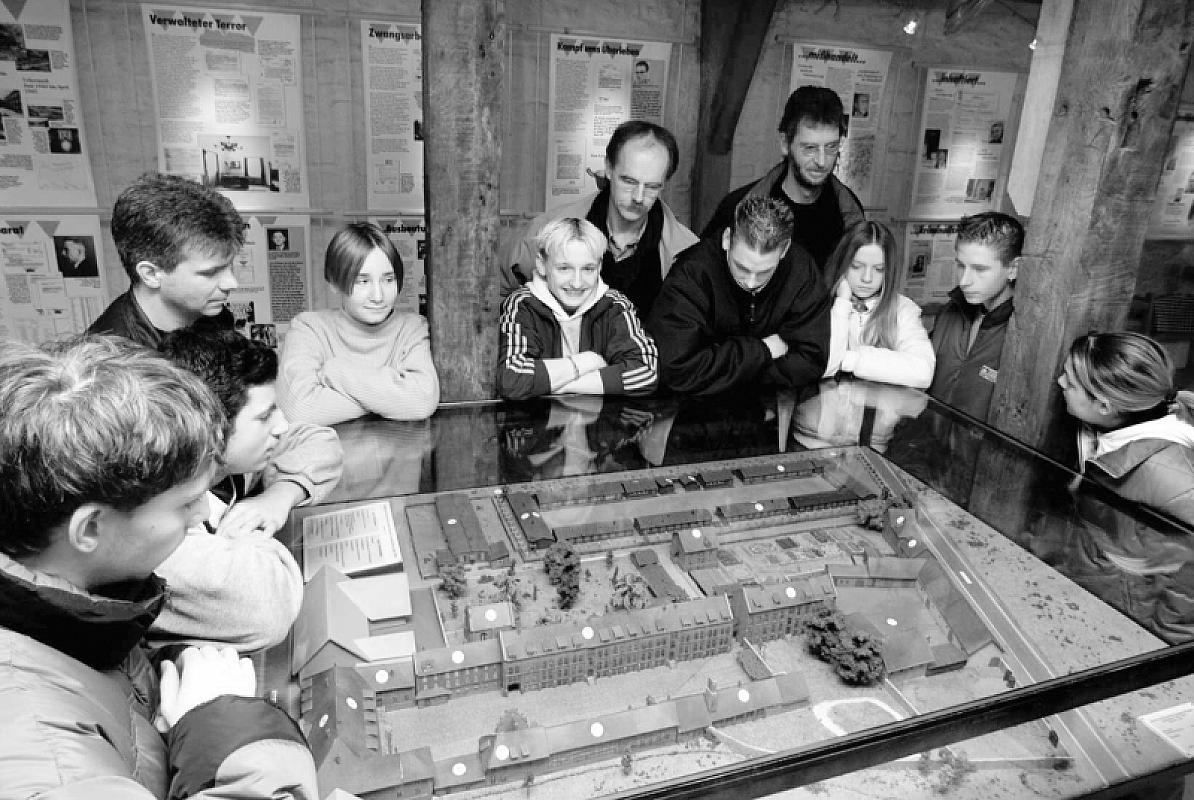
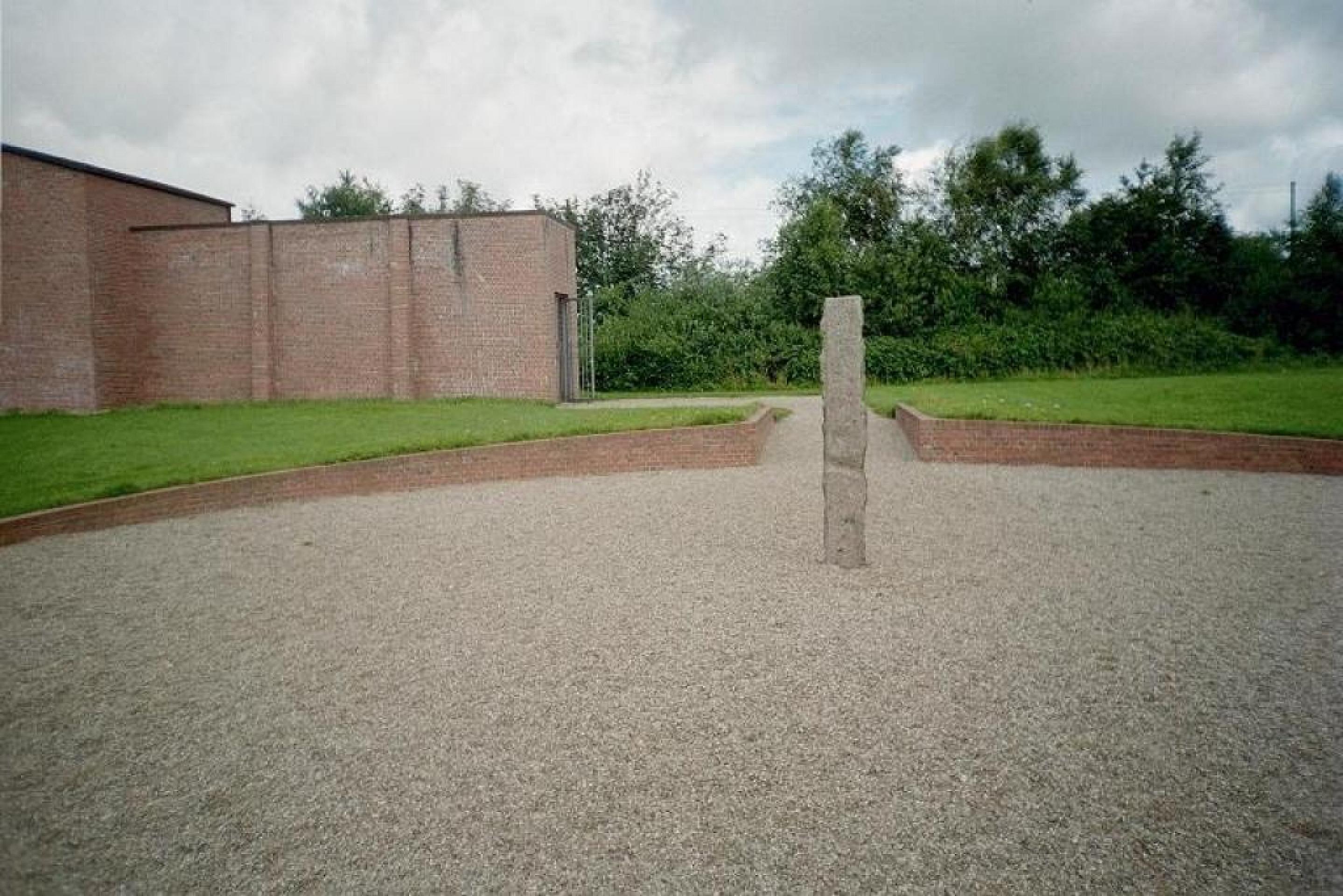
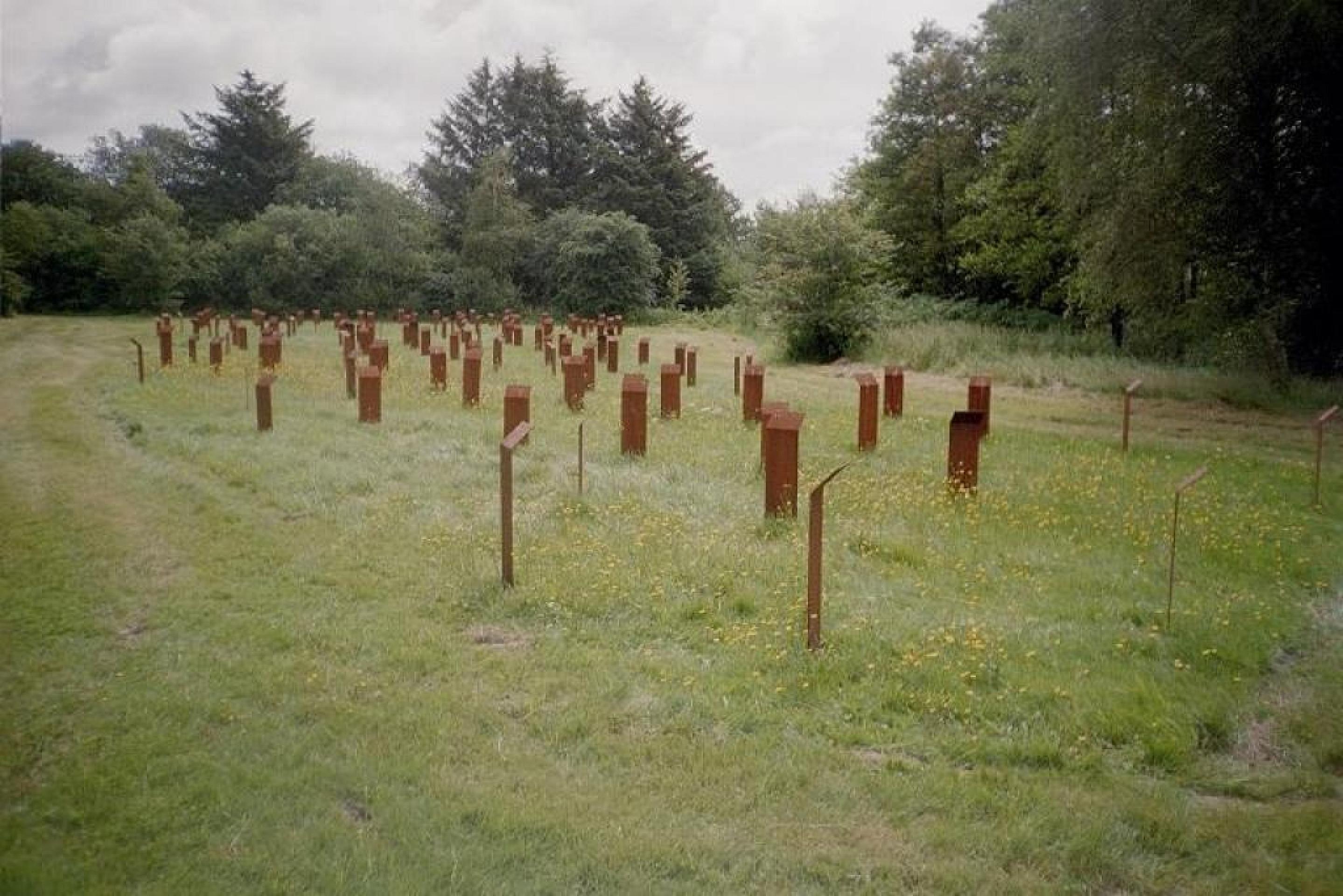
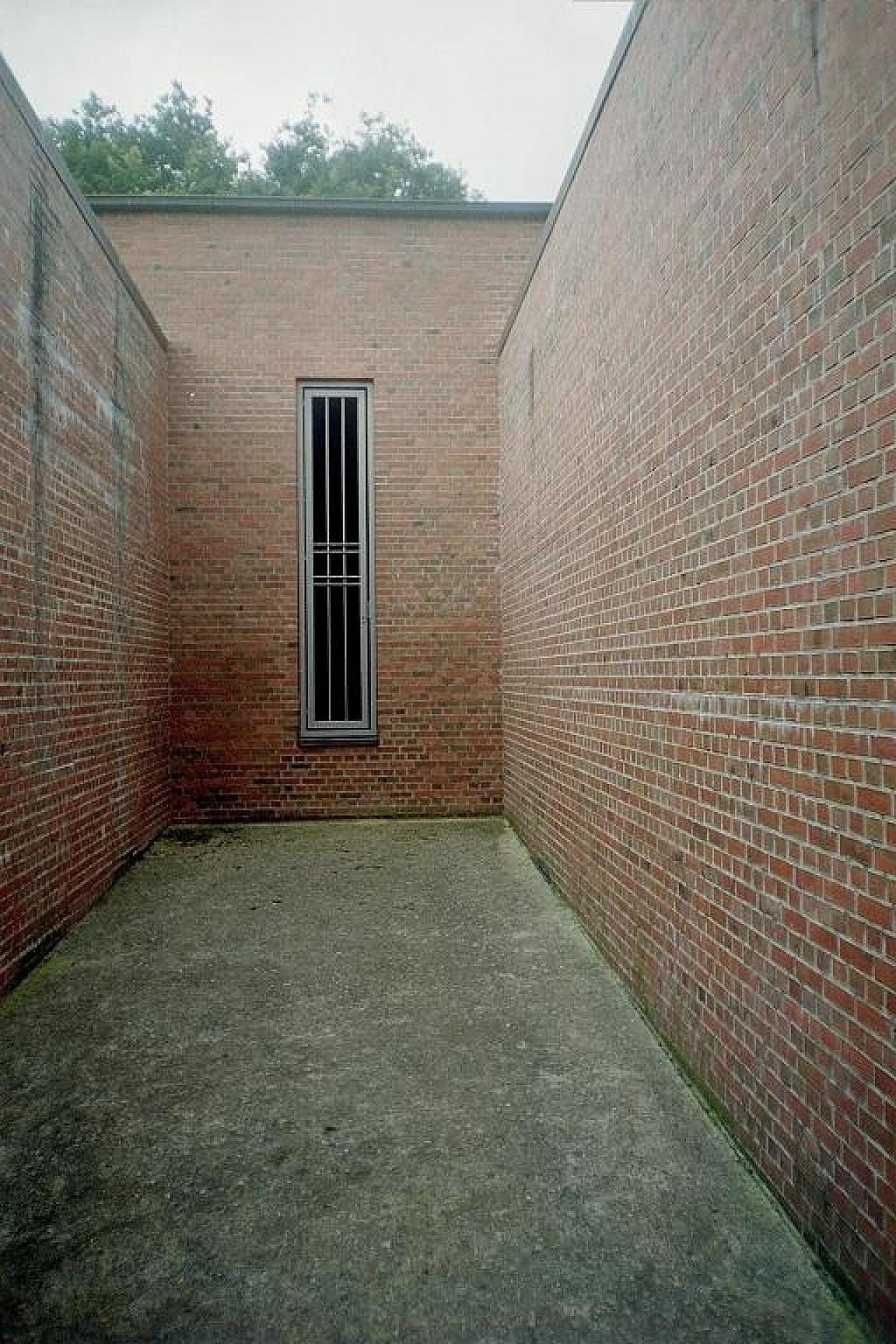
The »Husum-Schwesing Concentration Camp Workgroup« published a history of the Husum-Schwesing satellite camp in 1983. Between 1985 and 1994, the community of Northern Friesland purchased large parts of the former camp premises. On November 27, 1987, a memorial was dedicated on the ground. Information panels present the camp's history, and located in a red brick building is a model of the former satellite camp. A barred window and narrow distances between the walls symbolise the crowded atmosphere of camp life. In 2000, the old camp path was excavated. Located on the premises since 2001 is a »field of stelae« made of rusting metal columns bearing inscriptions of the names of those who perished at Husum-Schwesing. Each one of the over 300 stelae represent one victim.
Open

The memorial is accessible at all times.

Contact

https://kz-gedenkstaette-husum-schwesing.de/

gedenkstaette@nordfriesland.de

+49 (0)4841 897 30

Engelsburg 10
25813 Husum