The village of Jamlitz is in the southern part of Brandenburg. The second largest satellite camp of Sachsenhausen concentration camp was located here. A monument, an exhibition in the closeby village of Lieberose and a documentation site at the historic place commemorate the victims of the »Lieberose labour camp«. A further exhibition in Jamlitz provides information on the Soviet »special camp no. 6«, which was set up on the site of the satellite camp in 1945.
History
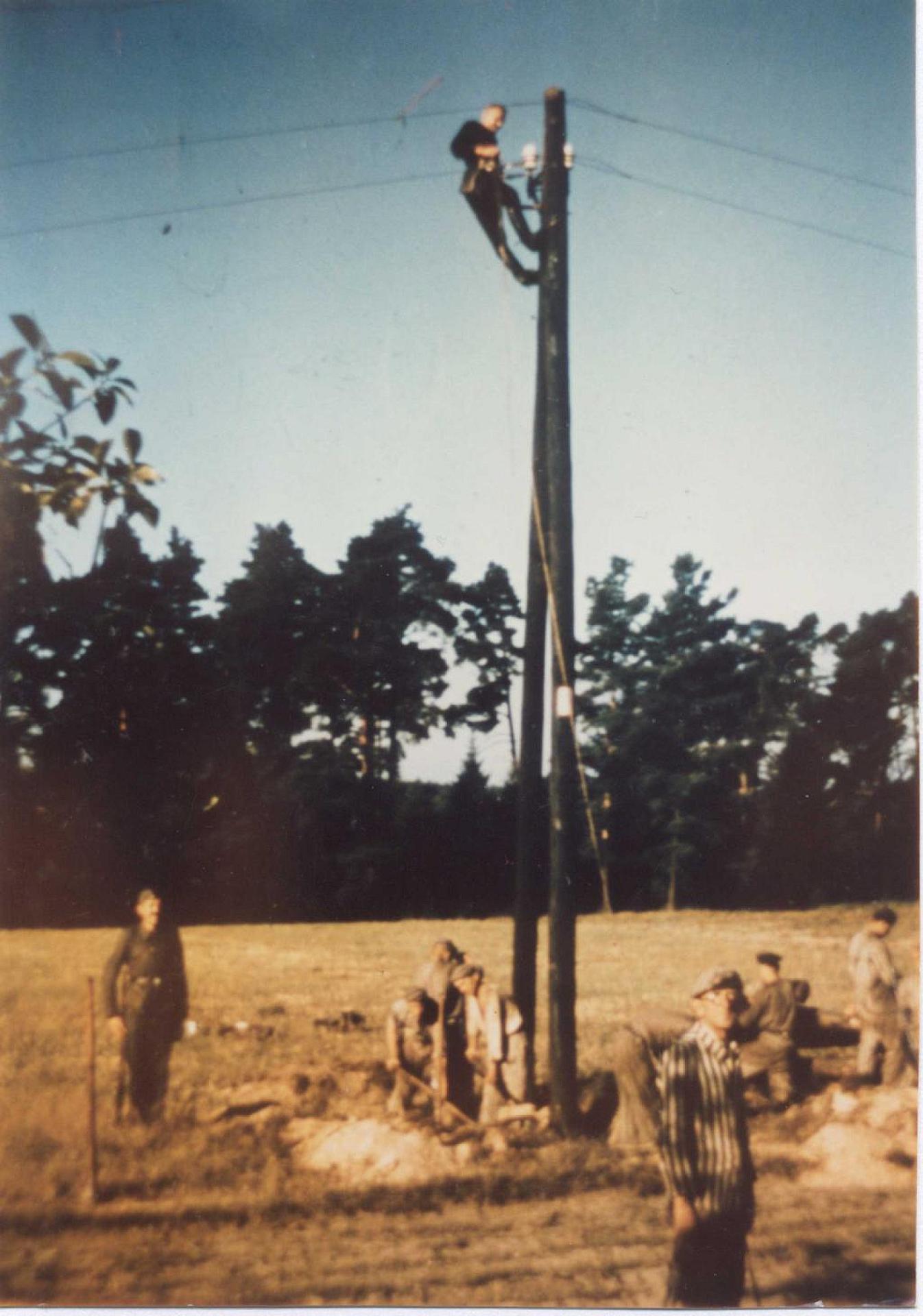
In 1943, prisoners of the Sachsenhausen concentration camp had to set up the Jamlitz satellite camp on orders of the SS. The Waffen-SS needed prisoners for the construction of the large SS military training ground »Kurmark«. It is possible that the Reichsführer SS Heinrich Himmler required the military training ground in order to be close to Berlin and be able to intervene with the Waffen-SS in case of a coup d’état.
First prisoner transports from the Groß-Rosen concentration camp arrived in the spring of 1944. In the course of 1944, the »Lieberose labour camp« developed into a camp for thousands of Jews, who had been selected for forced labour at the Auschwitz-Birkenau extermination camp. Many of them were of Hungarian origin.
In Jamlitz the Jewish slave labourers had to build barracks, roads and military installations. The terrible conditions in the »Lieberose labour camp« led to a high death rate among the prisoners. There was little equipment and few tools for the completion of the strenuous work; there were no sanitary facilities in the makeshift barracks. The prisoners received meagre food rations and little clothing. Many of them fell ill. Those no longer able to work were sent back to Auschwitz on a regular basis until October 1944 and murdered there. After that time, those who fell ill and could no longer work were admitted into one of the two »Schonungsblocks«. In February 1945, the SS shot more than 1,200 sick prisoners, mainly Hungarian Jews.
Between September 1945 and April 1947, the Soviet secret service NKVD administered the »special camp nr. 6« on the site of the former »Lieberose labour camp«. In all, around 10,000 people were imprisoned there without a trial or sentence, of which around 3,000 perished due to the harsh conditions.
Victims
Between November 1943 and March 1945, around 11,000 prisoners passed through the »Lieberose labour camp«. Around 10,000 of them were Jewish slave labourers, mainly from Hungary and Poland. In all, there were prisoners of twelve different nationalities in Jamlitz.
More than 1,200 Jewish prisoners who were sick and unable to walk were shot by the SS in Jamlitz during the evacuation of the camp in February 1945. The SS had their bodies buried in at least two mass graves.
According to newer research on the »Lieberose labour camp«, about 3,500 prisoners perished in Jamlitz of illnesses and exhaustion or were murdered by the SS. It is assumed that a further 4,000 prisoners were sent back to Auschwitz-Birkenau extermination camp until October 1944 and murdered there. Around 1,600 prisoners had to set off on a march towards Sachsenhausen concentration camp in February 1945. Around 140 men didn’t survive the exertions of the march.
There were about 10,200 prisoners in the Soviet special camp, which was located on the same site after 1945, of which about 3,000 died in the camp.
Remembrance
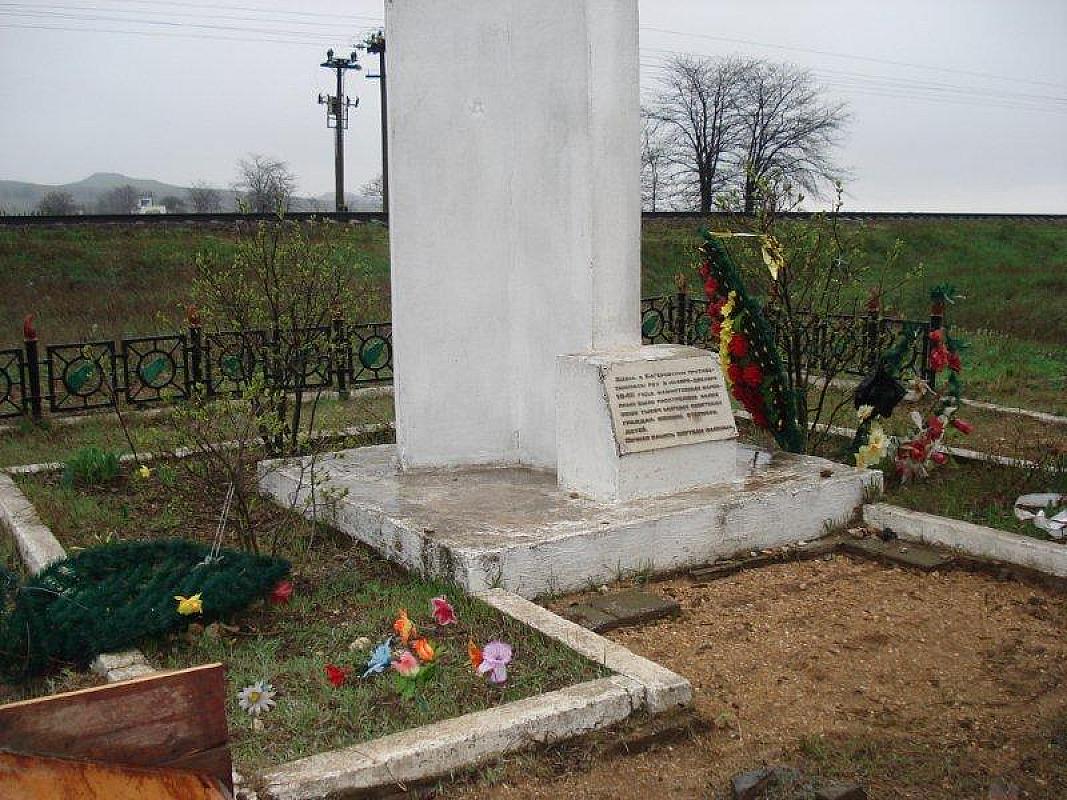
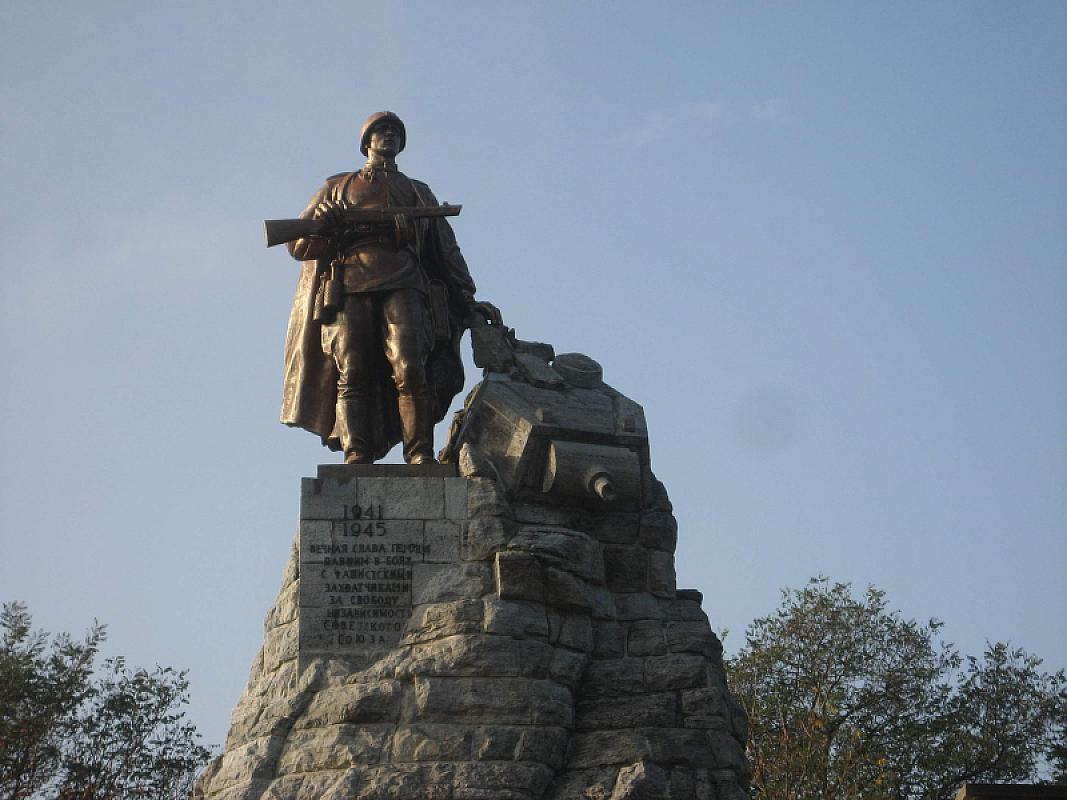
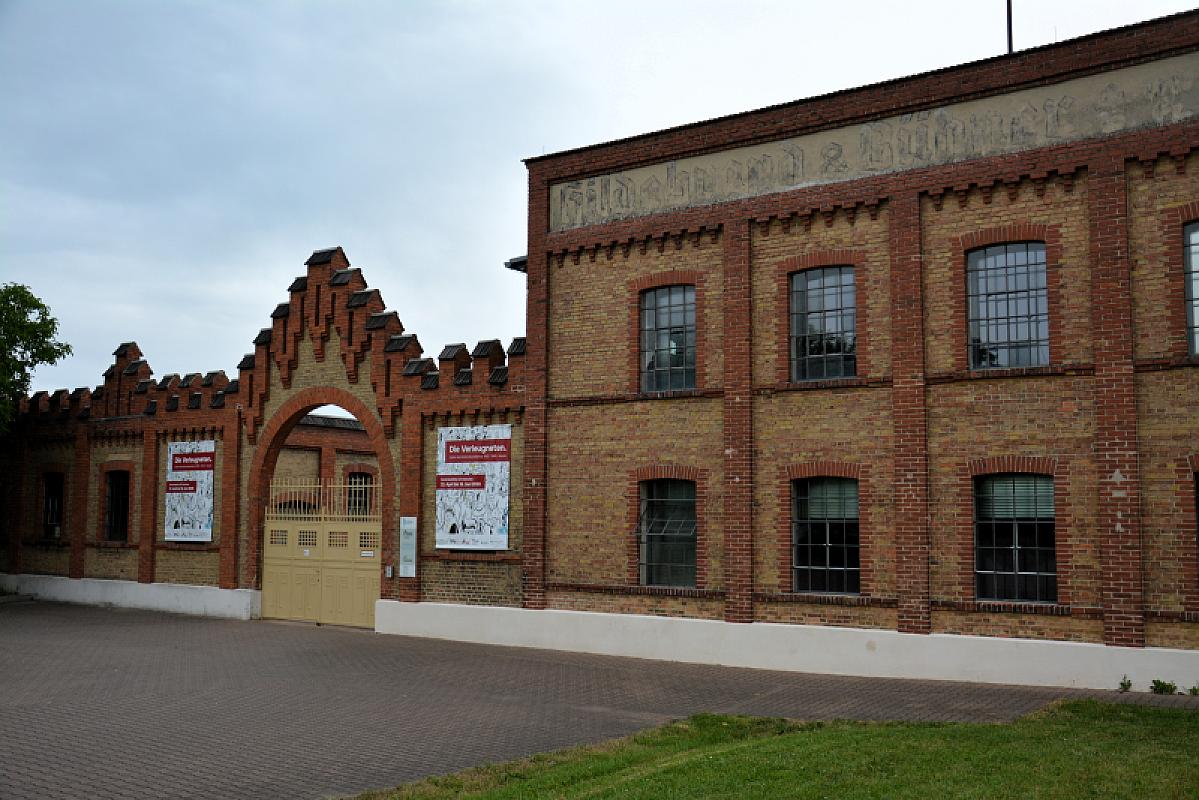
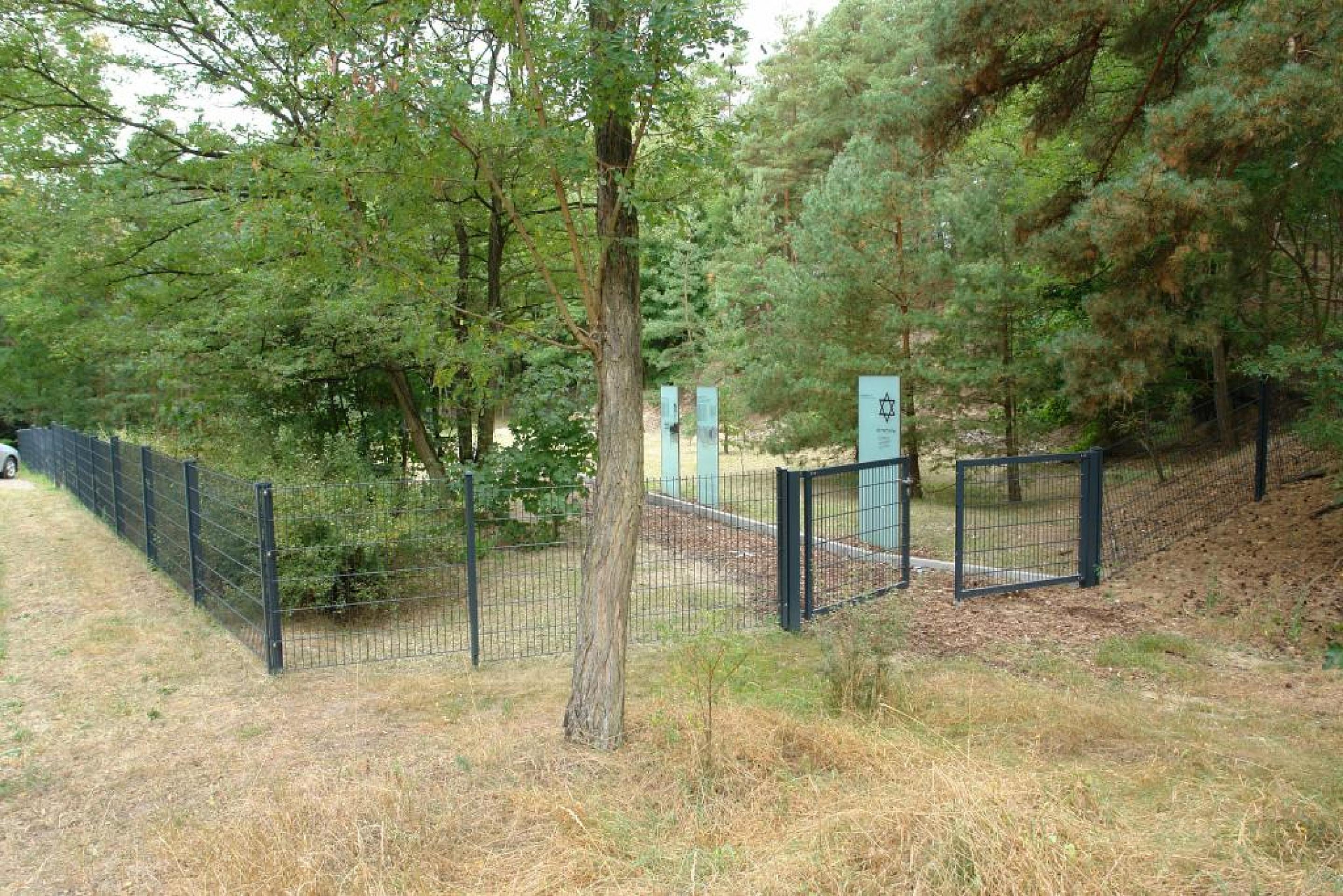
In 1971, one of the mass graves containing the remains of 577 murdered Jews was discovered close to Staakow, upon which the GDR authorities arranged for their exhumation. An urn, allegedly containing ashes of the mortal remains, was laid to rest in Lieberose. Subsequently, a memorial wall for the victims of fascism and a small museum were established at the site. The Jewish victims of the camp, however, remained unmentioned. Only in the 1990s did a local initiative group begin dealing with the history of the »Lieberose labour camp« and its victims. The results of this work can be seen in the exhibition of the memorial »Satellite camps Lieberose«. It is located in a small museum building close to the urn grave of the Jewish slave labourers. Since 2009, there is a Jewish cemetery on the site of the mass grave which was found in 1971.
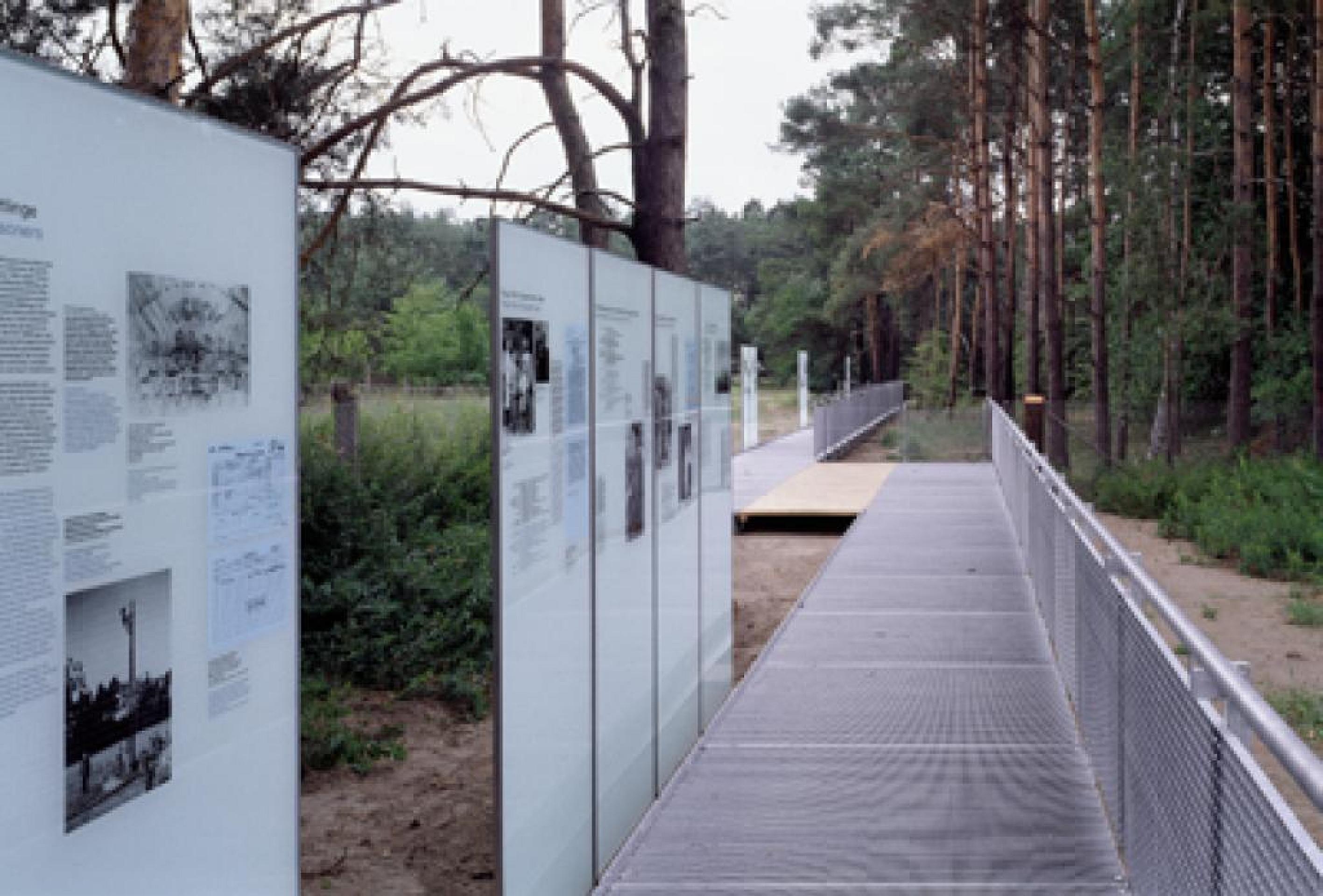
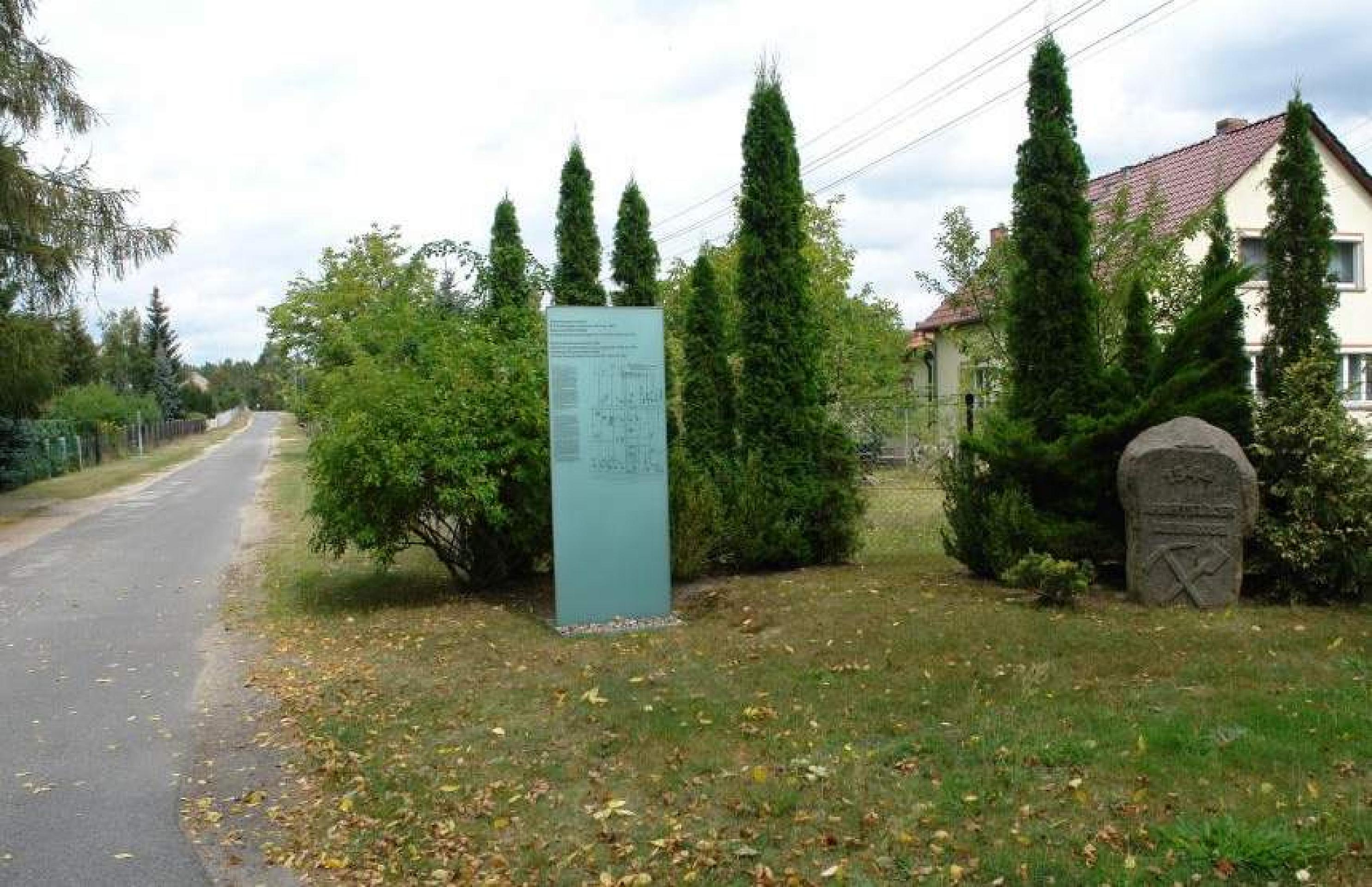
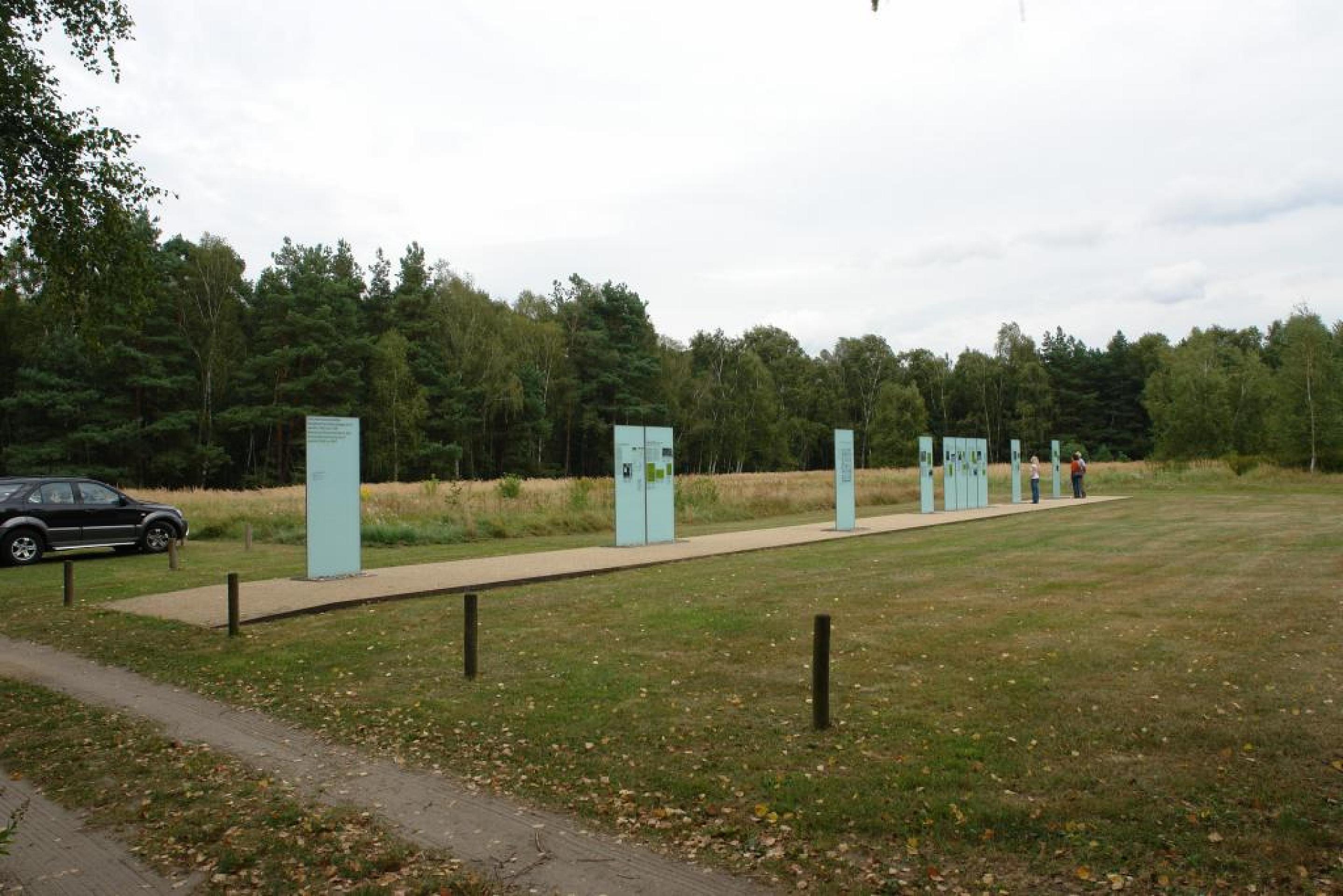
Until the end of GDR, nothing marked the site of the former satellite camp or Soviet special camp in Jamlitz. In 2003, a documentation exhibition was inaugurated, having been funded by the evangelical community of Lieberose and financially supported by the state of Brandenburg and the Brandenburg Memorial Foundation. Spatially separated translucent information boards provide information on the history and the victims of both camps.
Already since 1995, there has been a cemetery in memory of the victims at one of the mass graves of the Soviet special camp.
Open
The exhibitions are outdoors and are accessible at all times.
Contact
http://www.die-lager-jamlitz.de
info@die-lager-jamlitz.de
+49 (0)33671 280 032
Kiefernweg
15868 Jamlitz