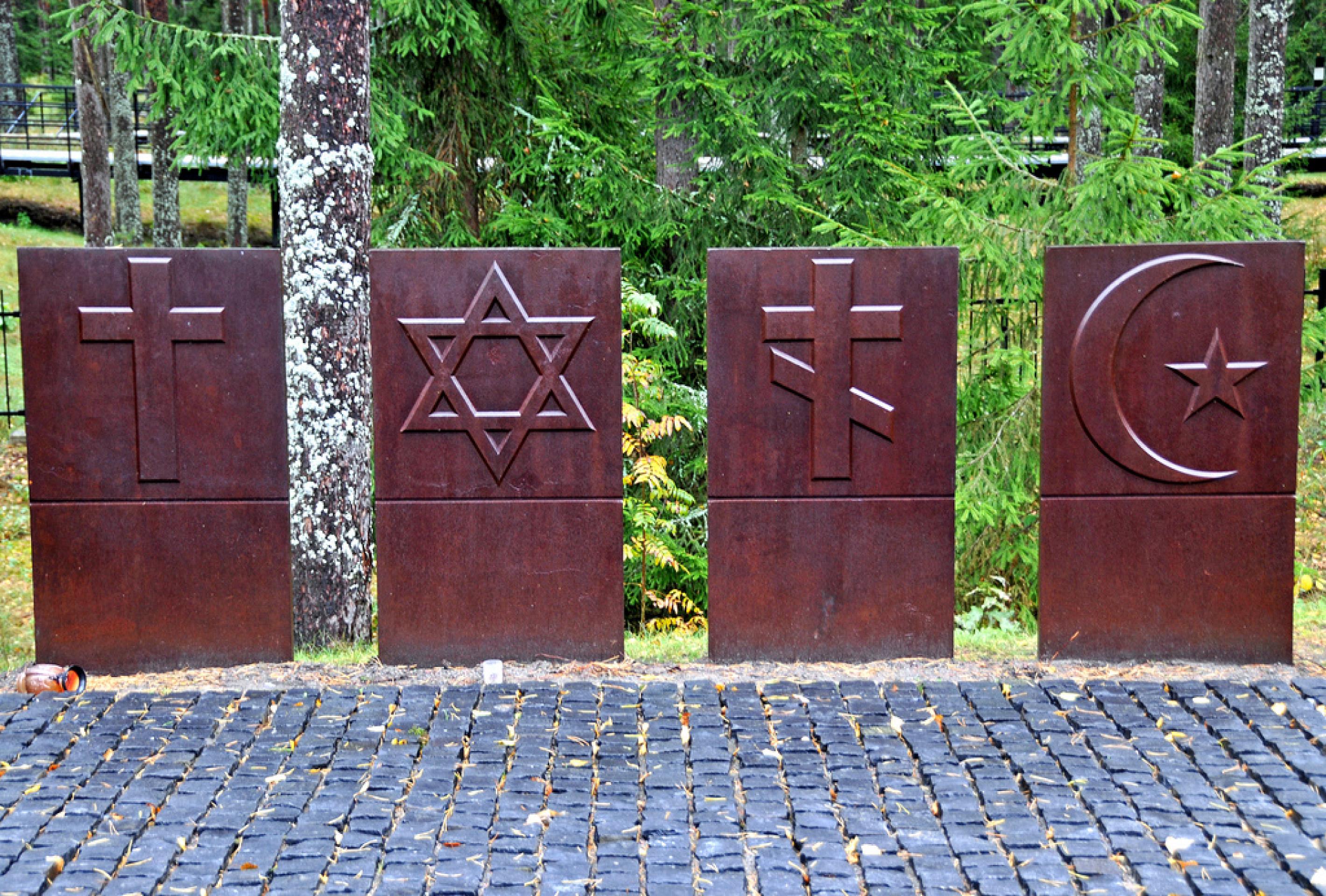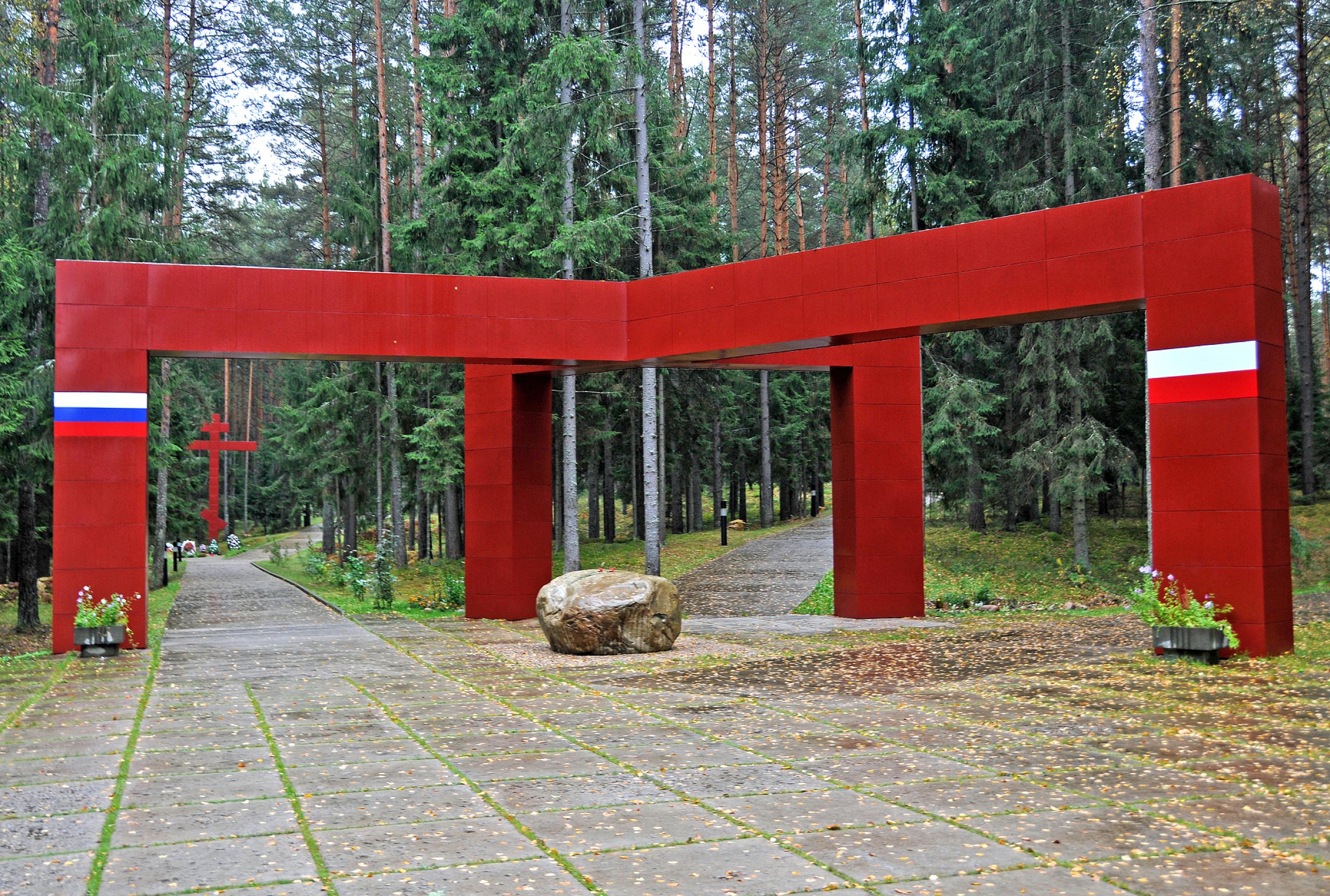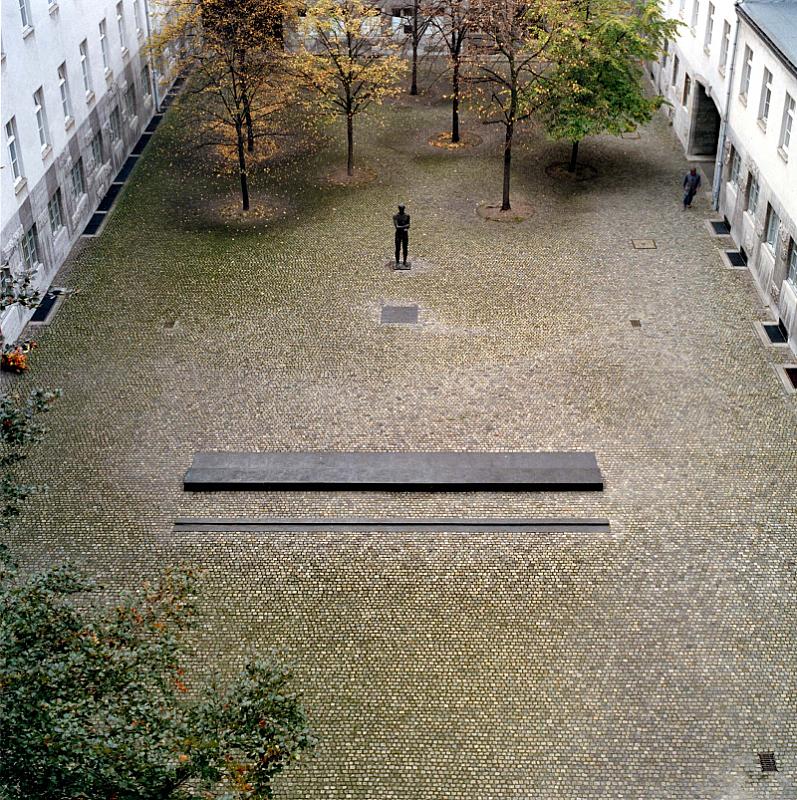
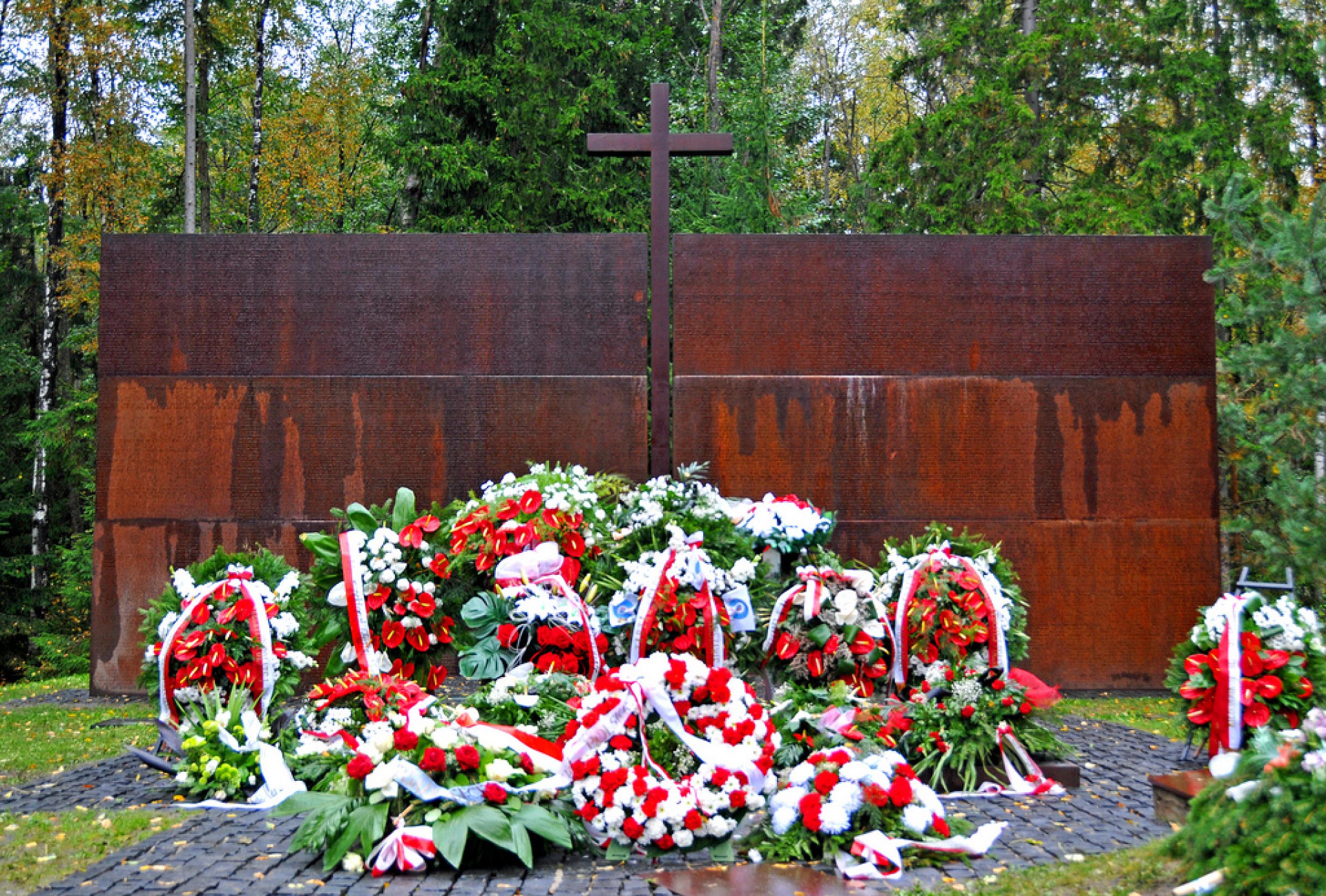
A memorial in Katyn, close to Smolensk, honours the approximately 3,600 Polish officers who were murdered there in 1940 by members of the Soviet secret service NKVD. Furthermore, the site also contains mass graves of Soviet victims of the Stalinist terror.
History
When Poland was occupied by the German Wehrmacht and the Red Army in 1939, about 250,000 Polish soldiers and 10,000 officers were captured as prisoners of war by the Soviets. Most of the soldiers were later released. At the end of 1939, about 25,000 soldiers were still imprisoned, including 8,500 officers. These officers as well as about 6,500 Polish policemen were held at three special camps in the Soviet Union: in Kozelsk, Starobilsk and Ostashkov. At the beginning of March 1940, Stalin and other members of the politbureau signed an order to execute the Polish prisoners. The pretext for the killings was that the Polish men were to be punished as »enemies of the Soviet Union«. Beginning April 1, 1940, the NKVD transported the Polish prisoners to a number of execution sites. The approximately 4,600 prisoners from the camp at Kozelsk were brought to the small village of Katyn outside of Smolensk. Members of the NKVD shot about 4,400 Polish officers in the back of the neck at prepared mass graves. At the same time, further mass shootings of Polish officers from the special camps at Starobilsk and Ostashkov took place in NKVD prisons near Tver and Kharkiv. The bodies were buried in mass graves.
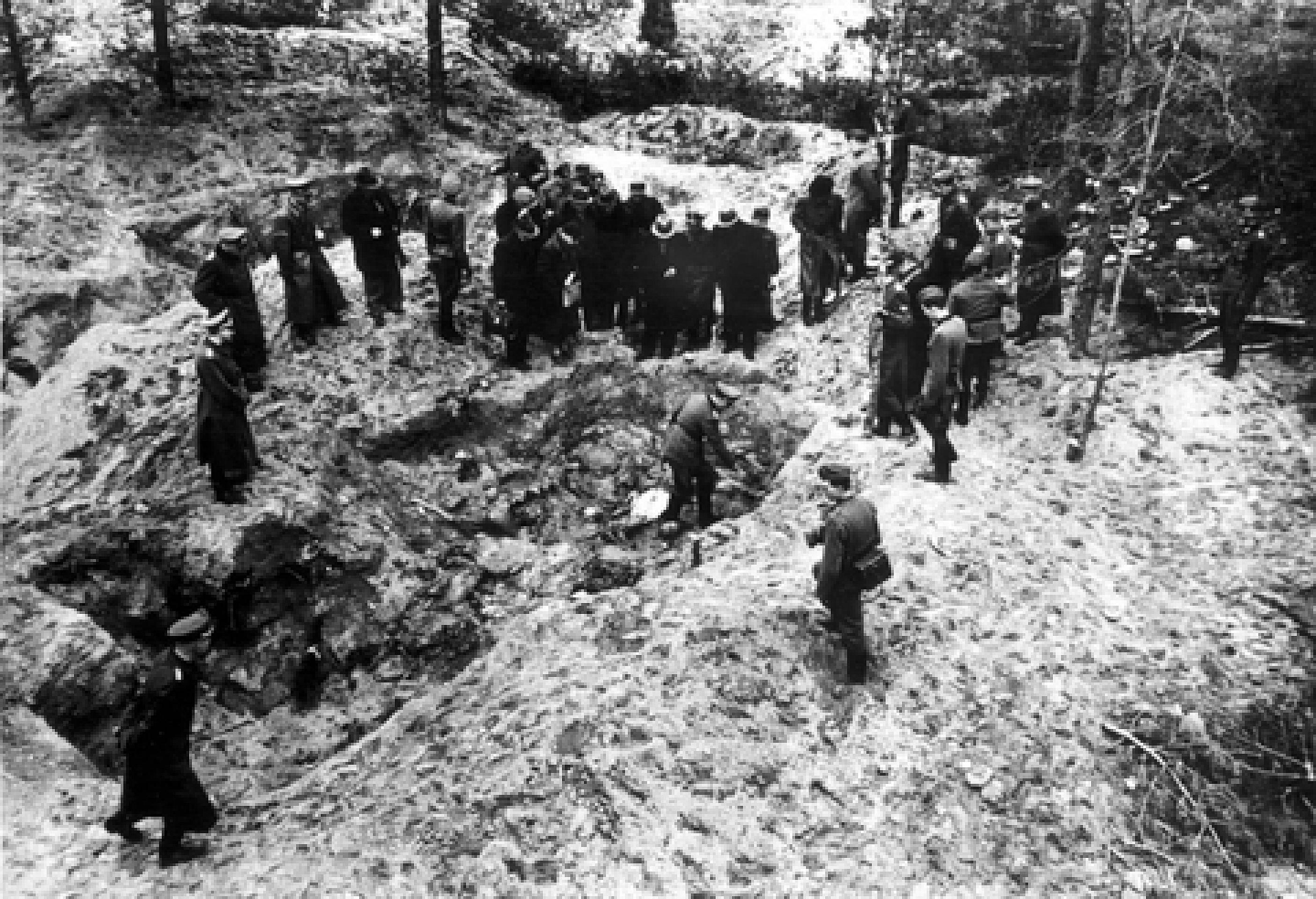
In February 1943, Wehrmacht units discovered the mass graves near Katyn, which had been occupied by the Germans since the German invasion of the Soviet Union in 1941. In April 1943, the Germans launched a large-scale propaganda campaign spreading the information that over 10,000 Polish officers had been murdered by the Soviet secret police; international delegations were brought to the site. The aim of this campaign was to drive a wedge between the Western Allies, the Polish government in exile and the Soviet Union. They were not successful: The Western Allies suppressed the Soviet crimes.
Victims
In all, nearly 22,000 Polish soldiers and officers were murdered by the NKVD between April and May 1940. Most of the victims were officers or policemen. A majority of the bodies could by identified upon discovery of the mass graves since they had been buried with their documents and in uniform. For a long time, the mass graves near Katyn were the only trace of the 22,000 Polish men. Further mass graves near Starobilsk and Ostashkov were discovered only decades after the war.
Remembrance
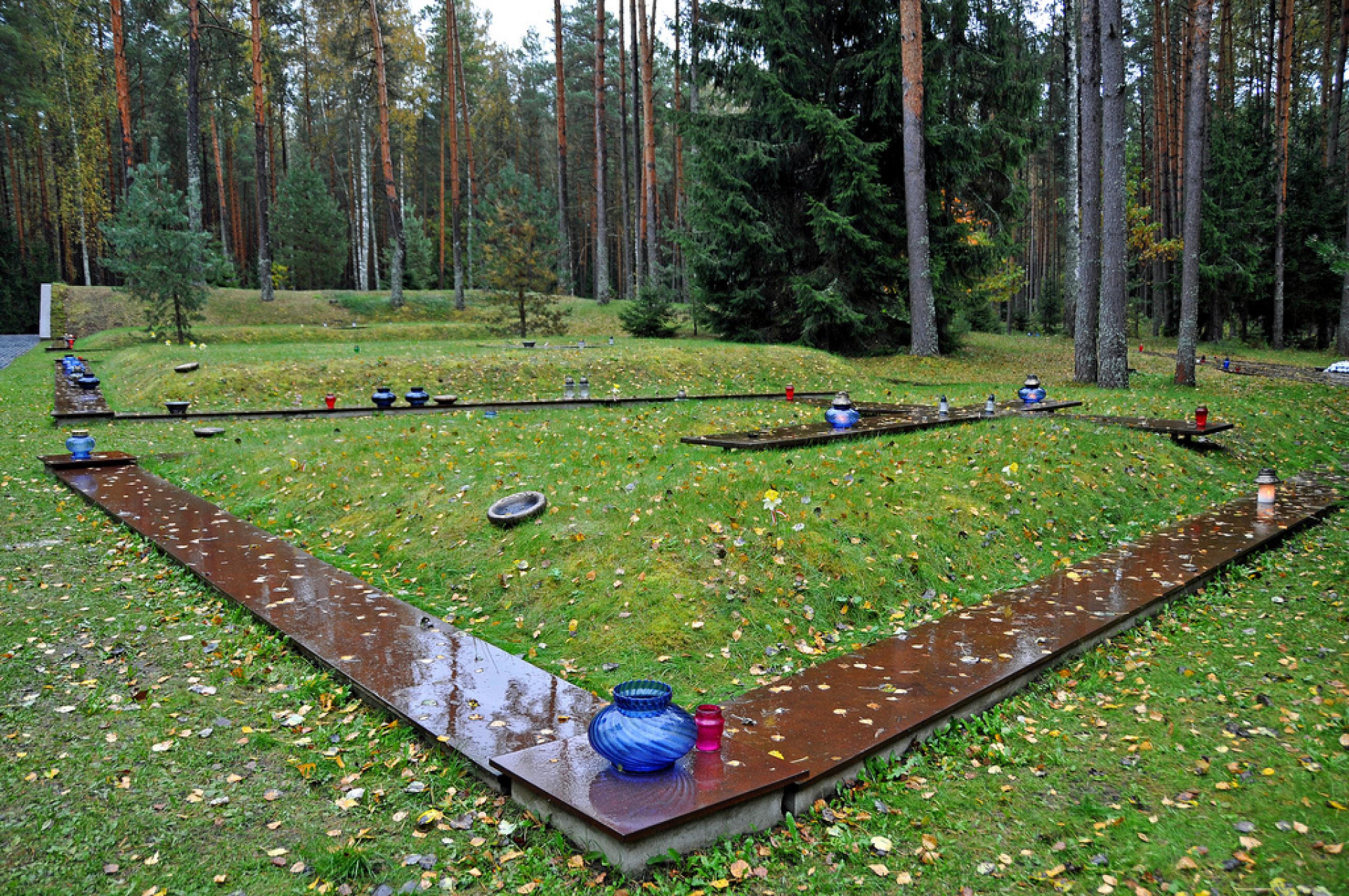
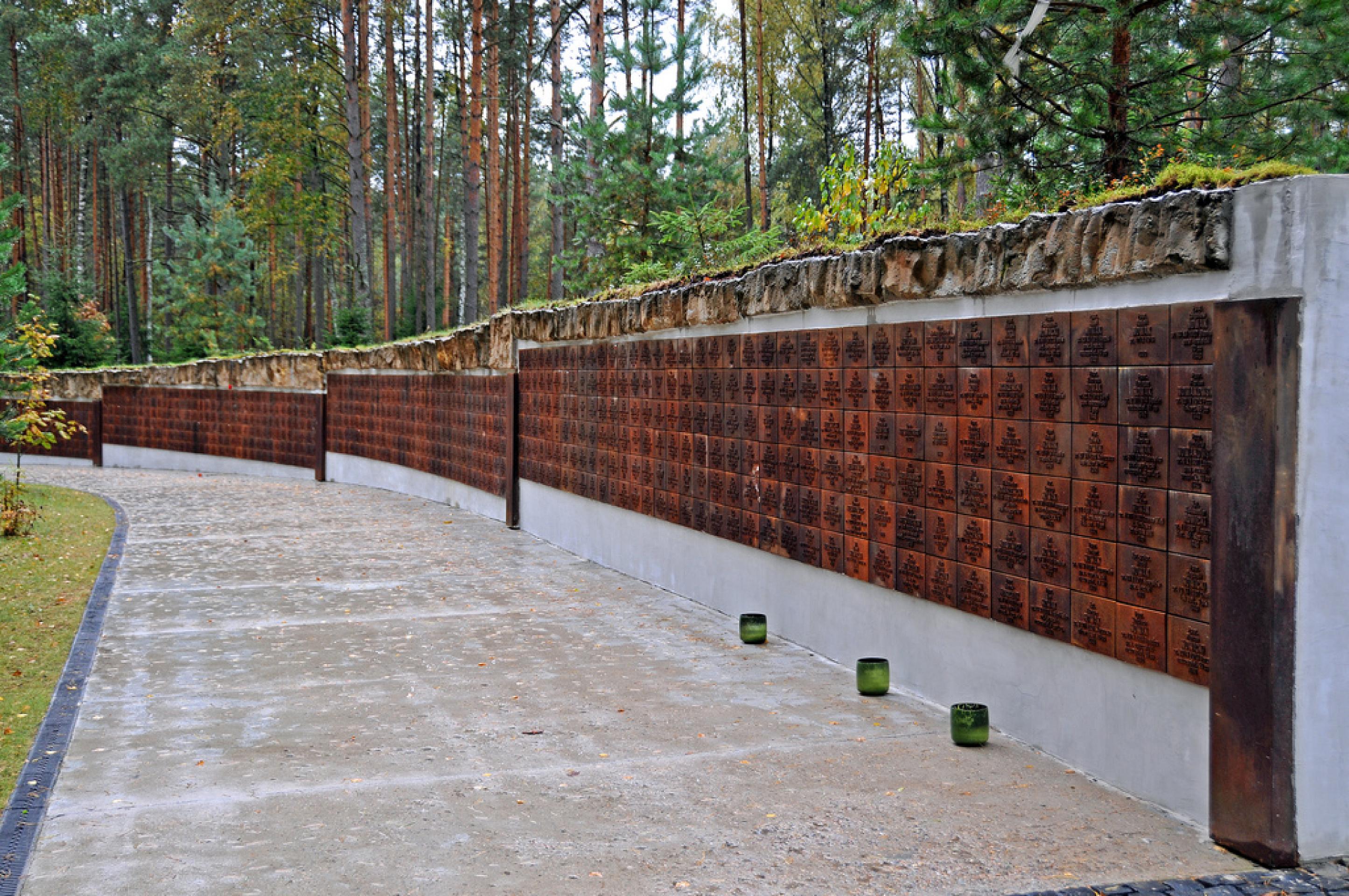
In 1944, the Red Army reconquered the region around Katyn. Immediately, the Soviet authorities constituted their own commission of inquiry, soon declaring that the Polish officers had been murdered in 1941 under the German occupation. This became the Soviet Union's official version, propagated in all of its satellite states, including Poland. Katyn and the surrounding areas became a restricted military area. In the 1950s, all publications concerning the Katyn crimes were forbidden in both Poland and the Soviet Union. In Poland, Katyn became a symbol of Soviet crimes against the Polish elite. Despite the state line, many in Poland secretly and privately commemorated the Katyn victims. Only in 1990 did the Soviet Union under Mikhail Gorbachev admit its involvement in the killings. The political transformation of the region meant that the crimes could for the first time be openly addressed in Poland and in Russia; archives were made accessible and many documents published. In 1990, the other burial sites of the Katyn crimes were uncovered. In 2000, on the 60th anniversary of the shootings, memorials were unveiled on all three sites by Polish and Russian representatives. The Katyn memorial also commemorates the Soviet citizens who were murdered here for political reasons by the NKVD already in the 1930s.
On April 7, 2010, the prime ministers of Poland and Russia, Donald Tusk and Vladimir Putin, for the first time jointly took part in a commemorative ceremony to the victims of the Stalinist crimes at Katyn. On April 10, 2010, Katyn once again became a tragic place for Poland: The Polish presidential airplane carrying president Lech Kaczyński and 95 other passengers crashed near Smolensk, killing everyone on board. Delegates from the world of politics and civil society had been on their way to their own commemorative ceremony at Katyn.
Possibilities
Permanent exhibition, guided tours of the premises, educational offer for schools
Open
Daily 9 am to 5 pm
Contact
katyn-memorial@mail.ru
+7 4812 485 323
Katyn
214522 Katyn