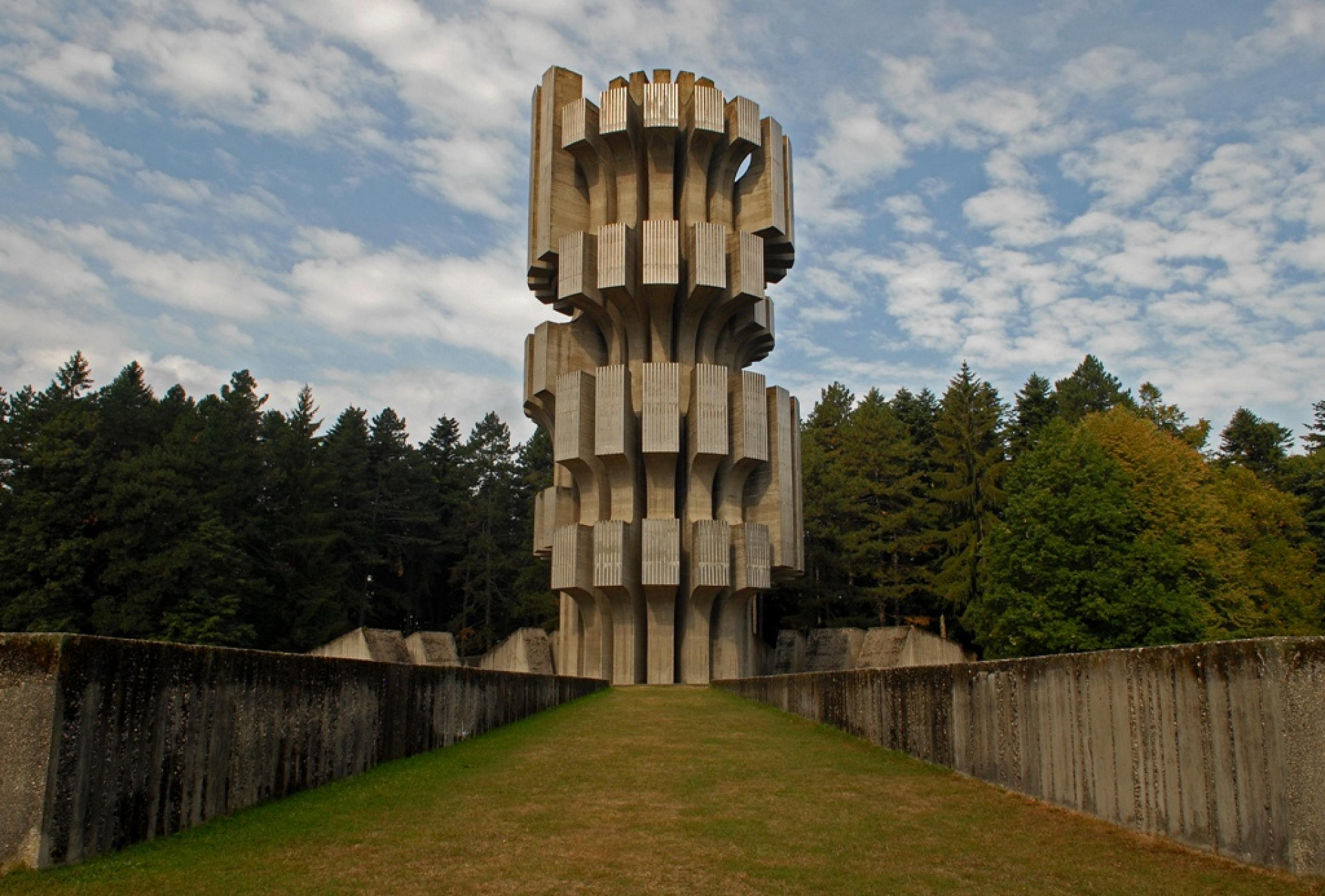
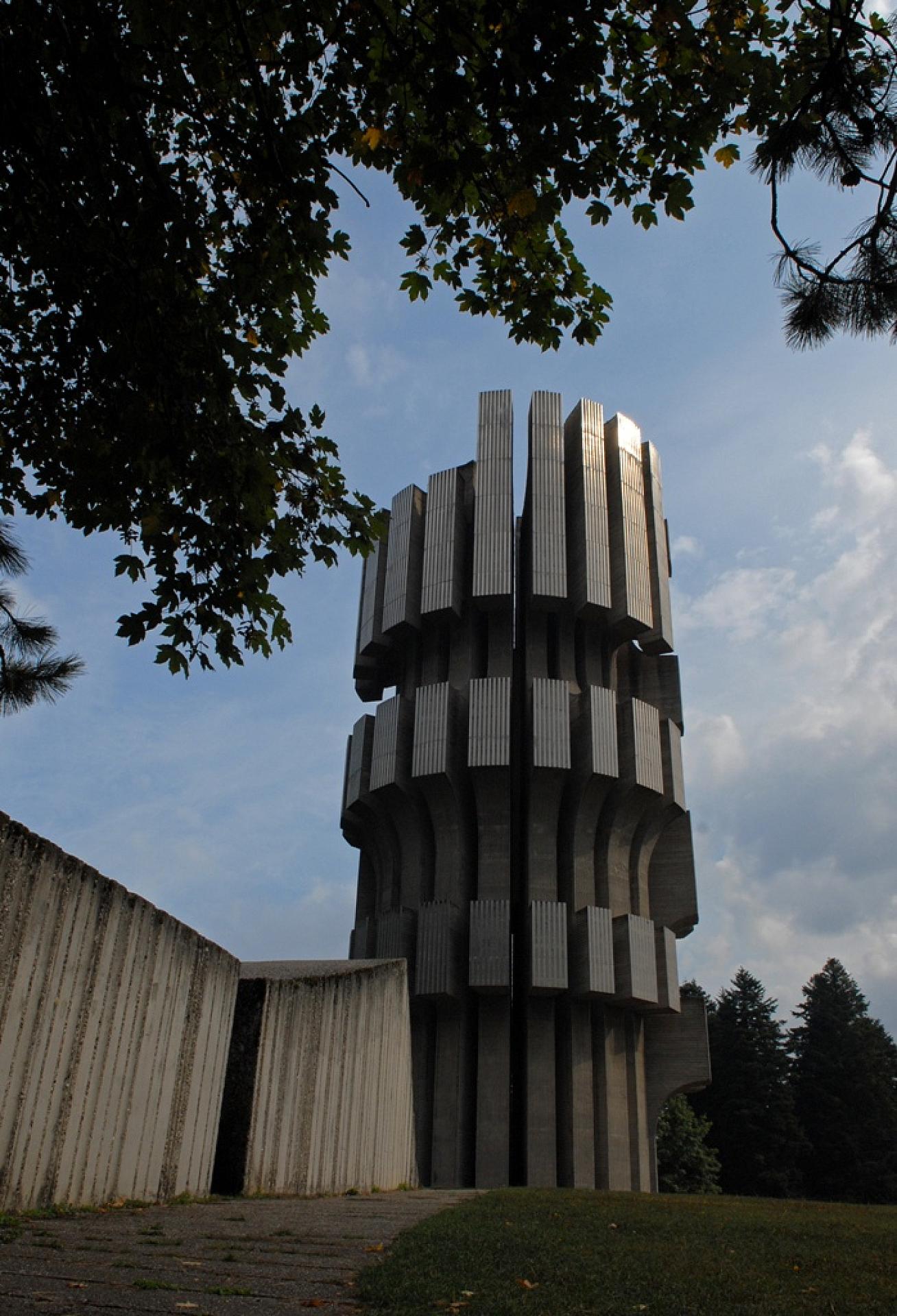
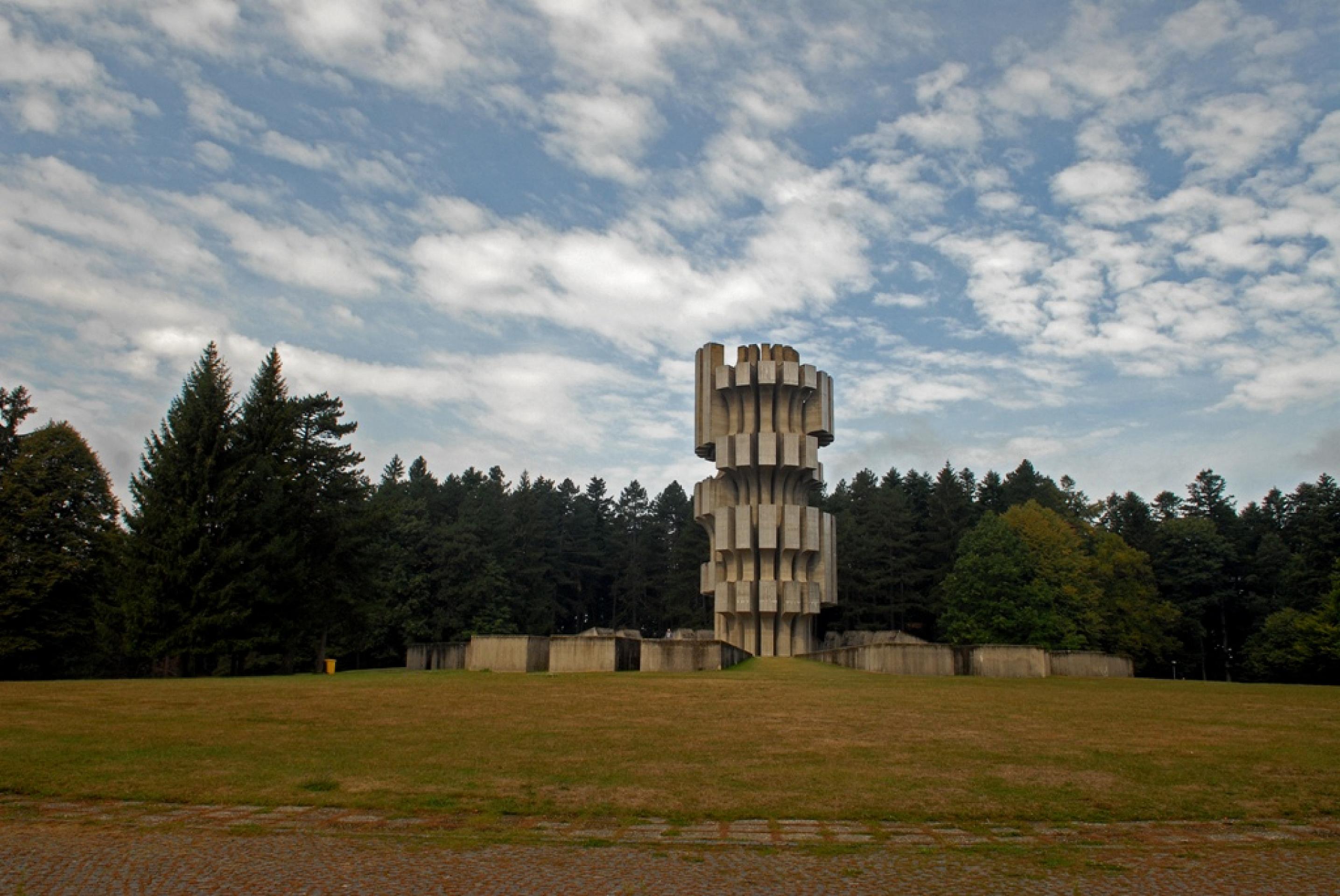
In 1972, a monumental memorial by sculptor Dušan Džamonja was erected on one of the peaks of the Kozara mountain range in Bosnia. It serves as a reminder of the battle which took place between Yugoslav partisans and the Croatian army, Ustaša militia and the German Wehrmacht in July 1942.
History
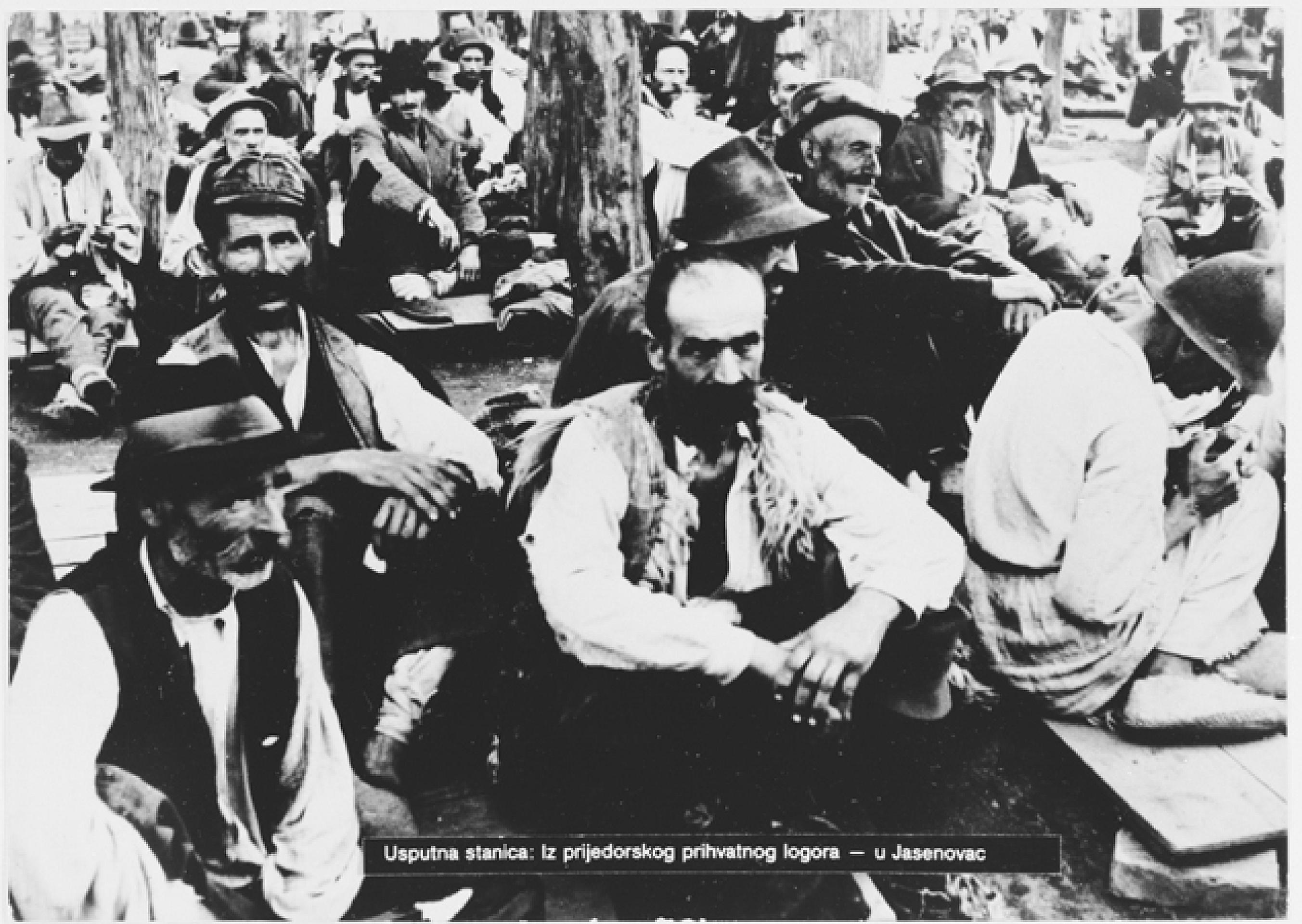
In early 1941, the Axis powers invaded Yugoslavia and dismembered the country. Subsequently, the fascist Croatian Ustaša movement proclaimed the Independent State of Croatia (Croatian: Nezavisna Država Hrvatska, NDH) on the territory of present-day Croatia and Bosnia and Herzegovina. Soon, partisan groups were established all over former Yugoslavia in resistance to both the occupying regime and the Ustaša rule in the Independent State of Croatia. The German Wehrmacht and its allies fought fiercely against the partisans, carrying out particularly brutal measures against the civilian population as well. In the spring of 1942, Germany, Croatia and Hungary formed »Kampfgruppe West Bosnia«, a special unit for combating partisans in the region. An attack against the partisans was launched at the end of June in the Kozara mountain range. In the course of the battle, the German and Croatian soldiers killed a vast number of men, women and children who inhabited the region. Only few of the killed men were armed partisans. In August 1942, 50,000 men, women and children, mainly from Serbia, were held in German and Croatian captivity in the Kozara region. Many of them were deported by the Ustaša to the Jasenovac camp and murdered there.
Victims
About 1,700 partisans were killed during the Battle of Kozara. How many civilians were deliberately killed by »Kampfgruppe West Bosnia« in the Kozara mountain range is not known.
There are few areas of Europe so clearly scarred by the events of the 20th century as Bosnia-Herzegovina in the south-east of the continent. After the First World War the country was part of the Kingdom of the Serbs, Croats and Slovenes. In 1929 the Kingdom became Yugoslavia, a dictatorship established by King Alexander I (1888–1934) with the overall support of Serbian officers. In April 1941, Yugoslavia was occupied by German troops and their Italian, Hungarian and Bulgarian allies and split into a number of annexed and occupied territories serving as puppet states of the Nazi regime.
Between 1941 and 1944, Bosnia-Herzegovina was part of the »Independent State of Croatia«, a puppet state of Nazi Germany ruled by the regime of terror of the Ustasha and their »Poglavnik« (leader) Ante Pavelić (1889–1959). The Ustasha was an insurgent nationalist movement, which had been fighting Serb-dominated Yugoslavia from abroad since 1929. After 1941, its policy of extermination was directed in particular against the large Serbian minority in Croatia, which was expelled, imprisoned and murdered, and also against Jews, Roma and religious or ideological opponents of the regime. It is estimated that almost 12,000 of the approximately 14,000 Bosnian Jews suffered a violent death under the regime. The Ustasha were also involved in fierce combat with various opposition movements – which, however, were also fighting each other – with a large number of casualties on all sides. There was no public discussion of these ethnic conflicts either after the end of the war in 1944-45 or during the communist dictatorship led by the former partisan leader Marshal Josip Broz Tito (1892–1980). Following the break-up of Yugoslavia in 1991-92, these conflicts were, however, to lead to the most devastating war in Europe after 1945. Today’s federal state of Bosnia-Herzegovina is divided into two parts: the Republika Srpska (Bosnian Serb Republic), founded shortly before the Bosnian War (1992–1995), and the Bosniak-Croat Federation. In July 1995, members of the army of the Republika Srpska, the police and Serbian forces murdered up to 8,000 mainly Bosnian men and boys over several days in Srebrenica.
During the Tito regime and up until the break-up of Yugoslavia, the culture of remembrance in Bosnia-Herzegovina was dominated by a large number of resistance monuments, memorial parks and synagogues used as museums. The most important of these were the »Il Kal Grandi« synagogue in Sarajevo, the Donja Gradina memorial site in the Republika Srpska - a former satellite camp of the largest Croatian concentration camp in Jasenovac - and the Vraca memorial park, inaugurated in 1981 as the central memorial site in Sarajevo for the »Victims of the Second World War and the Partisan War-Dead«. All of these sites were damaged, destroyed, looted or closed during the Bosnian War in particular and they have only slowly been reinstated. The events of the Bosnian War overshadow the remembrance of the victims of the years 1941 to 1944-45.
Remembrance
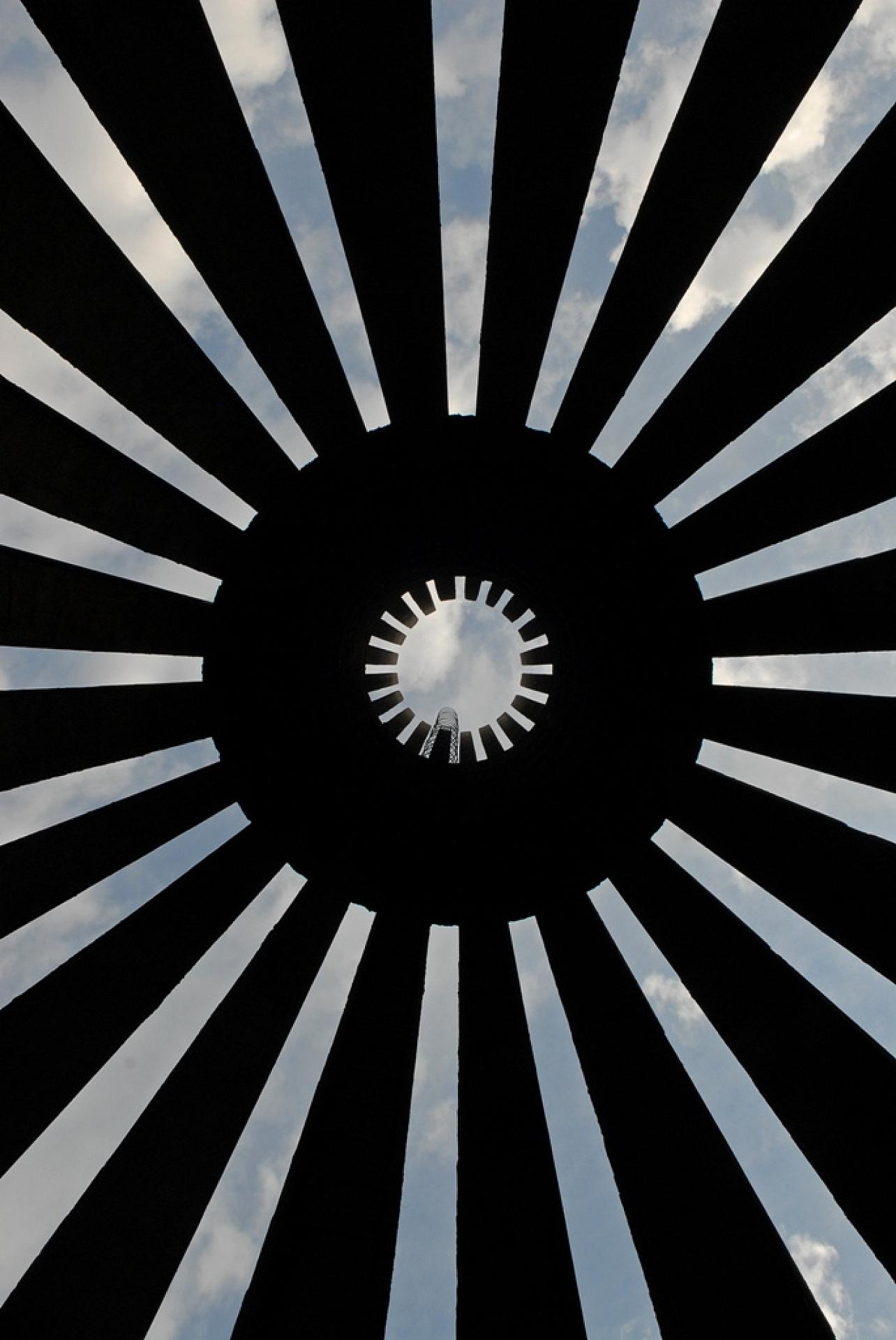
Today, most of the Kozara mountain range is part of a national park. The resistance of partisans against the German and Croatian armies in the Battle of Kozara became an important symbol of resistance under Tito's rule in post-war Yugoslavia. For example, in 1962, a monumental film was made about the battle entitled »Kozara«. In 1972, a memorial by sculptor Dušan Džamonja was dedicated to the victims of the battle on the peak of the Mrakovica high plain. The Kozara memorial is one of many partisan monuments – erected in Yugoslavia especially during the 1970s – and is considered representative of modernistic socialist concrete architecture.