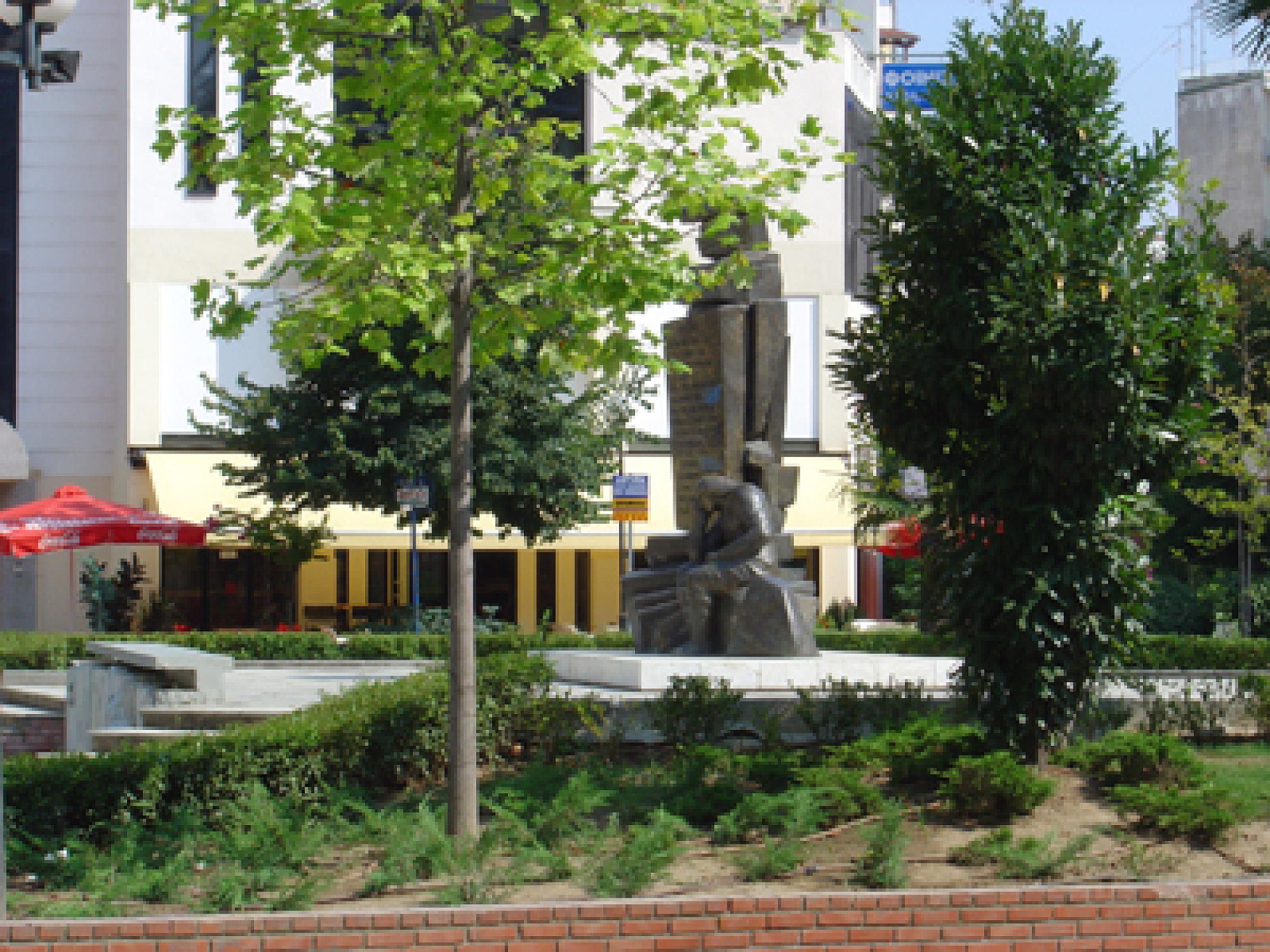
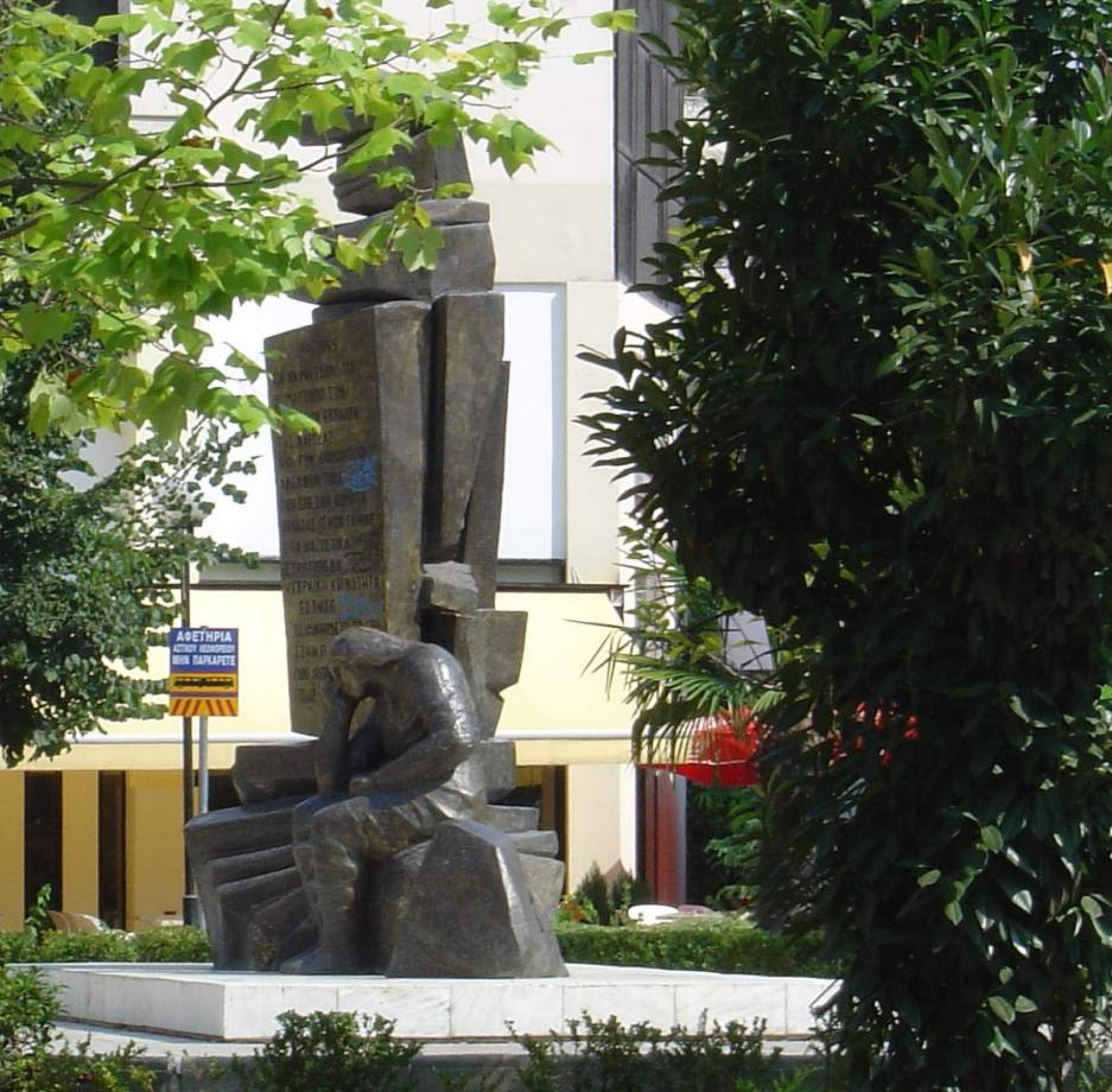
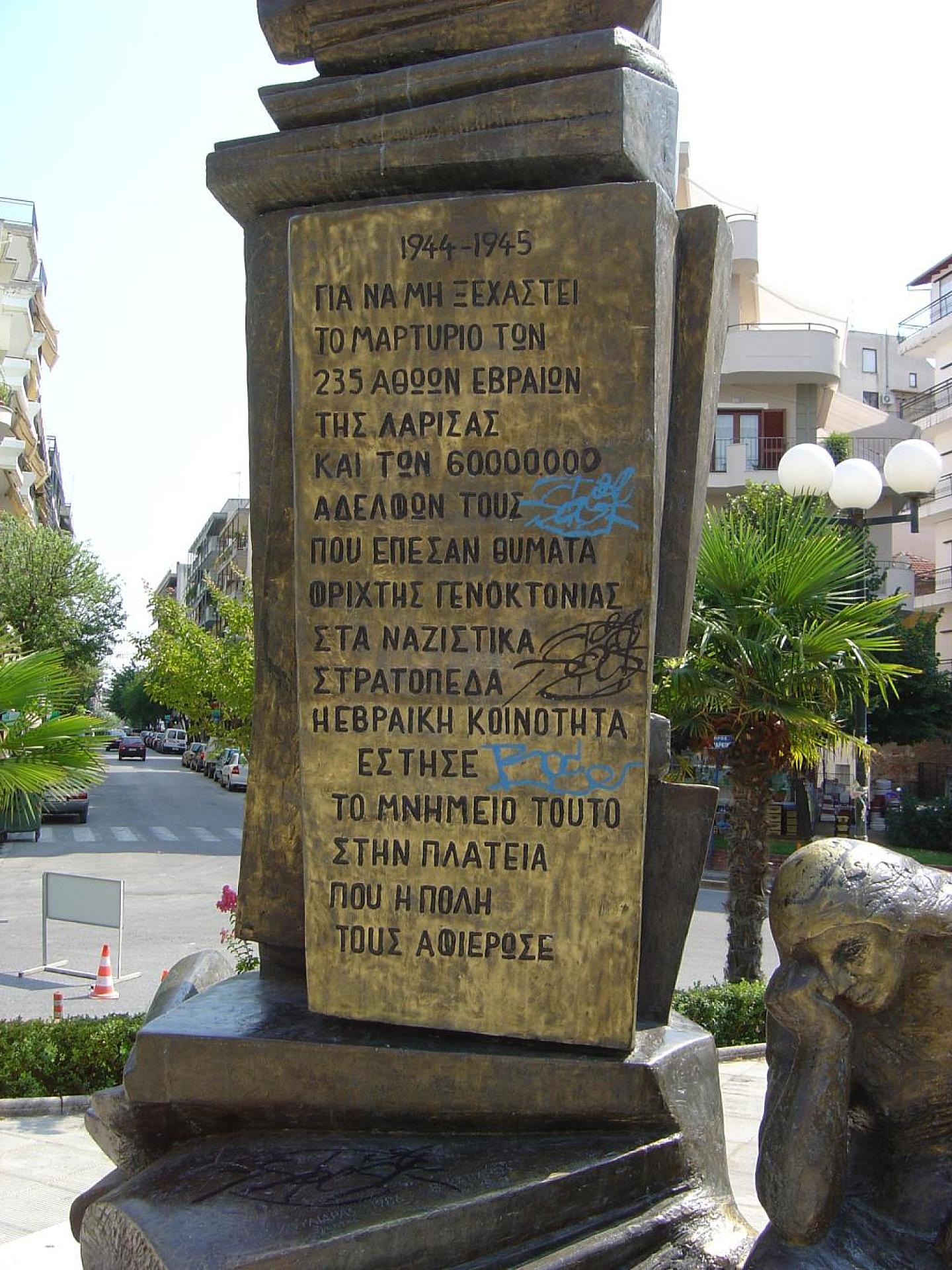
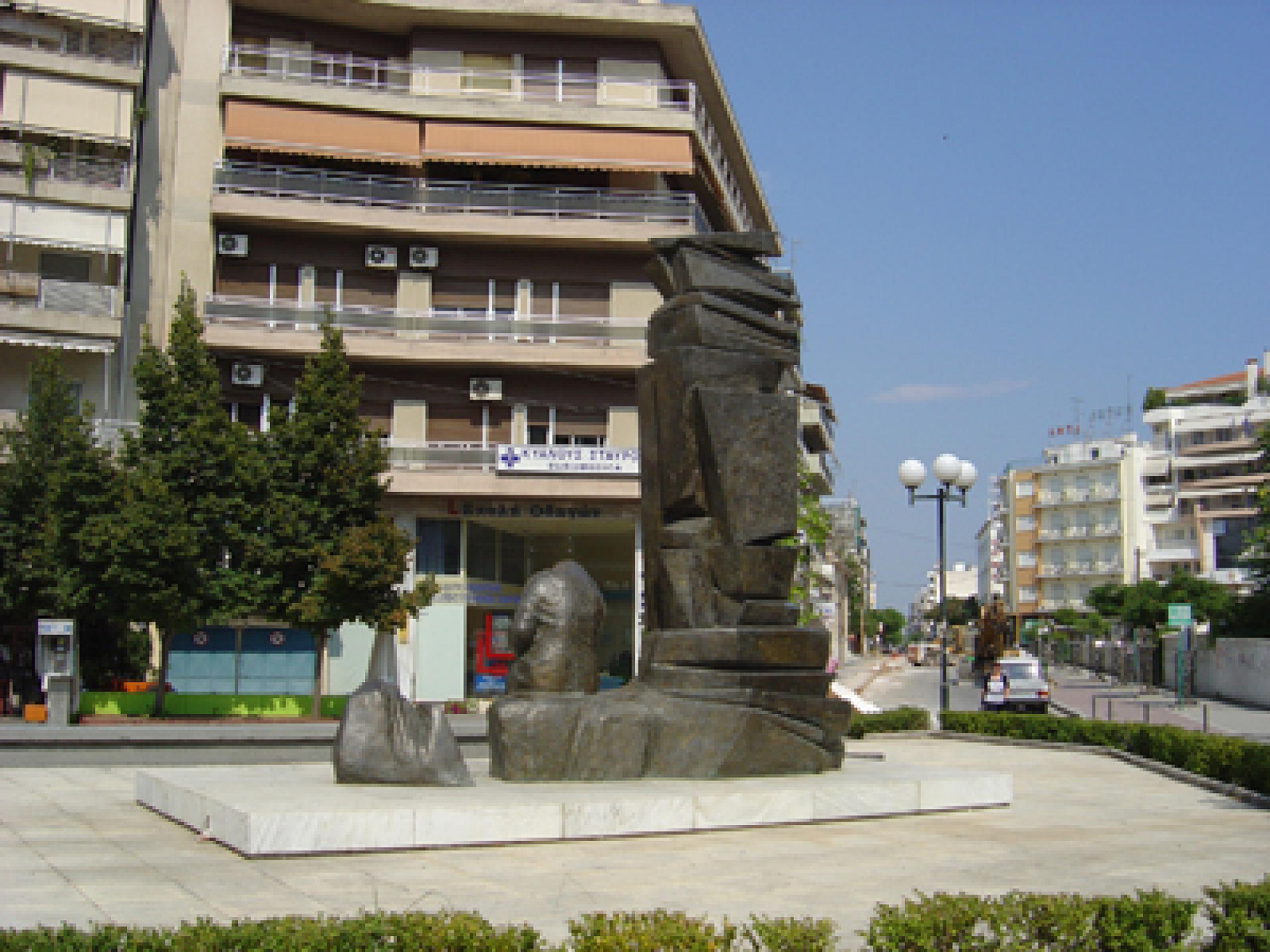
Larissa, located in Northern Greece, was one of the starting points for deportations to the Auschwitz-Birkenau death camp in 1944. A memorial honours the »Jewish martyrs of the Holocaust«.
History
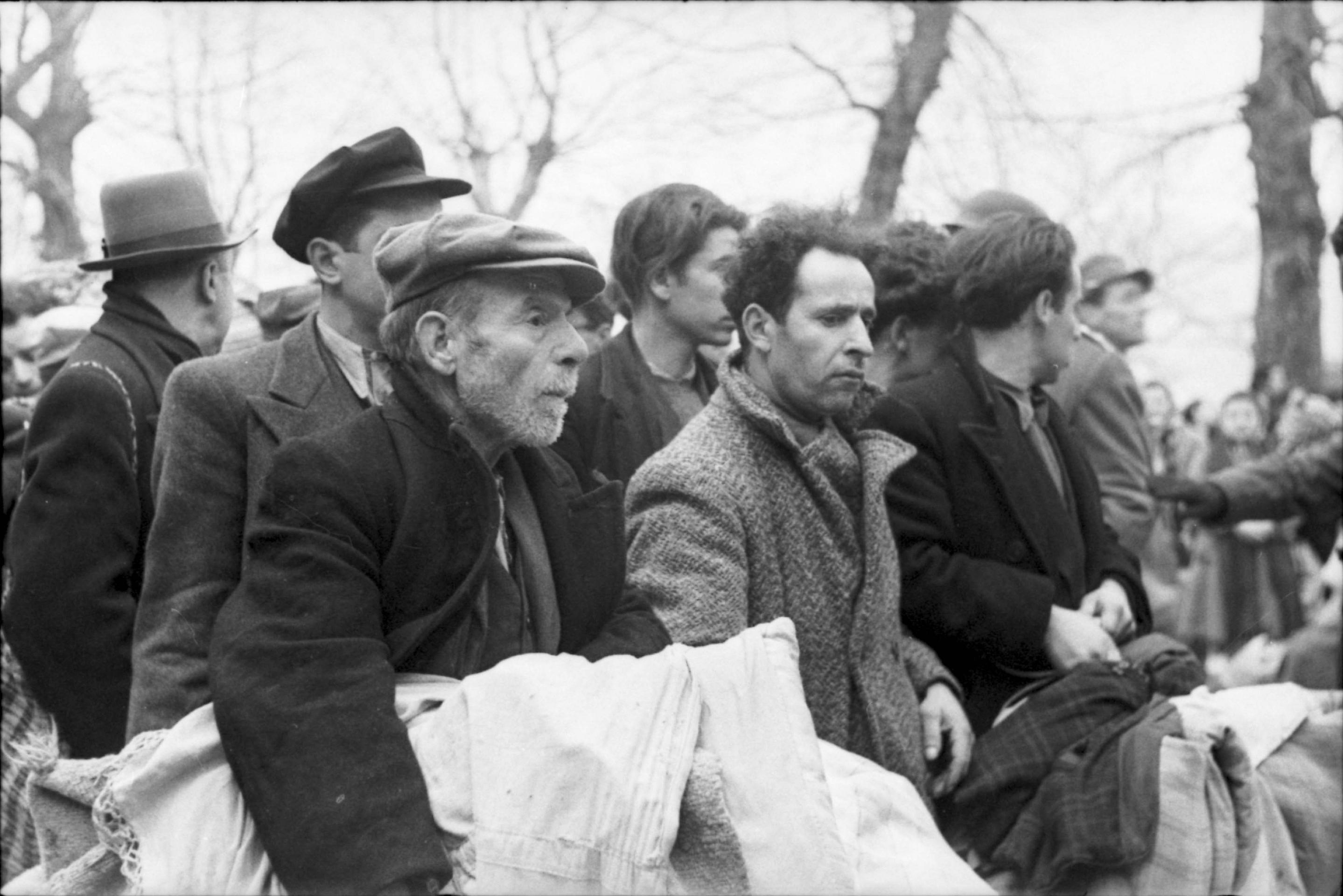
Larissa, the capital of the Thessaly periphery, came under Italian occupation after the German invasion in 1941. The city was home to about 1,120 Jews. Following the armistice between Italy and the Allies in September 1943, the Wehrmacht took control of the territories previously under Italian occupation. Soon, the National Socialists began registering all Jewish residents. Various people and institutions, including partisans, Jewish communities, municipal administrations and the orthodox church tried to warn the Jews in Thessaly and help them flee. Well over 500 managed to escape from Larissa to the mountains, where they were found refuge with the National Liberation Front (EAM) and the Greek People's Liberation Army (ELAS), both partisan organisations. 225 Jews from Larissa followed the order issued by higher SS and police leader Jürgen Stroop and showed up for registration. Security police (SP) and security service (SD) as well as members of the Wehrmacht arrested them in their houses in the night of March 24/25, 1944, and brought them to a collection camp which had been set up in an automotive depot in the city. Jews from numerous towns in the regions of Epirus and Thessaly were assembled by Stroop's orders, among others from the cities of Volos, Trikala, and Ioannina. The Jews had to hand their valuables over to the guards. A deportation train carrying 1,300 Jews, which had departed from Athens on April 2, 1944 and was headed for Auschwitz-Birkenau, made a stopover in Larissa. The National Socialists coupled another fifty cattle cars onto the train and forced the Jews who had assembled in Larissa to board them. The journey to the death camp lasted nine days. Many died along the way, especially elderly people, unable to take the exertions of travelling in inhumane conditions in the crowded cattle cars.
Victims
The deportation train from Athens consisted of a total of 84 cars upon its departure from Larissa. Over 5,000 Jewish men, women and children were deported to Auschwitz-Birkenau. This was the largest transport the National Socialists organised from Greece to the death camps.
The Wehrmacht invaded the Kingdom of Greece in April 1941. The country was divided up between the Third Reich and its Axis allies Italy and Bulgaria. The occupying powers exploited Greece’s agricultural resources as well as the country’s limited industrial capacity. This resulted in a famine in the winter of 1941-42, which probably claimed the lives of over 100,000 Greeks. Jewish life in occupied Greece was dominated by expropriation, public abuse, arrests, murder and forced labour. Between March 15 and mid-August 1943, around 46,000 Jews were deported in 19 transports from Thessaloniki to the Auschwitz-Birkenau and Treblinka extermination camps. These transports were organised by an SS special commando with the support of the local military administration. At the beginning of March 1943, the Bulgarian occupation authorities in the Greek province of Thrace had already arrested over 4,000 Jews, who were subsequently deported to Treblinka by the SS. Following the capitulation of Italy in autumn 1943, the Wehrmacht advanced to the Italian-occupied part of Greece. In March 1944, the SS and locals deported over 8,500 Jews from Athens, Ionnina and Rhodes to Auschwitz-Birkenau. Italy had previously refused to deport these Jews. Around 59,000 Greek Jews were murdered in the Holocaust.
The German occupation regime met with growing Greek resistance. The Wehrmacht responded in 1943-44 with numerous brutal attacks, reprisals and mass shootings. Entire villages were destroyed, for example the villages of Kalavrita and Distimo. Over 100,000 Greek civilians are believed to have died in the process.
The period from 1944, whilst Greece was still occupied by Germany, saw conflict between right-wing royalists and left-wing communist groups in the country. These conflicts escalated into a civil war from 1946-49. The royalists won this war with the support of Great Britain and the USA and adopted a strict anti-communist approach. Faced with a likely left-wing election victory in 1967, the military staged a putsch, seized power, and governed the country for the next seven years. The left-wing’s role in the resistance during the Second World War was only acknowledged following Greek accession to the European Economic Community in 1981. With the fall of communism in 1990-91 the divisions in Greek memory were finally overcome, allowing a confrontation with the 1946-49 civil war.
To a large extent, the Greek culture of memory continues to be dominated by remembrance of the resistance against the Germans. Memorial inscriptions often use the term »Holocaust« to refer to the murder of the civilian population, for example the »Holocaust of Kalavrita«. For a long time it was left to the Jewish community to remember the 85 percent of Greek Jews who were murdered in the Holocaust. Until 1997, the country’s only Holocaust memorial was to be found in the Jewish cemetery in Thessaloniki, the town with the largest Jewish community in Greece before the war. A Holocaust memorial was inaugurated in the centre of Saloniki in 1997 in conjunction with the ceremonies marking the town’s status as European City of Culture that year. In 2005, the memorial was moved to another site in the city. In 2010, a new holocaust memorial was inaugurated in Athens as well. Currently, a major holocaust museum is under construction in Thessaloniki, to which Germany contributes a sum of 10 million euros.
Remembrance
Today, Larissa is again home to a large Jewish community which has its own primary school, cultural centre and cemetery. In 1982, a square in the city centre was renamed to »Square of Jewish Martyrs of the Holocaust«. The Jewish community and municipal authorities erected a Holocaust memorial on this square in 1987. The bronze sculpture, depicting a stele and a woman whose head is bowed in mourning next to it, was designed by sculptor Giorgos Hoularas.