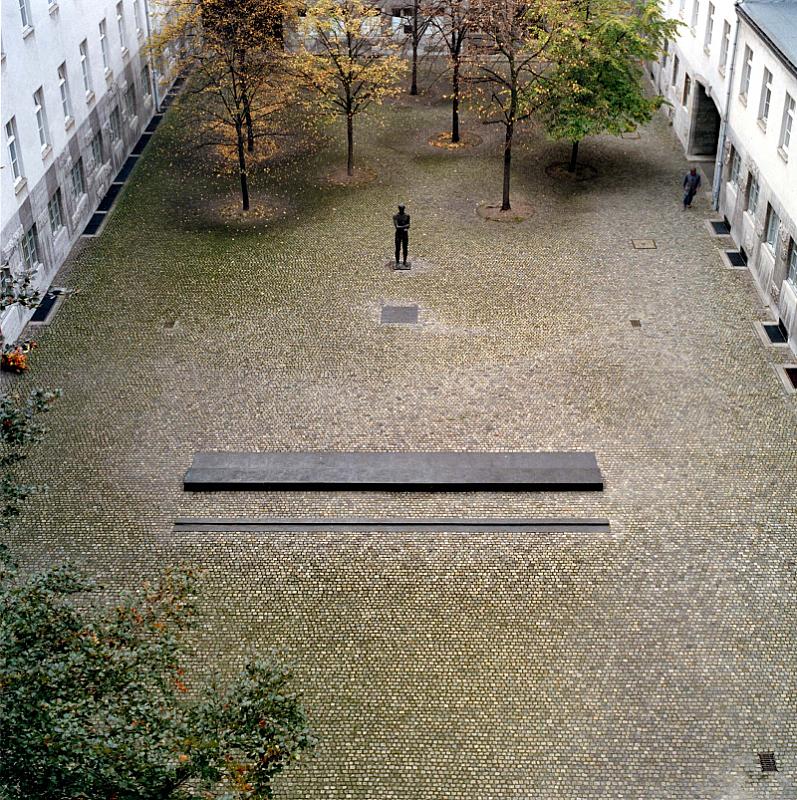
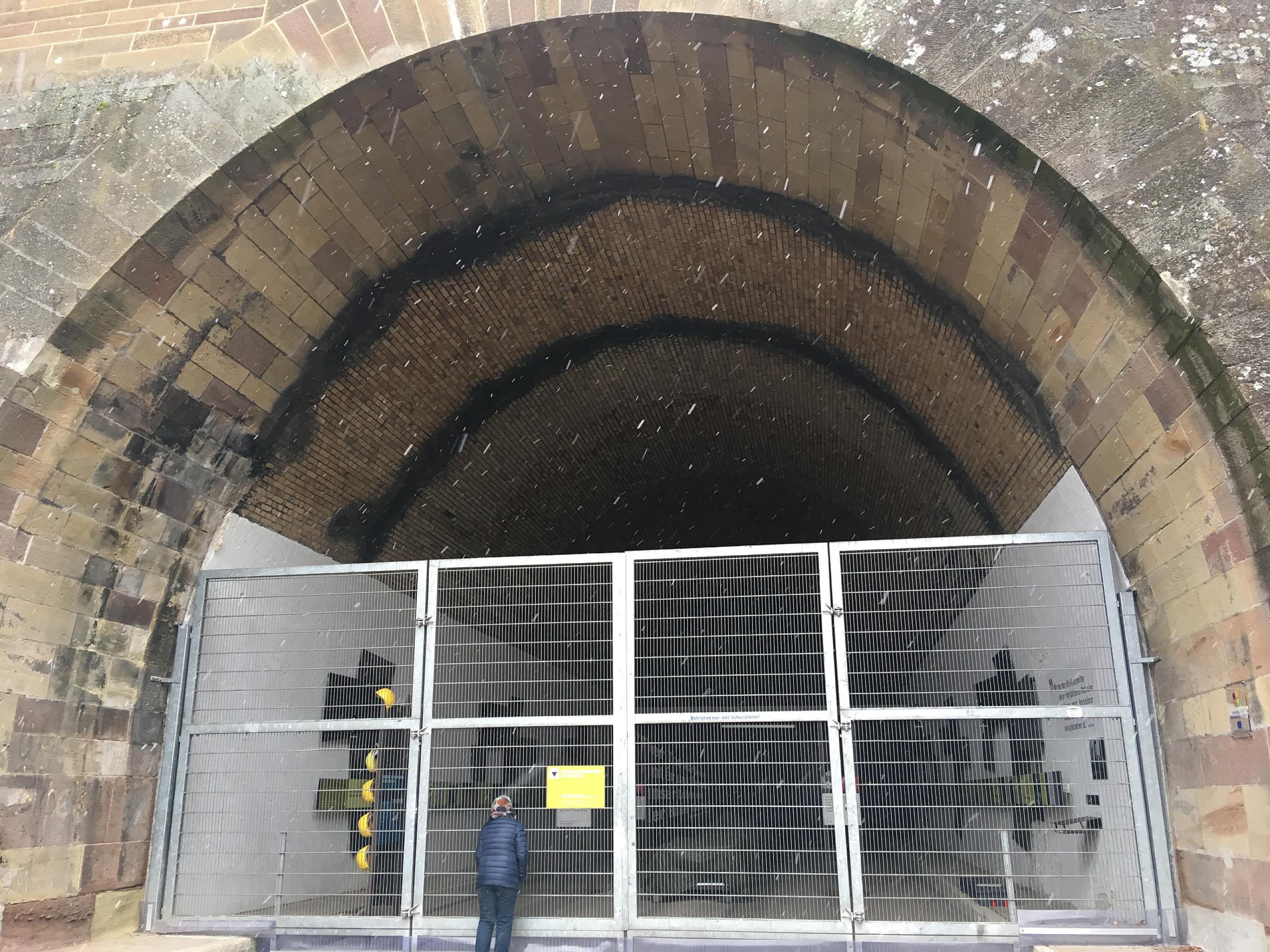
From spring 1944 to April 1945, there was an SS-run subcamp of the Natzweiler Concentration Camp in Leonberg. During this one year, a total of 5,000 male prisoners from 24 European nations worked in the two bomb-proof tubes of the Engelberg tunnel, the first motorway tunnel of the Reich. An exhibition on the history of the Leonberg Concentration Camp has been on display at this site since 2008.
History
The first Engelberg Tunnel near Leonberg was opened to traffic on 5 November 1938 after three years of construction. It was part of the Reichsautobahn route 39 and, with a length of 318 metres and two tubes, was the second motorway tunnel in Germany after the Nasenfel Tunnel (opened on 30 October 1937; now the A8).
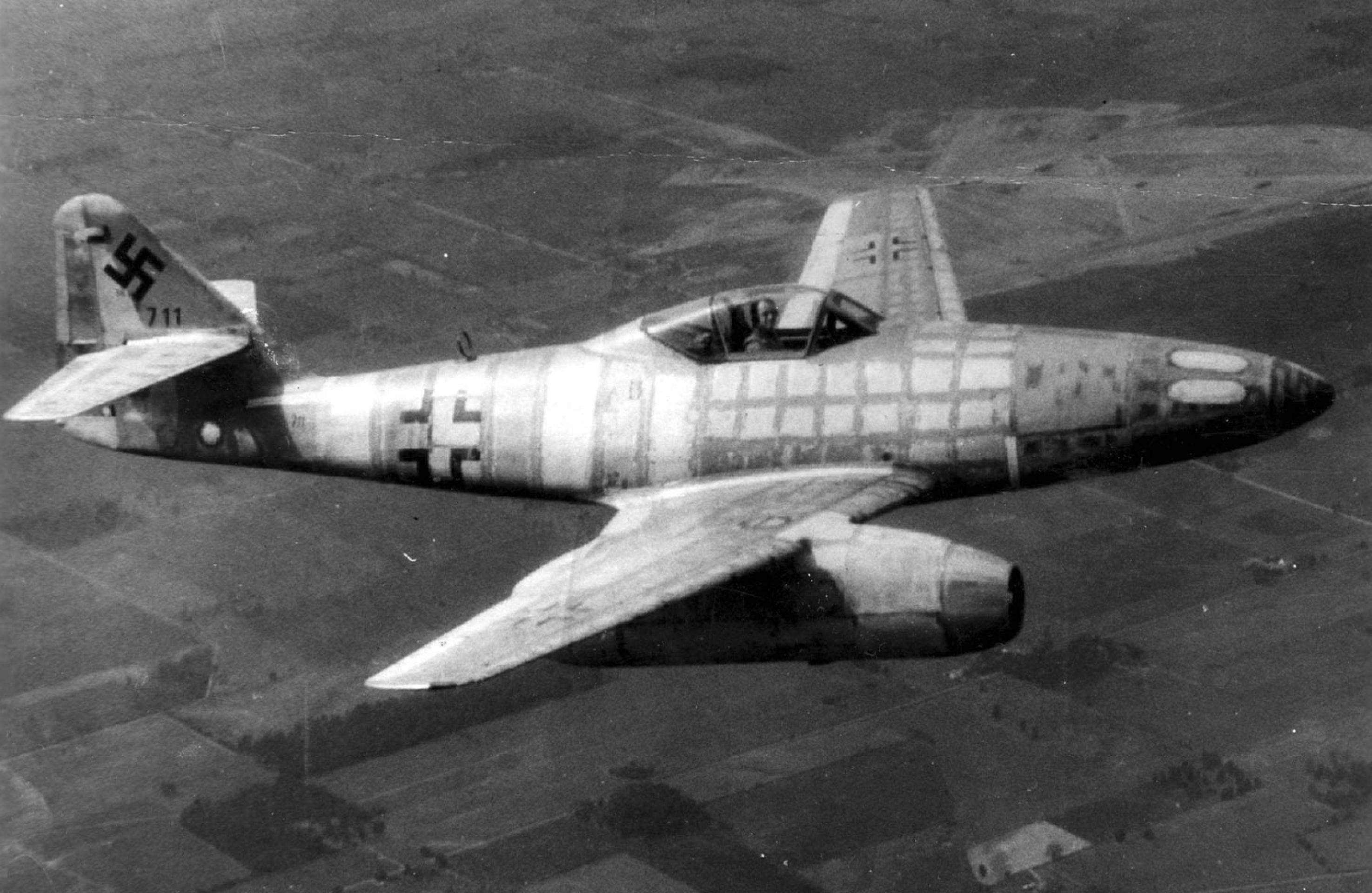
During the Second World War, the old Engelberg Tunnel was used as a Messerschmitt AG plant from 1944 as part of the underground relocation of German armaments production. Around 3,000 prisoners brought from the Natzweiler-Struthof Concentration Camp in Alsace to the Leonberg subcamp assembled aircraft wings for the Me 262 in 12 to 18-hour shifts, for which purpose a false ceiling was installed to increase the production area to 11,000 m². Shortly before the end of the war, the machines were dismantled and the tubes were finally blown up on 15 April 1945.
_Ausschnitt-large.jpg)
_Ausschnitt-large.jpg)
Victims
A total of around 5,000 prisoners passed through Leonberg concentration camp. They were mainly used to work in the Messerschmitt sub-plant »Presswerk Leonberg« in the two walled-up motorway tunnels. From the start of production in July 1944, their numbers rose steadily to 3,200 by January 1945. This meant that the two camps were completely overcrowded. The deportees came from 24 European countries, mainly Poland, the Soviet Union, Italy, France and Hungary. Seven per cent of the prisoners were German and at least a quarter were Jewish.
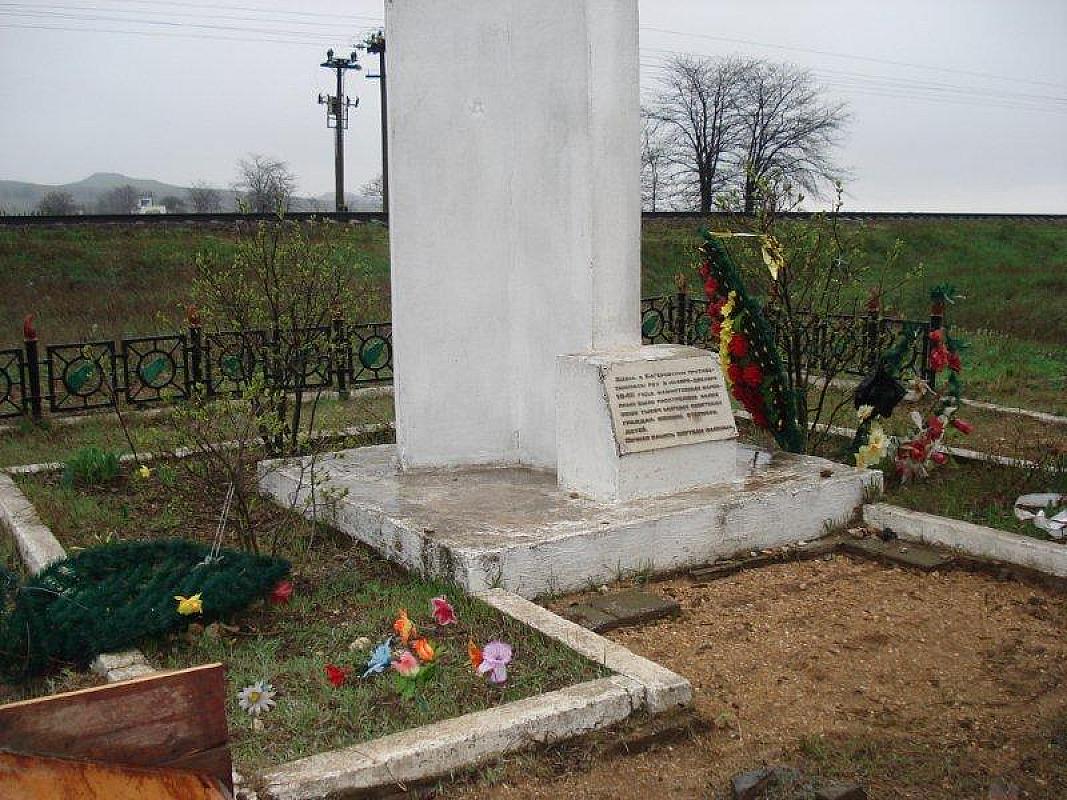
A total of 389 deaths were recorded, not including the much larger and unknown number of deaths among those who were deported to the Vaihingen/Enz, Dachau and Bergen-Belsen camps as exhausted prisoners. The Leonberg camp was disbanded in mid-April 1945, a few days before the French invasion. The 2,700 prisoners who were still alive were sent on a death march or a death journey towards Bavaria, partly on foot and partly by train. There they were to be deployed again in Messerschmitt factories and construction sites. Documents prove that 406 prisoners from Leonberg died as victims of the death marches. The actual number of prisoners who died is undoubtedly many times higher.
Remembrance
In a trial before the French Military Tribunal in Rastatt from 12 to 19 April 1948, two members of the guard teams, four prisoner functionaries (camp elders and Kapos as heads of work squads) and three senior employees of the Messerschmitt company were given long prison sentences, in one case the death penalty. The death sentences were later commuted to prison sentences and the prison sentences were shortened after being partially served. Only one of the four camp leaders was caught and brought to trial.
In March 1999, a concentration camp memorial initiative was founded in Leonberg, which contacted former concentration camp prisoners who were still alive throughout Europe and two years later was able to present the results of an extensive study entitled »Concentration camp and forced labour in Leonberg«. In the same year, a 1.5-kilometre »Path of Remembrance« was laid out through the town, along which visitor groups and school classes are guided today or can explore the history of the site on their own. The trail is signposted with six information boards in German, English and French.
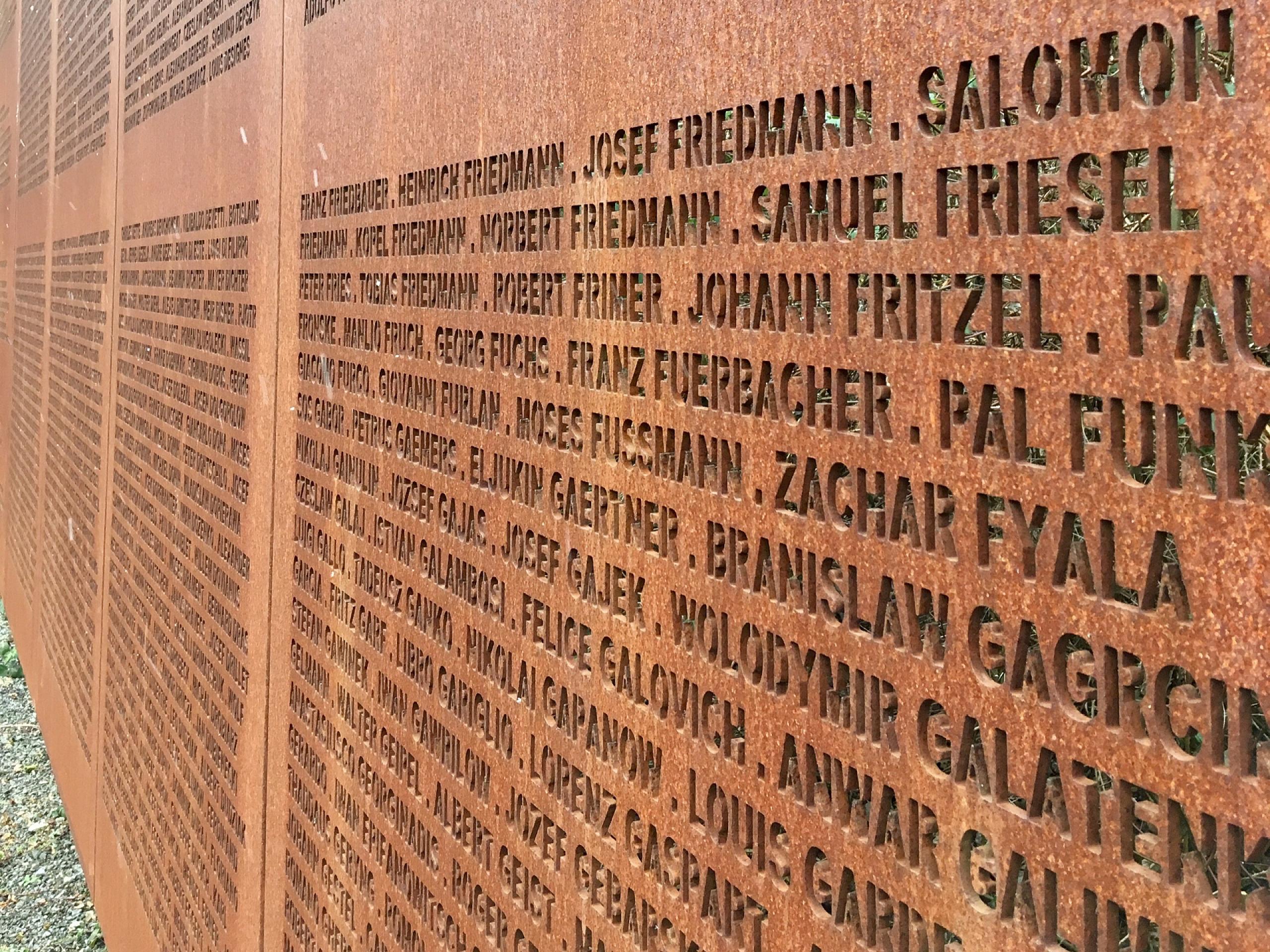
Since 2008, the preserved part of the Old Engelberg Tunnel has housed an exhibition on the history of the Leonberg Concentration Camp. In front of the tunnel, on 8 May 2005, the concentration camp memorial initiative erected a memorial designed by Johannes Kares, an artist from Tübingen, in the form of a 25-metre-wide and three-metre-high steel wall engraved with the names of 2,892 concentration camp prisoners as well as 16 Gestapo prisoners and forced labourers known at the time. In April/May 2013, the »House of a Thousand Names«, also designed by Johannes Kares, was erected on the opposite side in front of the tunnel. As part of a two-week youth camp, 150 young people engraved the approximately one thousand names of the last prisoner transport from Flossenbürg to Leonberg by hand on metal plaques.
_Ausschnitt-large.jpg)
Possibilities
»Path of Remembrance« walking tour through Leonberg, exhibition in the Old Engelberg Tunnel, group tours, offers for school classes, teaching materials, publications, library
Open
The documentation centre in the Old Engelberg Tunnel is open every Sunday from 2 p.m. to 5 p.m. from March to November
Guided tour of the exhibition from 1. 15 p.m. to 2 p.m. on the first Sunday of every month
Contact
https://www.kz-gedenkstaette-leonberg.de
info@kz-gedenkstaette-leonberg.de
+49 (0)7152 41975
KZ-Gedenkstätteninitiative Leonberg e.V.
Untere Burghalde 49
71229 Leonberg