In Nassau-Scheuern, a so-called transit institution was established by the National Socialist »T4«-office. Mentally ill and handicapped people were gathered here from 1941 on and transferred to »T4« killing centres. The »Lest We Forget« Memorial has commemorated the victims of »euthanasia« on the premises of the Scheuern hospitals since 2000.
History
Under the National Socialist regime the term »euthanasia« stood for the murder of thousands of mentally and physically handicapped people. The murder was planned and organised by a central office which directly reported to Adolf Hitler. The office was code named »T4« in reference to its postal address in Berlin's Tiergartenstraße. At first, toddlers up to the age of three fell victim to »euthanasia«, later older children and youths were affected. Beginning 1940, handicapped adults and ill people were included in the scheme under the new code »Action T4«. During the initial phase, people were killed by malnourishment, poison or medications. From January 1940, more and more »T4« killing centres began operating gas chambers.
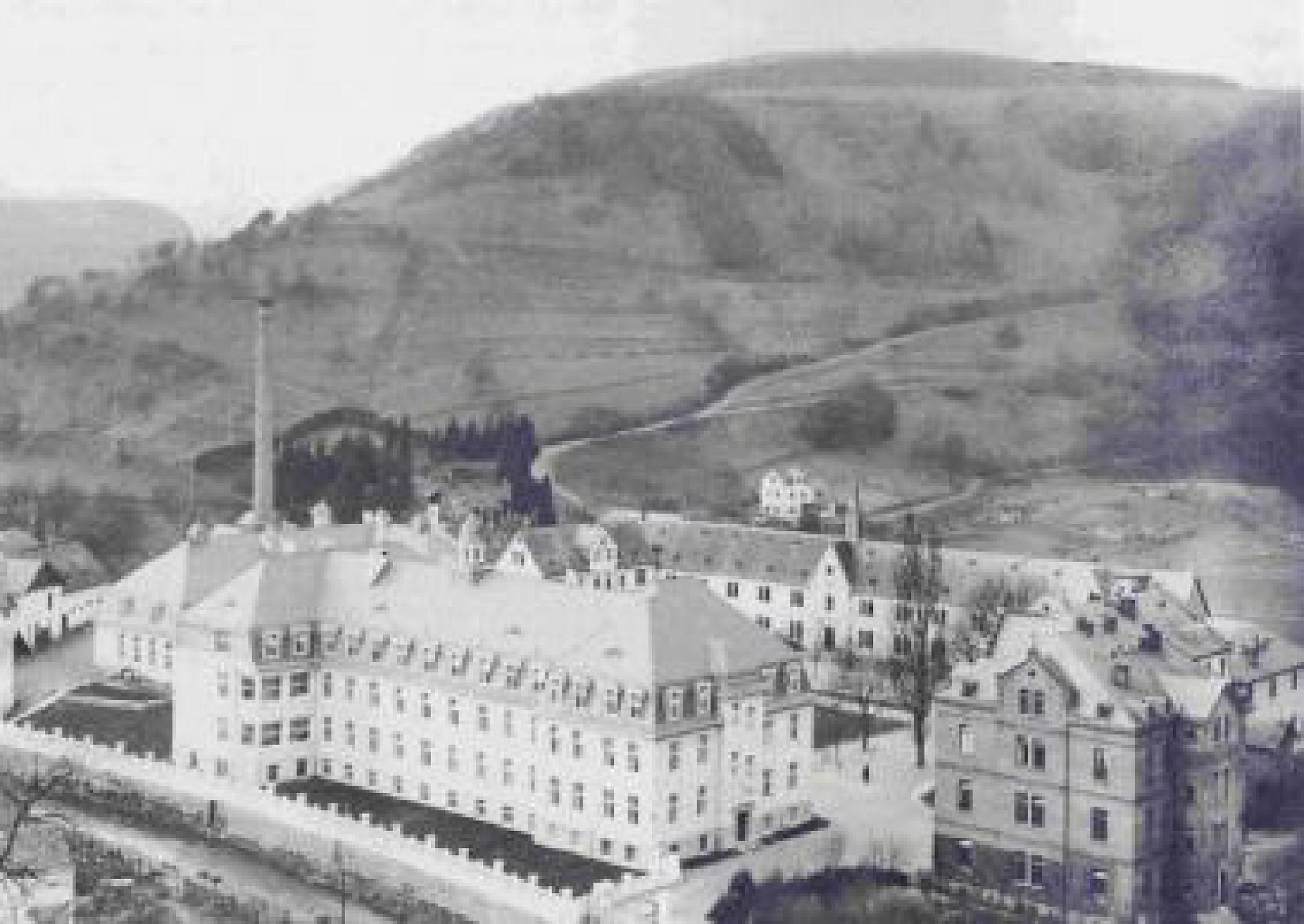
The transfer of patients deemed »unworthy of living« to so-called transit institutions was to ensure better concealment of the »Action T4«. After several weeks in transit institutions, the handicapped and mentally ill patients were taken to one of six killing centres by the Gemeinnütziger Krankentransport GmbH (GEKRAT; »charitable ambulance service«). The hospital in Scheuern too became a »euthanasia transit institution. Within a few months, the hospital's patients were transferred to »T4« killing centres in order to make room for »euthanasia« victims from other hospitals. The first collective transports from other hospitals arrived in Scheuern in April 1941. After a few weeks, the GEKRAT transported the patients to Hadamar in camouflaged grey buses. That same day, many of them were killed in gas chambers by hospital personnel. Even after the »euthanasia« campaign had officially been put to a halt in August 1941, doctors and medical staff continued killing patients as part of the »euthanasia« programme by poisoning them, giving them overdoses of medications and starving them to death. From January 1943 on, personnel at Scheuern continued putting together transports headed for Hadamar and other killing centres, as instructed by the »T4« office.
Victims
Between March and the end of April 1941, the GEKRAT transported over 300 patients from the Scheuern hospital to the Hadamar and Pirna-Sonnenstein killing centres. The victims had previously been patients at Scheuern. In total, the medical staff of the killing centres murdered about 1,500 physically and mentally handicapped as well as mentally ill people who were brought to the »T4« centre via the Scheuern transit institution.
The entry to power of the National Socialists in 1933 heralded the state persecution of opponents of the regime, Jews, Roma – who were classed as »gypsies« -, the sick and many other groups. For the first time, anti-semitism became part of the government policy of a modern state and the persecution of all groups was progressively heightened. The process was characterised by the interplay between state regulation, violence from supporters of the regime and rabble-rousing propaganda from the press. The acts of terror against the Jews in November 1938 (»The Night of the Broken Glass«), culminating in around one hundred deaths, marked the prelude to the complete exclusion and murder of the Jewish minority.
With the outbreak of the Second World War in September 1939, large parts of Europe fell under German control. In Eastern Europe in particular a multi-tiered system of camps and extermination sites was established, in which the SS murdered up to six million Jews, among them around 165,000 German Jews. It is estimated that around seven million Germans lost their lives in the war, including almost 3.5 million civilians. Around 28 million residents of the occupied Soviet Union (both soldiers and civilians) and three million non-Jewish Poles met a violent death. These groups are still barely commemorated in Germany.
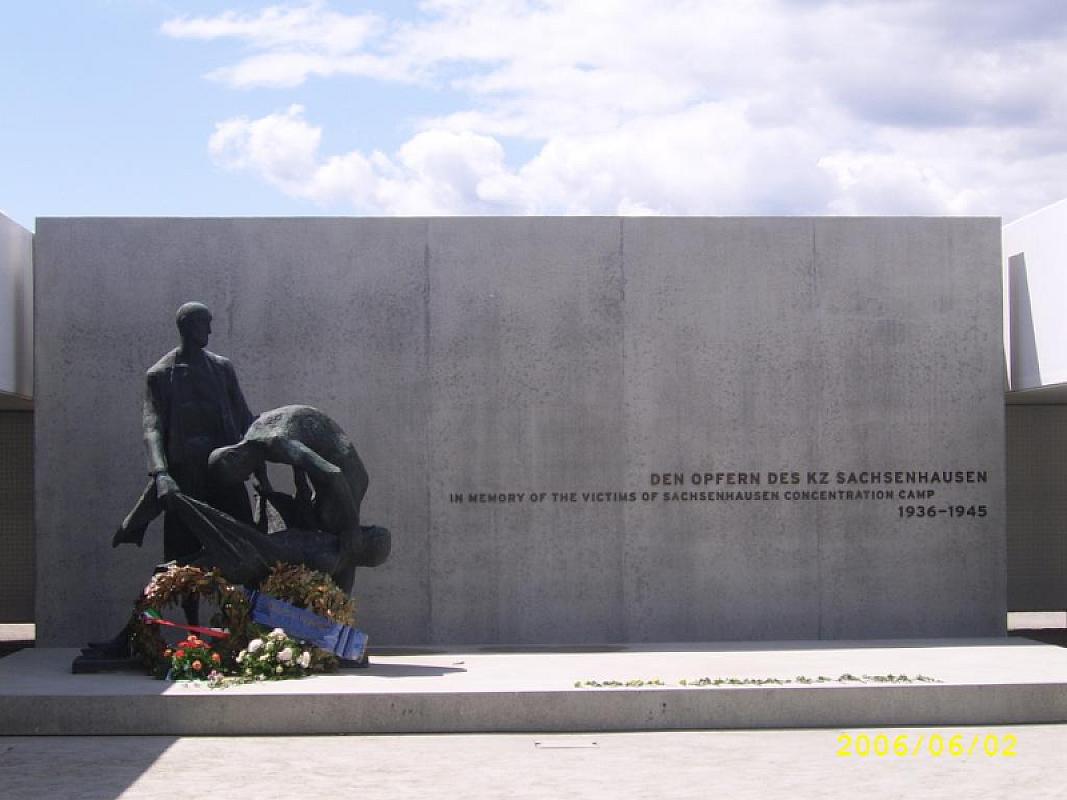
Germany came under Allied occupation in 1945 and 1949 saw the foundation of the German Democratic Republic (GDR) and the Federal Republic of Germany (FRG), who had very different cultures of remembrance. The GDR profiled itself as an »antifascist« state. The former concentration camps at Buchenwald, Ravensbrück and Sachsenhausen became »National Memorials« and primarily documented the communist resistance during the war.
In the Federal Republic, the dominant memory was initially of the victims of Allied bombing raids and those who had fled or been expelled from their homes in the former territory of the Third Reich. It was left to specific groups to remember Nazi persecution, the Holocaust or the resistance. With the exception of the war crimes trials, there was no public discussion of perpetrators or involvement in crimes. However, the situation was to change in the mid-1960s, when the statute of limitations for murder was lifted following a lengthy debate. Also during this period, memorial sites were established at former concentration camps (1965: Dachau and Neuengamme; 1966: Bergen-Belsen) and the German Resistance Memorial Centre was opened in 1968 in West Berlin. However, it was not until the 1980s that a diverse and often small-scale landscape of memory developed as the result of local initiatives.
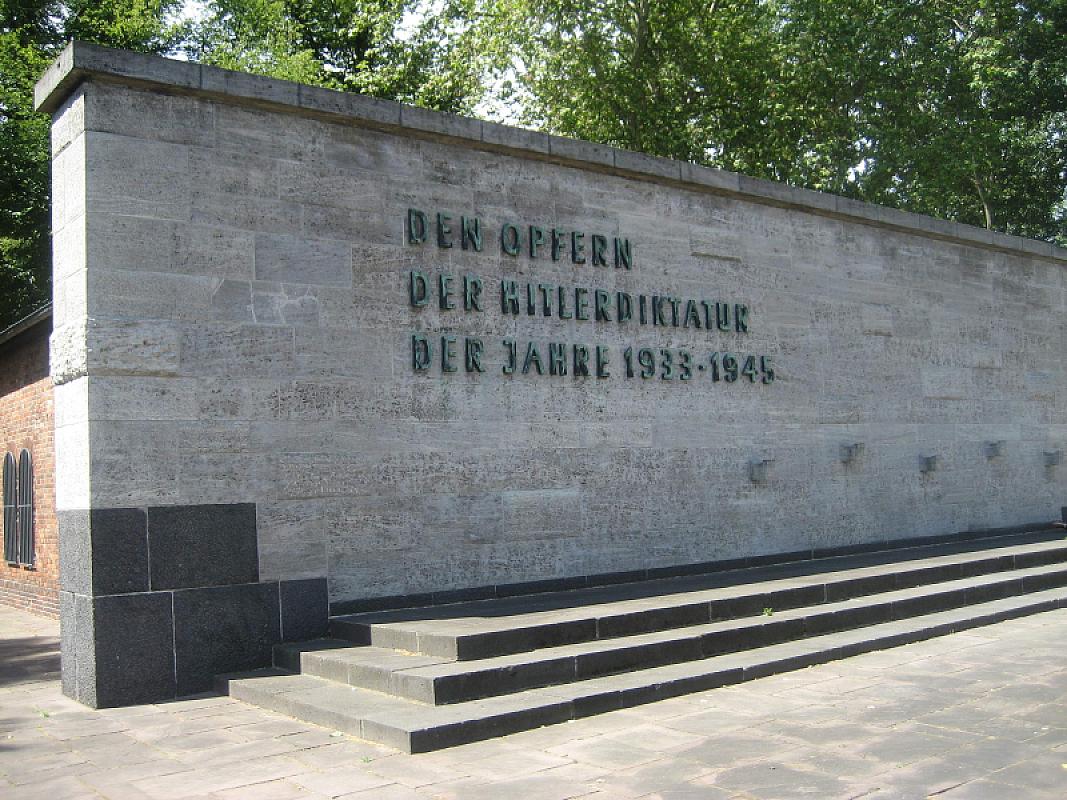
Following German unification in 1990, a national memorial site concept was developed and there was a major review of German sites of memory. The Memorial to the Murdered Jews of Europe in Berlin was inaugurated in 2005. The Topography of Terror, a comprehensive documentation of National Socialist crimes and perpetrators, has opened with a new centre in May 2010; the documentation centre »Flight, Expulsion, Reconciliation« followed suit in 2021. In the meantime, central memorials in Berlin have been erected to commemorate further groups of Nazi victims as well: the murdered Sinti and Roma, the patients murdered in the context of the Nazi’s »Euthanasia« killings and the persecuted homosexuals.
The German victims of National Socialist terror in the former Eastern territories of the Third Reich were forgotten by both German states after the end of the war. For decades, memory of these victims was only preserved by West German associations for Germans born in these territories and it mainly excluded the period from 1933 to 1945.
Remembrance
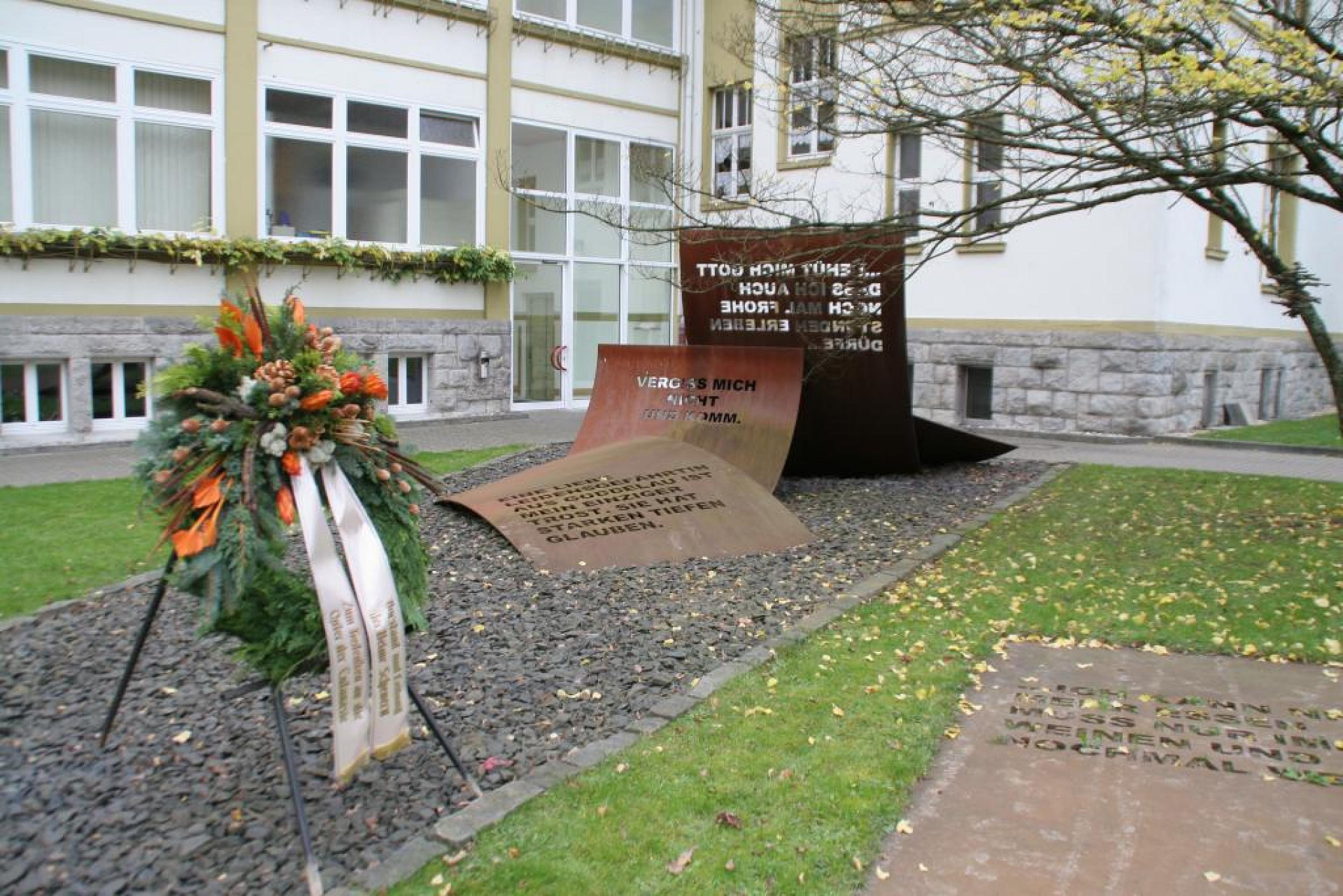
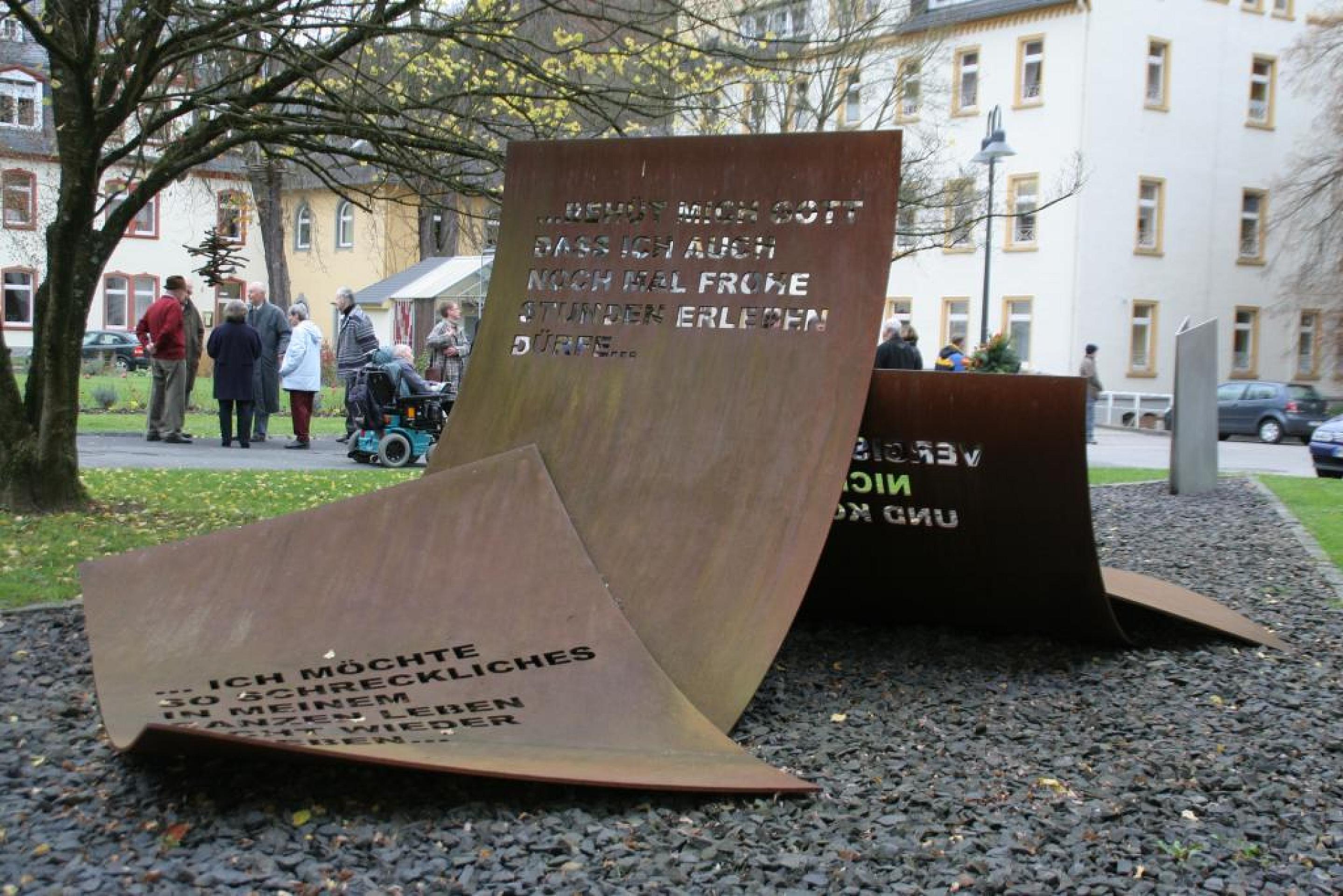
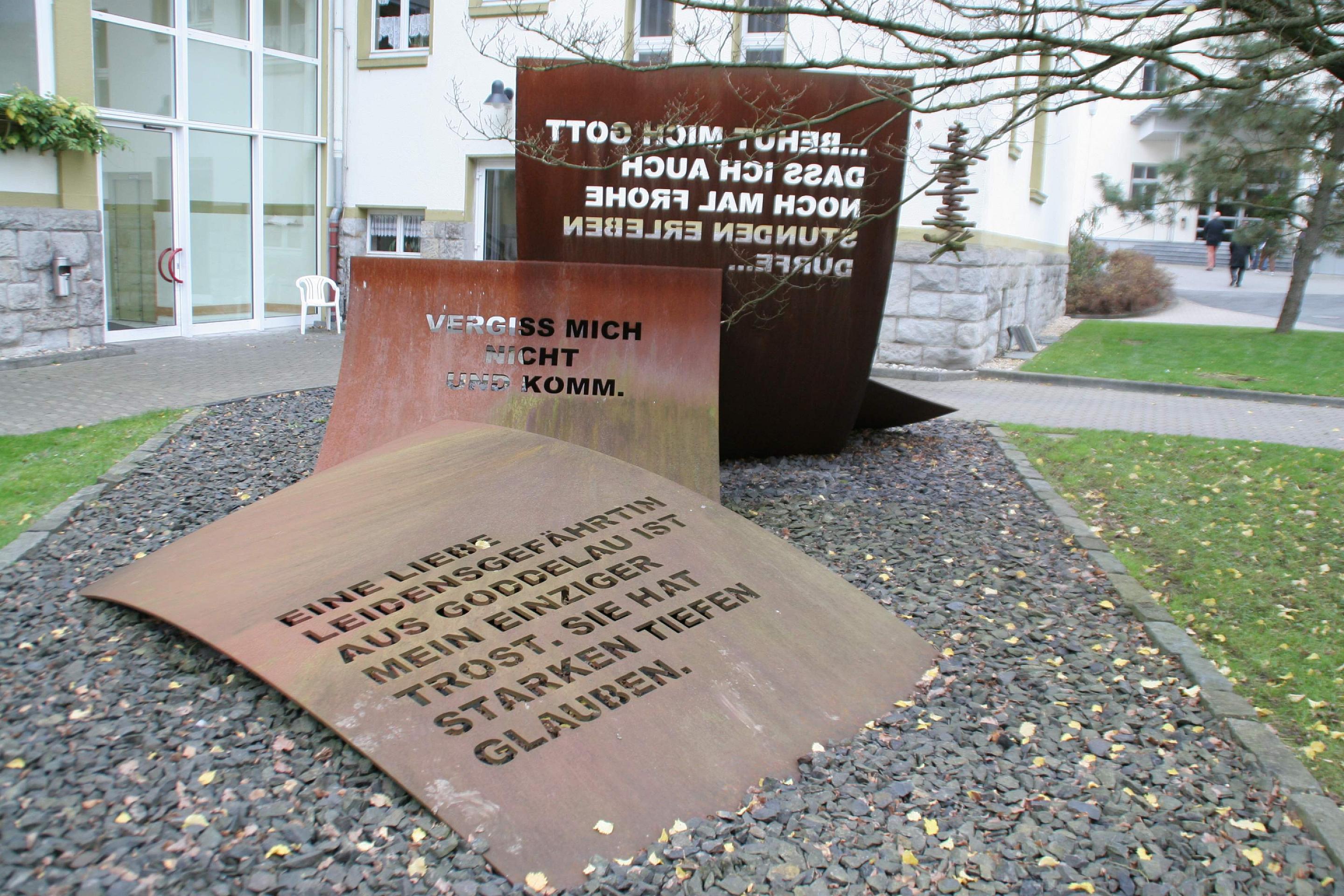
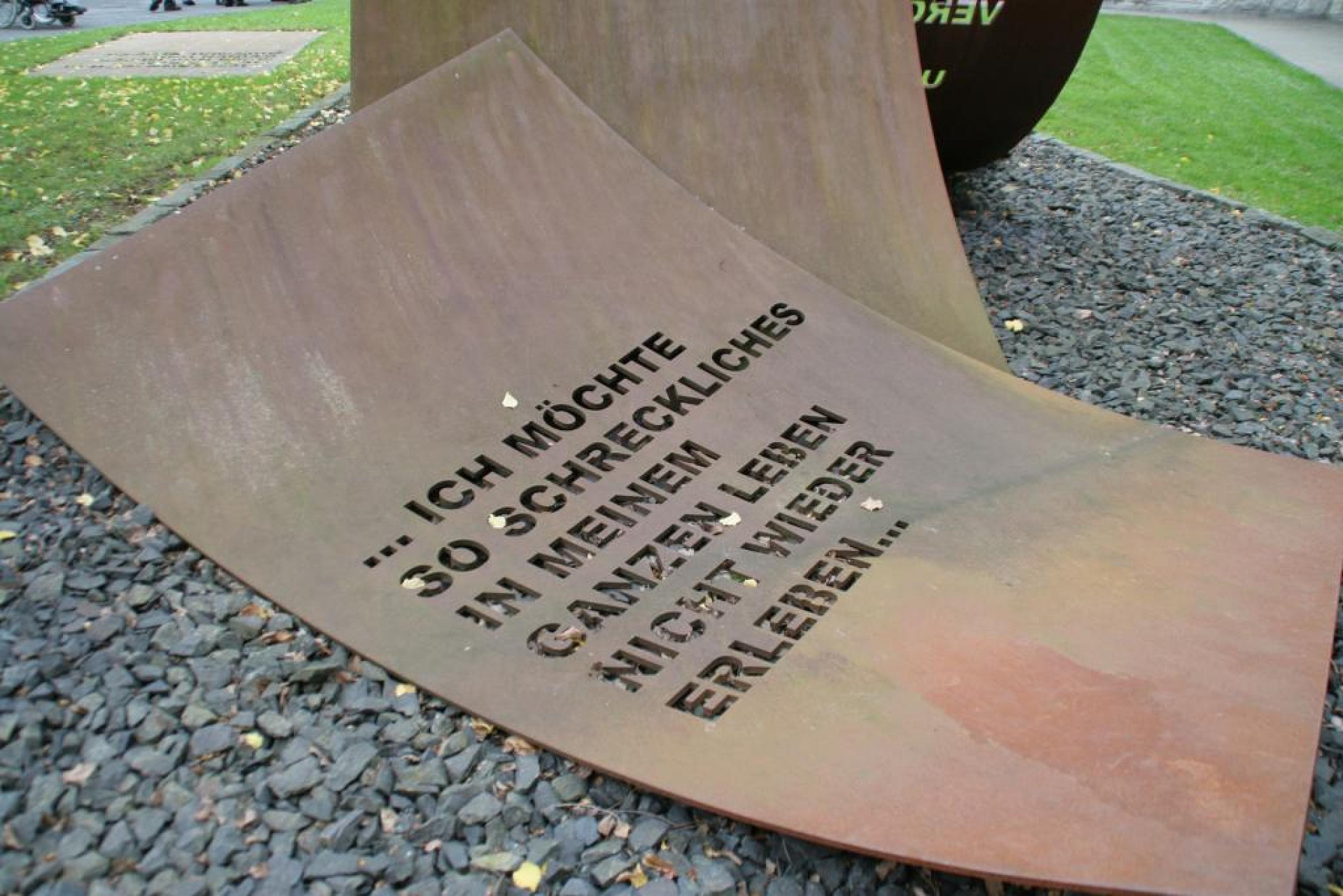
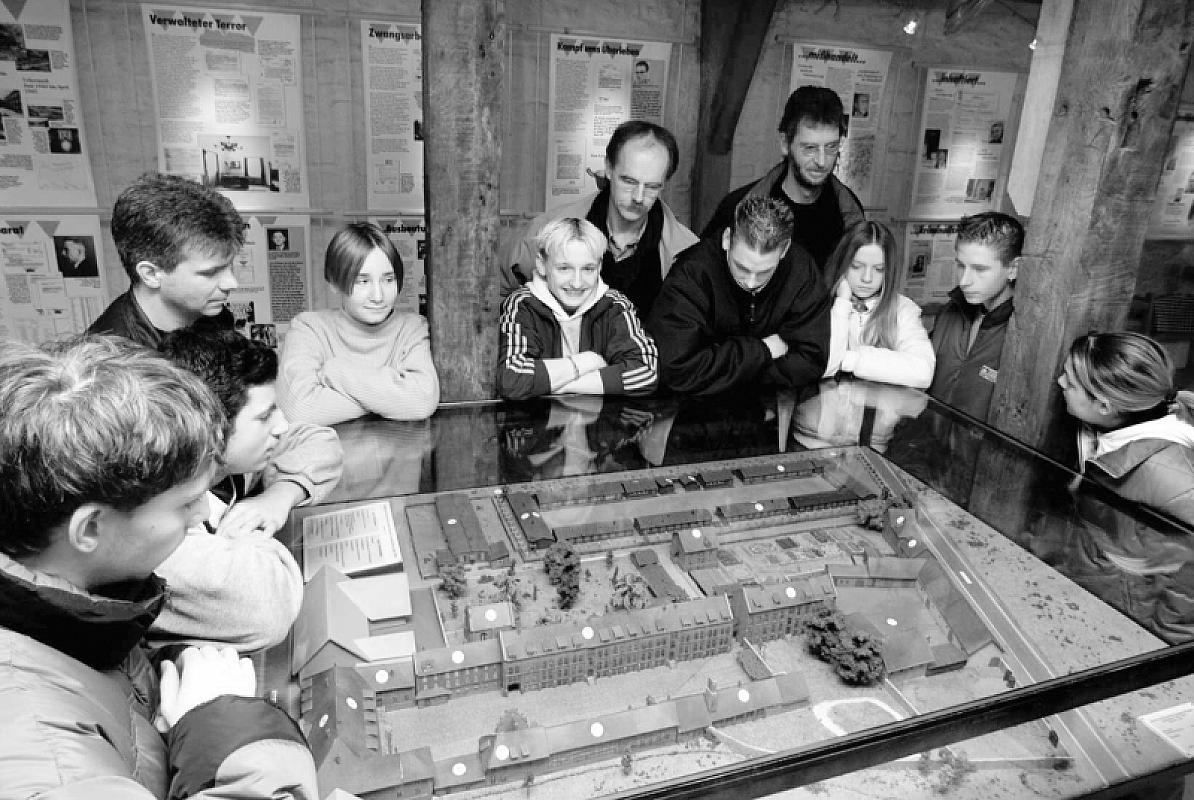
In 1999, the board of the Scheuern hospitals foundation decided to erect a memorial to the victims of the »euthanasia« crimes and to create a documentation of the topic. The memorial, designed by artist Christian Rudolpf, consists of five larger-than-life letterheads made of rusting steel. Stamped onto them are quotes from letters patients sent to their relatives. The hospital personnel never posted the letters. The memorial was dedicated on November 19, 2000, and can now be visited along with the exhibition displayed on the premises of the Scheuern hospitals.