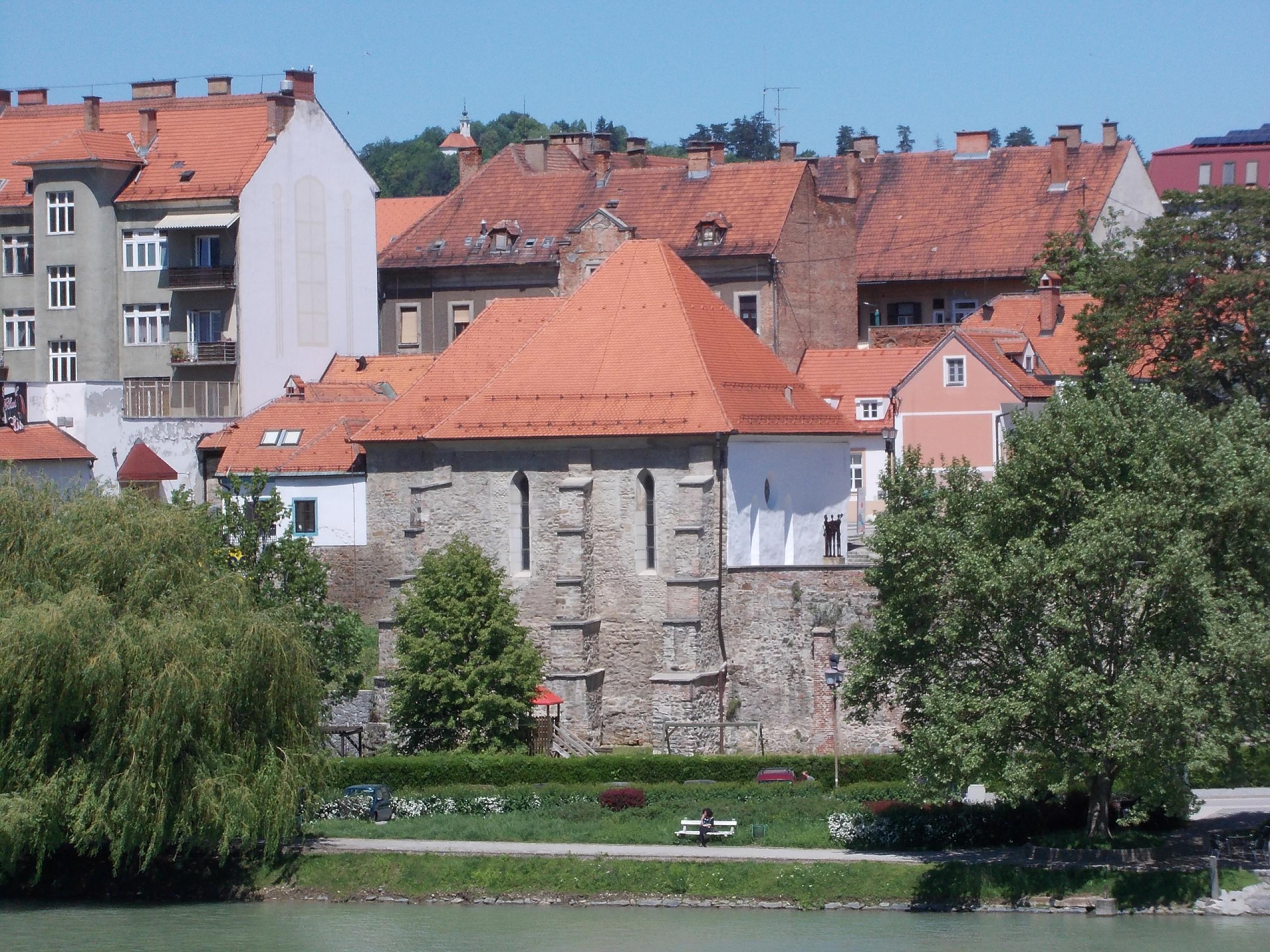
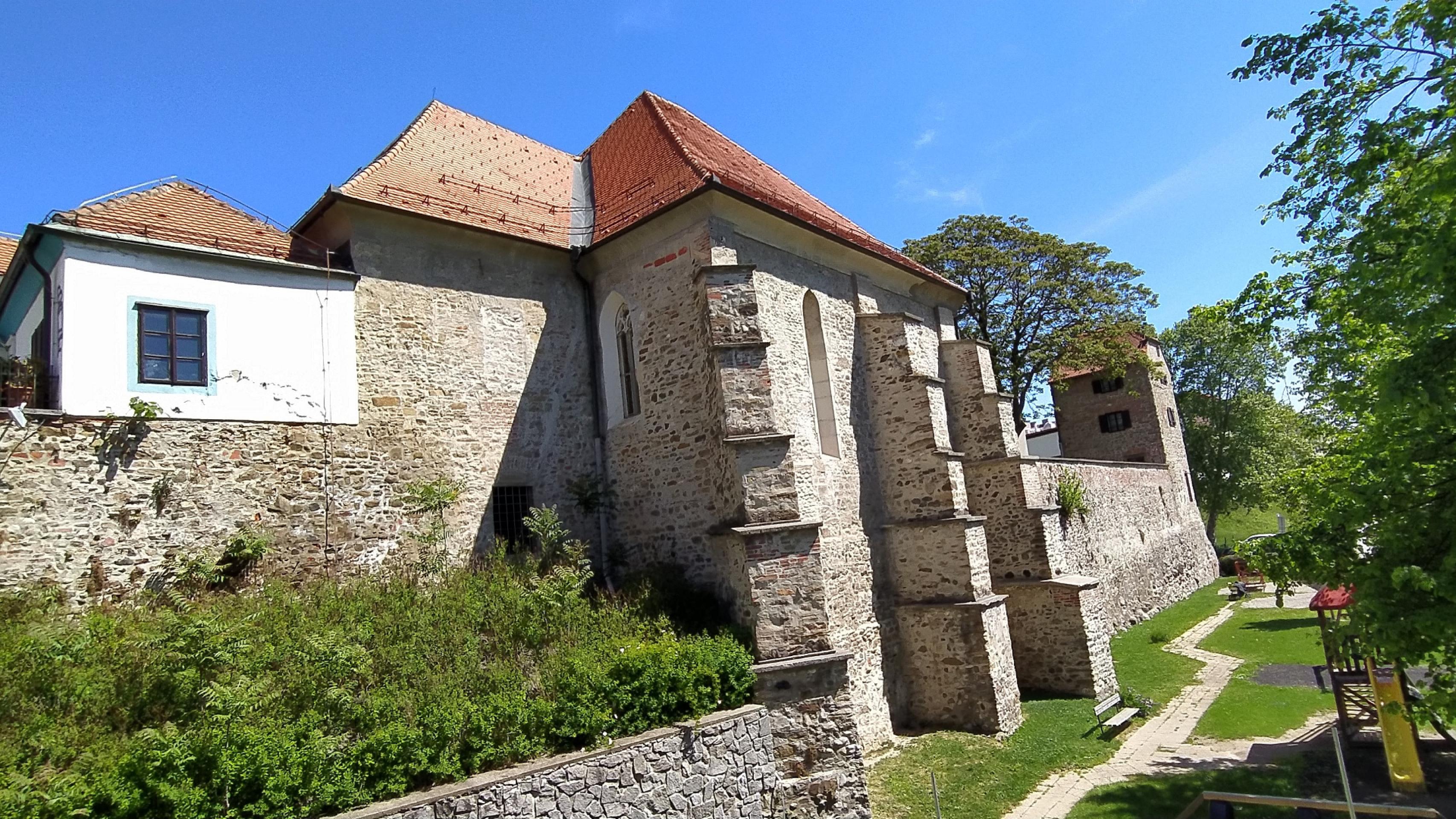
The restored synagogue in Maribor (German: Marburg an der Drau) is one of the oldest preserved synagogues in Europe and the most important monument to Jewish culture in Slovenia. The building, which is over 700 years old, is now a cultural centre that hosts exhibitions, concerts, literary evenings and lectures.
History
The synagogue was first mentioned in 1354, but was probably built at the beginning of the fourteenth century. The rabbi's house, the Talmud school, a Jewish cemetery and a mikvah (ritual bath) were once located nearby. However, these buildings are no longer preserved. Around 1390, Rabbi Israel ben Patachia Isserlein was born in Maribor, who became one of the most influential Jewish personalities in the Holy Roman Empire in the fifteenth century.
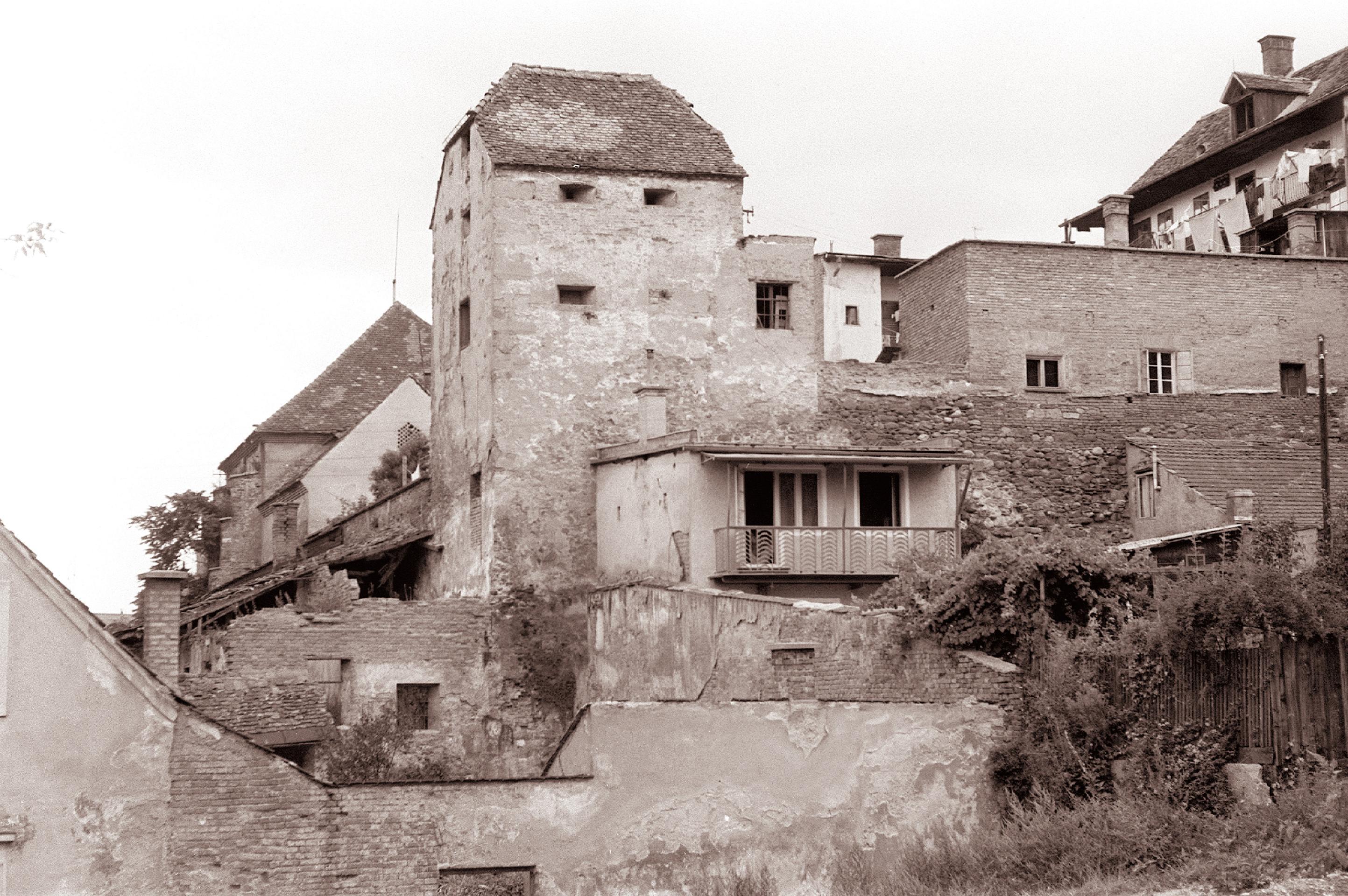
In 1465, the so-called Jewish Tower was built within the walls of the Jewish quarter. The tower is located in the immediate vicinity of the synagogue and has also been preserved to this day. It is not known to what extent the Jewish Tower was used by the Jewish community.
In 1497, the Jews were ordered by the Habsburg ruler Maximilian I to leave Styria and thus also Maribor, which until then had been the most important centre of Judaism in what is now Slovenia. In 1501, the synagogue was converted into the Catholic Church of All Saints. From 1785, the building served as a warehouse.
In 1869, the ban on Jews in Styria was lifted and some Jewish families returned to Maribor. However, the number of Jews no longer reached the level of the Middle Ages. Despite the efforts of the Jewish citizens, the synagogue was never reopened.
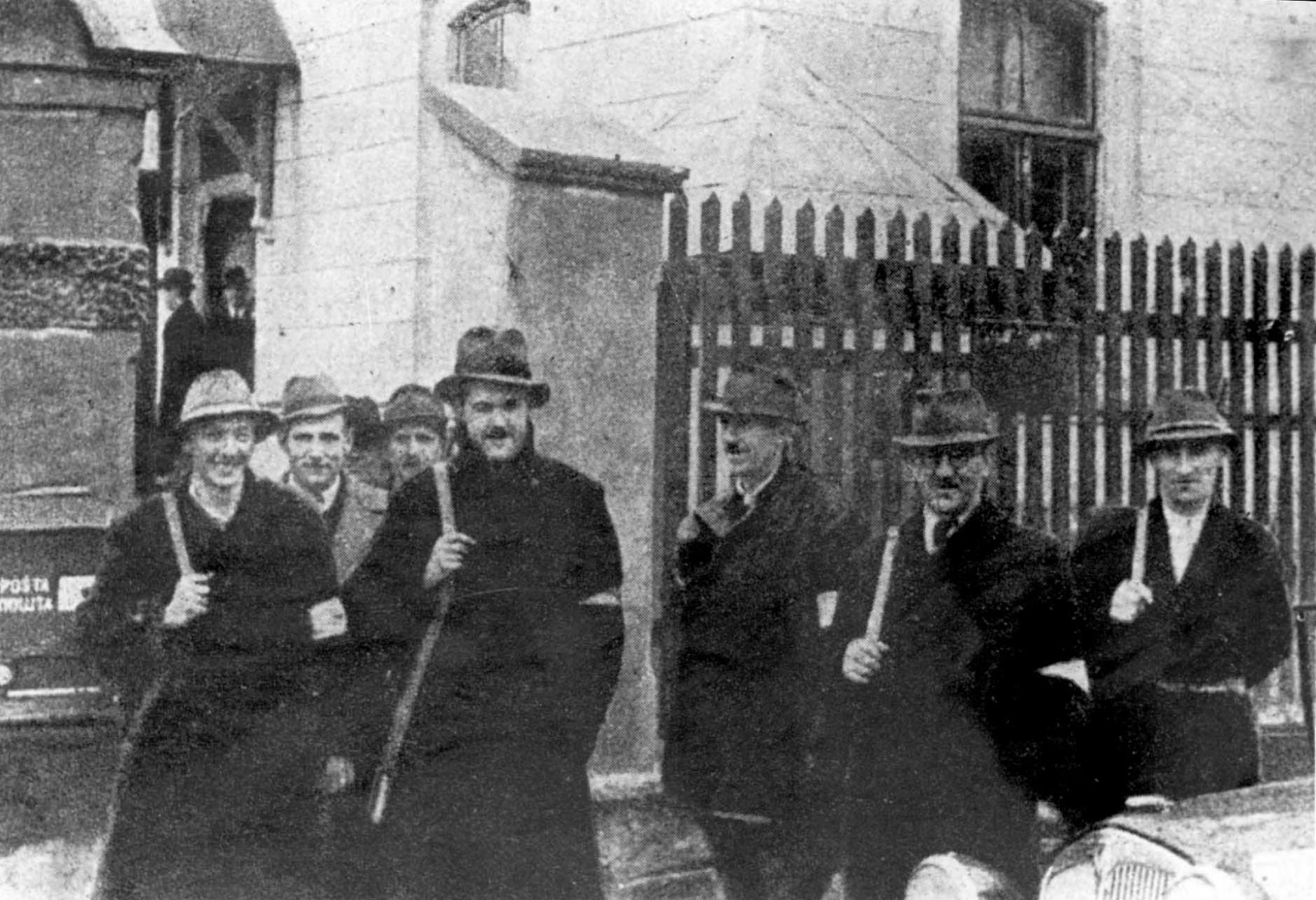
Between 1941 and 1945, the city was occupied by the German Wehrmacht. At this time, only a few Jews were still living in Maribor, as most of them had already left the city due to the anti-Jewish measures in the Kingdom of Yugoslavia. During the occupation, the National Socialists murdered or expelled all of the city's Jews. The building of the former synagogue was not destroyed, as it had not been used as a synagogue for almost 450 years.

Victims
Of the approximately 100 Jews living in Maribor in 1938, around a third died at the beginning of the German occupation and another third in the first year of the occupation. The remaining Maribor Jews were deported to concentration and extermination camps, mainly to Auschwitz, where most of them were killed.
Remembrance
Around five hundred years after the building ceased to fulfil its original purpose, the synagogue was restored. On 27 November 1964, the building was entered in the register of cultural and artistic monuments of the city of Maribor. In 1976/1977, renovation work was carried out on the façade of the building and the city wall, and two years later on the interior as well. In the 1980s, the building was used as an art gallery. Its original significance as a Jewish place of worship was not recognised.
This changed with the collapse of Yugoslavia and Slovenia's regained independence. In 1992, extensive renovation work began on the structure of the former synagogue in order to make the building usable again. The construction work was completed in 2001.
Despite the restoration, however, the synagogue was not reopened as a place of worship, as there is no longer a Jewish community in Maribor. Since 2011, the synagogue has been home to the Maribor Centre of Jewish Cultural Heritage, whose aim is to research, preserve and maintain the Jewish heritage in Slovenia. In 2015, the synagogue was declared a cultural monument of national importance.
The first Stolpersteine (»stumbling stones«) in Slovenia were laid here in 2012 to commemorate the murdered Jews of Maribor.
Possibilities
Permanent exhibition and temporary exhibitions, cultural events, lectures
Open
Monday to Friday 8.00 a.m. to 4.00 p.m.
Saturday and Sunday closed
Contact
https://www.sinagogamaribor.si/en/
info@sinagogamaribor.si
+386 31 680 294
Židovska ulica 4
2000 Maribor