Memorial and Information Point for the Victims of National Socialist »Euthanasia« Killings
Gedenk- und Informationsort für die Opfer der nationalsozialistischen »Euthanasie«-Morde
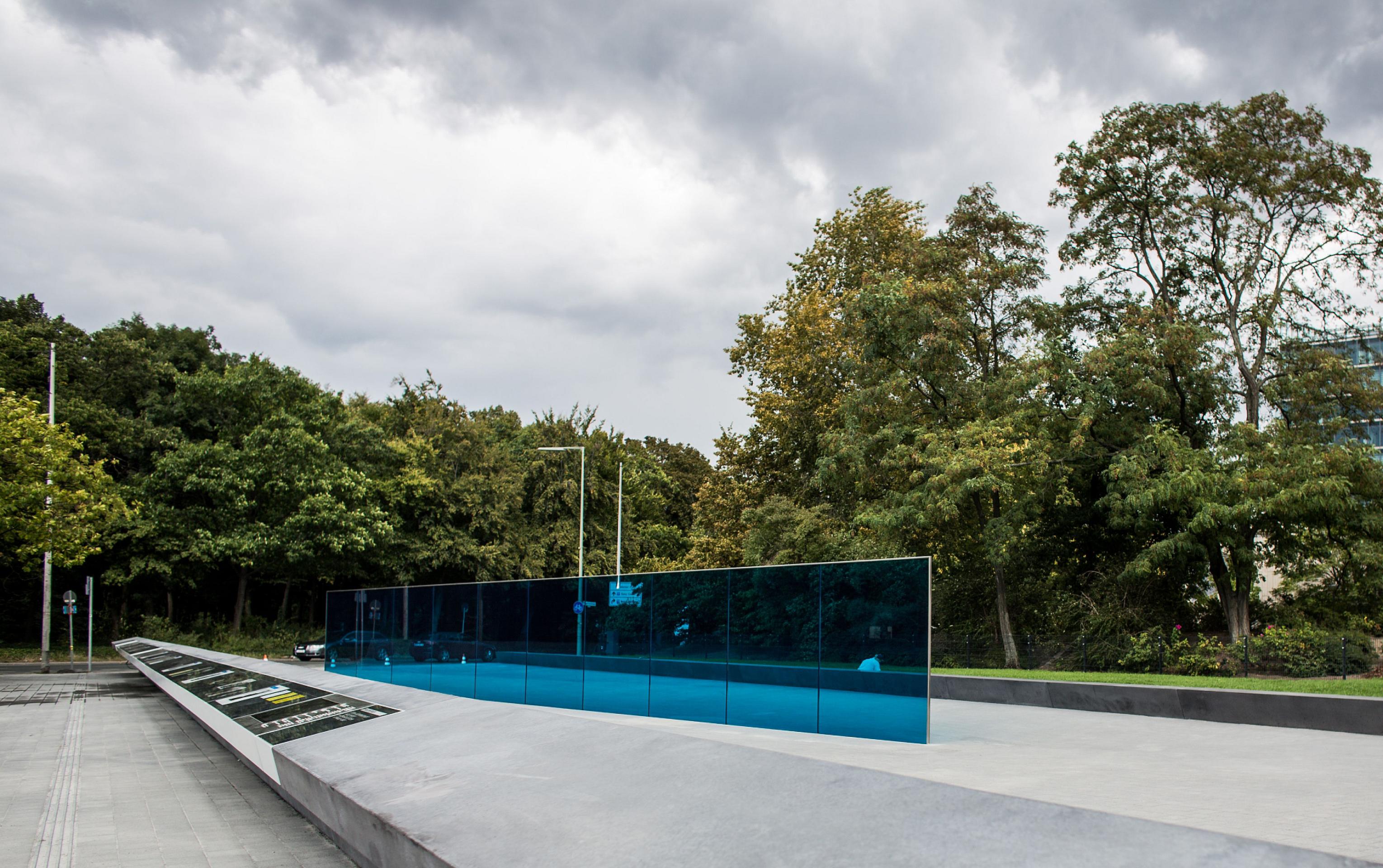
Since autumn 2014, there is a memorial located on the square in front of the Berlin Philharmonic dedicated to the tens of thousands of people who fell victim to the crimes of the National Socialist »Euthanasia« campaign. This is the historic site on which the National Socialists planned the murder of mentally and physically handicapped people in an operation codenamed »T4«.
History
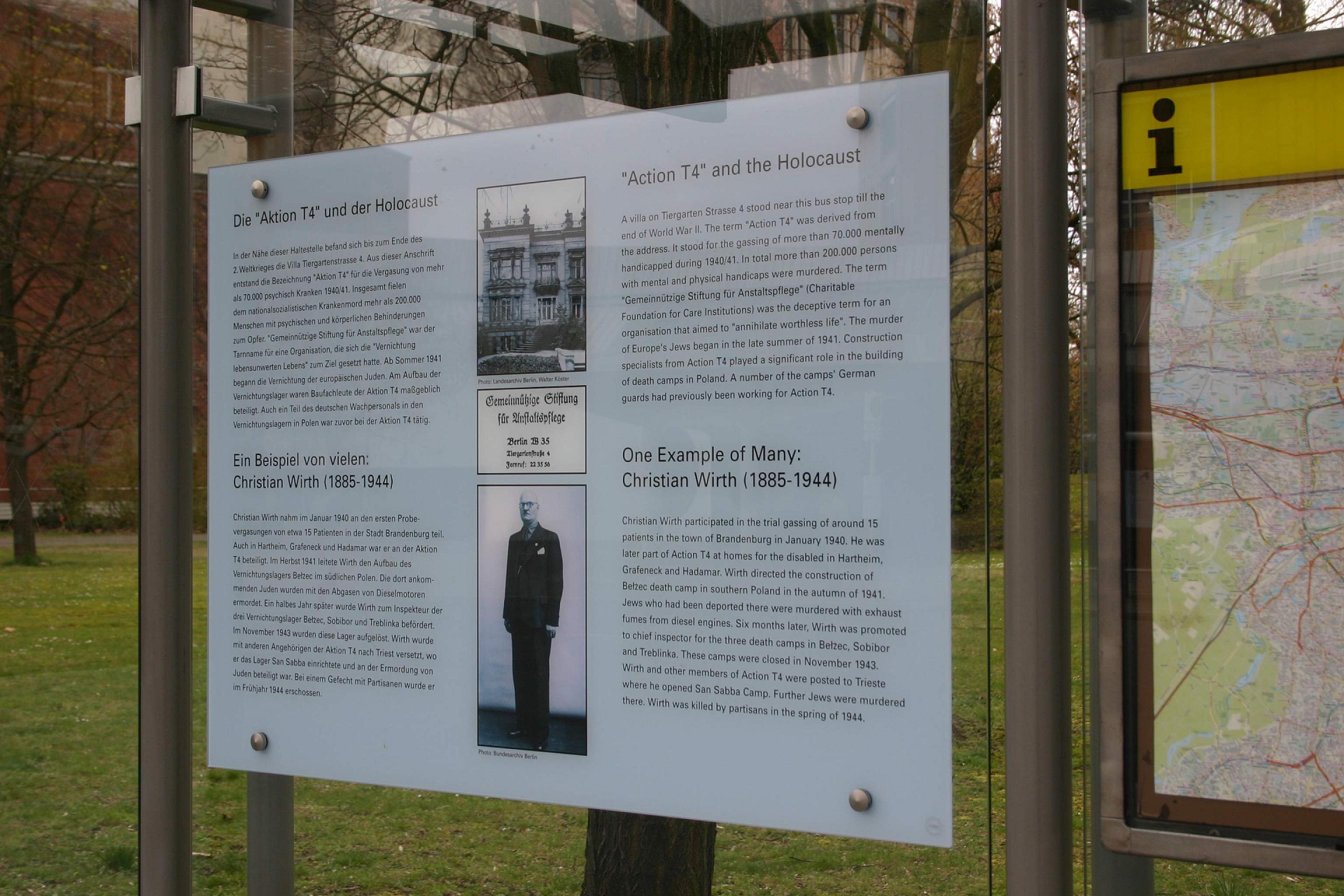
From April 1940, the headquarters of the operation that initiated, coordinated and carried out the mass murder of patients from clinics and care homes in the Third Reich were located in Tiergartenstraße 4 in Berlin. The operation was codenamed »T 4« or simply »Aktion« (»Operation«). Over 70,000 people died as a result before the killings were halted on 24 August 1941 following public unease. The murders began with the outbreak of war in September 1939 and continued throughout the German Reich and in many occupied territories, especially in Eastern Europe, both after the »euthanasia stop« in August 1941 and after the invasion of the Soviet Union in June 1941. The classification, »selection« and murder of these patients made this the first centrally organised and systematic process of mass murder carried out by the National Socialists. »T 4« was however only one aspect of the violent crimes carried out against patients from clinics and care homes. Researchers estimate that a total of 300,000 people were murdered as a result of the so-called euthanasia programme in Europe. However, there are still no reliable figures, especially for Eastern Europe.
Victims
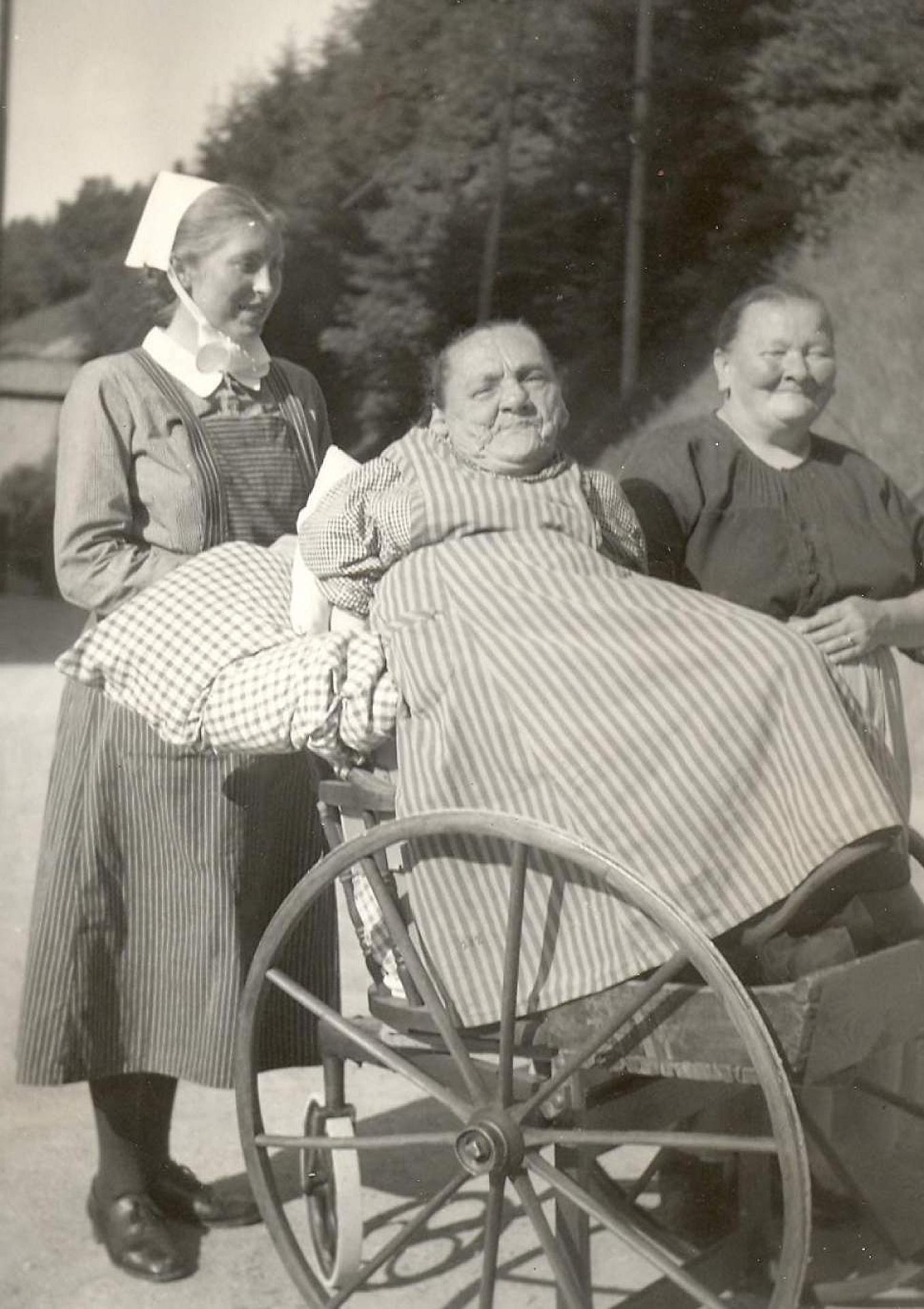
Over 70,000 mostly mentally and physically handicapped people were murdered by medical staff and physicians in six killing centres in 1940/41. When the »T4« programme was officially shut down, it is estimated that between 10,000 and 20,000 more people were killed as part of »Sonderbehandlung 14f13«. Historians estimate that there were 200,000 victims of the »euthanasia« programme in Germany alone. This number includes not only murdered patients but also concentration camp prisoners who were deemed unfit for labour or »undesirable«, sick forced labourers, Jewish patients, Jehovah's witnesses, alcoholics, prostitutes and people deemed »unadjusted«. From 1934, thousands of women were sterilised on the grounds of the »Law for the Prevention of Genetically Diseased Offspring«.
The number of patients murdered outside of Germany is still unclear.
Remembrance
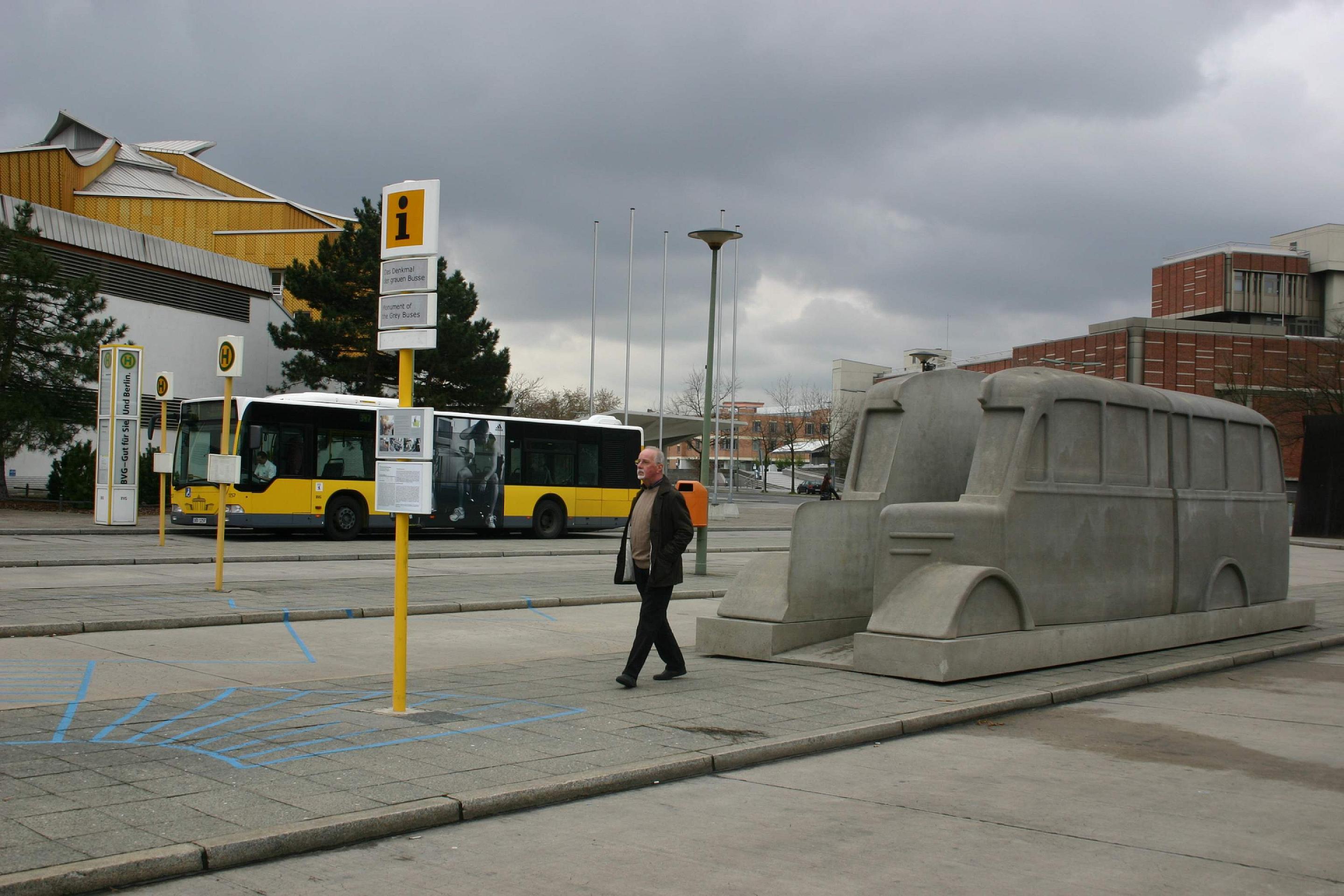
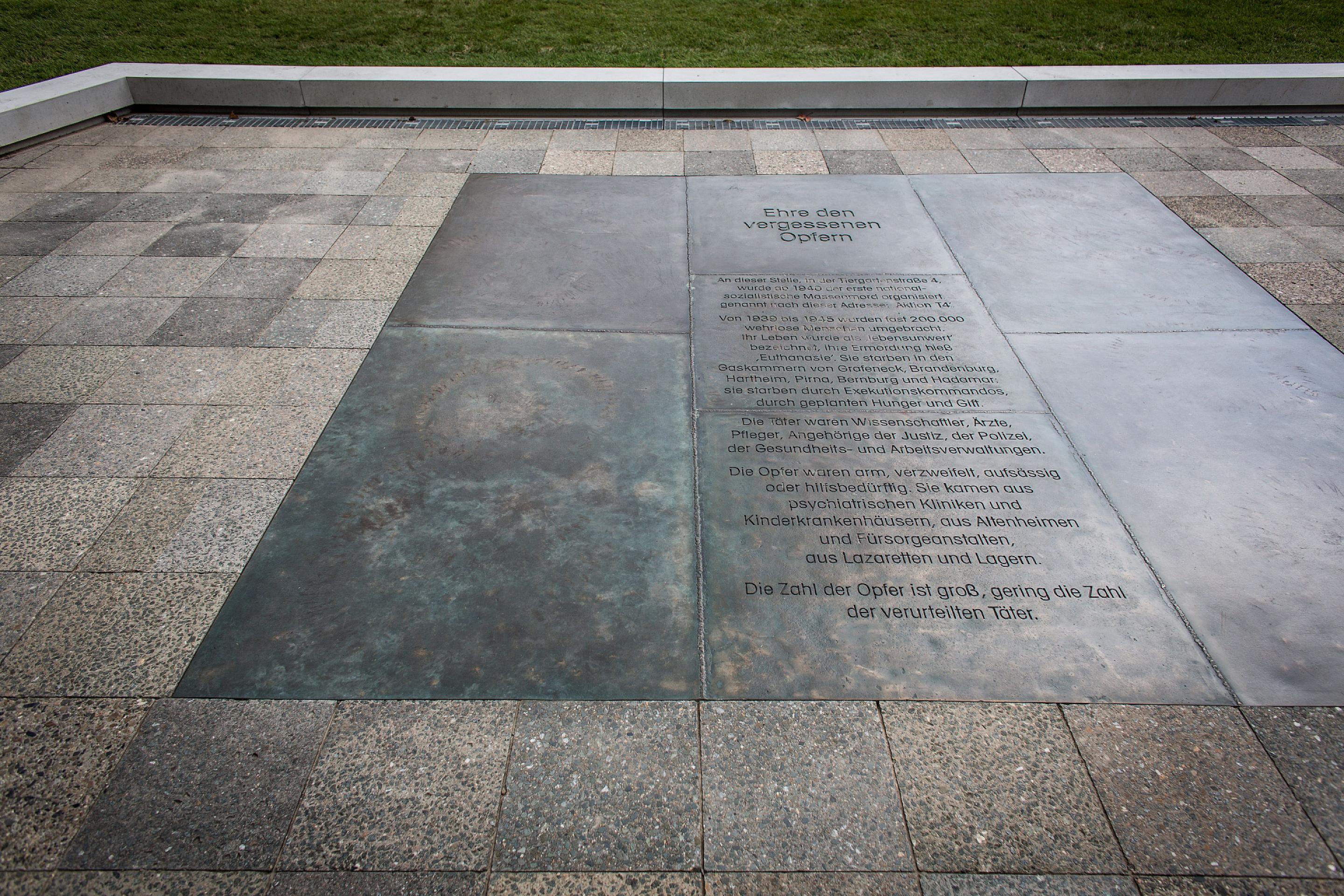
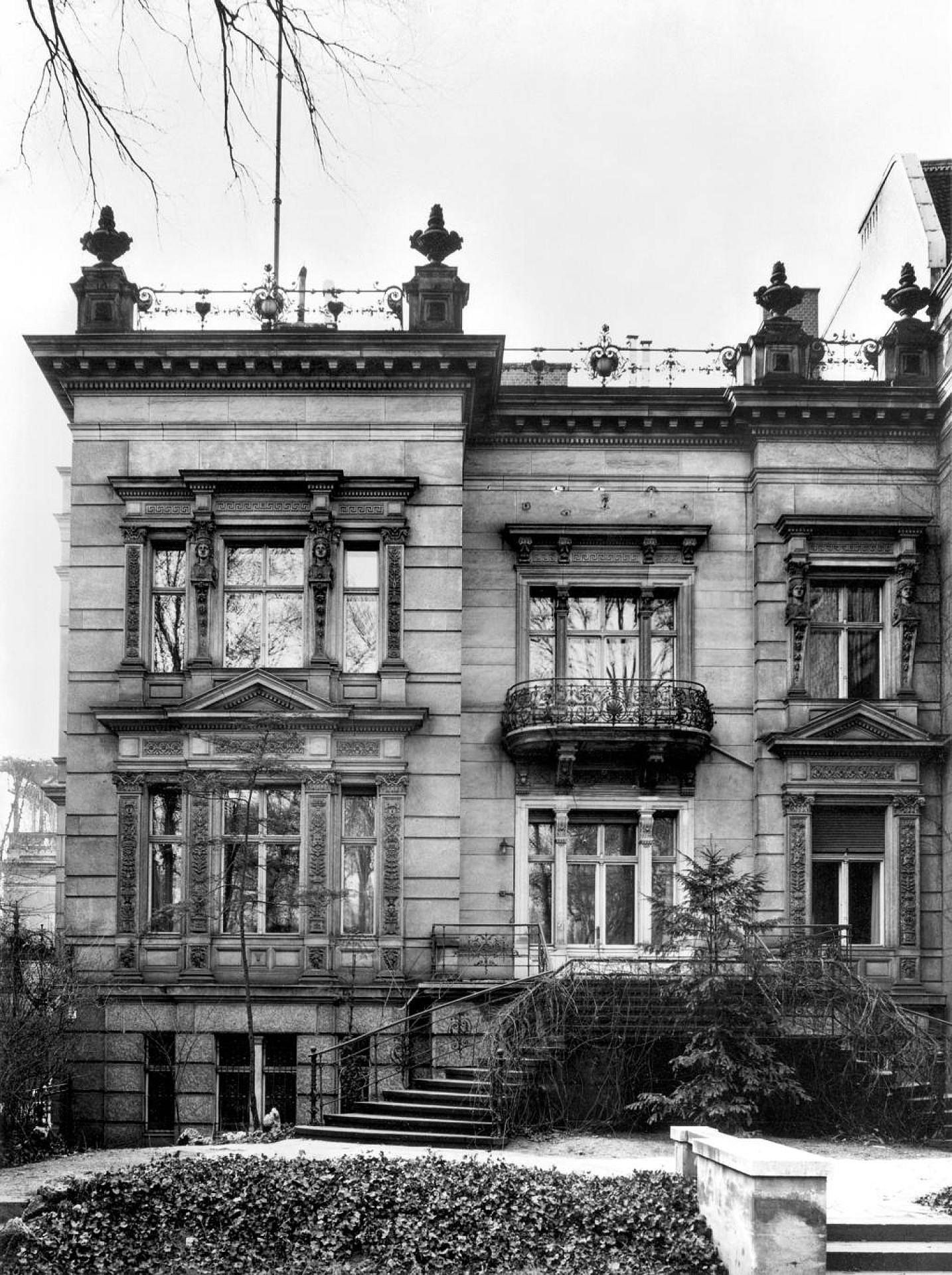
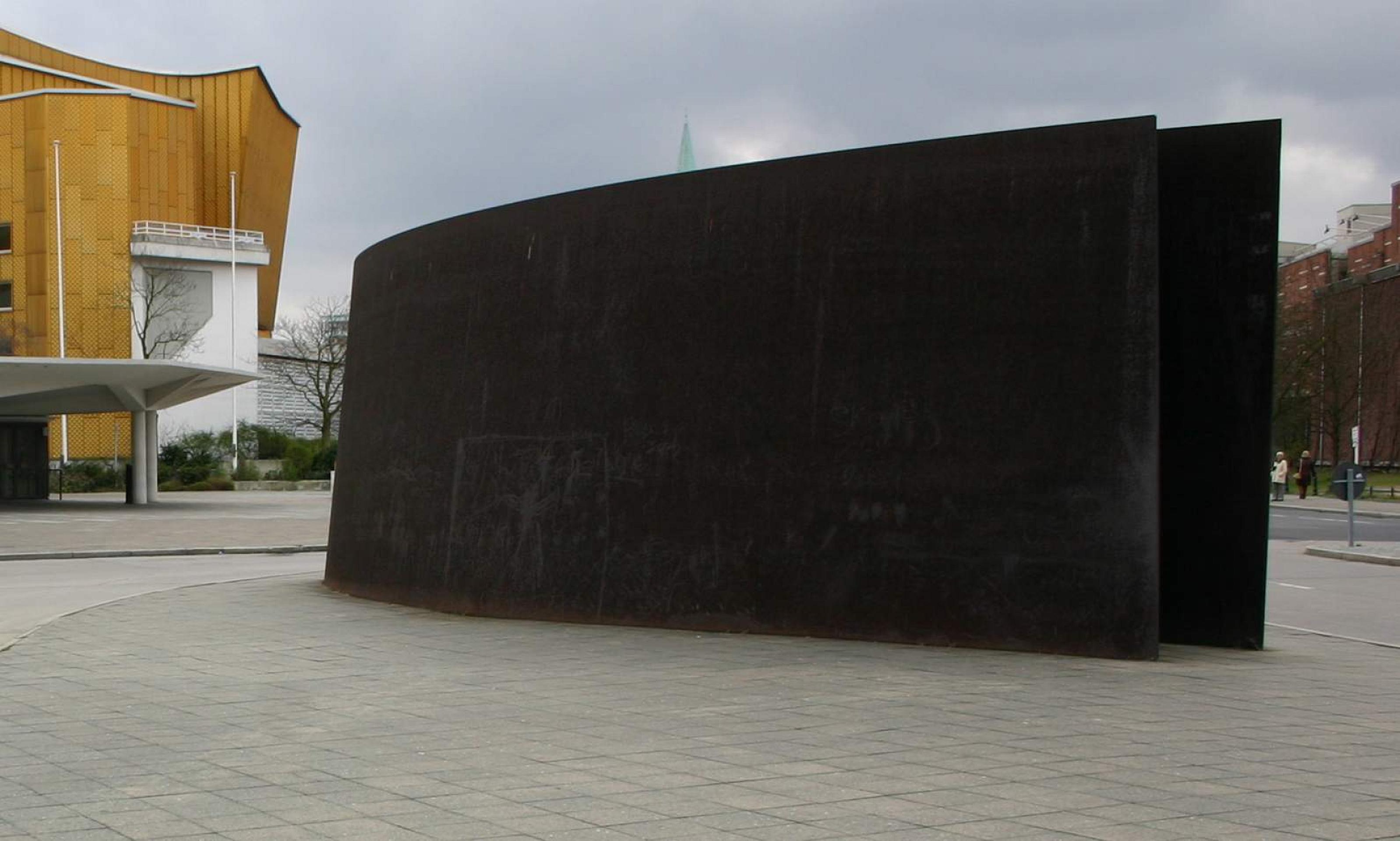
The building in Tiergartenstraße 4, which housed the headquarters of the »T4« authorities, no longer exists. The ruins of the villa, which was severely damaged in air raids, were torn down in the 1950s. Standing on the site today is the chamber music hall of the Berlin Philharmonic. In 1987, Richard Serra's sculpture »Berlin Curves« was brought to Berlin as part of a larger exhibition. It consists of two curved walls of steel erected parallel to each other, leaving a narrow passage. In 1988, the Berlin Senate purchased the sculpture with the aim of dedicating it as a monument to the victims of the »euthanasia« killings. The »Berlin Curves« monument has since then stood on the square in front of the Berlin Philharmonic. In direct vicinity is a memorial and information plaque set in the pavement, explaining the re-dedication of the sculpture to the victims of »T4«. Plans for redesigning the site of remembrance have been debated since the 1990s.
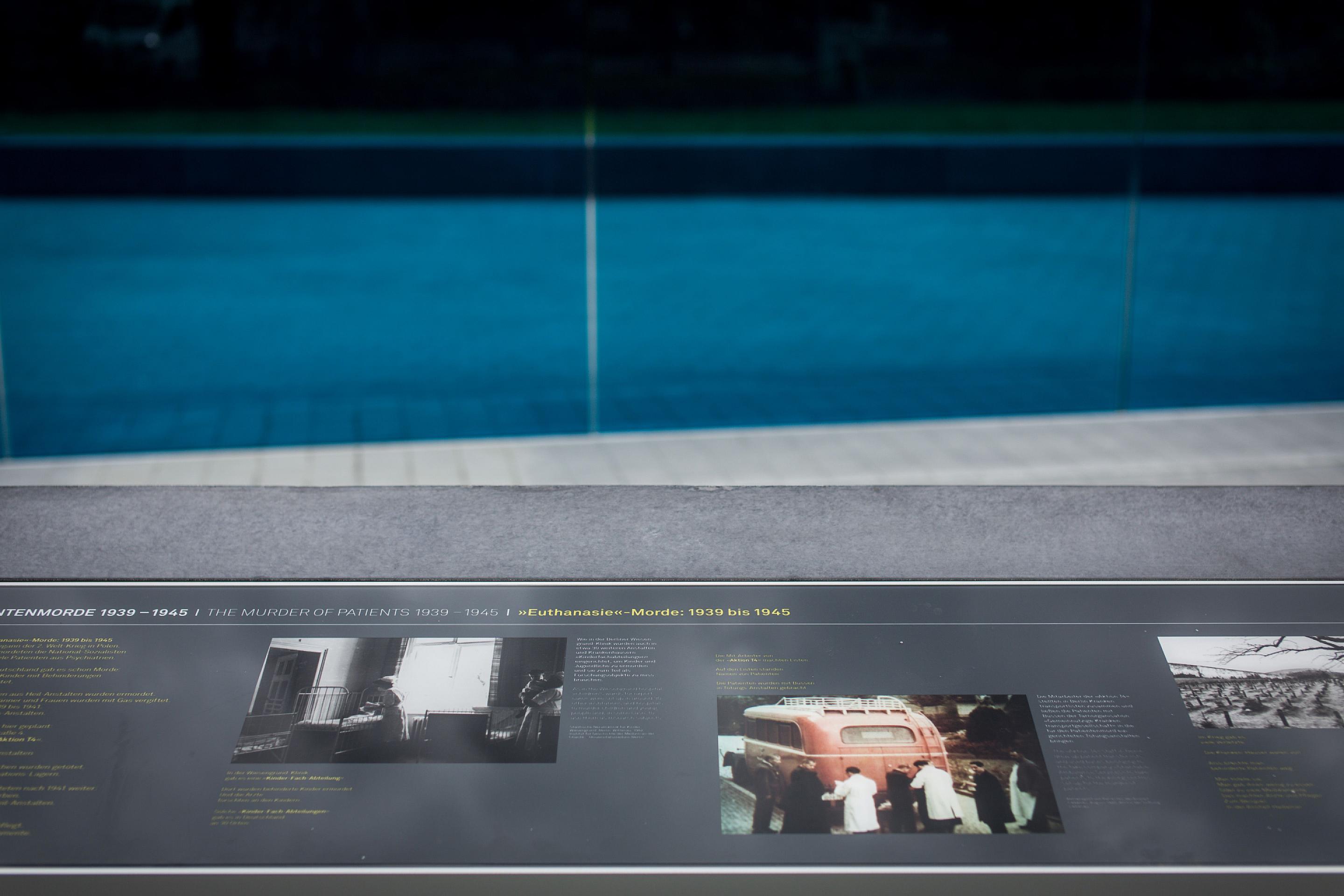
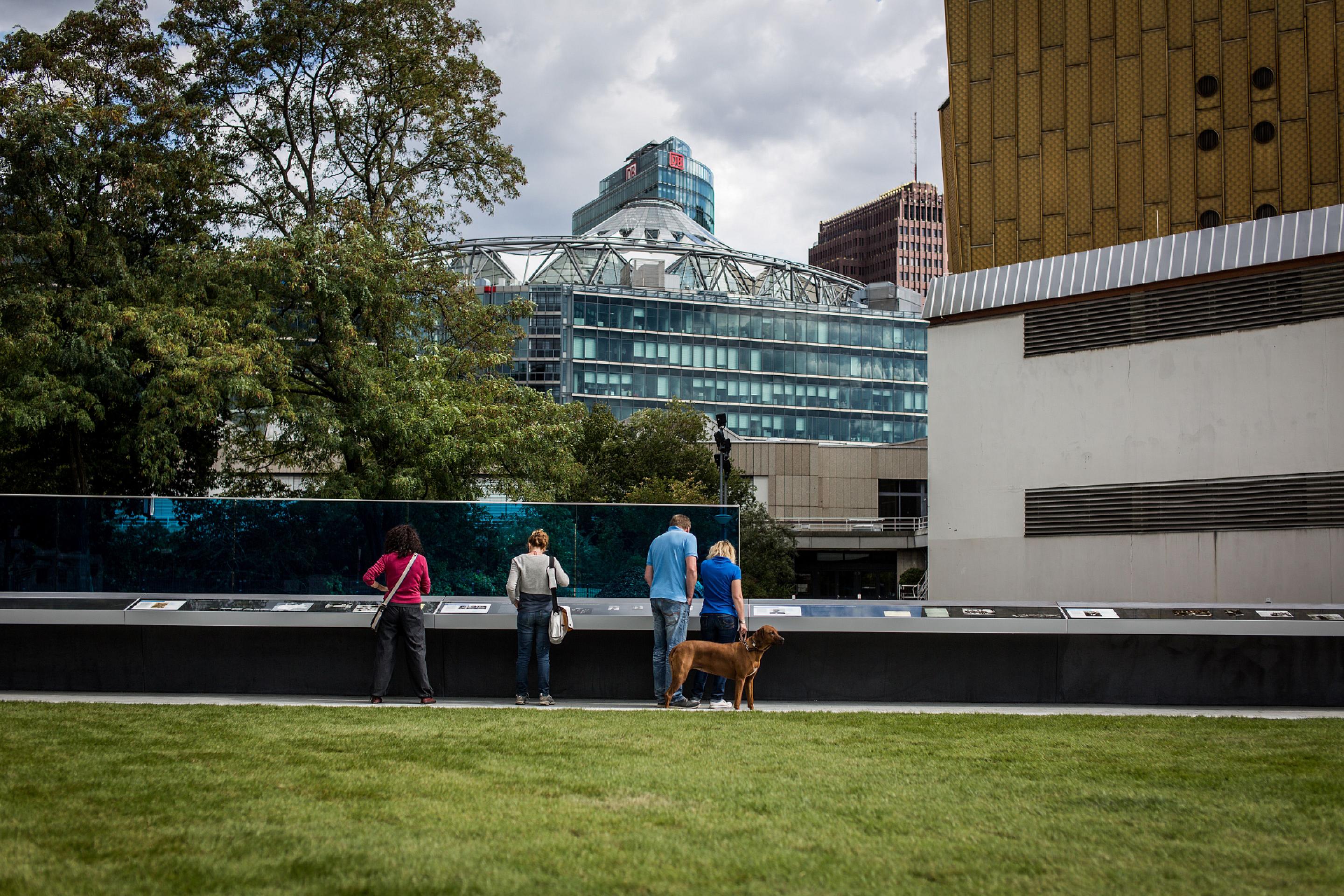
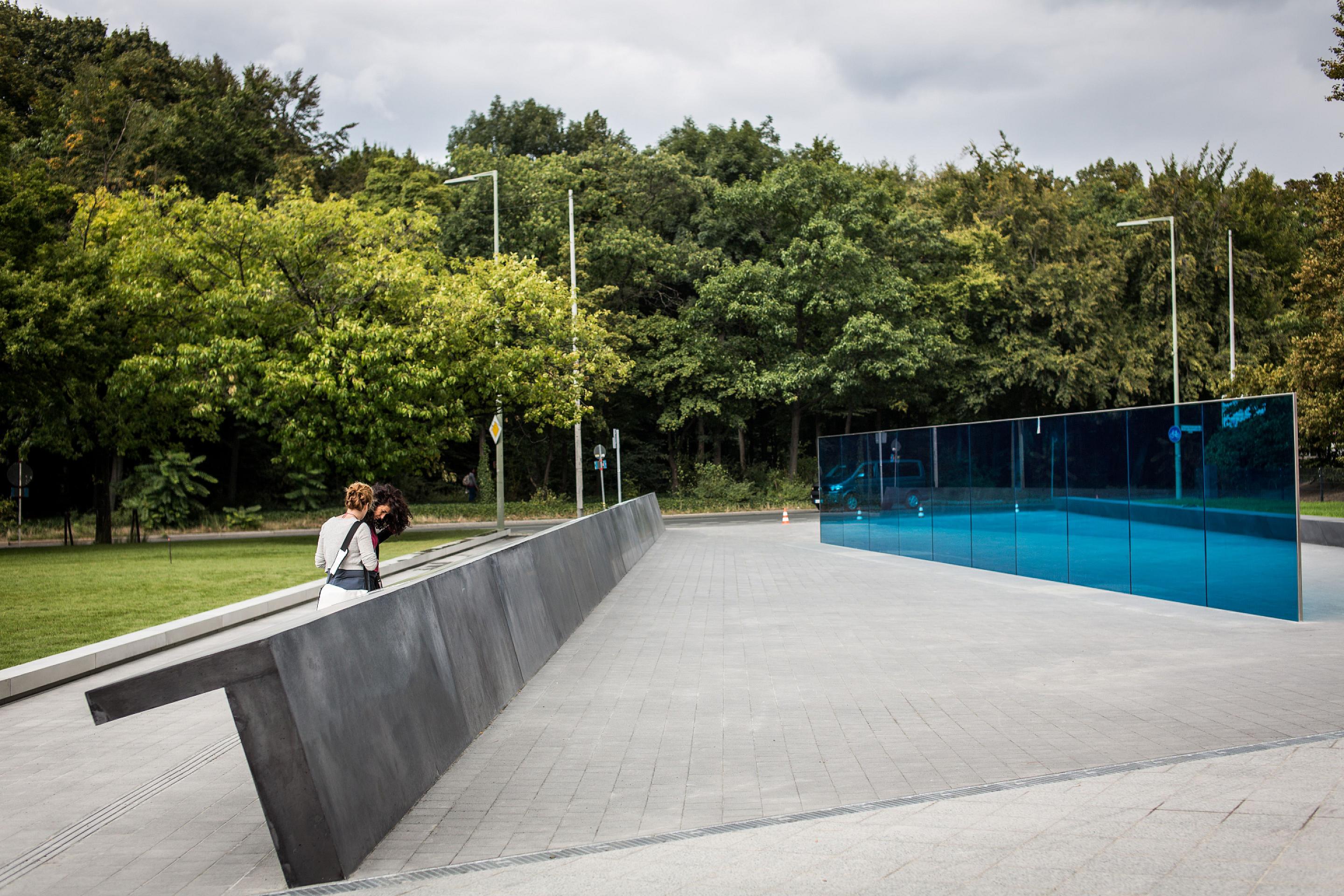
Plans for redesigning the site of remembrance have been debated since the 1990s. In November 2011, the German Bundestag voted to establish a »Memorial to the Victims of National Socialist ›Euthanasia‹ Killings« on the historic grounds of the administrative headquarters of the T4 programme. The state of Berlin subsequently launched a competition to design the memorial. The winning entry by the architect Ursula Wilms and the landscape architects Nikolaus Koliusis and Heinz W. Hallmann consists of a 24-metre-long wall made of clear light blue glass and set into a dark grey concrete surface that gently slopes towards the centre. An outdoor exhibition provides information about the history of the ›euthanasia‹ killings and their legacy up to the present-day. The Memorial was opened to the public on 2nd September 2014. The Topography of Terror Foundation and the Foundation Memorial to the Murdered Jews of Europe were involved in planning the memorial site.
Open
The memorial site is accessible at all times
Contact
besucherservice@stiftung-denkmal.de
+49 (0) 30 263 943 36
Tiergartenstraße/Herbert-von-Karajan-Straße
10785 Berlin