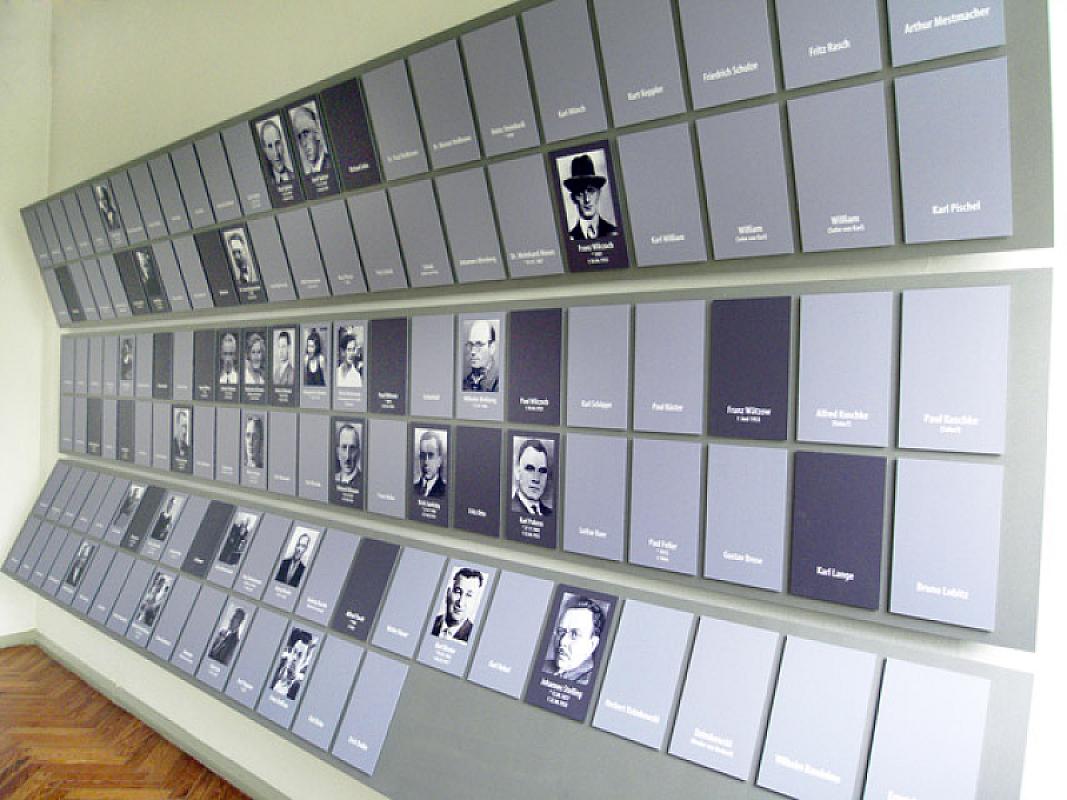
Memorial and Meeting Place, Former Ladelund Concentration Camp
KZ Gedenk- und Begegnungsstätte Ladelund
Several memorials in the North Frisian village of Ladelund commemorate the victims of the Ladelund concentration camp, a satellite camp of Neuengamme. Between November 1 and December 16, 1944, the camp existed on the northern edge of Ladelund. About 2,000 male concentration camp prisoners had to conduct forced labour constructing the »Frisian Wall« fortifications. In 1950, the St. Petri parish set up the first memorial on the Ladelund cemetery.
History
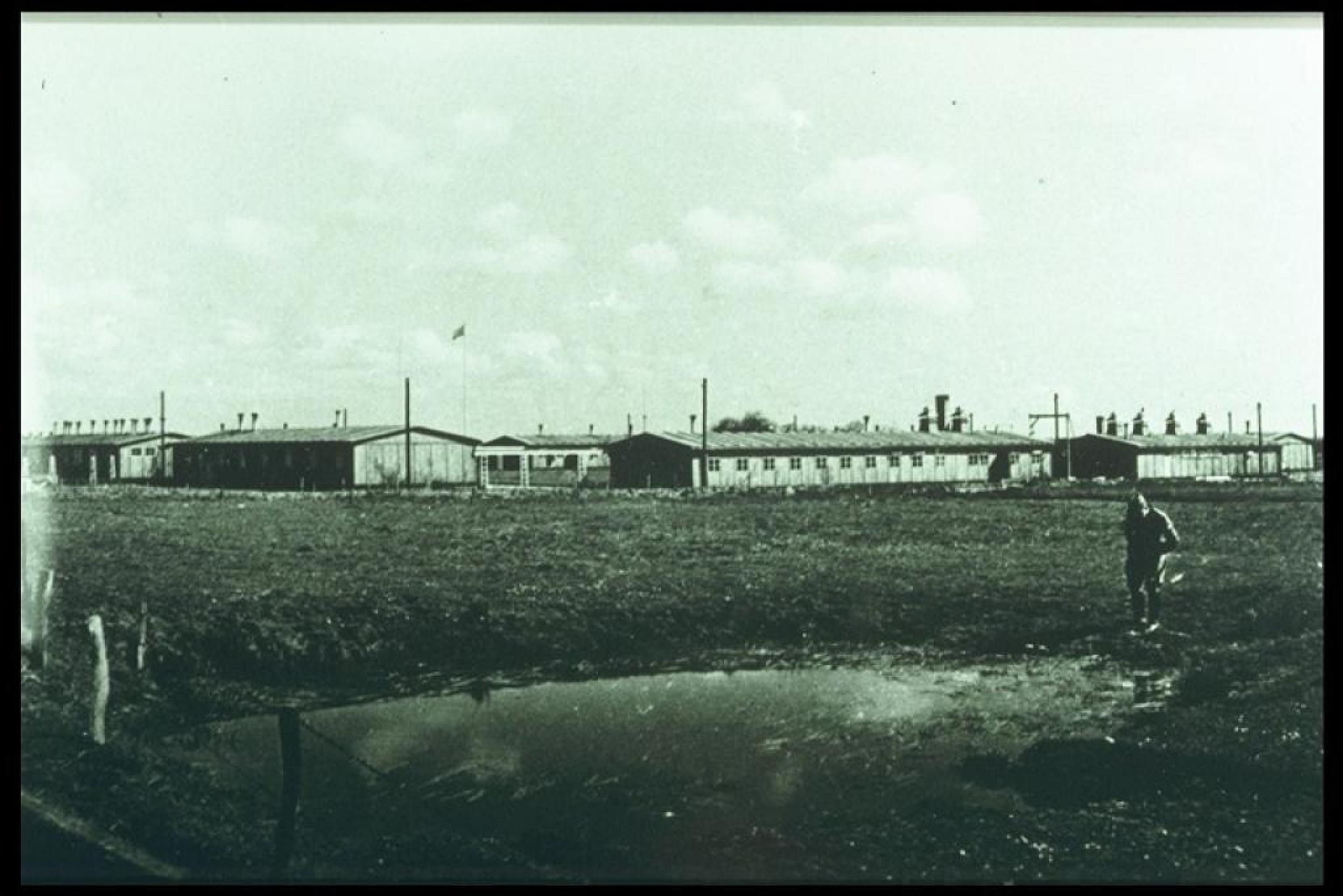
Following the Allied invasion of Normandy in June 1944, Hitler ordered the construction of fortifications along the German North Sea coast and the Danish border. Several forced labour camps were established along the coast to serve this purpose. On November 1, 1944, the first transport of prisoners from the Neuengamme concentration camp arrived in Ladelund close to the Danish border. The prisoners were brought to barracks of the Reichsarbeitsdienst (RAD, Reich Labour Service), which had been set up in 1938 to house 250 people. The SS also transferred about 1,000 from the Husum-Schwesing satellite camp to Ladelund on November 1. Another 1,000 prisoners arrived at Ladelund directly from the Neuengamme main camp. The inmates of the Ladelund satellite camp were deployed in constructing fortifications. Most of them had to dig anti-tank trenches - strenuous work during which they were frequently forced to stand in water flowing out of the tunnels they were digging. The prisoners were constantly subjected to abuse by the Kapos and guards. SS-Untersturmführer Hans Hermann Griem was in charge of both the Ladelund and the Husum-Schwesing satellite camps. He personally shot several prisoners and was reputedly very brutal. 200 soldiers of the navy served as guards. The exhausting labour, insufficient food supplies and lack of hygienic facilities caused many illnesses and deaths in Ladelund; about 300 prisoners died between November and mid-December 1944. On December 16, 1944, the Ladelund satellite camp was dissolved, probably because the situation on the front was rapidly worsening for the Germans. The »Frisian Wall« was never completed. The SS transferred the prisoners back to the Neuengamme main camp.
Victims
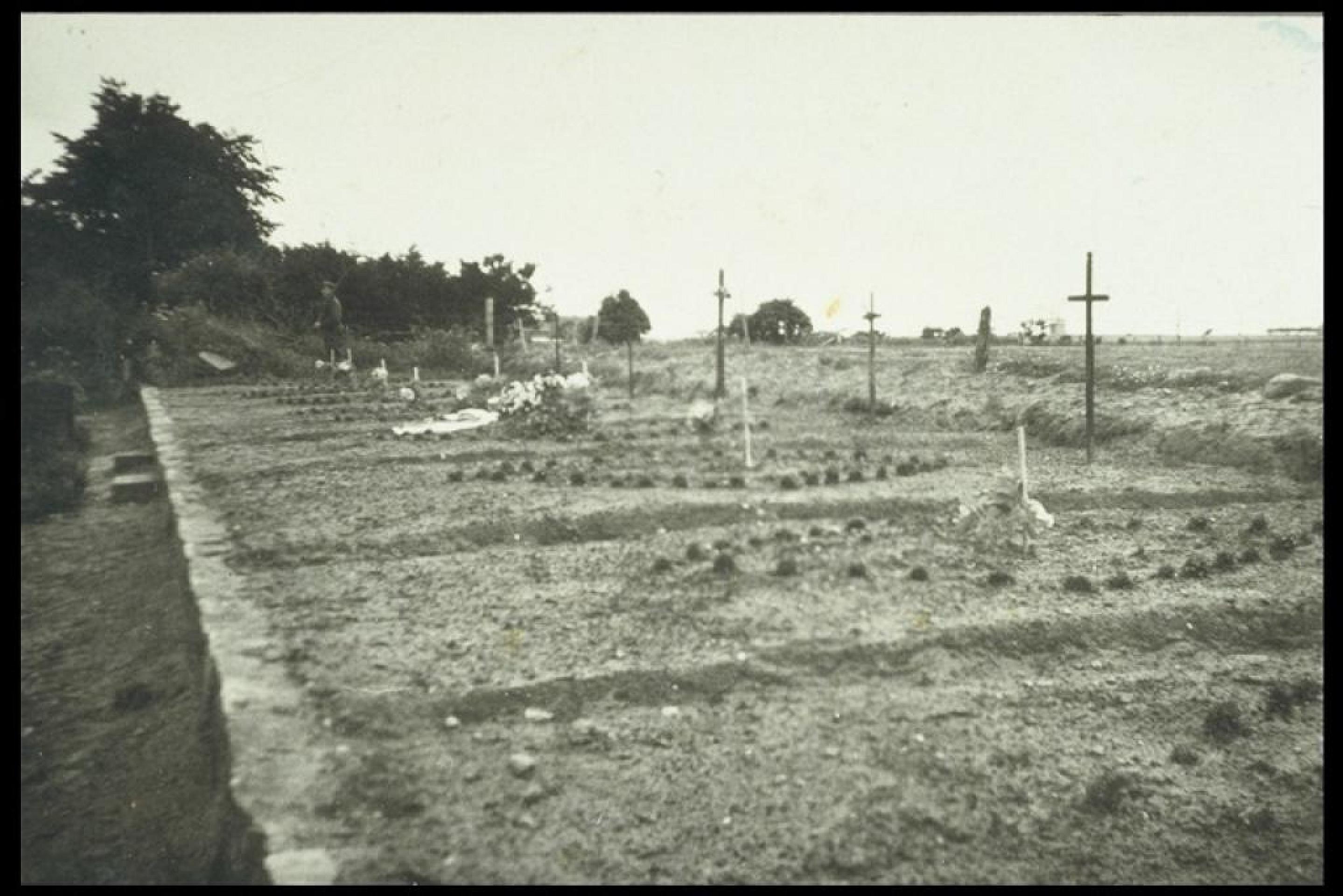
The prisoners held at Ladelund came from various European countries. Dutch prisoners constituted the largest group. Over 1,000 of the 2,000 men imprisoned at Ladelund came from the Netherlands. About 500 came from Poland, 200 from the Soviet Union. Some came from what is today the Czech Republic, France, Germany, Italy and Belgium. About 300 inmates perished during the six weeks in which Ladelund was in operation. They were buried on the local cemetery.
Remembrance
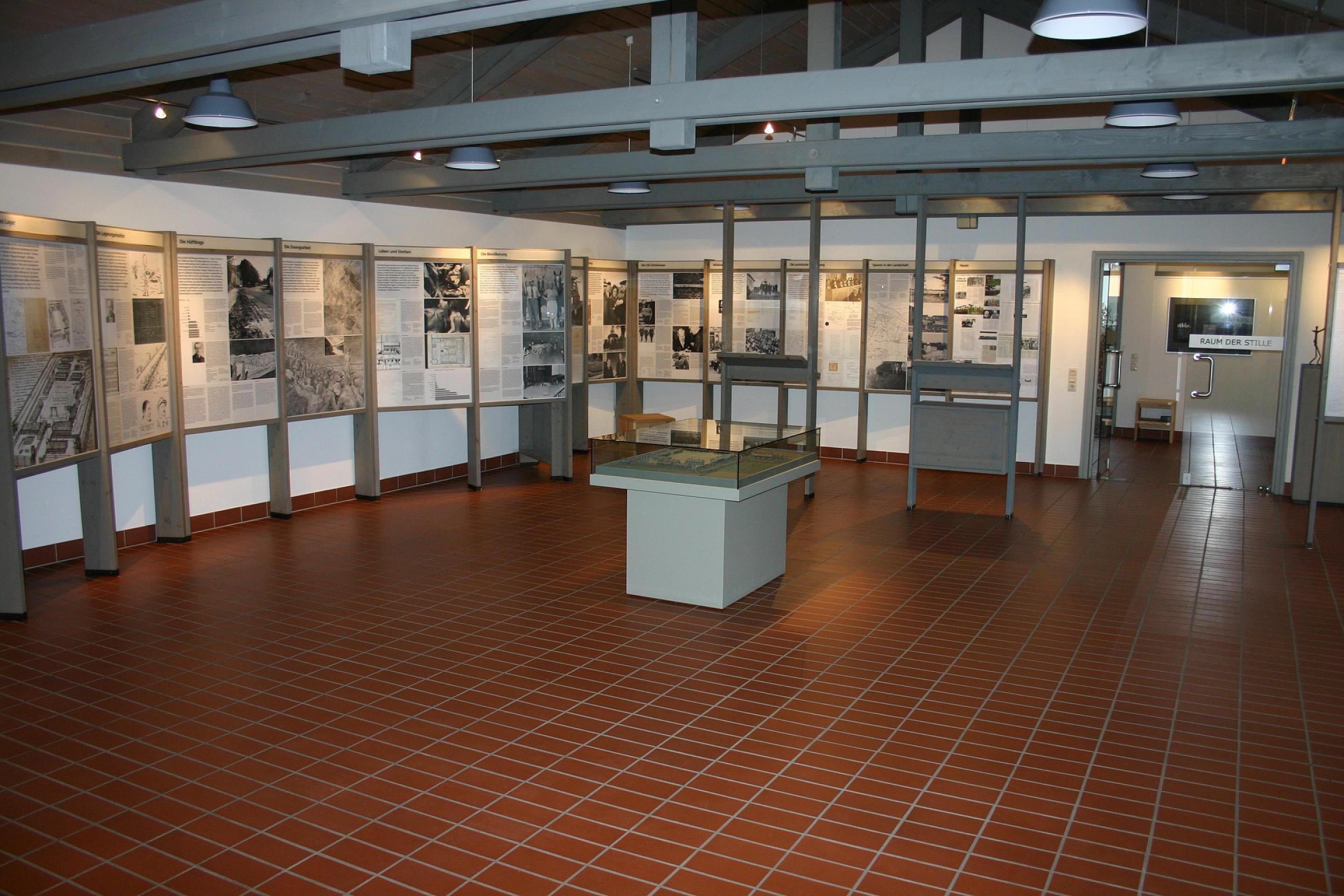
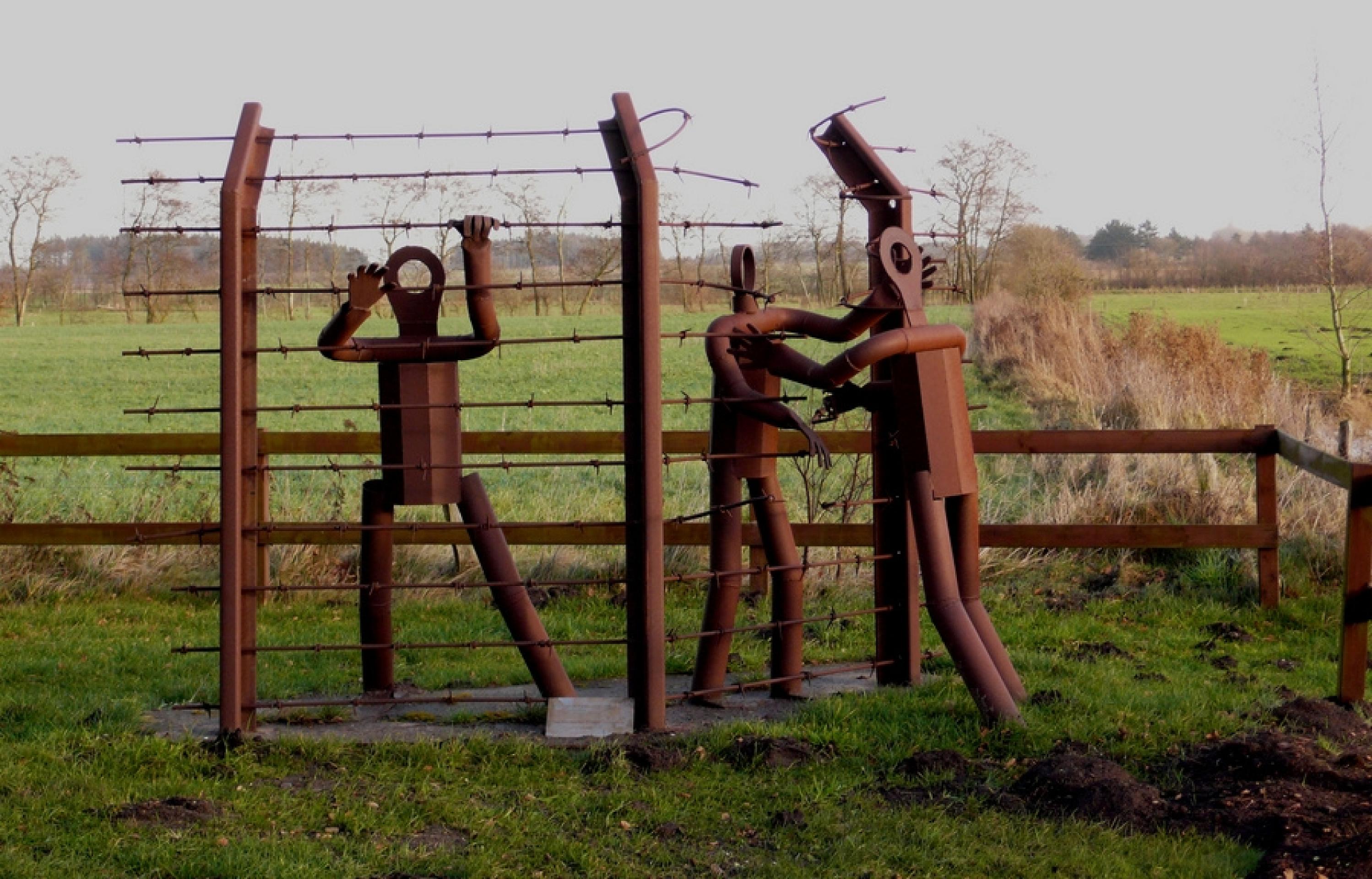
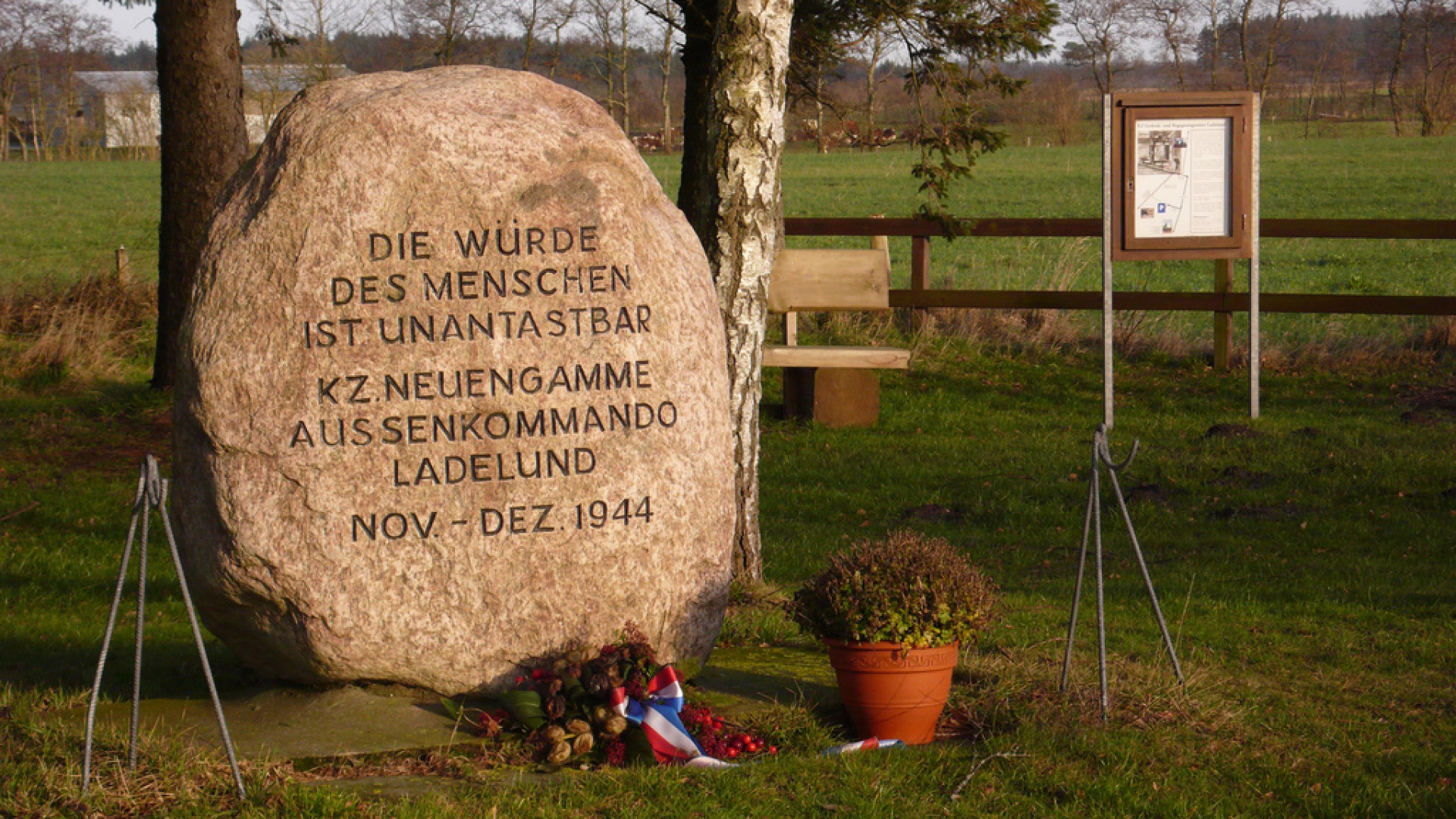
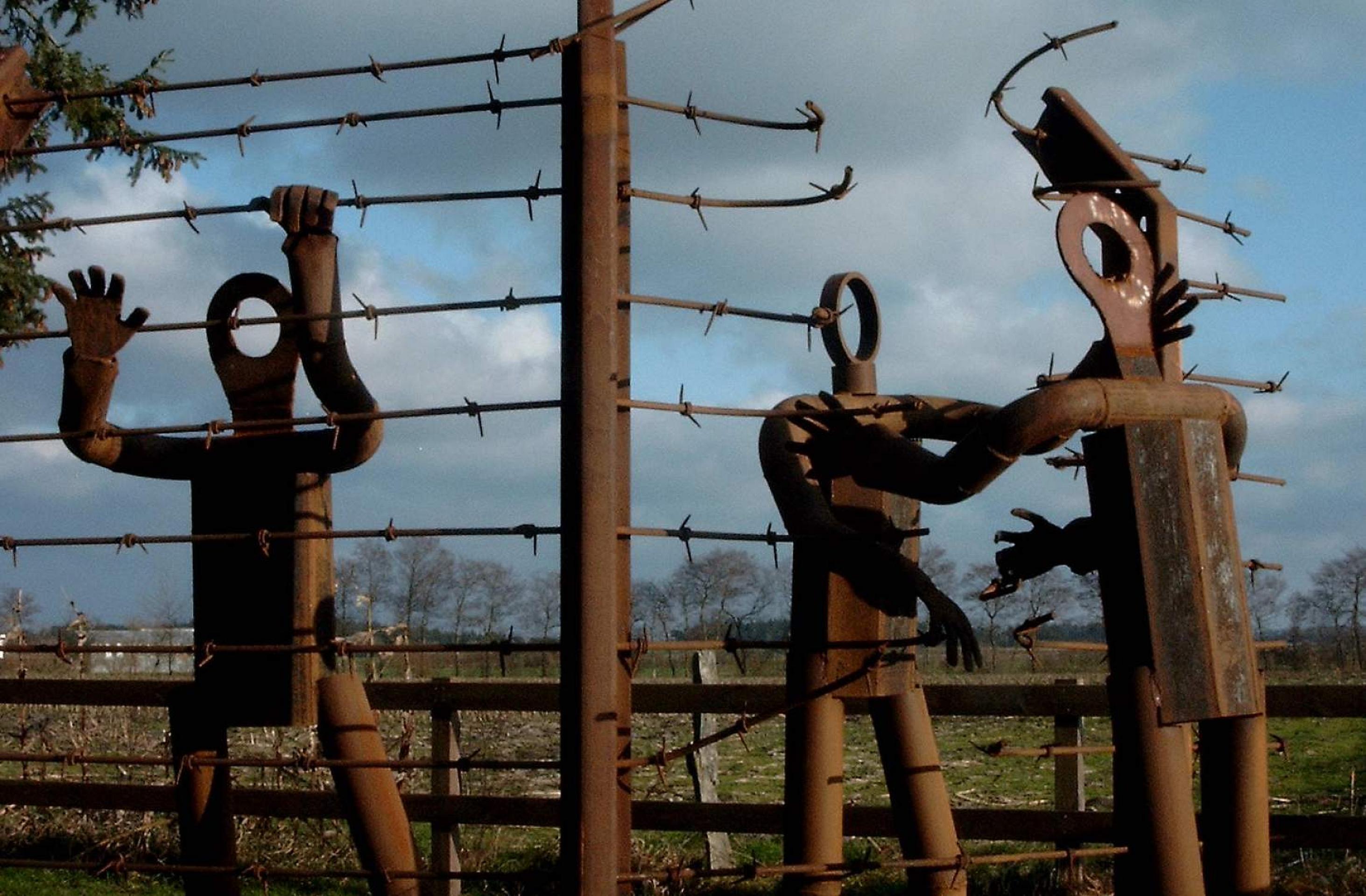
In 1950, the St. Petri parish in Ladelund established a memorial on the local cemetery on which about 300 victims of the Ladelund satellite camp were buried. It was one of the first memorials to victims of the National Socialist regime in Western Germany. In 1985, the parish erected a monument on the edge of the camp premises bearing the following inscription: »The dignity of men is unimpeachable. KZ Neuengamme satellite camp Ladelund November – December 1944«. In 1989, the parish opened a documentation centre on the camp grounds, which houses a permanent exhibition on the history of the Ladelund satellite camp. Thanks to donations it could be extended in 2006. Since 2002, a rusty metal sculpture commemorates the fates of the prisoners at Ladelund. It was designed by apprentices of the Theodor Schäfer vocational school and set up on the border of the former camp premises. The former camp grounds of the Ladelund satellite camp are now agricultural crop land - just like before 1938.
Possibilities
Permanent exhibition, guided tours, meetings with survivors, educational work for schools and extracurricular programs
Open
The memorial grounds are accessible at all times. Exhibition opening times: Tuesday to Friday: 10 a.m. to 4 p.m.
Saturday and Sunday: 2 p.m. to 4 p.m. or by appointment
Contact
http://www.kz-gedenkstaette-ladelund.de
info@kz-gedenkstaette-ladelund.de
+49 (0)4666 449
Raiffeisenstraße 3
25926 Ladelund