Memorial at the Cemetery of the Murdered After the Suppression of the Slovak National Uprising
Pamätník pri hrobe umučených po potlačení SNP
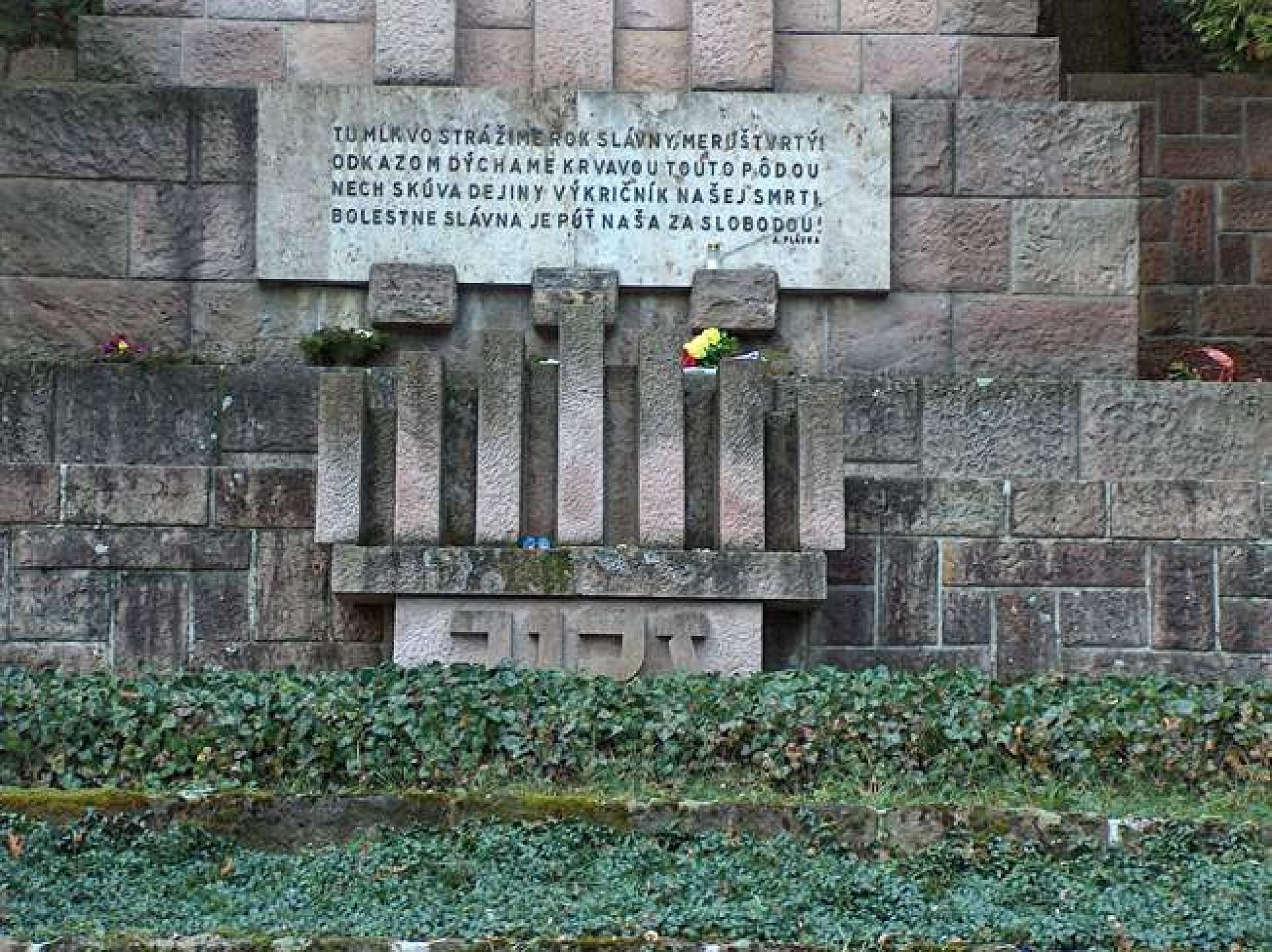
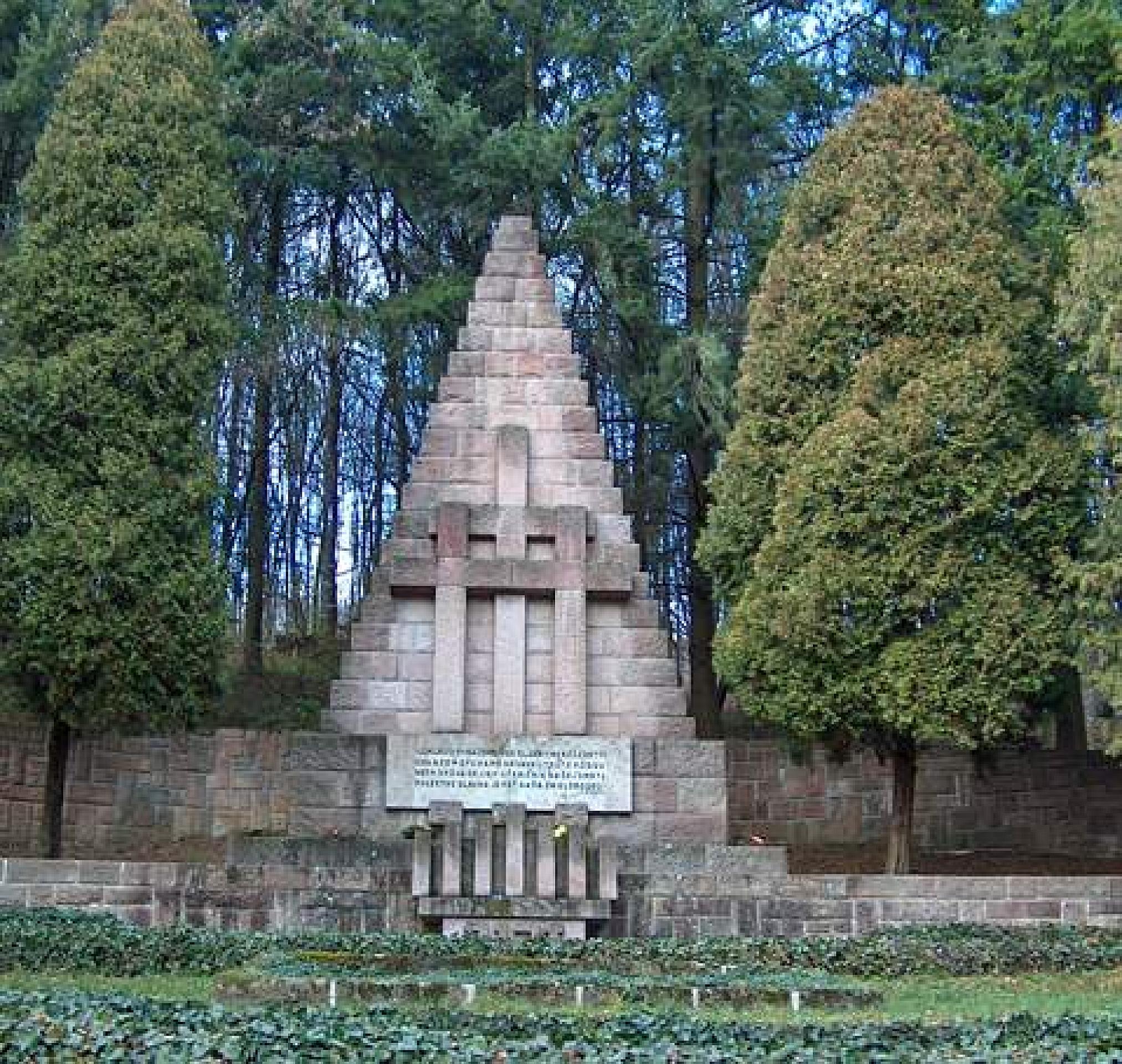
A monument in Kremnička, a district of Banská Bystrica which was incorporated into the town in 1970, commemorates the resistance fighters and civilians who were murdered in the aftermath of the suppression of the Slovak National Uprising.
History
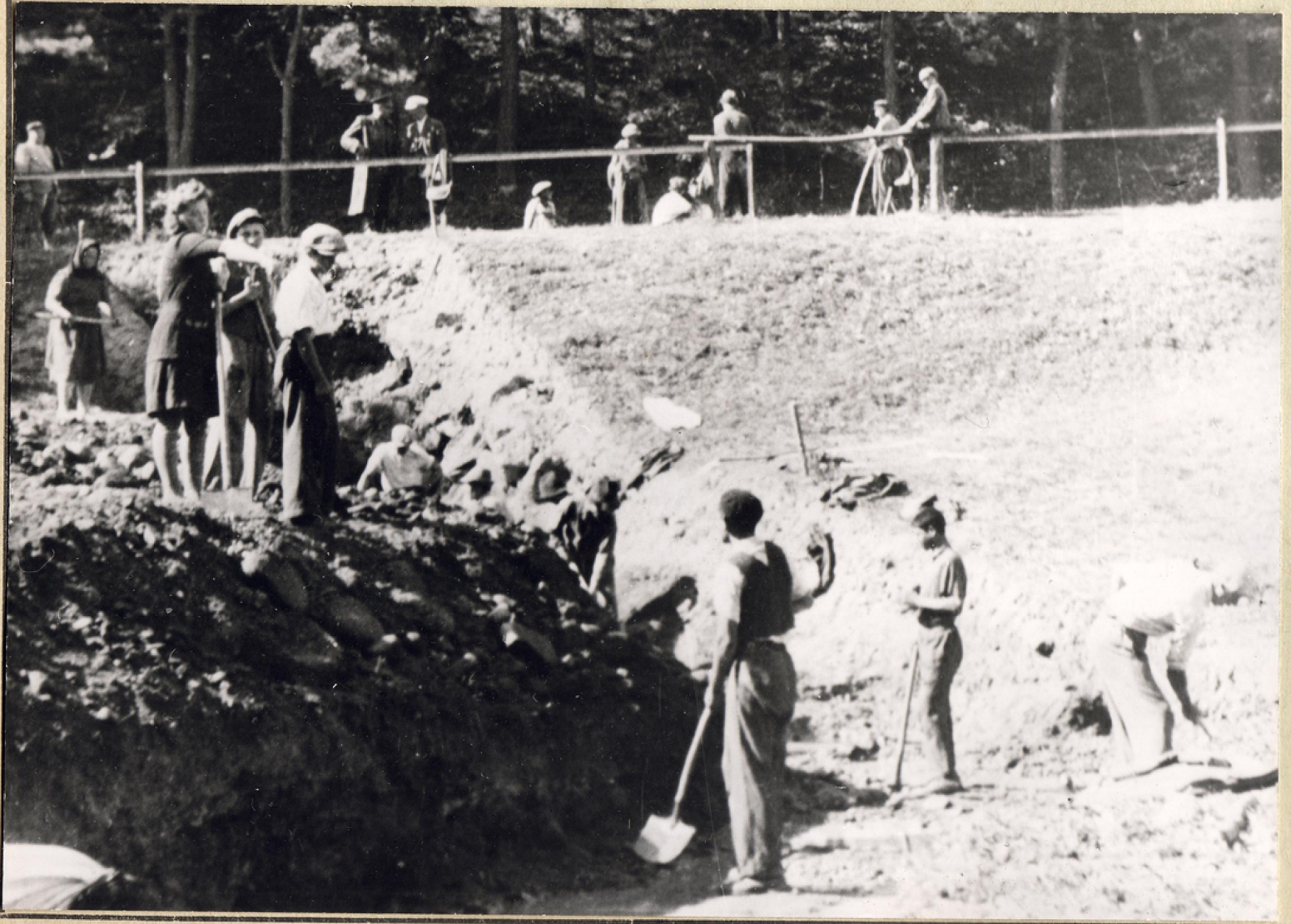
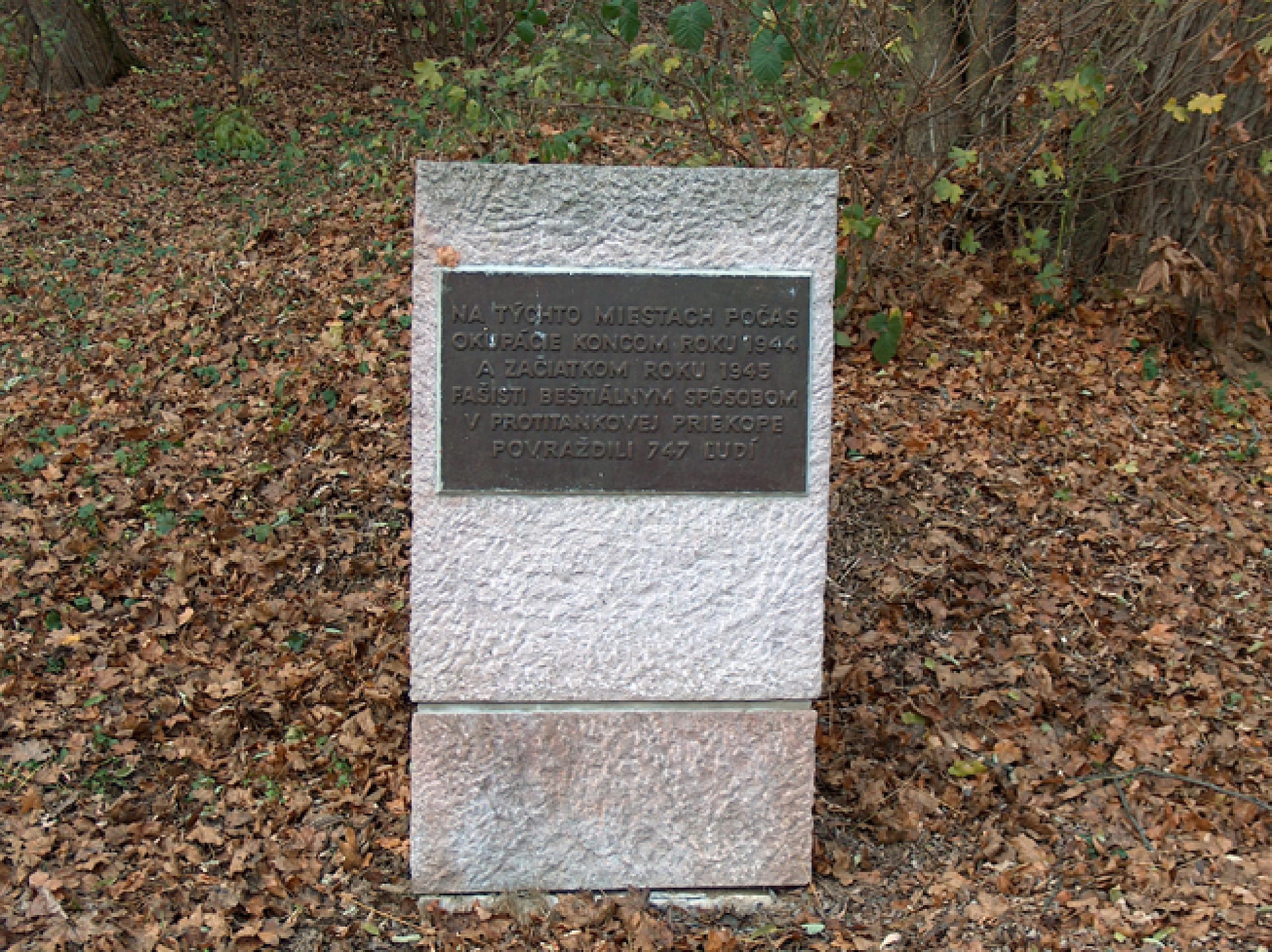
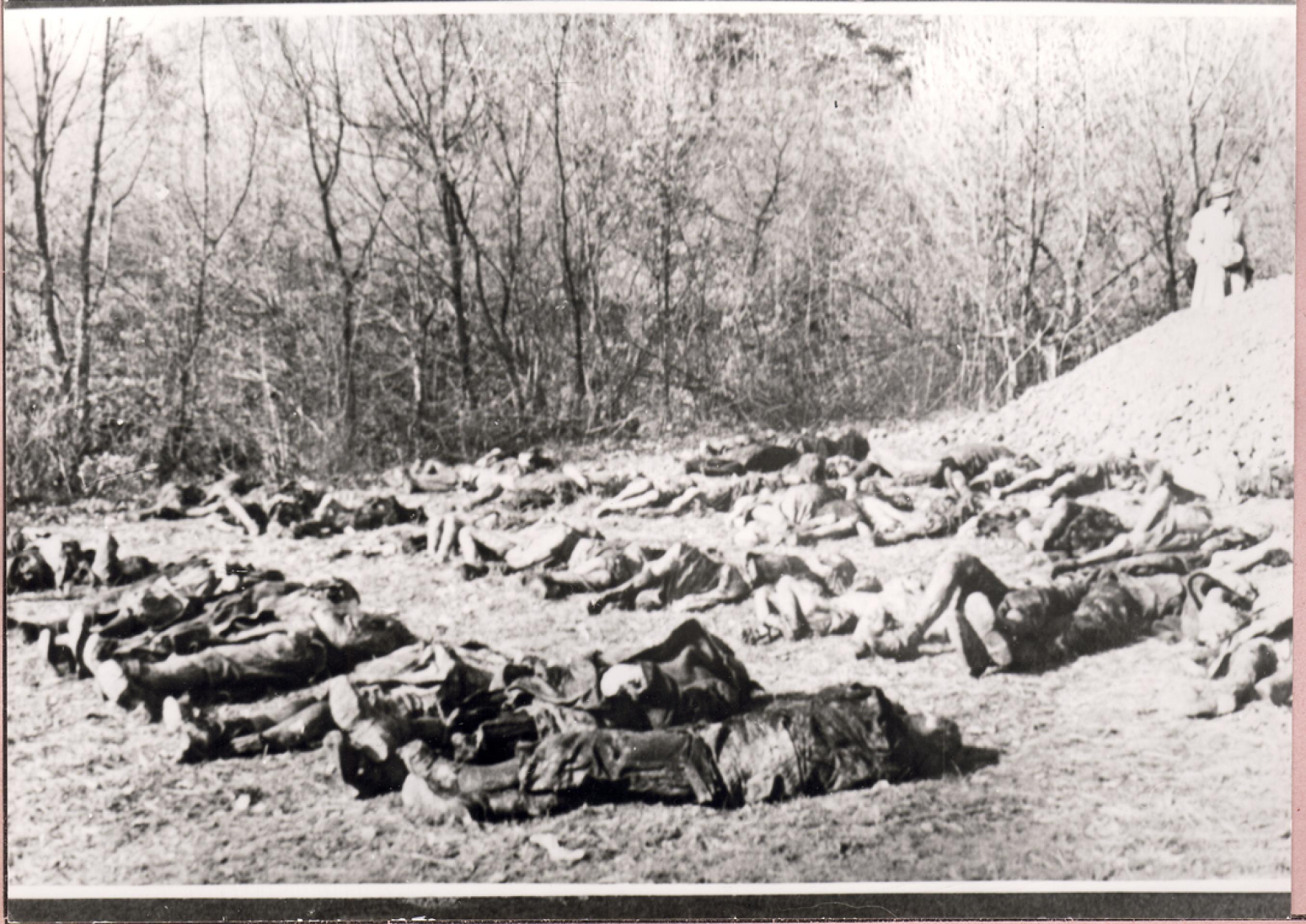
The Slovak National Uprising began on August 29, 1944. Launched in the central Slovak town of Banská Bystrica, its aim was to overthrow the dictatorial regime of Jozef Tiso. Resistance fighters from within the Slovak army and partisans jointly fought against the both troops loyal to the regime and the advancing German Wehrmacht and SS units. The Uprising ended when the rebel forces were defeated on October 27, 1944. Between November 5, 1944 and March 17, 1945, members of Einsatzkommando 14 (subordinate to SS-Einsatzgruppe H) and members of the Slovak Hlinka Guard conducted a series of mass shootings in the vicinity of Kremnička. They murdered 747 people. On December 12, 1944, alone 300 people were shot on a field near Kremnička. The perpetrators buried the victims in mass graves. In the course of these retaliation measures, German troops and their Slovak helpers murdered about 5,300 people, including many Jews who had fought with the partisans or sought refuge with them.
Victims
A total of 747 people were shot at Kremnička and buried in mass graves: 478 men, 211 women and 58 children under the age of 15. Among the victims were about 450 Jews. Approximately 5,300 people fell victim to the retaliation carried out by German and Slovak units, including 1,000 Jews and many Roma.
Following the collapse of the Habsburg Monarchy in 1918, Slovakia and the Czech regions of Bohemia, Moravia and Czech Silesia merged to form Czechoslovakia. By spring 1939, Czechoslovakia had been broken up as the result of a number of campaigns by neighbouring Nazi Germany. In autumn 1938 Slovakia became an autonomous state with a government of its own but lost border territories to Hungary at around the same time. In March 1939 it declared independence and became a satellite state of the Third Reich led by the nationalist Hlinka party and President Jozef Tiso (1887–1947), a Catholic priest. The military arm of the party served as the police force and took action against Jews, Czechs, the political left and other opponents. The regime introduced a forced labour system that also affected many Roma. In autumn 1941, the government in Bratislava became the first Nazi-allied administration to vote in favour of the German plan to deport Jews to Eastern Europe. In 1942 alone 60,000 Jews were deported from Slovakia to German extermination camps. A total of around 75,000 Slovakian Jews died in the Holocaust. The imminent arrival of the Red Army led to a national rebellion against the regime of the Hlinka party in the late summer of 1944. The German army and SS units crushed this rebellion, with the loss of some 20,000 lives.
After the war Slovakia again became part of Czechoslovakia, which was a communist state from 1948. The national rebellion was the main feature of collective memory. It was depicted as an act of resistance that had allowed a socialist society to emerge. In 1947 a site of memory was established at Banská Bystrica, which had been at the centre of the national rebellion. The site was extended on a number of occasions. Responsibility for collaboration with Germany was attributed solely to supporters of the Hlinka party. 1993 saw the Czech and Slovak parts of the country split into two separate republics. Slovakia had no state tradition of its own beyond the period 1939 to 1945. This is apparent in the culture of remembrance in the country today. Both socialists and civilian forces now refer to the Slovakian national rebellion. They associate it with the hope for a democratic state based on western values, a hope that was bitterly disappointed after 1948. Nationalist groups in Slovakia pursue a different approach. They identify themselves with the state’s independence from 1939–1945, view the rebellion that led to the occupation of the country as a betrayal and honour Tiso. These groups are unwilling to remember the deported Jews. Some view Slovakian collaboration as the result of having to relent to pressure from Germany to avoid endangering the country.
Liberal intellectuals aim to defuse these tendencies, referring to Slovakian involvement in the deportations and the persecution of the Roma. Small plaques to the persecuted and murdered Jews have been put up at a number of locations since the 1990s. However, some of these are in the region occupied by Hungary after 1938, from which German SS units deported Jews following the invasion of the Wehrmacht in March 1944. The most important site of memory to the Jews deported from Slovakia is the Holocaust Museum which was opened on the premises of the former forced labour and transit camp Sered’ in 2016.
Remembrance
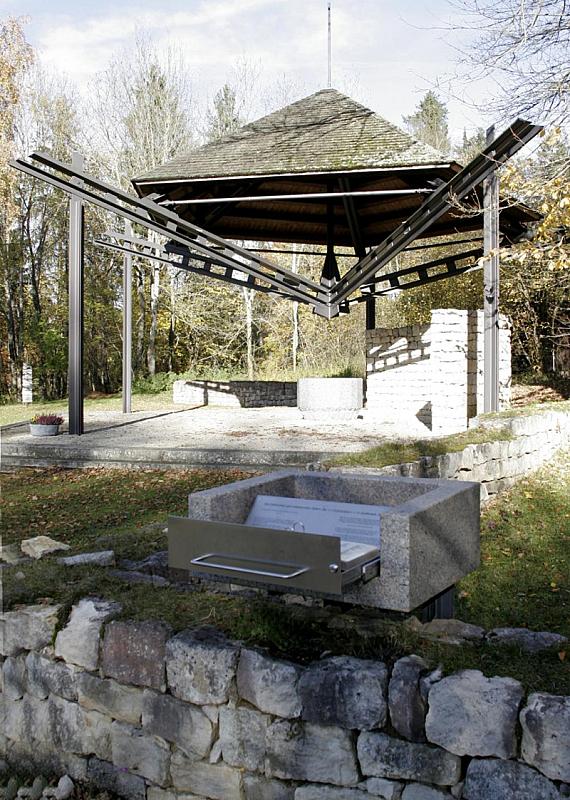
Immediately after the end of the war, the bodies of the victims of the mass shootings at Kremnička were exhumed with the help of the Soviet army and preparations were made for the erection of a memorial. The monument was designed by Dušan Samo Jurkovič and unveiled two years after his death, in 1949. In 1995, an inscription of the word »Remember!« in Hebrew and a menorah by Juraj Arieh Fatran, an Israeli architect of Slovak origin, were added to the monument. A further monument is located next to a mass grave in close vicinity. The village of Kremnička has since become a district of Banská Bystrica. The monument is administered by the local Museum of the Slovak National Uprising.
Possibilities
Commemoration ceremonies are held every year on August 29, the anniversary of the beginning of the Slovak National Uprising.