Memorial Book of the Baden-Württemberg State Parliament
Gedenkbuch des Landtags von Baden-Württemberg
The memorial book of the Baden-Württemberg State Parliament commemorates the members of the former State Parliaments of Baden and Württemberg who perished under National Socialist persecution.
History
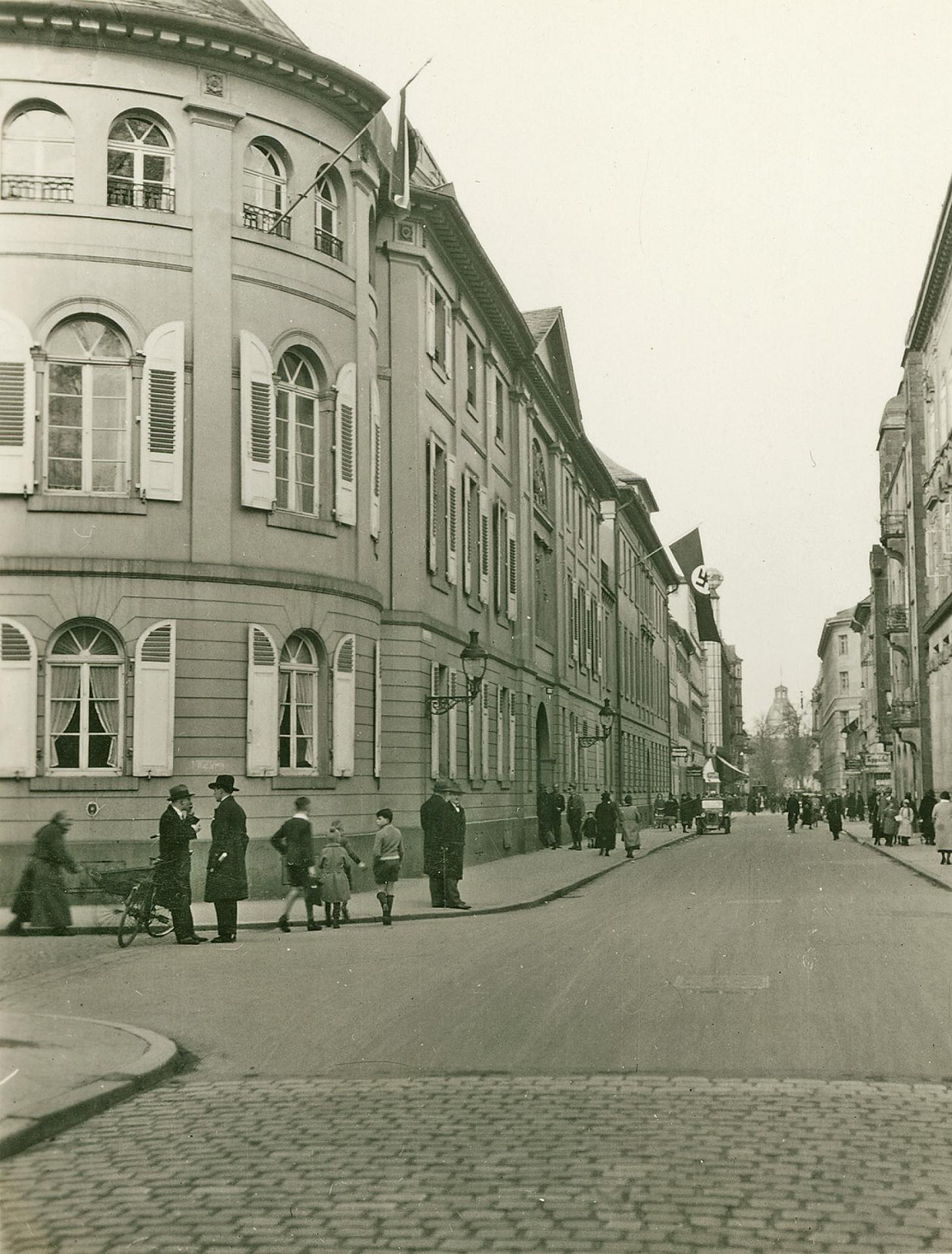
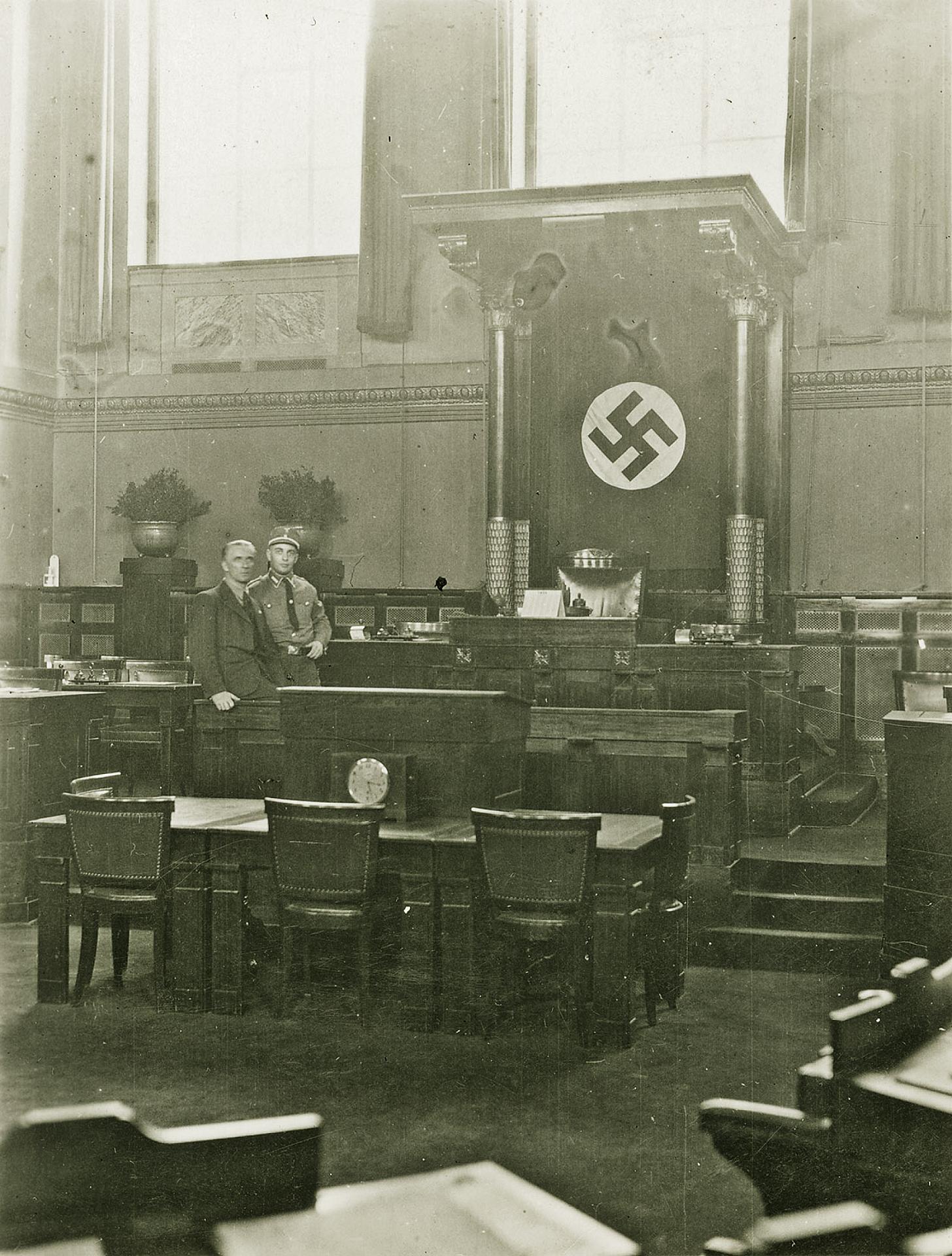
In the night of March 28/29, 1934, National Socialists strangled Ludwig Marum, leader of the faction of the Social Democrats in the Baden State Parliament, in the Kislau concentration camp. In order to make it appear as suicide, they hanged him on his cell's window crossbar. Like many other members of the State Parliament, Marum had been in political opposition to the National Socialist regime after they had taken power. These politicians were persecuted by the Gestapo, many were taken into »protective custody« and tortured. Several members of parliament were deported to concentration camps after their arrest. 18 members of the State Parliament - among them one woman - died of the effects of incarceration or torture. Some were intentionally murdered like Ludwig Marum. One of the persecuted politicians from south-western Germany was Kurt Schumacher, the later leader of the SPD parliamentary group in the first German Bundestag. Until 1931, Schumacher was chairman of the Württemberg SPD and a member of the Reichstag. He was arrested in July 1933 and passed through numerous concentration camps until his release in 1943. In 1952, he died of the long-term effects of his concentration camp imprisonment.
Victims
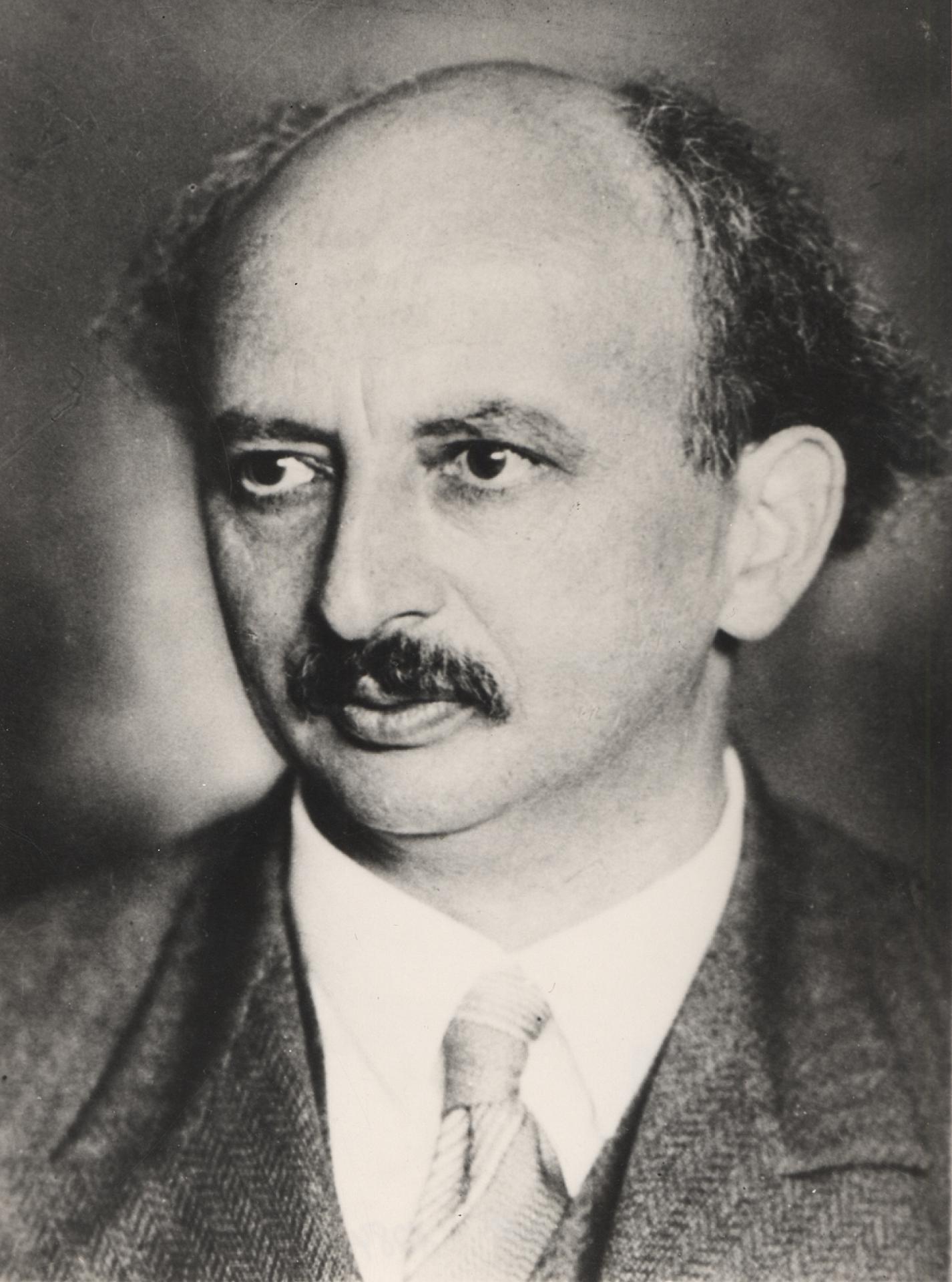
18 politicians and members of the State Parliaments of Baden and Württemberg as well as several members of the Reichstag from the region were murdered by the National Socialists or died of the effects of persecution. The names of the victims were: Eugen Bolz, Hermann Böning, Fritz Elsas, Johannes Fischer, Karl Großhans, Josef Heid, Julius Helmstädter, Leo Kullmann, Georg Lechleiter, Guido Leser, Ludwig Marum, Paul Rehbach, Leopold Rückert, Karl Ruggaber, Karl Schneck, Laura Schradin, Kurt Schumacher, and Jakob Weimer.
The entry to power of the National Socialists in 1933 heralded the state persecution of opponents of the regime, Jews, Roma – who were classed as »gypsies« -, the sick and many other groups. For the first time, anti-semitism became part of the government policy of a modern state and the persecution of all groups was progressively heightened. The process was characterised by the interplay between state regulation, violence from supporters of the regime and rabble-rousing propaganda from the press. The acts of terror against the Jews in November 1938 (»The Night of the Broken Glass«), culminating in around one hundred deaths, marked the prelude to the complete exclusion and murder of the Jewish minority.
With the outbreak of the Second World War in September 1939, large parts of Europe fell under German control. In Eastern Europe in particular a multi-tiered system of camps and extermination sites was established, in which the SS murdered up to six million Jews, among them around 165,000 German Jews. It is estimated that around seven million Germans lost their lives in the war, including almost 3.5 million civilians. Around 28 million residents of the occupied Soviet Union (both soldiers and civilians) and three million non-Jewish Poles met a violent death. These groups are still barely commemorated in Germany.
Germany came under Allied occupation in 1945 and 1949 saw the foundation of the German Democratic Republic (GDR) and the Federal Republic of Germany (FRG), who had very different cultures of remembrance. The GDR profiled itself as an »antifascist« state. The former concentration camps at Buchenwald, Ravensbrück and Sachsenhausen became »National Memorials« and primarily documented the communist resistance during the war.
In the Federal Republic, the dominant memory was initially of the victims of Allied bombing raids and those who had fled or been expelled from their homes in the former territory of the Third Reich. It was left to specific groups to remember Nazi persecution, the Holocaust or the resistance. With the exception of the war crimes trials, there was no public discussion of perpetrators or involvement in crimes. However, the situation was to change in the mid-1960s, when the statute of limitations for murder was lifted following a lengthy debate. Also during this period, memorial sites were established at former concentration camps (1965: Dachau and Neuengamme; 1966: Bergen-Belsen) and the German Resistance Memorial Centre was opened in 1968 in West Berlin. However, it was not until the 1980s that a diverse and often small-scale landscape of memory developed as the result of local initiatives.
Following German unification in 1990, a national memorial site concept was developed and there was a major review of German sites of memory. The Memorial to the Murdered Jews of Europe in Berlin was inaugurated in 2005. The Topography of Terror, a comprehensive documentation of National Socialist crimes and perpetrators, has opened with a new centre in May 2010; the documentation centre »Flight, Expulsion, Reconciliation« followed suit in 2021. In the meantime, central memorials in Berlin have been erected to commemorate further groups of Nazi victims as well: the murdered Sinti and Roma, the patients murdered in the context of the Nazi’s »Euthanasia« killings and the persecuted homosexuals.
The German victims of National Socialist terror in the former Eastern territories of the Third Reich were forgotten by both German states after the end of the war. For decades, memory of these victims was only preserved by West German associations for Germans born in these territories and it mainly excluded the period from 1933 to 1945.
Remembrance
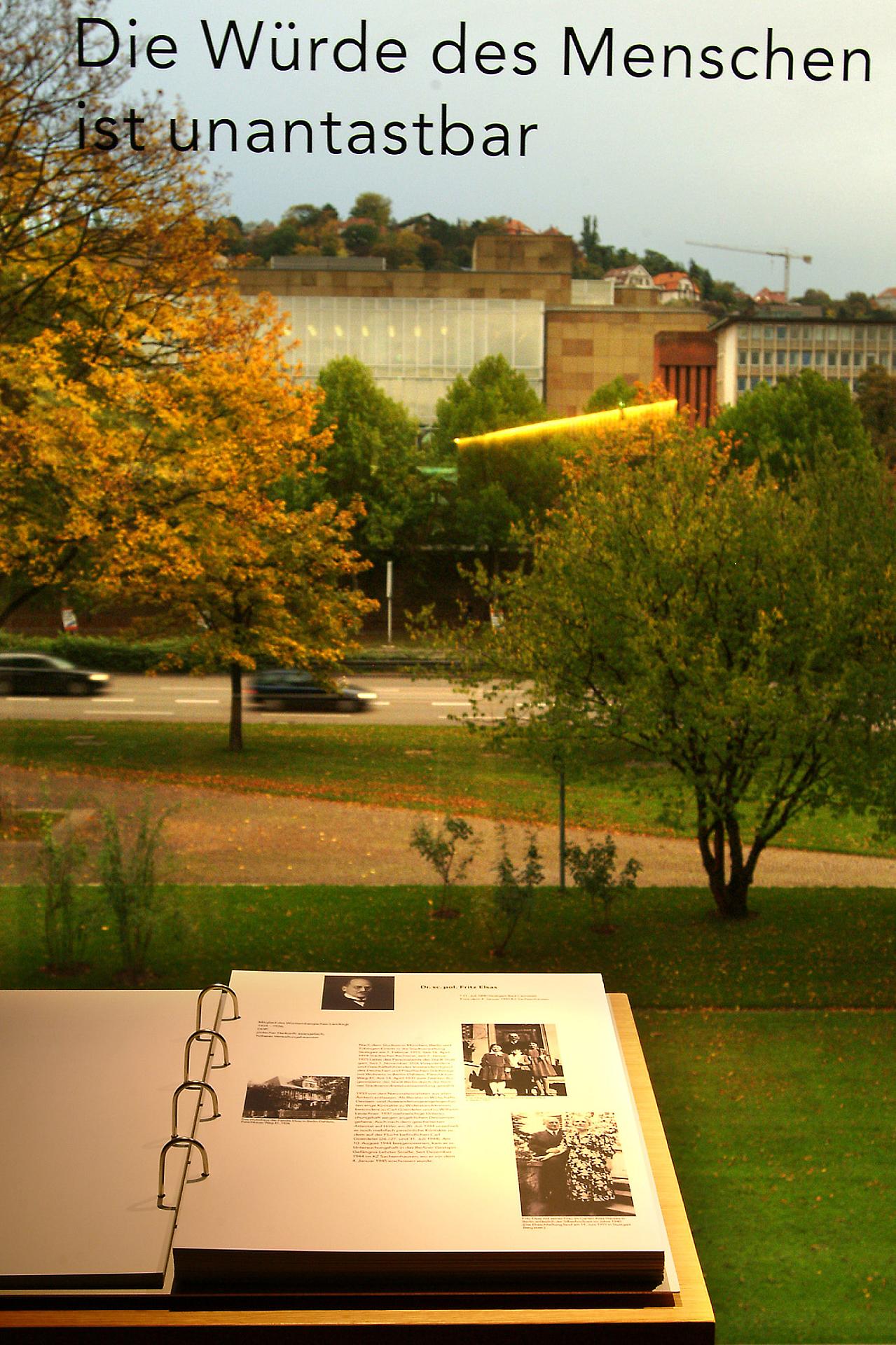
In 2003, the chairmanship of the Baden-Württemberg State Parliament decided to commission a documentation on the 18 members of the State Parliaments of Baden and Württemberg who were murdered or died of the effects of persecution by the National Socialists. This occurred on the occasion of the 70th anniversary of the National Socialists' assumption of power. The documentation resulted in the creation of a memorial book, which has been on display on the principal floor of the State Parliament building in Stuttgart since March 30, 2004. The memorial book contains biographical information on the 18 members of State Parliament, excerpts about human and civil rights as well as the 1919 »Weimar Constitution«. The documentation's aim is to show the importance of legally established human rights in a constitutional parliamentary democracy by portraying the fates of politicians who were persecuted under the National Socialist regime.
Possibilities
A4-sized brochure on the contents of the memorial book