Skip to content

Memorial for the victims of the Holocaust

Monumento a las víctimas del holocausto


On 12 March 2007 Spain’s first Holocaust memorial was dedicated. It was initiated by the city council and realized in cooperation with the Jewish community.

History

In 1492, Jews in Spain were either forced to convert to Catholicism or leave the country on pain of death. At the end of the 19th century, Spain opened its doors to Jews fleeing pogroms in the Russian Empire. During the First World War, many descendants of Jews who had fled in the 15th century – »Sephardic« Jews from the Balkans – returned Spain. Many settled in Barcelona and founded a new Jewish community in 1918, one year after Madrid’s first new synagogue had opened.
By 1936, the year that the Spanish Civil War broke out, the Jewish communities in various Spanish cities had consolidated their existence. After the victory of the Nationalist side under General Franco repressive measures were taken against Jews. Jewish communities were gradually dissolved; they remained banned until 1945. Nevertheless, Spain did not participate in the Second World War and did not hand over Jews to Nazi Germany. However, the country was also reluctant to open its doors to Jewish refugees in Europe and did little to help Jews with Spanish citizenship who remained in territories controlled by Germany.
Even after 1945, Jews could practice their religion only privately. In 1968, when a new law guaranteeing freedom of religion was passed, Jewish communities could reorganize themselves.
Victims

The memorial is dedicated first and foremost tot he murdered Jews of Europe, but also to other victims of National Socialism.

At the beginning of the 1930s, Spain was marked by deep divisions between republicans - including the socialists - and monarchists supporting a traditional, Catholic society. The country was also unsettled by the independence campaigns of various regions, including the Basque region and Catalonia. In 1936, the political violence that had been brewing in Spain since the mid 19th century spilled over into a bloody civil war of international dimensions following the election victory of the »Frente Popular« (People’s Front) composed of socialists, left-liberals and communists. Nazi Germany and the Italian fascist regime supported the anti-republican forces during the Spanish Civil War, which were led by General Francisco Franco (1892–1975) from October 1936 onwards. The »Condor Legion« of the German Luftwaffe provided military support and bombed a number of towns. In turn, the republican government troops were supported by the International Brigades, which were volunteer corps of foreign communists and left-wing socialists. Franco announced his victory on April 1, 1939. Following the outbreak of World War Two, thousands of republican refugees entered the sphere of influence of Nazi Germany in neighbouring occupied France and were deported to concentration camps. Over 5,000 Spaniards died in the camps. Spain was not involved in the Second World War. However, volunteers and army members fought on the side of the Wehrmacht as »División Azul« (Blue Division) during the campaign in Russia. The Franco regime pursued a contradictory policy towards the Jews. Jews, like Protestants and other non-Catholics, were not allowed to practise their religion once Franco had come to power. At the same time, Spain permitted between 20,000 and 35,000 Jewish refugees from abroad to cross the country in order to leave Europe. In 1944 some 3,500 Jews from the Hungarian capital Budapest were spared deportation by the German occupiers thanks to generous Spanish provisions granting safe passage. Franco remained in power until 1975. His regime was initially ostracised by the international community but later brought into the western community of states. Whilst the regime lasted it was impossible to confront the persecution of republicans in Spain and in the German sphere of influence. Attempts to establish small sites of memory at places associated with the Civil War were partly tolerated and partly blocked by officials. A critical national confrontation with the 1936-39 Civil War only started to emerge in the 1990s. A memorial centre was established in 1998 in Guernica, which had been completely destroyed in bombing raids by the »Condor Legion« in 1937. In 2005 José Luis Rodríguez Zapatero (*1960) became the first Spanish Prime Minister to visit a concentration camp memorial site when he commemorated the Spanish political prisoners who died at Mauthausen. In December 2006 the »Memory Law« was passed to rehabilitate the victims. This law officially denounces the dictatorial regime, which was responsible for countless executions and hundreds of thousands of expulsions. A national memorial dedicated to the »memory of the Jews, Spaniards, gypsies and other groups murdered in the extermination camps« was unveiled in Madrid in 2007.

Remembrance

It took years from the end of the Franco-dictatorship before any serious examination of the history of the regime and of the Civil War was undertaken. In 2005, José Zapatero became the first Spanish Prime Minister to visit a concentration camp memorial: in Mauthausen, he paid tribute above all to thousands of Spaniards, political prisoners, who had fled from the Franco-regime and died in German camps.
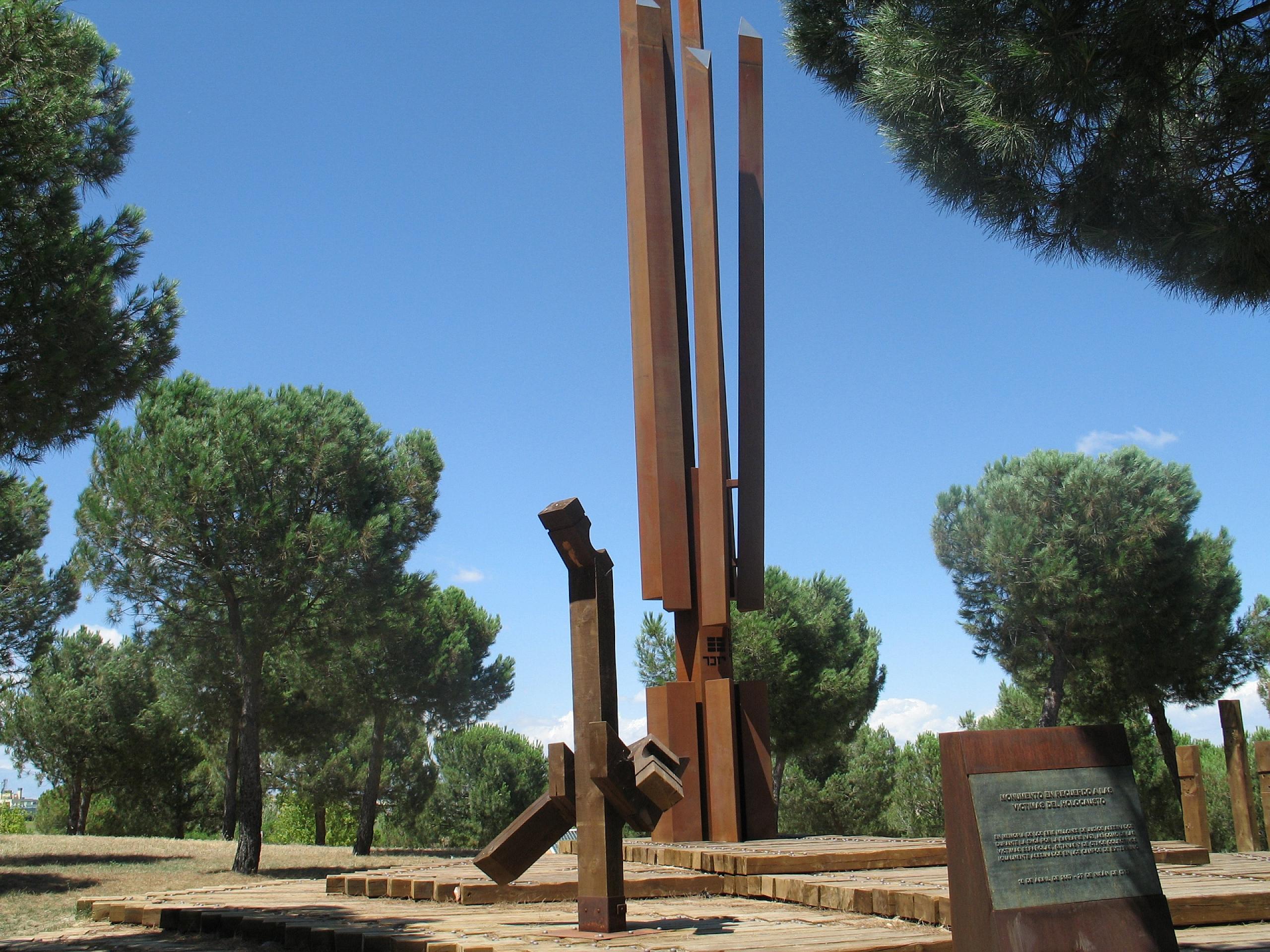
The Madrid City Council unanimously decided on 28 April 2005 to establish a Holocaust Memorial. It was dedicated on 12 March 2007 by the Mayor of Madrid. It is the first Holocaust memorial in Spain and was built in the »Park of the Three Cultures«, symbolizing the coexistence of Christians, Jews and Muslims.
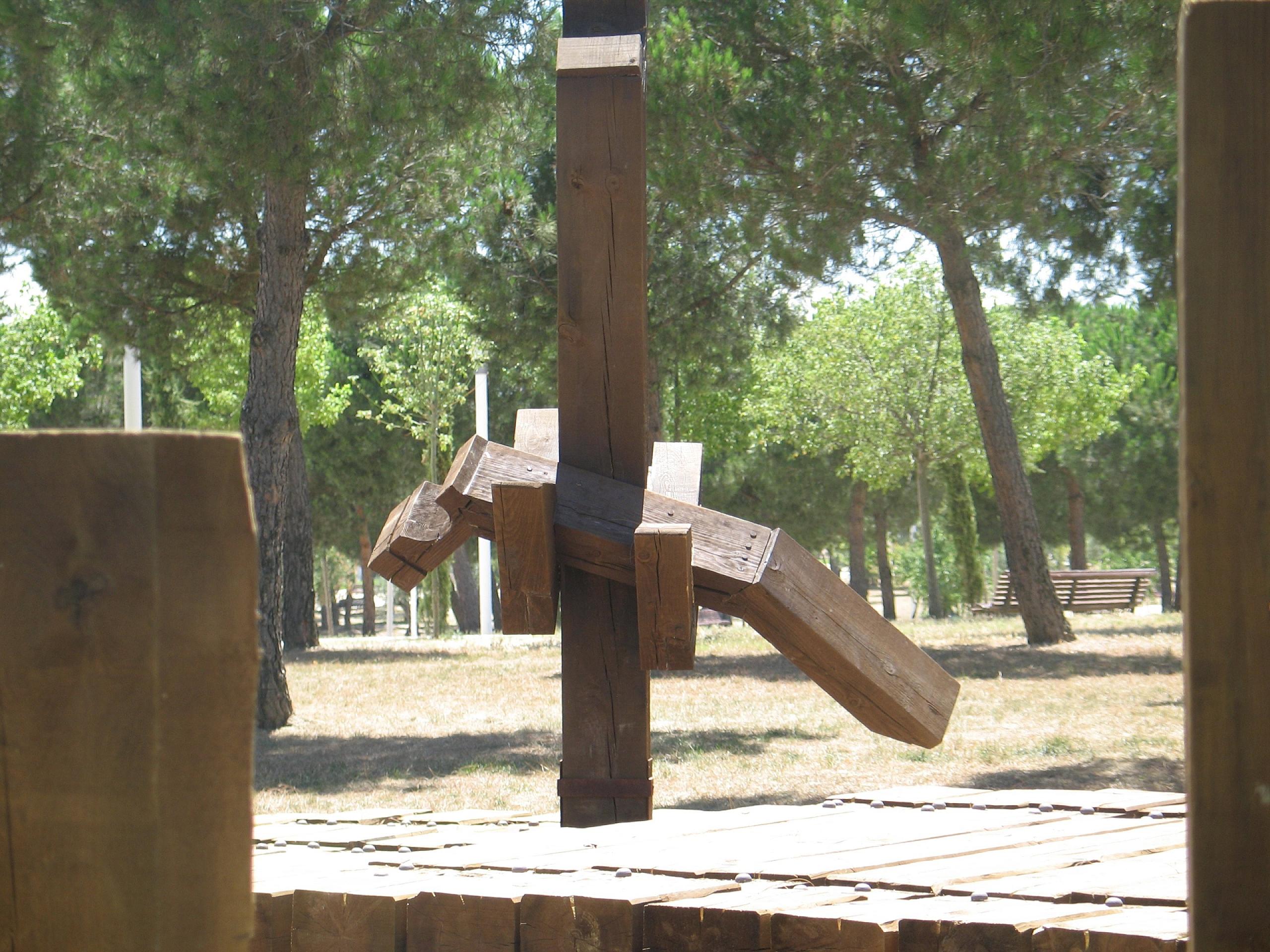
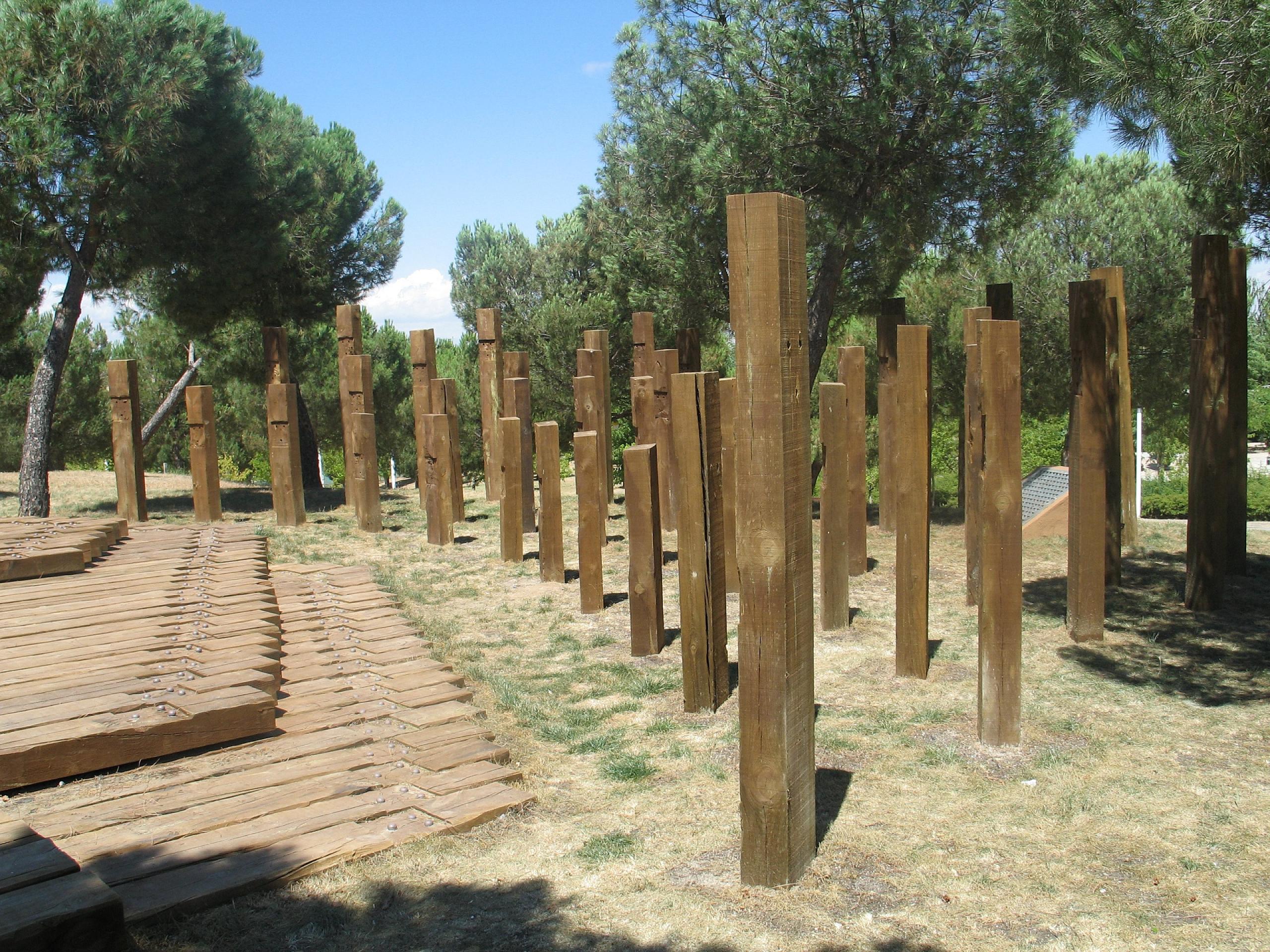
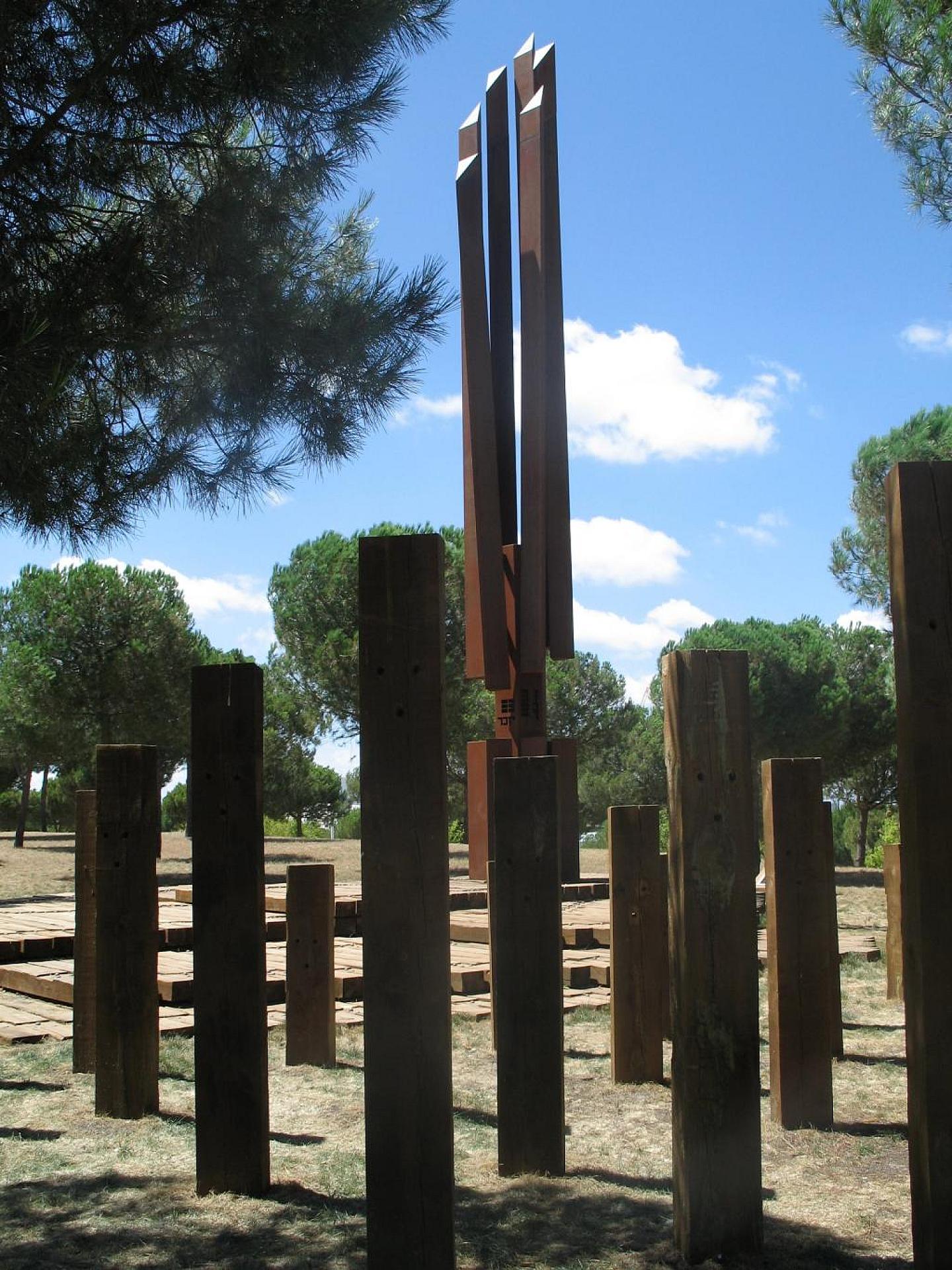
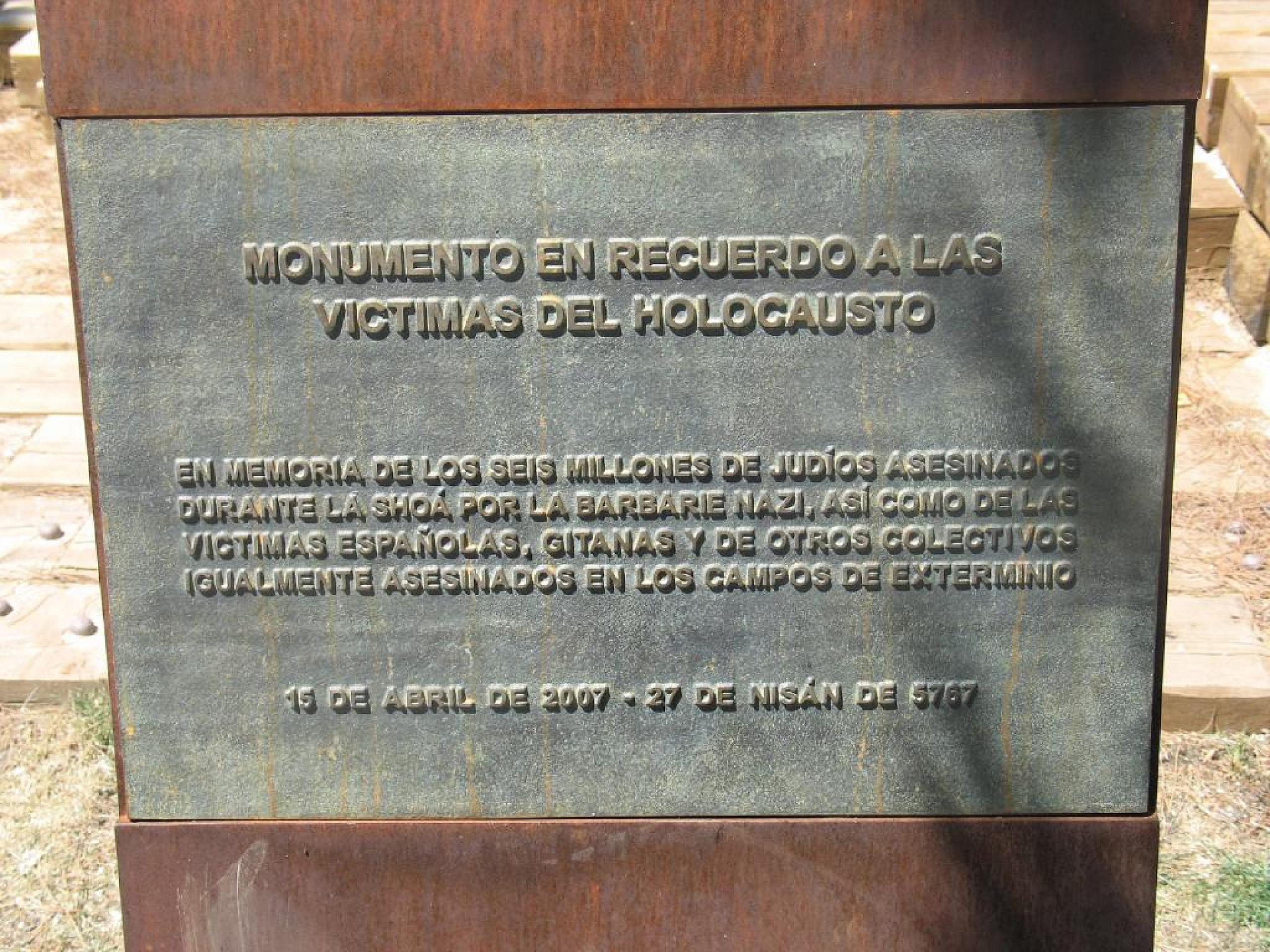
The design is by artist Samuel Nahon and architect Alberto Stisin. The column at its centre is ten metres high. It is made of railroad ties forming a Star of David. Around it are wooden sculptures commemorating the millions of victims. The Spanish inscription reads: »Memorial to the victims of the Holocaust. In memory of the millions of Jews murdered by Nazi barbarism during the Shoah, and also to Spanish, gipsy and other groups of victims, who were murdered as well in the extermination camps.«

Possibilities

There are commemorations held at the memorial regularly on Holocaust Remembrance Day, January 27.

Open

The memorial is accessible at all times.

Contact

Jardín de las Tres Culturas im Parque Juan Carlos I
28042 Madrid