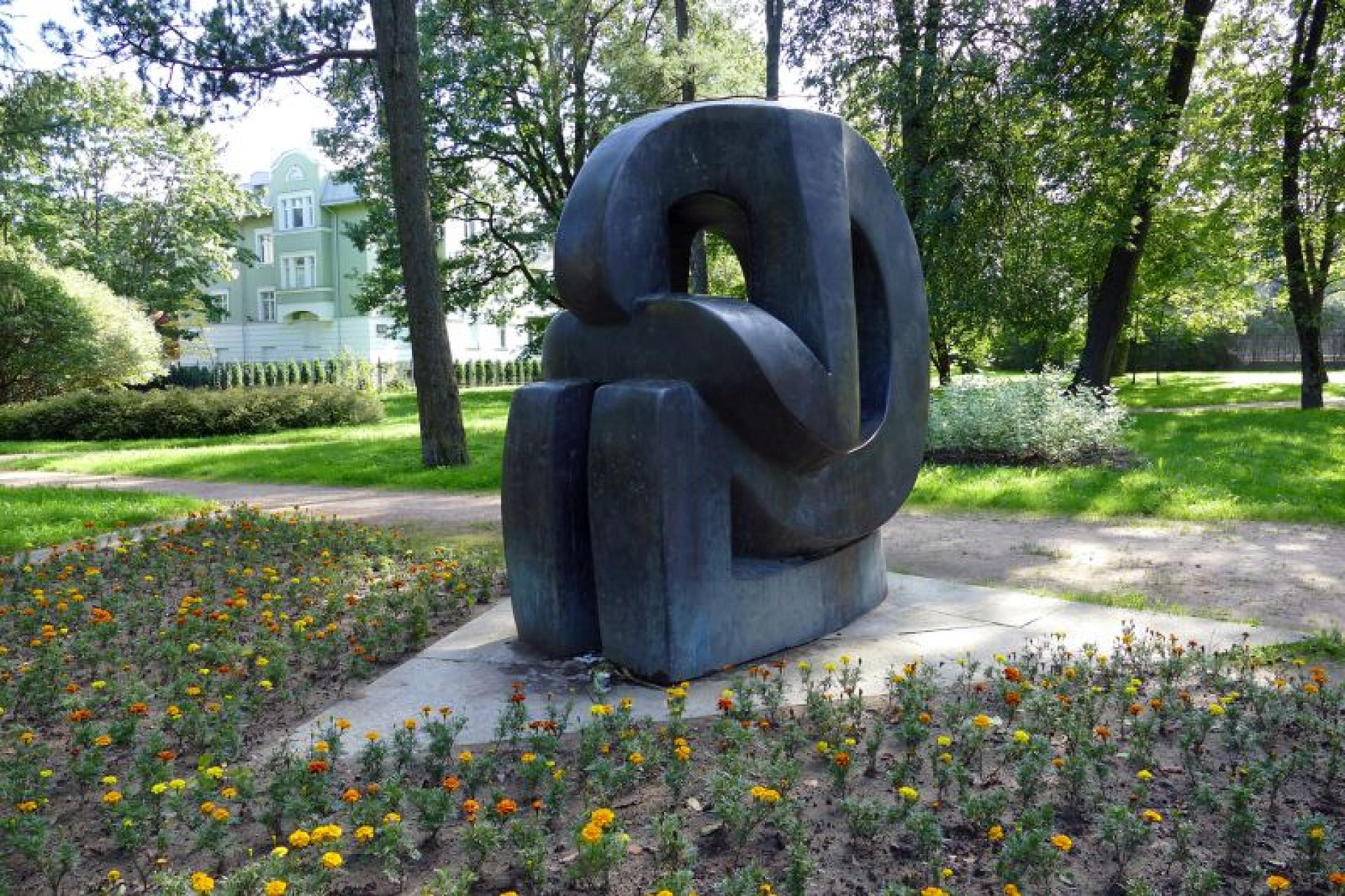
In the city of Pushkin (before 1918 Tsarskoye Selo, from 1918 to 1937 Detskoye Selo) the memorial »Formula of Sorrow« commemorates the Jews who were murdered there by German units in October 1941.
History
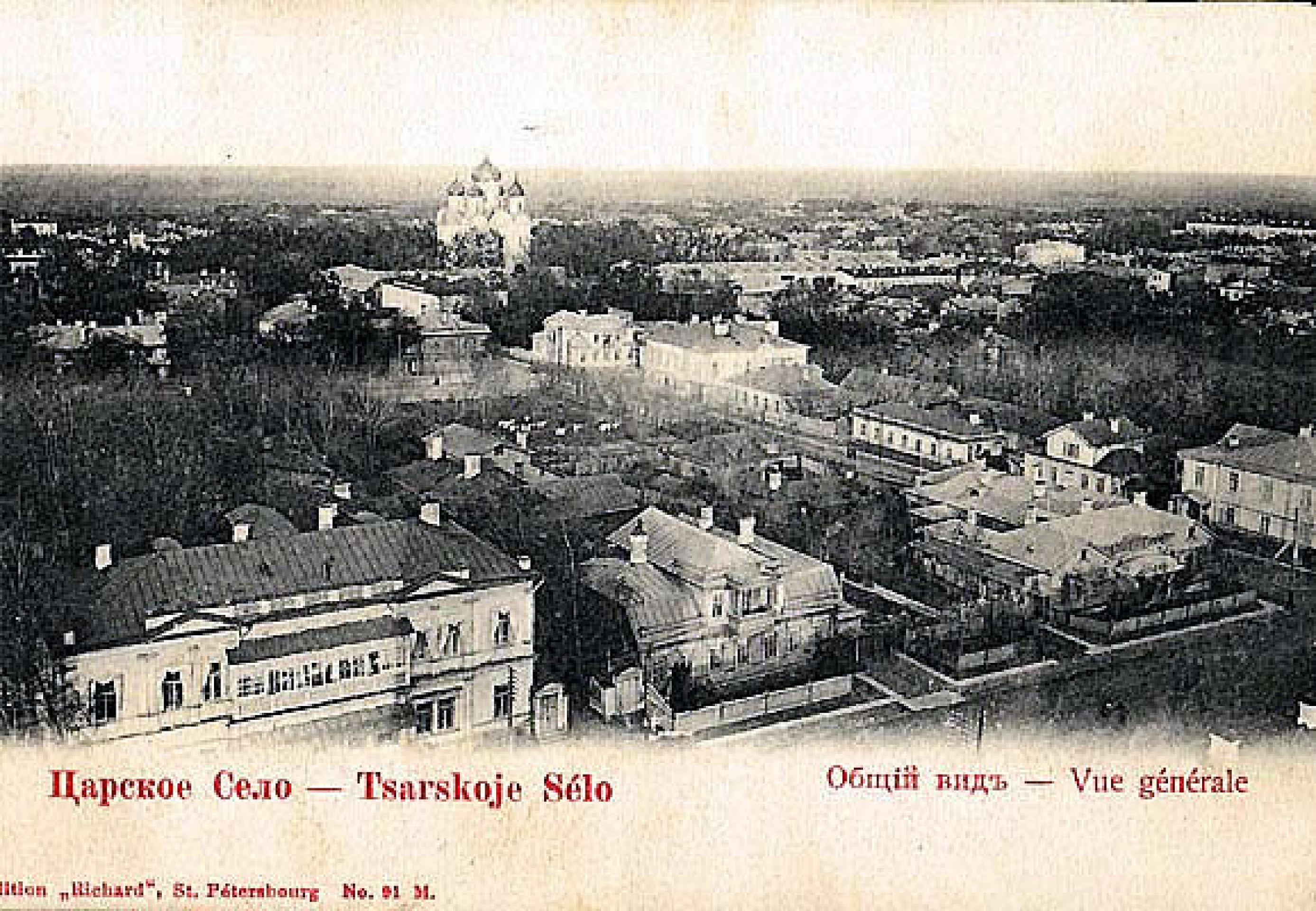
Tsarskoye Selo 25 kilometres south of Saint Petersburg, has served the Tsars as a popular summer residence since its foundation in 1710. Around 1830 the first Jews came to the city as soldiers of the Tsar's regiment. From the 1860s onwards, more Jews were allowed to move into the city. In Tsarskoye Selo one of the largest Jewish communities in the Russian empire developed that was outside the residential and settlement area designated for them (»Pale of Settlement«). In 1926 the city had 537 Jewish inhabitants. The Jewish population increased due to Jewish migrants from rural areas who did not find a place to live in overpopulated St. Petersburg (after 1924 Leningrad). In 1939, when the city was already renamed Pushkin, about 3,220 of its approximately 56,000 inhabitants were Jewish.
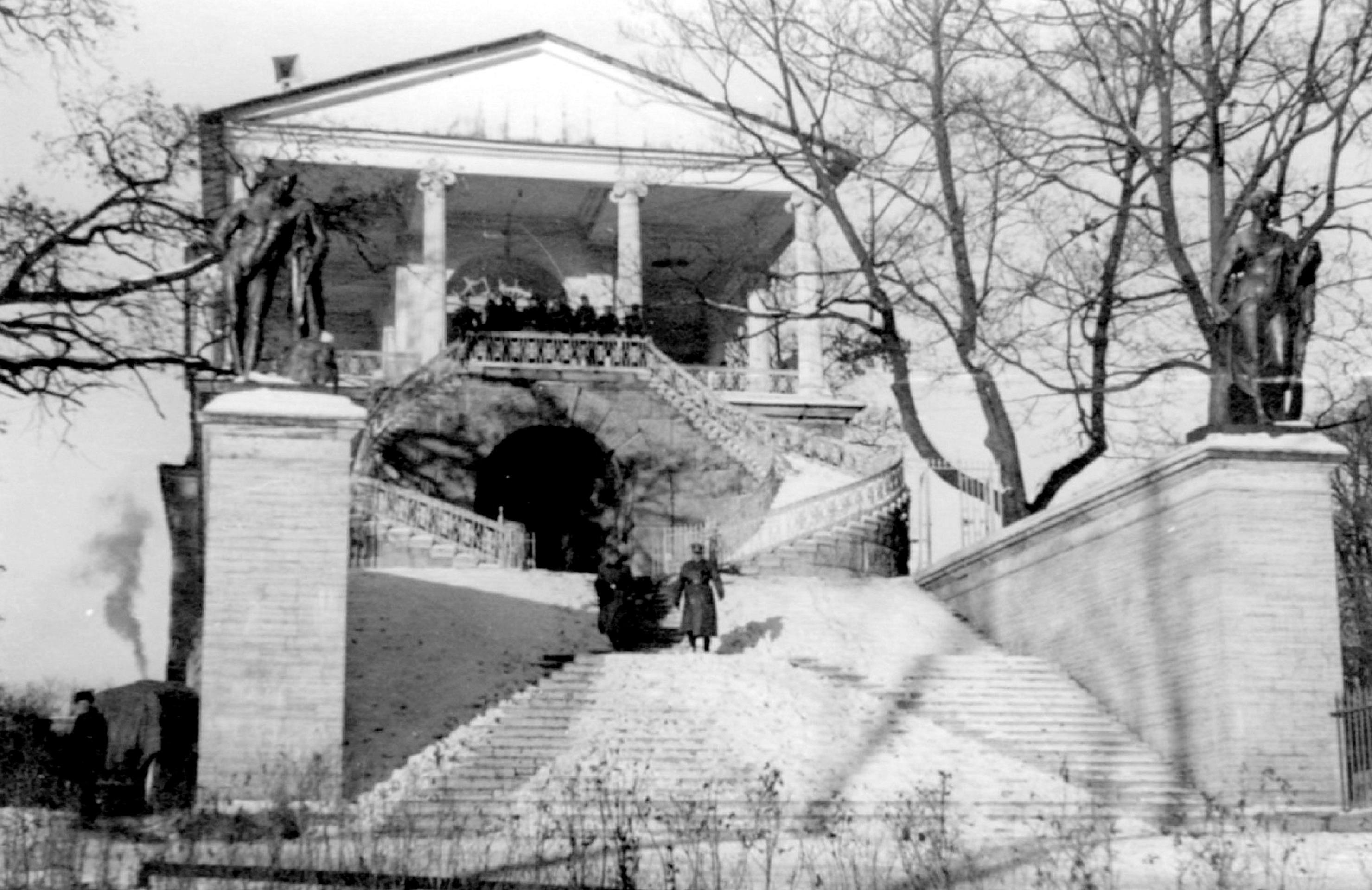
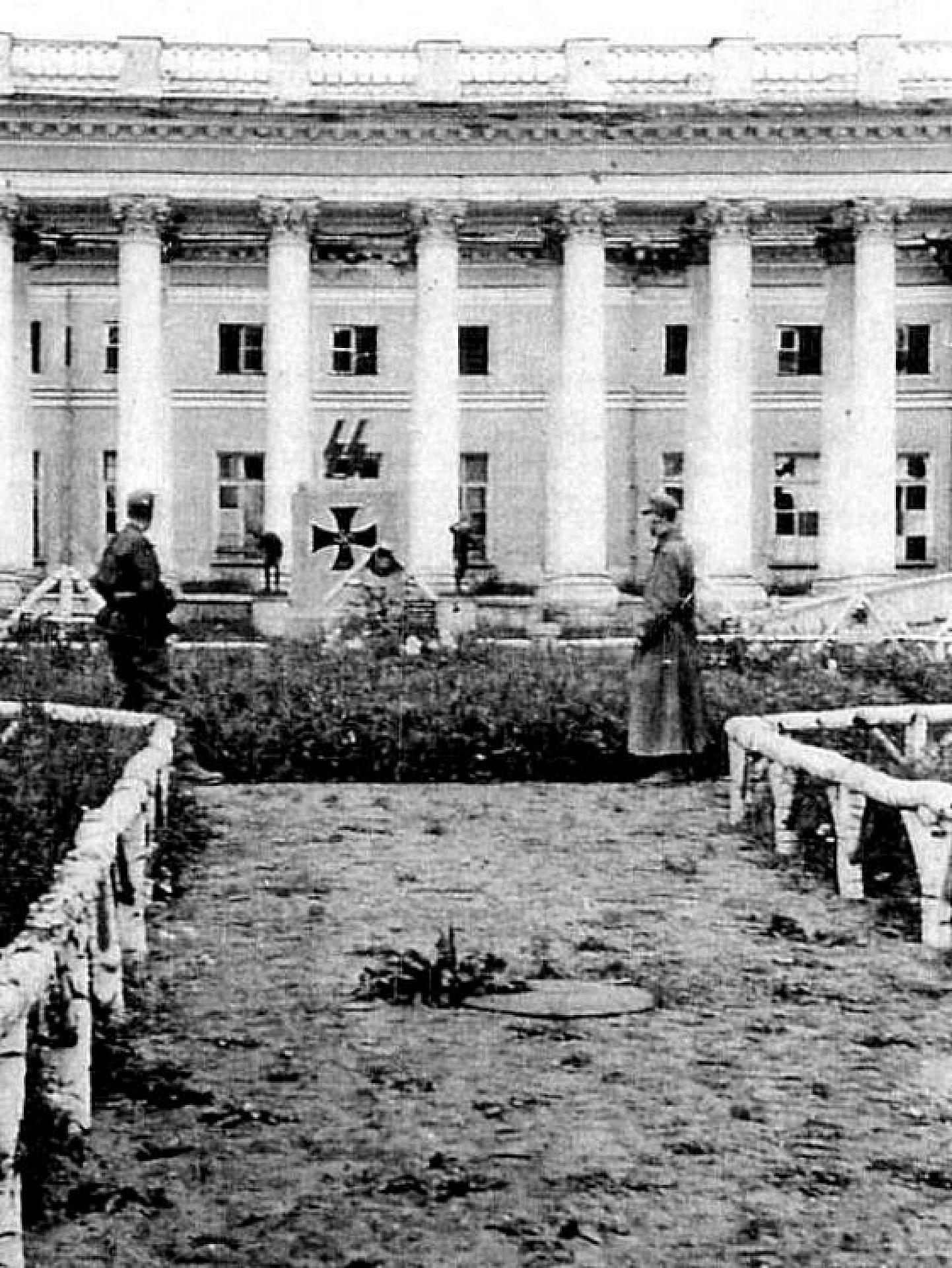
The German Wehrmacht occupied the city on September 17, 1941. From then on the city was located in the immediate vicinity of the front, while Leningrad was put under siege for almost three years. A large number of Jews were able to flee right before the German invasion. Right in the first few days soldiers of the Wehrmacht searched several bunkers of the city and murdered and hanged young men on the main square of the city in front of the Catherine Palace as a deterrent. Among the victims were also Jews. At the beginning of October 1941, the Jews were forced to register and surrender their property. On October 4, 1941, all Jews had to gather at the German commandant's office. Several hundred Jews were imprisoned in the cellars of the Catherine Palace. Until October 8, 1941 the Sonderkommando (SS special commando) 1b under SS-Oberführer Erich Ehrlinger shot all prisoners in several groups at different locations in the Alexander Park, The Catherine Park and the Babolovsky Park. In the following days they chased and shot all Jews who had managed to flee from the »Aktion«. On January 2, 1942 the Einsatzkommando (mobile killing unit) A declared the city to be »judenfrei« (free of Jews).
Victims
The number of victims in witness reports and documents of the Soviet Commission of Inquiry are contradictory. They vary between 150 and about 800. All in all the Einsatzgruppe (mobile killing unit) A murdered about 4,100 Jews in the Leningrad area.
Remembrance
On January 24, 1944 the Red Army recaptured Pushkin. Until the collapse of the Soviet Union there was no memorial for the murdered Jews of Pushkin. Many mass shooting sites are still unknown to this day. The SS-Oberführer and commander of Sonderkommando (SS special commando) 1b, Erich Ehrlinger (1910–2004), who had been responsible for the murder of the Jews in Pushkin, was brought to justice in the Federal Republic of Germany, but did not have to serve his 12 years' imprisonment because of his »permanent inability to stand trial«.
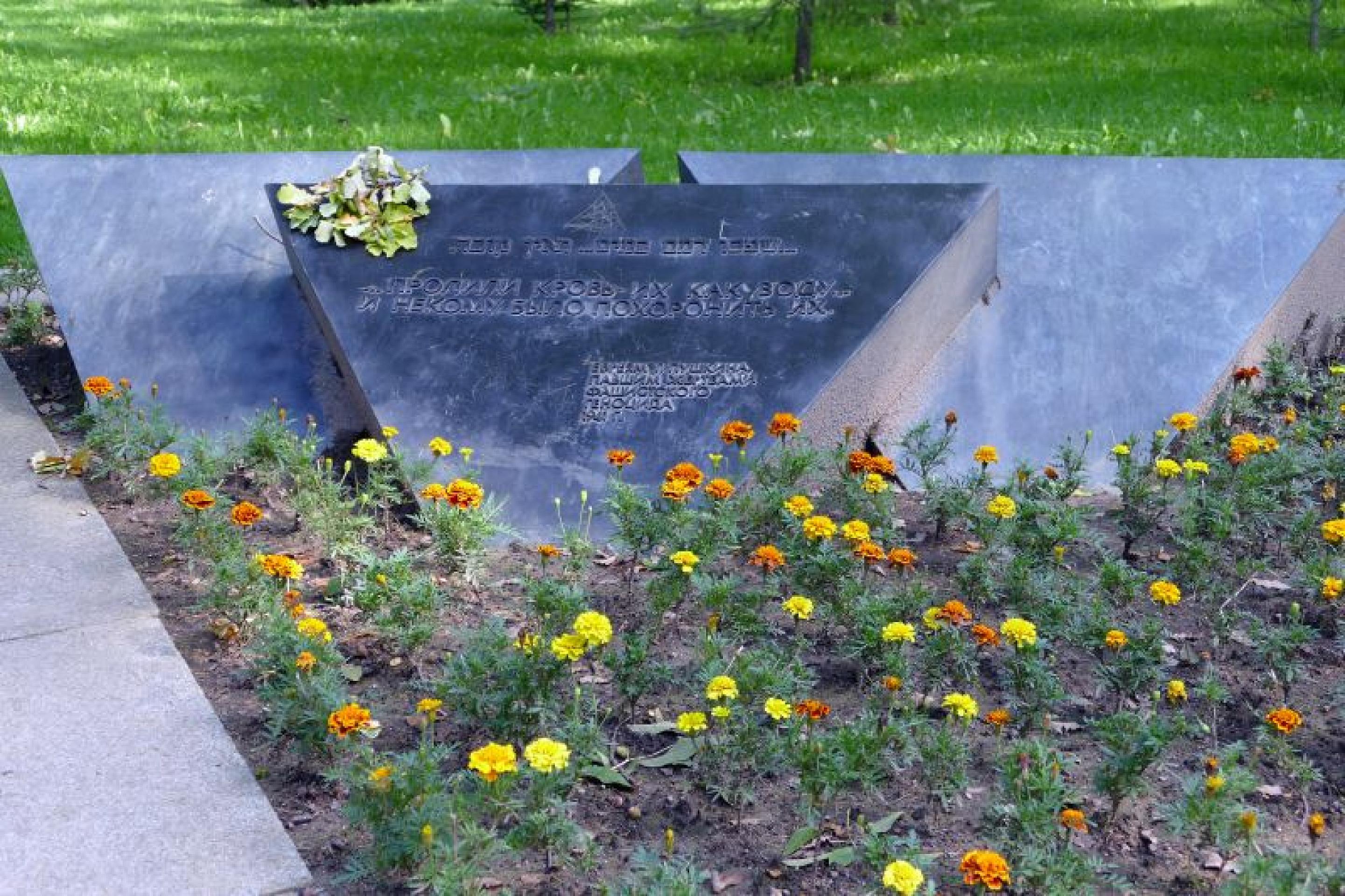
In 1991 members of the group »Investigation of Disaster« erected the monument »Formula Skorbi«, translated »Formula of Sorrow«. The bronze statue was designed by the famous Soviet sculptor and graphic artist Vadim Sidur. It stands on a granite platform. The Hebrew and Russian inscription reads: »They have shed their blood like water and there was no-one to bury them. To the Jews of Pushkin, fallen victims of the Fascist genocide of 1941«. The abstract sculpture is 2,4 meters high and is reminiscent of a crouched human being and the first letter of the Hebrew alphabet »Alef«, which symbolizes the beginning. The memorial is located in front of the Alexander Palace. Every year on the first Sunday of October a commemoration ceremony is held in memory of the victims.
Possibilities
A commemoration ceremony is held at the monument every year on the first weekend of October.
Open
The memorial is accessible at all times.
Contact
Moskowskaja uliza 5
196601 Puschkin