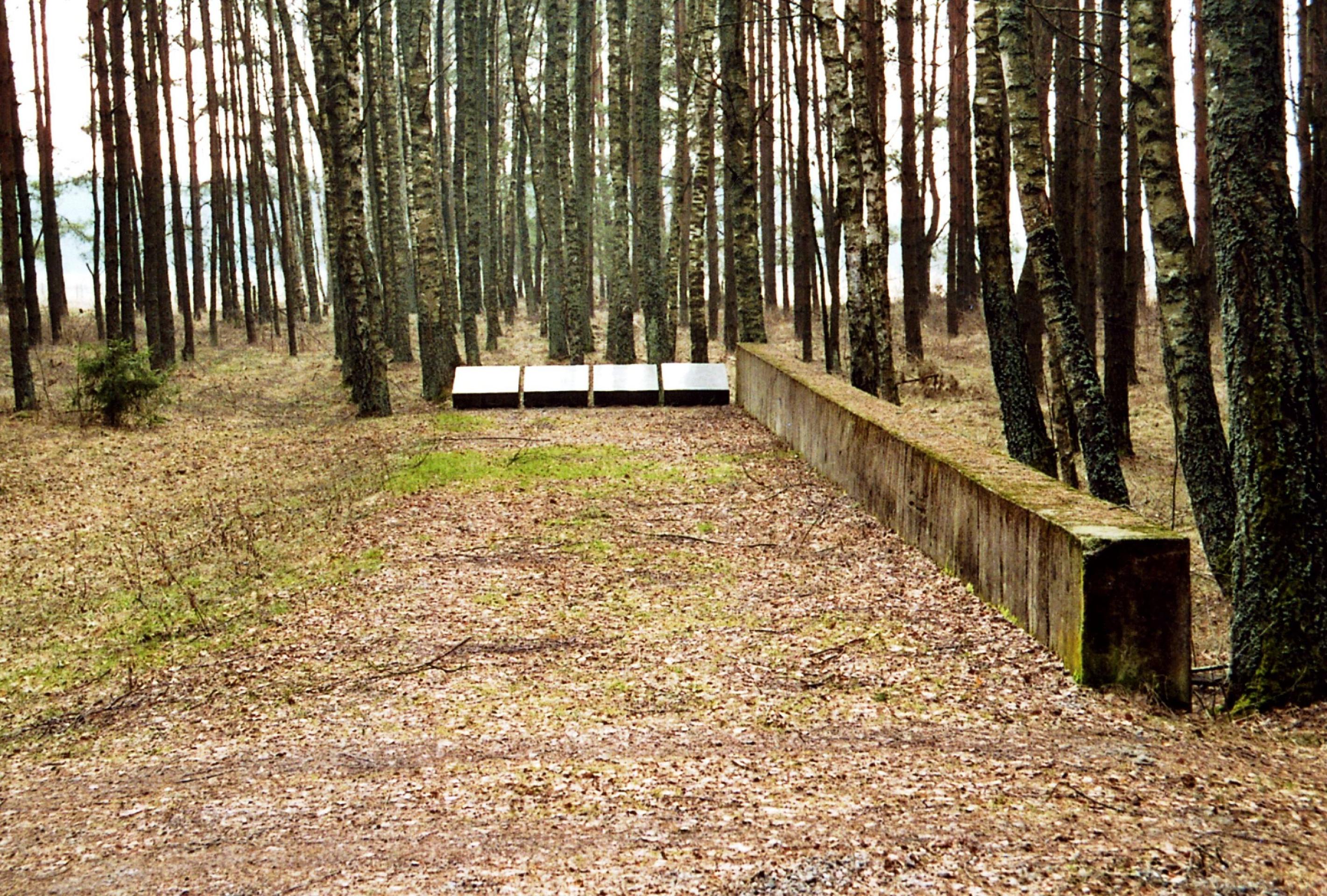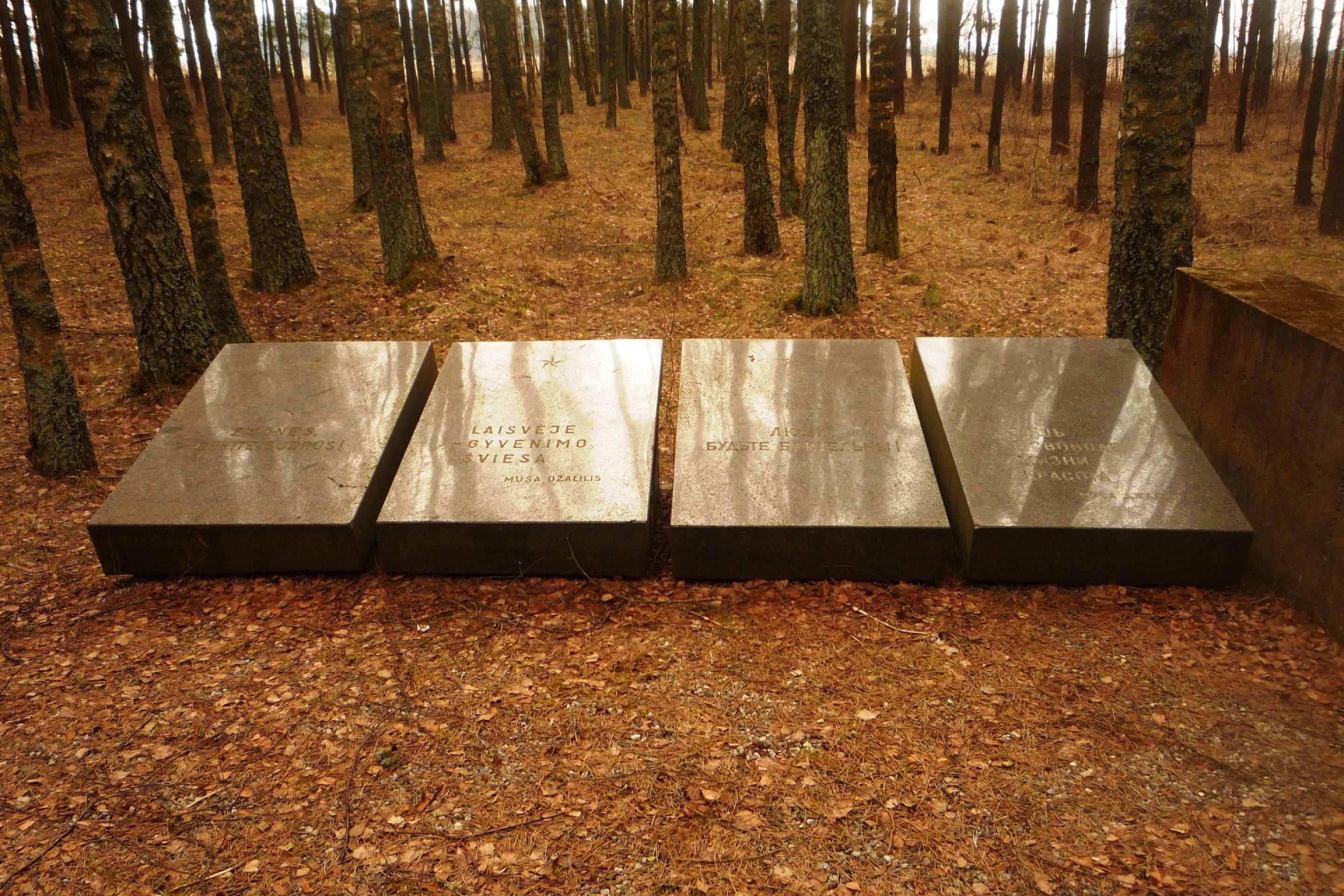
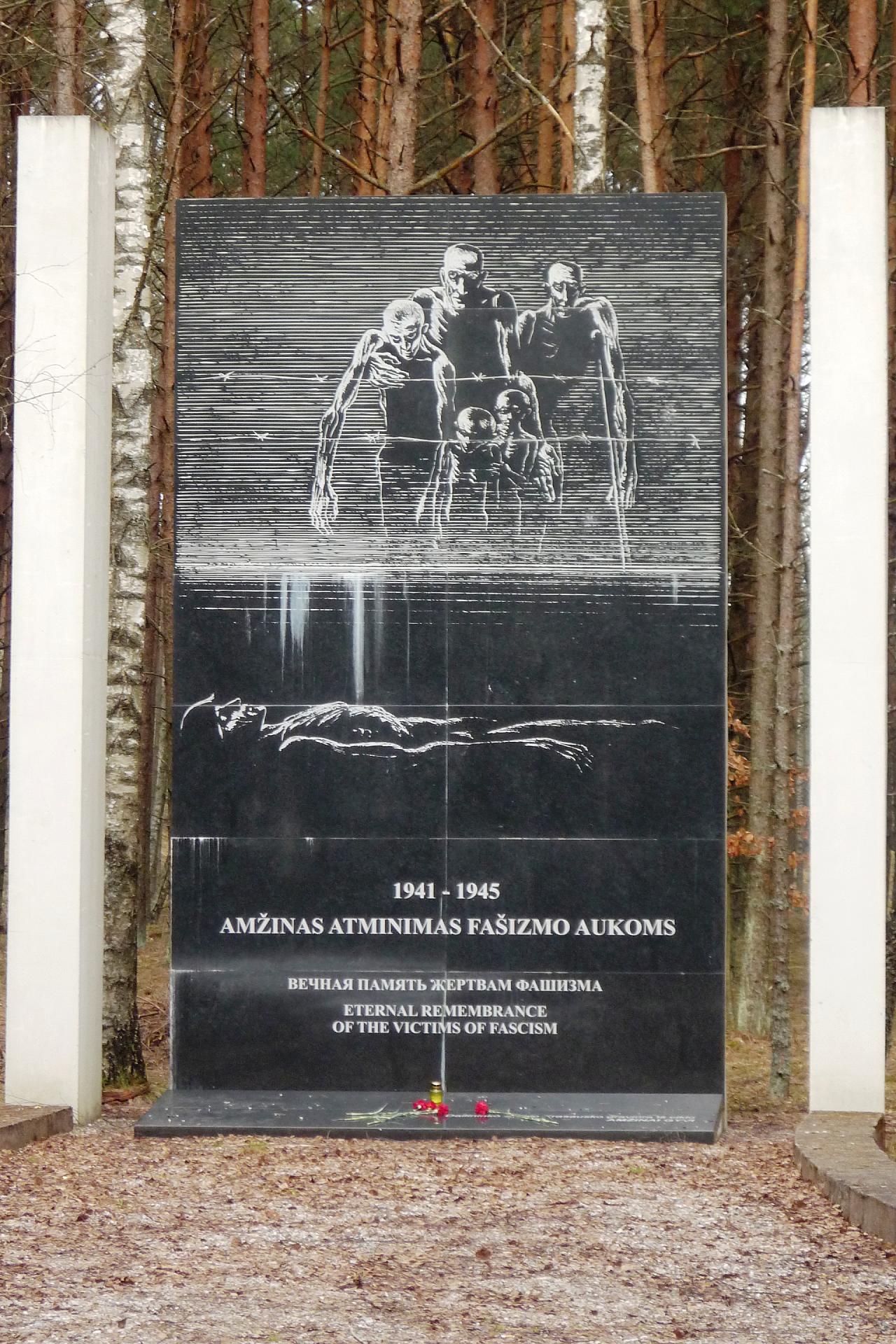
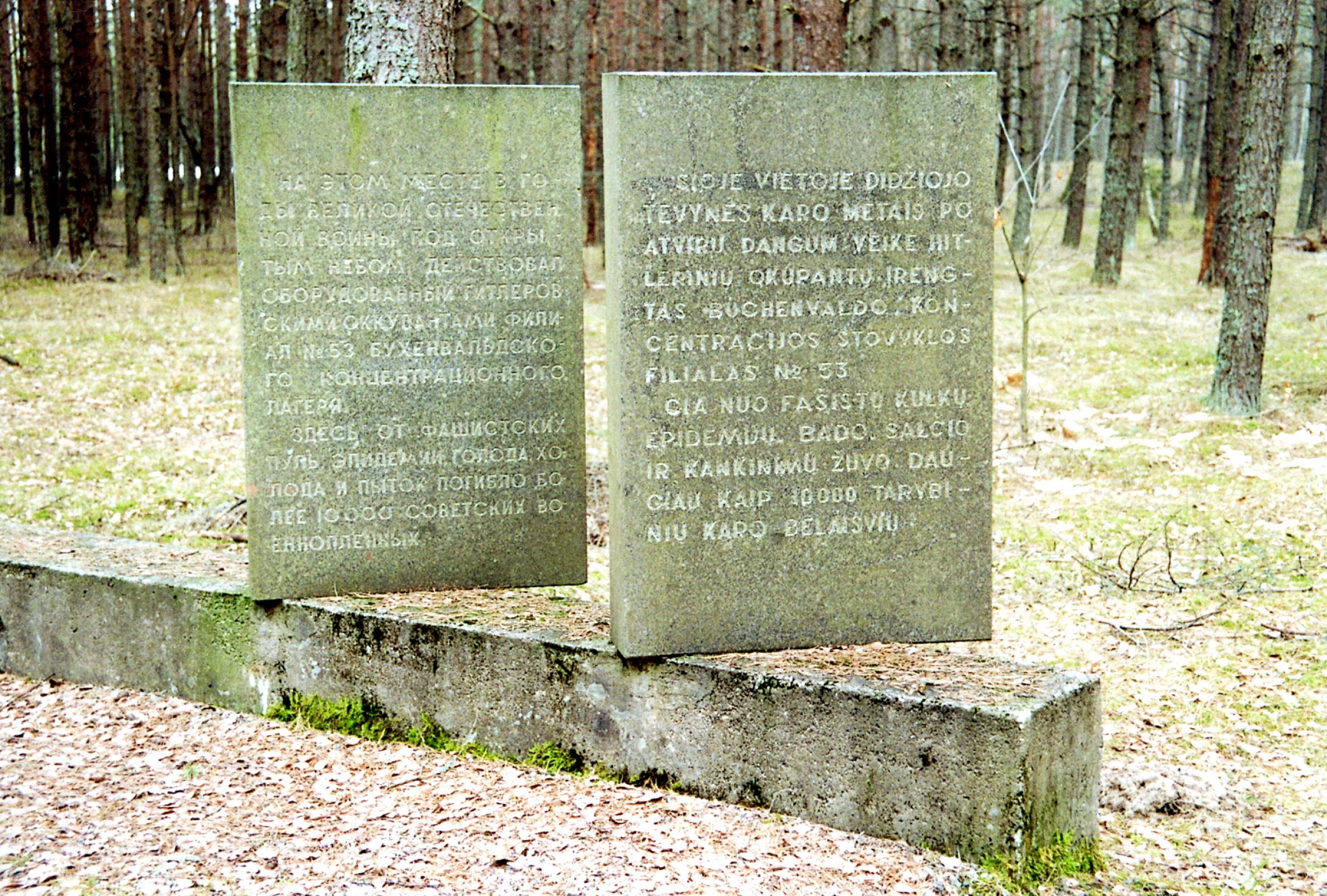
Since 1977 a memorial complex in Pagėgiai (German: Pogegen) in the Memel Territory (also known as the Klaipėda Region) and a granite commemorative plaque added in May 5, 2005 remember the approximately 10,000 Soviet prisoners of war of the Officers' Camp (Oflag) 53, which existed in this place most likely between summer of 1941 and 1944.
History
The small town of Pagėgiai (German: Pogegen) is located in a part of the former province East Prussia, which was occupied by Lithuania in 1923 and returned to the German Reich in 1939 and which was part of the Lithuanian Soviet Socialist Republic from the time of the invasion by the Red Army in 1944/45 until Lithuania's independence in 1990/91. Because of its proximity to the border this easternmost part of the German Reich was deployment zone for the Wehrmacht's attacks on Poland and the Soviet Union in autumn 1939 and in summer 1941. At the same time prisoner of war camps like the one in Šilutė in the Memel Territory were set up. Another one was the Officers' Camp (Oflag) 53, set up in 15 acres of woodlands near Pagėgiai. Little is known about this camp. Lithuanian and Russian papers speak of a concentration camp, some English-speaking websites even of a death camp. There is even talk of a satellite camp of the Buchenwald concentration camp. Initially political opponents of National Socialism and Jews are said to have been placed there. According to German sources 7,151 numbers of soldiers' identification tags are verifiable for 1941/42. Estimates maintain a number of about 10,000 prisoners, maybe up to 24,000. Oflag 53 partly served as a transition camp for the further transport to the western parts of the Reich. Some of the prisoners were deployed to conduct forced labour in the vicinity. So-called political commissars and Jewish soldiers of the Red Army are said to have been purposefully murdered. The camp very likely existed until the advance of the front in summer 1944, even though most of these so-called Russian camps on the territory of the Reich had already been dissolved or transferred by middle of 1942.
Victims
Up to 24,000 soldiers of the Red Army are said to have been imprisoned in the Oflag 53 near Pagėgiai between 1941 and 1944, perhaps also political opponents of National Socialism and Jews. The death toll is not known, it is said that at least several hundred »political commissars« and Jewish soldiers of the Red Army were shot.
Remembrance
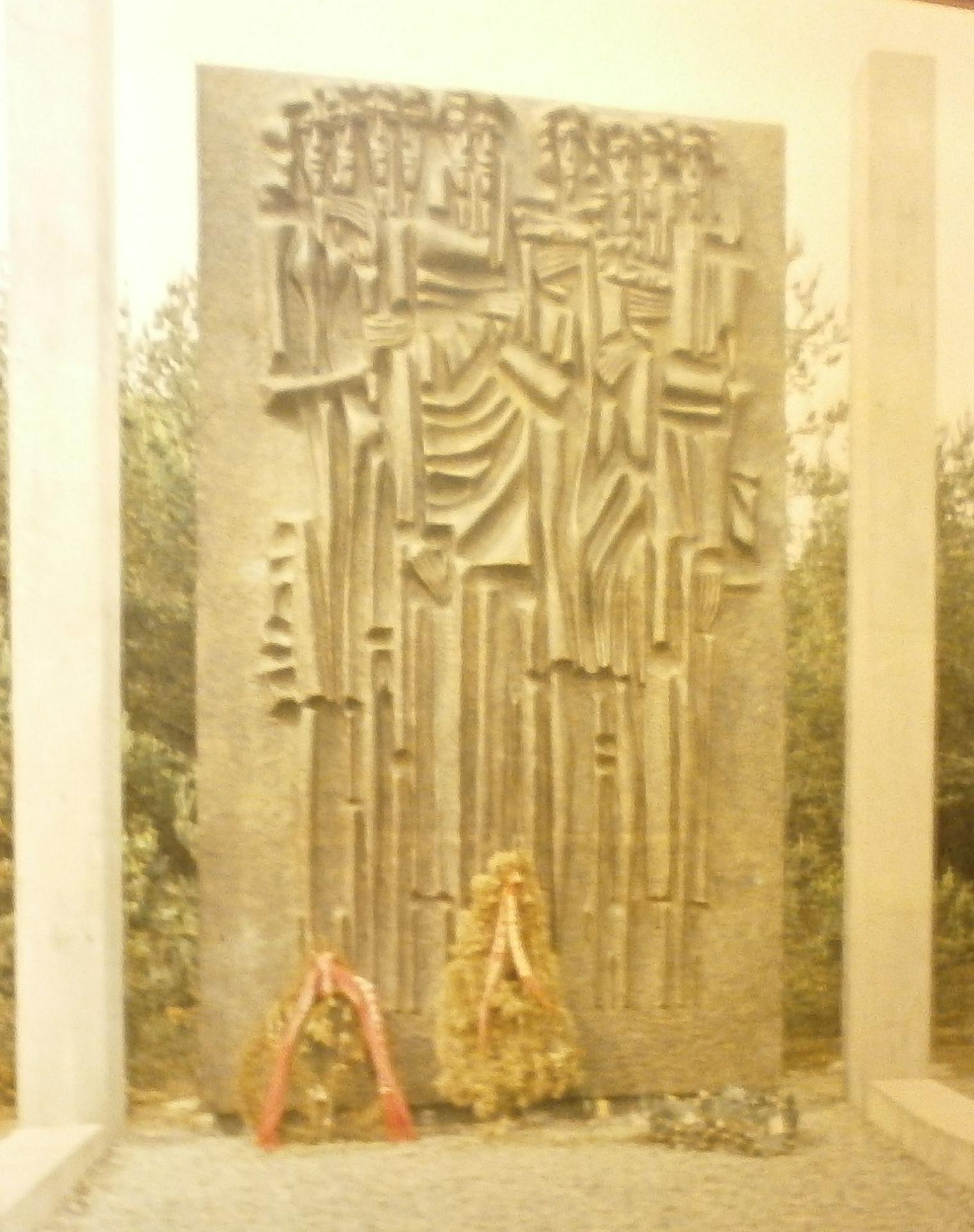
In 1964 research was carried out on site of the former Oflag 53 near Pagėgiai and a great number of human remains were discovered. A memorial (»Memorialkomplex«) opened in 1977 which had been designed by Gediminas Baravykas (1940–1995), incorporating a sculpture by Steponas Šarapovas (1936–1981). In the run-up to the 60th anniversary of the end of war – celebrated as »Victory Day« by those Russians who remained in independent Lithuania – the Lithuanian government allocated 87,000 Litai (just under 30,000 Euros) for the renewal of the memorial site. Modelled on a design by the artist Stasys Krasauskas (1929–1977) a black granite plaque was created which is dedicated to the »eternal memory to the victims of Fascism 1941-1945« in Lithuanian, Russian and English. It replaced the memorial plaque from Soviet times. On May 8, 2005 the then Prime Minister of Lithuania Algirdas Brazauskas (1932–2010) and the consul general of the Russian Federation in Klaipėda (German: Memel), Michael Torschin, dedicated the new plaque together. An orthodox priest consecrated the memorial and prayed for the dead prisoners of war. On every 8th and 9th of May there are meetings of Russian and Lithuanian veterans of the Red Army.
Open
The memorial is accessible at all times.
Contact
http://www.silaine.lt/2008/2008-04-08/Oflager-07.htm