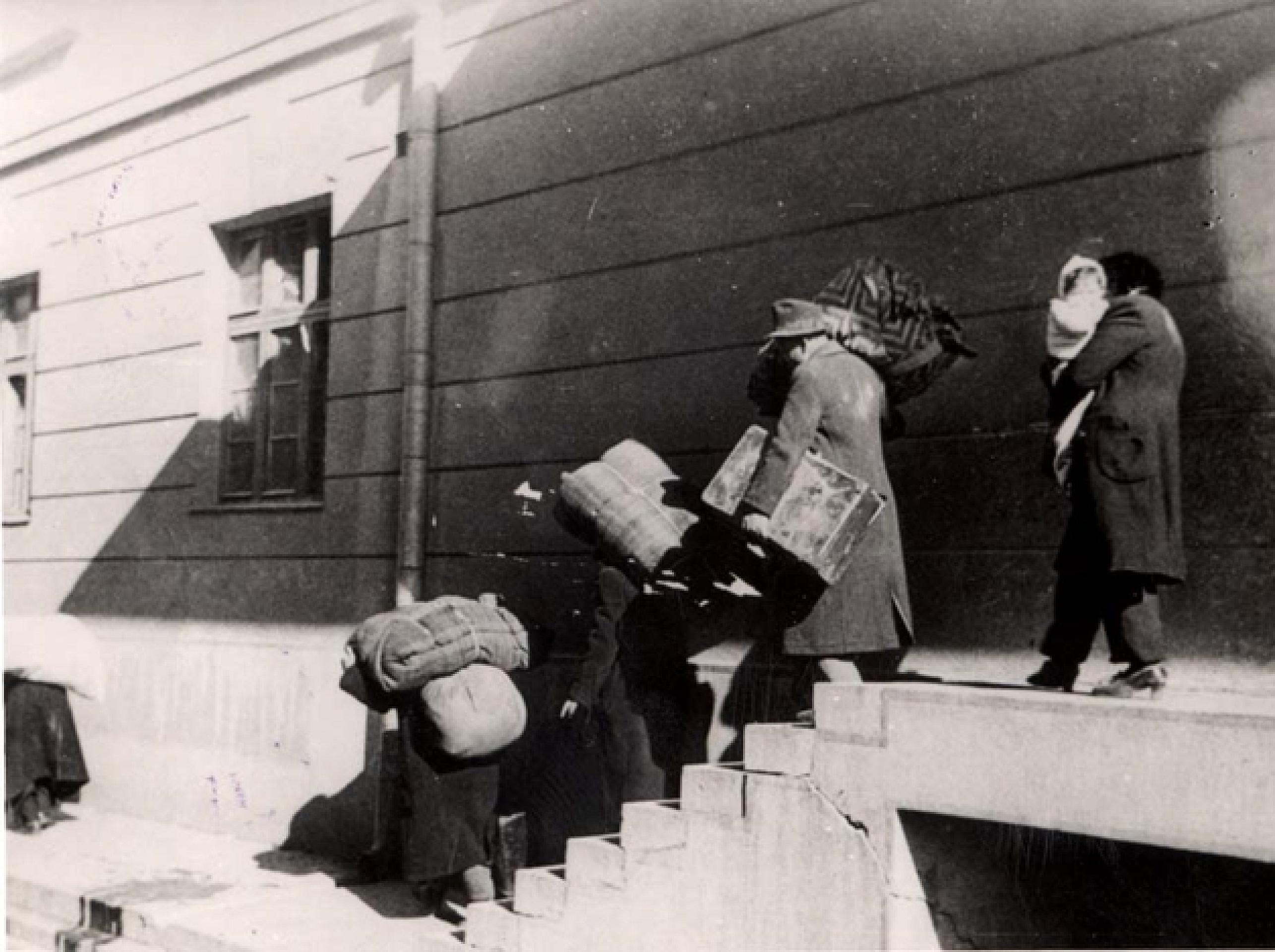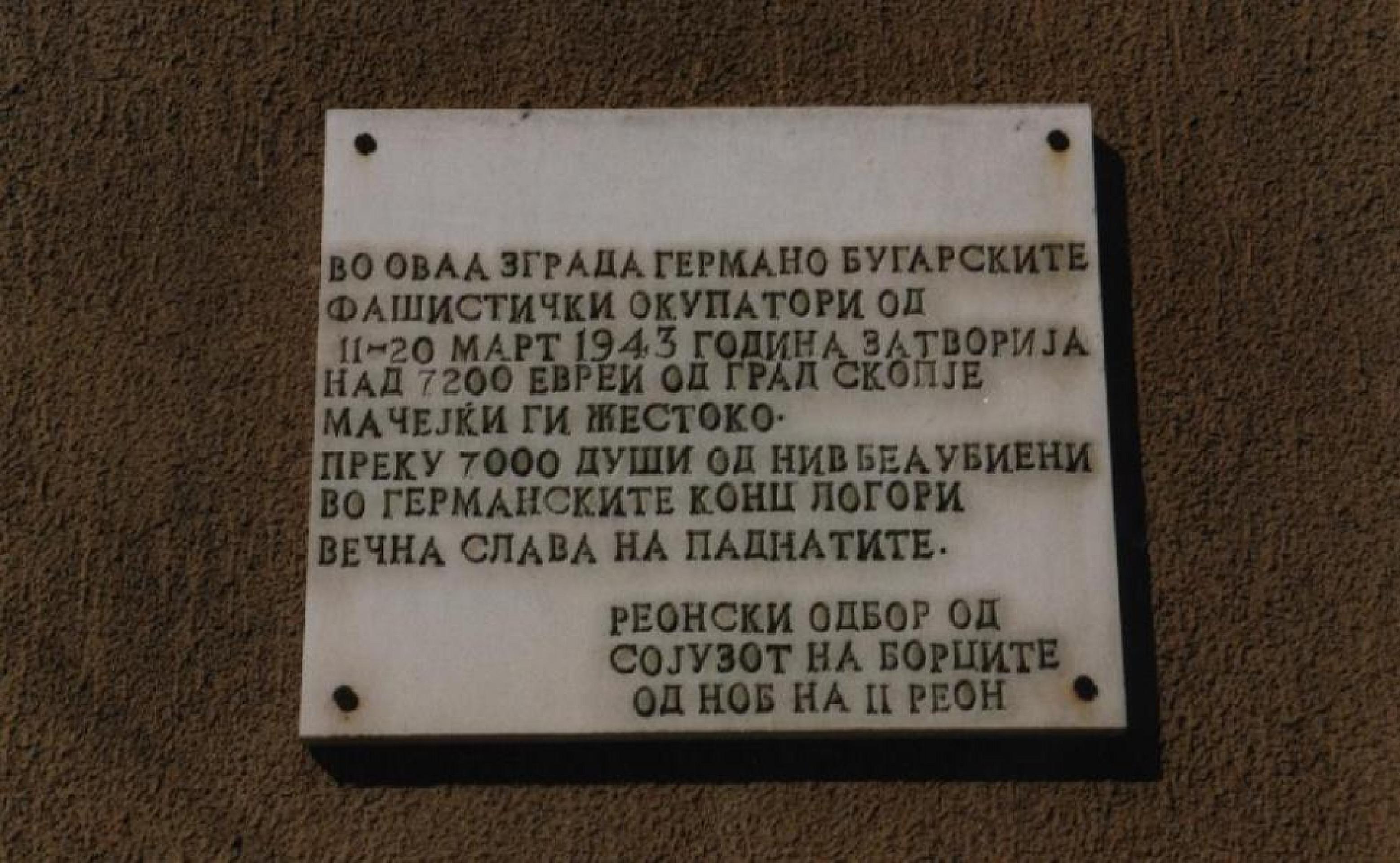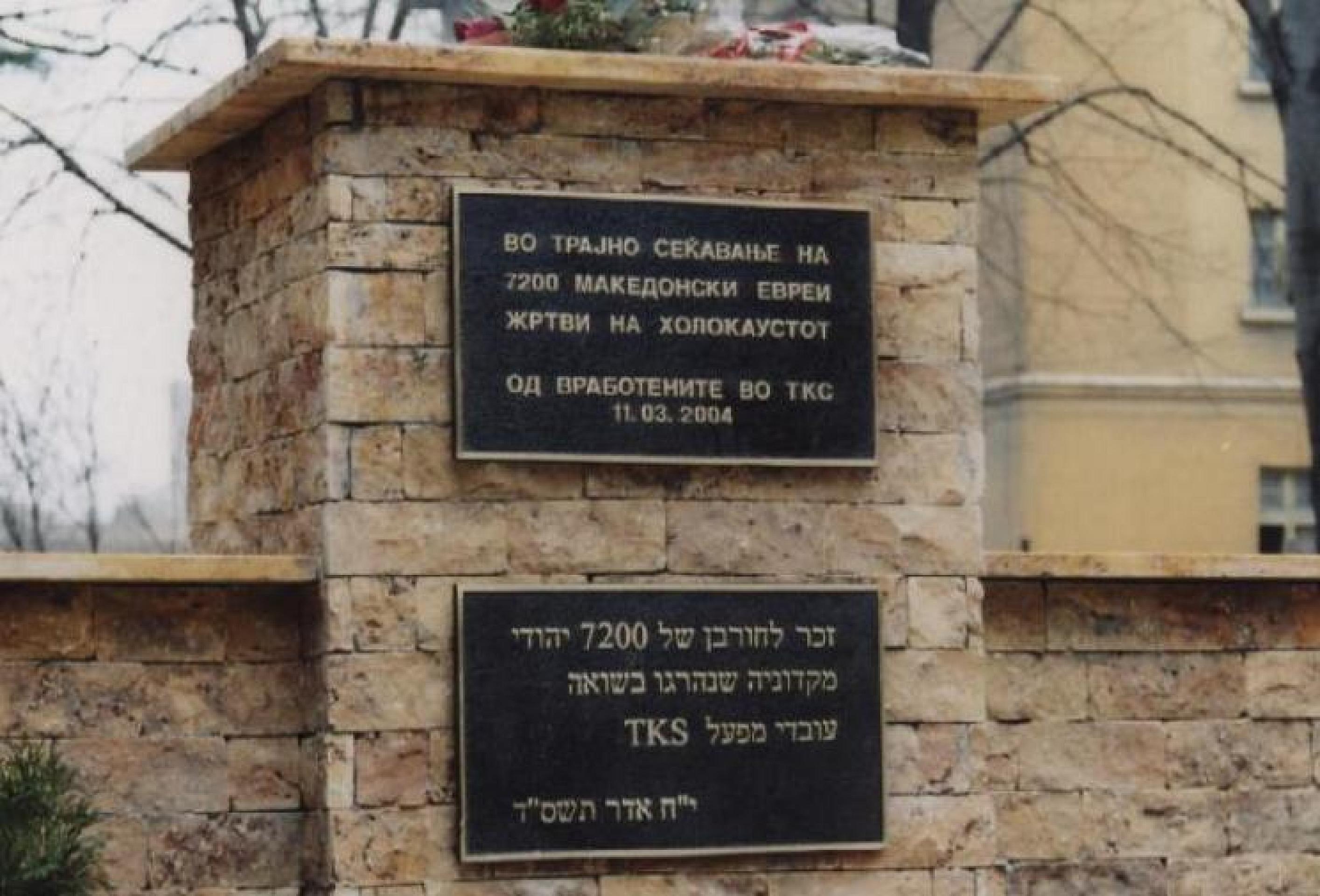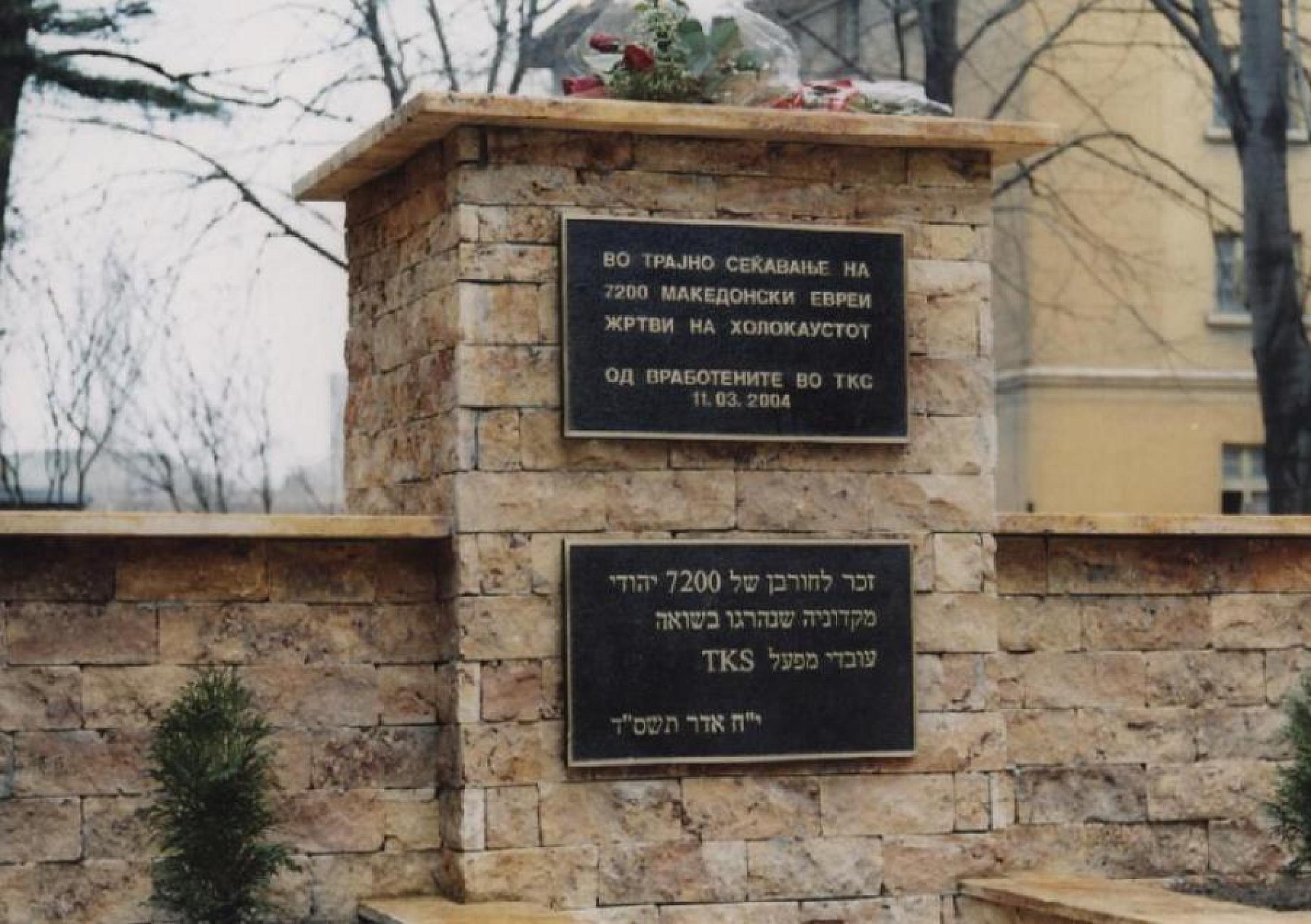
Over 7,000 Jews were held on the premises of a tobacco factory in the Macedonian capital Skopje after they had been arrested by Bulgarian police in a nationwide wave of arrests that took place on March 11, 1943. They were subsequently deported to the Treblinka extermination camp and murdered there. A memorial plaque on the factory premises and a monument, set up in 2004, honour the victims.
History
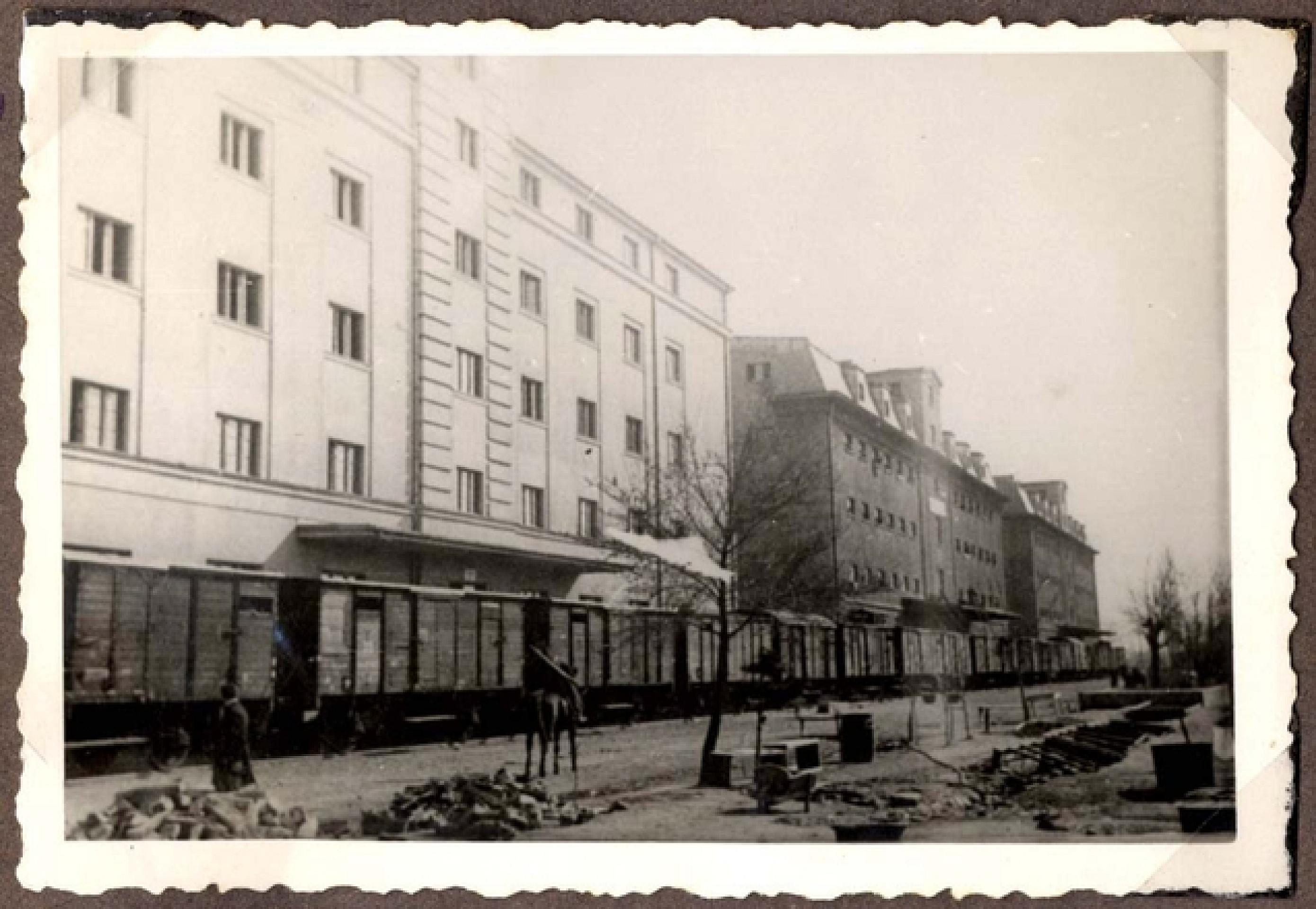
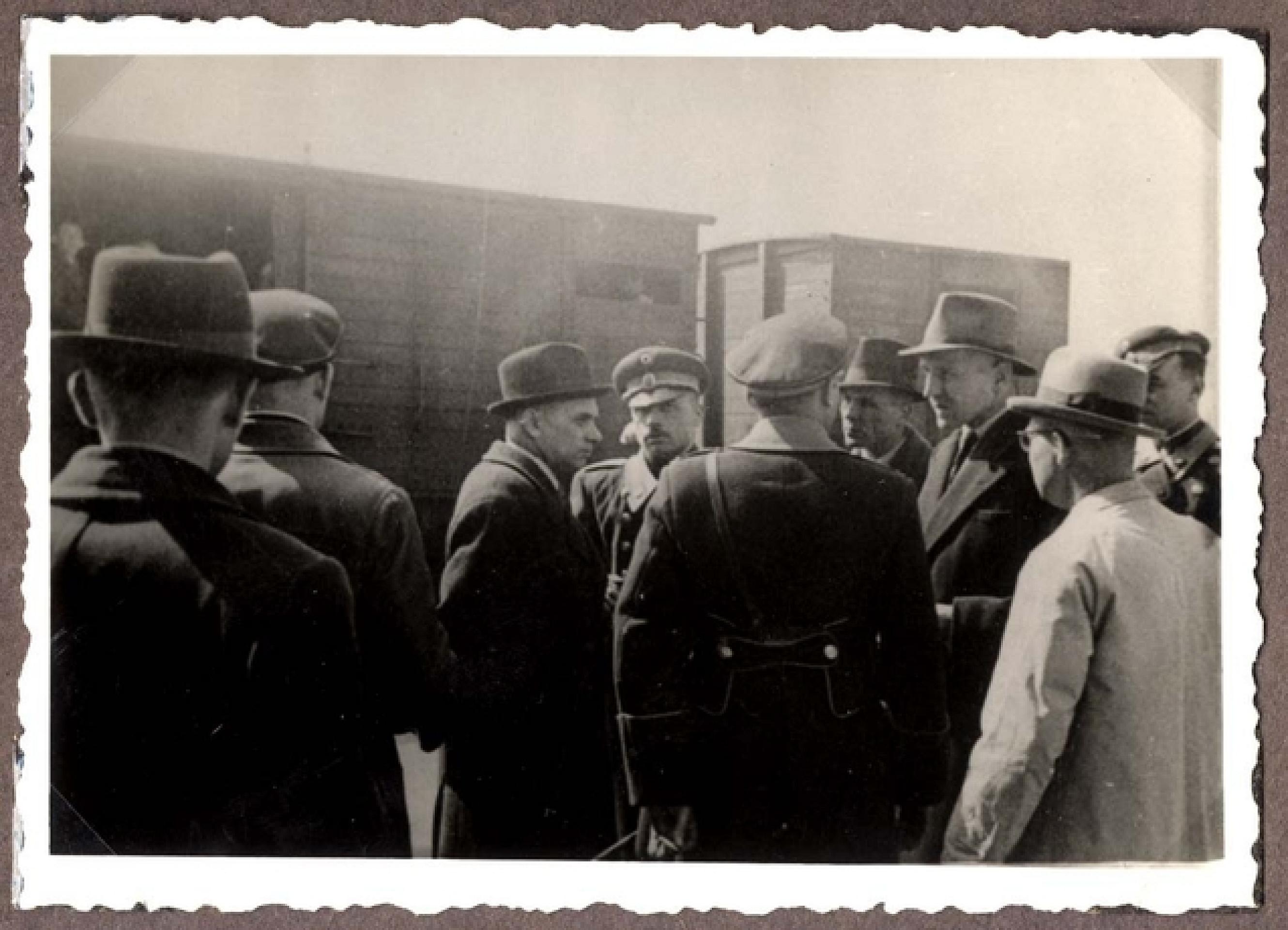
In April 1941, Yugoslavia was divided after it had been invaded by Germany and Italy. Germany's ally Bulgaria occupied the federal state Macedonia. At the beginning of 1943, the Bulgarian government agreed under German pressure to hand over the Jewish population residing in its occupied territories to the SS. In a nationwide operation coordinated by Alexander Belev, Bulgarian commissar of Jewish Affairs, Bulgarian police arrested Jews in Skopje, Štip and Bitola on March 11, 1943, and interned them in warehouses at the Monopol state tobacco factory in Skopje. There were no sanitary facilities at the factory, and the inmates did not receive any provisions. Only 165 of the 7,300 imprisoned Macedonian Jews were released, mainly foreign citizens as well as doctors and pharmacists. Three transports of the Bulgarian state railway departed from Skopje on March 22, 25 and 29, 1943 - they were bound for Treblinka in German occupied Poland, where the SS murdered the Jewish men, women and children by exhaust fumes.
Victims
Close to 7,200 Macedonian Jews, including 2,300 children, were delivered to the SS by the Bulgarian authorities, after which they were deported to Treblinka and murdered there.
Following the Balkan Wars in 1912-13 and the fall of the Ottoman Empire, the historical region Macedonia was divided equally between Serbia, Greece and Bulgaria. After 1918 Serbia brought its share – the territory that is now the Republic of North Macedonia – into the Kingdom of Serbs, Croats and Slovenes, that was renamed Yugoslavia in 1929. In April 1941 Yugoslavia was occupied by German troops and their Italian, Hungarian and Bulgarian allies and the state was split into a number of annexed and occupied territories serving as puppet states of the Nazi regime. North Macedonia was occupied by Bulgaria, with only its western part – home to a large Albanian minority – annexed to Italian-administered Albania. While Csar Boris III of Bulgaria (1894–1943) refused to hand over Bulgarian Jews to the Germans, at the beginning of March 1943 his authorities in the North Macedonian occupation zone arrested over 7,100 Bulgarian Jews, including 2,000 children, and handed them over to the SS. Almost all of them were murdered with exhaust fumes in Treblinka in German-occupied Poland.
As in all parts of the former Yugoslavia there were military units in North Macedonia either fighting for the communist partisan movement led by Marshal Josip Broz Tito (1892–1980) or on the side of the occupying forces. In August 1944, Tito’s victorious »People’s Liberation Army« announced the foundation of the autonomous republic of Macedonia within the Yugoslav Federation and declared that a Macedonian nation existed as an equal counterpart to the Serbs, Croats, Bosnians, Slovenes and Montenegrans.
After the end of the Second World War, numerous monuments to the partisans were built on North Macedonian soil, as elsewhere in Yugoslavia. Holocaust memorials were established in Skopje, Stip and Bitola, where the majority of Macedonian Jews had lived before the war. One example is the memorial in Bitola, inaugurated on March 11, 1960, which is located in the direct victinity of the »Estreja Ovadija Mara« monument to Jewish resistance fighters. In the capital Skopje there is a plaque on the former tobacco factory, which served as an assembly camp and point of departure for the deportation of North Macedonian Jews. The Holocaust Memorial Centre for the Jews of Macedonia was opened in 2011.
After a long dispute with Greece the Republic of Macedonia was renamed into Republic of North Macedonia in 2019.
Remembrance
Only just over 300 Macedonian Jews survived the war. After the war, a small memorial plaque was affixed on the premises of the tobacco factory. It is dedicated to the »eternal glory to the fallen« who were persecuted by the »German-Bulgarian fascist occupiers« - both expressions abiding with the official language of the communist regime in post-war Yugoslavia. In 2004, employees of the tobacco factory erected a small monument which also bears a Hebrew inscription. Each year, on March 11, a commemorative ceremony is held.
Open
The memorial plaque is accessible at all times.
Contact
ezrm@on.net.mk
+389 23 237 543
Tutunski Kombinat A. D. Skopje, 11 Oktomvri 125
1000 Skopje