Memorial Plaque to the Victims of the First Deportation from Königsberg
Мемориальная доска жертвам первой депортации из Кенигсберга
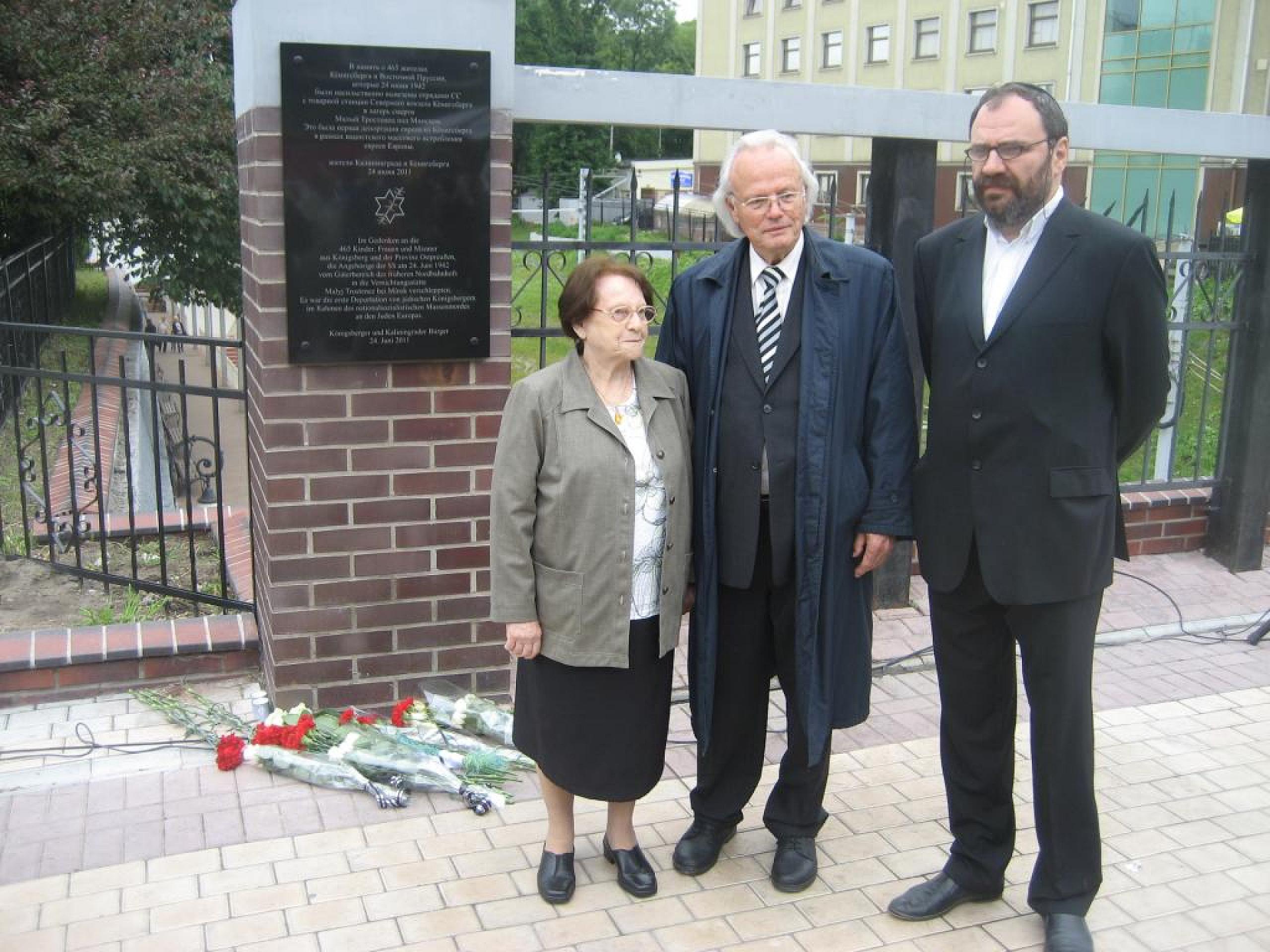
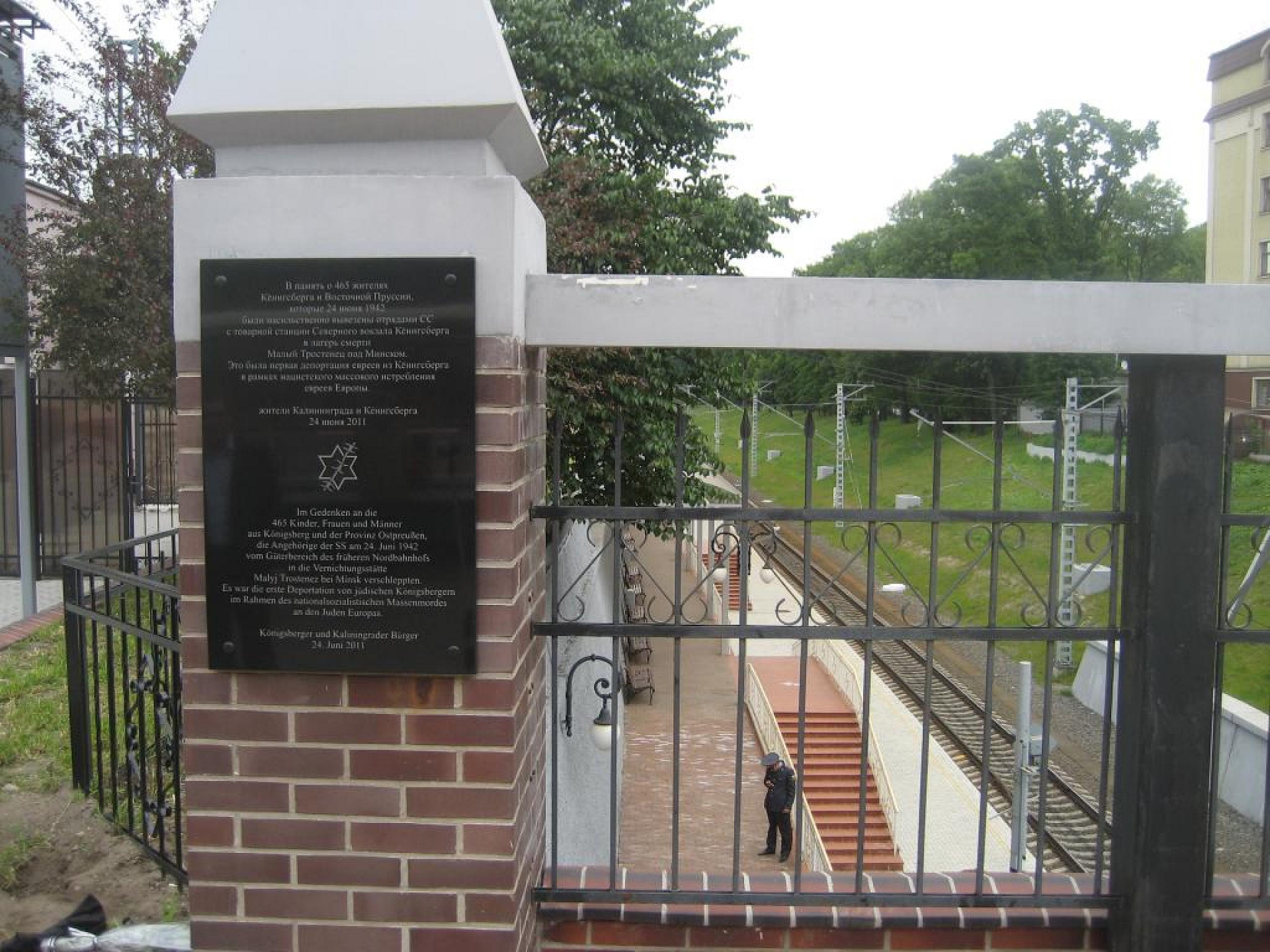
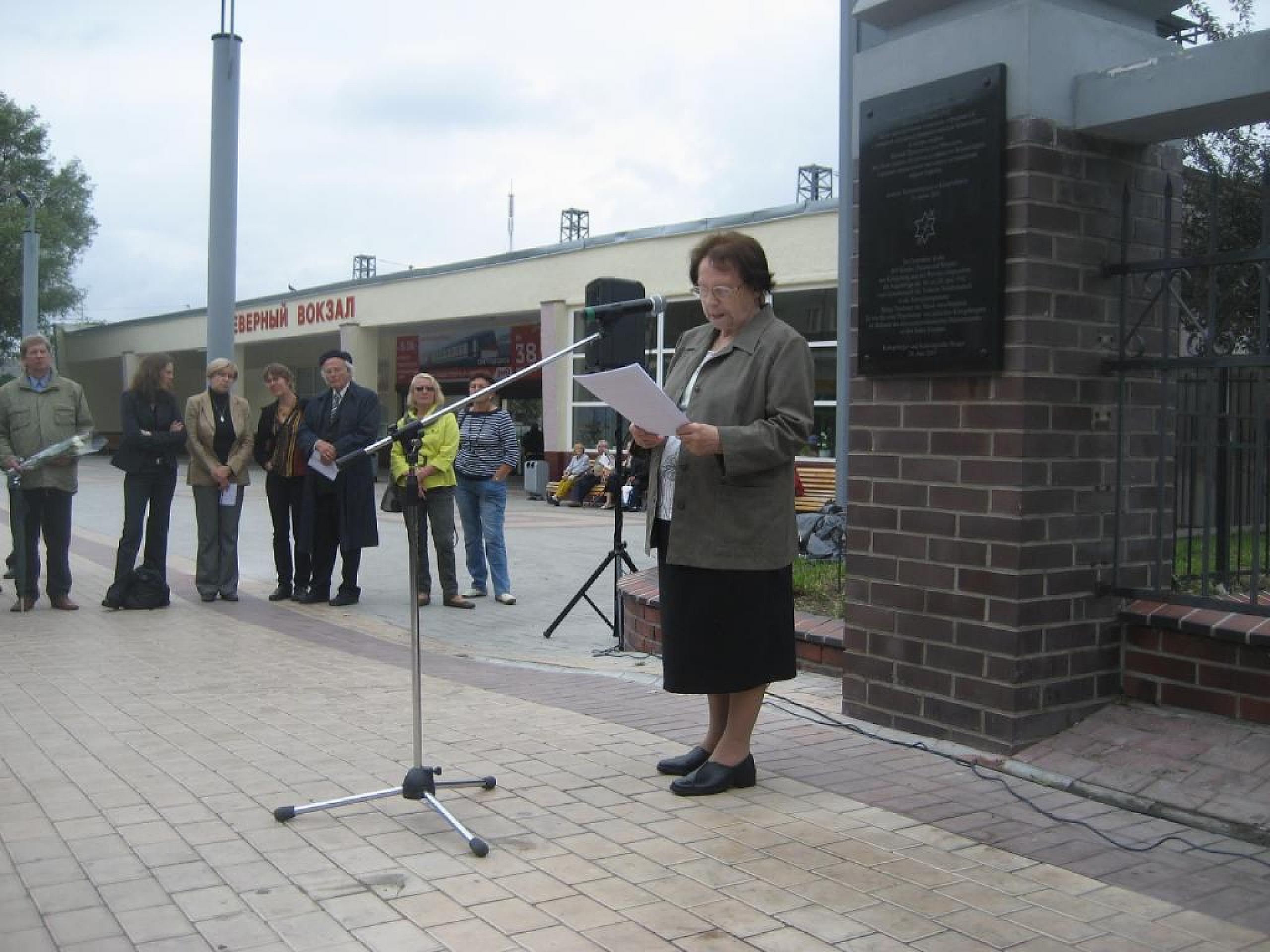
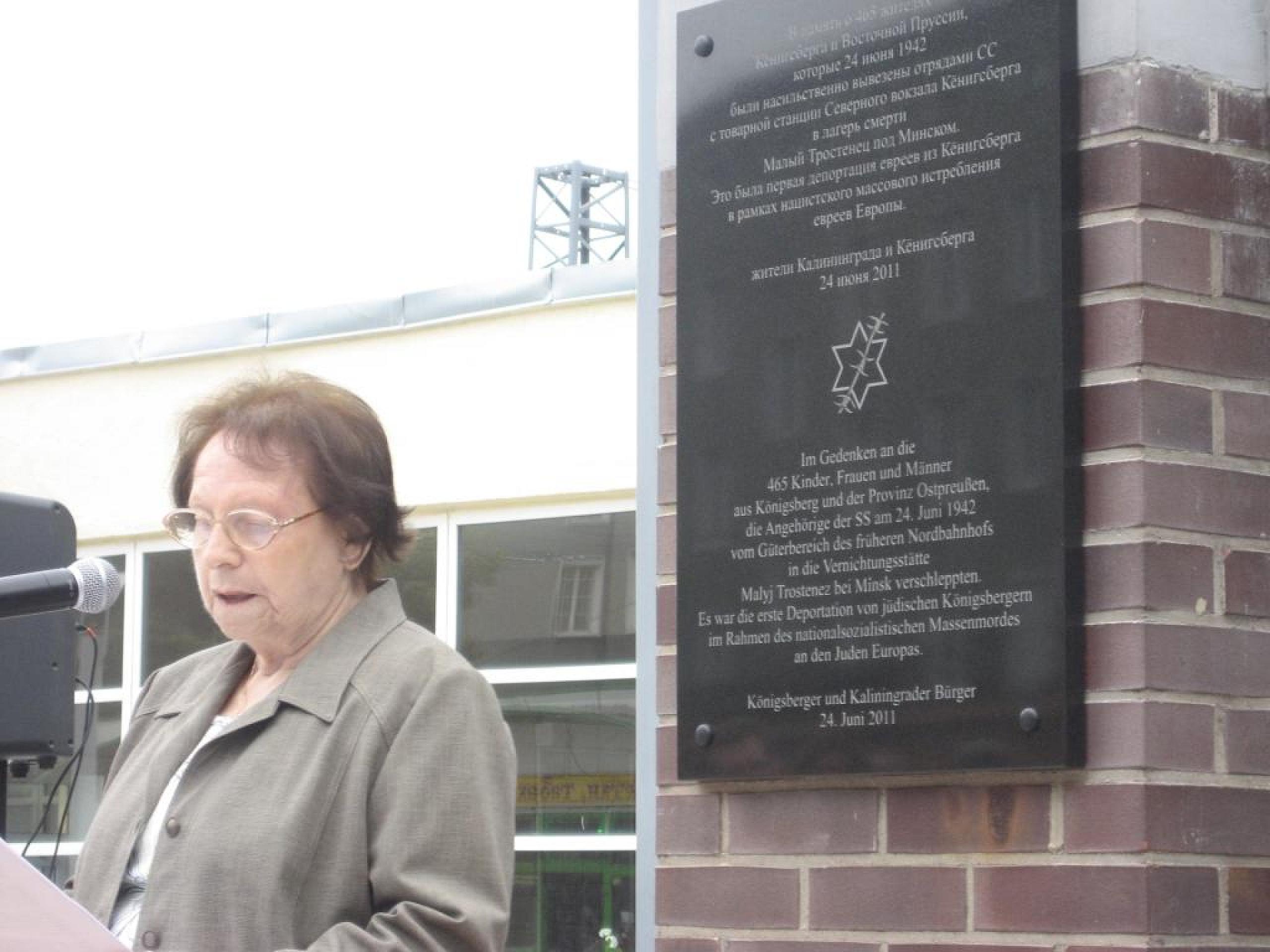
On June 24, 2011 - 69 years after the first deportation in the summer of 1942 - a memorial plaque on the former northern station of Königsberg (today: Kaliningrad) was dedicated to the deported Jewish men, women and children.
History
At the beginning of the 20th Century, Königsberg, the capital of East Prussia, had about 4,700 Jewish residents. During »Kristallnacht« on November 9/10, 1938, Königsberg National Socialists and their supporters destroyed the interior of the New Synagogue on Lindenstraße (today: Oktyabrskaya street) and set fire to parts of the building. Not long afterwards, the ruins were torn down.
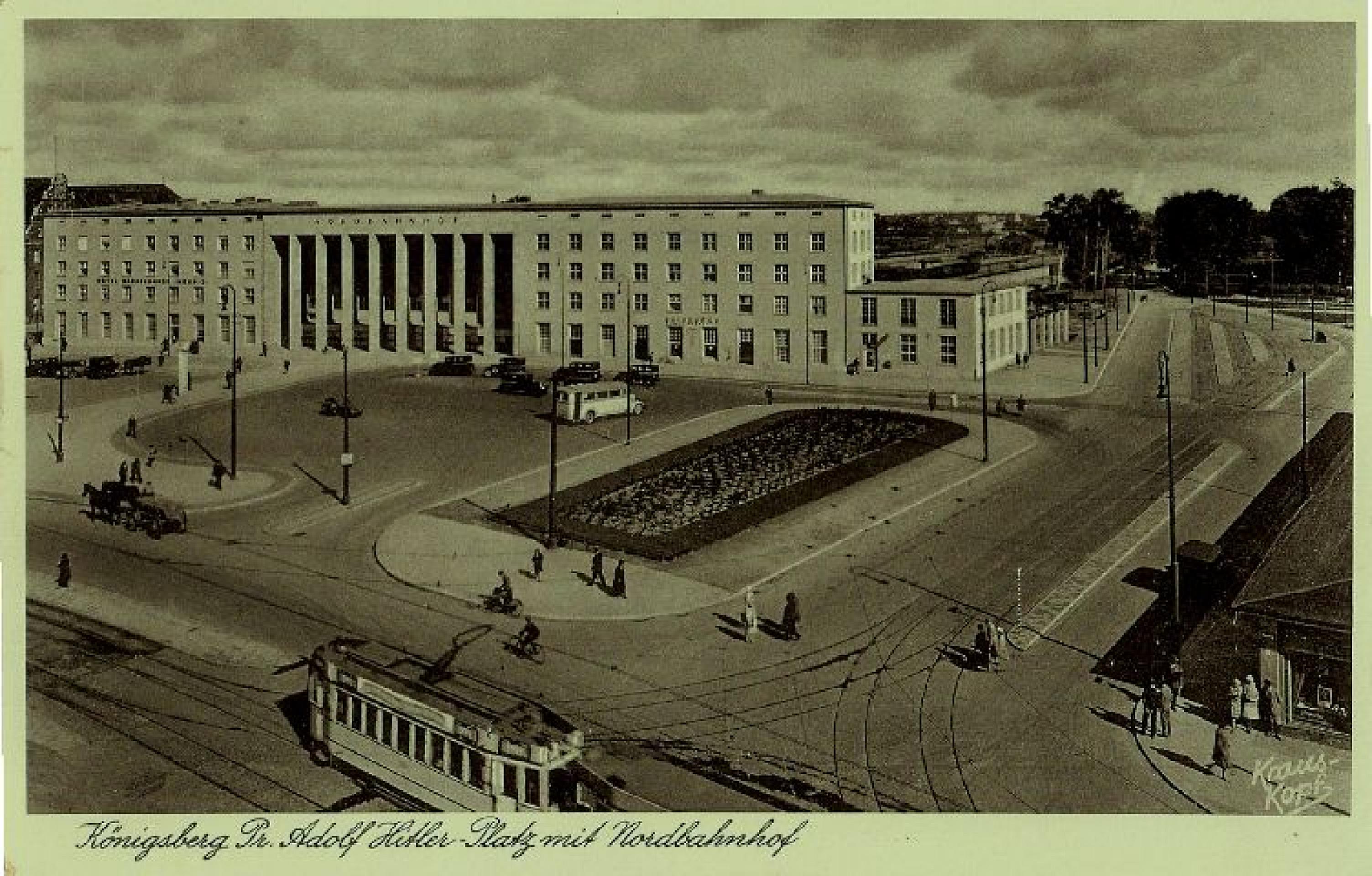
Until October 1941, several hundred Jews managed to flee Königsberg. On June 24, 1942, members of the SS deported 465 Jewish men, women and children - including 7-year-old Evelin Hella Evelyne Preuss and 61-year-old Paul Funk - from the freight depot of the city's northern station. They were loaded onto »Da 40« passenger trains bound for the Maly Trostenets extermination site near Minsk; this was the largest deportation from East Prussia. Prior to their deportation, the victims had been forced to march through the city in a long procession from the collection point to the train station. In the night, train cars carrying Jews from Allenstein (today Olsztyn, Poland) were coupled onto the train from Königsberg in Korschen - including the last rabbi of East Prussia, Dr. Naftali Apt - as well as carriages carrying Jews from Berlin, such as economist Cora Berliner. Almost all of the deportees were murdered by members of the SS shortly after their arrival at the Minsk freight depot two days later. Until 1945, further transports from Königsberg were bound for the Theresienstadt ghetto and Auschwitz.
Following the British air raids of August 1944 and the battle for the city in the spring of 1945, the city centre of Königsberg lay in ruins. Only few Jews survived the National Socialist persecution in the city. In the summer of 1945, northern East Prussia was annexed by the Soviet Union, and all Germans including the few Jews who had survived were expelled from the region in 1947/48. Residents of Kaliningrad began dealing with the city's and the region's German-Jewish history only after 1990/91.
Victims
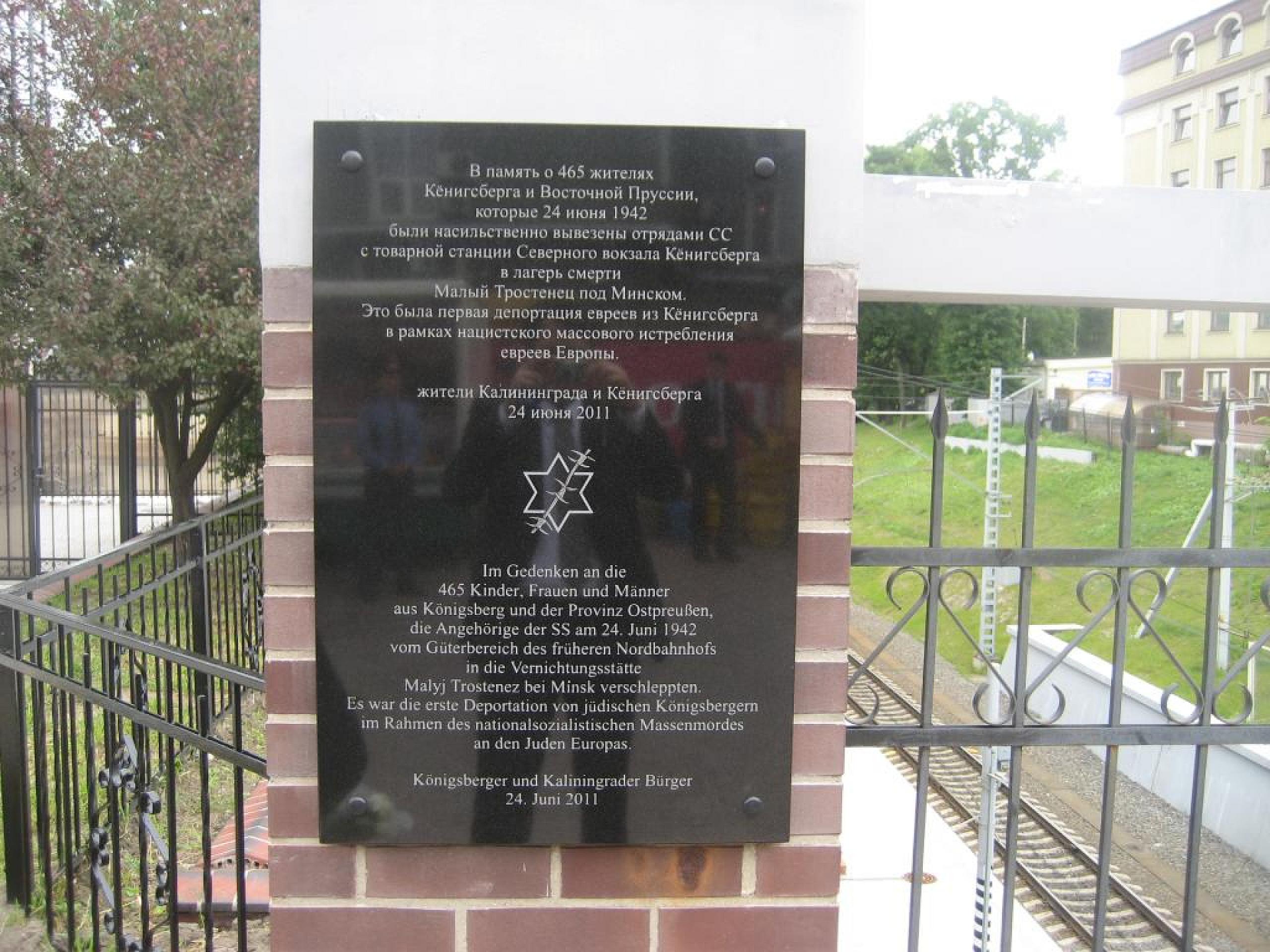
The memorial plaque bears the following inscription, in German and in Russian: »In memory of the 465 Jewish children, women and men from Königsberg and from the province of East Prussia who were deported from the freight depot of the former northern station to the Maly Trostenets extermination site near Minsk on June 24, 1942. This was the first deportation of Jews from Königsberg as part of the National Socialist mass murder of the European Jews. Citizens of Königsberg and Kaliningrad, June 24, 2011«.
Remembrance
The memorial plaque was affixed on the back of the former northern station, next to the entrance to the present-day northern station from which trains to the resort towns on the Sambia peninsula depart. The former freight depot (today: Kutuzovo Novoe) is located about four kilometres away, however, there is little public traffic there. The plaque was a joint initiative of the Jewish community of Kaliningrad, the Foundation Memorial to the Murdered Jews of Europe, and the Königsberg City Community Association, and supported by the Klaus Mehnert European Institute of the Kaliningrad State University of Technology, the German Consulate General and the Russian State Railway. Nechama Drober (b. 1927 as Hella Markowsky) and Michael Wieck (b. 1928), the last Jews of Königsberg to have survived the National Socialist persecution in the city as well as the Russian rule which followed in 1945, took part in the inauguration ceremony.
Open
The memorial plaque is accessible at all times.
Contact