Memorial Plaque to the Victims of the Nováky Forced Labour and Concentration Camp
Pamätník pro obetí pracovného a koncentračního tábora Nováky
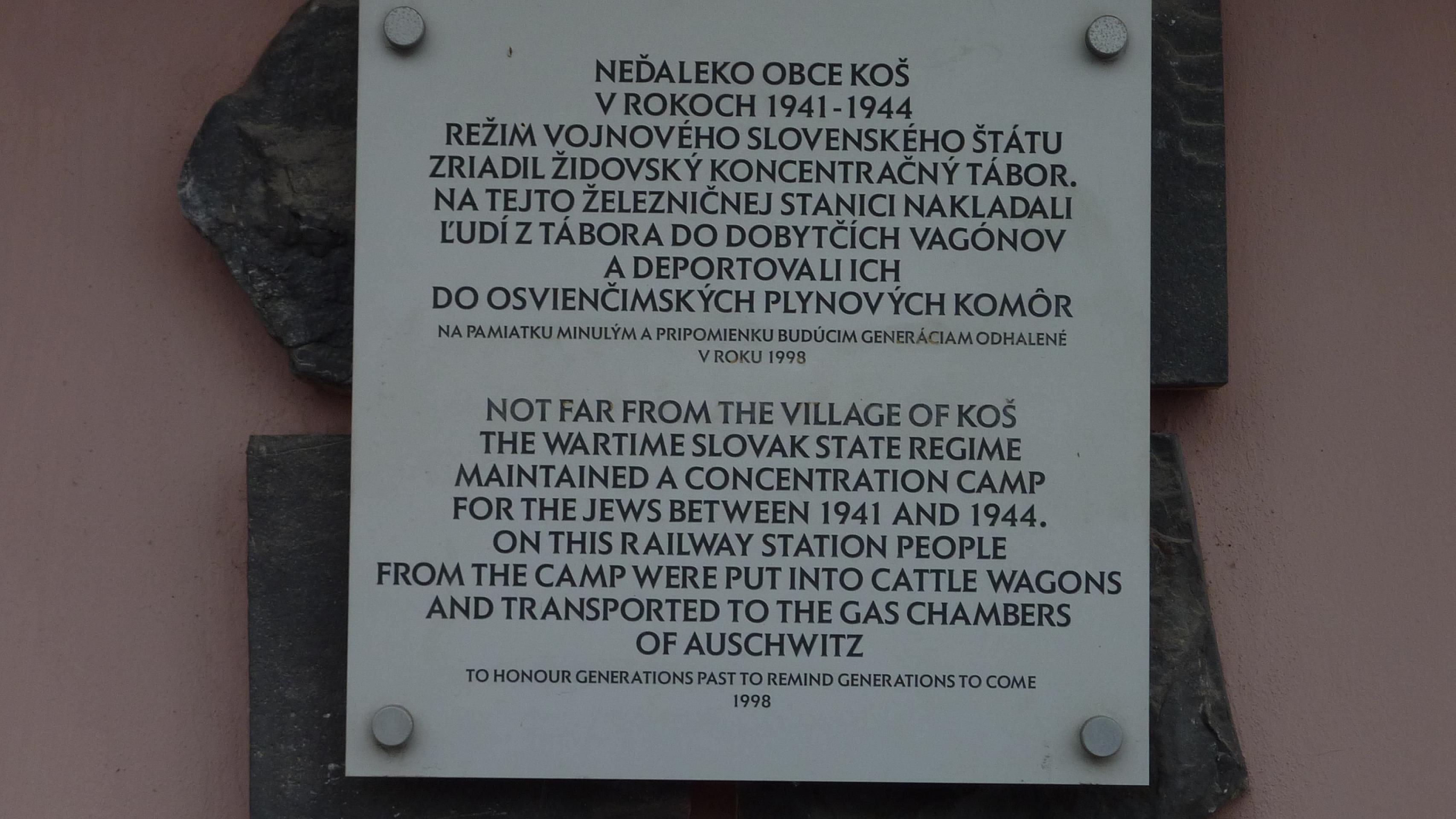
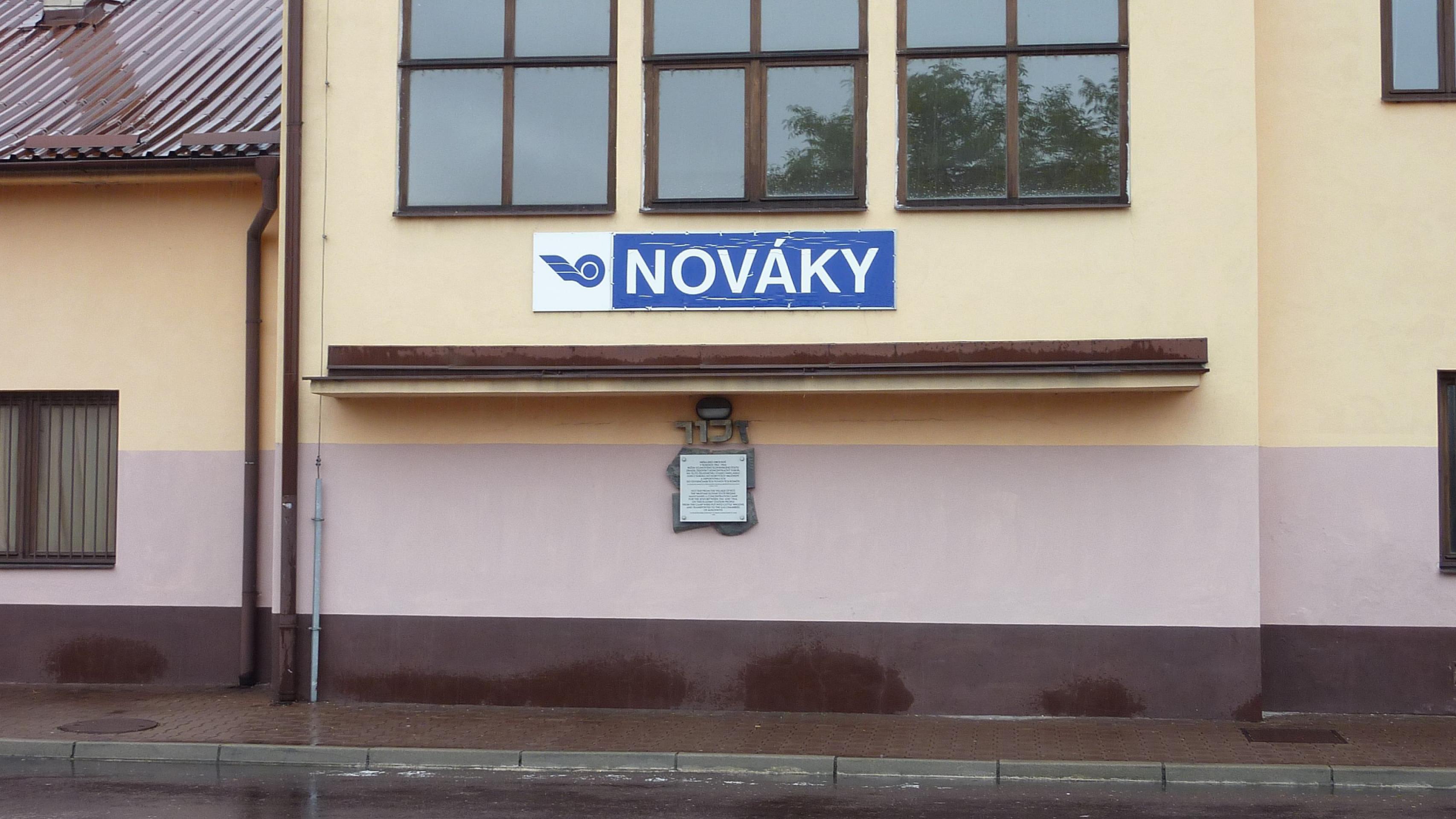
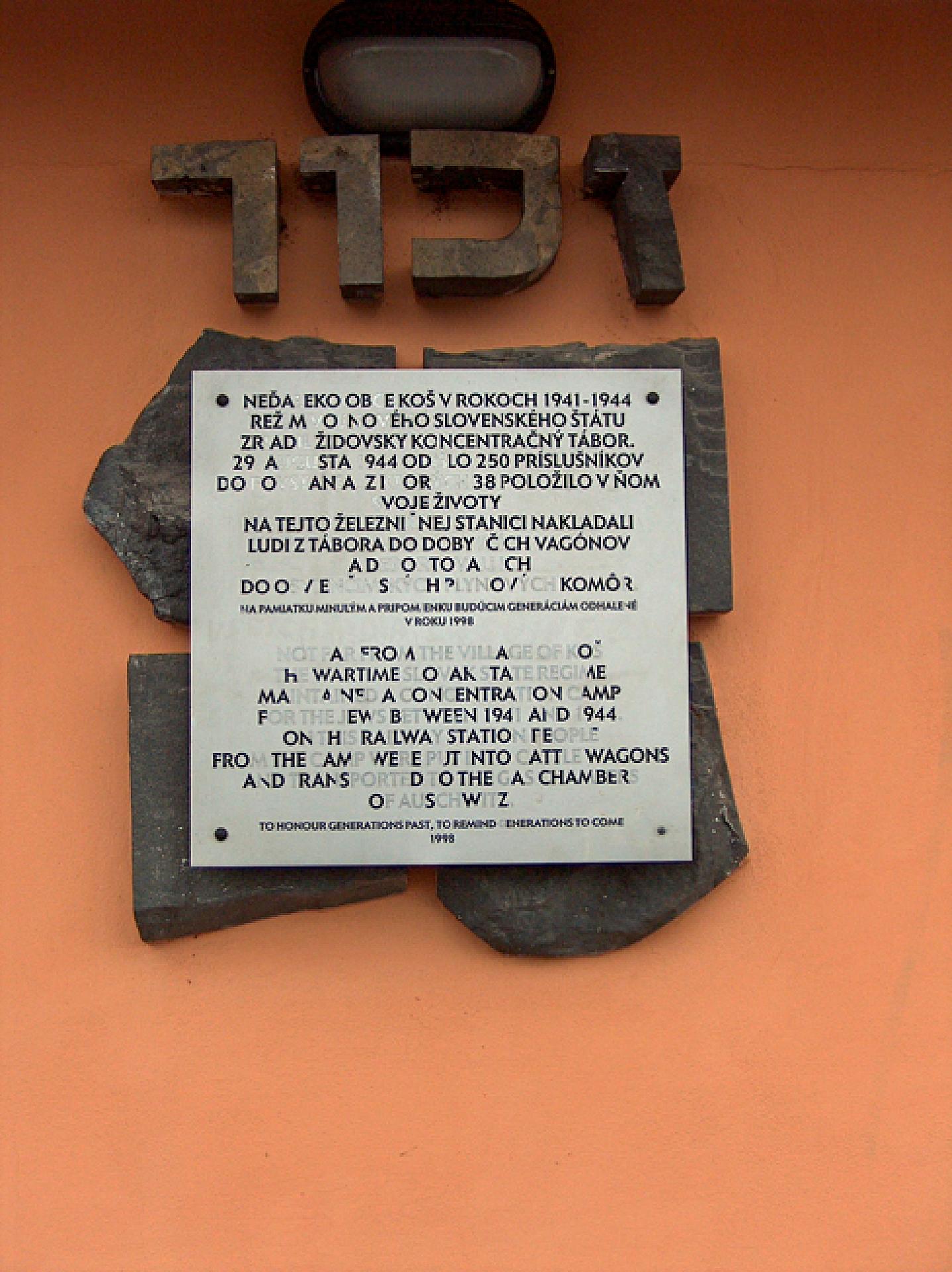
A memorial plaque at the entrance of the former forced labour and transit camp Nováky honours the fate of the Jewish prisoners who were incarcerated there.
History
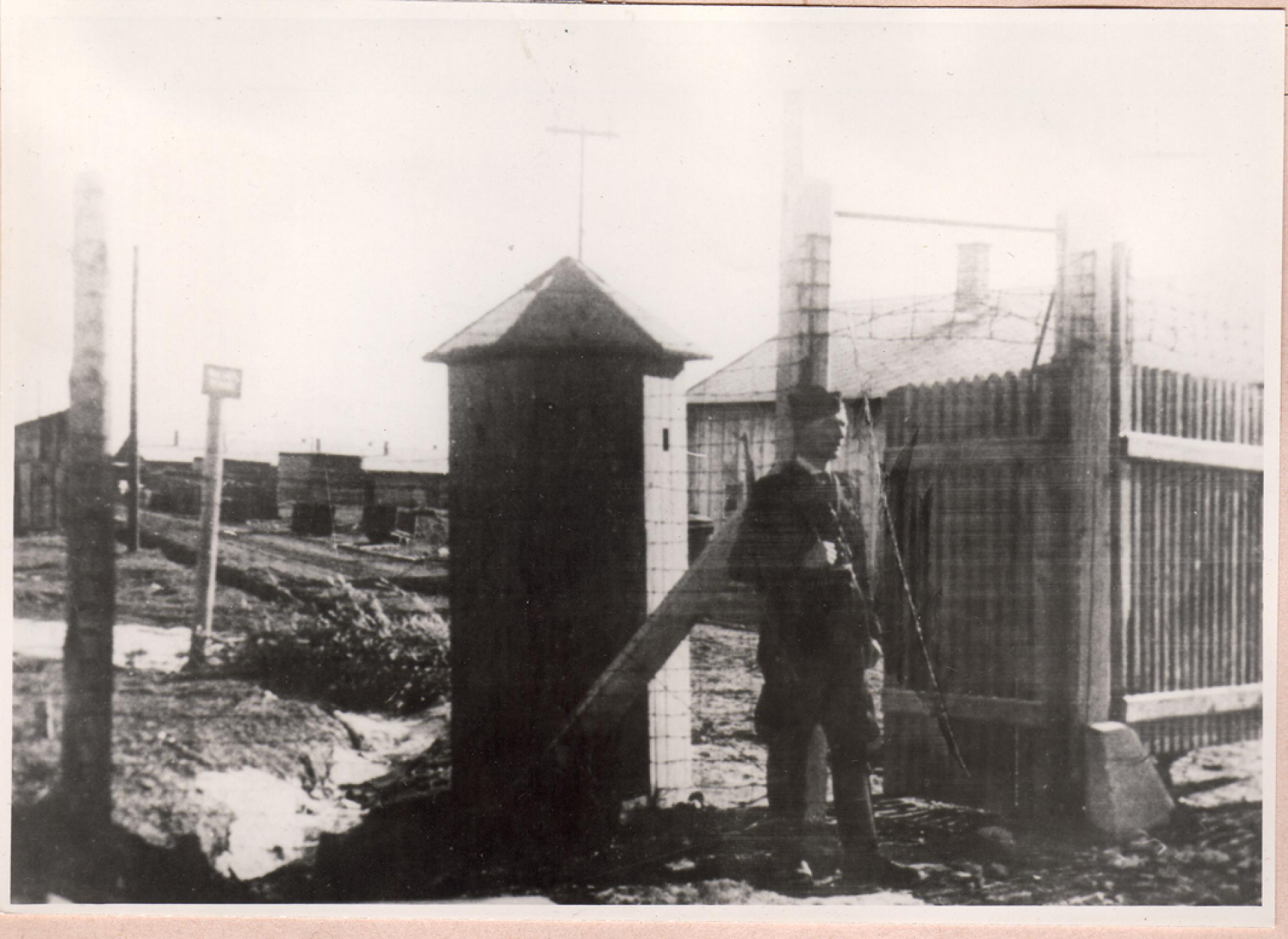
Next to Sered’ and Vyhne, Nováky was one of the most important forced labour camps for Jews run by Slovak authorities, which were at the time closely allied with the German Reich. The camp was located just outside of the small town of Nováky, about 50 km to the west of Banská Bystrica. It was established at the end of 1941 after the Slovak government had decreed a system of forced labour for Jews. From the spring of 1942 on, when the Slovak authorities began mass deportations, the camp was used both as a point of departure and as a transit camp for the deportation of Slovak Jews to ghettos and concentration camps in occupied Poland. The camp was guarded by members of the Hlinka Guard.
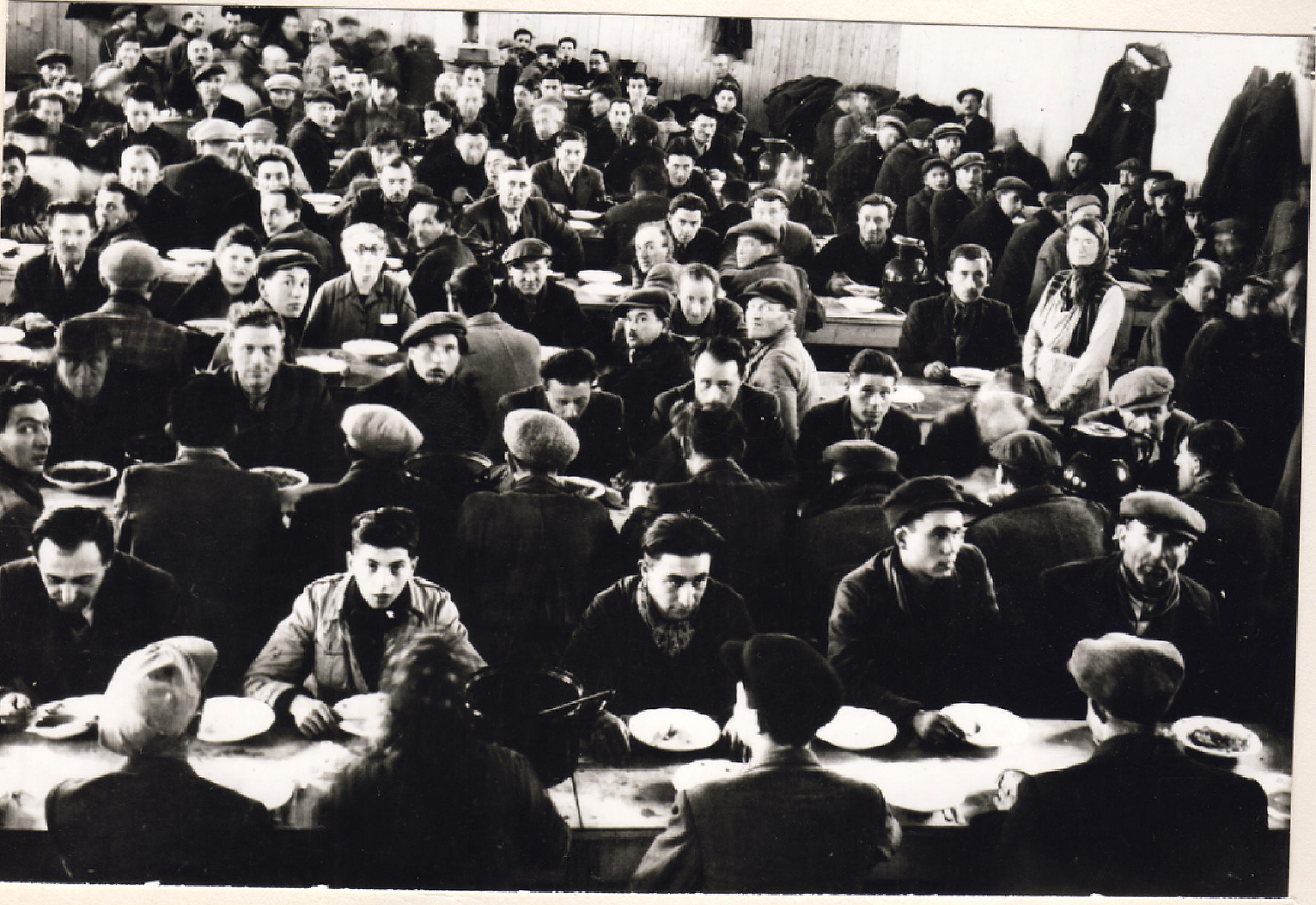
After the deportations came to a temporary halt in 1942, the Nováky camp continued to exist as a forced labour camp. With 1,600 prisoners, most of them skilled workers, it was the largest camp in Slovakia. In 1943, the living conditions in the camp improved. Leisure activities and cultural events were permitted; at the same time, a resistance movement began to form.
The camp was liberated during the Slovak National Uprising ─ which was launched in the nearby town of Banská Bystrica ─ in August 1944. Over 200 Jewish prisoners joined forces with the insurgents; 35 of them died in action.
Victims
Slovak authorities deported about 5,000 Jews from Nováky to occupied Poland. Most of them were murdered by the SS in extermination camps.
Following the collapse of the Habsburg Monarchy in 1918, Slovakia and the Czech regions of Bohemia, Moravia and Czech Silesia merged to form Czechoslovakia. By spring 1939, Czechoslovakia had been broken up as the result of a number of campaigns by neighbouring Nazi Germany. In autumn 1938 Slovakia became an autonomous state with a government of its own but lost border territories to Hungary at around the same time. In March 1939 it declared independence and became a satellite state of the Third Reich led by the nationalist Hlinka party and President Jozef Tiso (1887–1947), a Catholic priest. The military arm of the party served as the police force and took action against Jews, Czechs, the political left and other opponents. The regime introduced a forced labour system that also affected many Roma. In autumn 1941, the government in Bratislava became the first Nazi-allied administration to vote in favour of the German plan to deport Jews to Eastern Europe. In 1942 alone 60,000 Jews were deported from Slovakia to German extermination camps. A total of around 75,000 Slovakian Jews died in the Holocaust. The imminent arrival of the Red Army led to a national rebellion against the regime of the Hlinka party in the late summer of 1944. The German army and SS units crushed this rebellion, with the loss of some 20,000 lives.
After the war Slovakia again became part of Czechoslovakia, which was a communist state from 1948. The national rebellion was the main feature of collective memory. It was depicted as an act of resistance that had allowed a socialist society to emerge. In 1947 a site of memory was established at Banská Bystrica, which had been at the centre of the national rebellion. The site was extended on a number of occasions. Responsibility for collaboration with Germany was attributed solely to supporters of the Hlinka party. 1993 saw the Czech and Slovak parts of the country split into two separate republics. Slovakia had no state tradition of its own beyond the period 1939 to 1945. This is apparent in the culture of remembrance in the country today. Both socialists and civilian forces now refer to the Slovakian national rebellion. They associate it with the hope for a democratic state based on western values, a hope that was bitterly disappointed after 1948. Nationalist groups in Slovakia pursue a different approach. They identify themselves with the state’s independence from 1939–1945, view the rebellion that led to the occupation of the country as a betrayal and honour Tiso. These groups are unwilling to remember the deported Jews. Some view Slovakian collaboration as the result of having to relent to pressure from Germany to avoid endangering the country.
Liberal intellectuals aim to defuse these tendencies, referring to Slovakian involvement in the deportations and the persecution of the Roma. Small plaques to the persecuted and murdered Jews have been put up at a number of locations since the 1990s. However, some of these are in the region occupied by Hungary after 1938, from which German SS units deported Jews following the invasion of the Wehrmacht in March 1944. The most important site of memory to the Jews deported from Slovakia is the Holocaust Museum which was opened on the premises of the former forced labour and transit camp Sered’ in 2016.
Remembrance
The camp continued to be operated after the war. Members of Tiso's regime and collaborators were held captive here, and many German civilians were interned here before being expelled to Germany. In 1948, the communists took power in Czechoslovakia; between 1948 and 1952, political opponents of the Stalinist Regime had to conduct forced labour at Nováky. The barracks were torn down in the 1960s. In 1998, a memorial plaque in honour of the Jewish victims was set up at the Nováky railway station from which the deportation trains departed to Poland.