Memorial Sites to the Victims of »Retaliation Measures« 1943/1944
Erinnerungsorte für die Opfer von »Vergeltungsmaßnahmen« 1943/44
In 1943 and 1944, the German occupying forces on Crete carried out numerous »retaliation measures« against the civilian population. A memorial site in the mountain village of Amiras honours the victims. There are further monuments in several villages on Crete.
History
After the Italian troops had withdrawn from Greece in September 1943, assaults on the German occupying forces and acts of sabotage by Cretan partisans became more frequent. The Wehrmacht reacted to the resistance in a similarly brutal manner as they had in 1941: entire villages were destroyed and many civilians killed in reprisal. On September 12, 1943, 12 German soldiers were killed in combat against partisans near Ano Viannos in south-east Crete. That same day, general Friedrich W. Müller, commander of the 22nd Infantry Division stationed on Crete, ordered his men to immediately shoot residents of villages around Ano Viannos. He prompted his soldiers to be severe and to show no consideration for the civilian population. In the days that followed, soldiers destroyed several townships in the area. The male village residents were gathered and shot in groups; houses were burned down. Several women were thrown into burning houses by the soldiers. Wehrmacht reports on »Operation Viannos« speak of 440 killed Greeks. Wehrmacht units carried out similarly brutal actions in south-west Crete in the following weeks.
Victims
Over 440 men, women and children perished during the »retaliation measures« carried out around Ano Viannos. About 350 of them came from Ano Viannos itself.
The exact number of civilians who were murdered on Crete between 1941 and 1944 is not known. It is estimated that Italian and German occupying forces killed between 2,000 and 3,500 Cretans. Hundreds of villages were completely or partially destroyed.
The Wehrmacht invaded the Kingdom of Greece in April 1941. The country was divided up between the Third Reich and its Axis allies Italy and Bulgaria. The occupying powers exploited Greece’s agricultural resources as well as the country’s limited industrial capacity. This resulted in a famine in the winter of 1941-42, which probably claimed the lives of over 100,000 Greeks. Jewish life in occupied Greece was dominated by expropriation, public abuse, arrests, murder and forced labour. Between March 15 and mid-August 1943, around 46,000 Jews were deported in 19 transports from Thessaloniki to the Auschwitz-Birkenau and Treblinka extermination camps. These transports were organised by an SS special commando with the support of the local military administration. At the beginning of March 1943, the Bulgarian occupation authorities in the Greek province of Thrace had already arrested over 4,000 Jews, who were subsequently deported to Treblinka by the SS. Following the capitulation of Italy in autumn 1943, the Wehrmacht advanced to the Italian-occupied part of Greece. In March 1944, the SS and locals deported over 8,500 Jews from Athens, Ionnina and Rhodes to Auschwitz-Birkenau. Italy had previously refused to deport these Jews. Around 59,000 Greek Jews were murdered in the Holocaust.
The German occupation regime met with growing Greek resistance. The Wehrmacht responded in 1943-44 with numerous brutal attacks, reprisals and mass shootings. Entire villages were destroyed, for example the villages of Kalavrita and Distimo. Over 100,000 Greek civilians are believed to have died in the process.
The period from 1944, whilst Greece was still occupied by Germany, saw conflict between right-wing royalists and left-wing communist groups in the country. These conflicts escalated into a civil war from 1946-49. The royalists won this war with the support of Great Britain and the USA and adopted a strict anti-communist approach. Faced with a likely left-wing election victory in 1967, the military staged a putsch, seized power, and governed the country for the next seven years. The left-wing’s role in the resistance during the Second World War was only acknowledged following Greek accession to the European Economic Community in 1981. With the fall of communism in 1990-91 the divisions in Greek memory were finally overcome, allowing a confrontation with the 1946-49 civil war.
To a large extent, the Greek culture of memory continues to be dominated by remembrance of the resistance against the Germans. Memorial inscriptions often use the term »Holocaust« to refer to the murder of the civilian population, for example the »Holocaust of Kalavrita«. For a long time it was left to the Jewish community to remember the 85 percent of Greek Jews who were murdered in the Holocaust. Until 1997, the country’s only Holocaust memorial was to be found in the Jewish cemetery in Thessaloniki, the town with the largest Jewish community in Greece before the war. A Holocaust memorial was inaugurated in the centre of Saloniki in 1997 in conjunction with the ceremonies marking the town’s status as European City of Culture that year. In 2005, the memorial was moved to another site in the city. In 2010, a new holocaust memorial was inaugurated in Athens as well. Currently, a major holocaust museum is under construction in Thessaloniki, to which Germany contributes a sum of 10 million euros.
Remembrance
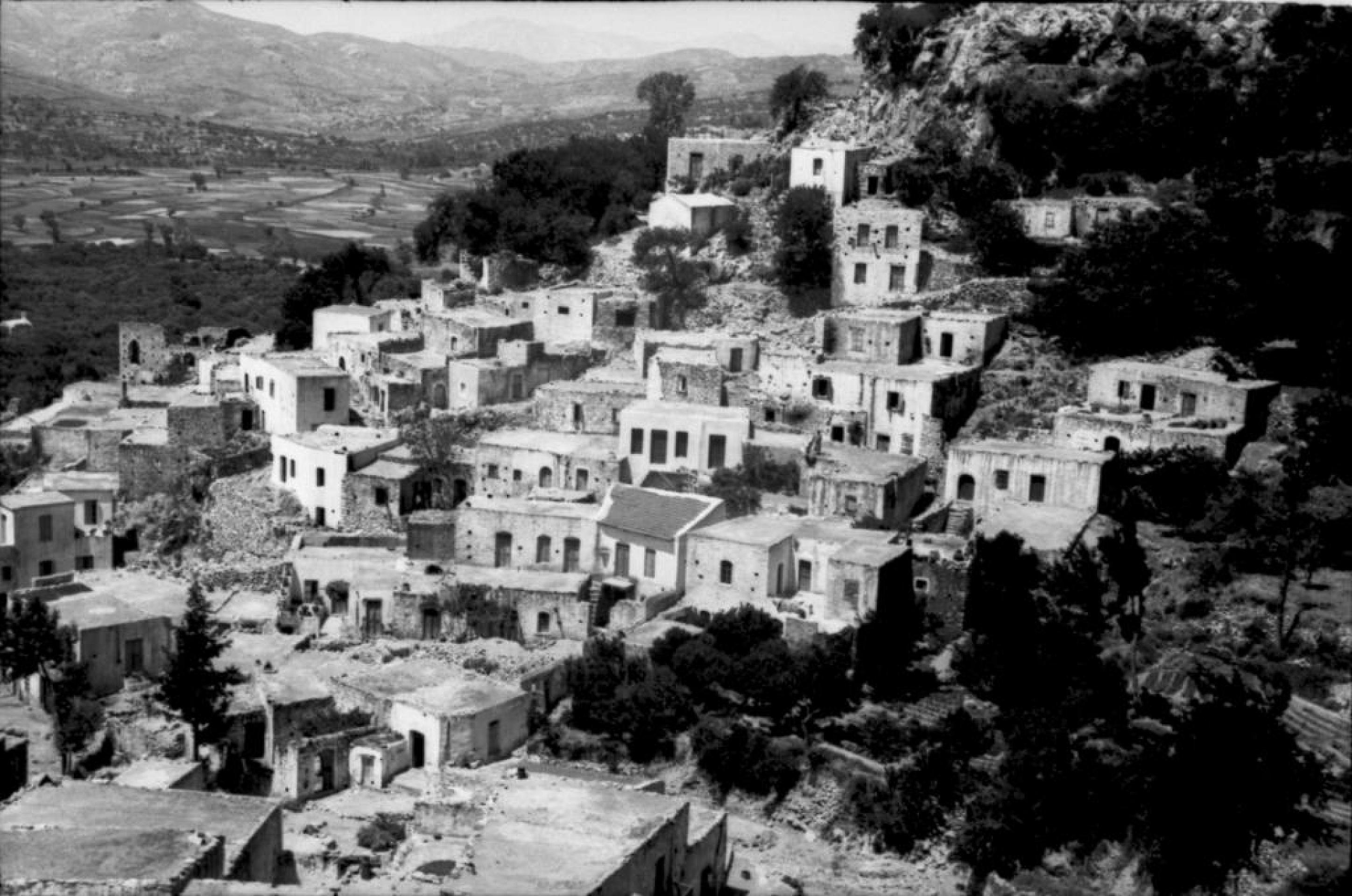
Today, almost every village on Crete in which »retaliation measures« were carried out has a memorial bearing the names of the victims. Located in the south-west of Crete is the ghost town of Epano Simi, which was completely destroyed and remained uninhabited after the war. The ruins of the former village serve as a reminder of the events of September 1943.
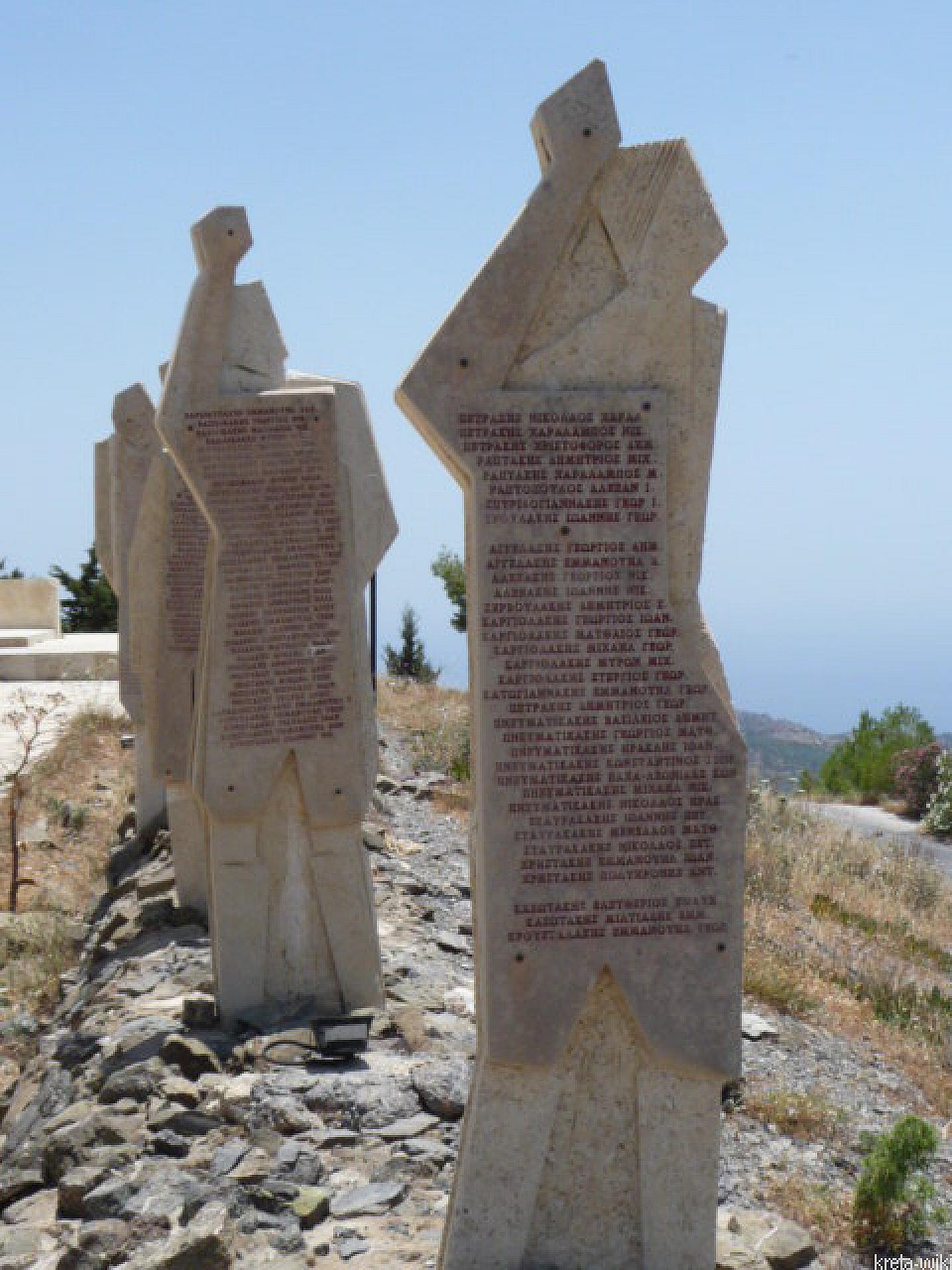
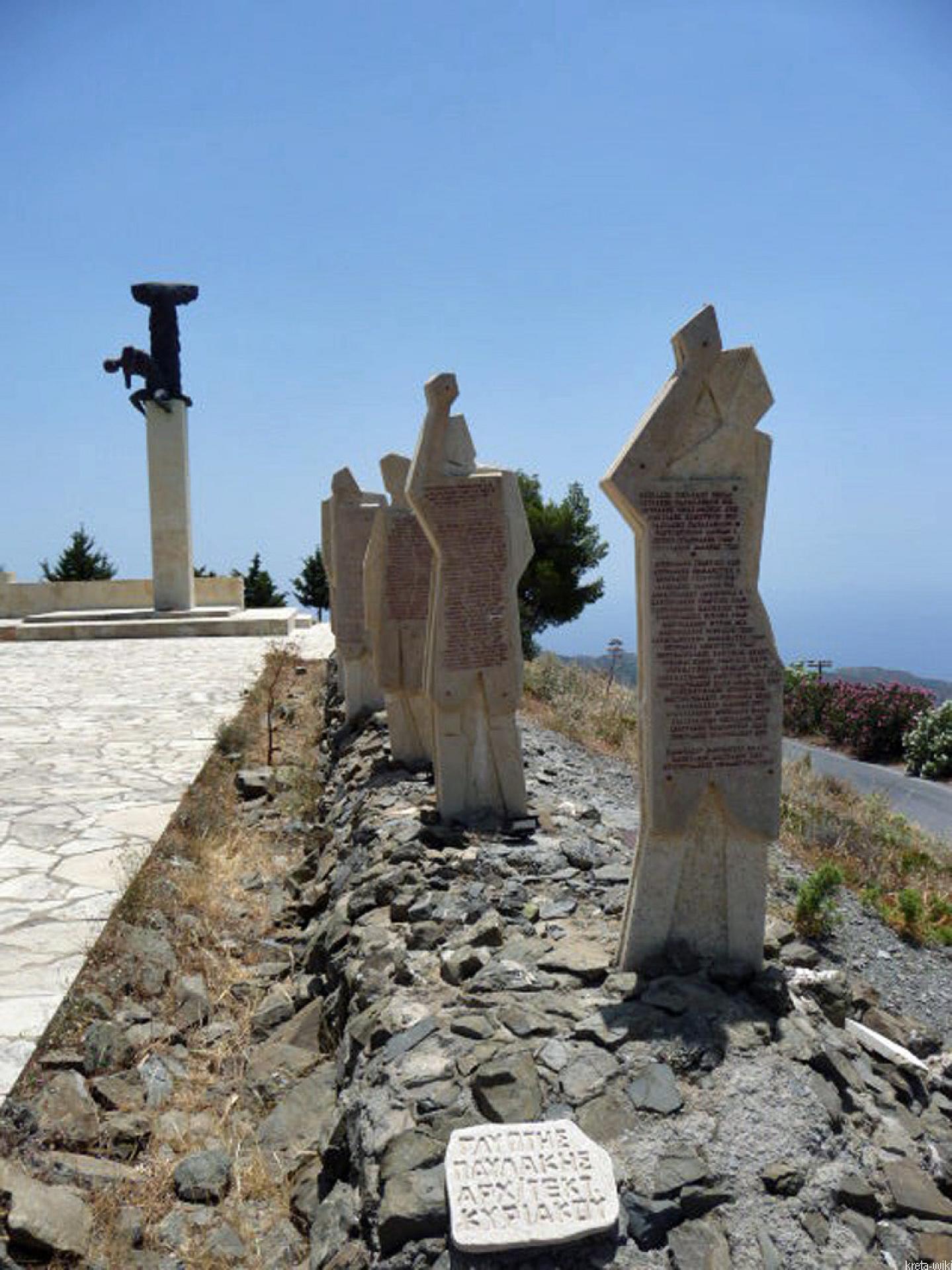
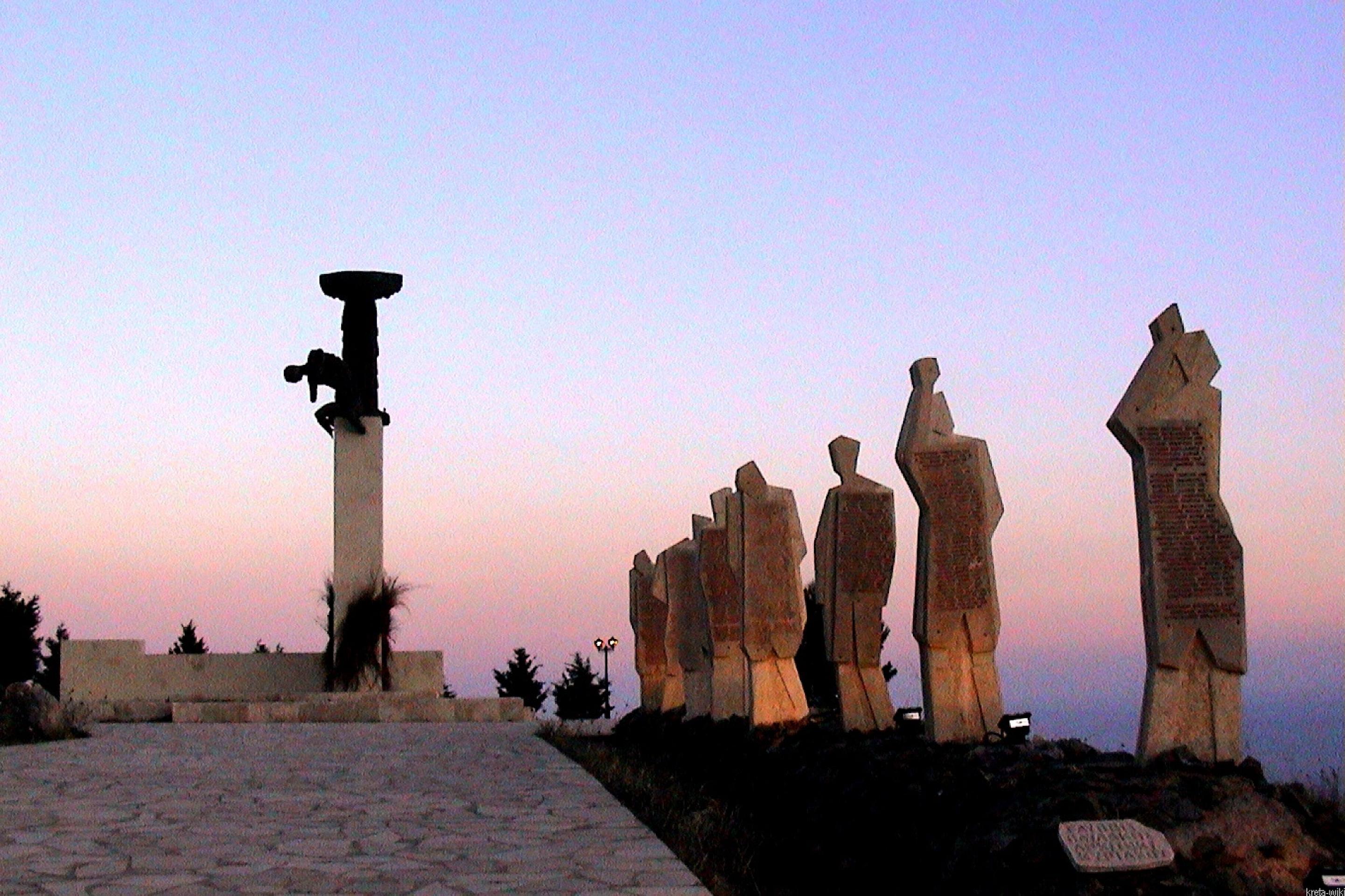
The monument in Amiras, which is a few kilometres away, lies on a hill on the outskirts of the village. Nine stone figures bear the names of the children who were murdered in the region of Ano Viannos on Crete.