Memorial to the Battle of Kursk
Мемориальный комплекс Прохоровское поле
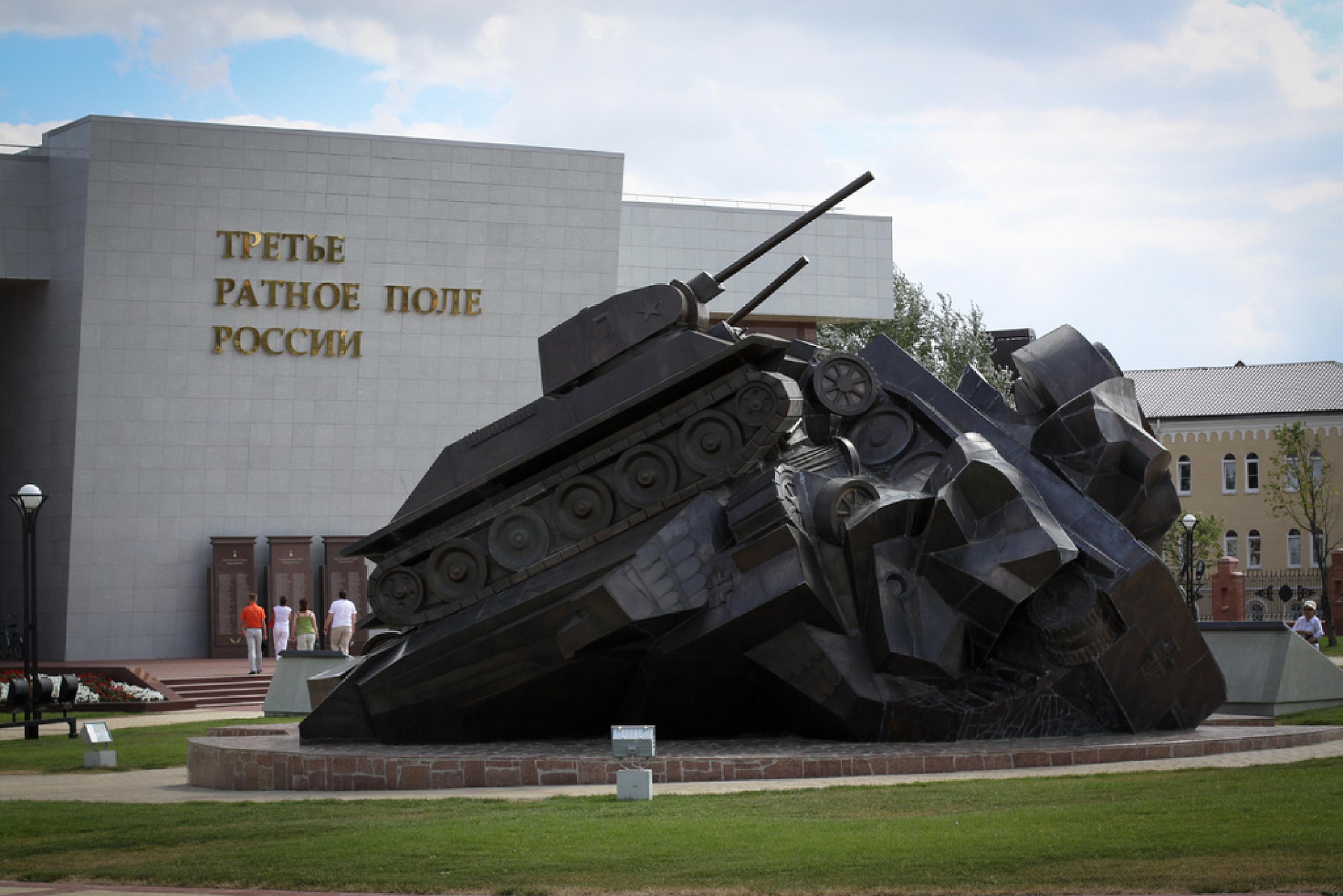
In the small Russian town of Prokhorovka about 100 km south of Kursk a monumental memorial complex remembers one of the largest tank battles in history, fought between Wehrmacht and Red Army in 1943.
History
In 1942/43 the Red Army could successfully drive back the Wehrmacht westwards, their advances resulting in the 200 km deep Kursk salient (also known as the Kursk bulge). This sector was of of a highly strategic importance since it had become a stronghold for the Soviet forces and because from Kursk the Wehrmacht would be able to advance south or even towards Moscow. Therefor the Wehrmacht High Command in 1943 planned to encircle the Russian troops in the Kursk bulge in a pincer movement. Because of various shortages Hitler postponed the attack until summer, hoping to be able to attack with a larger army. The Soviet command also expected a German attack. Their plan was to attack the Germans after a successful defensive battle and to drive them back further. Additional troops and tanks were redeployed to Kursk, the battlefield was mined and honeycombed with antitank ditches.
In the morning of July 5, 1943 »Operation Citadel« started: About 900,000 German soldiers and 2,700 tanks faced 1,3 million Red Army soldiers and 3,400 tanks. In the north the Red Army brought the German attack to a halt within days. The stronger and bigger section of the German army was in the south and was able to advance about 30 km. On July 11 the German troops started an attack near Prokhorovka. Following some quick success the armoured forces met with a bigger group of Soviet tanks which had been brought up as reinforcements on July 12. Despite being outnumbered, the German tanks inflicted terribly casualties on the Red Army. Nevertheless the German Wehrmacht abandoned the operation on July 13. On the one hand because the overall goal, the encirclement of Kursk couldn't be achieved, on the other hand because of the allied invasion of Sicily forced the German leadership to redeploy troops elsewhere.

Victims
In the battle of Prokhorovka about 500 German soldiers and up to 5,000 red Army soldiers died. Approximately 50 German tanks were destroyed or incapacitated whereas more than 230 Soviet tanks were destroyed. During the entire »Operation Citadel« approximately 180,000 Soviet and about 55,000 German soldiers lost their lives. Despite the high losses of men and material the Red Army continued their attack against Wehrmacht emplacements after July 13, 1943 as planned. Right through into August 1943 the Red Army was able to retake important territory, again accepting heavy casualties.
Remembrance
Although the battles near Prokhorovka were military operations in the context of »Operation Citadel«, they have been glorified in post-war times as the »Battle of Prokhorovka« and the »Greatest Tank Battle in History«. Although no side emerged victorious the Soviet propaganda declared it the victory of Kursk: Thousands of tanks are said to have clashed in Prokhorovka, after battles lasting for days and heavy German casualties the Red Army eventually came off victorious. This version was probably used to justify the Red Army's heavy casualties. The legend of the victorious battle of the Red Army strengthened over the years. The fact of the matter is that after this battle the Wehrmacht was unable to mount any bigger offensives on the eastern front.
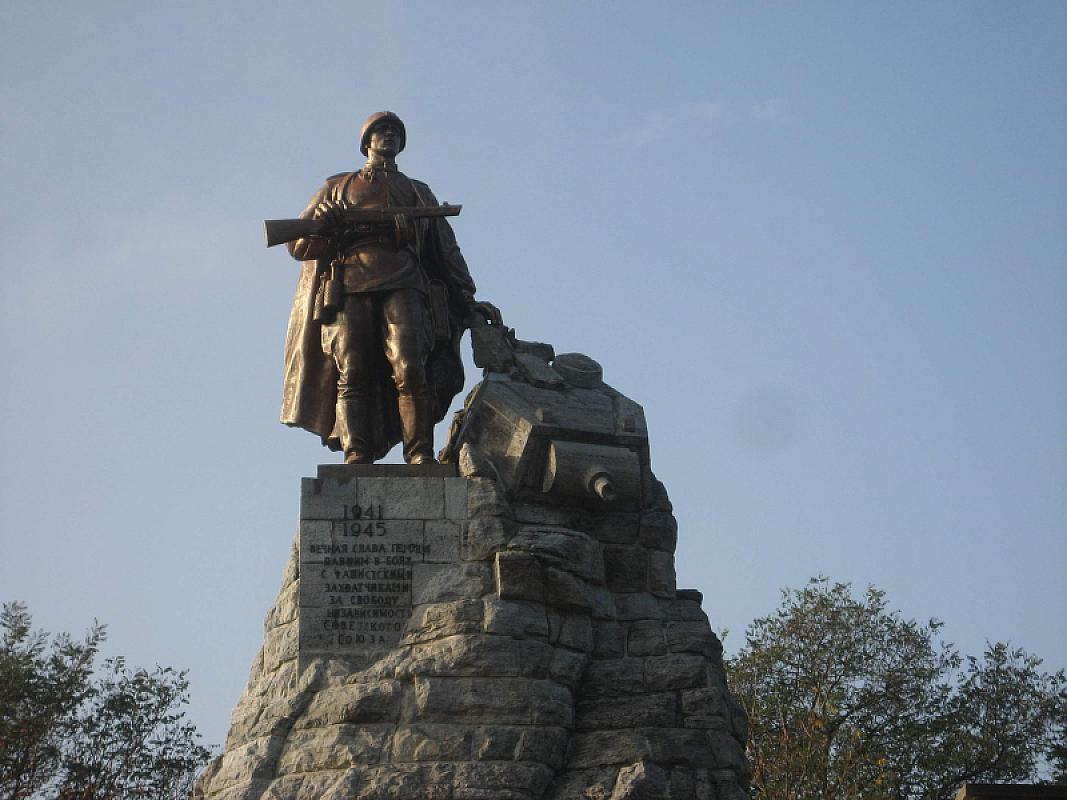
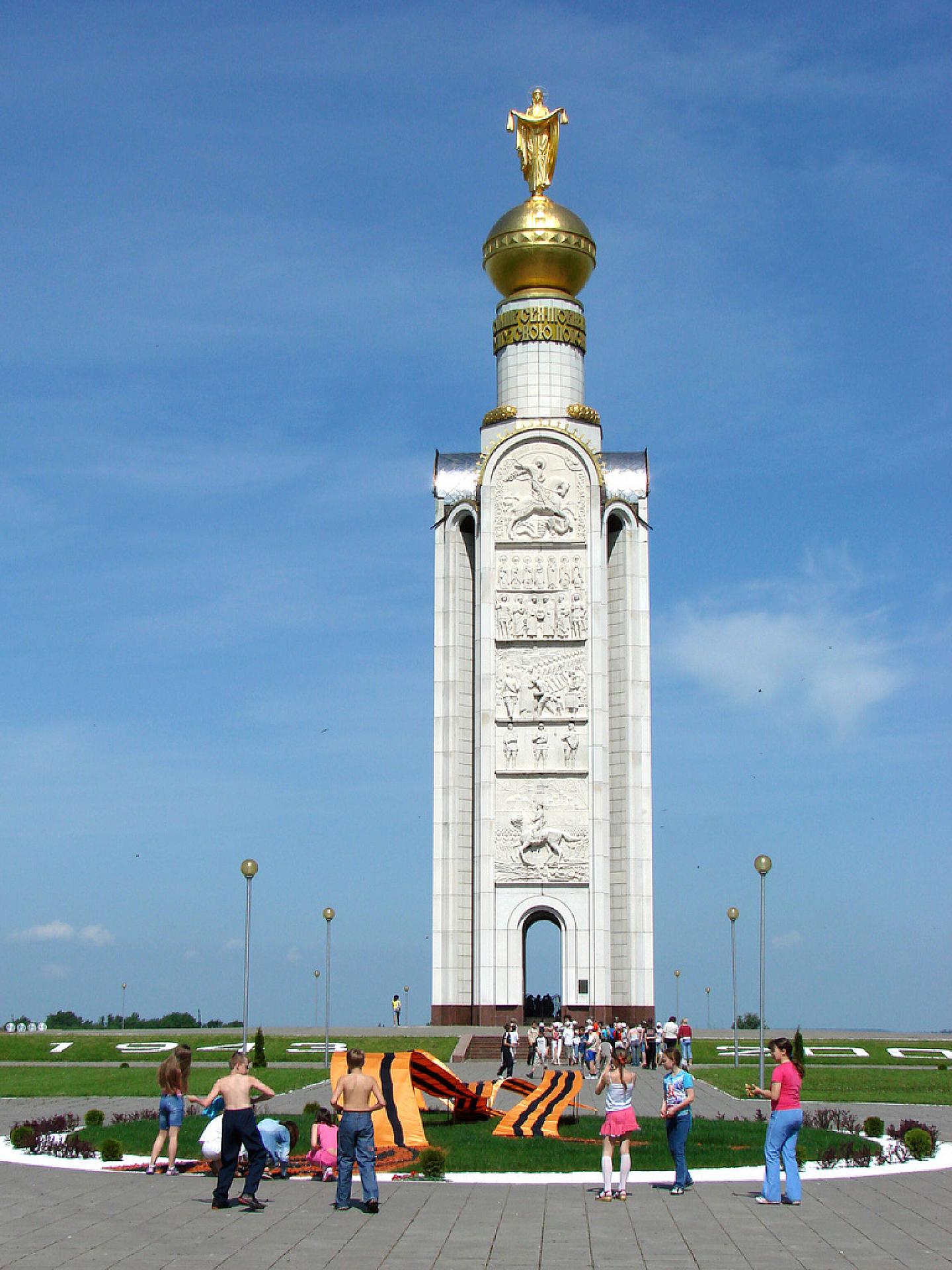
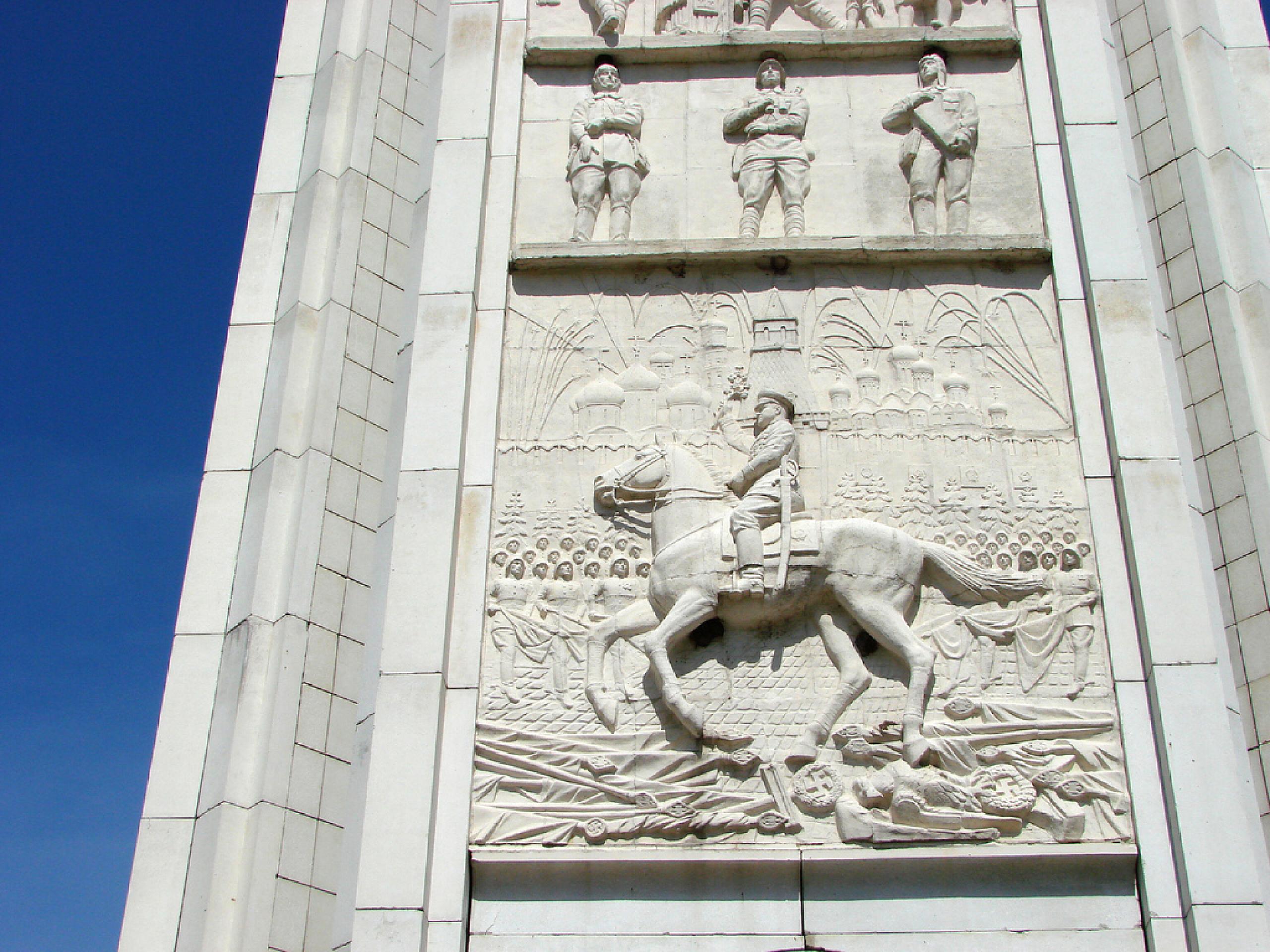
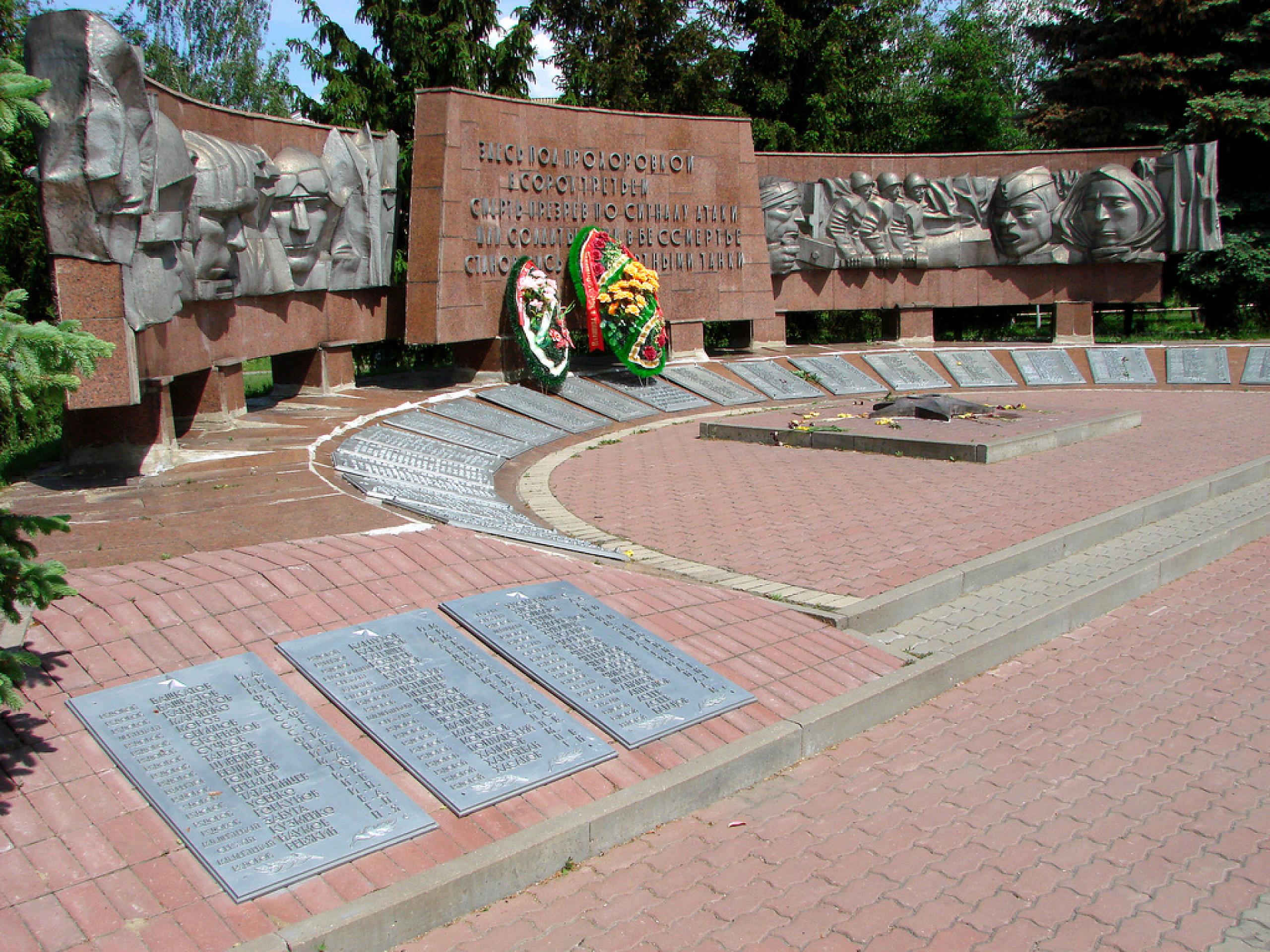
In 1995 a monumental memorial was erected near Prokhorovka, remembering the fallen Soviet soldiers and the Red Army's victory. The principle elements of the complex are a victory bell, a church and a burial site for fallen Red Army soldiers. They are flanked by numerous tanks and sculptures. The memorial was designed by the Kursk sculptor Vyacheslav Klykov. In addition a museum was opened in 2010.
Possibilities
Permanent exhibition, cultural centre, hotel, restaurant, library
Open
The memorial is accessible at all times. The museum is open Tuesday to Sunday 10.00 a.m. to 5.00 p.m.
Contact
http://www.prohorovskoe-pole.ru/
Proh_muz@mail.ru
+7(47242) 22 372
ul. Parkowaja, 47
309000 Prochorowka