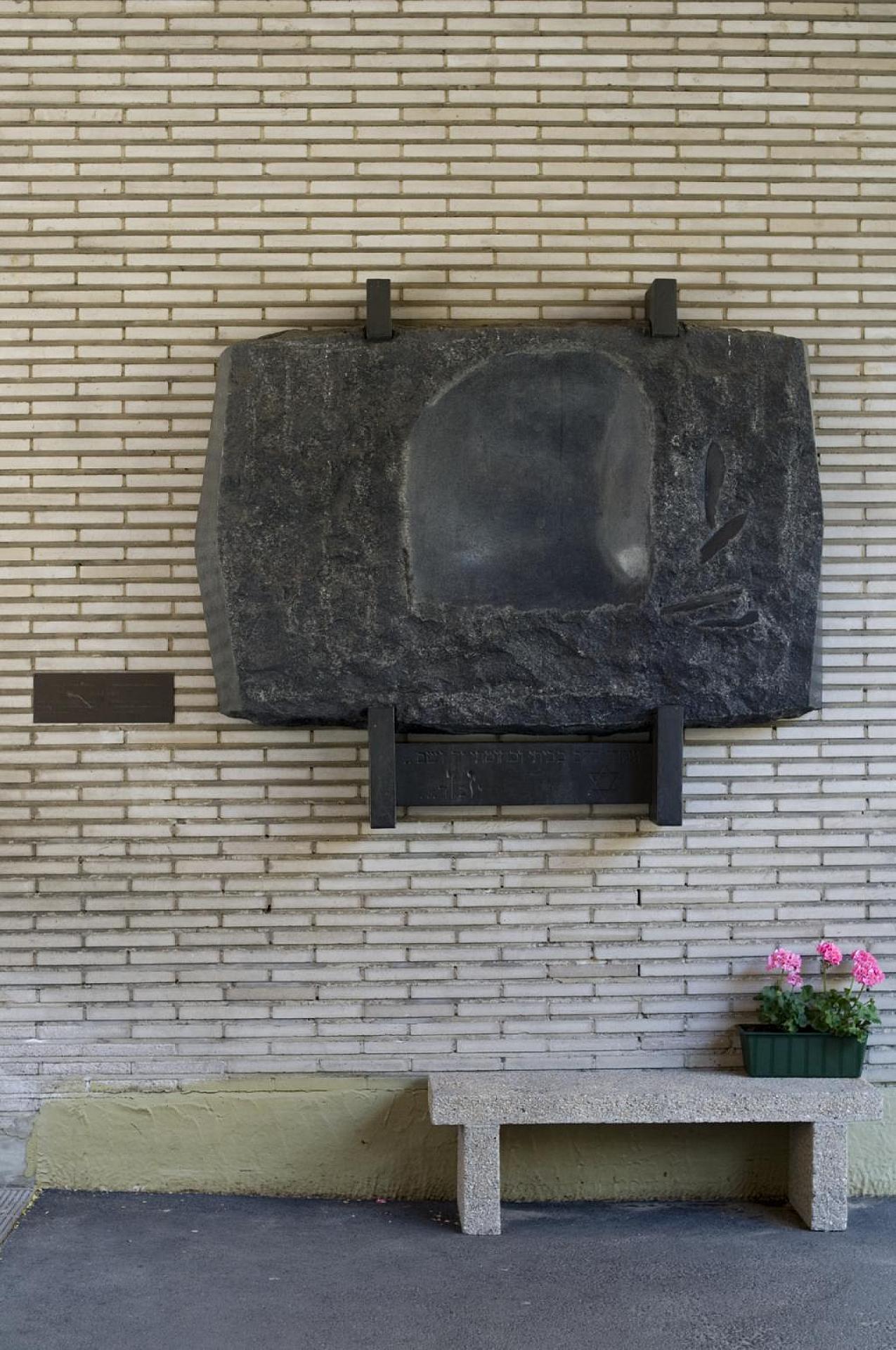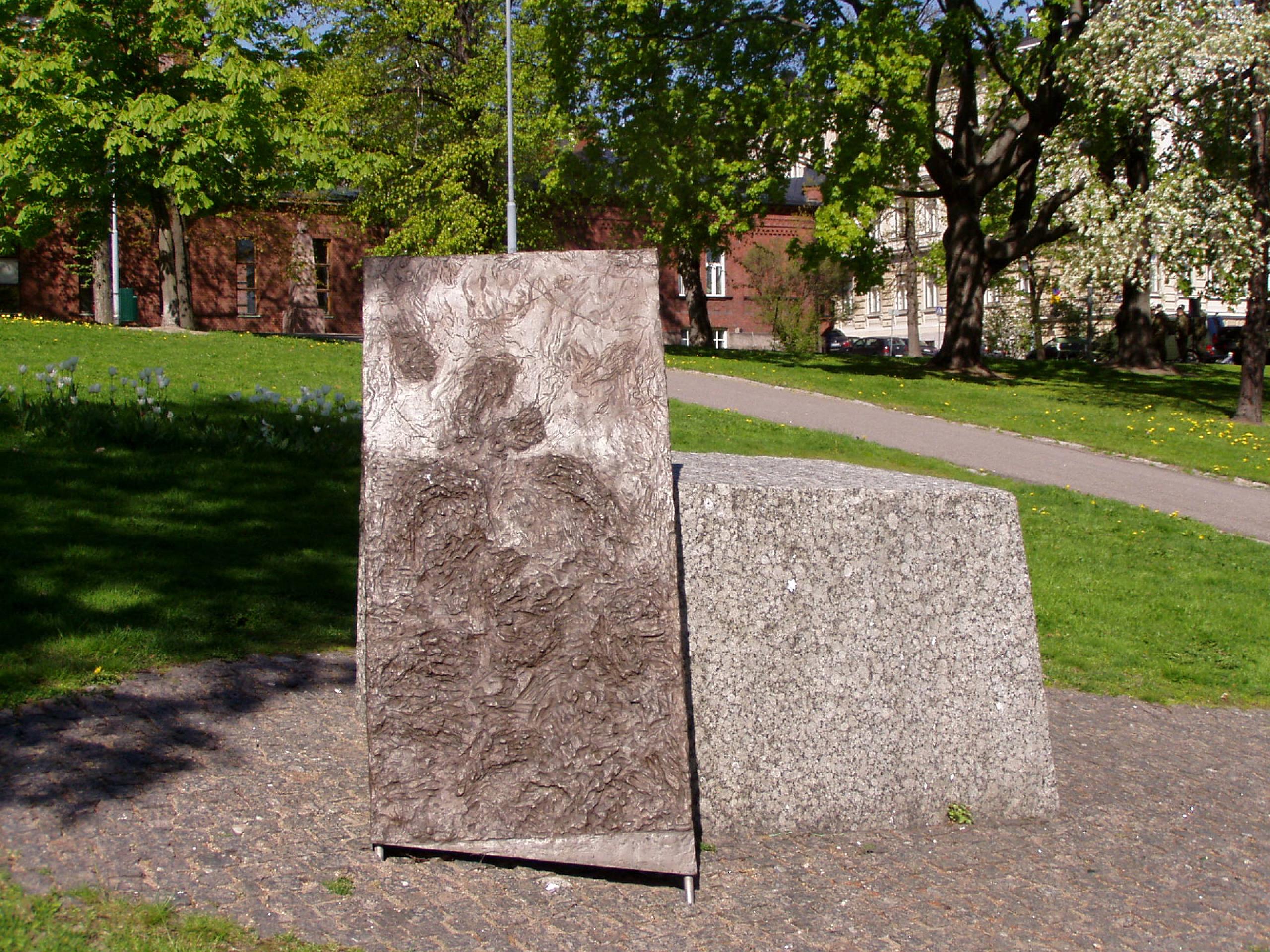
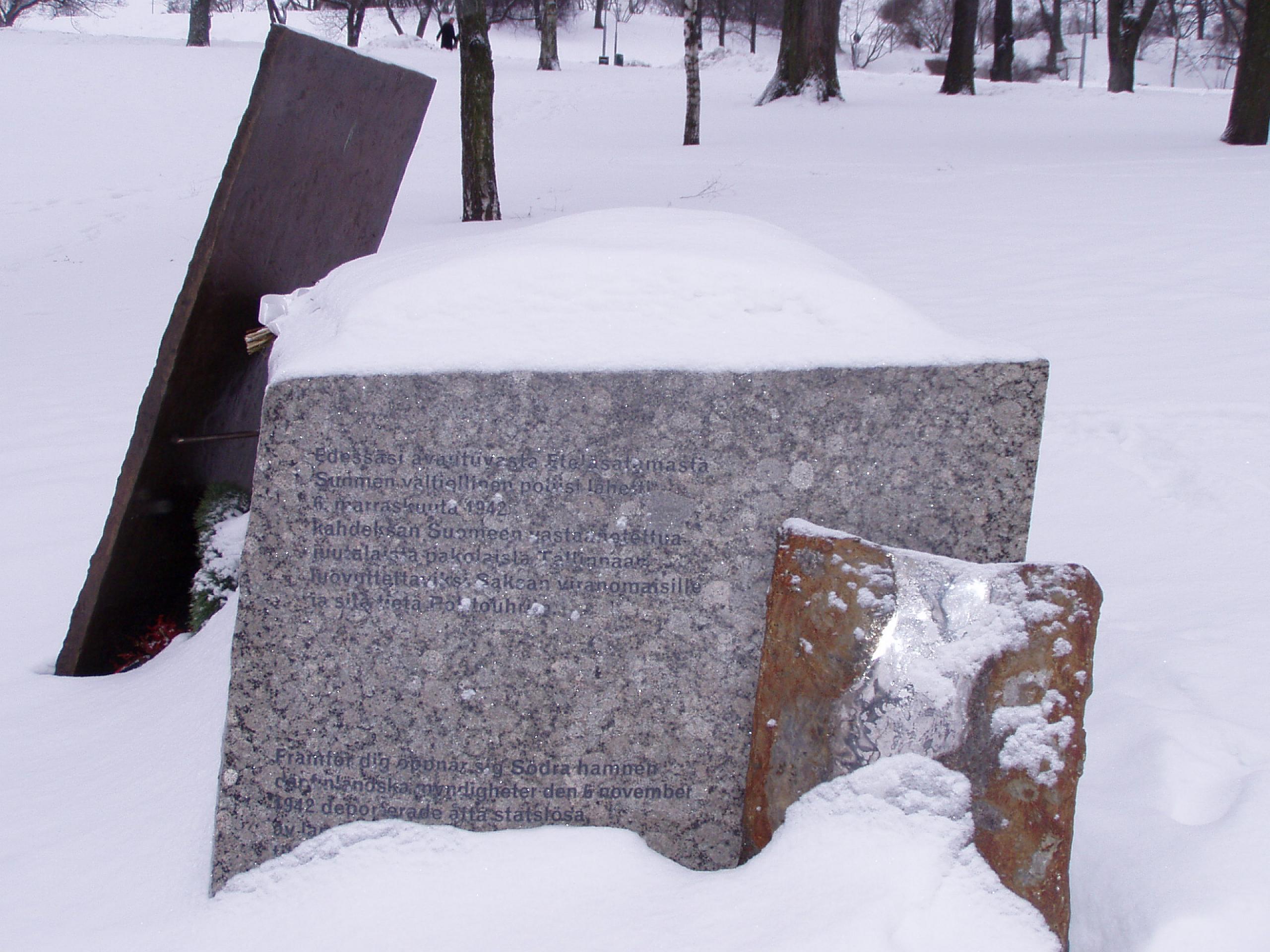
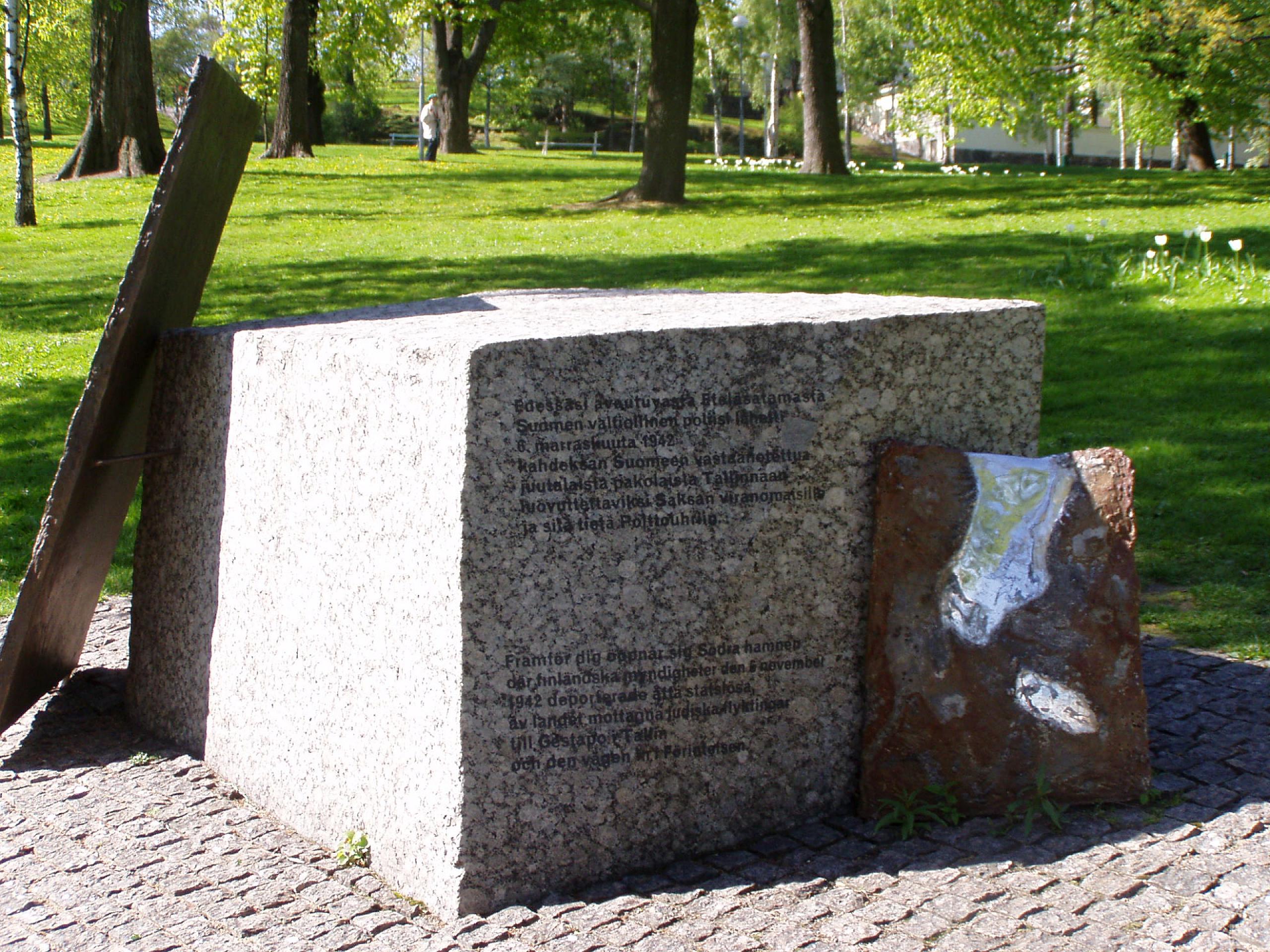
The memorial in the park on Tähtitorninmäki (English: Observatory Hill) in Helsinki recalls the eight Jewish refugees who were handed over to the Gestapo by Finnish authorities in 1942 and murdered at the Auschwitz-Birkenau extermination camp.
History
The so-called Winter War began on November 30, 1939, when the Red Army invaded Finland. An armistice was signed following fierce battles, and Finland had to cede parts of Karelia in the country's east to the Soviet Union. In 1941, when Germany invaded the Soviet Union, Finland joined forces with the Wehrmacht (in what was called the »Continuation War«), maintaining its independence, however. In 1944, in light of the course of war, the Finnish government ended the alliance with Germany and forced the German units to leave the country. The approximately 2,000 Finnish Jews were not persecuted; Jewish men were deployed as soldiers on the front. All the while, prime minister Johan Wilhelm Rangell refused to hand over Finnish citizens to Germany.
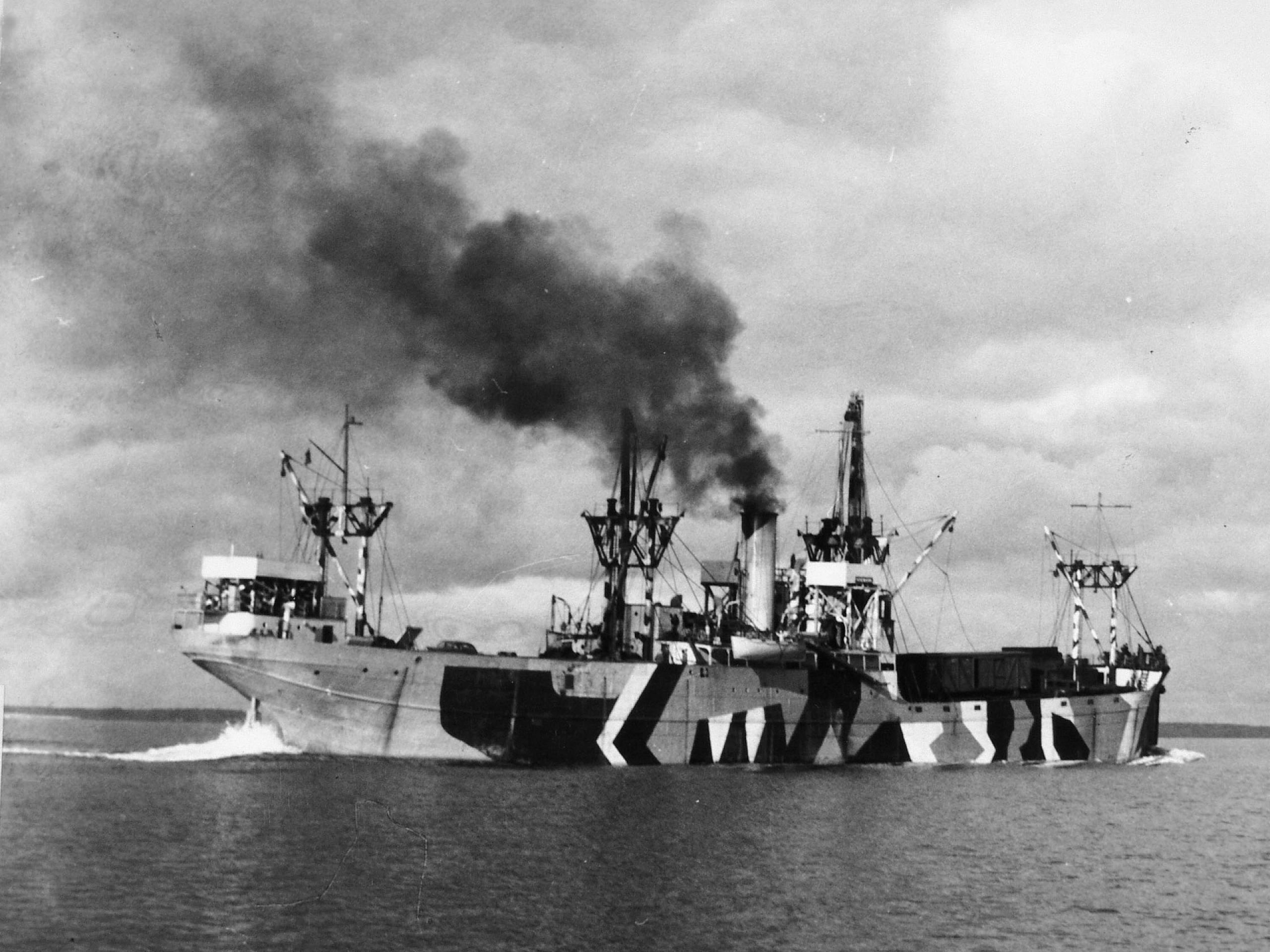
During the war, about 150 Jewish refugees from Central Europe fled to Finland. At first, they were taken to small townships, later a hundred men were interned at a labour camp. The Finnish secret police Valpo, asked to do so by the Germans, designated between 20 and 50 of the refugees for deportation. Walter Cohen, a refugee himself, made the matter public by sending a postcard about it. Finnish society and the government were divided on the issue. Despite an official halt to the undertaking, Valpo delivered eight Jewish emigrants from Germany, Austria and Latvia to the Gestapo on November 6, 1942. They were taken to Estonia on the SS »Hohenhörn« and later murdered in Auschwitz. Only one of them, Georg Kollmann, survived. In 1947, he testified in the trial against Valpo chief Arno Anthoni.
Already during the war, the delivery of the refugees was publicly disputed - prominent citizens demanded the internees be granted refuge, voicing this in the big daily newspapers. The police and minister of the interior argued on the other hand that the inmates were »saboteurs, spies and criminals« who should be extradited.
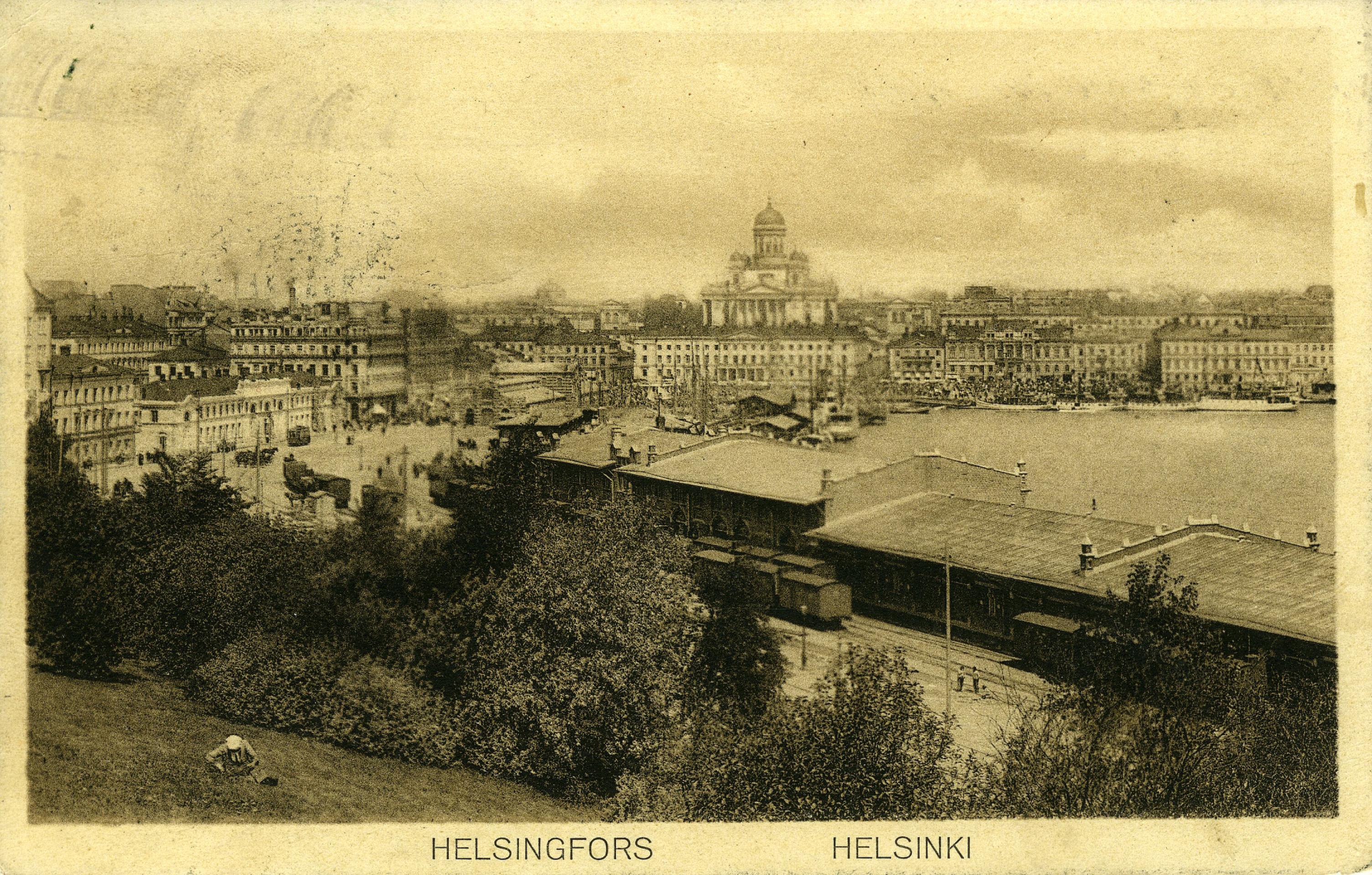
Victims
The memorial is dedicated to the eight Jewish refugees who were deported from Finland to Estonia and subsequently murdered in Auschwitz: Austrians Heinrich and Kurt Huppert, Georg and Janka Kollmann and their young son Franz Olof (born in Finland) and Hans Robert Martin Korn, Elias Kopelowski from Latvia as well as German Hans Eduard Szübilski. Recent research has shown that Finland delivered a further 130 civilians and over 2,600 Soviet prisoners of war, including up to 70 Jews, to the Gestapo and the Wehrmacht.
Remembrance
On November 5, 2000, on the occasion of Helsinki's 450th anniversary, a memorial to the deportees was unveiled by prime minister Paavo Lipponen in the park complex on Tähtitorninmäki in the centre of the Finnish capital. In the name of the government he apologised for the extradition of the eight victims. Jewish veterans, representing the 300 Jewish soldiers who had fought as equals in the Finnish army (alongside the Wehrmacht) against the Soviet Union, formed a guard of honour, presenting their medals and decorations. The chairman of the Jewish community of Helsinki, Gideon Bolotovski, welcomed the erection of the memorial.
The stone sculpture with the names of the eight victims was designed by sculptors Nils Haukeland and Rafael Wardi. Each year, a commemorative ceremony is held on November 8, the day of the deportation.
Apart from that, a memorial plaque to the European Jews murdered between 1939 and 1945 had been affixed in the Helsinki synagogue in 1970.
Open
The memorial in the park is accessible at all times. The Jewish community centre is open Monday to Friday between 9 a.m. and 5 p.m.
Contact
srk@jchelsinki.fi
+358 (0)9 586 03 10
Tähtitorninmäki
00100 Helsinki