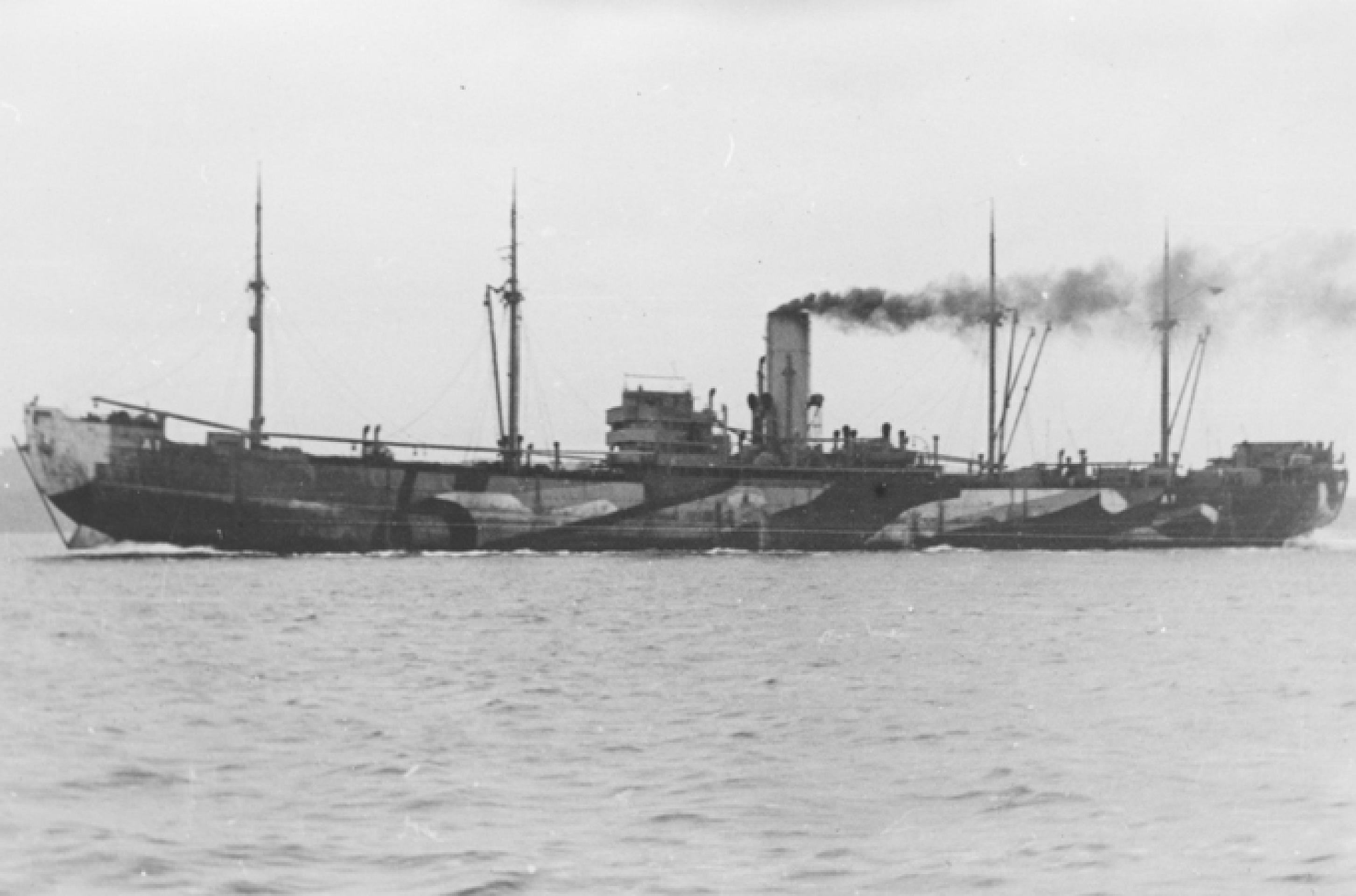
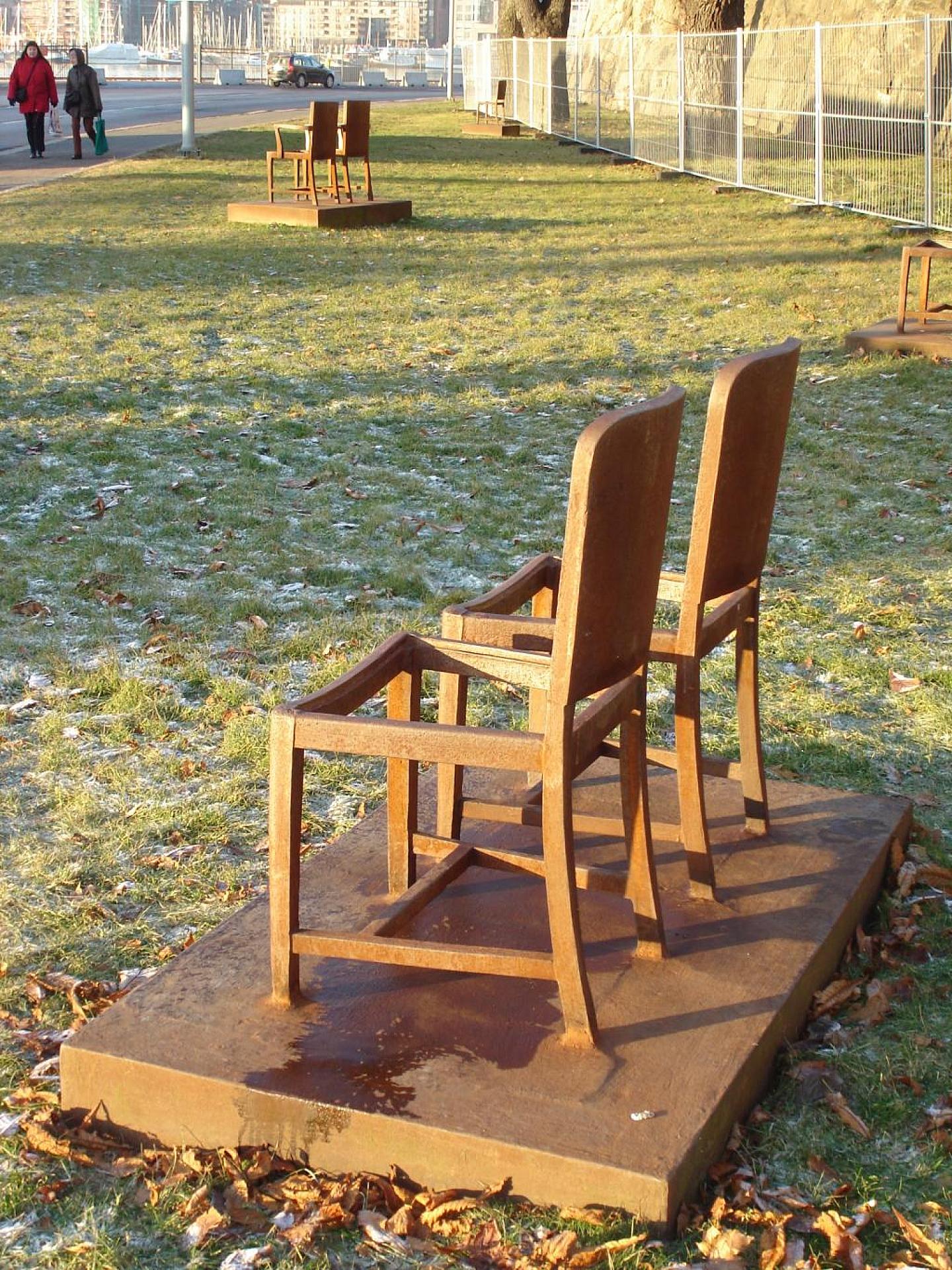
Over 690 Norwegian, German and stateless Jews were deported to the Auschwitz extermination camp in November 1942 and in February 1943. Since October 25, 2000, a memorial marks the spot from which the ships »Donau« and »Gotland« left Norway with the deportees on board.
History
In April 1940, German troops occupied Norway. At the time, there were over 1,300 Norwegian Jews and about 600 Jewish refugees living in Norway. In September 1940, the German occupiers installed a puppet regime led by Reich Commissioner Josef Terboven (1898–1945). From June 1941 on, the German occupying forces and Norwegian nationalists radicalised the exclusion of Jews. After their wealth had already been confiscated for the most part, all Jews in Norway were arrested in October 1942. On November 26, 1942, and on February 25, 1943, the SS deported 690 Jews from the port in Oslo on German ships: the »Donau« and the »Gotland«. They first headed for Stettin (today: Szczecin, Poland). From there they were taken by train to the Auschwitz extermination camp - either directly or via Berlin. 80 more Jews were deported in other transports. Only 30 of the deportees survived. 21 Jews died in Norway itself. About 900 Jews from Norway managed to flee to Sweden. In all, about 765 Jews from Norway were murdered between 1940 and 1945, over 40 per cent of the country's Jewish population.
Victims
The memorial is dedicated to the 765 Norwegian Jews who fell victim to National Socialist persecution.
In April 1940 the German Wehrmacht occupied the Kingdom of Norway following weeks of fighting. At the time, over 1,300 Norwegian Jews and around 600 Jewish refugees were living in the country, mainly in Oslo and Trondheim. The majority of the Norwegians were opposed to the Germans. Prior to the German invasion public support was also lacking for the anti-Jewish stance of the Norwegian party »Nasjonal Samling« (National Unity), founded in 1933 and led by Vidkun Quisling (1887–1945). From June 1941, the German occupying forces and Quisling’s nationalists pursued an increasingly radical policy of excluding the Jews and persecuting opponents of the regime. In February 1942, a collaboration government was established with Quisling as Prime Minister. This government, which was under the control of the German Reich Commissar Josef Terboven (1898–1945), further stepped up the terror measures, especially against Jews. All of the Jews in Norway were arrested in October 1942. At the end of November 1942 and the end of February 1943 the SS deported 690 of these Jewish men, women and children by boat to Stettin in Pomerania (now Poland). From here they were deported to Auschwitz, either directly or via Berlin. At least 765 Jews from Norway became victims of the mass murder, over forty percent of the Jewish population of the country.
A number of resistance groups were formed in Norway, which practised civil disobedience and carried out acts of sabotage. Arrested members of the resistance were deported to the concentration camps at Natzweiler-Struthof, Neuengamme and Sachsenhausen. Many villages and industrial plants in the north of the country were razed to the ground during the Wehrmacht’s withdrawal from Norway in spring 1945. Quisling was arrested on 8 May 1945 and executed in the Akershus fortress in Oslo on 24 October 1945. In many languages the name Quisling stands for collaboration and treachery. Around 45,000 Norwegians had joined his party by 1945. Norway’s national Resistance Museum was opened in Akershus in 1970 along with a monument for the Norwegian patriots shot at the fortress during the Second World War. A number of Holocaust memorials have been established in Trondheim and Oslo since the 1990s. The Centre for Studies of Holocaust and Religious Minorities was founded in 2005 in Quisling’s former offices (»Villa Grande«) in Oslo. The Norwegian royal family headed by King Haakon VII (1872–1957) became a symbol of the Norwegian resistance and post-war democracy. The king and crown prince both refused to capitulate and went into exile in Britain. A »Peace Grove« was opened in 1997 near a birch tree where they had sought refuge in April 1940. The aim is to encourage people to engage in the »continuing struggle for freedom, peace and human dignity both today and in the future«. Many Norwegian sites of memory are oriented to the present and future and focus on education in peace and human rights. Since the 1980s, a critical confrontation with collaboration and everyday life under the German occupation has also been a feature of the Norwegian culture of memory.
Remembrance
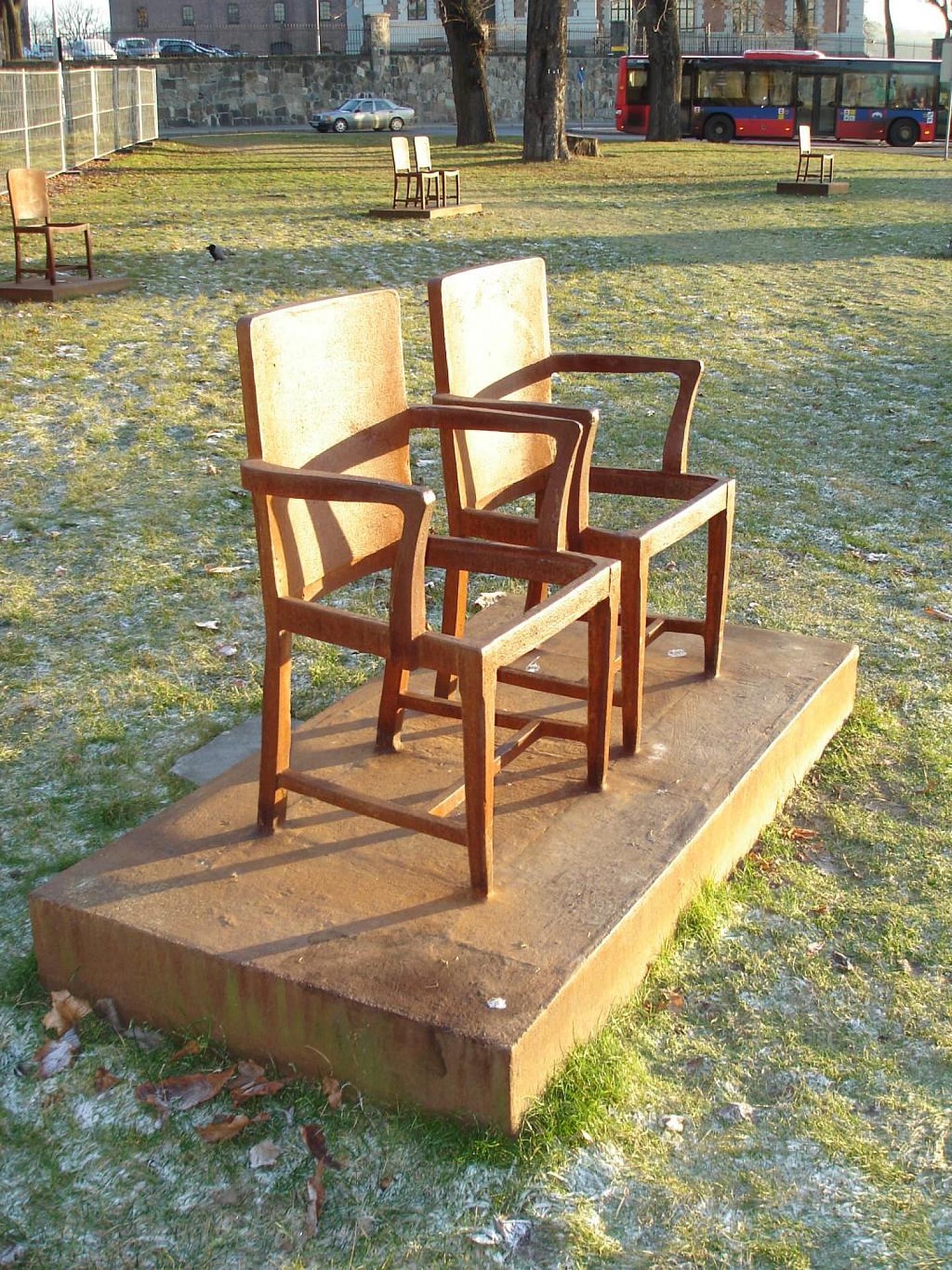
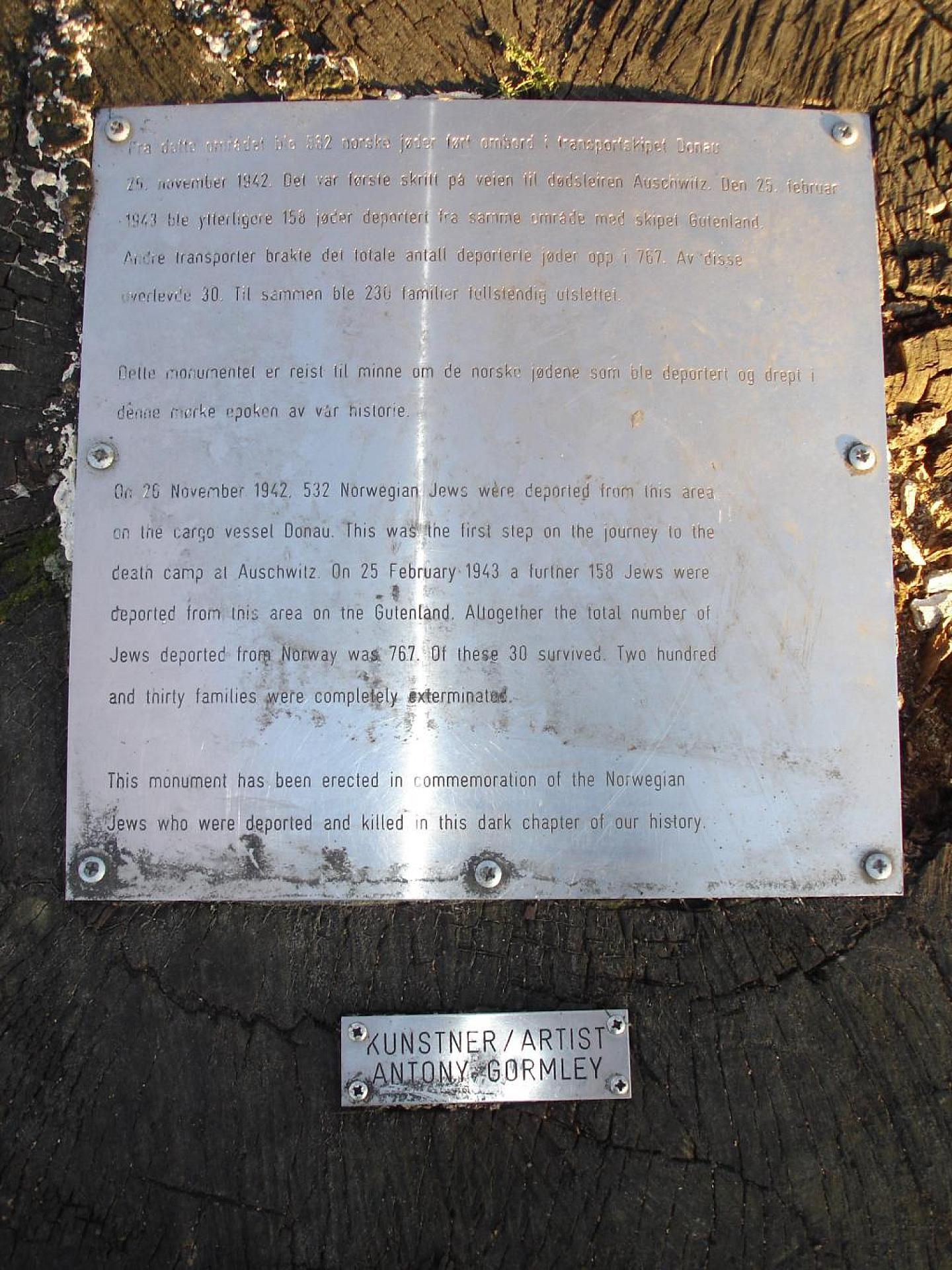
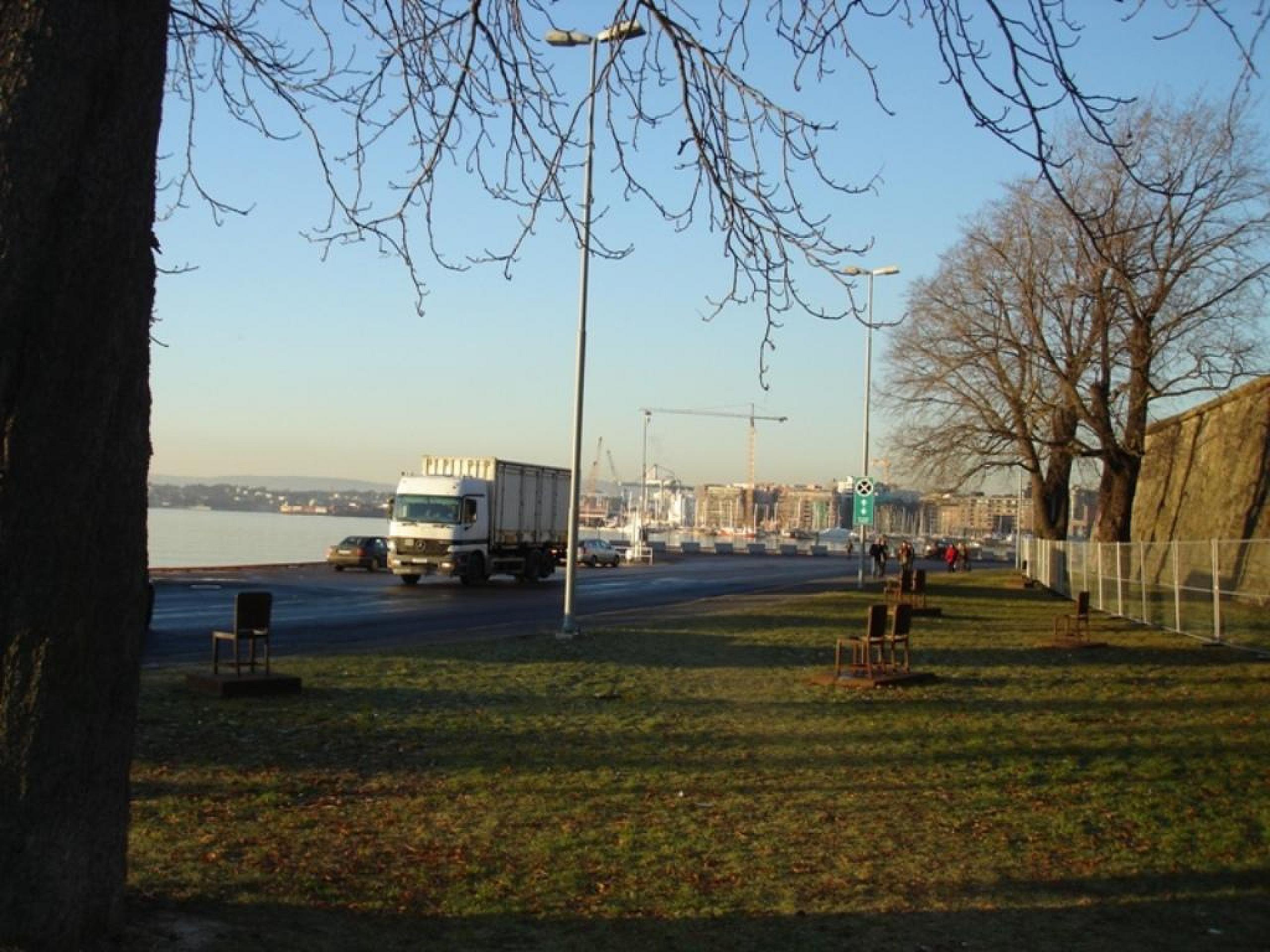
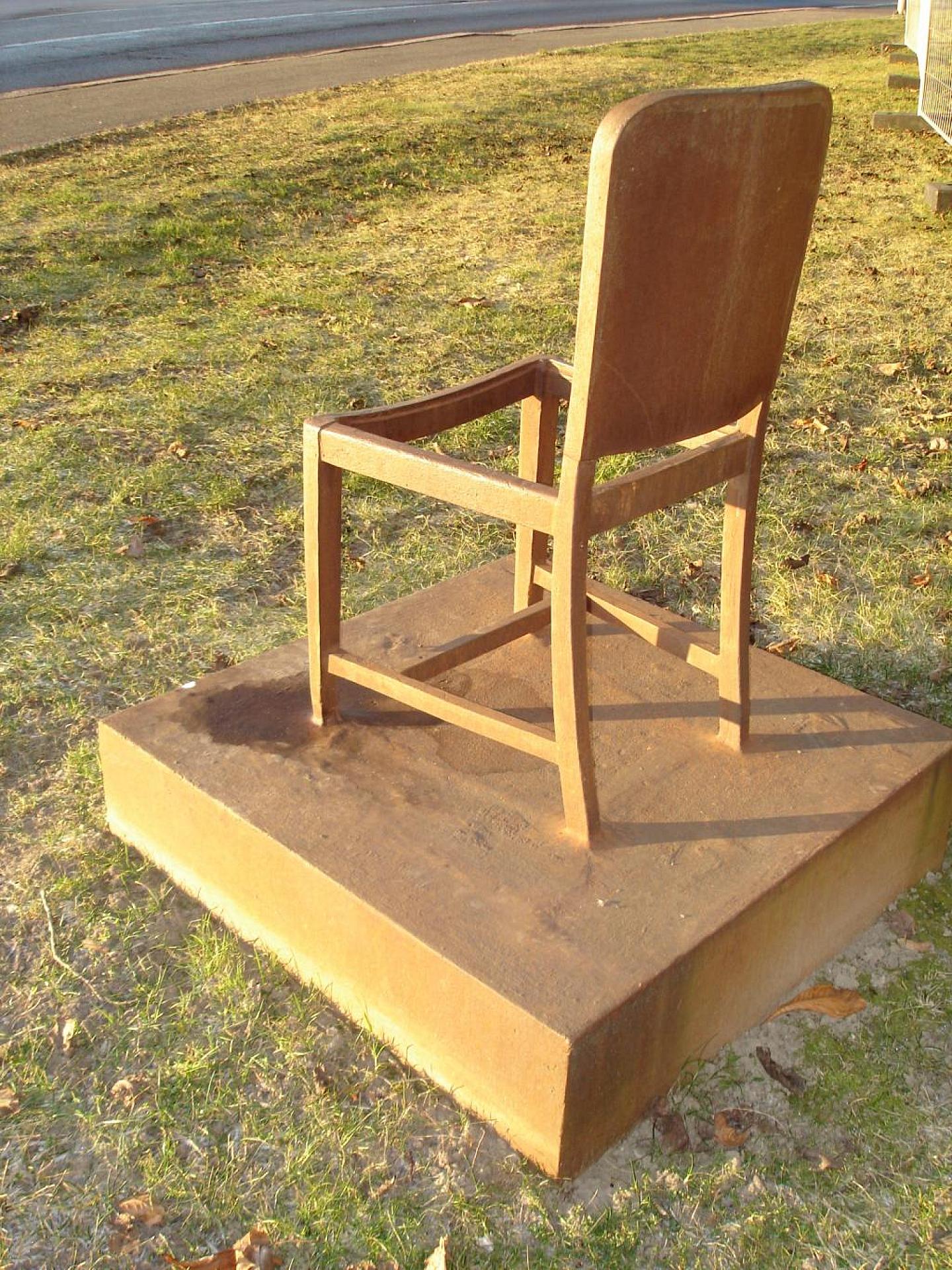
The monument, which was unveiled on 25 October 2000, marks the spot from where the »Donau« and »Gotland« ships left the Oslo port in 1942 and 1943. It was designed by British sculptor Antony Gormley. The steel sculpture shows eight seatless chairs in a gradual state of decay. The plaque with the dedication is mounted onto a tree stump.