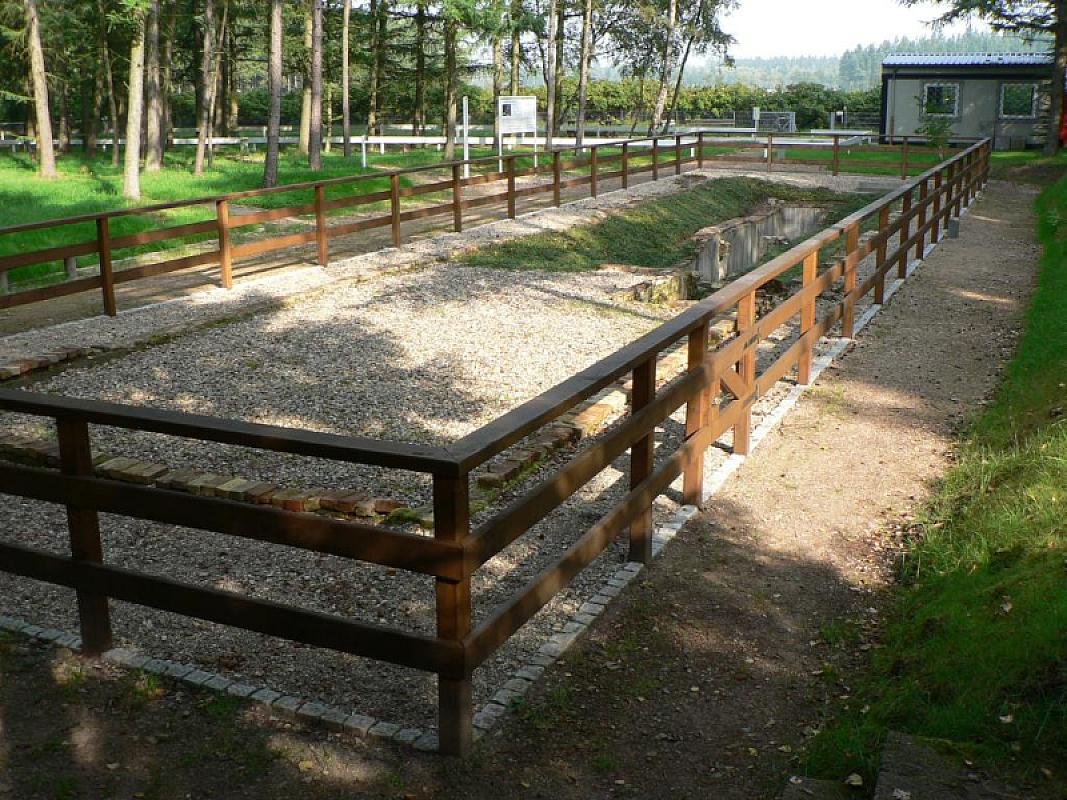
Memorial to the murdered Jews of Gomel
Память убитых евреев Гомеля / Памяць забітых яўрэяў Гомеля
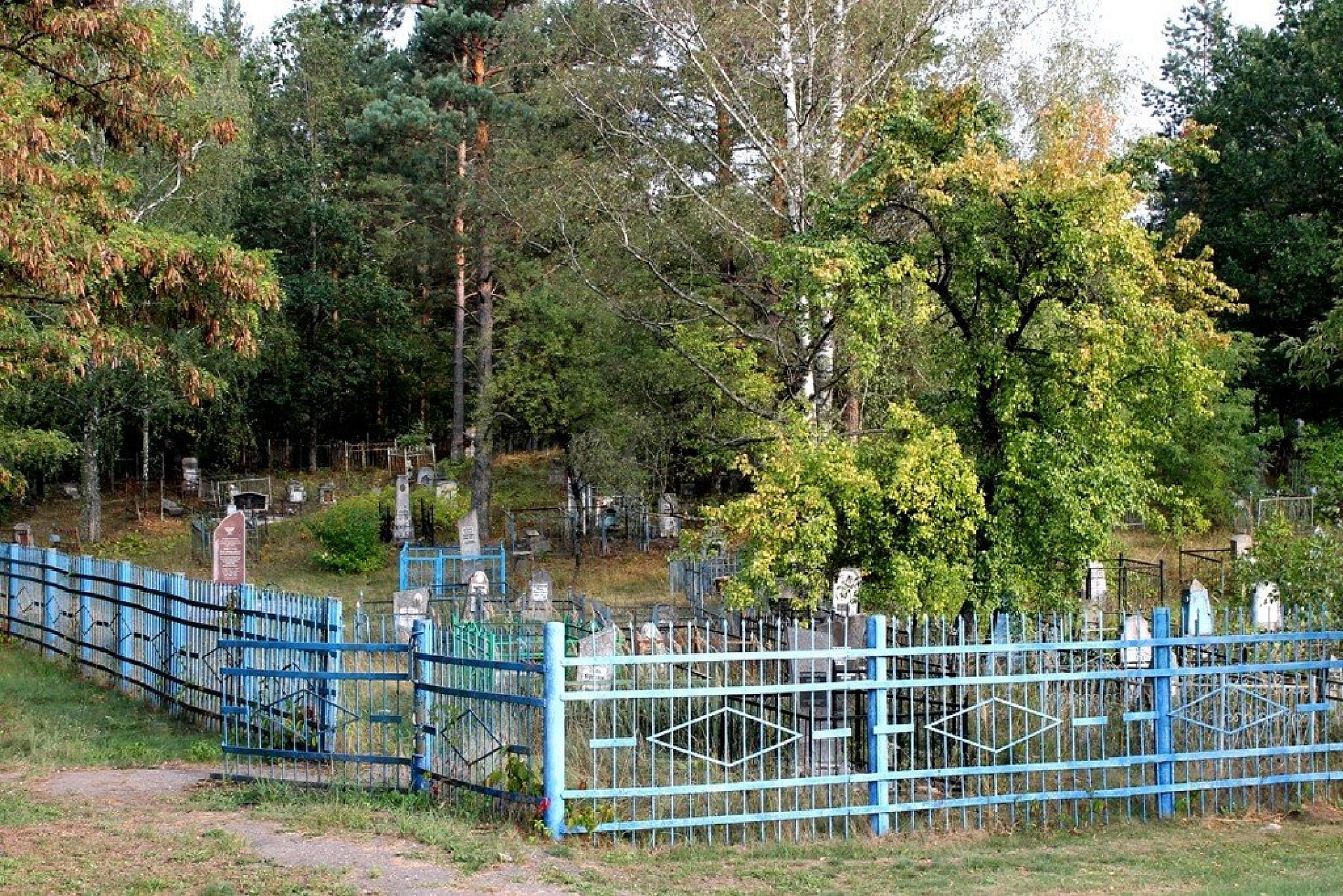
In Gomel, the second largest city in Belarus, two memorials in the Jewish cemetery remember the murdered Jews of the city.
History
Gomel (Belarusian: Homel) is located in south-east Belarus near the border to Ukraine on the banks of the river Sozh. Founded in 1142, Jews had been living in the city from the first half of the 16th century. Many of them were murdered during the Khmelnytsky Uprising of 1648. At the end of the 19th century about 20,400 Jews lived in Gomel and made up more than half of the population. At the beginning of the 20th century the Jewish community again suffered from pogroms. After the First World War Gomel briefly belonged to Ukraine before the Bolsheviks occupied the city in 1919. In 1926 Gomel was added to the Belarusian SSR.
Many Jews managed to escape from the city before the German troops arrived on August 19, 1941: Of the originally 40,900 Jews only about 4,000 remained. Between September and October 1941 the Germans established four different ghettos in Gomel. In the largest, which was located in the district of Monastyrek, approximately 800 Jews had to live. Also in the other three ghettos several hundred people were crammed into a very confined space. Many died because of the catastrophic circumstances.
At the beginning of November 1941, the Germans and their local helpers murdered some 2,300 Jews in a »Großaktion«. Members of the Security Police (SiPo) and local policemen took the victims from their homes and drove them to a prison. Over the next two days, they were shot and killed by members of Einsatzkommando 8 (sub-group of Einsatzgruppe) of Einsatzgruppe B (mobile killing unit). Several hundred Jewish specialists were left alive until 1942. They had to conduct forced labour in various labour camps in and around Gomel. Gomel was also home of several prisons and five prisoner-of-war camps. Some of the Jewish prisoners were suffocated in gas vans or shot together with other prisoners in a forest outside the city. The last such shooting took place in the first weeks of October 1943, after which the German troops withdrew from the area.
Victims
Only a few days after the occupation of the city German units shot ten Jews, whom they accused of having offered resistance. In mid-September 1941, Einsatzkommando 8 (sub-group of Einsatzgruppe) of Einsatzgruppe B (mobile killing unit) arrived in the city under the command of Oskar Winkler. During the first major mass shooting at the beginning of October 1941, this unit shot approximately 53 Jews. From mid-October 1941, Wilhelm Schulz and the men of Einsatzkommando 8 were responsible for the executions. As part of a »Sonderaktion« at the beginning of November, they and their local helpers shot more than 2,300 Jews. The mass executions continued until the summer of 1942. In the winter of 1942/43, the persons in charge discovered several Jews among the Soviet prisoners of war in transit camp 121. They left them standing naked in the cold and poured cold water over them until they froze to death. In autumn 1943 the Germans shot almost all prison inmates in a forest. Among them were at least fifty Jews. Also in the autumn of 1943 the occupying forces attempted to cover up the traces of their crimes by having the mass graves of Jewish victims opened and the already decaying corpses burned.
Remembrance
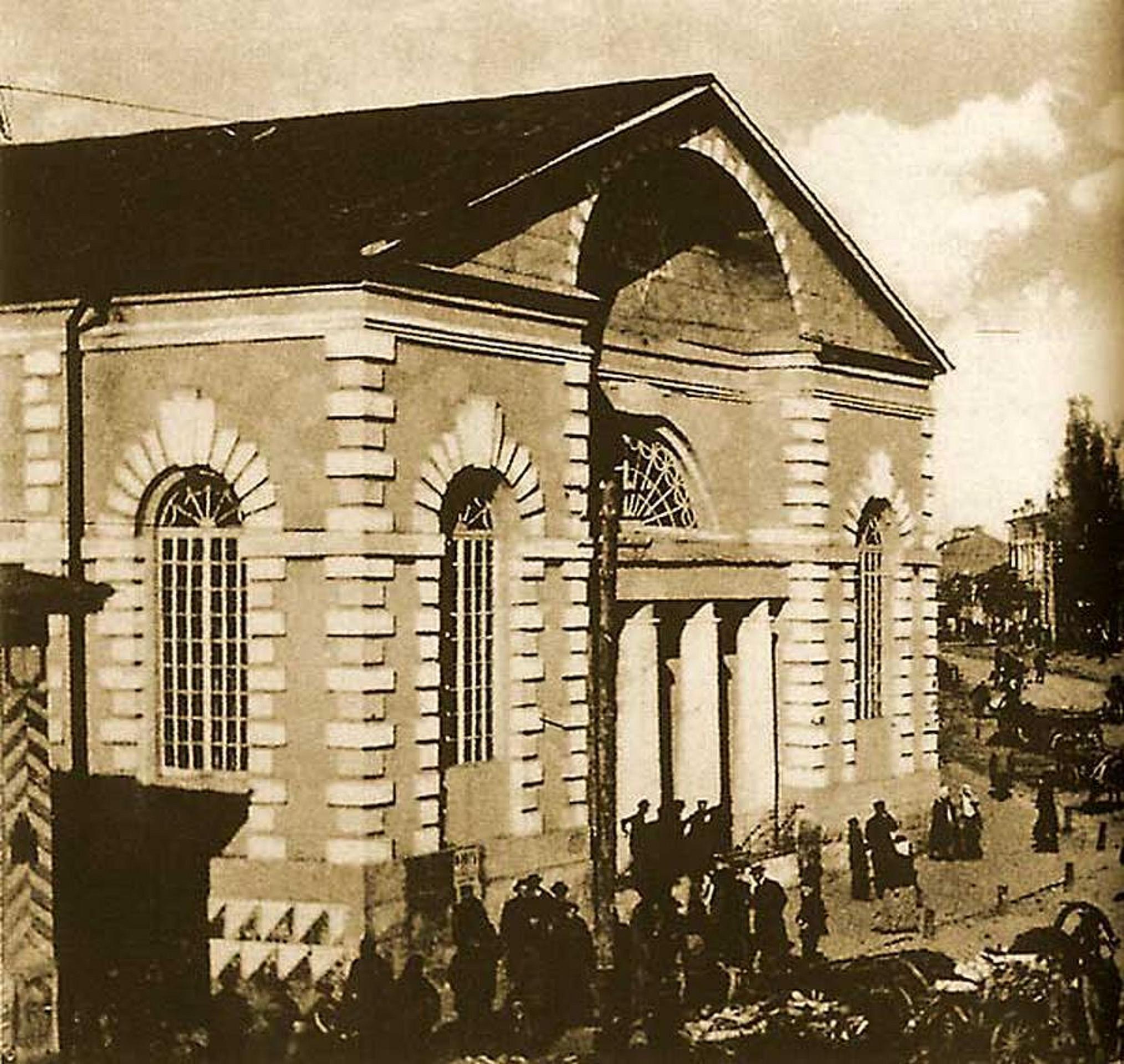
The Red Army liberated Gomel on November 26, 1943 and many Jews returned to the city after the war, so that their number increased to approximately 25,000 by 1959. At the end of the 1980s and beginning of the 1990s many of them emigrated abroad, so that in 1999 only about 4,000 Jews lived in the city. Nevertheless, the Jewish community began to rebuild its culture during this period. Already in 1993 they got back the building of the synagogue in Krasnoarmeyskaya Street in the city centre.
For decades no memorial in Gomel remembered the murdered Jews of the city. In 1960, construction workers found the remains of the victims of one of the mass executions. A member of the Jewish community from Gomel took care of the transfer of the corpses to the Leshtchinskoje cemetery. In 1975 a memorial was erected here in honour of the »Victims of Fascism, Soviet fighters and partisans«, however, the Jewish identity of the victims was not mentioned in the inscription. Another memorial »In honour of the Victims of the Fascists« was erected in Sowyetskaya Street.
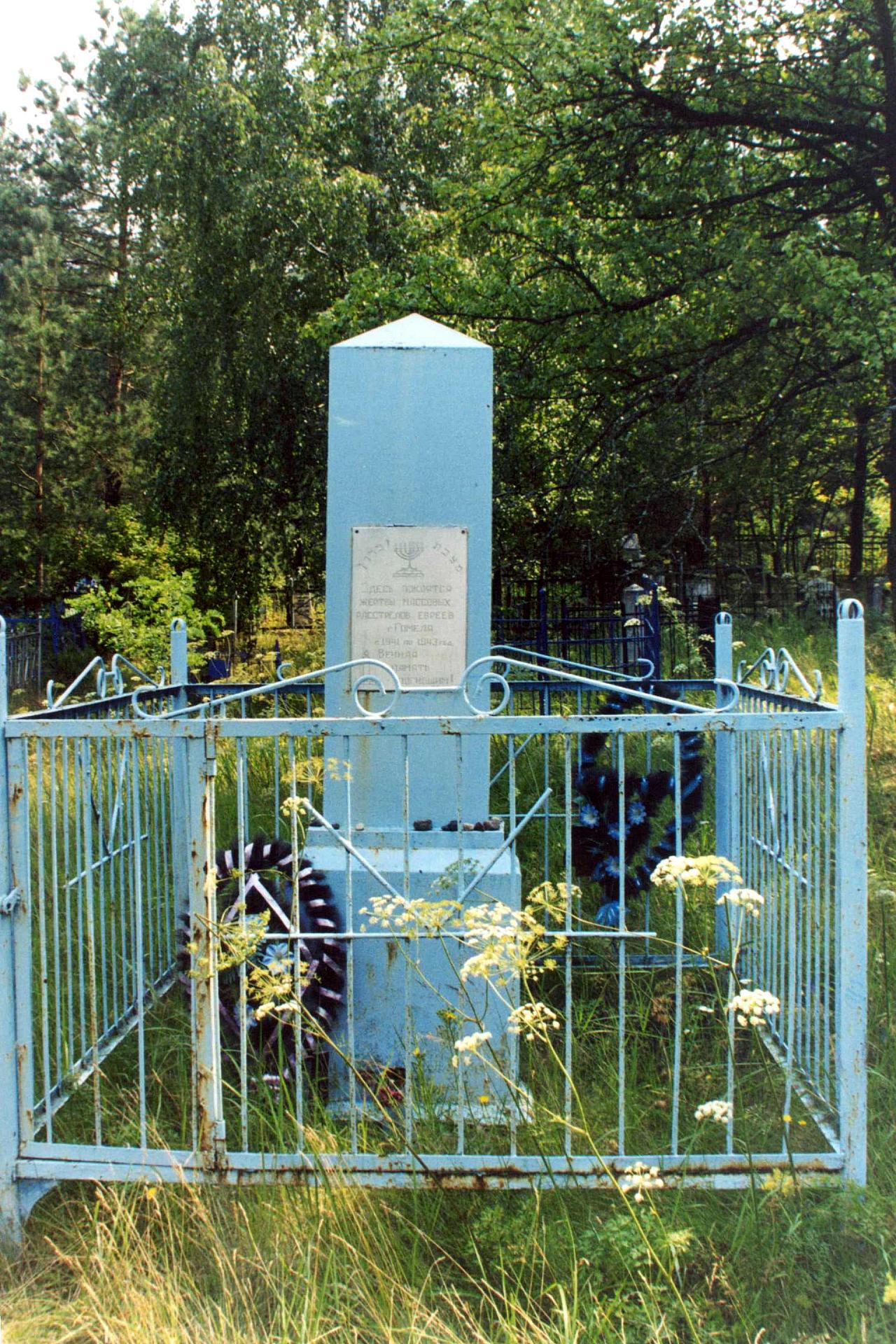
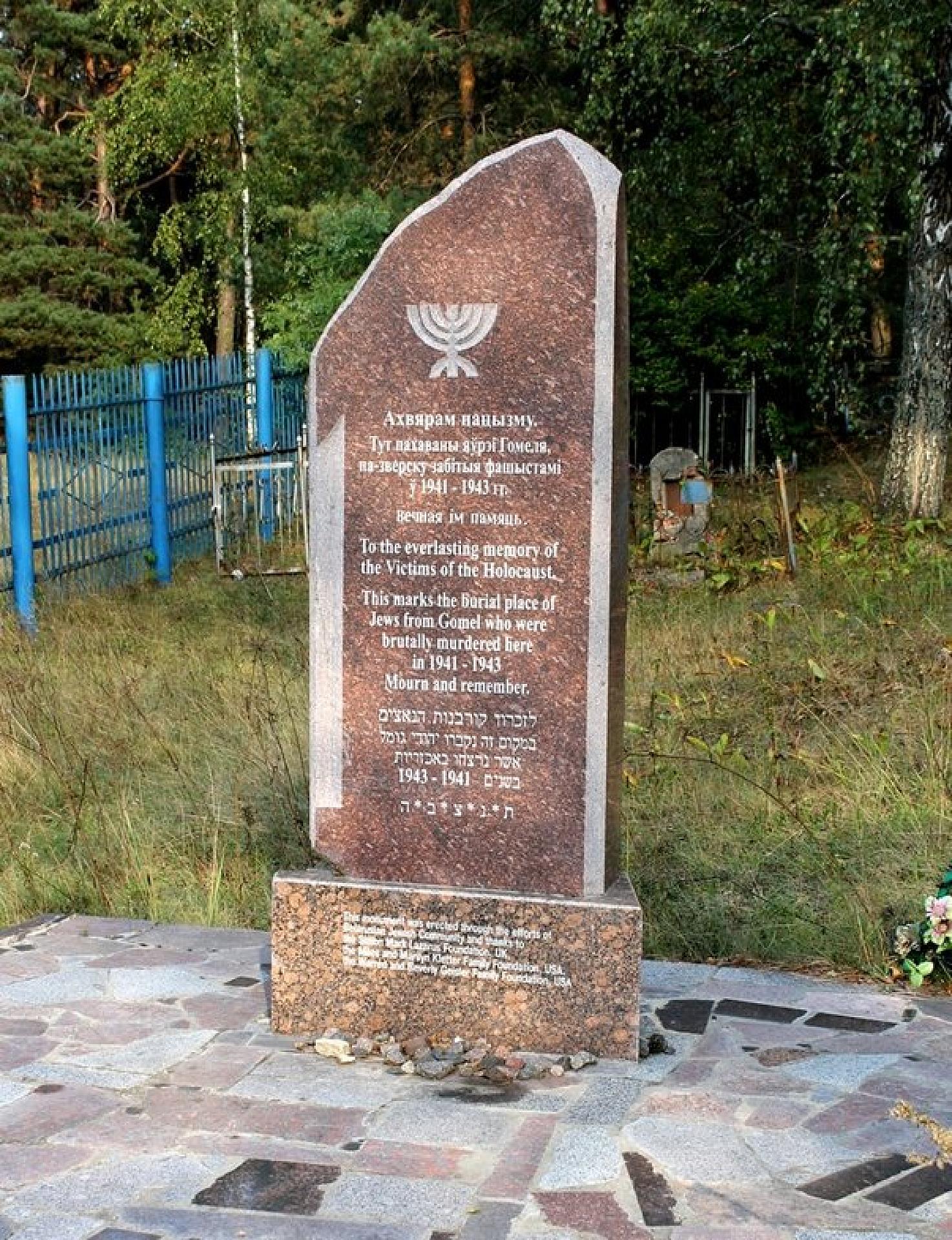
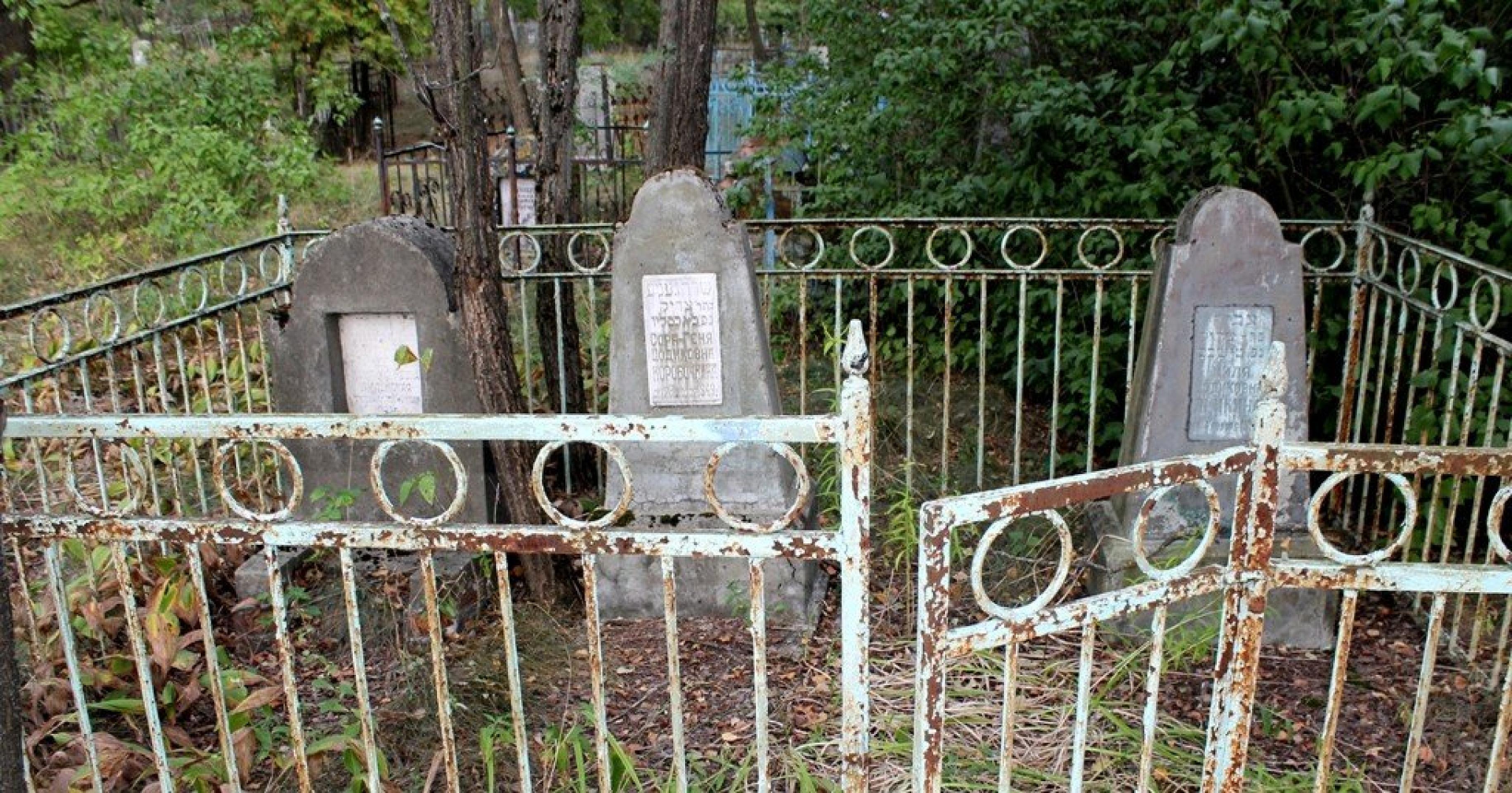
It was only after the collapse of the Soviet Union that the Jewish community of Gomel could erect a small obelisk in the Jewish cemetery. Between 1941 and 1942, the Germans had shot several Jews here. The monument bears a menorah and the Hebrew inscription »matzevat ha-zikaron« and the Russian inscription: »Here lie the victims of the mass shooting of the Jews from the city of Gomel 1941-1943. May they remain eternally in our memory!«. The cemetery has not been used since the 1970s. For some years now, the two Jewish communities have been maintaining it again. In 2012 a new memorial was erected commemorating the Jews who were murdered here between 1941 and 1943. Its inscriptions are in Belarusian, English and Hebrew.
Possibilities
Every year on Holocaust Remembrance Day there is a memorial service.
Open
The memorials are accessible at all times.
Contact
Tschernigowskoje Schosse, 9km
246042 Homel