Mizocz is a small town in the historical region of Volhynia near the town of Rivne (Ukrainian: Riwne, Polish: Równe) in the northwest of the Ukraine. Since the late 1980s, a memorial near the town commemorates the approximately 1,500 Jews who were shot there by a German killing squad on October 14 and 15, 1942.
History
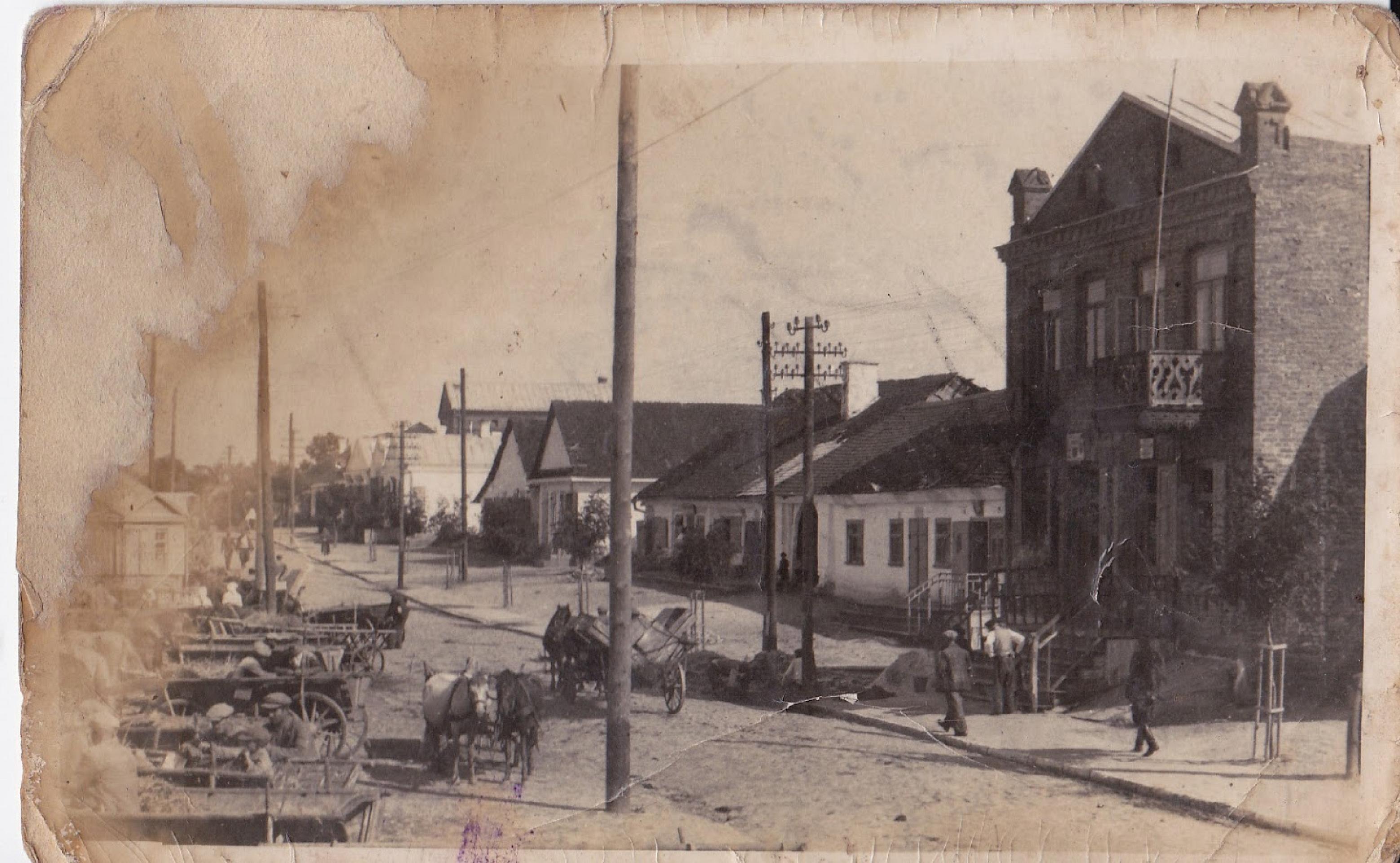
The first Jewish families settled in Mizocz in the 18th century. Prior to the First World War the region around Mizocz was a province of the Russian Empire. After that, it was part of Poland. About 1920 half of the population was Jewish, the other half was made up of Poles, Ukrainians and Czechs.
As a result of the Molotov-Ribbentrop-Pact the region was occupied by the Soviet Union. By the middle of 1941 the town's Jewish population was 1,050. Few days after the attack on the Soviet Union the German Wehrmacht marched into Mizocz. Some 300 Jews managed to escape to the Soviet Union. Shortly afterwards anti-Jewish riots flared up, encouraged by National Socialist propaganda. In early August German units conducted first mass shootings of Jews in the surroundings of Mizocz. In spring 1942 all Jews from the areas of Mizocz, Ostroh (Polish: Ostróg) and Zdolbuniv (Polish: Zdołbunów) had to move to ghettos by command of the German Gebietskommissariat (District Commissariat). About 1,700 Jewish children, women and men lived in the Mizocz ghetto.
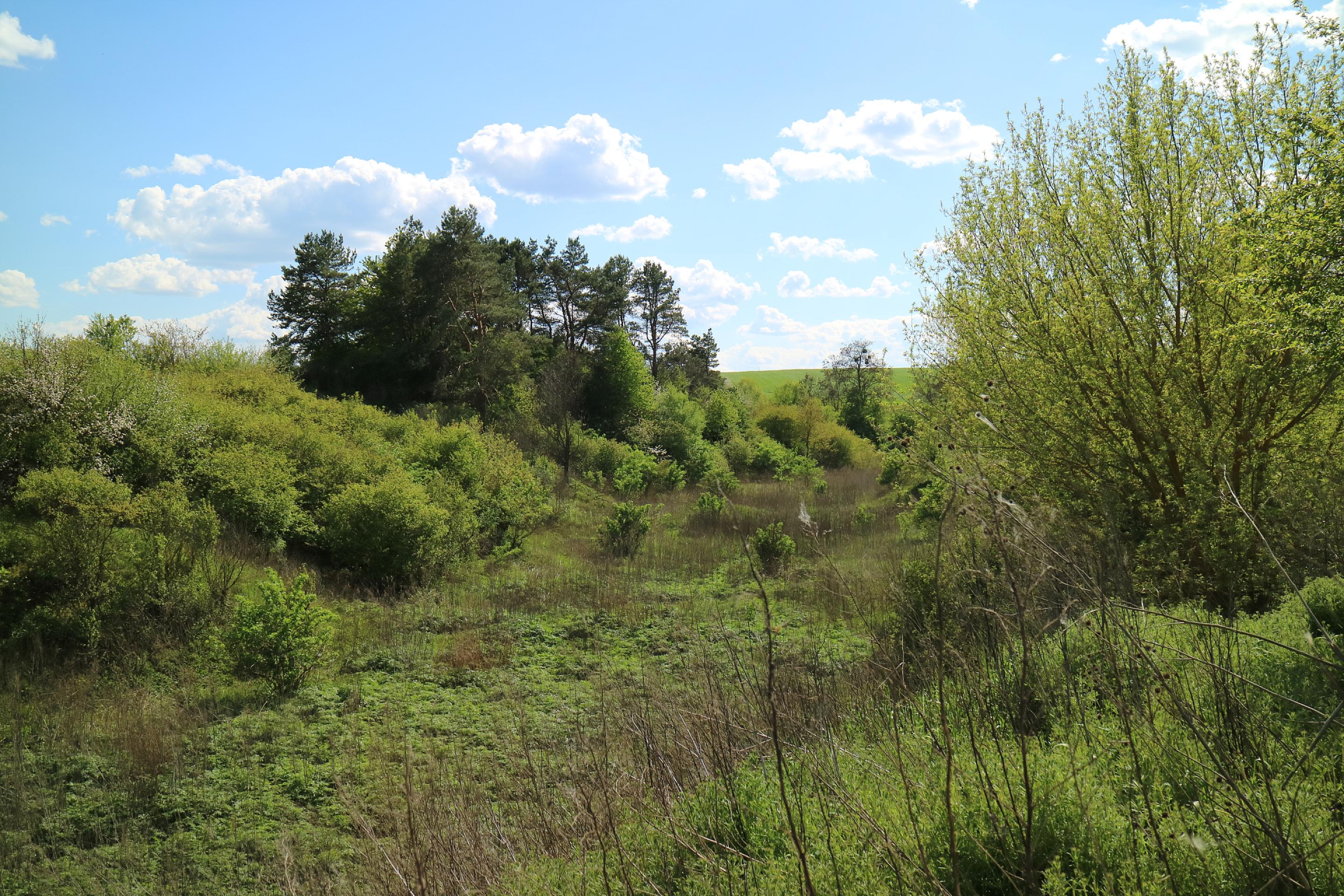
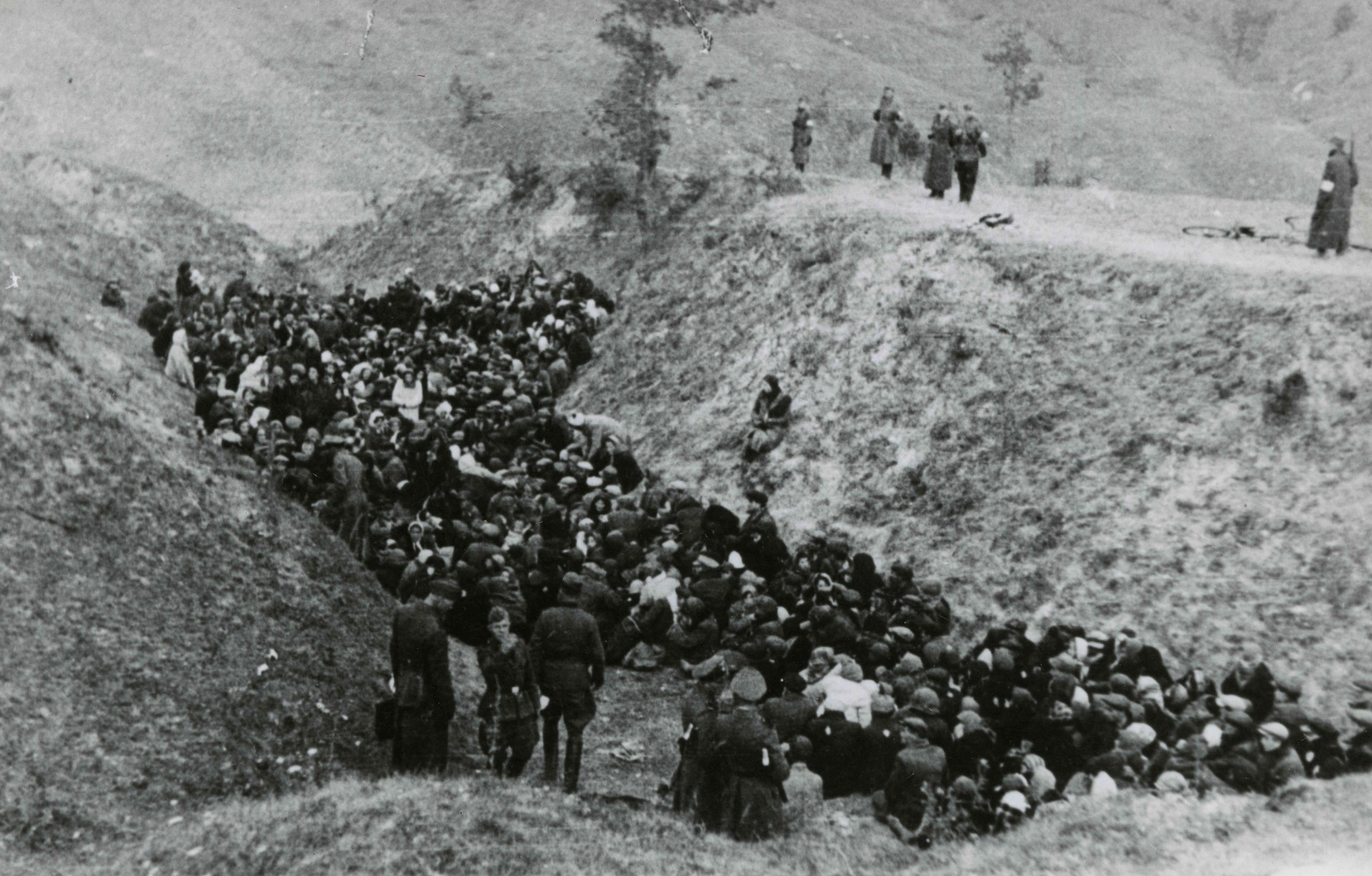
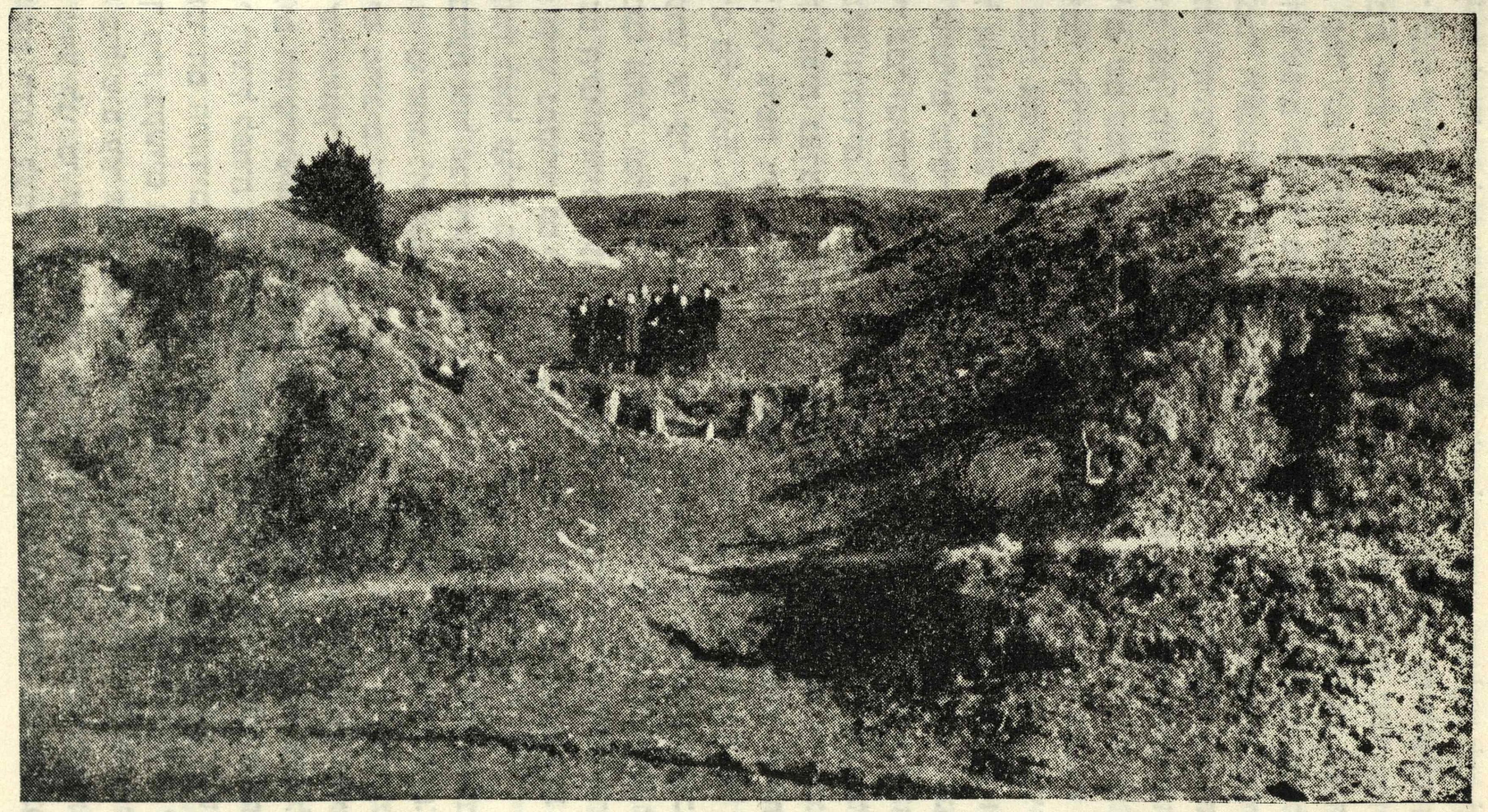
On October 13, 1942 German constabulary and Ukrainian auxiliary police surrounded the Mizocz ghetto. To try to escape, some Jews set fires. Only few managed to escape whereas 200 people fell victim to the flames. The next day a firing squad composed of Security Police (SiPo) and Security Service of the SS (SD) arrived im Mizocz. They dragged the Jews to a ravine out of town and murdered them by a shot in the back of the head. Within two days the unit murdered up to 1,500 Jewish children, women and men. Only very few Jews survived in hiding until the Red Army arrived.
Victims
About 200 Jews died in the fire during the liquidation of the Mizocz ghetto on October 1942. In the following two days the killing squad shot up to 1,500 Jewish children, women and men. The unit was under the command of Dr. Karl Pütz, commander of Security Police (SiPo) and DS (KdS) Volhynia-Podolia. Between 1941 and September 1942 the National Socialists murdered about 95,000 Jews in the whole Rivne area.
Remembrance
It is estimated that only 1,5 percent of the Jews in the Volhynia region survived the Holocaust. Only 19 of the approximately 2,000 Jews who lived in Mizocz prior to the mass shootings in October 1942 were still alive when the Red Army liberated them. After their liberation the enclosure of the killing fields was an important matter for the few Jewish survivors in Volhynia. In most cases they had to seize the initiative themselve . In winter 1944/45 many Jews from Volhynia left the Soviet Union. Most of the Jews living in Volhynia after the war had moved there from other parts of the Soviet Union.
The mass shootings in Mizocz were subject to court proceedings in West Germany in the early 1960s. Five photographies by Gustav Hille, a German gendarm present at the shooting of women and children on October 14, 1942, played a key role in the trial.
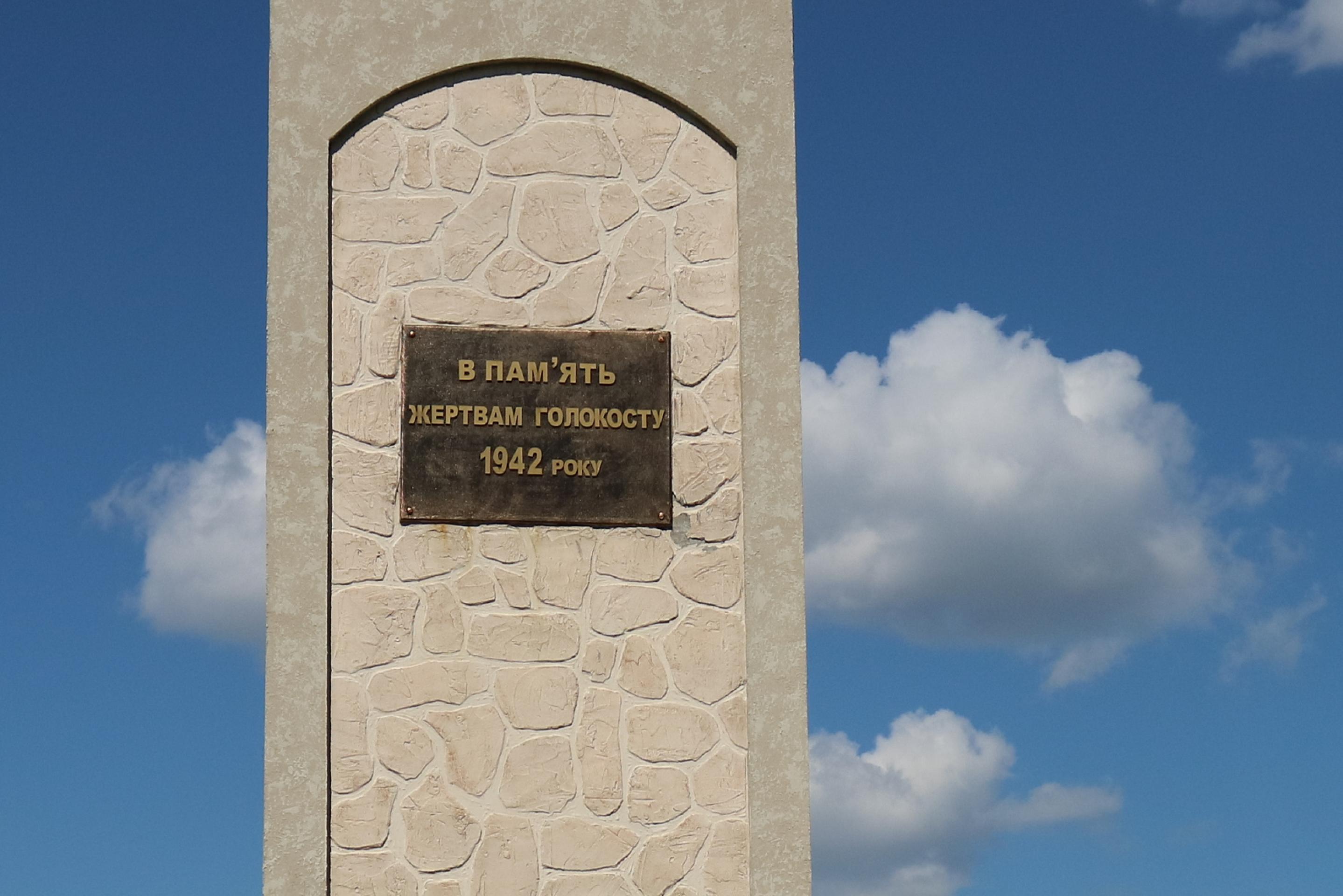
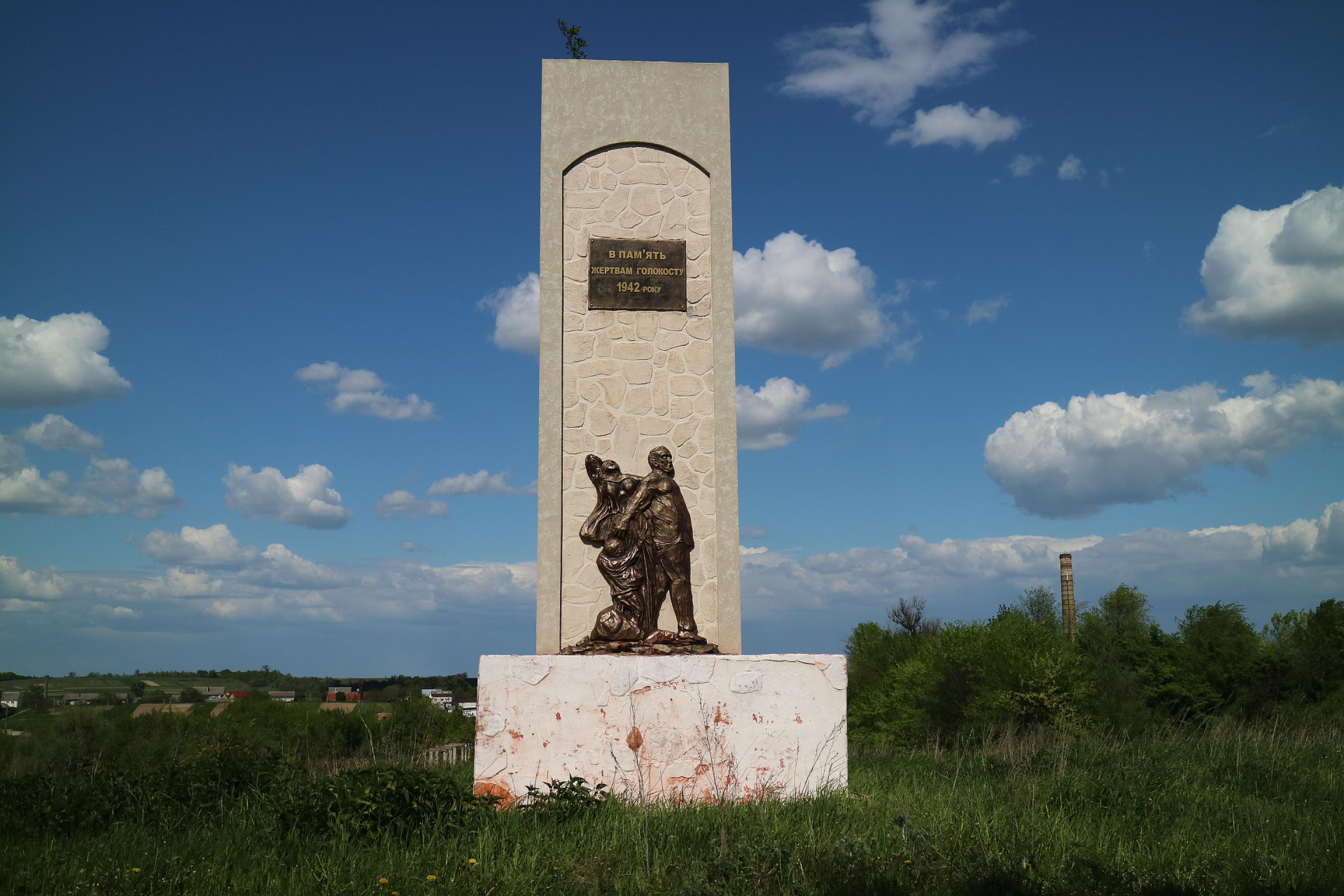
In the late 1980s a memorial was erected near the site of the mass shootings. In 1992 first delegations from Israel and the United States visited the memorial to commemorate the victims. The victims' descendants erected a memorial plaque with the Ukrainian inscription: »In memory of the victims of the Holocaust in 1942«.
One of the few reminders of the once large Jewish community of Mizocz is the Jewish cemetery. The once up to 100 gravestones are hardly recognizable anymore. On the initiative of an Israeli rabbi an appeal for the preservation of the cemetery was started.
Open
The memorial is accessible at all times.
Contact
35740 Mizocz