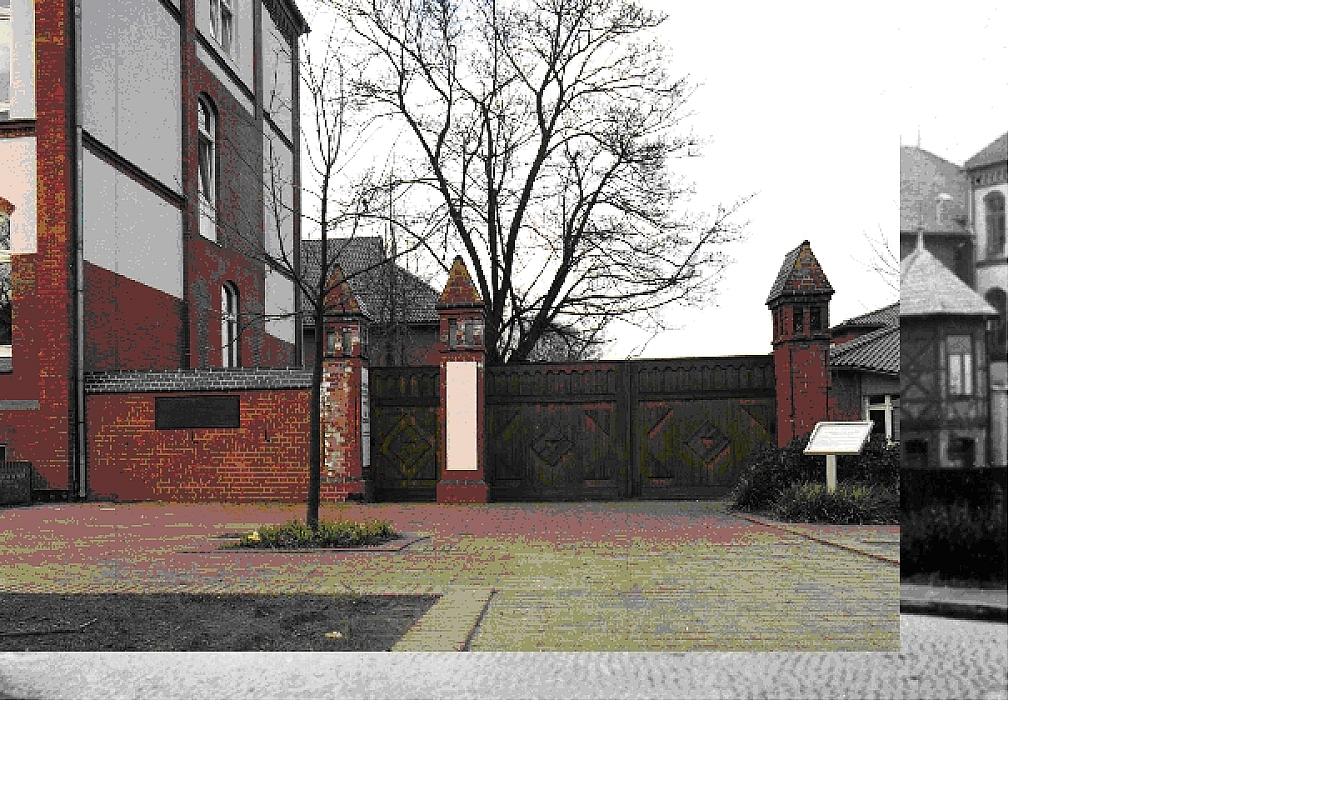
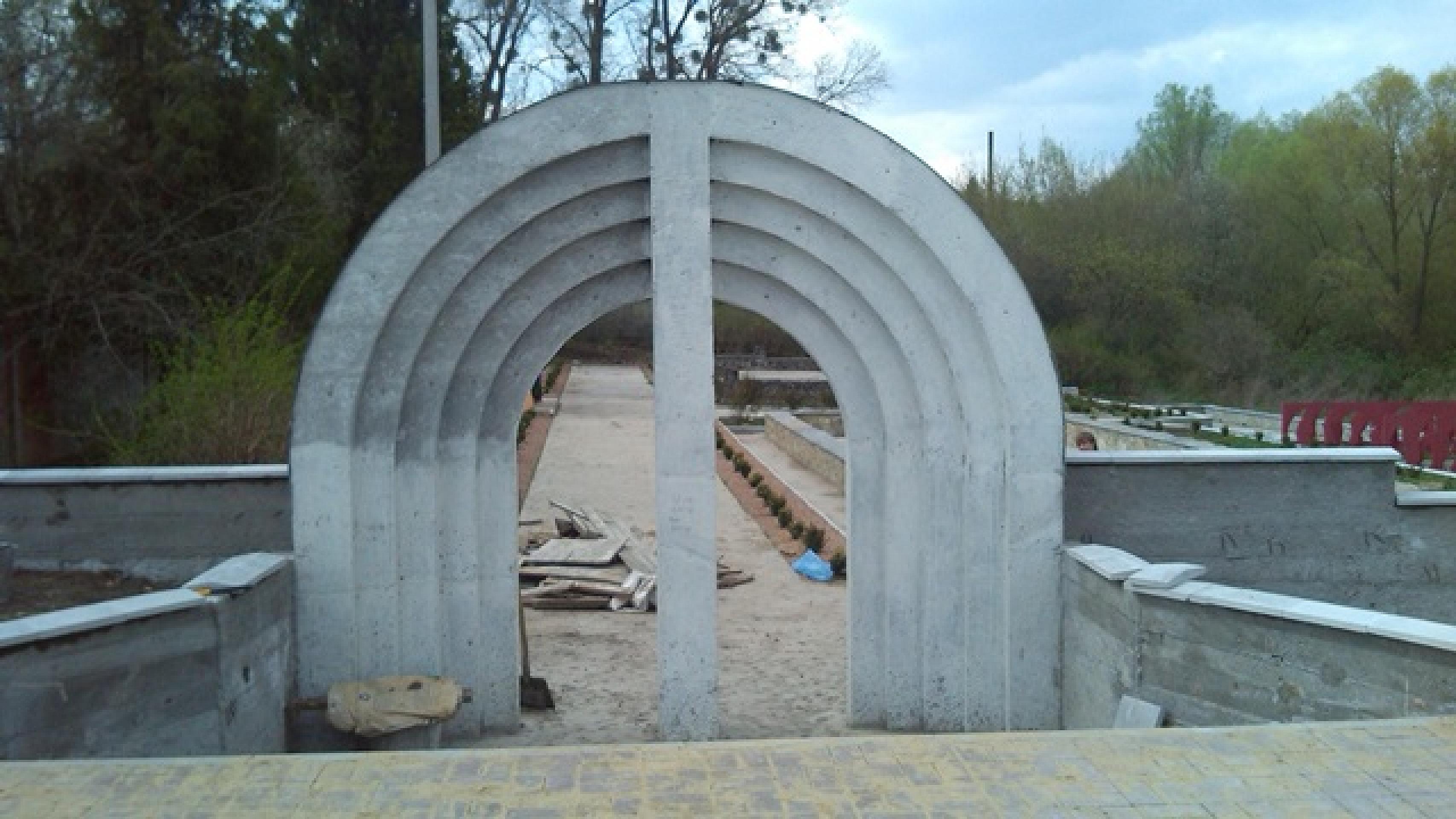
Memorial to the murdered Jews of Proskurov
Меморіал Жертвам Голокосту
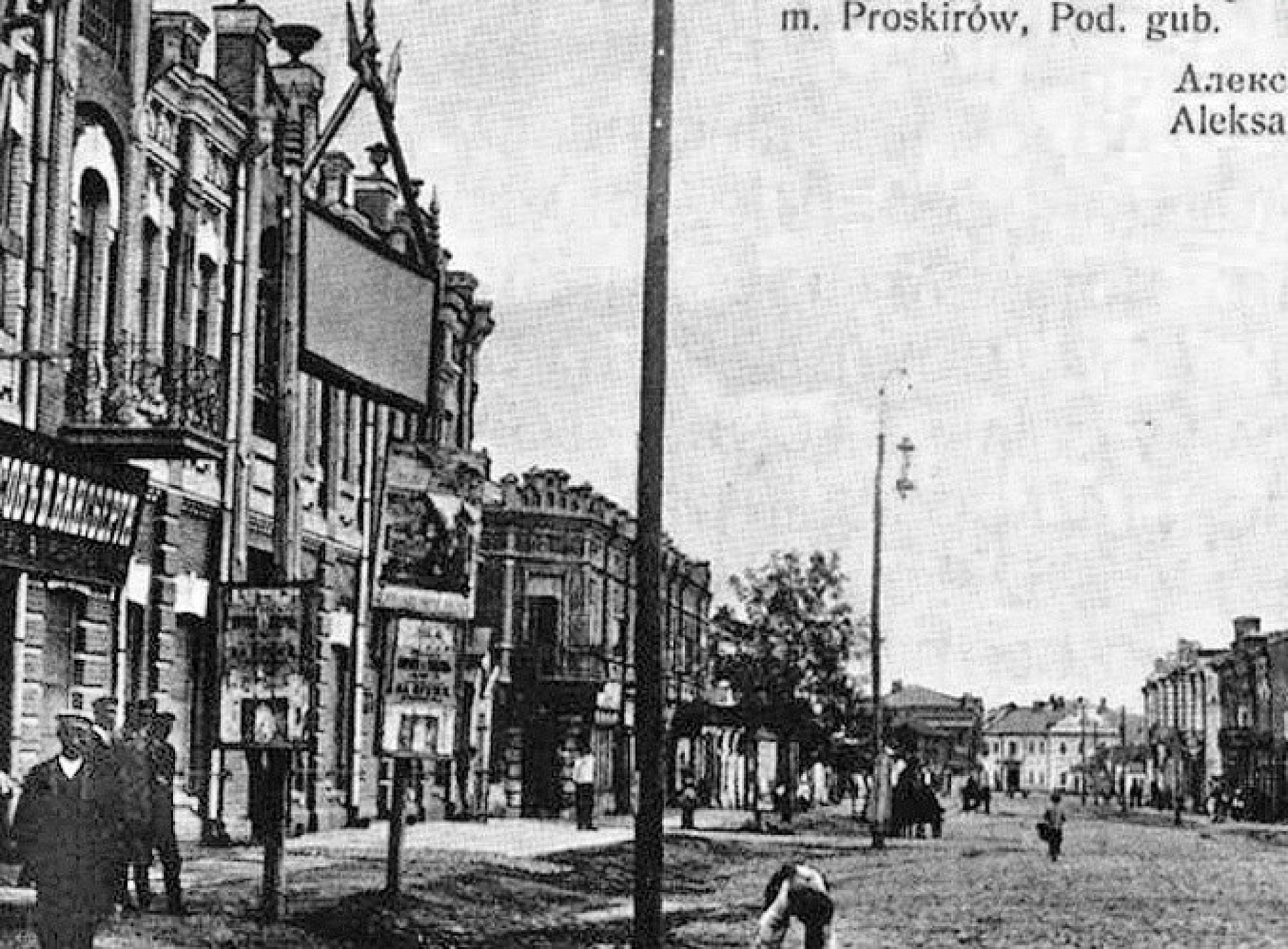
In the major Ukrainian city of Khmelnytskyi, which until 1954 was called Proskurov (Ukrainian: Proskuriv, Polish: Płoskirów), several memorials remember the murdered Jews of the city.
History
Proskurov, located in the historical region of Podolia on the bank of the Southern Bug, was founded in 1431. Jews settled there from the 17th century. In the 19th century Proskurov developed into an important trading centre. In 1897 about half of the population was Jewish. In the turmoil after the October Revolution in 1917, about 1,600 Jews were murdered in anti-Jewish pogroms. In 1939 the city numbered about 14,500 Jews, which corresponded to approximately 39 percent of the population.
The German Wehrmacht occupied the city on July 8,1941. Some 2,500 Jews had fled before to the interior of the Soviet Union. The German occupiers forced the Jews to surrender their valuables, to bear identification marks and to form a Jewish Council to carry out the German orders. They appointed a woman, Lisa Lindenbojm, as chairman of the Jewish Council. She often became violent against Jews when they defied German orders. At the beginning of September, all Jews had to move into a ghetto. It was located on the eastern outskirts of the city, surrounded by a barbed wire fence and guarded by Ukrainian and Lithuanian policemen. In the following weeks Jews from surrounding villages moved in to protect themselves from anti-Jewish riots by the local population. On November 4, 1941 the Einsatzkommando 6, a sub-group of the Einsatzgruppe C (mobile killing unit) shot the majority of the ghetto's inhabitants at a depression in the east of the city. By the end of the year, the ghetto had been wiped out. All Jews who were spared from the »Aktion« had to relocate to a new ghetto. Approximately 3,000 Jewish workers and their families lived there and conducted heavy forced labour. In May 1942, the German occupiers founded another ghetto in Lesnewo five kilometres east of the city. The Jews worked on the construction of roads and the central railway station for the »Organisation Todt«. At the end of November and beginning of December, the Germans shot almost all of the Jews of the two ghettos and declared the area to be »judenfrei« (free of Jews).
Victims
In mid-July 1941, Sonderkommando (special unit) 4b, which stayed in the city for a few days, by their own account shot 146 »Communists«. Among them were also Jews. Between August 19, 1941 and the beginning of September 1941, Police Battalion 320 shot several hundred Jews. Many of the ghetto's inhabitants perished because of the catastrophic living conditions, while others were murdered by members of the local and German police units. During the »Großaktion« on November 4, 1941 the Einsatzkommando 6 of the Einsatzgruppe C (mobile killing unit) under the command of SS-Obersturmführer Theodor Salmanzig murdered about 5,300 Jews. At the same time, the men murdered another 2,500 Jews from surrounding villages. On November 30,1942 members of the SD together with local and German police units shot all inhabitants of the second ghetto, approximately 6,000 Jews. Some Jews resisted in vain.
Remembrance
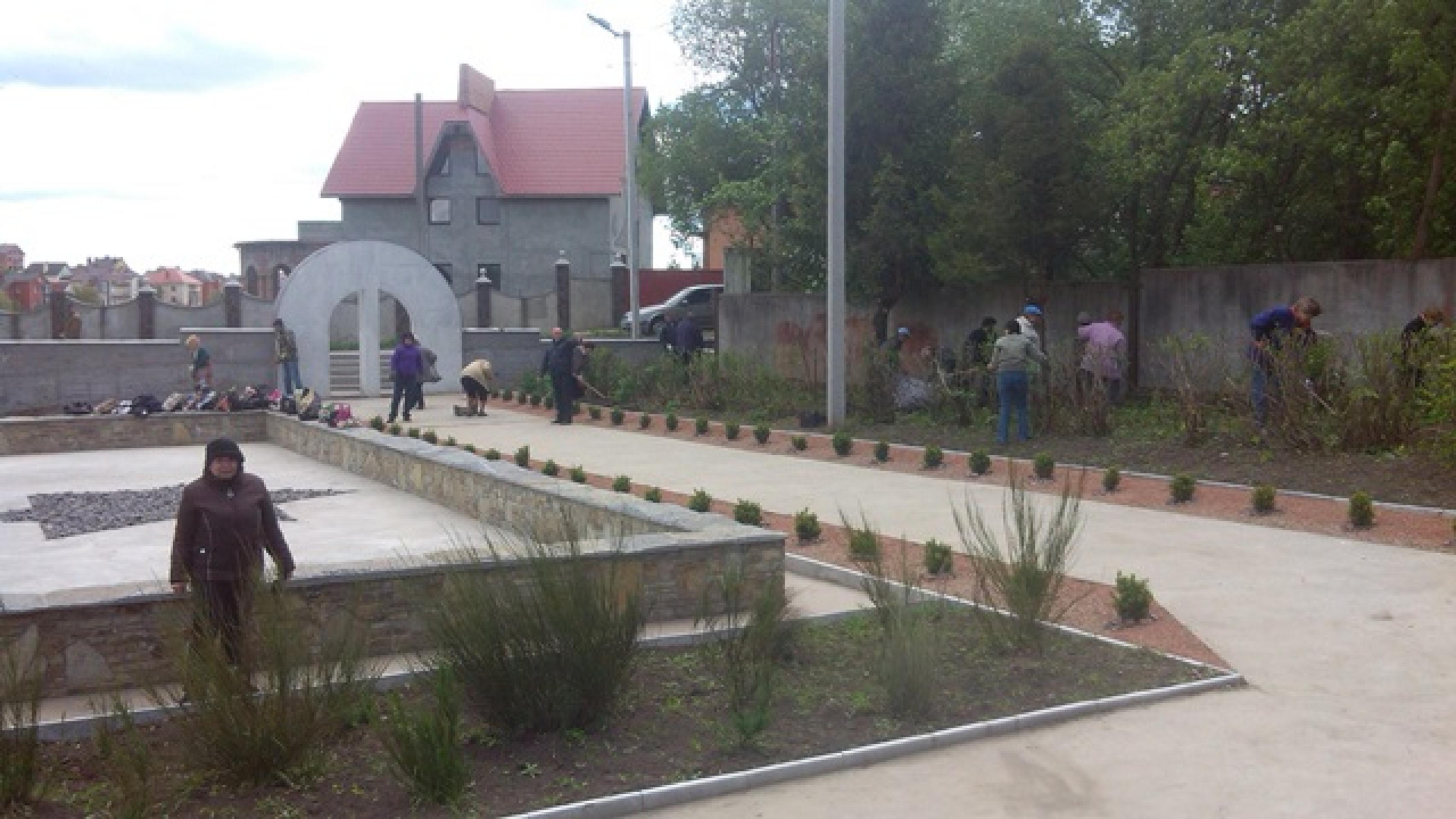
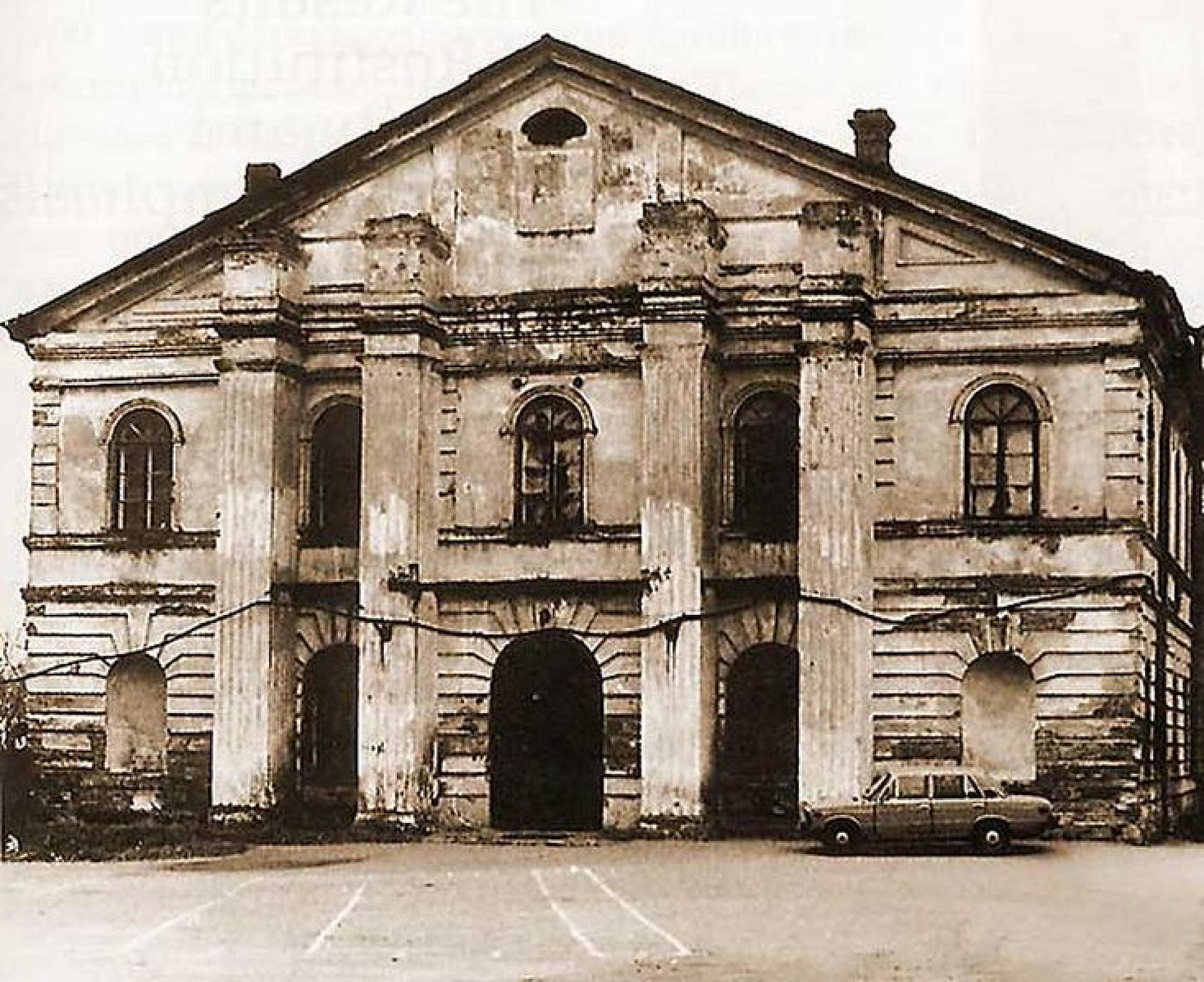
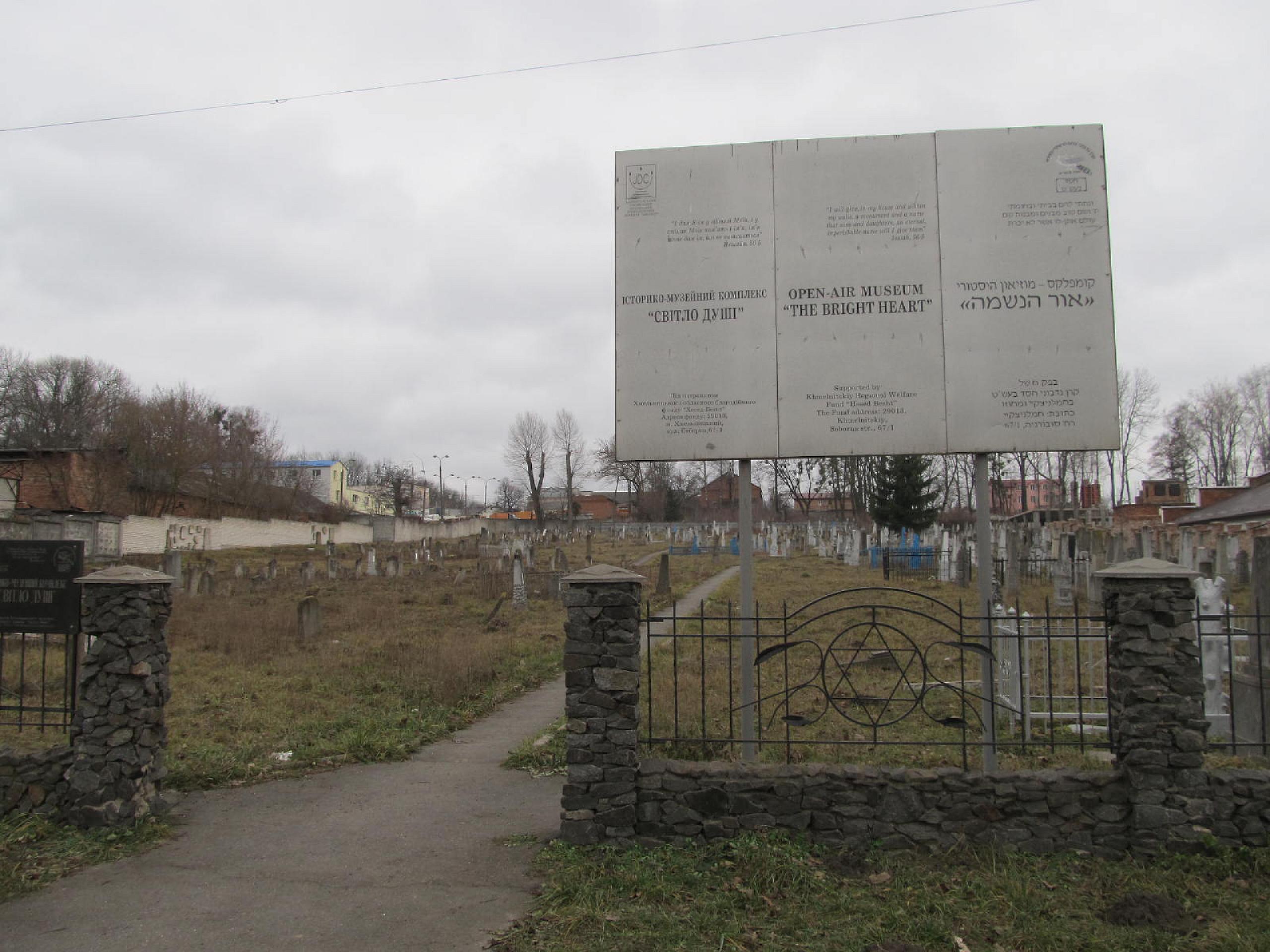
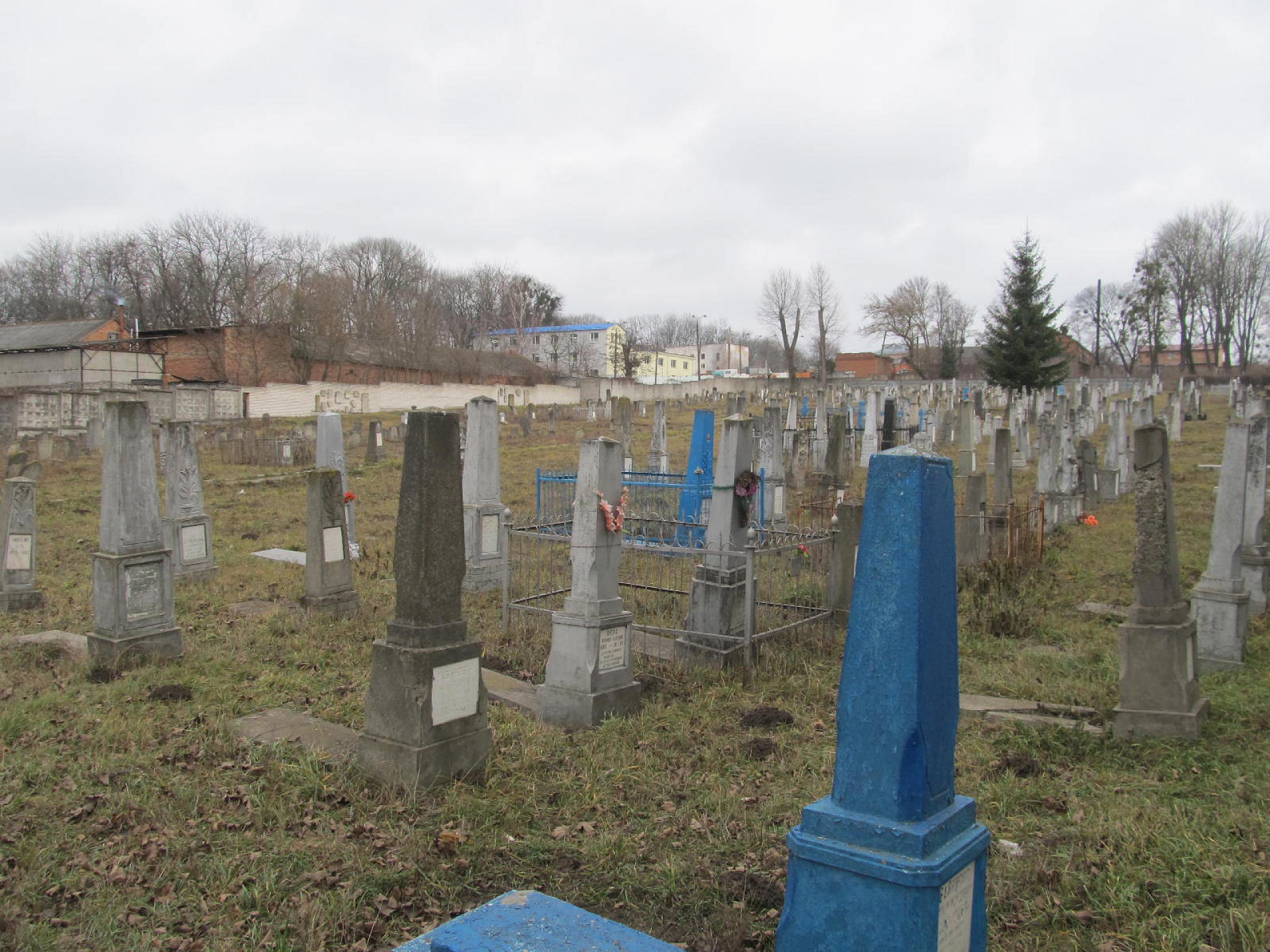
Proskurov was liberated by the Red Army on March 25, 1944. Some Jews returned to the city after the war and erected a monument to the murdered Jews at the mass shooting sites in the north-eastern part of the city. Initially, the inscription spoke of Jewish victims but it was changed in the 1960s, concealing the Jewish identity of the victims. Only since the 1990s has the inscription expressly named Jews as victims again. Today, the memorial complex »Radiant Souls« with several monuments and commemorative plaques, erected and financed by the Jewish community of Khmelnytskyi and the charitable fund »Chesed Bescht«, is located at the mass shooting sites. They also set up a museum in the Jewish community centre »Tikhiya« to commemorate the victims of the Holocaust and look after the preservation of the Jewish cemetery, which is also part of the memorial complex. A commemoration ceremony is held annually on the site. In 2009, a memorial plaque remembering the former historical Jewish cemetery, which once stood on this site, was attached to a building.
Of the numerous places of worship and Jewish institutions belonging to the Jewish community at the beginning of the 20th century, only one synagogue is still owned by the Jewish community, which still has about 2,000 members today. The synagogue was restored in 2009.
Contact
hesedbesht@ukr.net
+ 38(382) 702 054
wul. Silskohospodarska
29000 Chmelnyzkyj