Skip to content

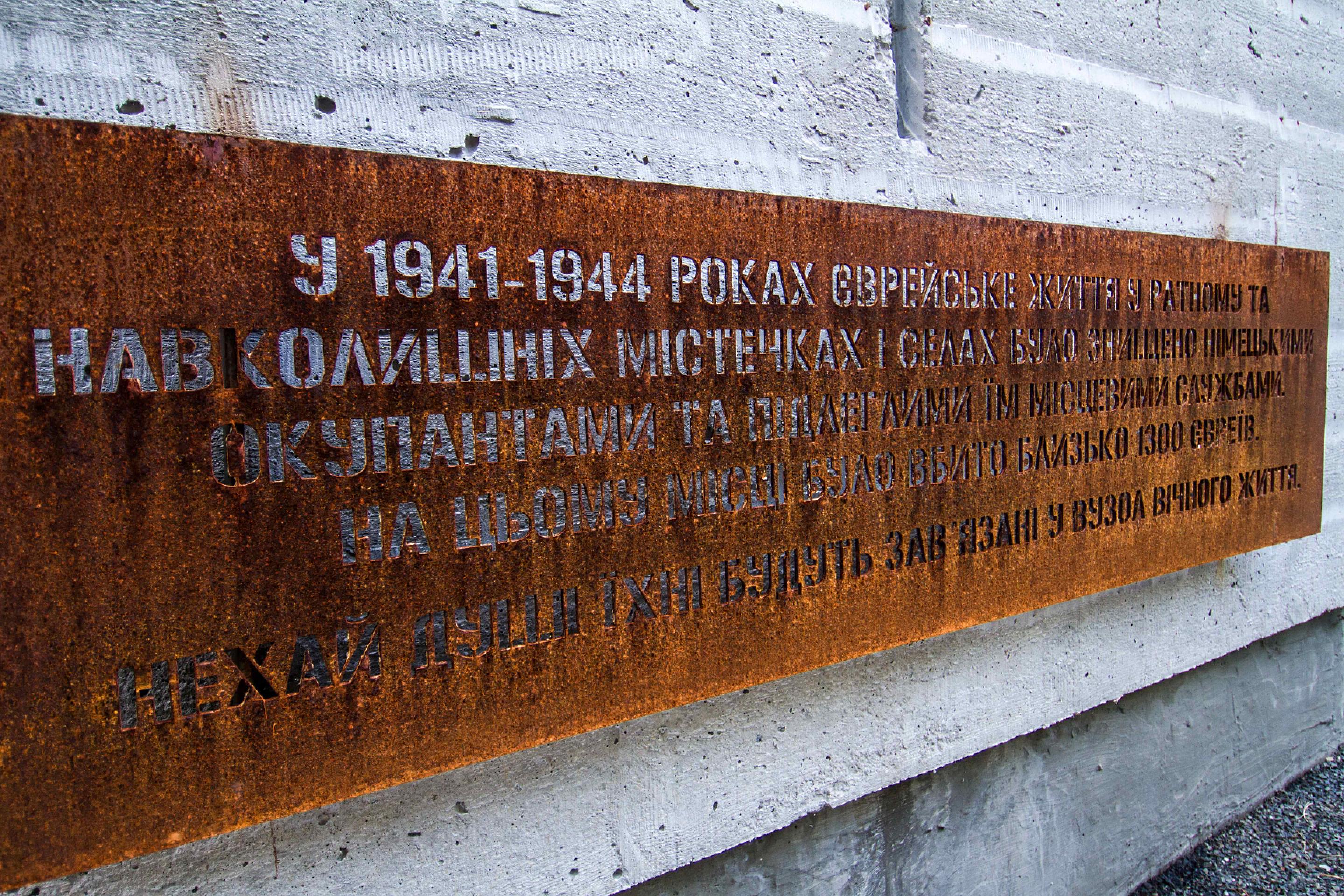
Memorial to the murdered Jews of Ratne

Пам’ятне місце для вбитих євреїв із гетто у Ратному


Since 2015 a memorial on the site of the mass shootings in Prokhid remembers the Jewish community of Ratne (Polish and Yiddish: Ratno) which was completely annihilated in the Holocaust. Most of them were murdered on August 26, 1942.

History

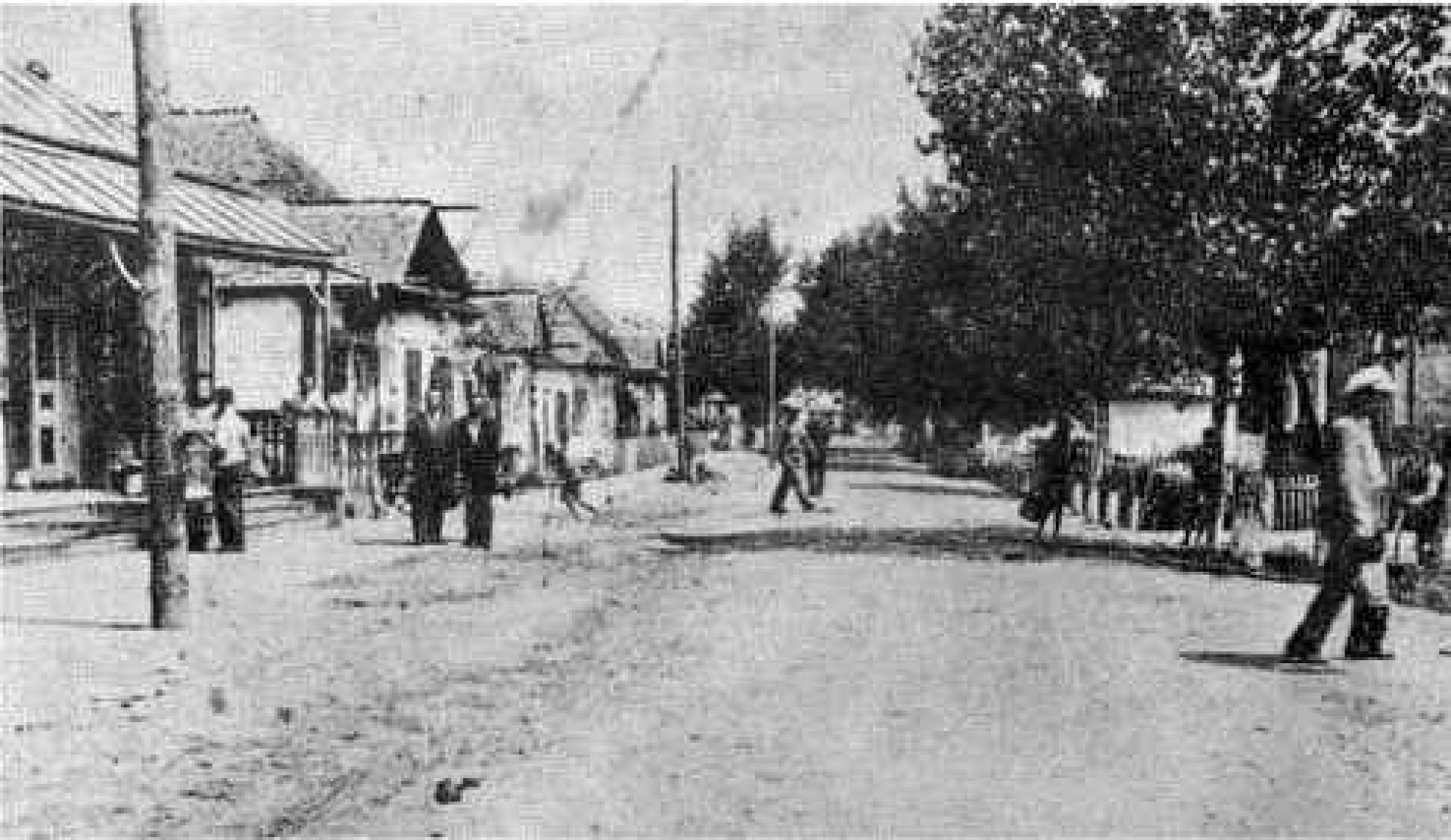
Ratne (Polish: Ratno) located in the historical region of Volhynia belonged to Poland until September 1939 and came under Soviet occupation as a result of the Molotov-Ribbentrop-Pact. First hints on Jewish inhabitants date back to the 16th century. About 1937 the Jewish community had approximately 2,140 members out of a total population of 4,000.
On June 28, 1941 the German Wehrmacht occupied Ratne. Between the retreat of the Soviets and the arrival of German security forces, locals plundered Jewish homes and businesses. The German civil administration installed a Ukrainian local administration and a Ukrainian police unit in Ratne which was subordinate to the German constabulary. Shortly after the German occupiers arrived, they shot 27 Jews and 30 Soviet prisoners of war. Aided by the Ukrainian auxiliary police, they introduced an array of anti-Jewish measures. More Jews were murdered during anti-Jewish riots on June 6, 1942. Shortly afterwards the Security Police (SiPo) shot 280 Jews under the pretext that they were supporters of the Soviet system.
In spring 1942 the Germans established a ghetto in Ratne. About 2,500 Jews had to live there. After a partisan raid on Ratne in June 1942, the Germans shot more than 110 Jews in »retaliation«. On August 26, 1942, units of the Gestapo outpost from Brest, aided by the German constabulary and Ukrainian auxiliary police, murdered the ghetto's entire population. Beforehand they recruited Ukrainian peasants from Prokhid to dig pits in order to bury the bodies of the murdered. Although several hundred Jews fled before they could be taken to Prokhid, most were eventually caught and murdered as well. In February 1943 the remaining Jews who had been left alive to conduct forced labour were also murdered.
Victims

During the »Aktion« of the liquidation of the ghetto in August 1942, German and Ukrainian units murdered between 1,300 and 1,500 Jews. Only 14 Jews from Ratne survived the war.

Ukraine, the second-largest Republic in the European part of the former Soviet Union, was at the centre of the Second World War and the Holocaust. It is estimated that five to six million Ukrainians died during the war, including around 630,000 Jews. In mid-September 1939, following the Soviet occupation of eastern Poland in accordance with the Hitler-Stalin Pact – a secret German-Soviet agreement –, the south-east of Poland became part of the Soviet Ukraine. The oppression of the local population was now an everyday occurrence. In summer 1941, the German attack on the Soviet Union initially affected these very regions. Right from the start of the invasion the Jewish population was accused of supporting the Soviet powers and became the target of brutal attacks. These attacks were often the work of nationalist Ukrainians, who initially welcomed the advance of the Wehrmacht. German SS Einsatzgruppen and allied Rumanian units soon began to carry out mass shootings of Jews. The Babyn Yar ravine near Kiev, where German units and Ukrainian militia murdered over 33,700 Jews over two days in September 1941, has since become a global symbol of the genocide of Jews. The non-Jewish population was also a target for persecution. National Socialist racist ideology classed Ukrainians, as all »Slavs«, as »subhuman«. The occupiers looted the country, deported way over one million civilians to carry out forced labour and publicly executed hostages. By 1943 a partisan war against the Wehrmacht was raging along with the campaign of the nationalist »Ukrayinska Povstanska Armiya« (Ukrainian Rebel Army or UPA) against the Soviets and the Polish population in western Ukraine. The number of Poles to die in the process lies way over 100,000. From 1944 the Ukraine was again part of the Soviet Union and also encompassed former territories in eastern Poland. The UPA continued its campaign until the mid-1950s. The Soviet authorities deported around 300,000 Ukrainians to Siberia to counter the resistance. The Ukrainian culture of memory was aligned with the symbolic forms of remembrance found in the Soviet Union. Monumental sites of memory were constructed to celebrate the »victory« in the Great Patriotic War. It is only recently that victims have been remembered alongside the venerated heroes. In addition, a culture of memory centred on the campaign of the UPA has emerged in western Ukraine, with the UPA’s legacy being interpreted as a struggle for independence. Confrontation with anti-semitism and the collaboration with the German occupiers has only begun around 2000. With just a few exceptions, the mass shootings of Jews were ignored until the 1980s. It was not until 1991 that the government of independent Ukraine acknowledged Babyn Yar as a »symbol of Jewish martyrdom«. Long after gaining independence, Ukraine was still on the search for its national identity. The documentation of Soviet crimes – for example the state’s responsibility for the Great Famine (Holodomor) in 1922-23 that led to millions of deaths – has more significance in the establishment of a Ukrainian identity than learning about the Holocaust. Nevertheless, new memorial sites for the murdered Jews were established throughout the country, such as Drobitskiy Yar in Kharkiv or the Holocaust Museum in Odessa. On many mass grave sites new memorials were created, partially with German support. In Kiev, a new grand memorial site with global relevance was planned at Babyn Yar. These plans were put on hold with the beginning of the full-scale Russian invasion of Ukraine on February 24, 2022. What impact the current defensive war will have on Holocaust remembrance in the future remains to be seen.

Remembrance

For decades there was no memorial to remember the Jews of Ratne who were murdered in Prokhid. In 1989 a memorial was erected on the site of the mass shootings. It was replaced by a new stele in 1995 on the initiative of survivors from Israel.
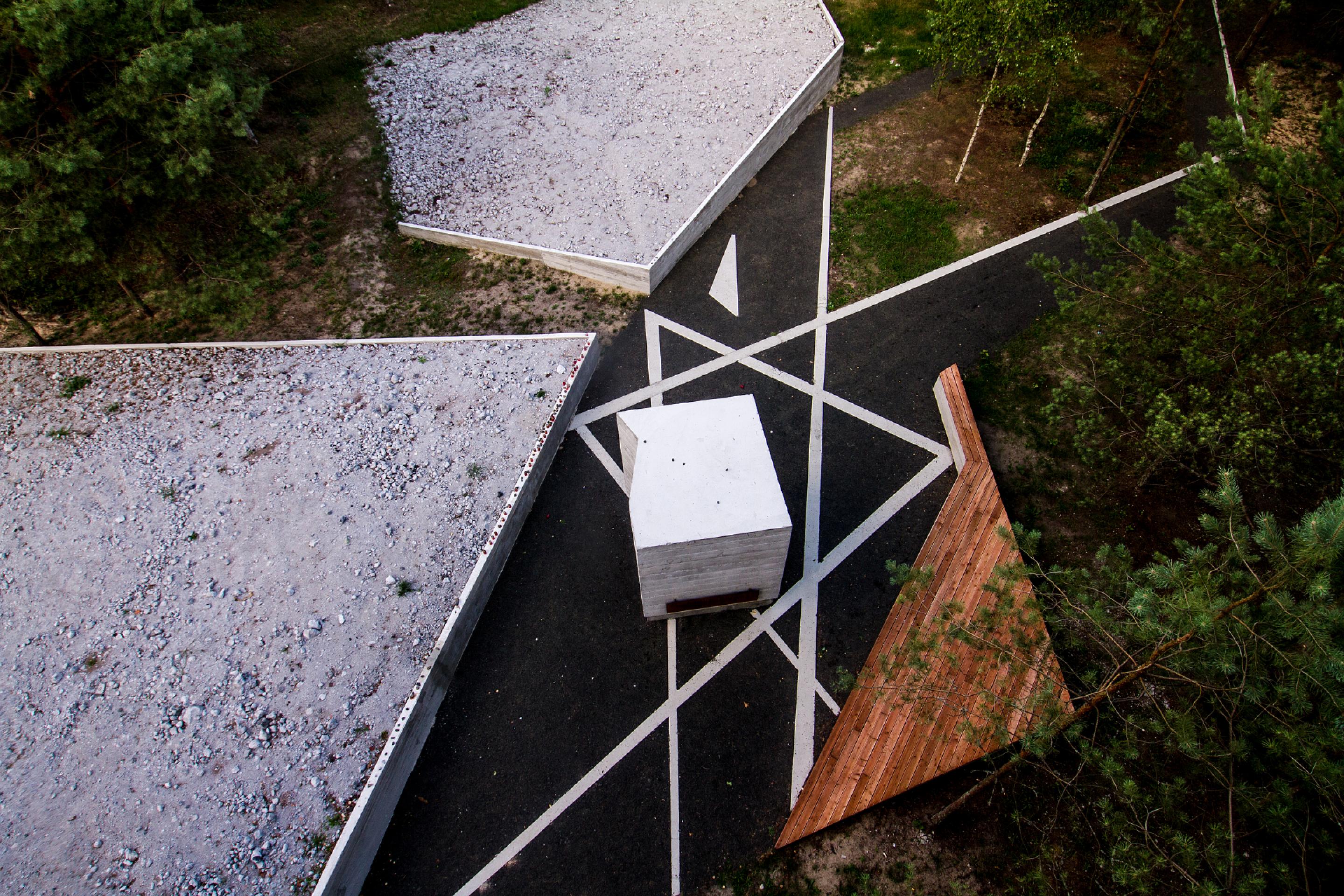
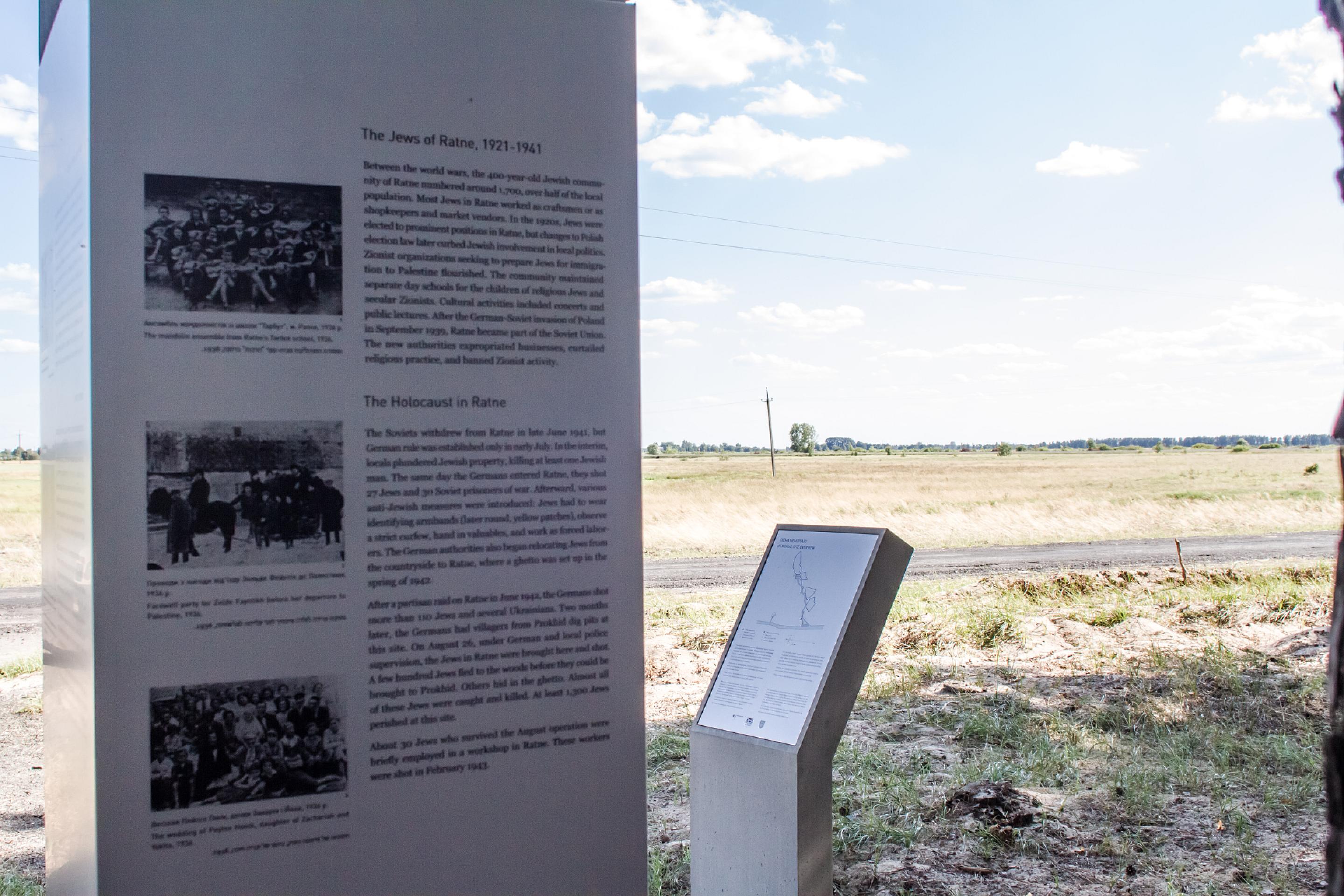
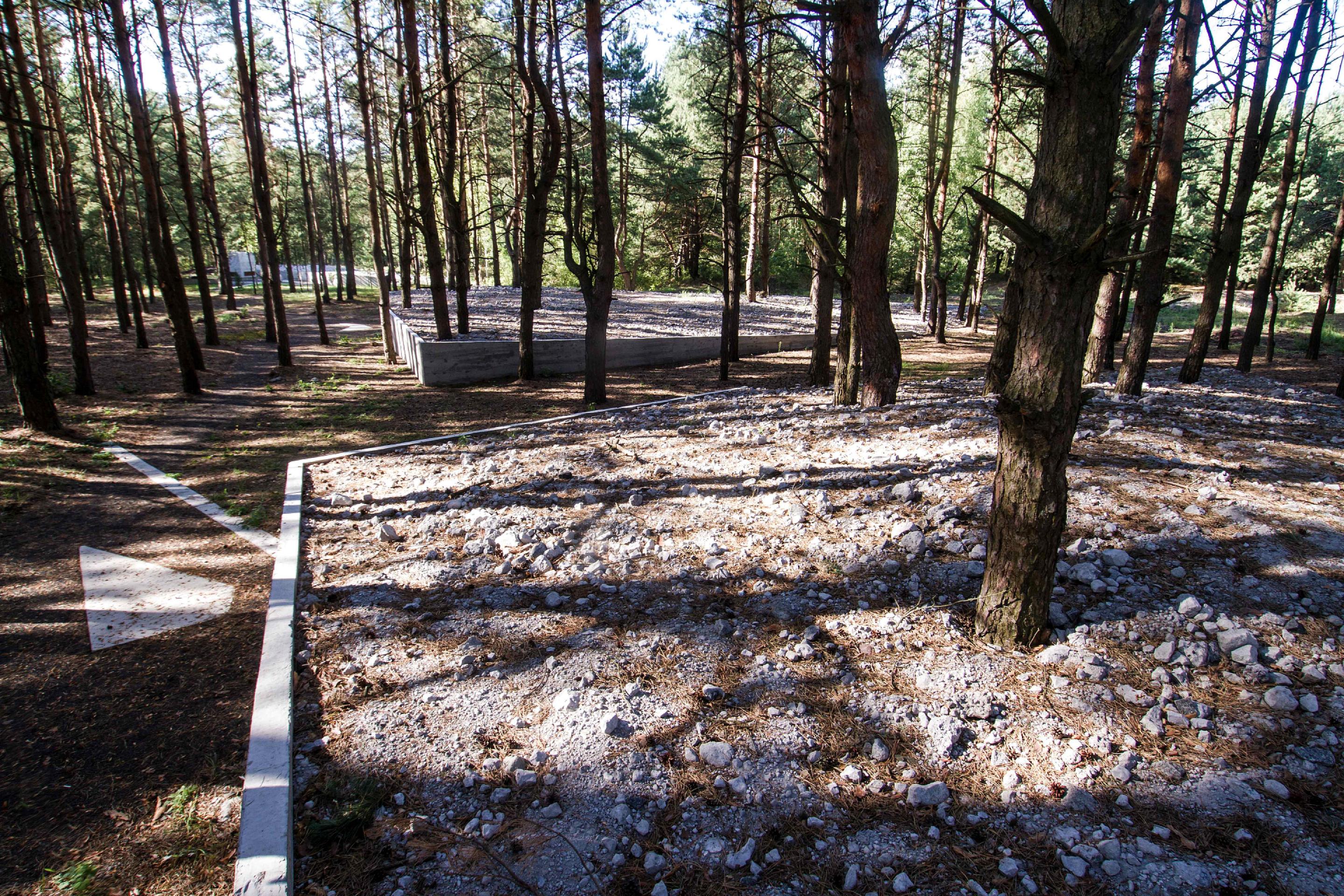
Since 2014 as part of the international project »Protecting Memory« supported by the German foreign office, the mass graves were sheltered and the site was reshaped on the initiative of the American Jewish Committee Berlin. In 2015 a memorial was built on the site. The architectural elements cover four Jewish mass graves. Grey-blue prisms with surfaces ranging in size from 220 to more than 1,000 square meters now protect the resting place of those who were murdered. The sides of these prisms protrude up to a meter from the ground.
There are even more mass graves in Prokhid. Further unmarked mass graves are located in Ratne, as well as a mass grave with members of the Roma people.
Open

The memorial is accessible at all times.

Contact

http://www.protecting-memory.org/de/memorial-sites/prokhid/

uhcenter@holocaust.kiev.ua

+380 (044) 285-90-30

М19, Volyns'ka oblast, Ukraine
44108 Ratne