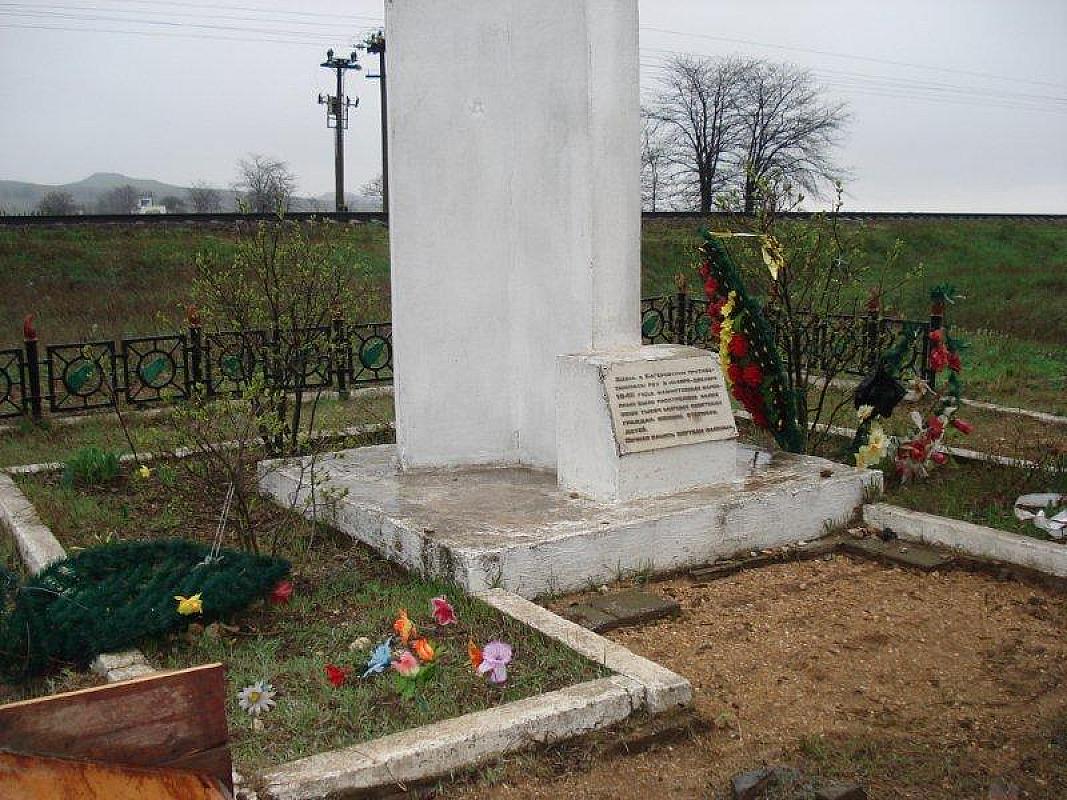
Memorial to the murdered Jews of Slonim
Память убитых евреям Слонима / Памяць Забітых габрэям Слоніма
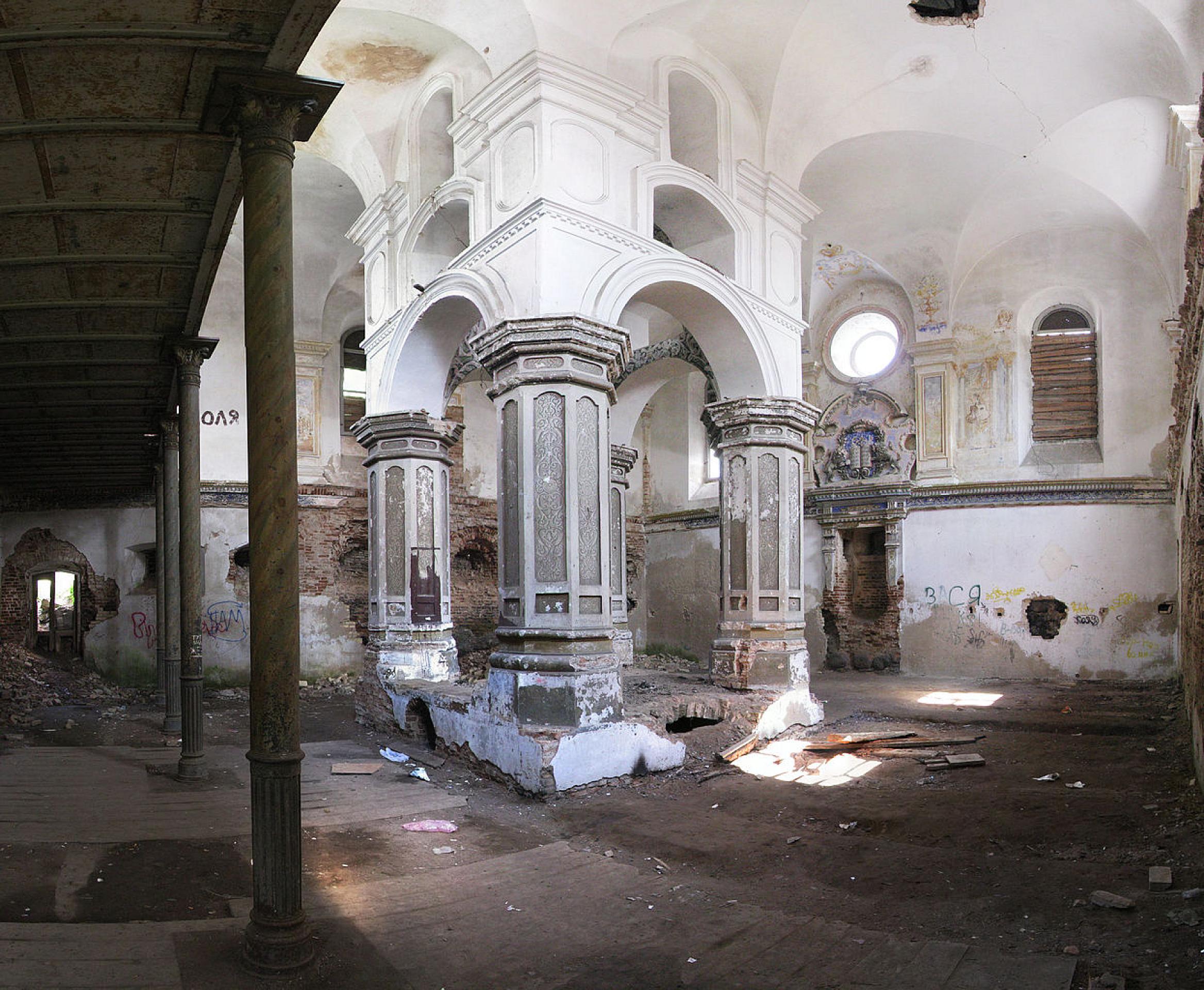
In the Belarusian city of Slonim, several memorials and the ruins of a synagogue remember the once flourishing Jewish community of the city and the murdered Jews of the Slonim ghetto during World War II.
History
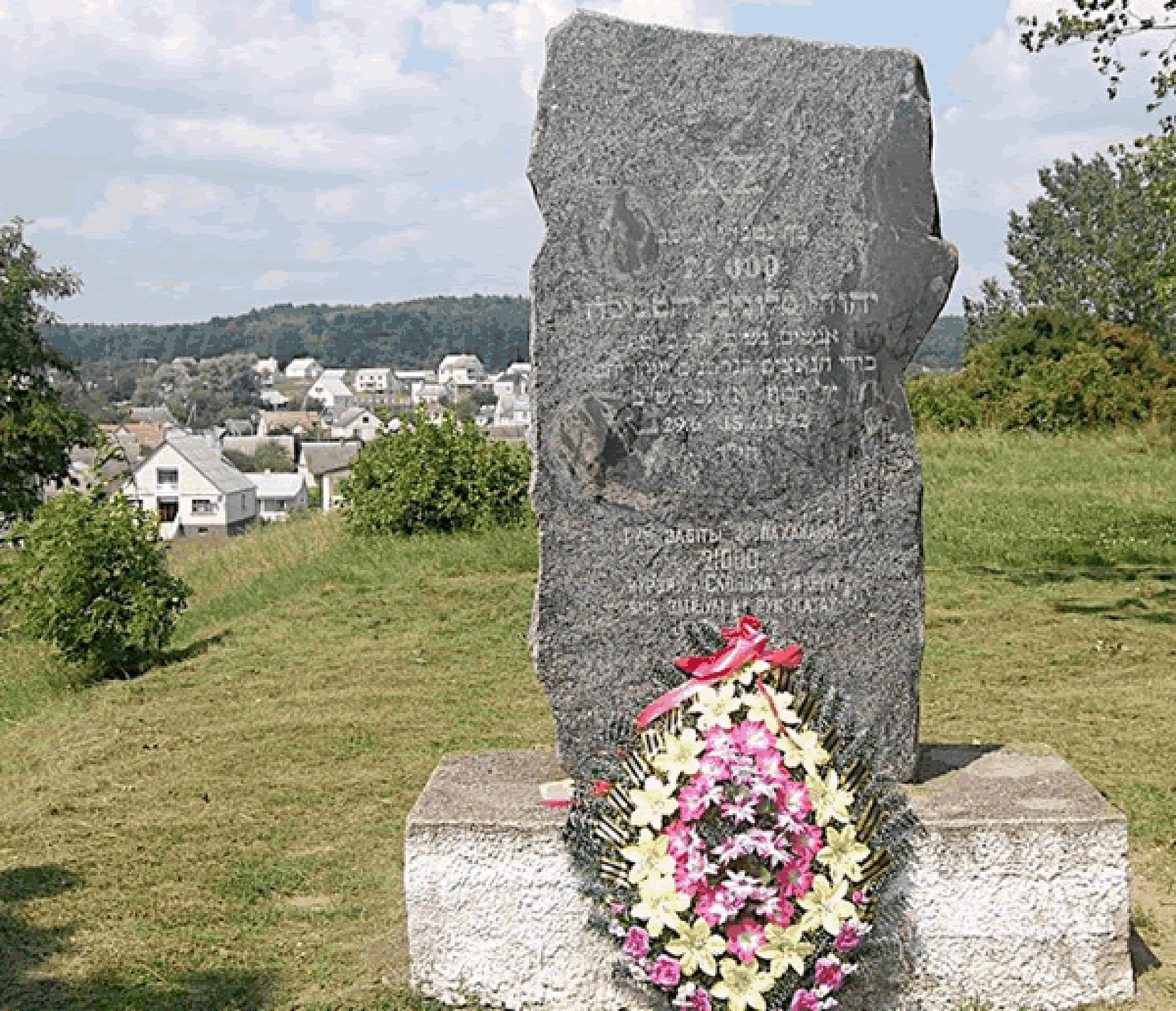
Slonim, located at the mouth of the Shchara into the Isa, was founded at the beginning of the 13th century. Until the Second World War, the city was an important political centre and also an important place of Jewish life. After the First World War, the city became Polish until it fell to the Soviet Union in 1939 as a result of the Molotov-Ribbentrop Pact. Repression by the Stalinist regime followed in 1940, to which Jews also fell victim: In April 1940, the Soviet State Security Service NKVD deported about 1,000 Jews to Siberia. At the same time many Jews fled the German-occupied territories of Poland to Slonim, so that on June 25, 1941, when the German Wehrmacht conquered Slonim, about 22,000 Jews lived in the city. From the first day of the German occupation Jews were exposed to violence. On July 17, 1941 members of a German police unit drove young Jewish men whom they had arrested on the street to the market square. From there the men were taken in trucks to a pit near the village of Petralevichi and shot there. In August 1941, the German authorities fenced a part of the city centre with barbed wire and set up a ghetto there. All Jews classified as fit for work received an »identification card«. The majority of the remaining Jews, mainly elders, women and children, were driven to the village of Chepelevo seven kilometres away on 14 November 1941 under the pretext that they were being resettled and were killed there.
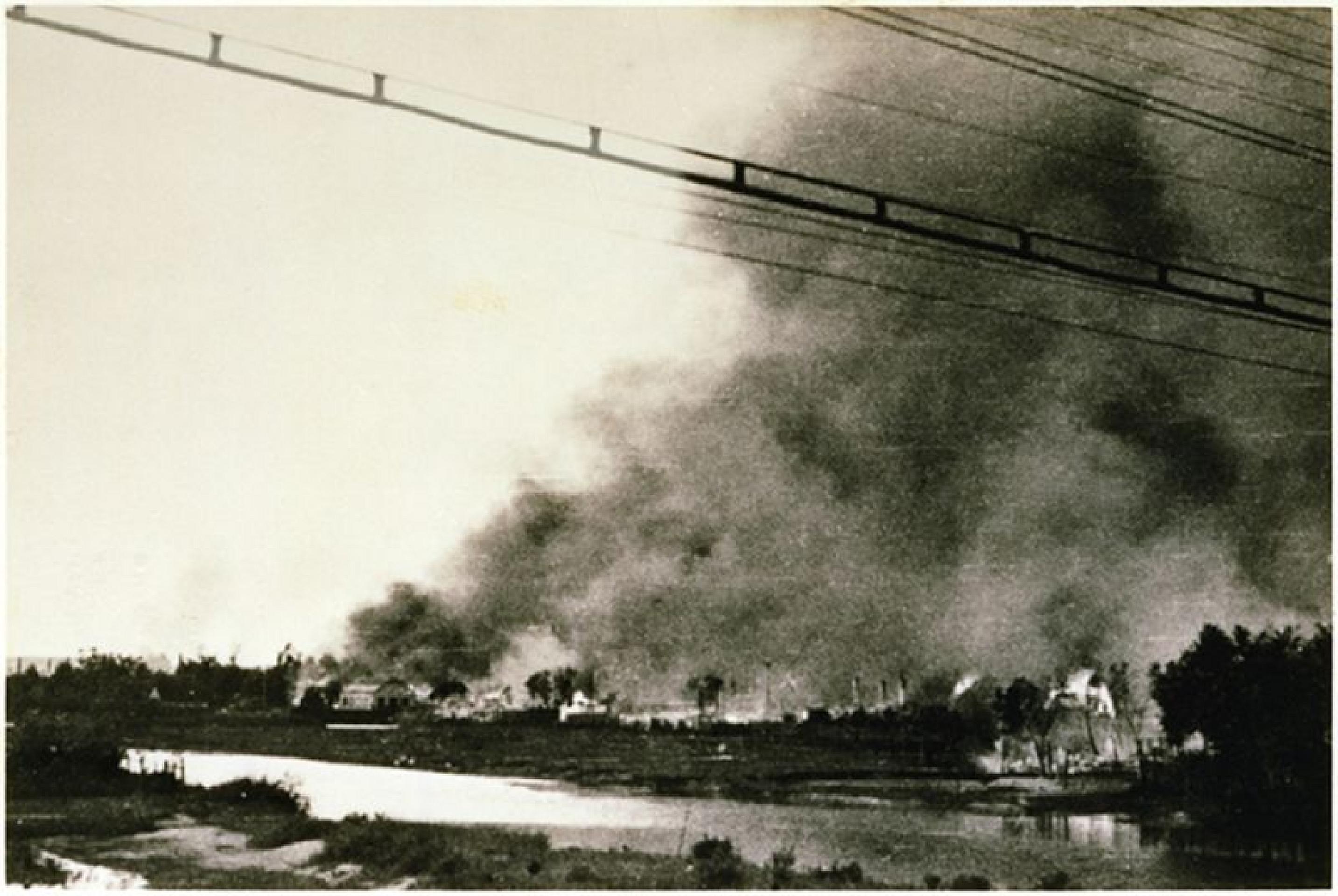
In the ghetto a resistance movement was organized that was in contact with the partisans in the woods. When on June 29, 1942 the Germans wanted to carry out another »Aktion«, an uprising broke out in the ghetto. To quell the uprising, the Germans set the ghetto on fire. A few Jews managed to flee to the partisans but the vast majority of the fled Jews were murdered. In autumn 1943 the ghetto was liquidated.
Victims
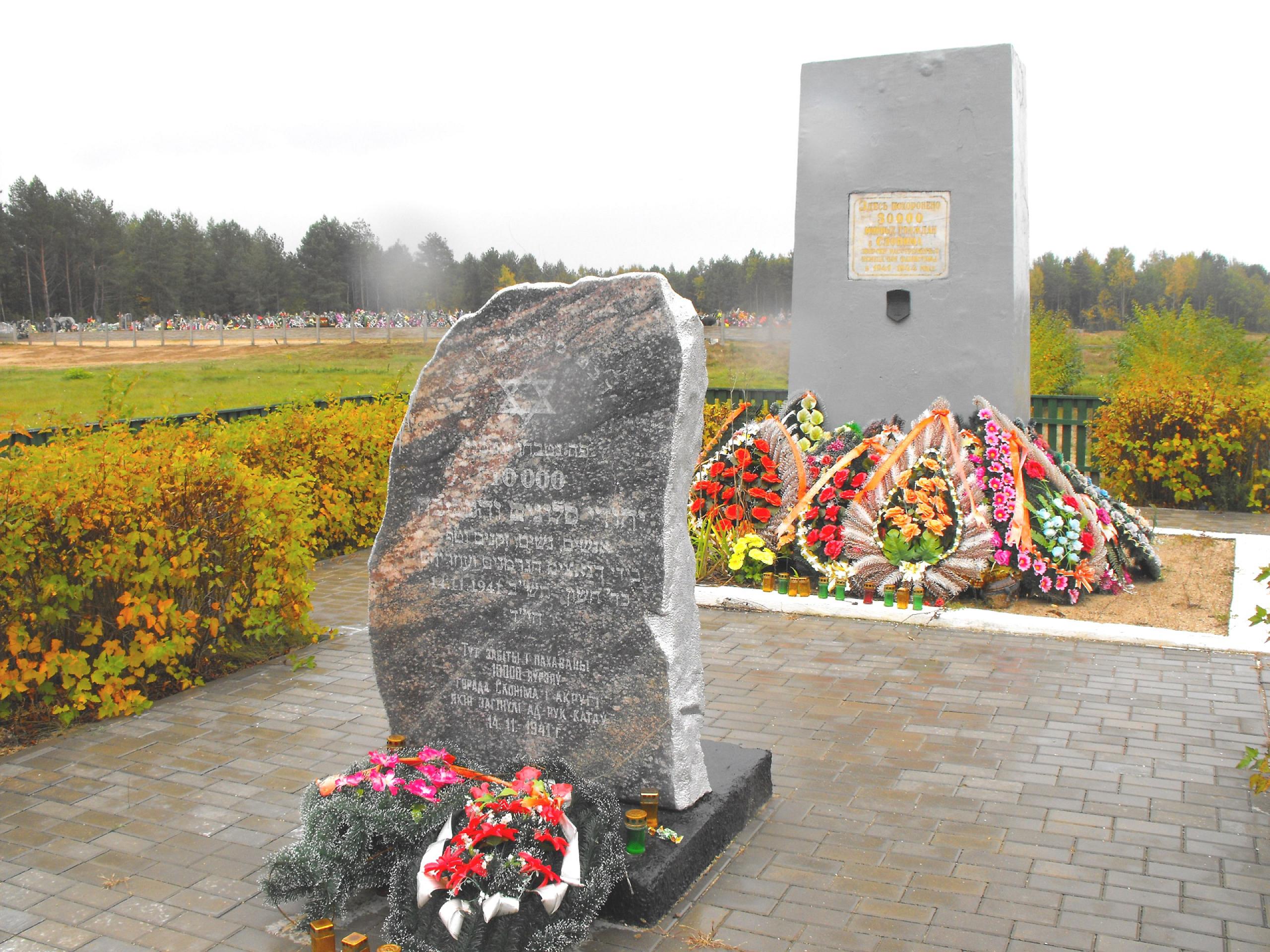
Parts of Einsatzgruppe B (mobile killing unit) had been stationed in Slonim since July 1941. Subsequently, they were responsible for several mass executions of Jews. During the first »Aktion« on July 17, 1941 they and members of the police murdered some 1,200 young Jewish men whom they had arbitrarily arrested off the streets. The German police were supported by Belarusian auxiliary policemen. On November 14, 1941, together with members of the Belarusian, Latvian and Lithuanian auxiliary policemen, the Einsatzgruppe murdered some 9,000 Jews, mainly children, women and older men. Thereafter 7,000 Jews remained in the ghetto who were forced to conduct forced labour. In March 1942, the German authorities liquidated several ghettos in surrounding villages and drove the remaining Jews to Slonim. After the uprising in the ghetto on June 29, 1942 the German security authorities and their helpers murdered up to 13,000 Jews. About 400 Jews managed to escape to the woods, where they managed to join partisan units. All in all up to 45,000 Jews were murdered in Slonim during the German occupation.
Remembrance
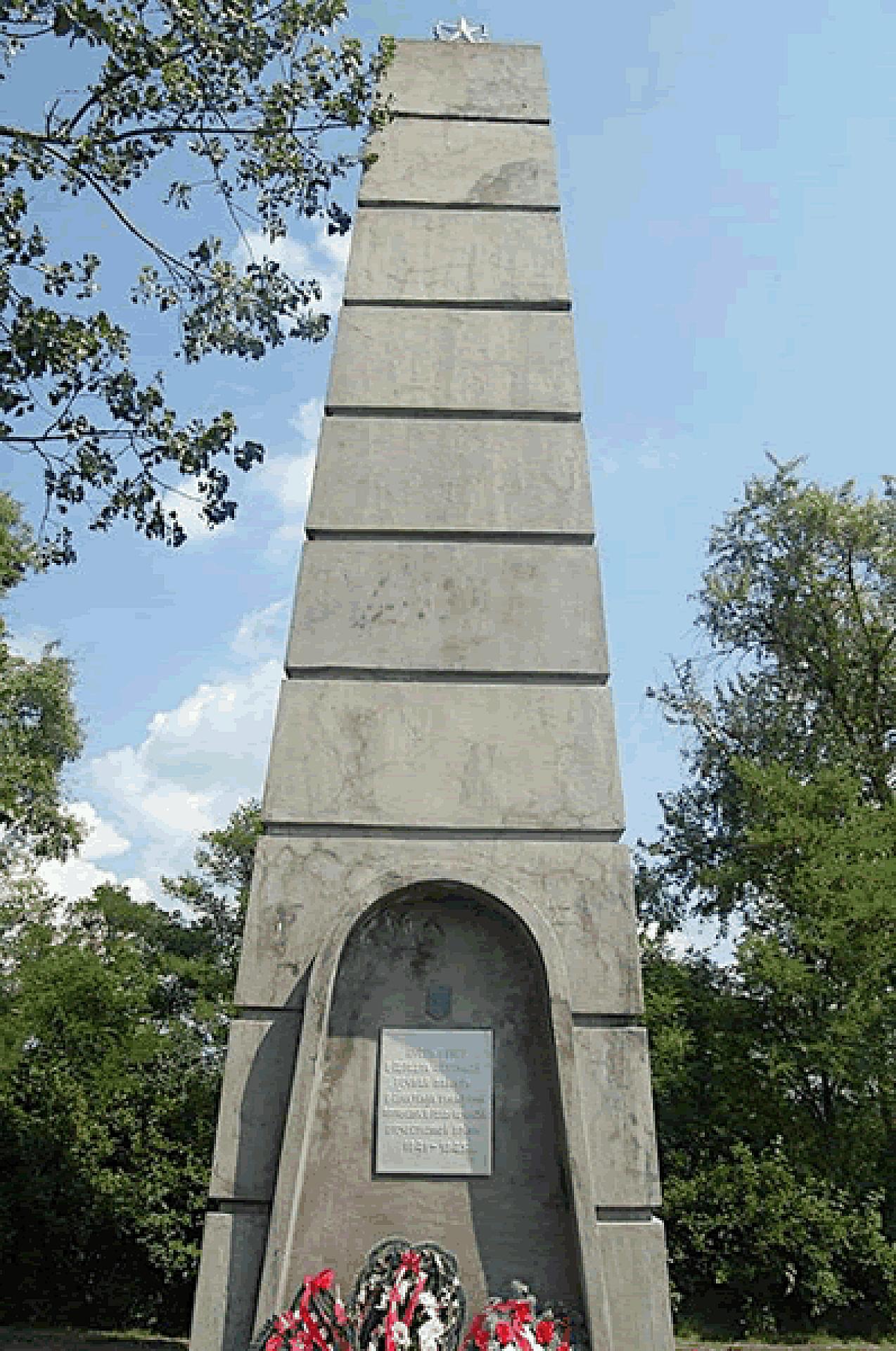
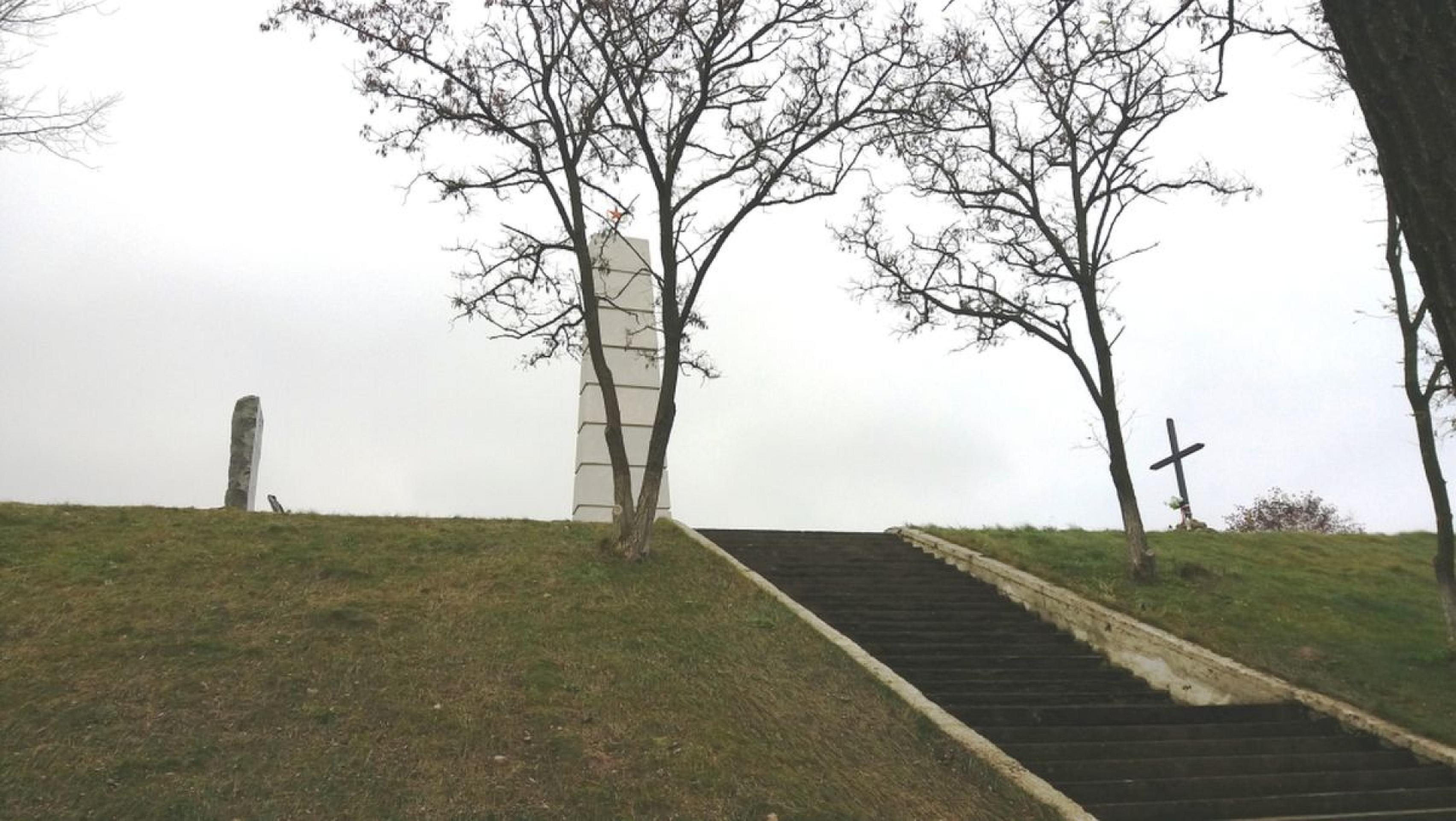
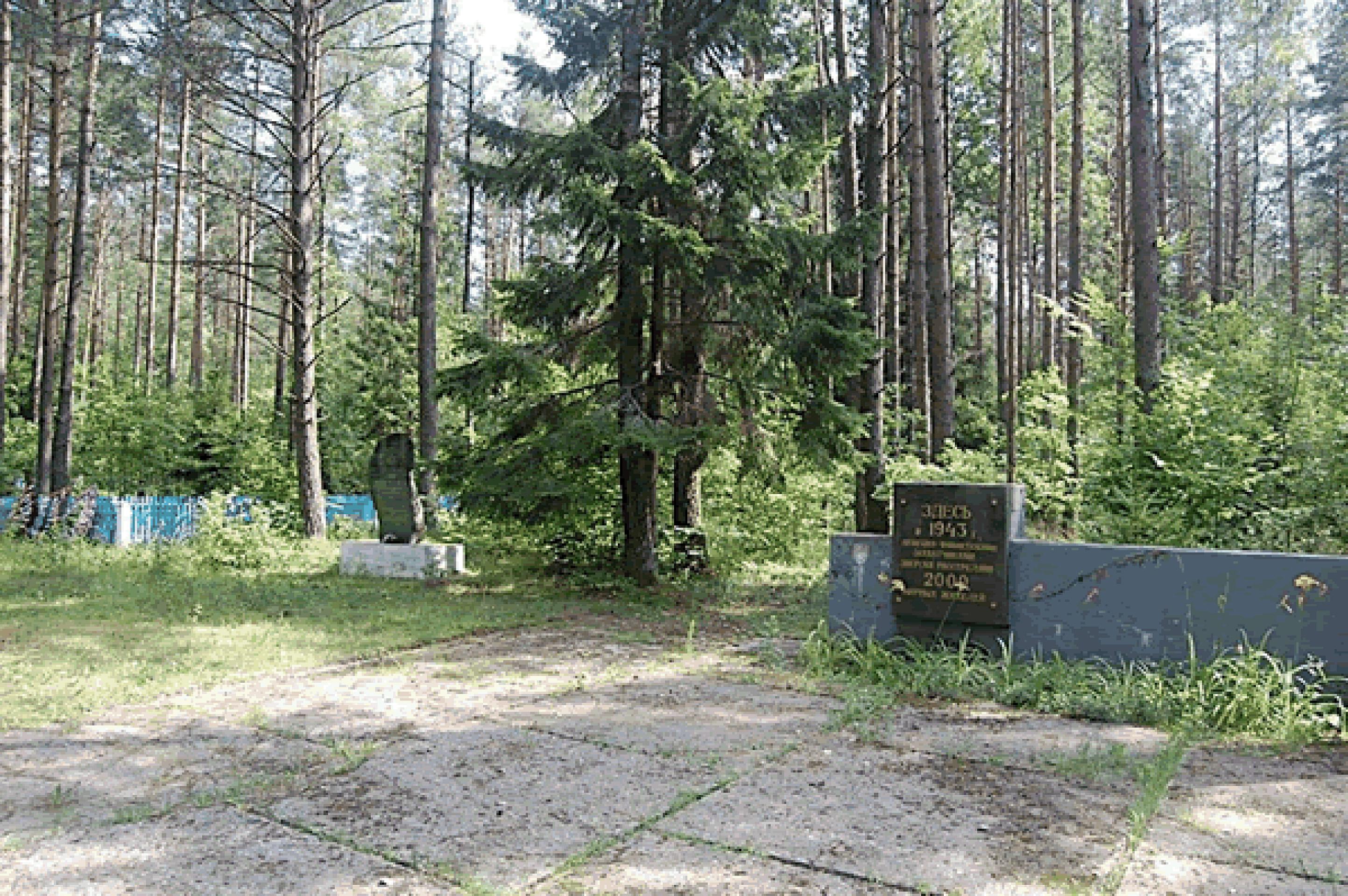
On July 10, 1944 the Red Army reconquered Slonim. In 1946 there were only 30 Jews left in the city. The first memorial in memory of the victims was erected in 1964 near the village Petralevichi 1 north of Slonim. The 12 metre high obelisk with a red star at its top commemorates the »Soviet citizens who perished during the Great Patriotic War«. Over the years, further memorials remembering the murdered Jews were erected around the memorial. Another mass shooting site is located east of the city near the village of Chepelevo. The first memorial was inaugurated here in 1967. The inscription is faded by the weather and is difficult to read. A memorial stone with a Star of David was erected in front of the monument in the 1990s. Its inscription has also faded over time.
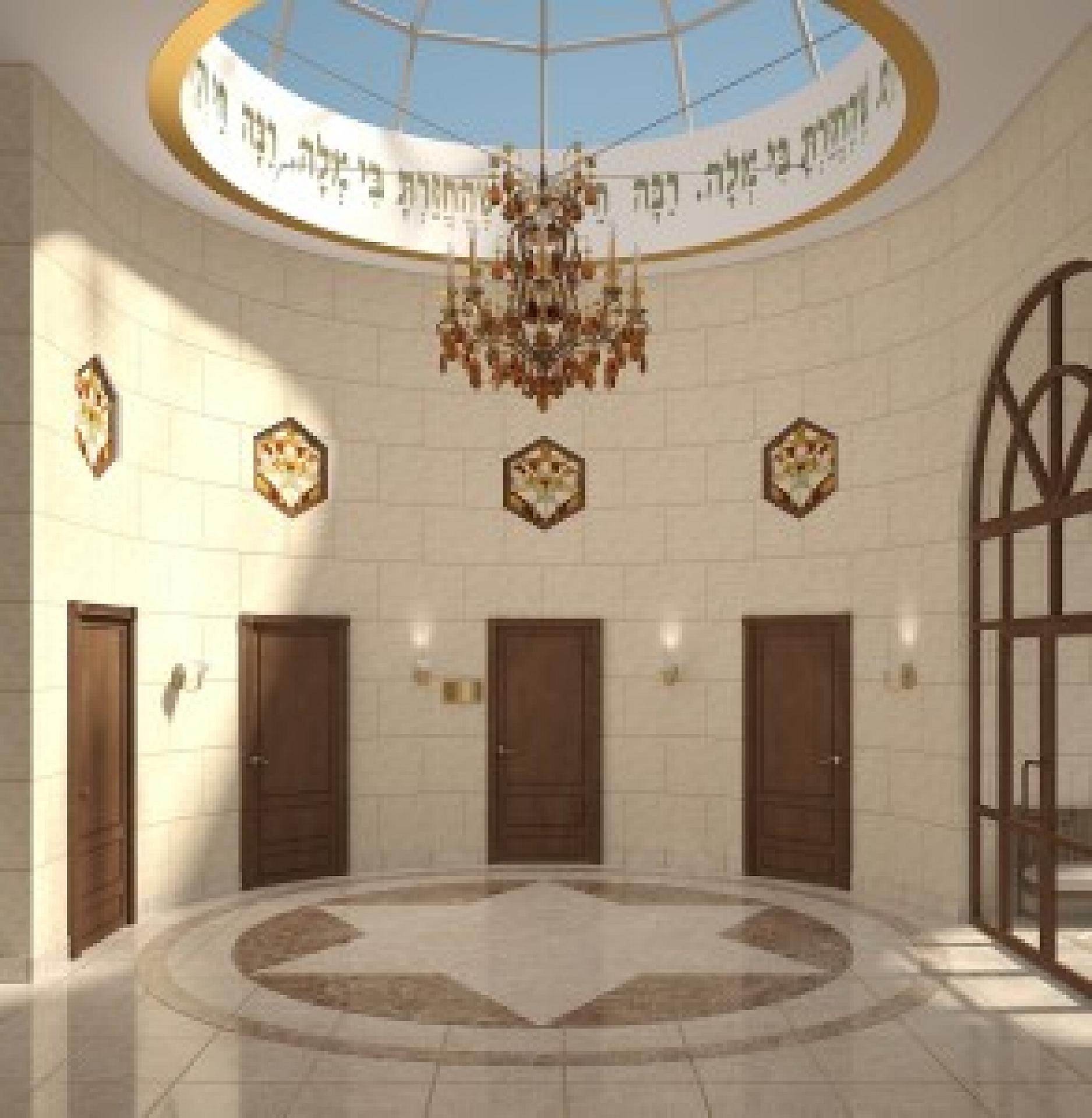
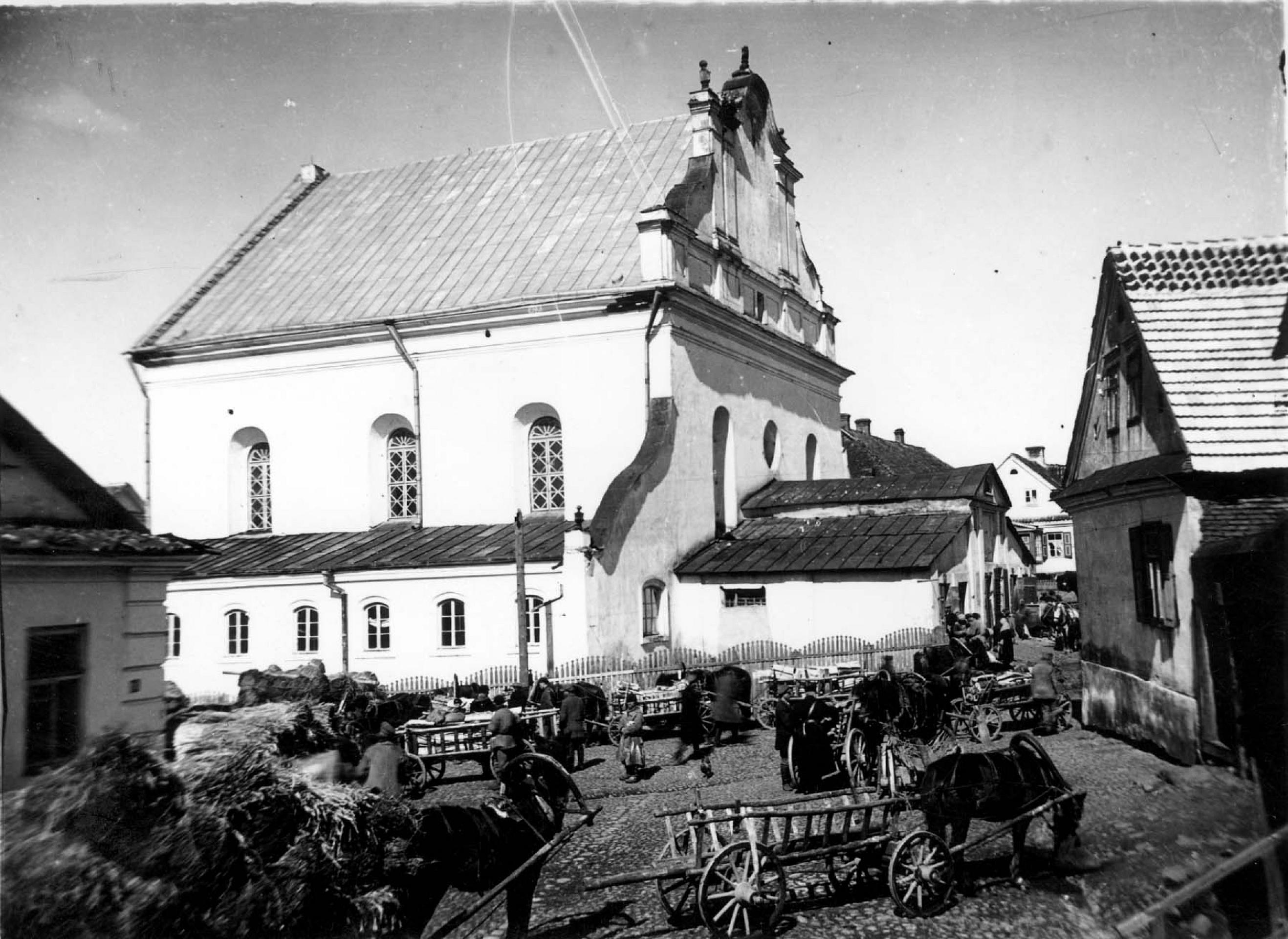
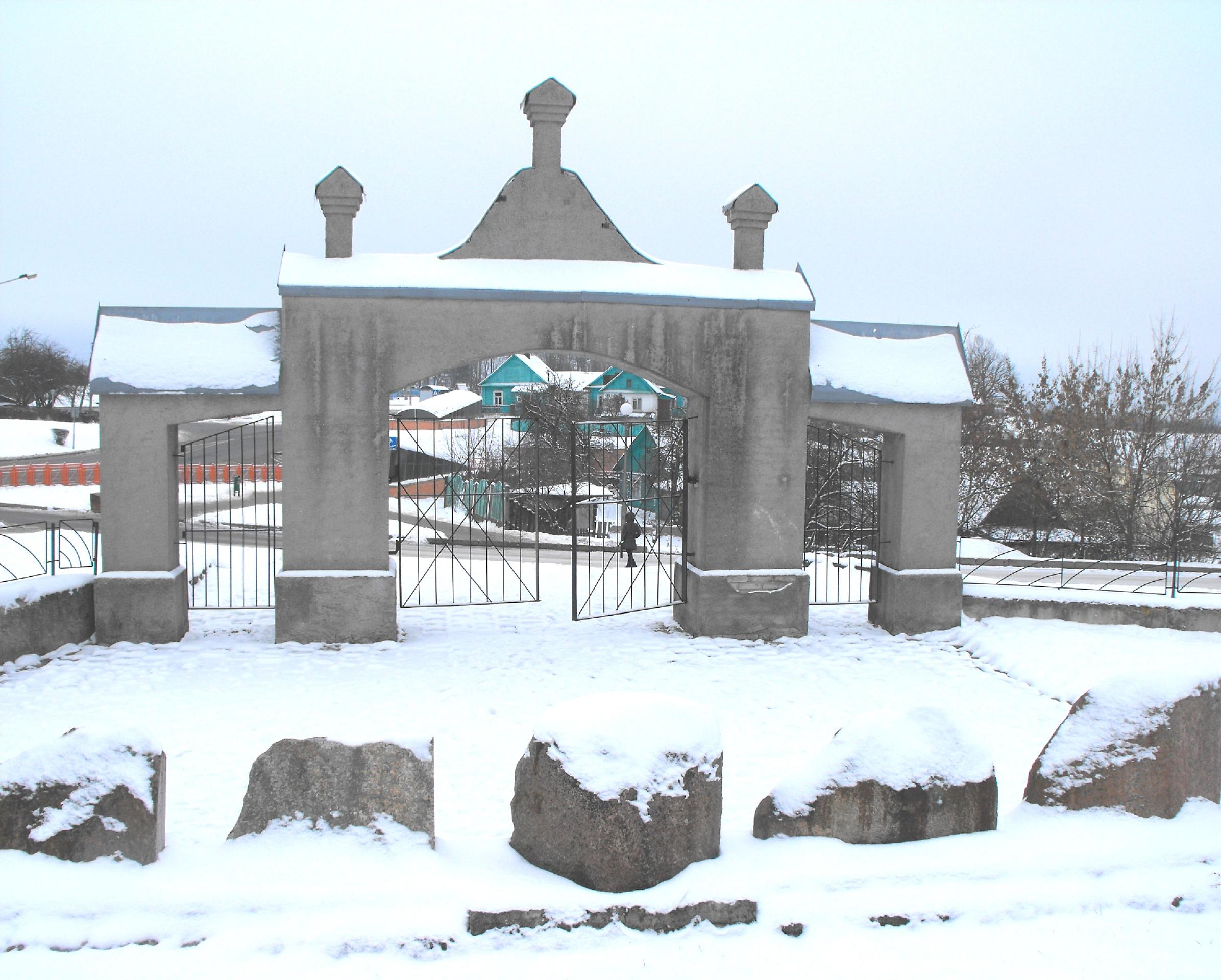
A larger memorial complex was designed by the famous Belarusian architect Leonid Levin. It was opened in 1994 on the site of the former Jewish cemetery and commemorates the murdered Jews of the Slonim ghetto and the once flourishing Jewish community of the city. The entrance gate of the complex is based on the ark of the former cemetery. Behind it are several memorial stones and preserved gravestones. Otherwise, the ruins of the once magnificent Slonim synagogue are reminiscent of the Jewish community of Slonim. The place of worship, built in 1642, is located in the centre of the city. Its façade and interior in the style of the Baroque period have largely been preserved, but are in great need of restoration. In 2016 it was decided together with the Jewish community to open a museum of Jewish culture there in the foreseeable future.
Open
The memorials are accessible at all times.
Contact
http://www.eilatgordinlevitan.com/slonim/slonim.html
Wuliza Breszkaja
231800 Slonim