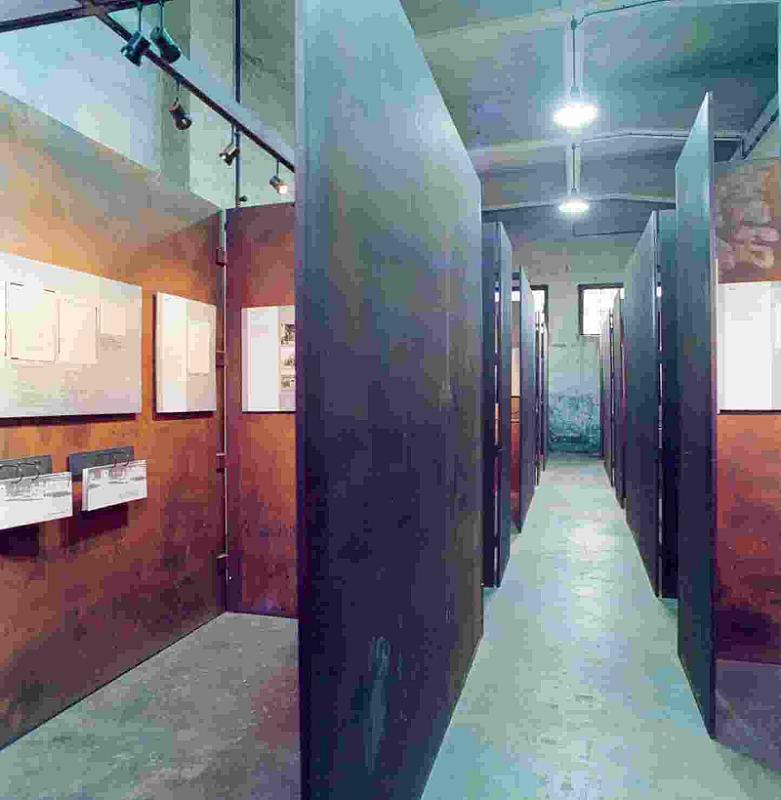
Memorial to the murdered Jews of Slutsk
Памятники убитым евреям, узникам Слуцкого гетто / Помнікі забітым яўрэям, вязням Слуцкага гета
In the Belarusian city of Slutsk several memorials remember the victims of the ghetto that existed there between 1941 and 1943.
History
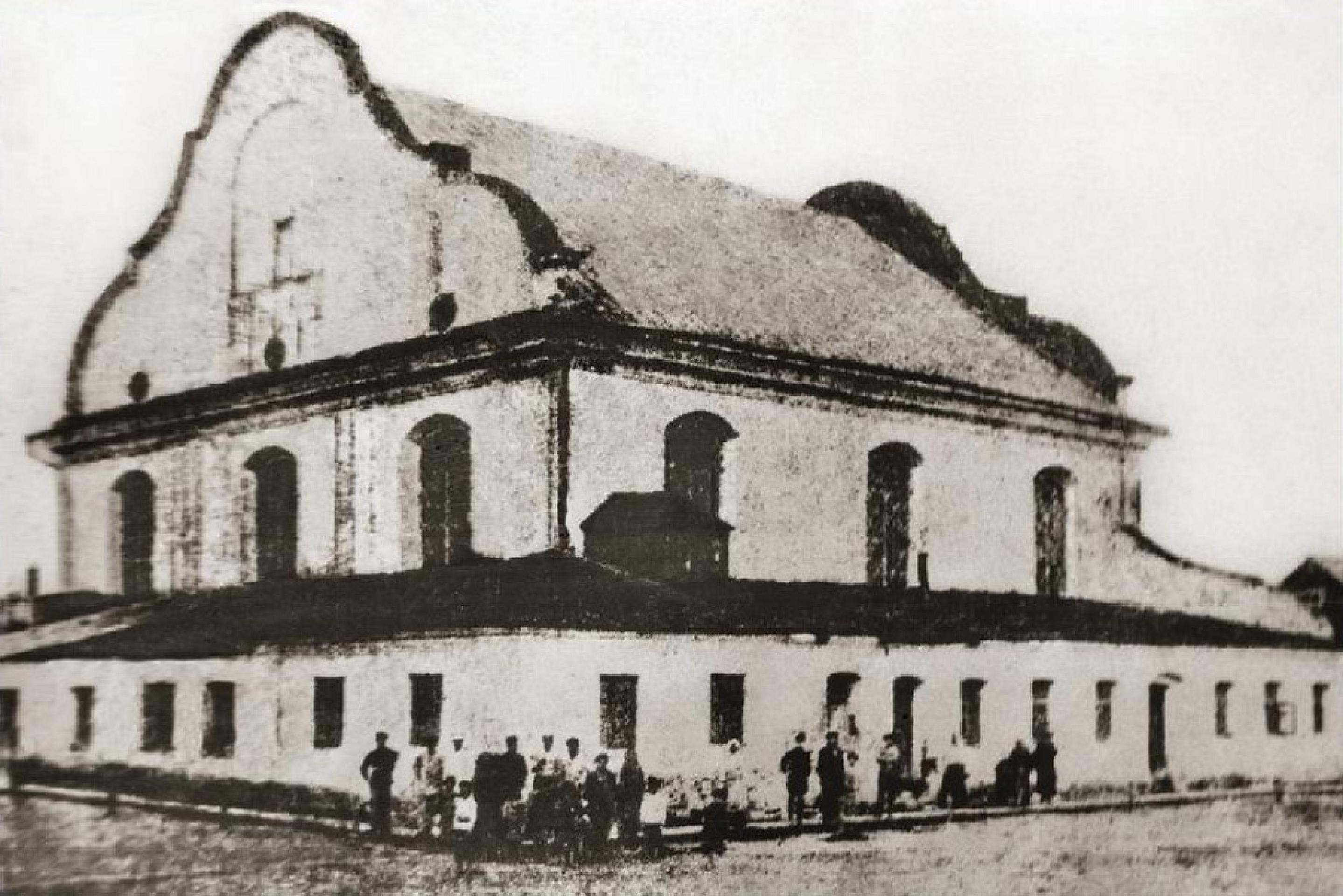
Slutsk (Polish: Słuck) is one of the oldest cities in Belarus and was first mentioned in 1116. After the Second Partition of Poland in 1793, the city became part of the Russian Empire. After 1921 the city became part of the Soviet Union. Jews lived in Slutsk since the end of the 16th century. Two centuries later they constituted the majority of the population.
The German Wehrmacht occupied the city on June 26, 1941. Only a few Jews had managed to escape before they reached the town. Initially, the Wehrmacht set up a prisoners of war camp for tens of thousands of Red Army soldiers in Slutsk. Jewish POWs were instantly shot.
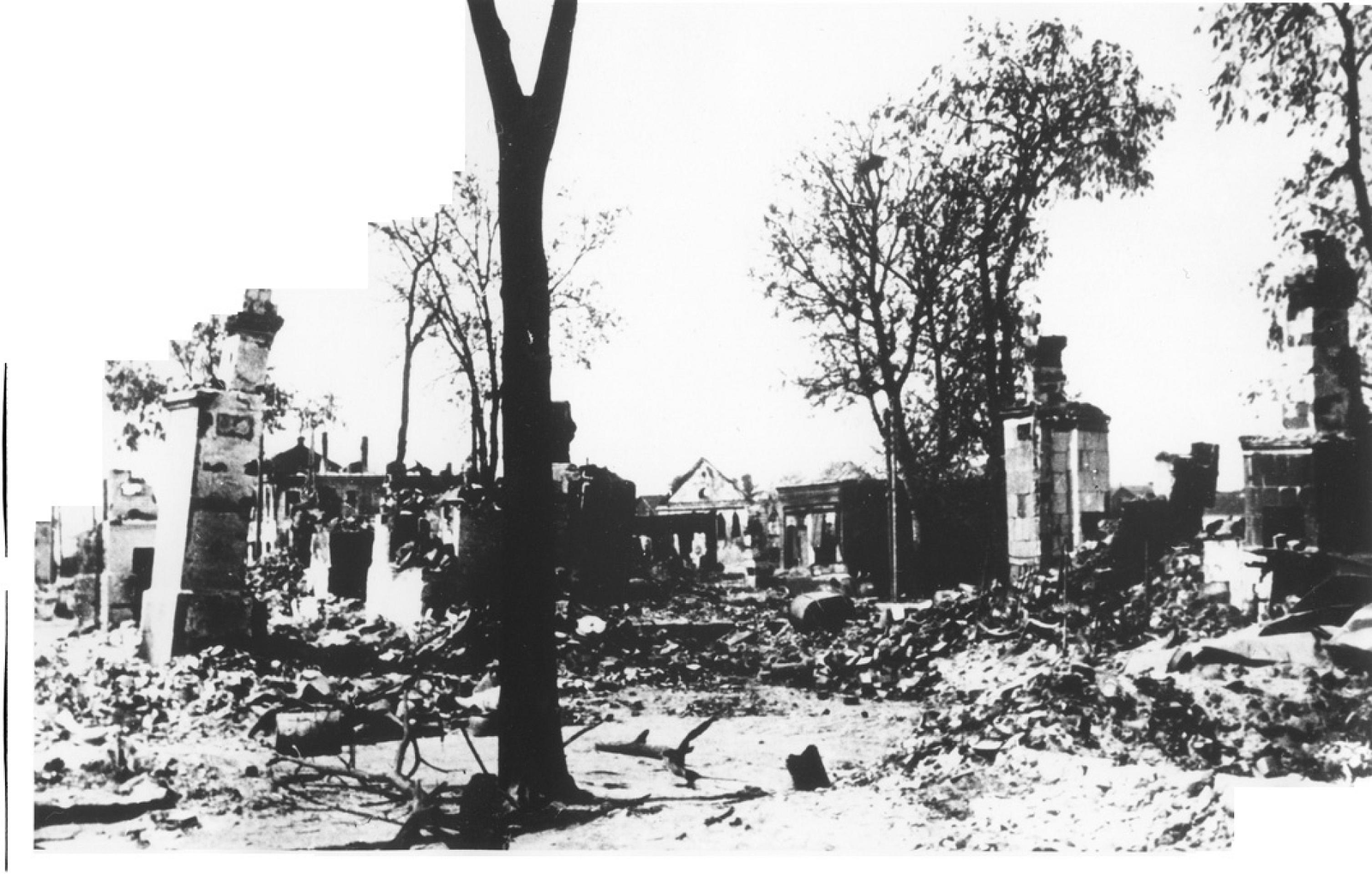
The Jews in Slutsk had to wear identifying badges and conduct forced labour. In autumn 1941 they were forced to move to a ghetto fenced with barbed wire. The living conditions were catastrophic. On October 27, Lithuanian auxiliaries drove all Jews who did not have a work permit from their homes and workplaces to a birch grove to be murdered there by German units. In January 1942, the Germans set up a second ghetto, intended for Jews who were considered to be incapable of work. The living conditions there were much worse than in the first ghetto. Every Monday and Sunday the Germans drove several Jews from the second ghetto to a nearby forest and shot them there. In March 1942 the ghetto was dissolved again. Those who were still alive were returned to the first ghetto. On February 5, 1943 SS-Obersturmführer Eduard Strauch gave the order to liquidate the ghetto. On February 8, 1943 the Germans and their helpers loaded the Jews onto trucks and drove them to previously excavated pits, where they shot them and buried their bodies. Then they set fire to the ghetto.
Victims
In the summer the Germans shot between 1,500 and 2,000 Jewish prisoners of war in the POW camp Stalag 341. After Einsatzkommando (sub-group of Einsatzgruppe) 8 of Einsatzgruppe (mobile killing unit) B arrived in Slutsk in the summer of 1941, its members shot several hundred Jews and alleged Communists. During the »Großaktion« on October 27, 1941 the German police battalion 11 together with Lithuanian helpers murdered up to 4,000 Jews.
From January 1942 to March 1942 there was a ghetto in Sluzk for the elderly and the ill. Most of them were murdered in a nearby forest. In May 1942 the Germans shot about 30 partisans and up to 40 hostages in Slutsk. In the beginning of February 1943 the Germans and their helpers murdered over 3,000 Jews. With that, the ghetto was dissolved.
A total of about 10,000 Jews were murdered in Slutsk and the surrounding area during the war.
Remembrance
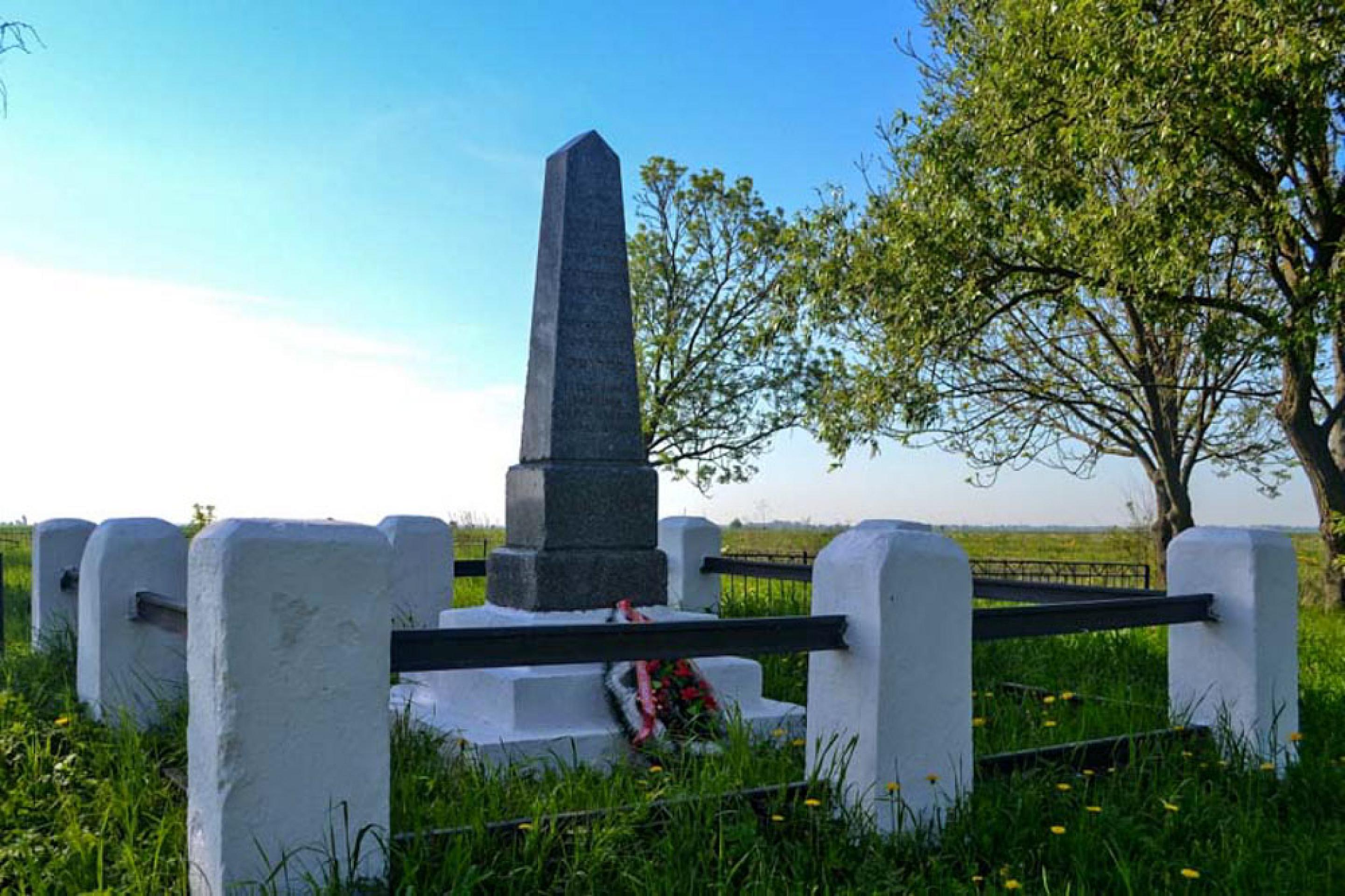
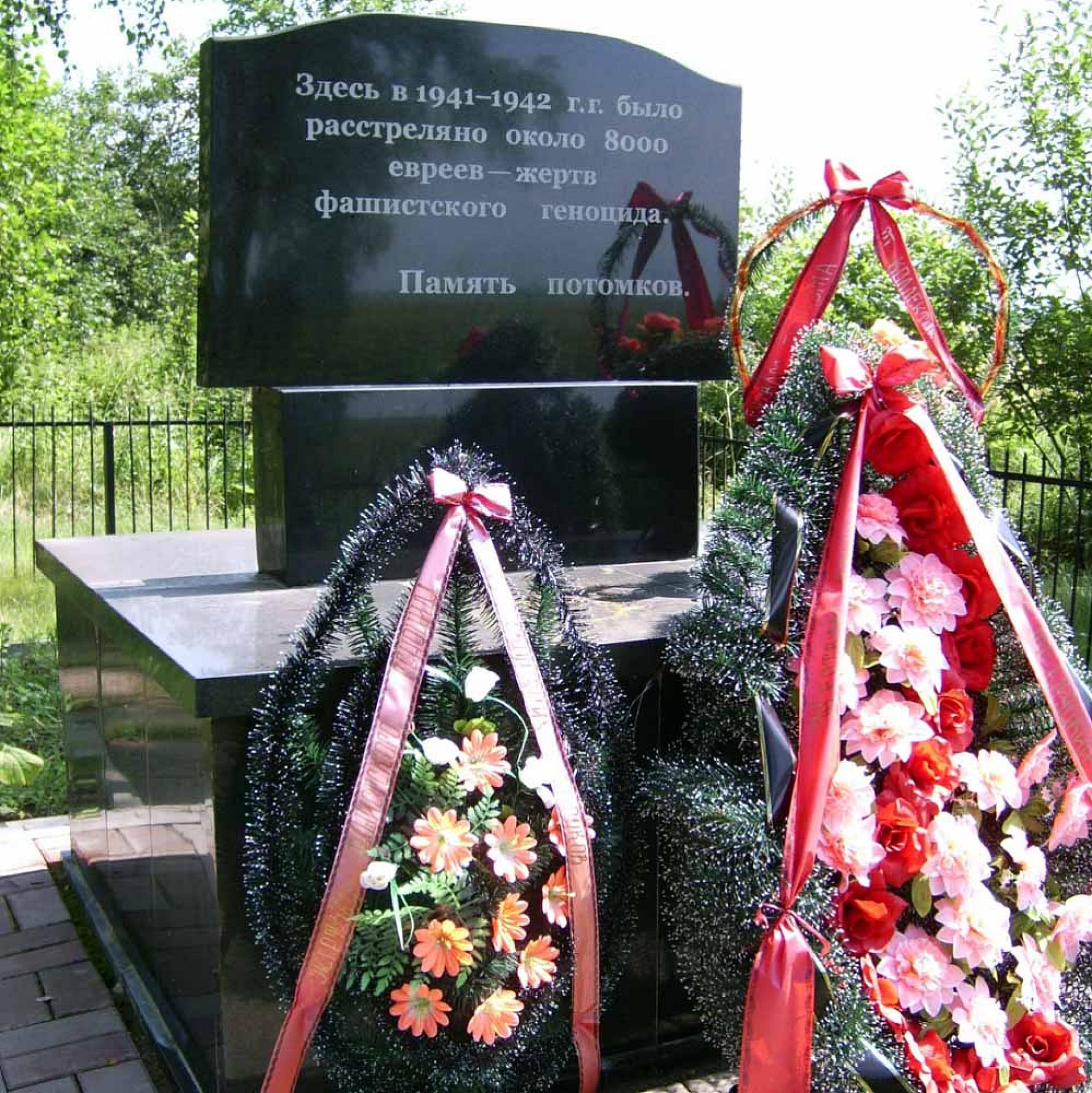
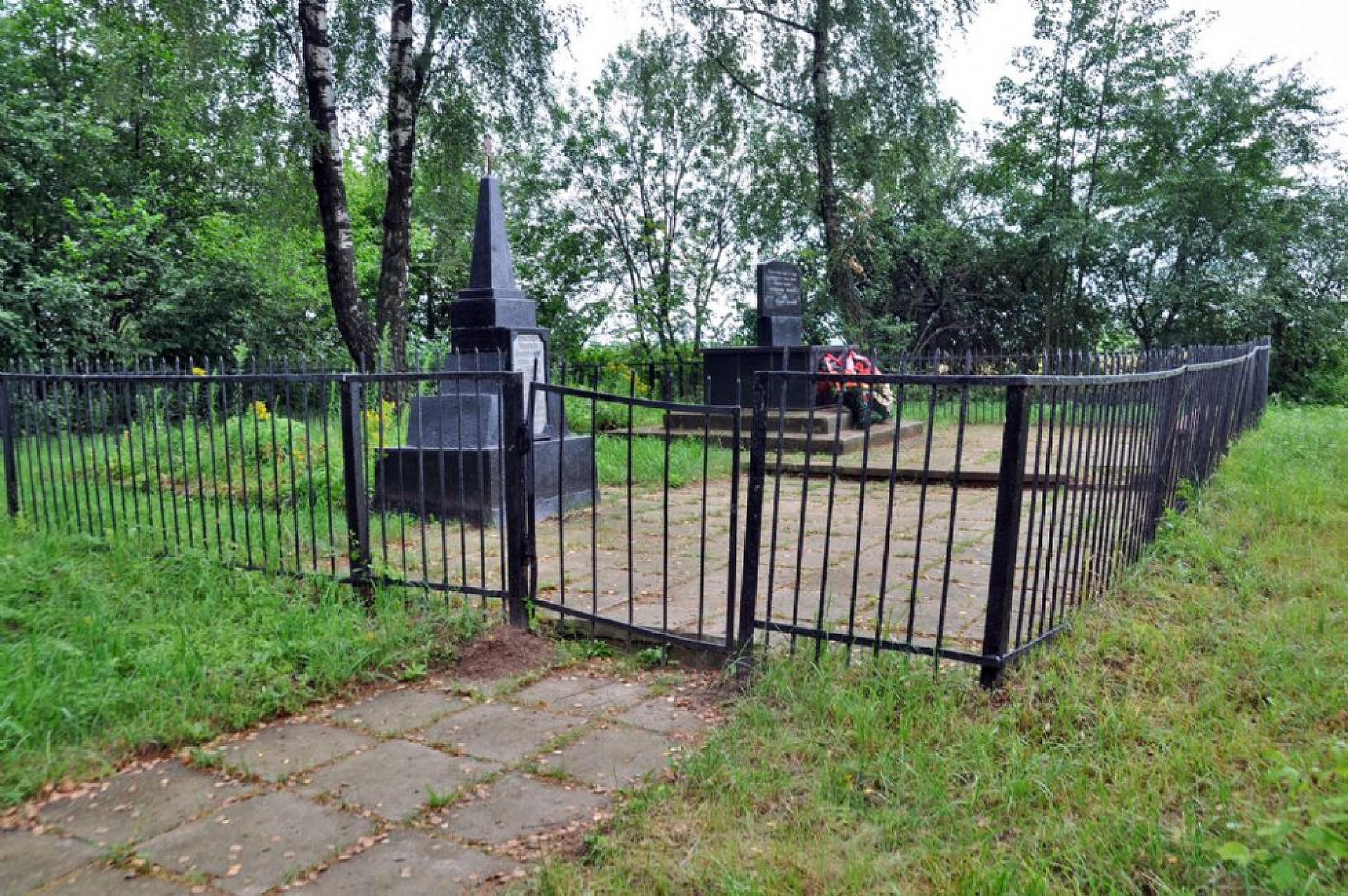
On June 30, 1944 Slutsk was liberated by Soviet forces. In 1956 a first monument was erected in memory of the victims. It is made of black granite and is located 2 kilometres south of the village Selishche in a birch grove called Gorovakha, where more than 3,000 Jews were shot on October 27, 1941. The next monument was erected at the end of the 1990s, financed by the Jewish community of Slutsk. The monument was destroyed in an act of vandalism in 2006, but was soon replaced by a new one. Today the Russian inscription reads: »From 1941–1942 about 8,000 Jews - victims of the fascist genocide - were shot at this place. Eternal memory«. Next to the monument there is another one, in memory of two non-Jewish inhabitants who were murdered in Slutsk in 1942. The monument was erected by family members.
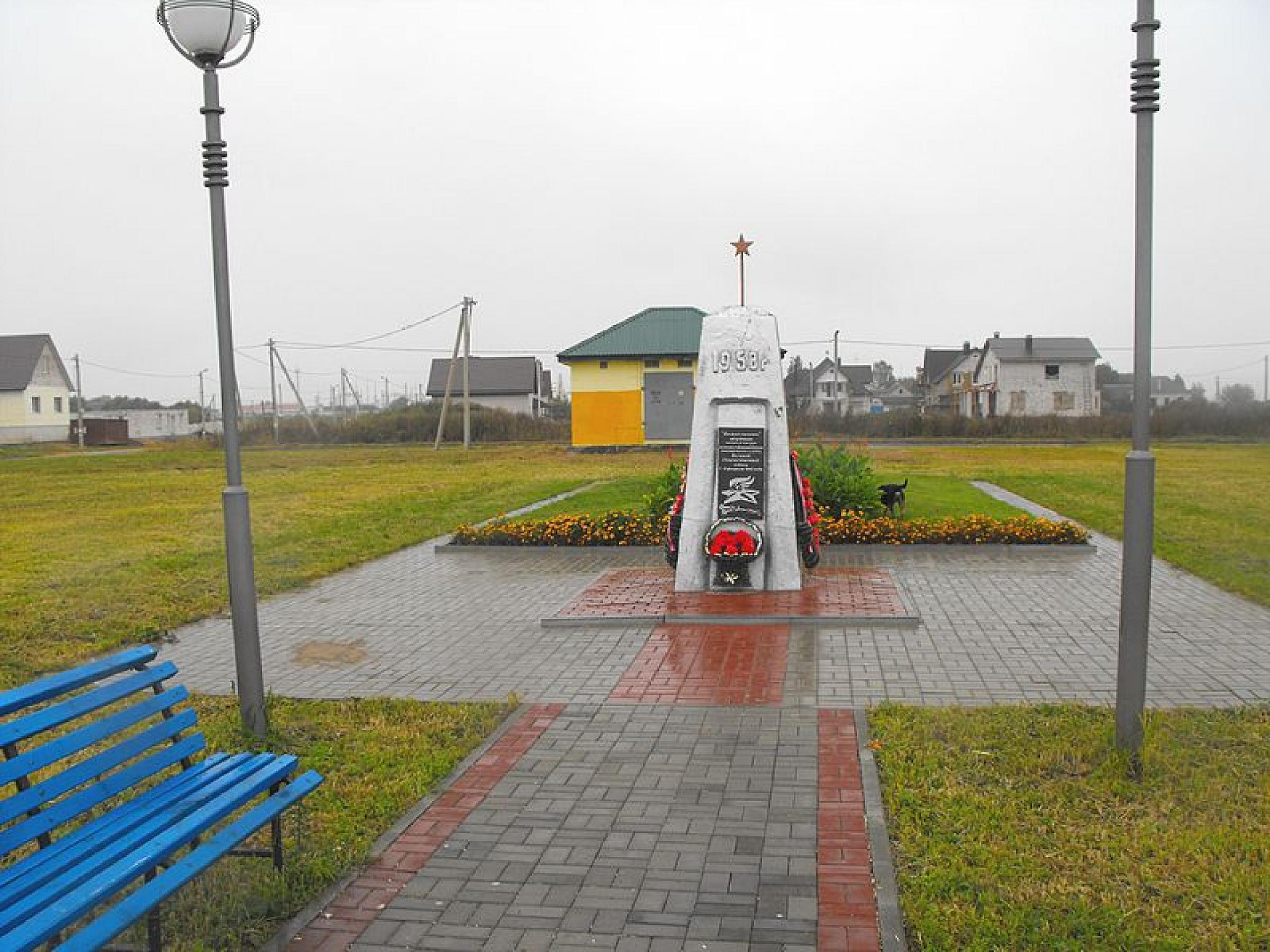
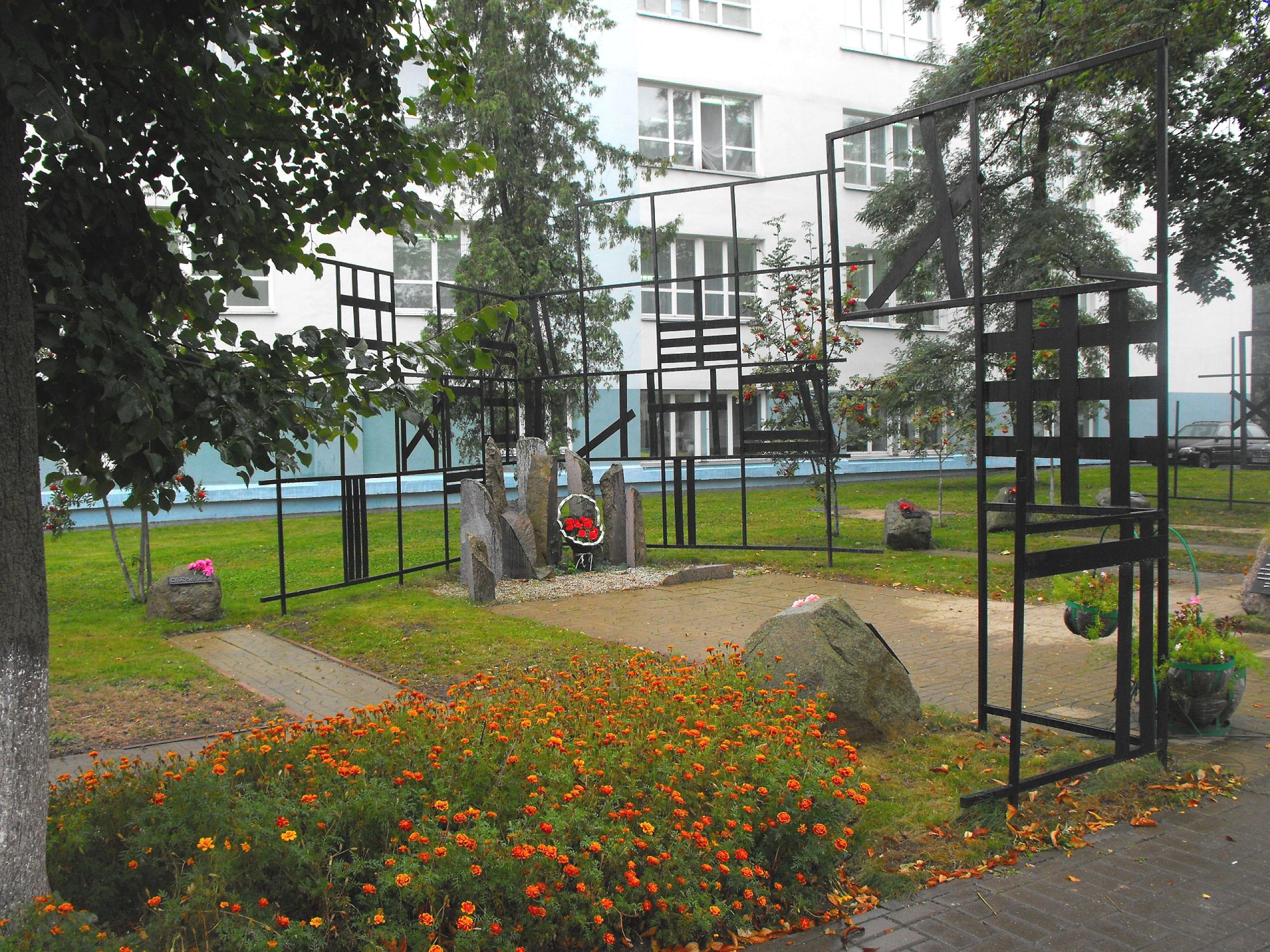
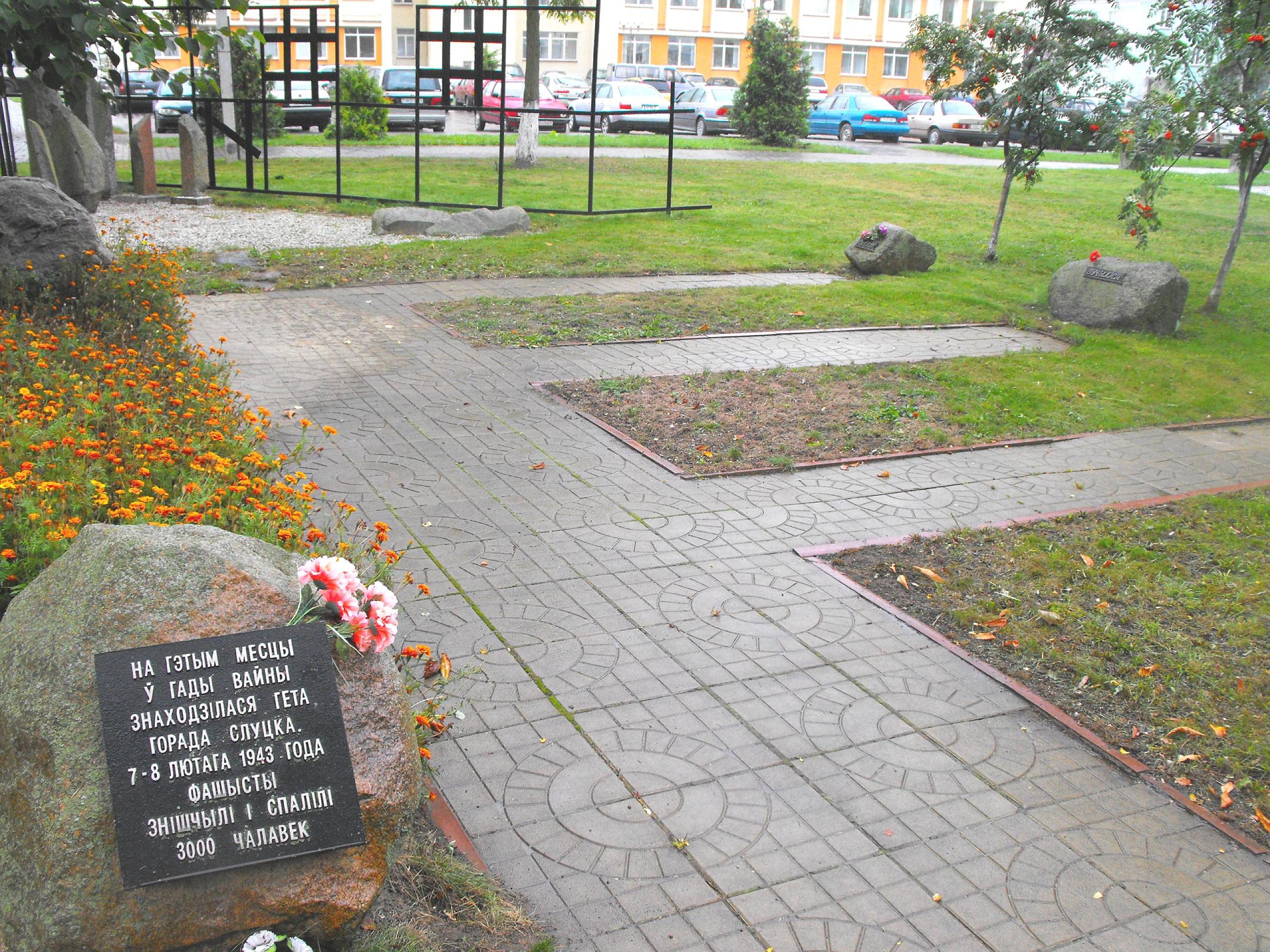
In 1958 a memorial was erected on the site of the former ghetto in Monakhowa Street in memory of the victims of the mass shootings in February 1943. At the top of the monument there is a red star. Another monument is located directly on the Vesaya River, about one kilometre west of the village of Sloboda. The Hebrew inscription reads: »Here rest old and young people, women and men, mothers and babies whose blood was shed like water in Slutsk by the fascist murderers. May their names be cursed forever«. Below that is a Russian inscription that also commemorates the victims. In 2007 a memorial was erected in Kopylskaya Street, where the ghetto used to be. It was designed by the Belarusian architect Leonid Levin (1936-2014). The Belarusian inscription on the memorial stone reads: »The ghetto of the city of Slutsk was located here during the war. On February 7 and 8, 1943 the fascists shot and burned 3,000 people«.
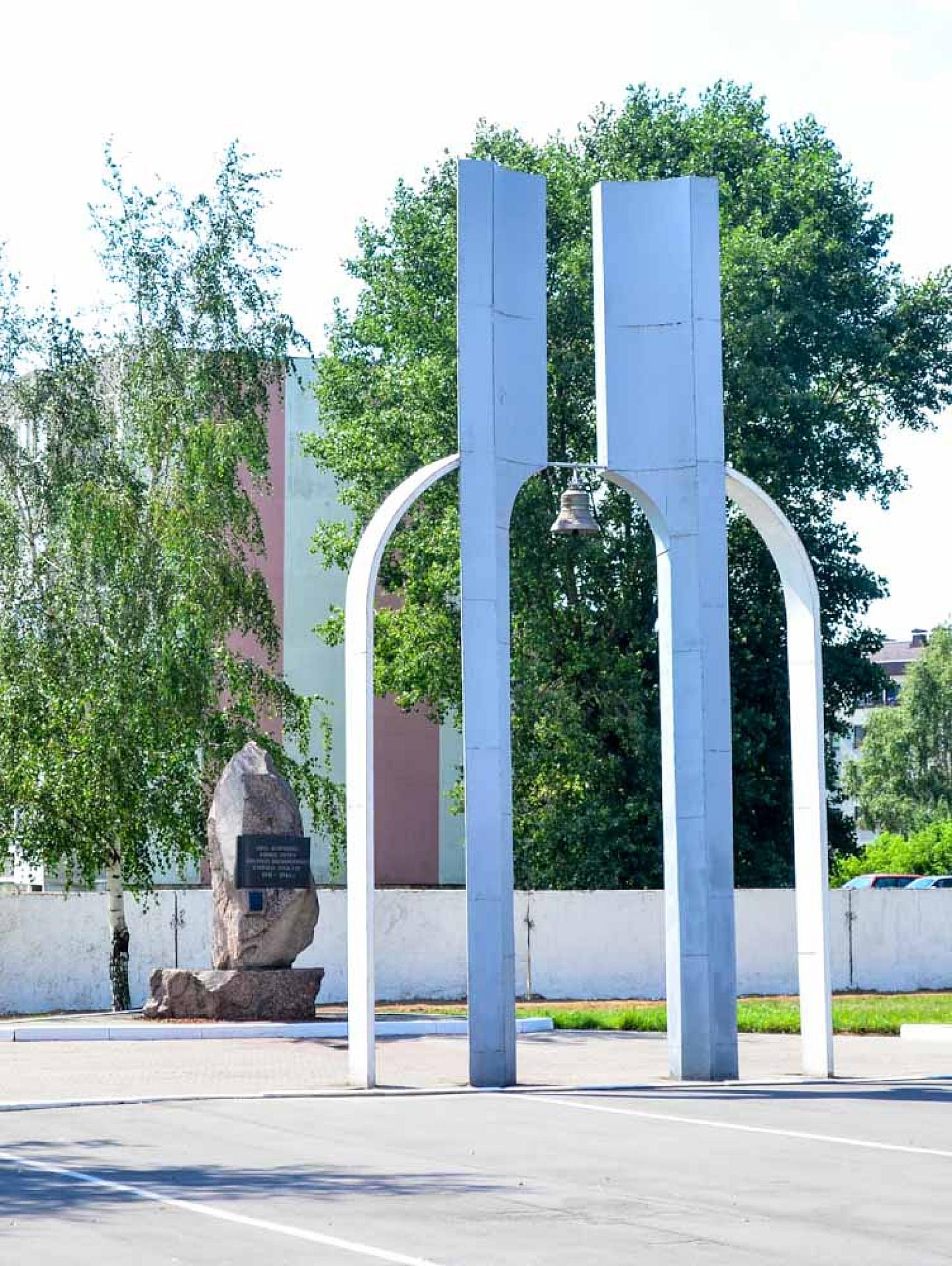
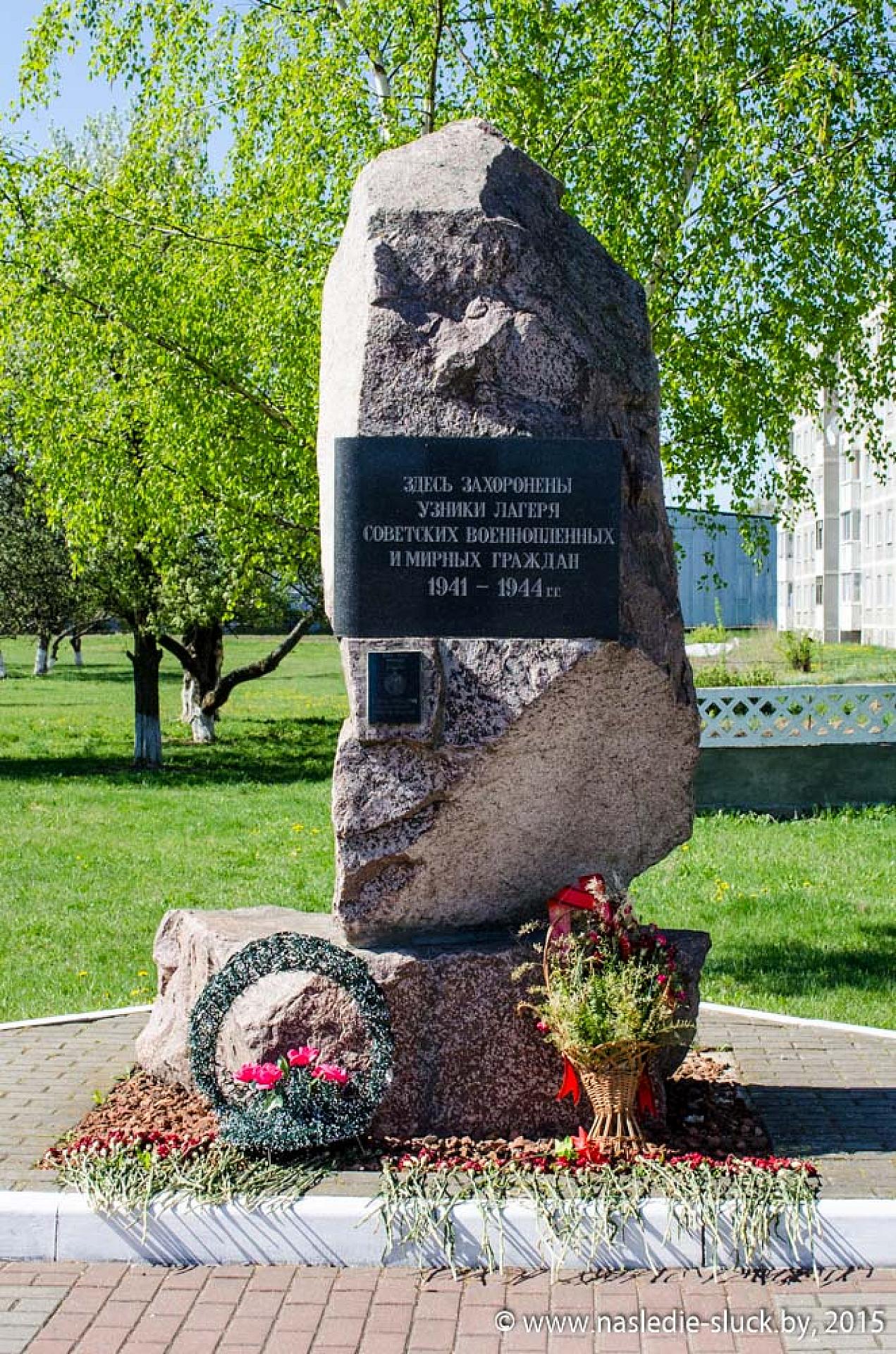
Since 2004 a memorial commemorates the victims of the POW camp Stalag 341 in Slutsk.
In 1959 more than 1,200 Jews lived in the city. When the Soviet Union fell apart, many Jews emigrated abroad, so that at the beginning of the 1990s there were only about 600 Jews in Slutsk.
Open
The memorials are accessible at all times.
Contact
hvorov@inbox.ru
+375 29 696 49 36
Kopylskaja Uliza 2A
2HH2+96 Sluzk