Memorial to the Murdered Psychiatric Patients in Mogilev
Памятник убитым пациентам психбольницы / Помнік забітым пацыентам псіхлячэбніцы
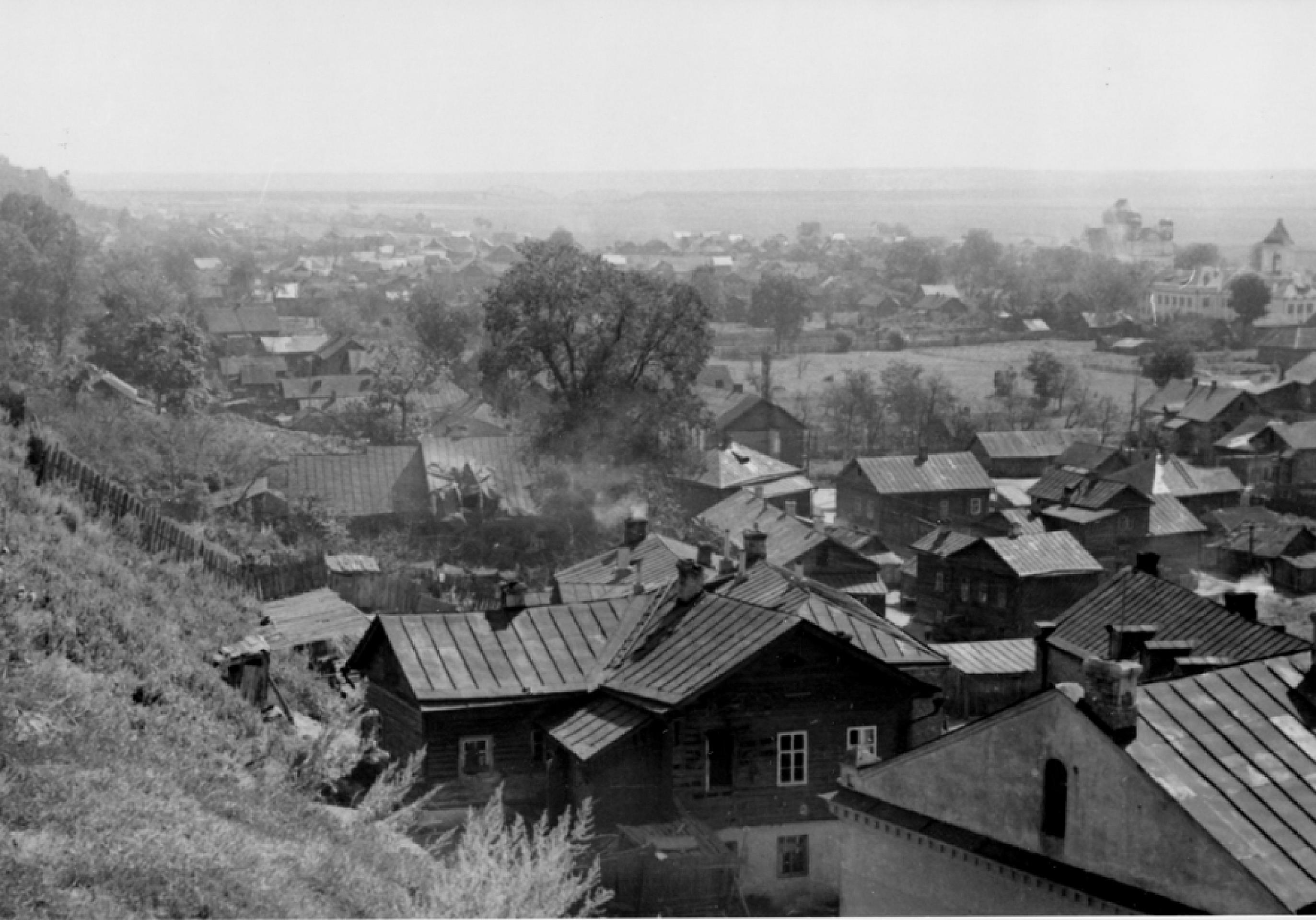
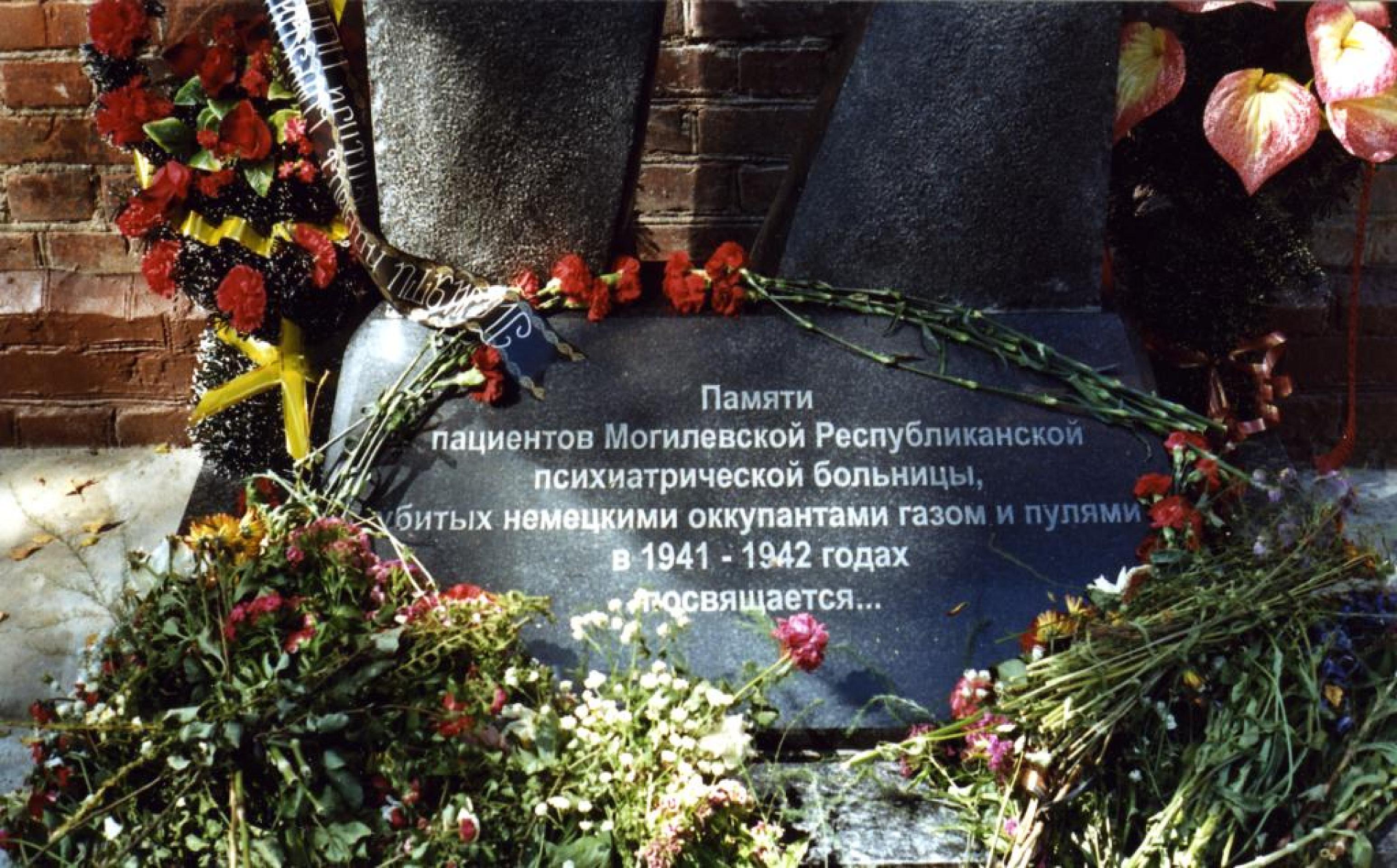
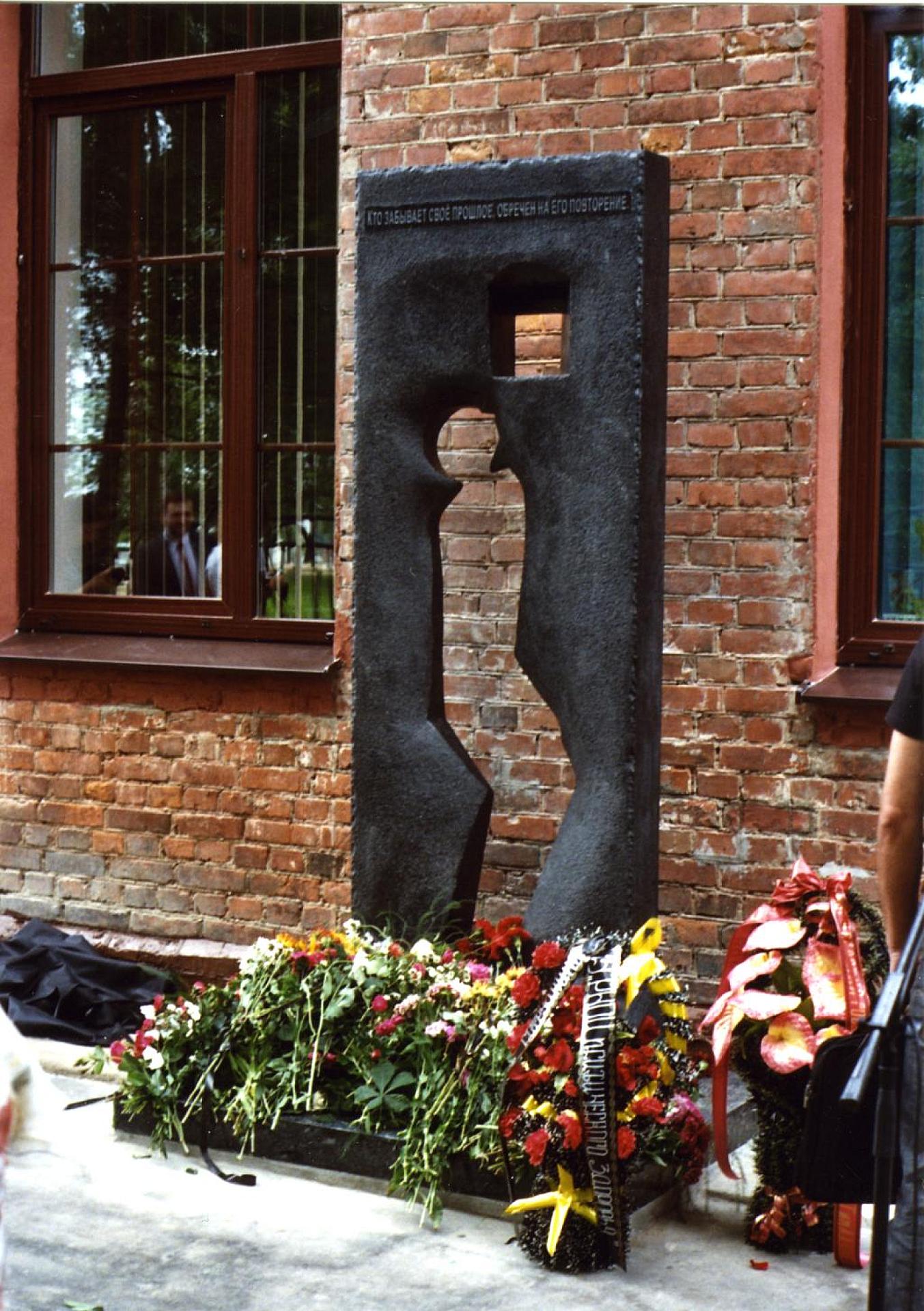
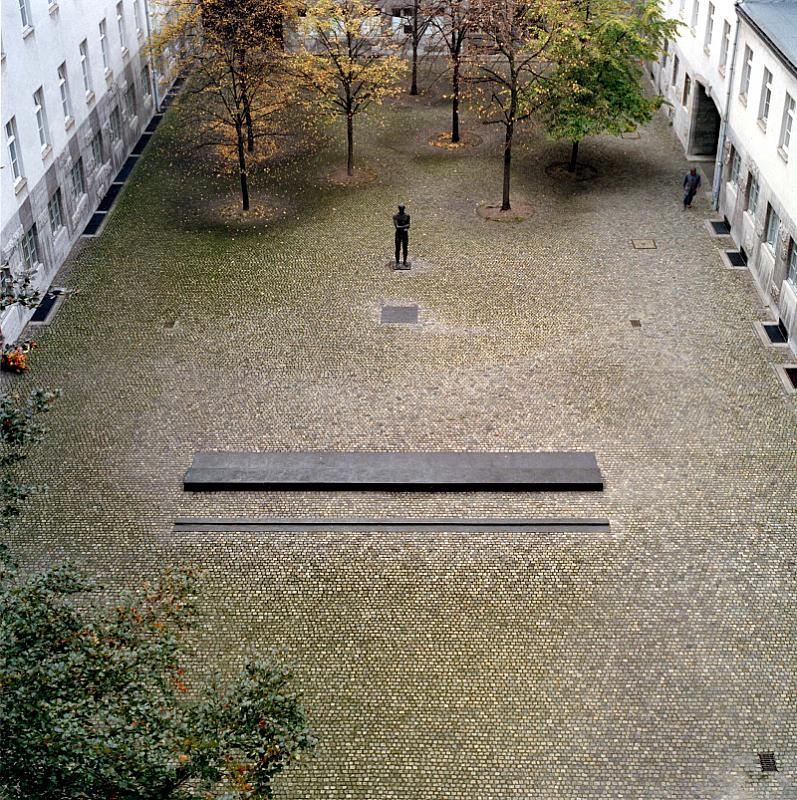
A monument in the Belarusian town of Mogilev (Belarusian: Mahilëŭ) - which is situated close to the Russian border at the banks of the Dnieper River - commemorates the 1,200 murdered patients of the local mental hospital. It was dedicated on July 2, 2009. Einsatzkommando 8 (mobile killing squad) murdered the psychiatric patients between September 1941 and January 1942 in the course of the National Socialist »euthanasia« campaign.
History
The German Wehrmacht occupied Mogilev in July 1941. At the beginning of August 1941, Einsatzkommando 8 (mobile killing squad), which was part of Einsatzgruppe B (mobile killing unit) entered Mogilev under the command of Otto Bradfisch. Shortly after the invasion, German troops arrested Dr. Kliptsan, the Jewish director of the Mogilev mental hospital. The new director, Dr. A.N. Stepanov, was commissioned to make a list of all of the hospital's patients and to classify them as »fit for work« or »unfit for work«. In September 1941, the SS tested a new killing method in the Mogilev mental hospital: nursing personnel led at least five psychiatric patients to a room into which car and lorry exhaust fumes were injected. The patients were asphyxiated with the poisonous gases after suffering mortal agony. This experiment was observed by Arthur Nebe, the commandant of Einsatzgruppe B, and Dr. Albert Widmann, chemist at the Forensics Institute in Berlin. The murder of the patients was also filmed, most probably by Nebe. At the end of September or beginning of October, the first large murder action took place. Einsatzkommando 8 killed over 800 patients by asphyxiating them with exhaust fumes. Jews from the Mogilev ghetto had to bury the corpses in mass graves. At least one further »Aktion« took place in January 1942. The members of Einsatzkommando 8 shot the remaining patients of the mental hospital as well as patients from an agricultural colony for the mentally ill. Around 250 people perished in this »Aktion«. After the building of the mental hospital had been vacated it was converted to a military hospital for the Wehrmacht.
Victims
It is no longer possible to establish the exact number of victims from the Mogilev mental hospital murdered by the SS between September 1941 and January 1942. According to estimates based on eyewitness statements, at least 1,200 people fell victim to the National Socialist »euthanasia« campaign in Mogilev, among them many children. At least 60 of the victims were Jewish. They were subjected to a selection and murdered in the first »Aktion«.
With the outbreak of the Second World War in September 1939 and the Red Army’s invasion of eastern Poland the north-east of the country was annexed to Soviet Belarus. In summer 1941 the whole of Belarus was occupied by German troops. Over the next three years between one in four and one in three residents met a violent death. Almost all of the towns were completely destroyed. The Wehrmacht or SS systematically annihilated around 620 villages together with theor inhabitants, including Chatyn. The largest extermination camp on occupied Soviet territory was located in Maly Trostenets outside the Belarusian capital Minsk. It is now presumed that at least 60,000 German and Belarusian Jews were murdered there. Up to 85,000 Jews are estimated to have died in Minsk and 230,000 in the country as a whole. From 1941, Belarus was at the heart of the Soviet partisan struggle against the German occupation with over a thousand active partisan groups. The Red Army began to recapture the country at the end of 1943 and the German occupation was considered over by summer 1944. The country was largely destroyed, the society shattered and the people traumatised.
Belarus was reincorporated into the Soviet Union in 1944. A large part of the Polish territory annexed in 1939 remained part of the country. National memorial and memory culture in post-war Belarus were dominated by the liberation of the country on 3 July 1944 and the day of victory on 9 May 1945 as the end of a »heroic« struggle in the Great Patriotic War. Memory of the partisan war was also of key importance. The genocide of the Jews was not mentioned directly in the Soviet republics. An obelisk put up at the »Yama«, a pit where mass murders took place in the Minsk ghetto, was therefore an exception in the former Soviet Union. It was erected as early as 1946 and for decades was the sole memorial with a Yiddish inscription and a direct reference to the murdered Jews. The memorial site at Khatyn is also unusual. Here,153 people were burnt alive in March 1943. The memorial site, established in 1969, is notable for its simplicity, its concentration on the human dimension of the plight of the victims amidst the horrors of war and the absence of monumental features otherwise common in the former Soviet Union.
After Belarus claimed independence in 1991 the search began for an independent national identity. The number of victims plays a decisive role, especially those killed during the Second World War. However, there is consciously no distinction drawn between the territorial situation of the country pre- and post-1939. Both the crimes of the Stalinist regime and the Holocaust have come to the fore but the nature of the state has prevented public discussion of these aspects. State remembrance continues to be dominated by the war in the years 1941 to 1944. Its main symbol is the monumental new building of the Museum of the History of the Great Patriotic War, opened in 2014. In the meantime, however, the association of Jewish communities in Belarus has established a series of memorials to the victims of mass murder. Since the early 1990s, several German towns have also put up stelae in Minsk to remember the Jews deported and murdered there. The Berlin stele, financed by the federal state of Berlin and the Foundation Memorial to the Murdered Jews of Europe, was inaugurated in an official ceremony on June 25, 2009. There is also movement with regards to a fitting development of the Maly Trostenets area: In 2015, a memorial complex was inaugurated at the site. A second segment which was co-financed by Germany was opened in 2018 by the presidents of Belarus, Austria and Germany. Germany has also pledged to finance the renovation of the Historical Workshop’s historical building on the former territory of the Minsk ghetto, documenting the fates of its victims.
Remembrance
The memorial was dedicated on July 2, 2009, on the initiative of the Psychiatric University Clinic in Heidelberg and the Psychiatric Regional Hospital in Mogilev. It was designed by Mogilev artist Alexander Minkov. The memorial in Mogilev was the first memorial in the former Soviet Union commemorating the murders of psychiatric patients under German occupation.