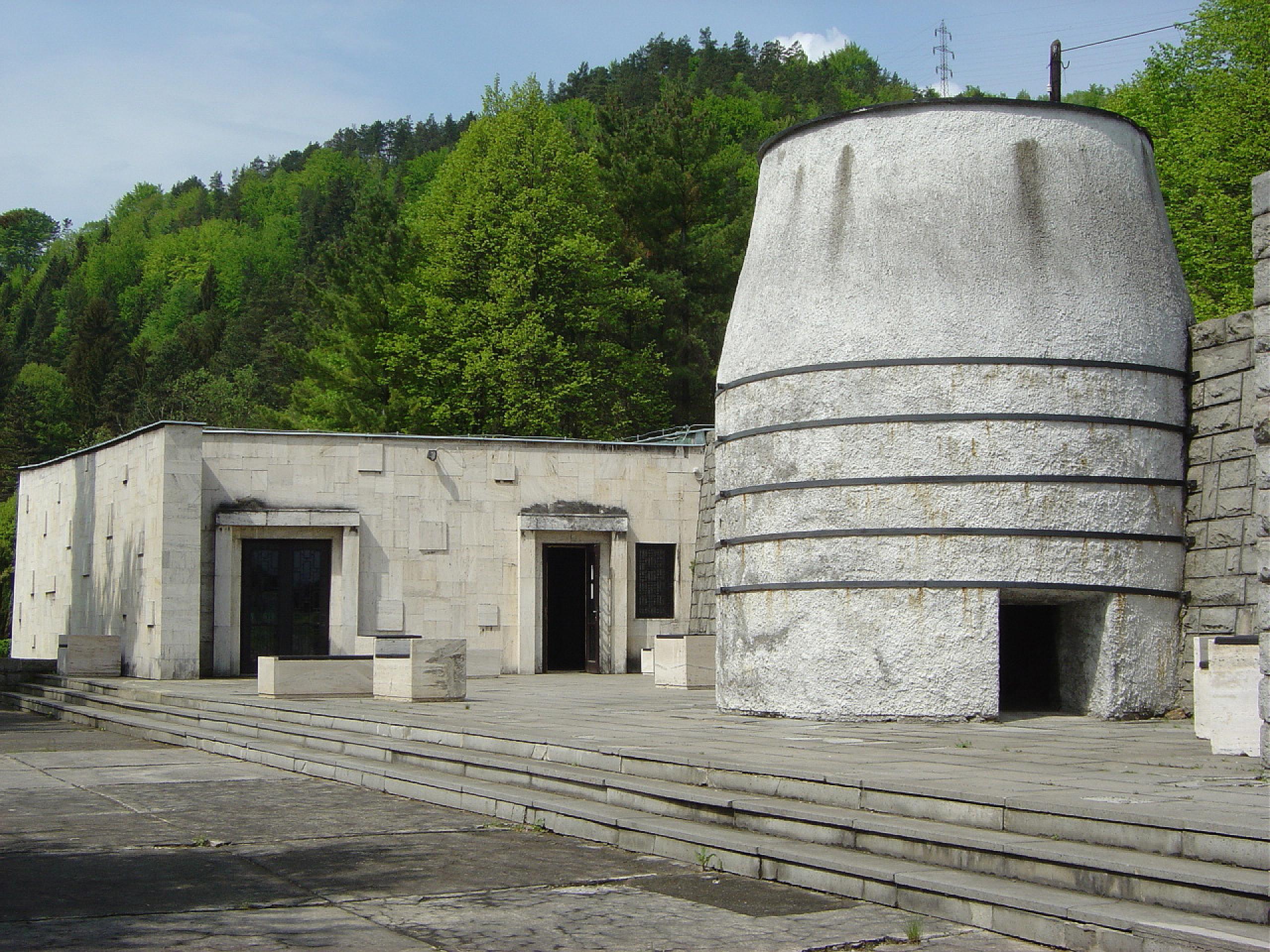
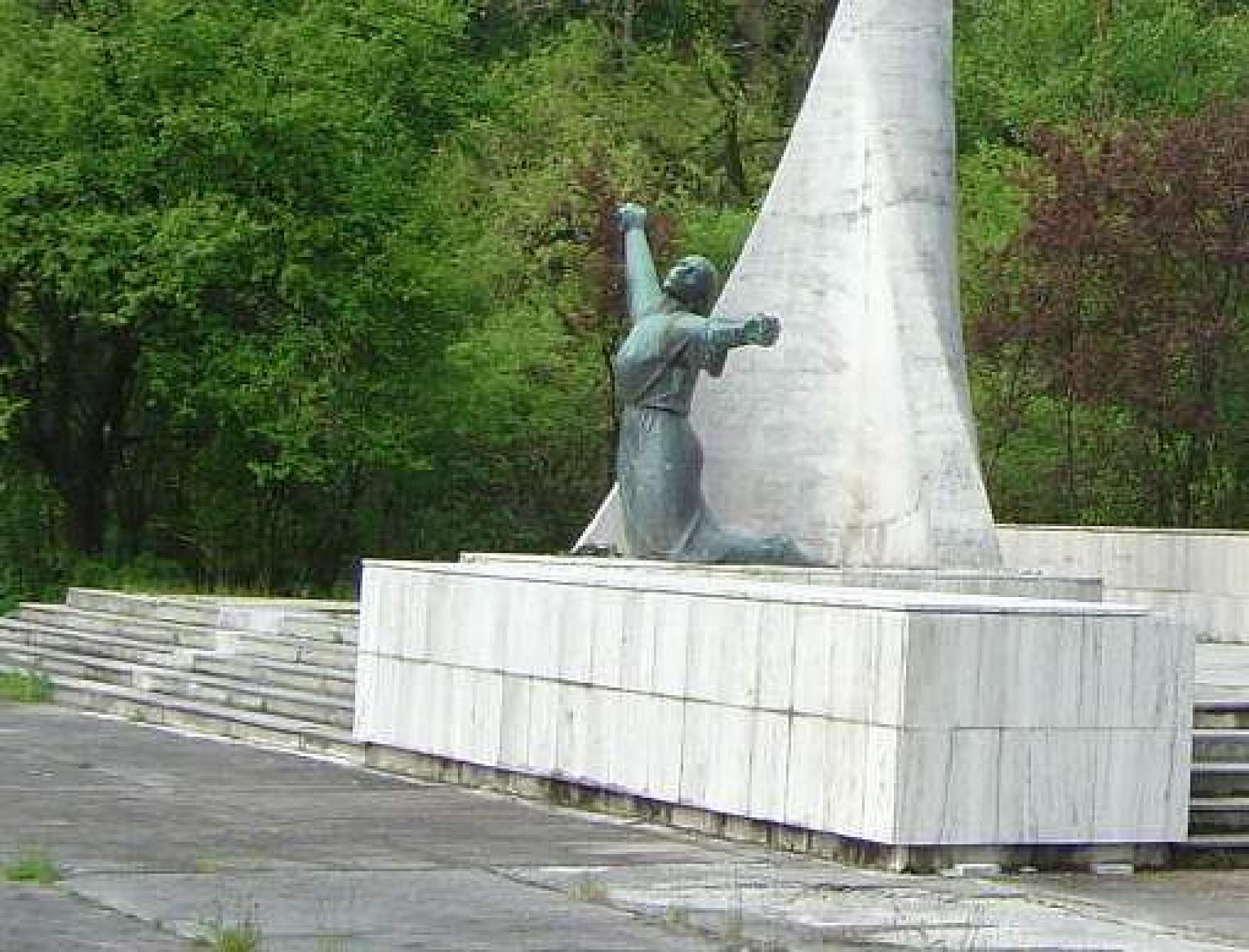
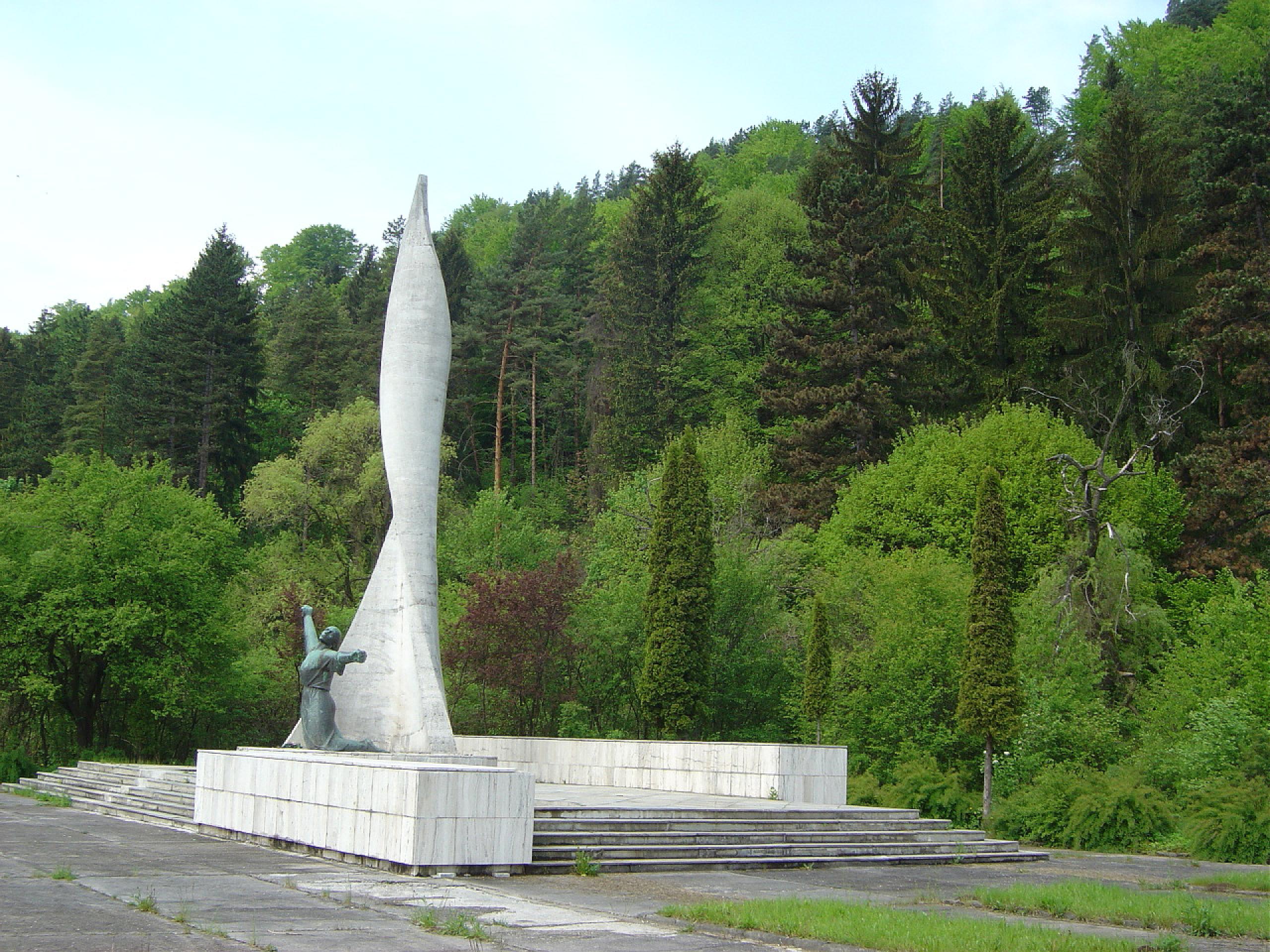
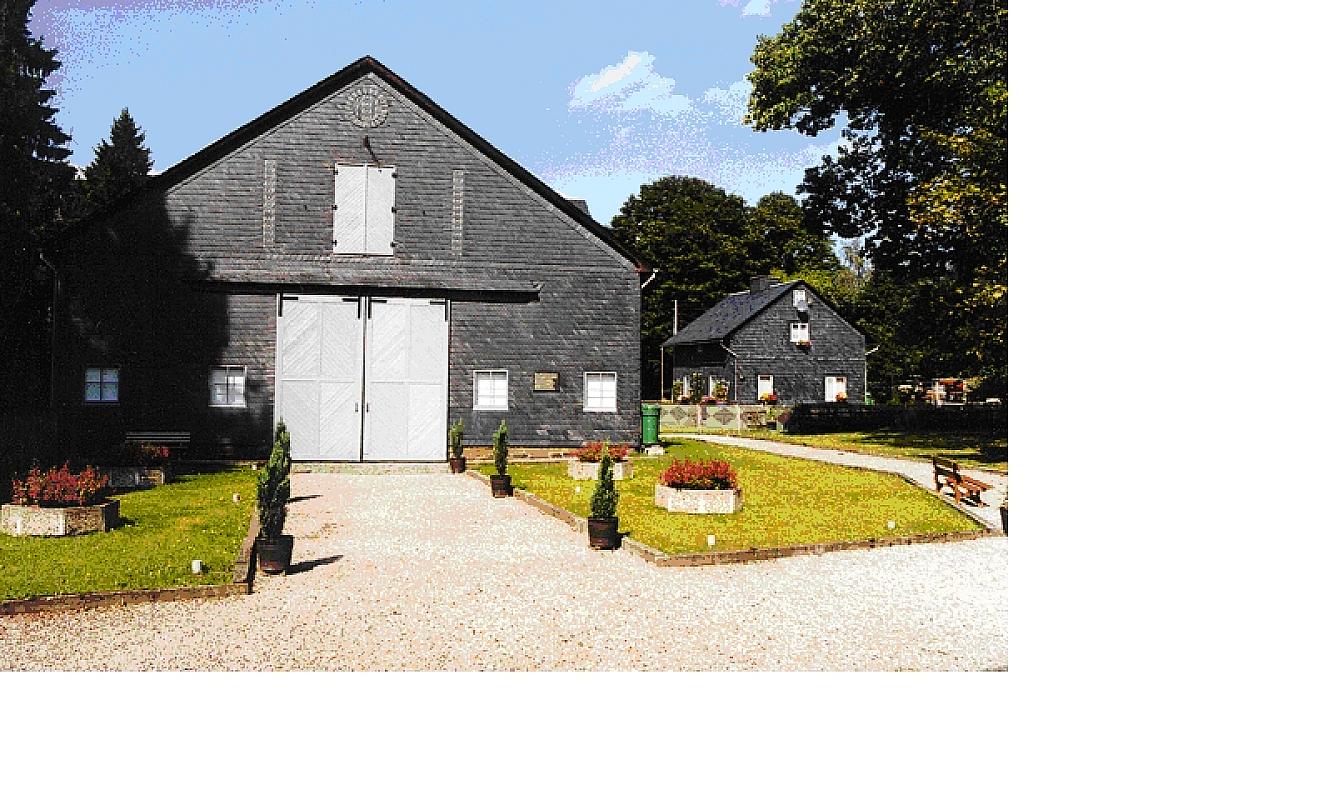
A monument and a documentation centre in the town of Nemecká, not far from Banská Bystrica, commemorate those killed in the aftermath of the suppression of the Slovak National Uprising.
History
The Slovak National Uprising began on August 29, 1944. Launched in the central Slovak town of Banská Bystrica, its aim was to overthrow the dictatorial regime of Jozef Tiso. Resistance fighters from within the Slovak army and partisans jointly fought both against the troops loyal to the regime and the advancing German Wehrmacht and SS units. The Uprising ended when the rebel forces were defeated on October 27, 1944. Between January 5 and 11, 1945, members of Einsatzkommando 14 (subordinate to SS-Einsatzgruppe H) and members of the Slovak Hlinka Guard conducted a series of mass shootings in the vicinity of Nemecká. They murdered up to 900 people at the local lime works. The victims had to kneel down in front of a burning lime kiln after which they were shot in the back of the neck. Their bodies were burned in the lime kilns and the ashes scattered into the Hron river. Members of the Einsatzkommando and the Hlinka Guard aimed their retaliation measures first and foremost against supporters of the uprising, partisans, Jews and Sinti and Roma.
Victims
The exact number of people murdered in Nemecká in the aftermath of the Slovak National Uprising can no longer be accurately established - historians estimate the number at between 500 and 900. It is known that there were at least 26 insurgents among those murdered, as well as 205 Jews, Sinti and Roma. Among the murdered resistance fighters were also Frenchmen, Americans, Soviet citizens and a Romanian woman. The Hlinka Guard and SS-Einsatzgruppen members murdered a total of about 5,300 people, including 1,000 Jews, after the suppression of the Slovak National Uprising.
Following the collapse of the Habsburg Monarchy in 1918, Slovakia and the Czech regions of Bohemia, Moravia and Czech Silesia merged to form Czechoslovakia. By spring 1939, Czechoslovakia had been broken up as the result of a number of campaigns by neighbouring Nazi Germany. In autumn 1938 Slovakia became an autonomous state with a government of its own but lost border territories to Hungary at around the same time. In March 1939 it declared independence and became a satellite state of the Third Reich led by the nationalist Hlinka party and President Jozef Tiso (1887–1947), a Catholic priest. The military arm of the party served as the police force and took action against Jews, Czechs, the political left and other opponents. The regime introduced a forced labour system that also affected many Roma. In autumn 1941, the government in Bratislava became the first Nazi-allied administration to vote in favour of the German plan to deport Jews to Eastern Europe. In 1942 alone 60,000 Jews were deported from Slovakia to German extermination camps. A total of around 75,000 Slovakian Jews died in the Holocaust. The imminent arrival of the Red Army led to a national rebellion against the regime of the Hlinka party in the late summer of 1944. The German army and SS units crushed this rebellion, with the loss of some 20,000 lives.
After the war Slovakia again became part of Czechoslovakia, which was a communist state from 1948. The national rebellion was the main feature of collective memory. It was depicted as an act of resistance that had allowed a socialist society to emerge. In 1947 a site of memory was established at Banská Bystrica, which had been at the centre of the national rebellion. The site was extended on a number of occasions. Responsibility for collaboration with Germany was attributed solely to supporters of the Hlinka party. 1993 saw the Czech and Slovak parts of the country split into two separate republics. Slovakia had no state tradition of its own beyond the period 1939 to 1945. This is apparent in the culture of remembrance in the country today. Both socialists and civilian forces now refer to the Slovakian national rebellion. They associate it with the hope for a democratic state based on western values, a hope that was bitterly disappointed after 1948. Nationalist groups in Slovakia pursue a different approach. They identify themselves with the state’s independence from 1939–1945, view the rebellion that led to the occupation of the country as a betrayal and honour Tiso. These groups are unwilling to remember the deported Jews. Some view Slovakian collaboration as the result of having to relent to pressure from Germany to avoid endangering the country.
Liberal intellectuals aim to defuse these tendencies, referring to Slovakian involvement in the deportations and the persecution of the Roma. Small plaques to the persecuted and murdered Jews have been put up at a number of locations since the 1990s. However, some of these are in the region occupied by Hungary after 1938, from which German SS units deported Jews following the invasion of the Wehrmacht in March 1944. The most important site of memory to the Jews deported from Slovakia is the Holocaust Museum which was opened on the premises of the former forced labour and transit camp Sered’ in 2016.
Remembrance
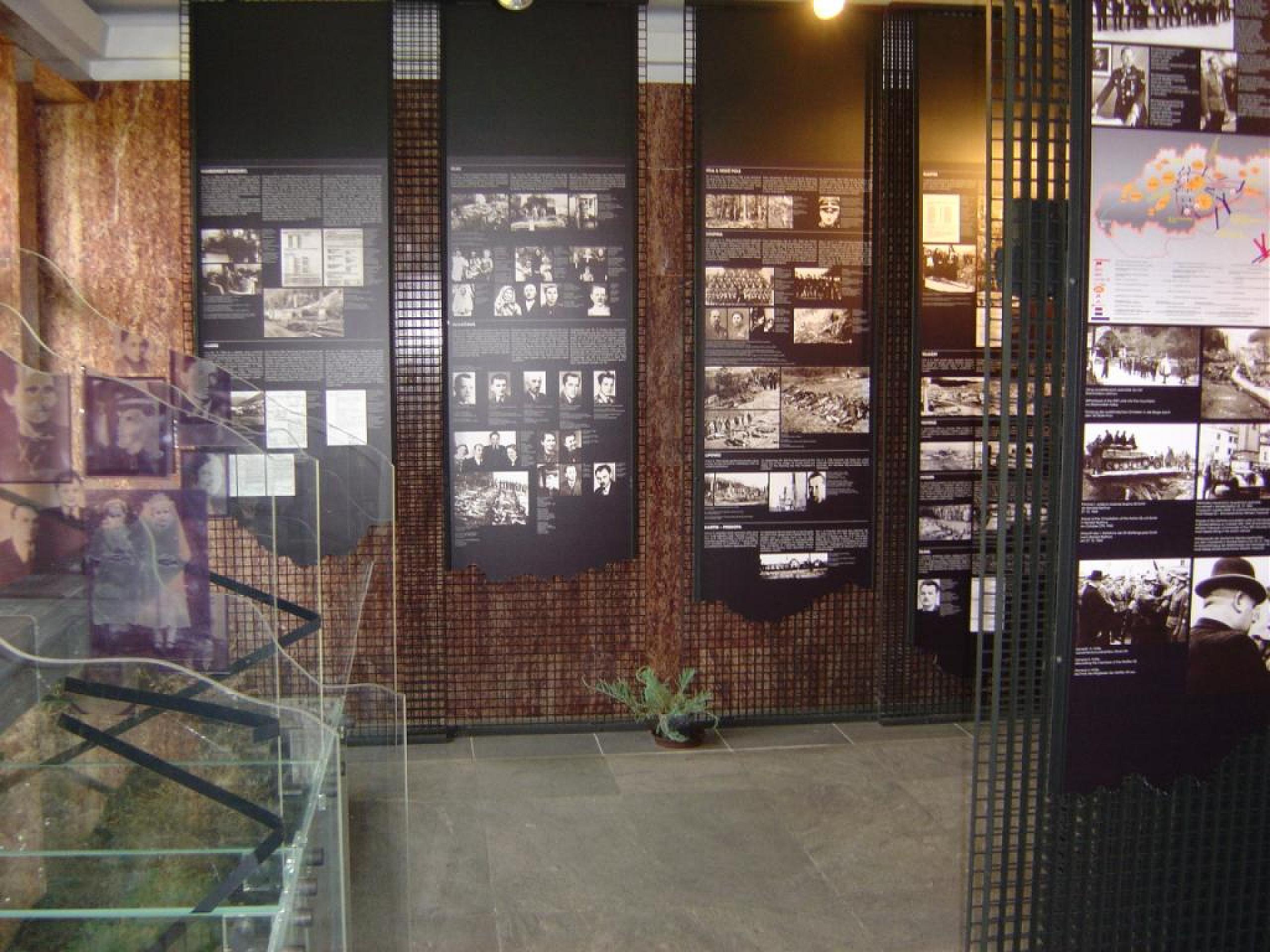
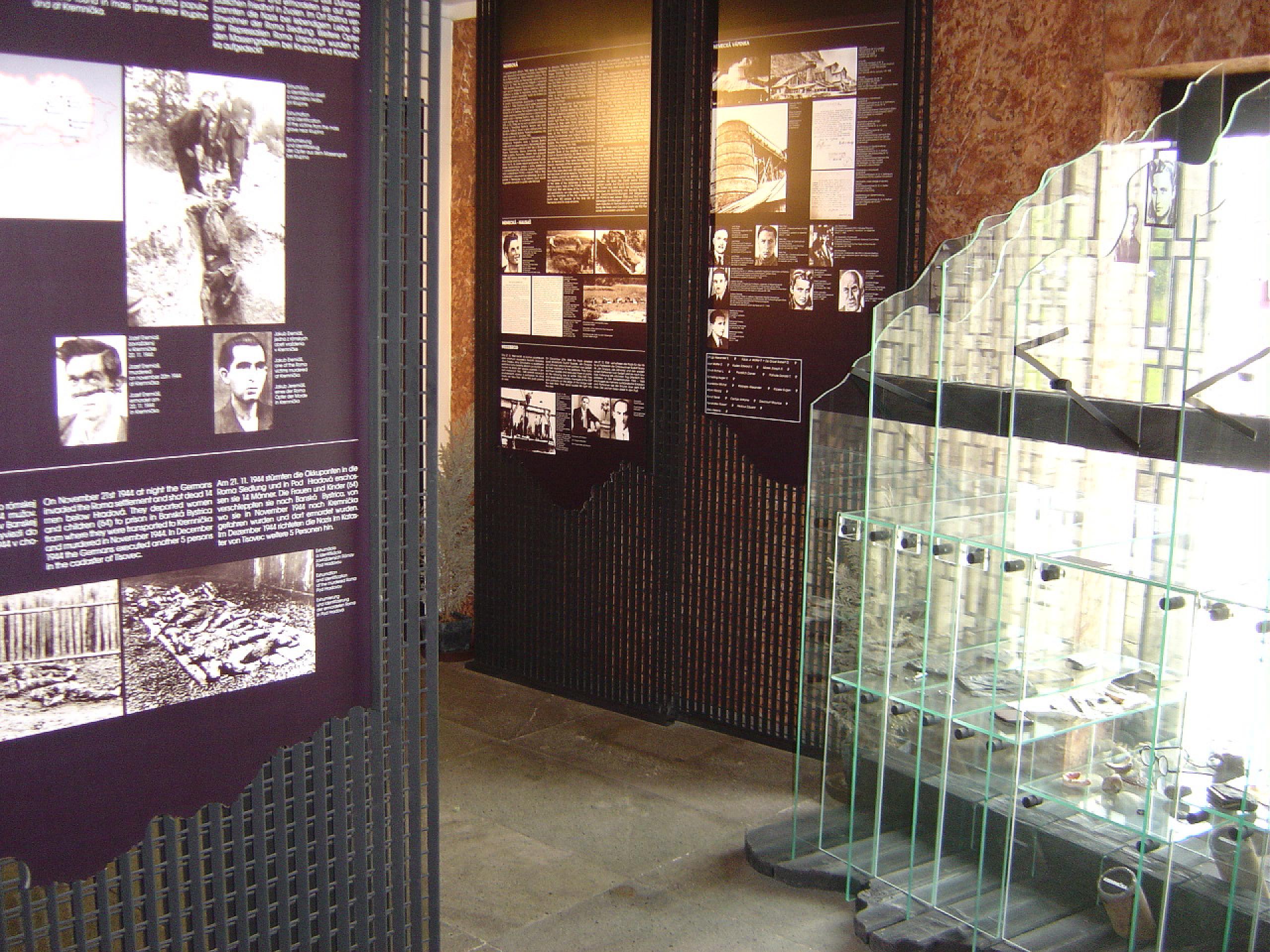
A monument designed by Klára Pataki was unveiled in 1959. In 1962, a memorial centre on the Slovak National Uprising and the mass murder following its suppression was opened. The memorial site has been administered by the Museum of the Slovak National Uprising in Banská Bystrica since 2002.
Possibilities
Permanent exhibition, monument
Open
The monument is accessible at all times.
Memorial centre: Tuesday to Sunday 9 a.m. to 4 p.m.