Memorial to the Victims of National Socialist Tyranny on Morzinplatz
Mahnmal für die Opfer der NS-Gewaltherrschaft am Morzinplatz
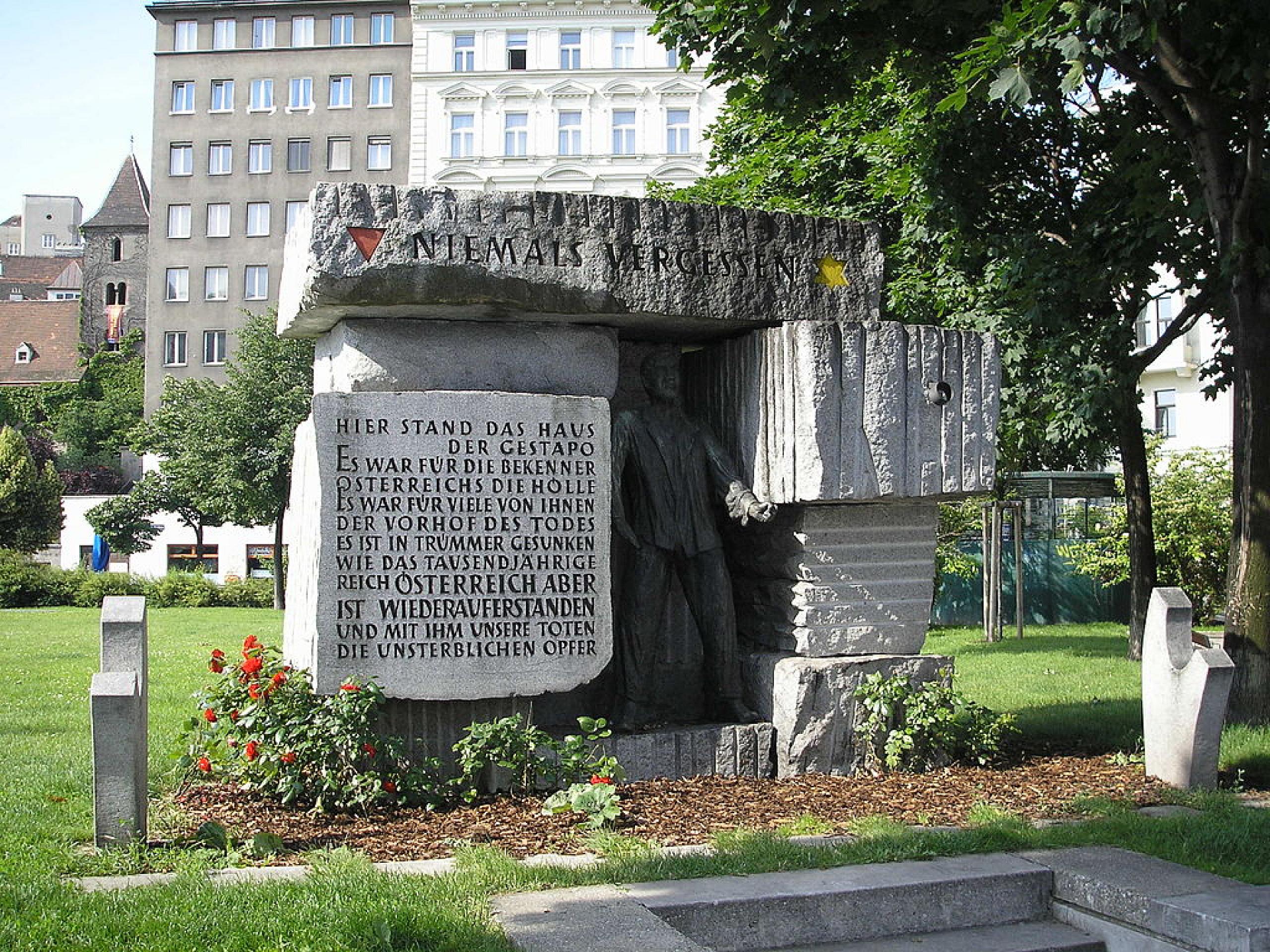
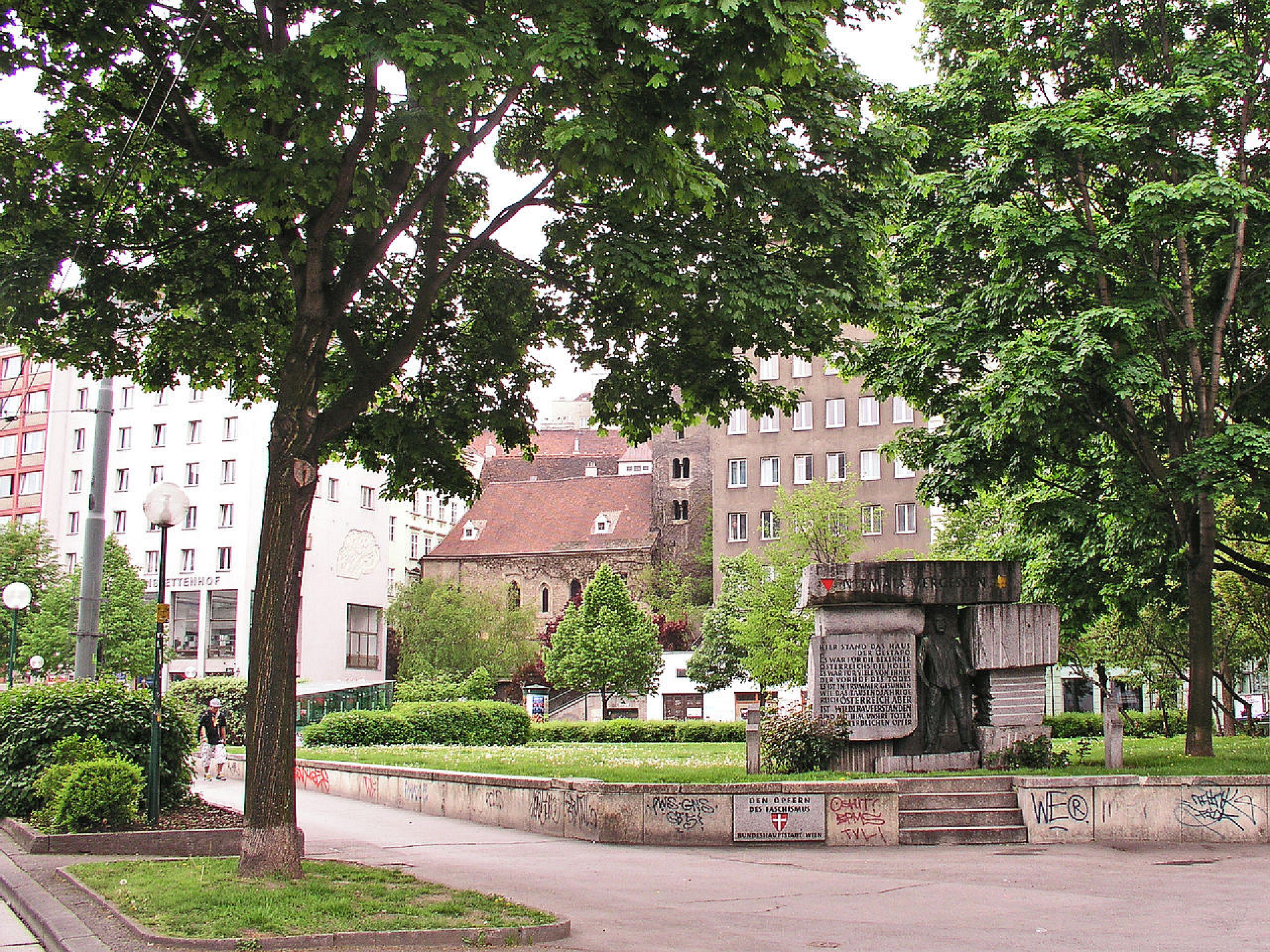
Since 1951, a memorial stone on the site of the former Gestapo headquarters commemorates those who were imprisoned here. In 1985, the City of Vienna set up an official monument here, this time dedicated to all victims of National Socialist tyranny.
History
Following Austria's »Anschluss« (»annexation«) to the German Reich, the Gestapo set up headquarters in Vienna and branch offices in Innsbruck, Salzburg, Klagenfurt, Linz, Eisenstadt and Graz. These offices persecuted political opponents in Austria and implemented the anti-Jewish laws of the National Socialist state.
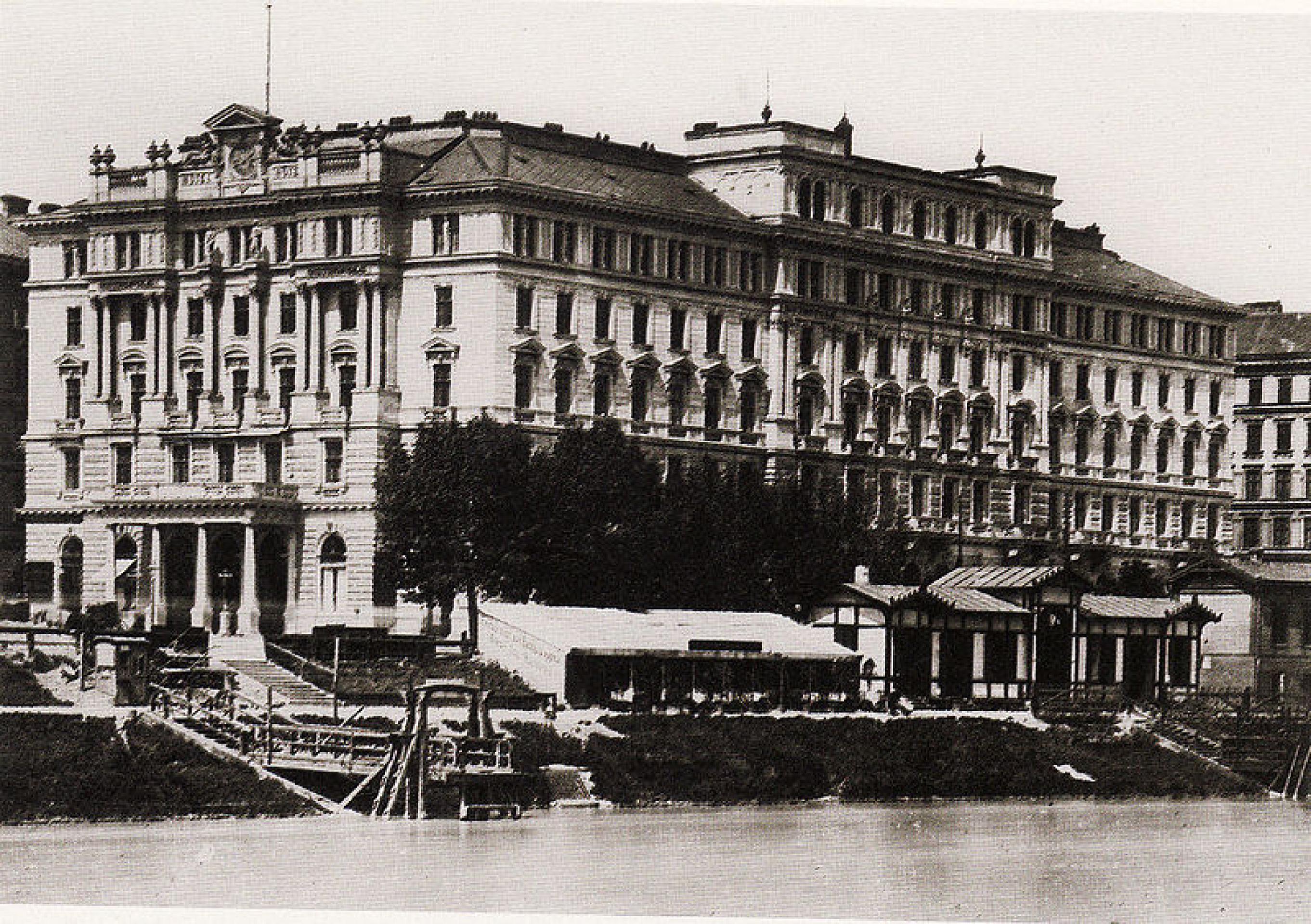
The Vienna headquarters were established on Morzinplatz in the former »Hotel Metropol« and were headed by Franz Josef Huber. In 1939, the Vienna headquarters had over 840 staff members, making it larger than the Berlin Gestapo office. Between 1938 and 1945, Viennese personnel took about 50,000 people into »protective custody«. The inmates were abused and tortured in the basement of the building, which served as a prison. Many of the prisoners were then deported to concentration camps. The Vienna headquarters also participated in the deportation of about 45,000 Viennese Jews to extermination camps in occupied Poland.
In 1945, bomb impacts destroyed the Gestapo building on Morzinplatz.
Victims
According to its inscription the memorial is dedicated to »the victims of fascism«. An inscription on the monument refers to the victims of the Vienna Gestapo, which had its headquarters in direct vicinity of the monument on Morzinplatz. About 50,000 people were temporarily in »protective custody«: communists, social democrats, Jews, monarchists, members of various religious groups, »asocials«, criminalised people and homosexuals.
Remembrance
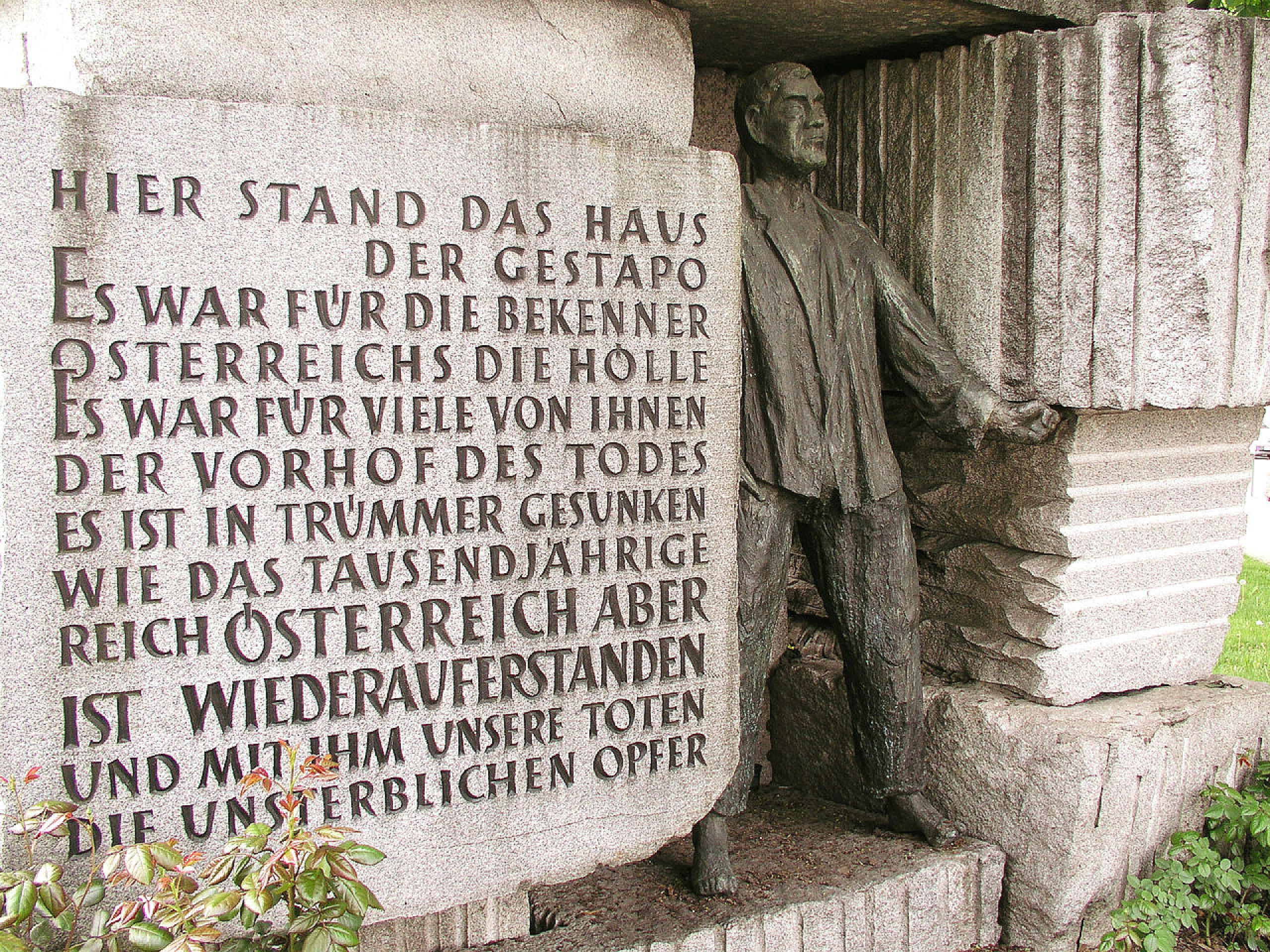
On April 11, 1951, the Concentration Camp Society In Memory of Victims of the Gestapo set up a memorial with the following inscription: »Never forget – Here stood the house of the Gestapo. To Austria's faithful it was hell. For many of them it was the forecourt of death. It sank into ruins like the Thousand Year Reich. Yet Austria rose up again and with her our dead, the immortal martyrs«.
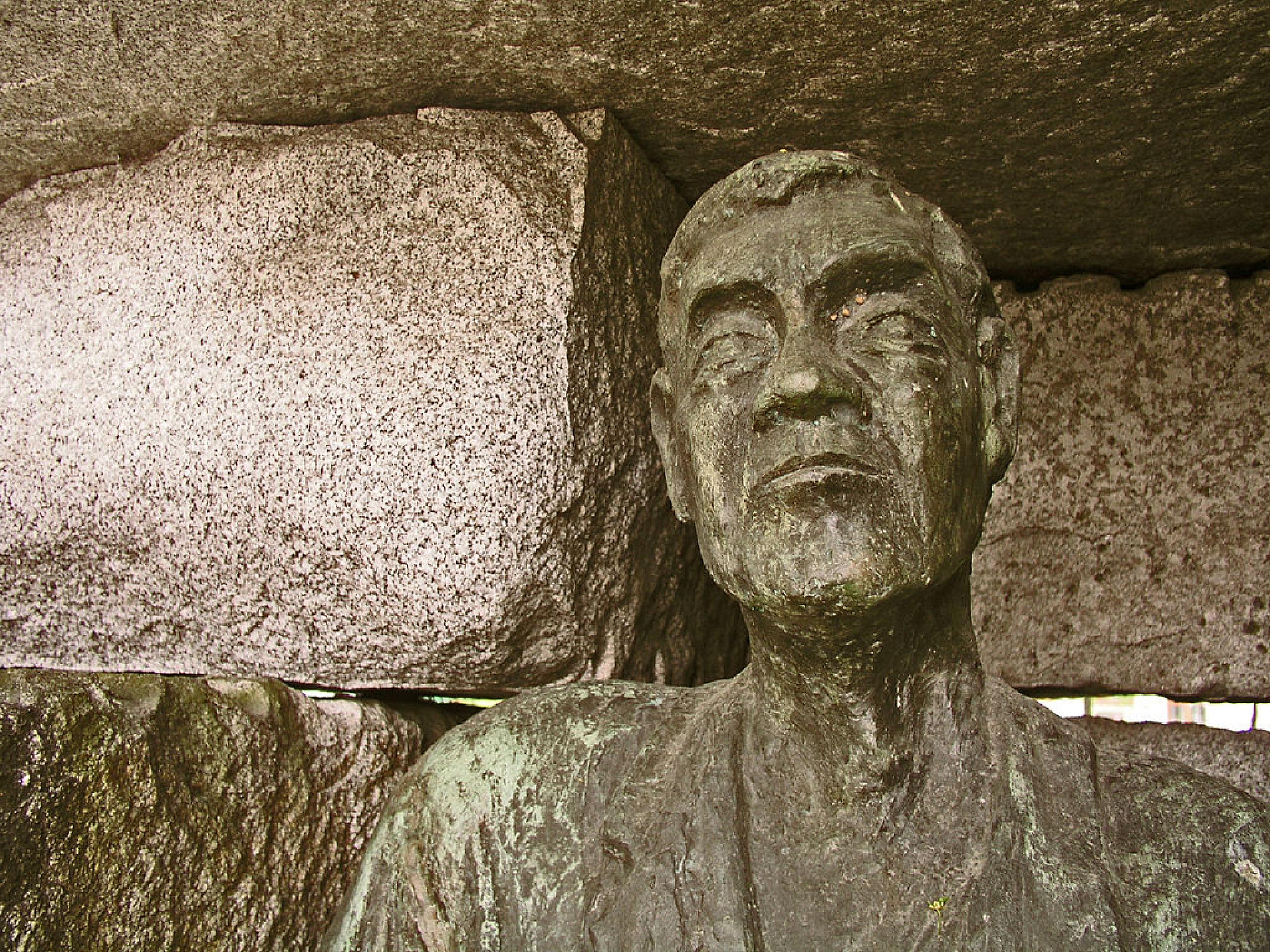
In the 1980s, the City of Vienna funded an official monument which replaced the memorial stone. It presents a bronze figure, which is surrounded by granite stones from the former concentration camp Mauthausen. The inscription from the previous memorial was preserved. The monument was inaugurated on November 1, 1985, by Viennese mayor Helmut Zilk and the working group of Concentration Camp Societies and Austrian Resistance Fighters.
In 1968, the »Leopold Figl-Hof« was built on the premises of the former Gestapo headquarters. Today, located in the basement of the building is a commemorative site dedicated to the victims and the history of the site between 1938 and 1945.
The monument on Morzinplatz specifically points to two victim groups under National Socialism: On the upper stone slab a red triangle, which concentration camp inmates were marked with, commemorates political prisoners, while a yellow star symbolises the Jewish victims. Since the end of the 1990s, several initiatives have lobbied for the mention of other victims groups on the monument.
In 2005, the City of Vienna decided to construct a »Monument to the Homosexual and Transgender Victims of National Socialism in Vienna« on Morzinplatz, thus creating the first public memorial for this victim group in Vienna. The winner of the competition in 2006 was the »The Pink Square« concept by artist Hans Kupelweiser. However, the plans have not been realised.
Open
The memorial is accessible at all times.
Contact
http://www.nachkriegsjustiz.at
info@nachkriegsjustiz.at
+43 (0)1 534 369 031 5
Morzinplatz
1010 Wien