Memorial to the victims of the German occupation in Yanushpol (Ivanopil)
Місце пам’яті жертвам німецької окупації в Янушполі
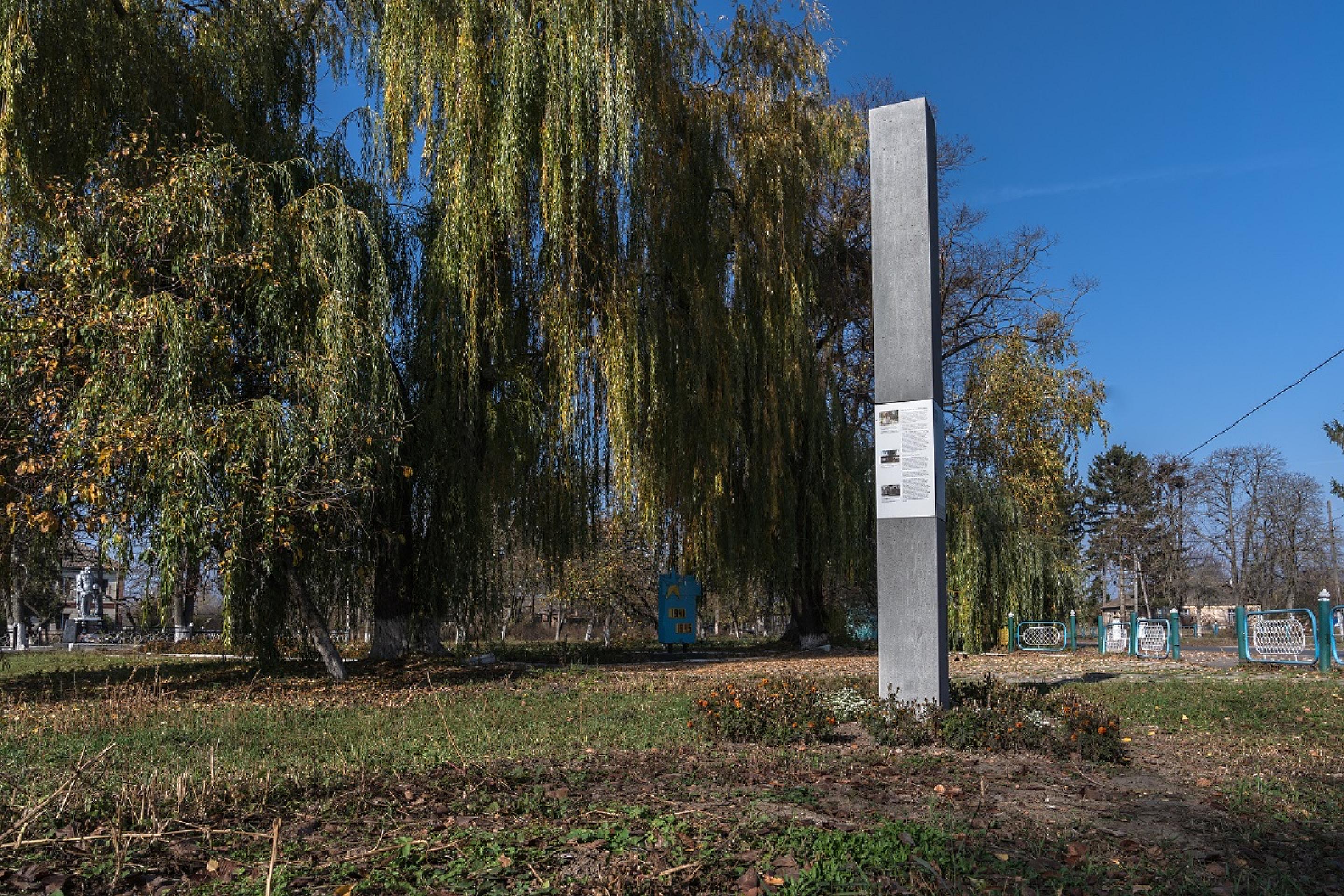
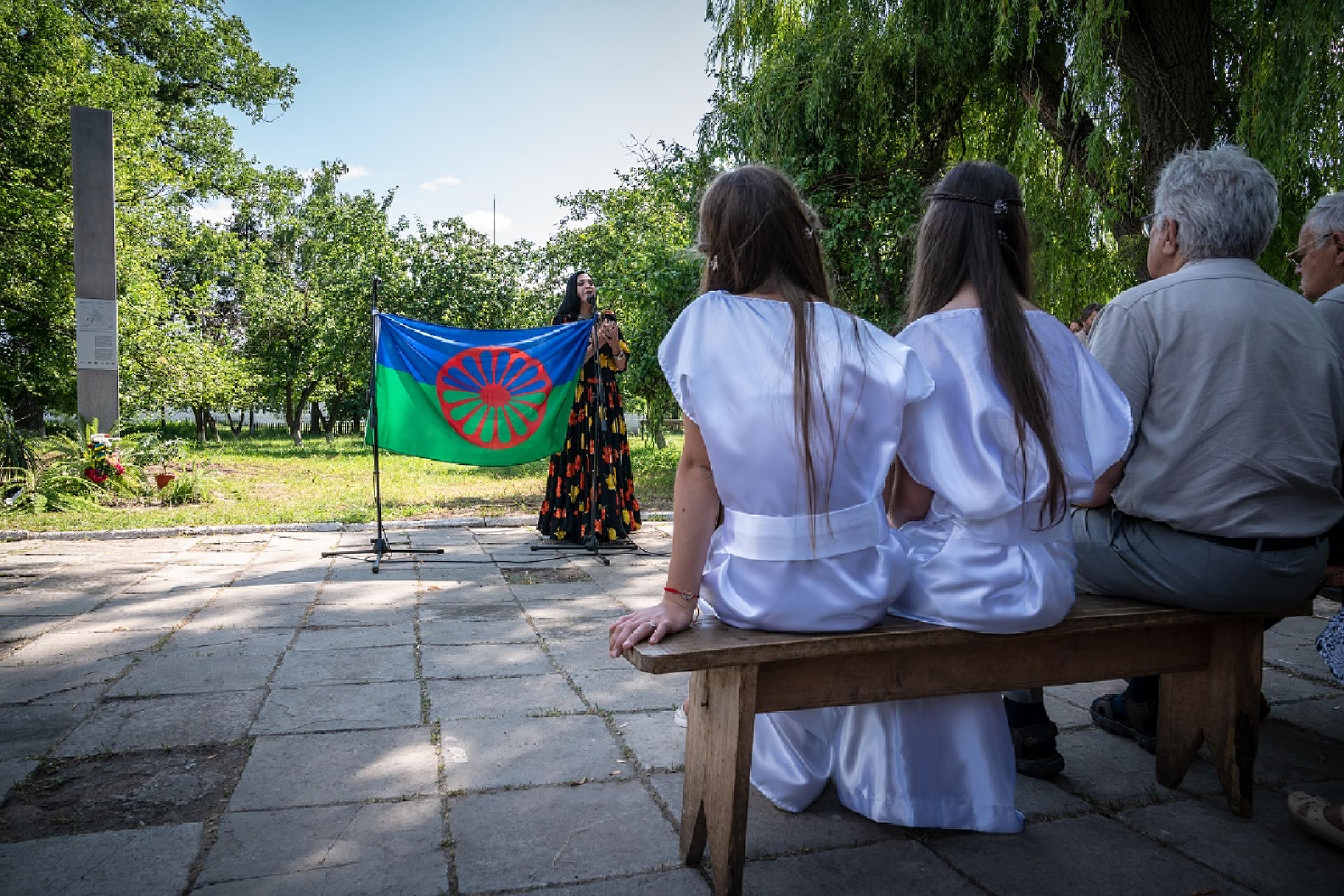
In Ivanopil (until 1946 Yanushpol) Jews, political opponents, Soviet POWs and a larger group of Roma had been murdered under the German occupation. Since 2019 an information stele is dedicated to all the victims.
History
Ivanopil (until 1946: Yanushpol, Ukrainian: Yanushpil) is an urban-style settlement about 60 kilometers southeast of Zhytomyr. For centuries Ukrainians, Poles, Jews and Russians lived together here. At the end of the 19th century about one fifth of the inhabitants of the village were Jews. In the 1920s and 1930s, the Soviet authorities closed Jewish prayer houses and schools, and many Jews moved away from the countryside. In 1939 approximately 700 Jews lived in Yanushpol.
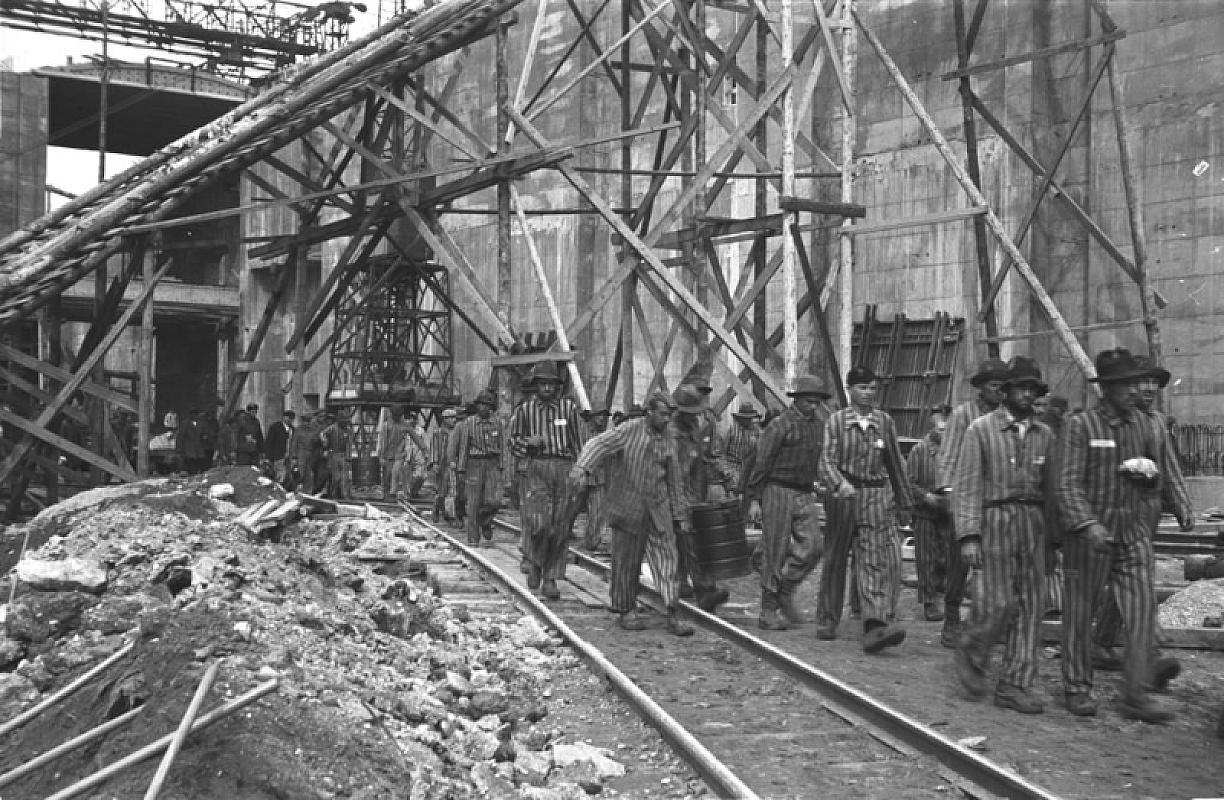
The German Wehrmacht occupied Yanushpol at the beginning of July 1941 and on August 20, members of Einsatzgruppe (mobile killing unit) C shot and killed a group of 15 Jews. The rest of the Jewish population had to move to a ghetto. Jews from the surrounding villages were also moved into this ghetto. The living conditions were very cramped and favoured the outbreak of diseases. There was not enough food, yet Jews had to conduct forced labour.
In May 1942, 80 Jews were transferred from the ghetto in Yanushpol to the Lisaya Gora camp in Berdychiv, where later they were all murdered. On May 29, 1942 the ghetto was dissolved and its inhabitants were murdered just outside the village. German gendarmes, local policemen and an SS unit stationed in Berdychiv took part in the murder operation.
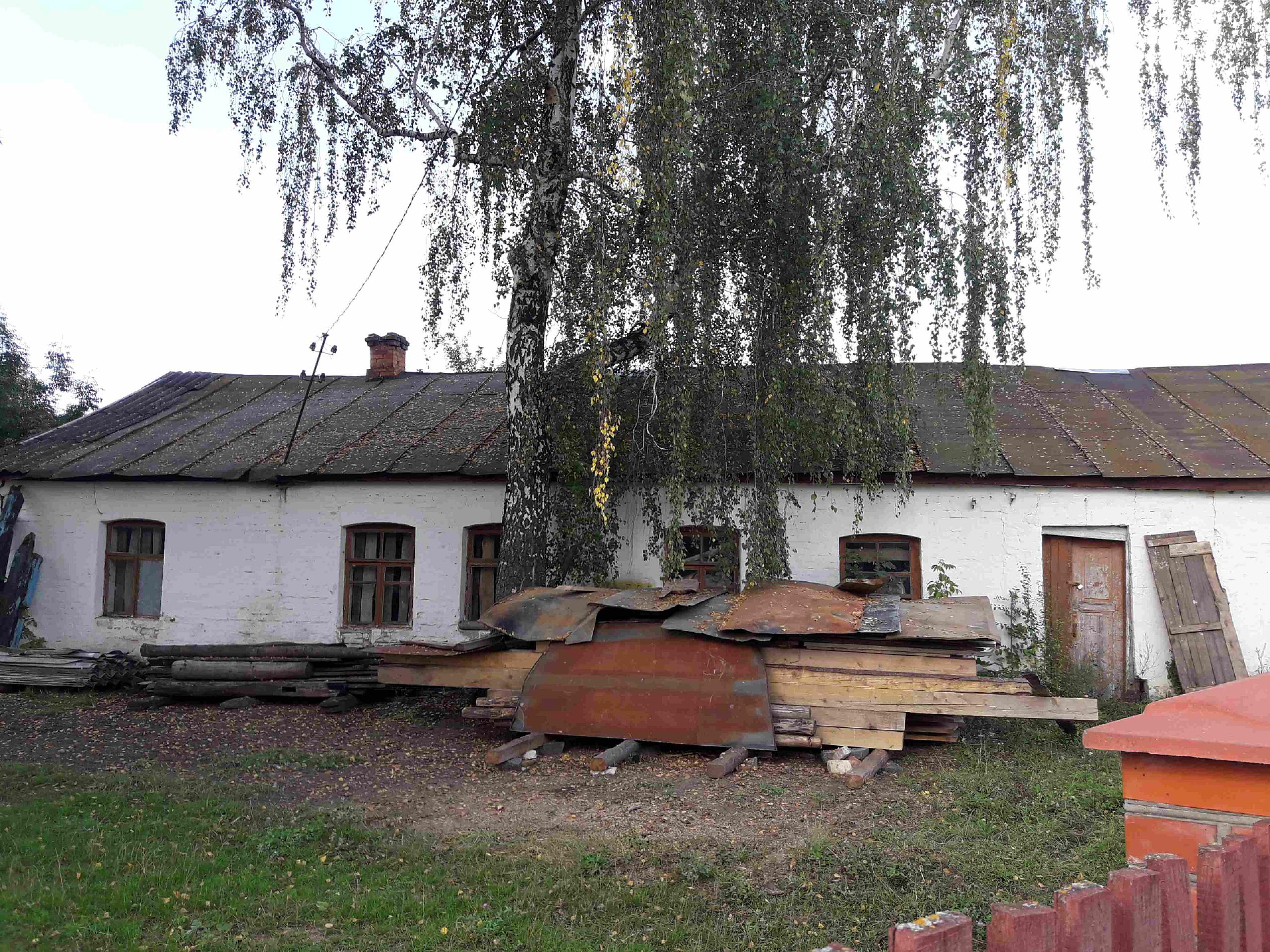
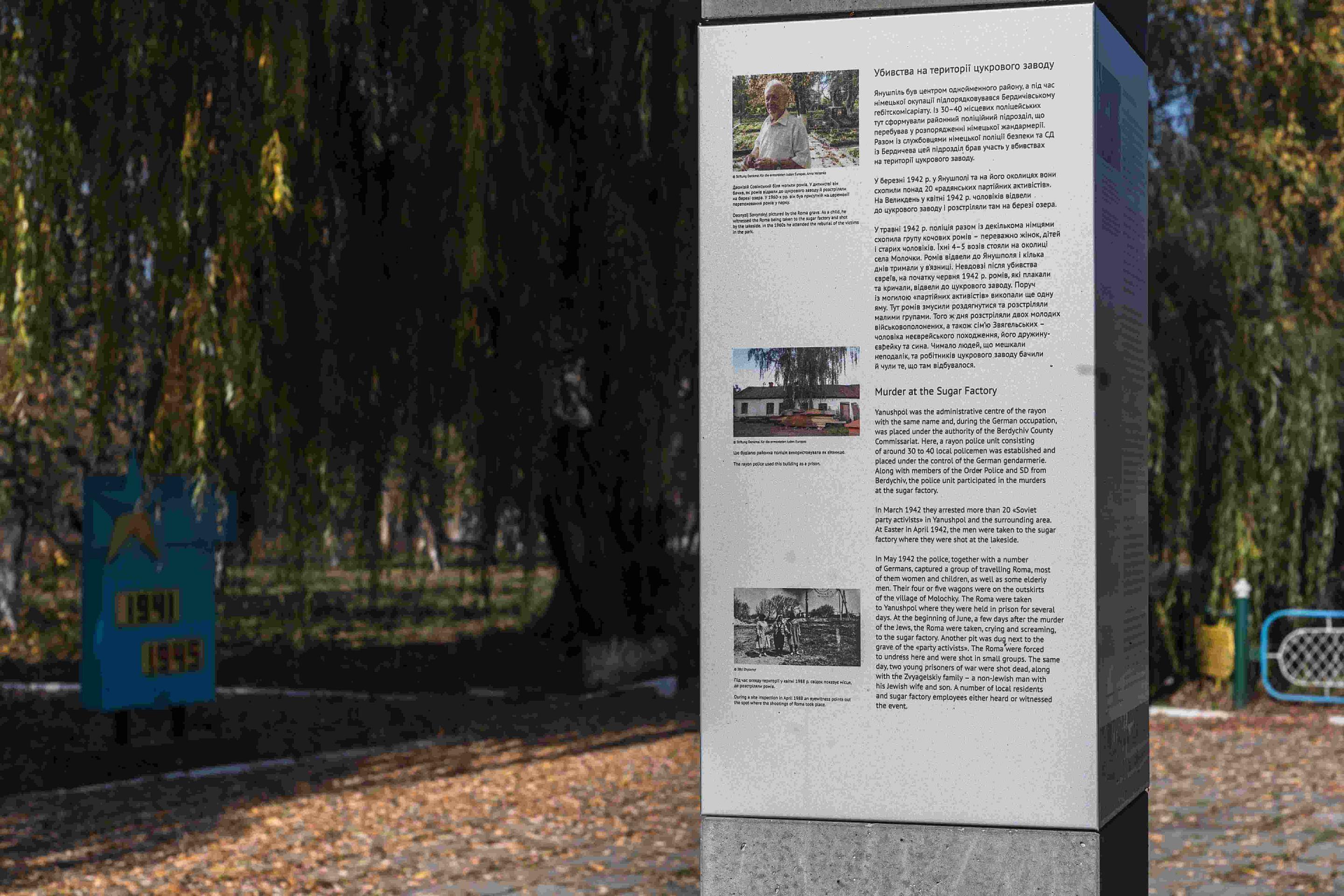
In early June 1942 a group of Roma was murdered in Yanushpol. The travelling group was apprehended in May near a nearby village and the families were initially imprisoned in the Yanushpol prison. A few days later they were shot dead on the premises of a sugar factory. During the German occupation, actual or supposed political opponents and Soviet prisoners of war were shot at the same place on numerous occasions.
Victims
Except for a few survivors, all 700 Jewish inhabitants of Yanushpol were murdered, most of them on May 29, 1942 and it is possible that up to 400 other Jews who were not locals were also murdered in Yanushpol. In June 1942 German units shot dozens of Roma on the site of the sugar factory. Political opponents as well as Soviet prisoners of war were also shot here.
Remembrance
After the liberation of Yanushpol in 1944 a Soviet commission of inquiry investigated in the village. In the post-war years some local collaborators of the occupying forces were put on trial. One of the cases – against a »Volksdeutschen« (ethnic German) named Hans (Ivan) Kampf, who worked for the Germans during the war as a policeman and translator – was reopened in 1987. The trial ended in 1989 with the execution of the accused.
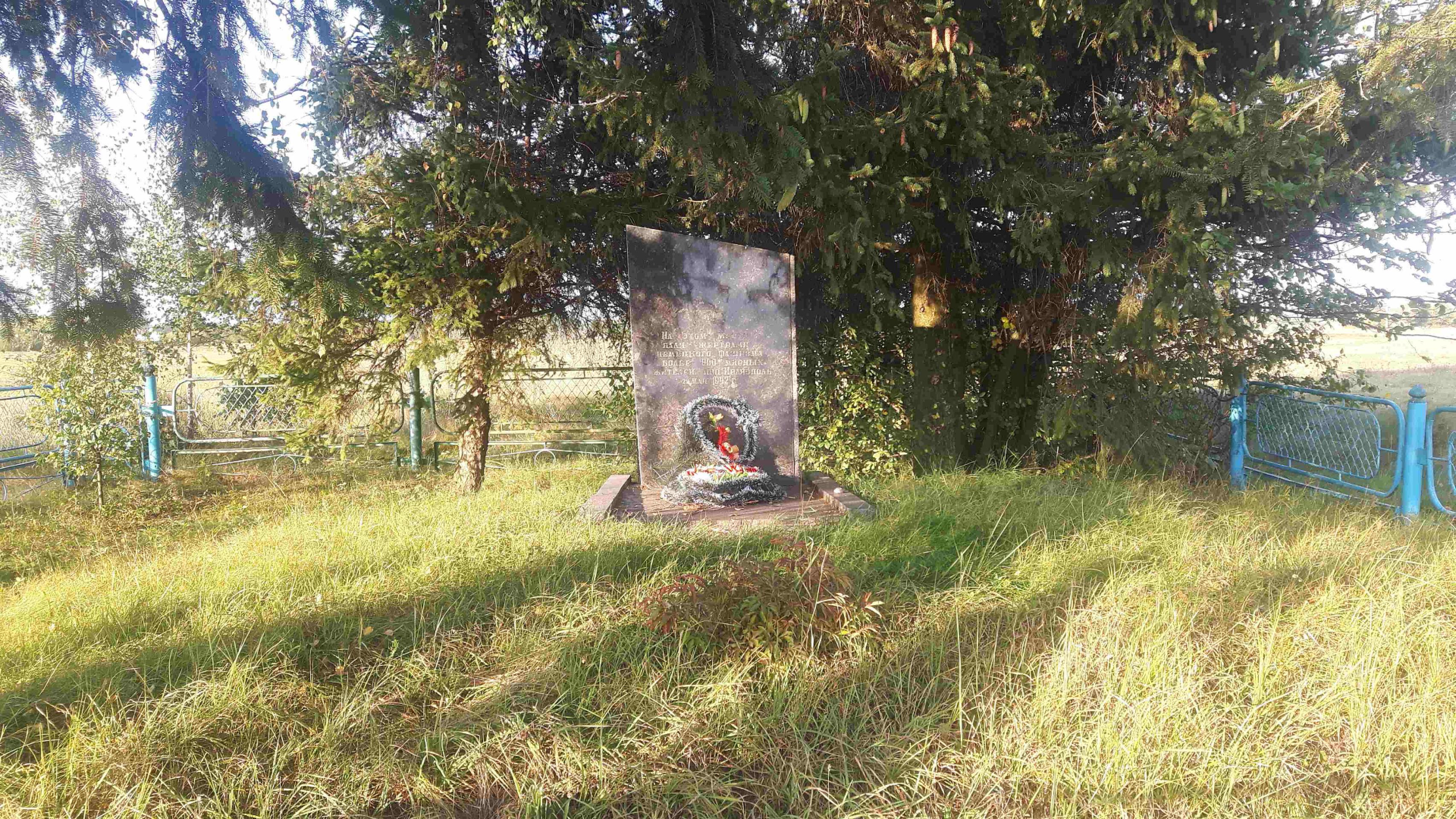
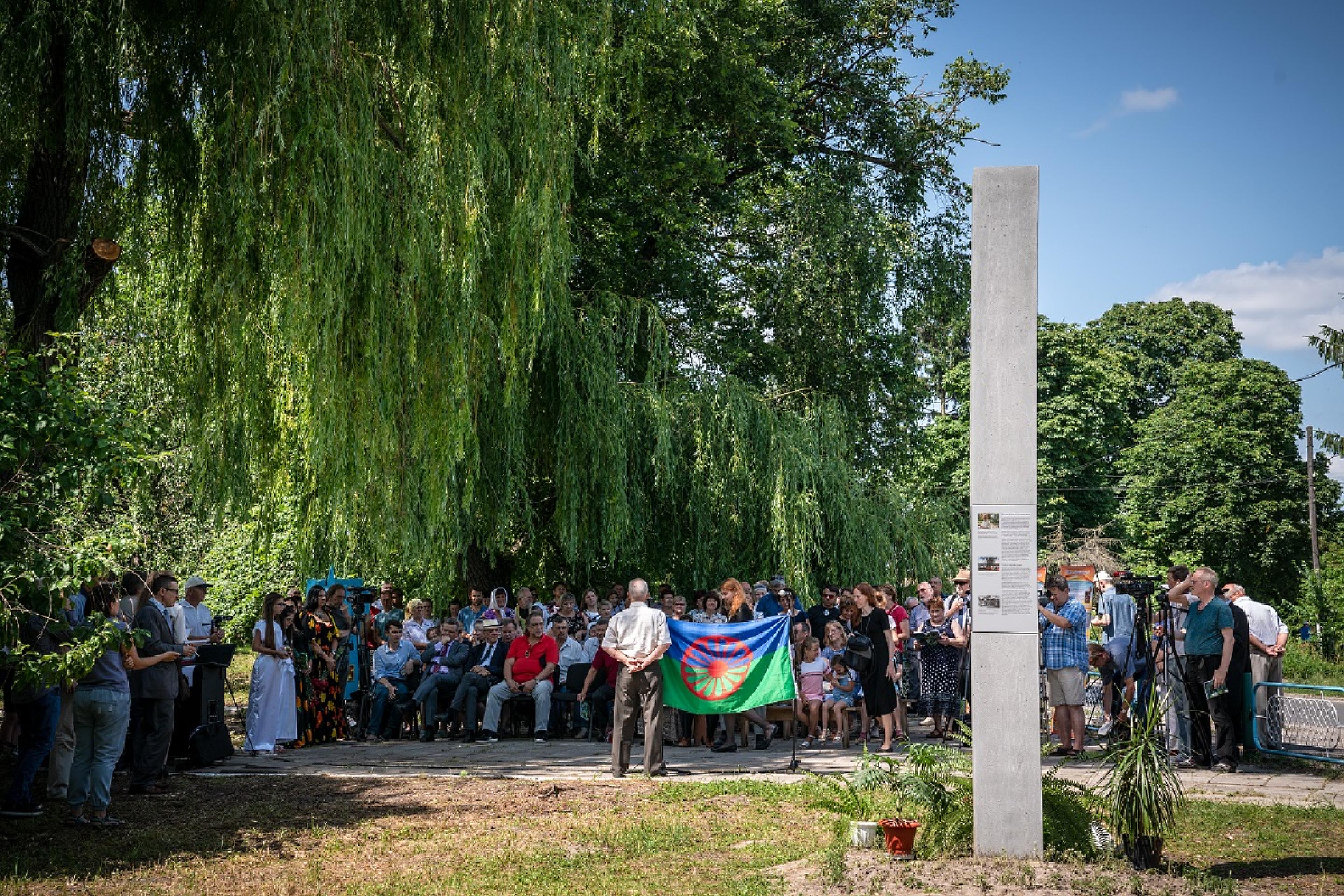
In the course of these investigations, the mass grave of the murdered Jews was opened and forensically examined in 1987. 811 victims were counted. Subsequently, the human remains were reburied and the communal grave was fenced in. In 1991, the year of the break-up of the Soviet Union, a memorial was erected at the grave. The Russian inscription does not mention the Jewish identity of the victims. On the site of the sugar factory, a first memorial was erected to soldiers of the Red Army who died in the fight for the liberation of the village. In the 1960s the graves of those murdered during the German occupation were opened. The bodies of political opponents could be identified, but not those of the murdered Roma. Even after that, nothing at the site reminded of the murdered Roma. As part of the »Protecting Memory« project in the summer of 2019 a stele was erected at this place, which informs about the crimes in Yanushpol and the victims, including also the fate of the Roma. The stele is dedicated to all victims of the German occupation in Yanushpol. The international »Protecting Memory« project is based at the Berlin office of the Foundation Memorial to the Murdered Jews of Europe.
Open
The memorial is accessible at all times.
Contact
https://www.erinnerungbewahren.de/ivanopil/
info@erinnerung-bewahren.de